
The Constant Ping: Managing Notifications for More Present Family Time


Welcome to Mind Care Guide, where we understand the delicate balance between modern life and mental well-being. Are you feeling overwhelmed by the constant barrage of notifications, impacting precious moments with your loved ones? In The Constant Ping: Managing Notifications for More Present Family Time, we delve into practical strategies for reclaiming your attention and fostering deeper connections.
Discover how mindful notification management can transform your family time, creating a haven of presence and genuine engagement. Curious how to silence the digital noise and amplify the joy? Read on and embark on a journey towards a more connected and fulfilling family life.
The Constant Ping: Managing Notifications for More Present Family Time
- The Digital Distraction: How Notifications Impact Family Time
- Mindful Notification Management: Reclaiming Family Moments
- Strategies for Effective Notification Control
- Rebuilding Family Connection: Beyond Notification Management
- Communicating Expectations: A Family Agreement on Technology Use
- The Benefits of Mindful Notification Management for Family Well-being
- Long-Term Strategies for a Tech-Balanced Family Life
-
Frequently Asked Questions
- How does excessive notification checking impact family time?
- What are some practical strategies for managing notifications to improve family time?
- Why is mindful notification management important for mental well-being, beyond just family time?
- How can family members work together to create a notification-friendly environment?
- What are the potential benefits of reducing notification frequency for both parents and children?
- Final Reflection: Reclaiming Family Time in a Hyper-Connected World
- Reclaim Your Family Time: Silence the Digital Noise
The Digital Distraction: How Notifications Impact Family Time
Understanding the Allure of Notifications and Their Impact on Attention
Notifications are designed to grab our attention instantly. They arrive as sounds, vibrations, or visual pop-ups, signaling new information – a message, an update, a like, a news alert. This constant influx taps into our innate curiosity and desire to stay connected, creating a powerful pull. The allure lies in the potential reward: a new piece of information, social validation, or simply a break from the current task. This immediate feedback loop makes checking notifications a compelling habit, often done without conscious thought.
However, this constant allure has a significant impact on our attention spans, particularly during dedicated family time. When a notification arrives, our focus is fragmented. Even if we don't immediately act on it, the mere awareness of its presence can divert cognitive resources. Research suggests that even brief interruptions, like checking a notification for just a few seconds, can take several minutes to fully recover our concentration on the original task. This makes being truly present during conversations, games, or meals with family incredibly challenging, undermining efforts towards mindful notification management for family time.
The Neuroscience Behind Notification Addiction: Dopamine and Digital Devices
The compelling nature of notifications is deeply rooted in our brain's reward system, primarily involving the neurotransmitter dopamine. When we receive a notification, there's a jolt of anticipation followed by a potential reward – the content of the message or alert. This unpredictable but potentially rewarding pattern is similar to how slot machines work, triggering dopamine release. Dopamine is associated with motivation, pleasure, and learning; it reinforces behaviors that led to the reward.
Over time, this repeated cycle of anticipation and reward creates a strong association between the notification alert and a potential positive feeling or valuable information. Our brains become wired to seek out these digital pings, leading to a habitual, sometimes compulsive, checking behavior. This dopamine-driven loop makes it difficult to resist checking devices, even when we consciously intend to focus on our family. Understanding this neurobiological basis is crucial for appreciating why mindful notification management for family time requires conscious effort and strategies.
The Ripple Effect: How Constant Notifications Affecting Family Dynamics
The intrusion of constant notifications into family life creates a ripple effect that impacts communication, connection, and overall dynamics. When a parent or child is frequently distracted by their device, it sends a subtle but powerful message: that the digital world is more important than the people physically present. This can lead to feelings of neglect, frustration, and disconnection among family members. Conversations are interrupted, shared activities are disrupted, and opportunities for genuine interaction are lost.
For example, during a family dinner, a parent checking work emails or a teenager scrolling through social media fragments the shared experience. It diminishes the sense of being truly seen and heard. Children, in particular, are highly attuned to where their parents' attention is focused, and consistent digital distraction can impact their sense of security and importance within the family unit. Addressing this requires a concerted effort towards mindful notification management for family time, prioritizing human connection over digital alerts.
Mindful Notification Management: Reclaiming Family Moments
Defining "Mindful Notification Management": A Practical Approach
Mindful notification management is not about eliminating technology entirely, but about developing a conscious, intentional relationship with our digital devices and their alerts. It involves making deliberate choices about when, where, and how we allow notifications to interrupt our lives, particularly in the context of family interactions. It's about being aware of the impact these pings have on our presence and attention and taking steps to minimize their disruptive potential.
This practical approach involves several key components: auditing your current notification habits, customizing settings to align with your priorities, setting clear boundaries around technology use, and being fully present during dedicated family time. It's an ongoing process of self-awareness and adjustment, recognizing that our digital environment constantly evolves. Embracing mindful notification management for family time empowers us to reclaim valuable moments and strengthen bonds without being constantly pulled away by digital demands.
Setting Intentional Boundaries: Prioritizing Family Time Over Digital Alerts
Setting intentional boundaries is the cornerstone of effective mindful notification management for family time. This means making a conscious decision that certain times and places are dedicated solely to family interaction, free from the constant interruption of digital alerts. These boundaries aren't just about turning off sounds; they are about a mental shift, a commitment to being fully present with loved ones.
Examples of intentional boundaries include designating specific hours in the evening as "tech-free family time," establishing a rule that phones are put away during meals, or committing to not checking notifications for the first hour after arriving home from work. These boundaries must be clearly communicated to family members and consistently enforced. While initially challenging, these intentional limits create predictable spaces for genuine connection, signaling that family relationships are the priority over the demands of the digital world.
Strategies for Effective Notification Control

Auditing Your Notifications: Identifying Essential vs. Non-Essential Alerts
The first step in gaining control over notification overload is understanding what is actually demanding your attention. Take time to audit the types and frequency of notifications you receive. Go through your phone's settings and look at which apps are permitted to send you alerts. You might be surprised by the sheer volume and the number of apps you rarely use that are constantly vying for your attention.
Categorize your notifications into essential and non-essential. Essential notifications might include urgent communications from family members, critical work alerts (if applicable and unavoidable), or important safety warnings. Non-essential notifications typically include social media likes, game updates, promotional offers, news headlines, and reminders from apps you don't actively need throughout the day. This audit provides a clear picture of the digital noise you're dealing with and is foundational for practicing mindful notification management for family time.
Customizing Notification Settings: Tailoring Alerts for Optimal Family Engagement
Once you've audited your notifications, the next crucial step is to customize settings on your devices to align with your goal of better family engagement and mindful notification management. Most smartphones and computers offer granular control over how notifications are delivered, from sounds and vibrations to banners and lock screen alerts. Tailoring these settings allows you to reduce the intrusiveness of non-essential alerts while ensuring you don't miss truly important communications.
This customization might involve turning off notifications entirely for certain apps, changing the alert style (e.g., silent banners instead of loud sounds), or grouping notifications to reduce clutter. The aim is to create a digital environment that serves you, rather than constantly demanding your attention. By taking control of these settings, you actively reduce the number of pings that can pull you away from precious family moments, fostering better mindful notification management for family time.
Turning off Non-Essential Notifications: A Step-by-Step Guide
Taking control of your digital environment starts with systematically disabling notifications that don't serve your well-being or interrupt family time. Start by accessing your device's settings menu. On most smartphones, this is done through a "Settings" app, then navigating to "Notifications" or "Apps & Notifications." Here, you'll find a list of all your installed applications.
Go through the list app by app. For each non-essential app (like many games, social media platforms you don't need constant updates from, or shopping apps), tap on its entry and find the option to "Block All Notifications" or toggle off specific alert types (sounds, banners, badges). This might seem time-consuming initially, but dedicating 15-20 minutes to this task can drastically reduce the daily barrage of interruptions. This is a practical step towards achieving mindful notification management for family time.
Utilizing "Do Not Disturb" Mode: Creating Dedicated Family Time
"Do Not Disturb" (DND) mode is a powerful tool for creating predictable, uninterrupted blocks of family time. When activated, DND silences all incoming calls (except designated favorites), texts, and app notifications. This feature allows you to be fully present without the constant fear of missing something urgent, as you can typically set exceptions for important contacts like your spouse or children's school.
Schedule DND mode to activate automatically during regular family activities, such as dinner time (e.g., 6:00 PM to 7:00 PM), board game nights, or bedtime routines. Many devices allow you to set recurring schedules. Using DND mode intentionally creates a clear boundary between digital demands and family connection, making it easier to practice mindful notification management for family time and truly engage with those around you.
Customizing App Notifications: Prioritizing People Over Apps
Beyond simply turning notifications off, many operating systems allow you to customize how notifications from specific apps or contacts behave. This feature is particularly useful for prioritizing communication from actual people over automated alerts or updates from apps. For instance, you can often set messaging apps to notify you differently for messages from specific contacts (like family members) versus group chats or promotional messages.
In messaging apps, explore settings that allow you to mute specific conversations or individuals temporarily or permanently. On your phone's system settings, you might be able to designate certain contacts as "favorites" or "priority" so their calls or messages can bypass "Do Not Disturb" mode, while all other alerts remain silenced. This level of customization ensures that while you're limiting digital noise for mindful notification management for family time, you remain accessible to those who truly matter.
Leveraging Technology for Good: Using Apps to Manage Notification Overload
Paradoxically, technology itself can offer solutions for managing notification overload and supporting mindful notification management for family time. Several apps are specifically designed to help users control their digital habits, block distractions, and schedule focused time away from their devices. These tools can be invaluable allies in the quest for a more balanced digital life.
These apps often provide features like website and app blocking, time tracking, and even gamified incentives for staying focused. They can help reinforce the boundaries you've set and make it easier to resist the urge to check notifications during designated family periods. Exploring these tools can provide external support for building healthier tech habits and enhancing the quality of your family interactions.
App Recommendations for Notification Filtering and Scheduling: Forest
Forest is a popular app that uses a unique gamified approach to help users stay focused and manage screen time, which indirectly aids in mindful notification management for family time. When you need to focus or want to dedicate time to family without digital distractions, you plant a virtual tree in the app. The tree grows while you stay off your phone and out of the apps you've designated as distracting.
If you leave the app or check a blocked app before your set time is up, your tree dies. This simple concept leverages positive reinforcement and a sense of accomplishment (growing a forest) to encourage users to put their phones down. Forest also partners with a real tree-planting organization, allowing users to spend virtual coins earned from focusing on planting real trees, adding an extra layer of motivation for staying present.
App Recommendations for Notification Filtering and Scheduling: Freedom
Freedom is a more robust and comprehensive app designed specifically to block distractions across multiple devices (phones, tablets, computers). It allows users to create custom blocklists of distracting websites and applications. You can schedule "Freedom sessions" for specific times of the day or create recurring sessions during periods you want to be fully present with your family.
Unlike simpler blocking apps, Freedom works across operating systems and can be set to block the internet entirely or just specific sites and apps. This makes it a powerful tool for individuals or families serious about implementing strict tech-free periods for enhanced mindful notification management for family time. While it's a subscription service, for many, the ability to reliably block distractions across their digital ecosystem is well worth the investment in regaining focus and presence.
Rebuilding Family Connection: Beyond Notification Management
Creating Tech-Free Zones: Establishing Sacred Spaces for Family Interaction
Beyond managing notifications on devices, physically designating certain areas or times as "tech-free zones" is a powerful way to rebuild and strengthen family connection. These zones become sacred spaces where face-to-face interaction, conversation, and shared activities are prioritized without the constant intrusion of screens. Establishing these boundaries signals a clear commitment to valuing human presence over digital engagement.
Implementing tech-free zones doesn't require a complete digital detox of the home, but rather intentional pockets of time and space dedicated to unplugging together. This practice reinforces the principles of mindful notification management for family time by creating environmental cues that support being present. Over time, these zones can become anticipated and cherished parts of the family routine, fostering deeper bonds and creating lasting memories.
Tech-Free Dinner Times: Reconnecting Through Shared Meals
Dinner time is perhaps the most common and impactful opportunity to implement a tech-free zone. Historically, shared meals have been a cornerstone of family connection, providing a consistent time to talk, share experiences from the day, and simply be together. Introducing phones, tablets, or even TVs into this space fragments attention and inhibits meaningful conversation.
Making dinner a strictly tech-free zone means all devices are put away – ideally in a designated charging station away from the table – before sitting down. This simple rule encourages everyone to engage with each other, practice active listening, and share in the communal experience of eating together. Consistent tech-free dinner times are a powerful, practical application of mindful notification management for family time, significantly improving communication and presence.
Designating Tech-Free Zones in the Home: Bedrooms and Living Areas
Expanding tech-free zones beyond the dinner table can further support mindful notification management for family time. Consider designating bedrooms as tech-free sanctuaries, especially for children and teenagers, at least during certain hours leading up to bedtime. This promotes better sleep hygiene and reduces late-night digital distractions that can interfere with rest and morning readiness.
The main living area, where the family gathers for relaxation or activities, is another prime candidate for a tech-free zone. While watching a movie together might involve a screen, general downtime, reading, playing board games, or simply talking can be designated as phone-free time. Having clear expectations about device use in shared spaces reduces conflict and encourages family members to engage with each other rather than retreating into their individual digital worlds.
Engaging in Mindful Activities Together: Fostering Presence and Connection
Mindful notification management for family time is not just about reducing digital distraction; it's also about increasing opportunities for present, connected interaction. Engaging in mindful activities together helps cultivate a sense of shared presence and deepens bonds. These activities encourage focusing on the present moment and interacting with each other without the urge to check devices.
Mindful activities can be simple and integrated into daily life or planned as specific outings. The key is that they require attention and engagement, naturally drawing focus away from potential digital distractions. By actively participating in these experiences together, families build stronger connections and create positive associations with being present with one another.
Practicing Mindful Listening During Family Conversations
One of the simplest yet most profound mindful activities for families is practicing mindful listening during conversations. This means truly paying attention when another family member is speaking, without interrupting, formulating your response prematurely, or allowing your mind to wander – especially not to incoming notifications. It involves making eye contact, nodding, and offering verbal cues to show you are engaged.
Mindful listening requires putting down devices and giving your full attention. It validates the speaker and fosters a sense of being heard and understood within the family. Encouraging mindful listening during routine conversations, whether discussing the day's events or tackling a family challenge, strengthens communication skills and deepens emotional connection, directly benefiting from successful mindful notification management for family time.
Participating in Shared Hobbies and Activities: Hiking
Engaging in shared hobbies or activities is an excellent way to foster connection and naturally practice mindful presence away from digital distractions. Activities that require physical presence and interaction, like playing a sport, cooking together, working on a puzzle, or going for a hike, provide rich opportunities for genuine connection.
Hiking, for instance, is an activity that inherently encourages being present. Surrounded by nature, the urgency of digital alerts often fades. Navigating trails, observing the environment, and conversing while walking promotes interaction and shared experience. While a phone might be used for navigation or photos, the primary focus is on the activity and the company, embodying the spirit of mindful notification management for family time by prioritizing the real world over the digital one.
Spending Time in Nature: Unplugging and Reconnecting
Spending time outdoors in nature offers a powerful antidote to digital overload and provides a natural environment for unplugging and reconnecting as a family. Whether it's a walk in a local park, a trip to the beach, camping, or simply spending time in the backyard, being in nature has been shown to reduce stress and improve focus.
Nature provides a wealth of sensory experiences that capture attention in a healthy way, from the sounds of birds to the feel of the wind or the sight of trees. These experiences facilitate conversation, shared discovery, and quiet contemplation together. Designating regular "nature time" for the family is an effective strategy for stepping away from screens, practicing mindful presence, and reinforcing the positive outcomes of mindful notification management for family time.
Communicating Expectations: A Family Agreement on Technology Use
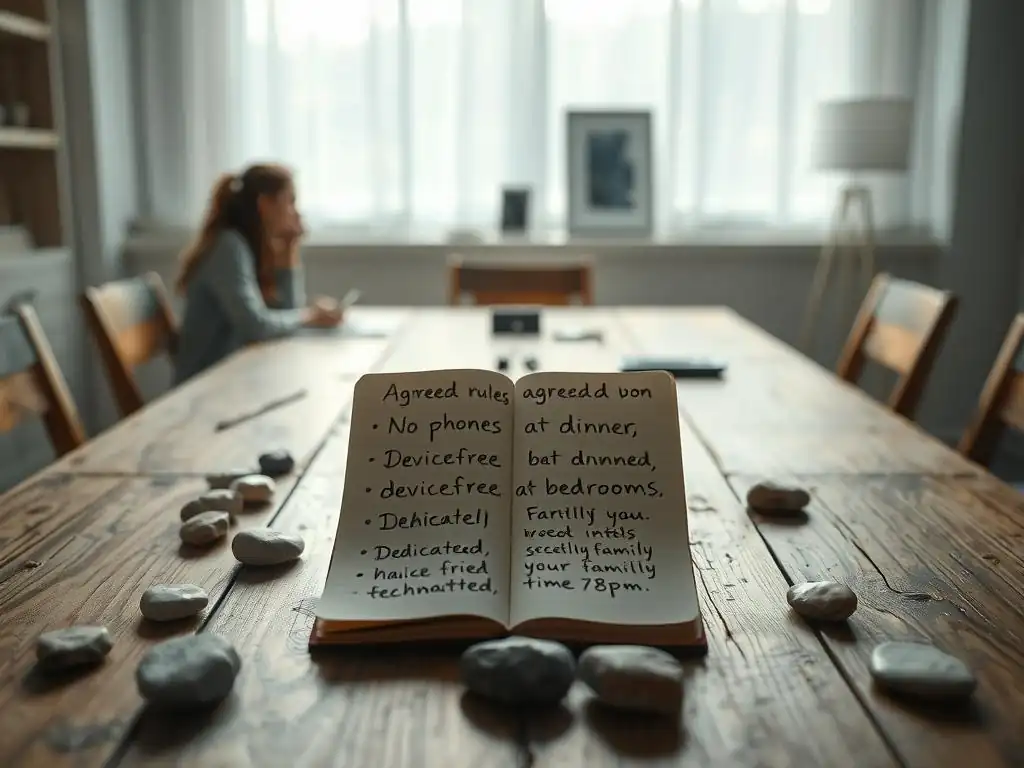
Implementing mindful notification management for family time is most effective when it's a collaborative effort. Open communication about the impact of technology and establishing shared expectations are crucial steps towards creating a healthier digital balance within the family unit. This isn't about imposing rules unilaterally, but about fostering understanding and mutual agreement.
Talking openly about why these changes are important helps family members, especially children and teenagers, understand the value of present family time. It moves from rules being perceived as punitive to being understood as supportive of stronger relationships. A family agreement or contract formalizes these discussions and provides clear guidelines for everyone.
Open Dialogue: Discussing the Impact of Technology with Family Members
Start by initiating open and honest conversations with all family members about how technology, particularly constant notifications, affects your time together. Share your observations about how devices sometimes pull attention away from interactions. Encourage everyone to share their own feelings and experiences – do they feel ignored when others are on their phones? Do they find it hard to disconnect?
This dialogue should be empathetic and non-judgmental. The goal is to raise awareness and build a shared understanding of the problem, not to assign blame. Discuss the benefits of being more present with each other – better conversations, stronger bonds, less stress. Framing mindful notification management for family time as a way to enhance everyone's well-being makes it a shared goal rather than a source of conflict.
Creating a Family Technology Contract: Establishing Clear Guidelines and Consequences
Formalizing your family's shared expectations about technology use into a written "technology contract" or agreement can be very helpful. This document should outline the agreed-upon rules regarding tech-free times (like meals or family activities), tech-free zones (like bedrooms after a certain hour), and general principles of mindful device use, including mindful notification management for family time.
The contract should be developed collaboratively, with input from all family members. It should clearly state the agreed-upon guidelines (e.g., "No phones at the dinner table," "Devices off by 9 PM on school nights") and also include agreed-upon consequences for breaking the agreement. Displaying the contract prominently serves as a visual reminder of the family's commitment to balancing technology with connection.
Modeling Healthy Technology Habits: Leading by Example
Perhaps the single most important factor in successfully implementing mindful notification management for family time is for parents and caregivers to model the desired behavior. Children learn by observing, and if adults are constantly glued to their phones, checking notifications during conversations, or ignoring tech-free zones, any rules or contracts will have little impact.
Make a conscious effort to put your phone away when interacting with your children or partner. Resist the urge to check notifications during family meals or activities. Talk about your own struggles with digital distraction and the strategies you are using to manage it. Your willingness to demonstrate mindful tech habits is the most powerful teaching tool and reinforces the importance of being present with loved ones.
The Benefits of Mindful Notification Management for Family Well-being
Implementing strategies for mindful notification management for family time yields numerous benefits that contribute significantly to the overall well-being of individual family members and the family unit as a whole. These benefits extend beyond simply reducing screen time; they enhance the quality of interactions and create a more positive home environment.
The conscious effort to manage digital distractions pays dividends in terms of reduced stress, improved communication, stronger relationships, and a greater sense of presence and connection. These positive outcomes reinforce the value of prioritizing family time and make the effort required for mindful notification management truly worthwhile.
Reduced Stress and Anxiety: Creating a Calmer Home Environment
Constant notifications contribute to a state of perpetual readiness and mild stress. Each ping is a demand for attention, triggering a micro-burst of stress as we decide whether or not to engage. This constant state of alert can be mentally exhausting and contribute to feelings of anxiety, not just for the individual receiving the notification but also for those around them who witness the distraction.
By implementing mindful notification management for family time, you reduce the frequency and intensity of these digital demands. This creates a calmer, less chaotic home environment. With fewer interruptions, family members can relax more fully, focus on tasks at hand, and engage in leisure activities without the underlying tension of anticipating the next digital alert. This reduction in ambient stress benefits everyone's mental well-being.
Improved Communication and Connection: Strengthening Family Bonds
One of the most significant benefits of mindful notification management for family time is the improvement in communication and the strengthening of family bonds. When devices are put away and notifications silenced, families are more likely to engage in meaningful conversations, practice active listening, and truly connect on an emotional level.
Uninterrupted family time allows for deeper sharing, better problem-solving, and more opportunities for empathy and understanding. Children feel more comfortable opening up when they have their parents' undivided attention. Spouses can connect more intimately without digital interference. This enhanced communication and presence foster a stronger sense of belonging and mutual support within the family.
Enhanced Presence and Engagement: Fully Participating in Family Life
Mindful notification management for family time allows individuals to be truly present and fully engaged in the moments they share with loved ones. Instead of being physically present but mentally distracted by their devices, family members can immerse themselves in activities, conversations, and experiences together.
This enhanced presence means noticing the nuances of a child's story, fully enjoying a shared meal, laughing together during a game, or simply appreciating the quiet moments of being together. It allows for a richer, more fulfilling experience of family life. By consciously managing notifications, families reclaim their attention and dedicate it to building memories and nurturing relationships.
Long-Term Strategies for a Tech-Balanced Family Life
Achieving mindful notification management for family time is not a one-time fix but an ongoing process. Maintaining a healthy balance between technology use and family life requires long-term commitment, regular evaluation, and a willingness to adapt strategies as technology and family needs evolve. Building sustainable habits is key to ensuring that digital tools remain helpful aids rather than constant sources of distraction.
Developing long-term strategies involves making mindful tech use a permanent part of the family culture, knowing when to seek help if technology use becomes problematic, and consistently prioritizing the mental well-being of all family members in relation to their digital lives.
Regularly Evaluating and Adjusting Notification Settings: Staying Proactive
The digital world is constantly changing, with new apps, features, and notification types emerging regularly. What worked for mindful notification management for family time last year might need adjustment today. Therefore, it's important to regularly revisit and evaluate your notification settings and overall technology habits.
Schedule periodic "tech check-ins" individually or as a family (perhaps every few months) to review how well your current strategies are working. Are new apps causing distractions? Have your family's needs or schedules changed? Be prepared to adjust which notifications are on or off, modify DND schedules, or update your family tech agreement. Staying proactive is essential for maintaining a healthy balance.
Seeking Professional Help: Addressing Technology Addiction and Its Impact on Family
While mindful notification management strategies can significantly improve family life for many, in some cases, technology use can escalate into a more serious issue resembling addiction, profoundly impacting family relationships. If you or a family member finds it extremely difficult to control technology use, if it's causing significant conflict, neglect of responsibilities, or emotional distress, it may be more than just a matter of managing notifications.
Recognizing the signs of problematic tech use, such as withdrawal symptoms when unable to access devices, continued use despite negative consequences, or spending excessive amounts of time online at the expense of real-life interactions, is crucial. Seeking support from mental health professionals or therapists specializing in technology addiction or family counseling can provide necessary tools and interventions to address these deeper issues and heal family dynamics strained by excessive digital engagement.
Prioritizing Mental Well-being: Nurturing a Healthy Relationship with Technology.
Ultimately, mindful notification management for family time is about prioritizing mental well-being – both individually and as a family unit. A healthy relationship with technology means using it as a tool that enhances life, rather than allowing it to control attention, dictate mood, or detract from meaningful relationships.
This involves cultivating self-awareness about how technology makes you feel, recognizing when you need a break, and actively choosing activities that nourish your mind and relationships away from screens. Encourage family members to develop their own healthy tech habits and support each other in the process. By nurturing a conscious, balanced relationship with technology, families can protect their time together, reduce stress, and build stronger, more present connections for years to come.
Frequently Asked Questions
How does excessive notification checking impact family time?
Excessive notification checking can distract from and interrupt meaningful interactions, leading to feelings of being disconnected and less present during family time.
What are some practical strategies for managing notifications to improve family time?
Strategies include setting specific times for checking notifications, using focus modes to silence alerts, and designating tech-free zones during family activities.
Why is mindful notification management important for mental well-being, beyond just family time?
Mindful notification management reduces constant stimulation, lowers stress levels, and allows for greater focus and engagement in all aspects of life, leading to improved mental well-being.
How can family members work together to create a notification-friendly environment?
Families can establish shared agreements about technology usage, create designated tech-free zones, and model healthy notification habits for each other.
What are the potential benefits of reducing notification frequency for both parents and children?
Reducing notification frequency can lead to increased attention spans, improved communication skills, and a stronger sense of connection and presence within the family.
Final Reflection: Reclaiming Family Time in a Hyper-Connected World
The relentless barrage of notifications is not just a technological inconvenience; it's a significant threat to the quality of our family time. Our increasingly digital lives are fracturing our ability to be truly present with loved ones, creating a constant tug-of-war between connection and distraction. This erosion of mindful presence is a crisis that demands immediate attention.
The impact of constant connectivity on family dynamics is profound and far-reaching. It's not just about the time spent scrolling through feeds; it's about the emotional space we occupy when our attention is divided. The most precious gift we can offer anyone is our presence. When mindfulness embraces those we love, our relationships deepen.
This quote speaks to the core of the issue: true connection requires undivided attention, a commodity increasingly scarce in our notification-saturated world. We must actively cultivate mindful presence to nurture the bonds that matter most.
You now hold the power to reshape your family's digital landscape. Consider the ways in which notifications disrupt your family time. Experiment with different notification settings, establish tech-free zones, and prioritize meaningful interactions over fleeting digital engagements. By consciously managing your digital intake, you can create a more peaceful, present, and connected family life. Start small, be consistent, and rediscover the joy of truly being present with the people you love.
Reclaim Your Family Time: Silence the Digital Noise
Thanks for taking the time to learn how to better manage your notifications and reclaim precious family time! We hope you found practical strategies to disconnect and reconnect. Now, let's put those tips into action:
- Prioritize your family: Dedicate one hour tonight completely device-free—focus on meaningful interaction with loved ones. This is your most important step.
- Experiment with notification settings: Try muting non-essential apps for a full day and observe the difference in your focus and family interactions. Note your experience!
- Share your insights: Tell us – what's one simple change you’ll make to reduce notification overload and boost family time? Let's create a supportive community of mindful digital citizens!
What small step will you take today to be more present with your family?