
Mindful Nights: Using Meditation to Ease Sleep Anxiety


Welcome to Mind Care Guide, a sanctuary for your mental well-being.
Struggling to find peaceful slumber amidst racing thoughts? You're not alone. Many experience the frustrating cycle of sleep anxiety. Our exploration into how Meditation reduces sleep anxiety offers practical techniques and insights to help you reclaim your nights and wake up refreshed. Discover how mindful practices can quiet the inner turmoil and gently guide you towards restful sleep. Let's embark on this journey to calmer nights, together.
- Mindful Nights: Using Meditation to Ease Sleep Anxiety - A Mind Care Guide
- The Power of Meditation for Sleep
- Meditation to Reduce Sleep Anxiety: A Step-by-Step Guide
- Incorporating Meditation into Your Nightly Routine
- Advanced Meditation Techniques for Deeper Sleep
- Overcoming Challenges in Your Meditation Practice for Sleep
- Benefits of Consistent Meditation for Sleep Quality
- Beyond Meditation: Additional Tips for Managing Sleep Anxiety
- Conclusion: Embracing Mindful Nights for Restful Sleep
-
Frequently Asked Questions
- How can meditation specifically help with sleep anxiety?
- What types of meditation are most effective for reducing sleep anxiety?
- How often should I meditate to see a noticeable reduction in sleep anxiety?
- What are some common challenges when starting meditation for sleep anxiety, and how can I overcome them?
- Are there any situations where meditation is not recommended for sleep anxiety?
- Final Reflection: Cultivating Calm in a Restless World
- Unlock Your Peaceful Nights: Start Your Meditation Journey Now
Mindful Nights: Using Meditation to Ease Sleep Anxiety - A Mind Care Guide
What is Sleep Anxiety and How Does it Manifest?
Sleep anxiety, or somniphobia, is a form of performance anxiety specifically centered around the act of sleeping. It manifests as excessive worry, fear, or dread about falling asleep, staying asleep, or the consequences of not getting enough sleep. This anxiety can create a vicious cycle: the more you worry about sleep, the harder it becomes to relax and drift off, which in turn fuels more anxiety.
Symptoms can include a racing heart, shortness of breath, muscle tension, and intrusive thoughts specifically related to sleep failure as bedtime approaches. Many individuals report feeling wide awake and agitated the moment they lie down, despite feeling tired just minutes before.
This specific type of anxiety can significantly disrupt quality of life, extending beyond just the nighttime hours. During the day, individuals might experience fatigue, irritability, difficulty concentrating, and a constant preoccupation with how they will sleep the following night. The fear can become so intense that some people actively avoid their bedrooms or delay bedtime as long as possible.
It's estimated that a significant portion of the population struggles with sleep disturbances linked to anxiety, with reports suggesting numbers in the tens of millions globally experiencing some degree of sleep-related worry that impacts their rest patterns. The pervasive nature of this anxiety makes finding effective coping mechanisms, such as using meditation to reduce sleep anxiety, incredibly important.
The Link Between Anxiety Disorders and Sleep Disturbances
There is a profound and well-documented bidirectional relationship between anxiety disorders and sleep disturbances. Individuals diagnosed with generalized anxiety disorder (GAD), panic disorder, or obsessive-compulsive disorder (OCD) frequently report experiencing insomnia or other sleep-related issues. Studies indicate that up to 50% of adults with GAD report significant sleep problems, and those with panic disorder often experience nocturnal panic attacks. This connection is not merely coincidental; the physiological hyperarousal characteristic of anxiety disorders, including elevated stress hormones like cortisol and increased sympathetic nervous system activity, directly interferes with the body's ability to relax and transition into sleep states.
Conversely, chronic sleep deprivation can exacerbate existing anxiety symptoms and even contribute to the development of anxiety disorders in vulnerable individuals. Lack of sufficient sleep impairs the prefrontal cortex, the part of the brain responsible for regulating emotions and executive functions, while simultaneously increasing activity in the amygdala, the brain's fear center.
This neurological imbalance makes individuals more reactive to stress, more prone to worry, and less able to manage anxious thoughts effectively. Breaking this cycle is crucial, and techniques like meditation to reduce sleep anxiety offer a non-pharmacological approach to calm the nervous system and improve sleep quality, thereby potentially mitigating anxiety symptoms during waking hours as well.
Identifying Your Sleep Anxiety Triggers
Recognizing the specific factors that activate your sleep anxiety is a critical step toward managing it. Triggers can be internal, such as negative self-talk about sleep ("I'll never fall asleep tonight," "I'll be useless tomorrow"), or external, like the bedroom environment itself or specific bedtime habits. Common triggers include:
- Worrying about not getting the recommended 7-9 hours of sleep.
- Checking the clock repeatedly during the night.
- Consuming caffeine or alcohol close to bedtime.
- Using electronic devices with blue light in bed.
- Stress from work, relationships, or daily life spilling into bedtime thoughts.
- Physical discomfort or medical conditions.
- Negative past experiences with insomnia.
Identifying these triggers often involves keeping a sleep diary for a week or two, noting down bedtime routine, thoughts, feelings, and sleep outcomes. For example, someone might notice their anxiety spikes specifically after scrolling social media in bed, or after a particularly stressful day at work, their mind races when they lie down.
Pinpointing these patterns allows you to develop targeted strategies, such as implementing a digital curfew, establishing a relaxing pre-sleep routine, or utilizing specific techniques like meditation to reduce sleep anxiety before triggers escalate. Understanding what sets off your anxiety empowers you to take proactive steps to counter it.
The Power of Meditation for Sleep
How Meditation Helps Reduce Anxiety and Promote Relaxation
Meditation is a practice that involves training the mind to focus and redirect thoughts, often leading to a state of relaxed awareness. When dealing with anxiety, particularly the kind that interferes with sleep, meditation works by interrupting the cycle of worry and rumination. It helps you become more aware of your thoughts and feelings without getting carried away by them. Instead of fighting anxious thoughts about sleep, meditation teaches you to observe them from a distance, reducing their power to trigger a stress response. This shift in perspective is crucial for calming the nervous system.
Regular meditation practice has been shown to decrease activity in the default mode network (DMN), the part of the brain associated with mind-wandering and self-referential thoughts, which are often central to anxiety. By quieting the DMN and promoting activity in areas related to focus and emotional regulation, meditation helps lower overall stress levels.
This reduction in physiological arousal—slower heart rate, lower blood pressure, relaxed muscles—creates a more conducive state for sleep. Many find that even a short 10-minute session of meditation before bed can significantly reduce the mental chatter and physical tension that prevents them from falling asleep, effectively using meditation to reduce sleep anxiety in the moment.
The Science Behind Meditation and Sleep Improvement
Research has increasingly supported the efficacy of meditation, particularly mindfulness-based interventions, in improving sleep quality and reducing insomnia symptoms. Studies have demonstrated that regular meditation practice can lead to measurable changes in brain structure and function, including increased gray matter density in areas associated with attention and self-awareness, and decreased amygdala size (the brain's fear center). These changes contribute to better emotional regulation and a reduced stress response, which are key factors in overcoming sleep anxiety.
Furthermore, studies have shown that participants engaging in mindfulness meditation programs experience significant improvements in sleep parameters. For example, one study published in JAMA Internal Medicine involving older adults with moderate sleep disturbances found that those who participated in a mindfulness awareness program reported greater improvements in sleep quality, less insomnia severity, and reduced daytime impairment compared to a sleep hygiene education group.
The meditation group showed improvements on scales measuring sleep disturbance, fatigue, and depression. This scientific backing provides strong evidence for the potential of meditation to reduce sleep anxiety and promote restful sleep by addressing the underlying stress and hyperarousal that contribute to insomnia.
Different Meditation Techniques for Sleep Anxiety Relief
While the core principle of meditation often involves focus and awareness, various techniques can be particularly effective for addressing sleep anxiety:
- Mindfulness Meditation: This involves paying attention to the present moment without judgment. For sleep anxiety, this might mean focusing on the sensations of lying in bed, the sound of your breath, or the feeling of the blanket, letting go of thoughts about the day or worries about sleep as they arise.
- Body Scan Meditation: This technique involves systematically bringing awareness to different parts of the body, noticing sensations without trying to change them. It's excellent for releasing physical tension often held unconsciously when anxious.
- Breathing Exercises: Focusing solely on the breath—its rhythm, depth, and feel—can quickly calm the nervous system. Techniques like 4-7-8 breathing are specifically designed to induce relaxation.
- Guided Meditation: Following a guided audio recording can be very helpful, especially for beginners. These often include visualizations or instructions to relax the body and quiet the mind, making it easier to use meditation to reduce sleep anxiety without needing to direct the practice yourself.
- Loving-Kindness Meditation (Metta): While not directly focused on sleep, cultivating feelings of warmth and compassion towards oneself and others can create a peaceful mental state conducive to sleep.
Each of these techniques offers a slightly different path to relaxation and reduced anxiety, and experimenting with a few can help you discover which one resonates most effectively with your specific needs for using meditation to reduce sleep anxiety.
Meditation to Reduce Sleep Anxiety: A Step-by-Step Guide

Preparing for Your Bedtime Meditation Session
Setting the stage is crucial for a successful bedtime meditation practice aimed at reducing sleep anxiety. Begin by establishing a consistent time for your meditation, ideally shortly before you plan to fall asleep. This helps signal to your body that it's time to wind down. Choose a quiet, comfortable space where you won't be interrupted. Your bedroom is a natural choice, but ensure the environment is conducive to relaxation – dim lighting, a comfortable temperature, and minimal noise. Avoid meditating in a place where you typically engage in stimulating activities, like working or watching intense television.
Ensure you are physically comfortable. You can sit upright in a chair with your feet flat on the floor, or lie down in your bed. If lying down, you might place a pillow under your knees for added support. Wear loose, comfortable clothing that doesn't restrict your breathing.
Before you start, take a few moments to release any obvious physical tension – perhaps a gentle stretch or a few deep sighs. Have a glass of water nearby if needed. The goal is to create an environment and physical state that supports relaxation, making your efforts to use meditation to reduce sleep anxiety more effective from the start.
Guided Meditation for Sleep: A Beginner's Routine
Guided meditation is often the most accessible starting point for beginners looking to use meditation to reduce sleep anxiety. It involves listening to an instructor's voice guide you through the process.
*   **Step 1: Get Comfortable:** Lie down in bed or sit comfortably. Close your eyes gently.
*   **Step 2: Listen to the Guide:** Put on headphones or use a speaker to listen to a guided sleep meditation track. Many apps and websites offer these, ranging from 5 to 30 minutes.
*   **Step 3: Follow Instructions:** The guide will typically instruct you to focus on your breath, relax different parts of your body, or visualize calming scenes. Your only job is to listen and follow along as best you can.
*   **Step 4: Gently Bring Back Focus:** It's normal for your mind to wander. When you notice your thoughts drifting, gently bring your attention back to the guide's voice or the instructed focus point, without judgment.
*   **Step 5: Allow Sleep to Come:** Many guided sleep meditations are designed to fade out as you relax. Allow yourself to drift off to sleep if it happens naturally during or after the session.
Starting with a guided session removes the pressure of "doing it right" and provides structure, making it easier to relax and allow the meditation to work its calming effect, thereby helping to reduce sleep anxiety. Aim for a session length that feels manageable, perhaps 10-15 minutes to begin with.
Mindfulness Meditation for Sleep: Focusing on the Present Moment
Mindfulness meditation for sleep is about cultivating non-judgmental awareness of your current experience, which is particularly helpful when anxious thoughts about sleep are overwhelming.
*   **Step 1: Find Your Position:** Lie down in bed. Allow your body to settle and become heavy.
*   **Step 2: Notice Your Breath:** Bring your attention to your breath. Don't try to change it, just notice the sensation of air entering and leaving your body. Maybe focus on the rise and fall of your abdomen or chest.
*   **Step 3: Observe Thoughts:** As thoughts about the day or worries about sleep arise (and they will), simply notice them without getting involved. Imagine them like clouds floating by in the sky. Acknowledge the thought ("Ah, there's a thought about tomorrow's meeting") and let it pass.
*   **Step 4: Return to the Present:** Each time your mind wanders, gently guide your attention back to your breath or the physical sensations of your body in the bed. The act of returning is the practice, not the absence of thoughts.
*   **Step 5: Stay Present with Sensations:** Notice any physical sensations in your body – warmth, coolness, pressure, tingling. Simply observe them without trying to analyze or change them.
Practicing mindfulness before sleep teaches your mind to detach from anxious narratives, making it easier to relax and fall asleep. It's a powerful way to use meditation to reduce sleep anxiety by shifting your focus from future worries to the calm reality of the present moment. Start with 5-10 minutes and gradually increase the duration as you become more comfortable.
Body Scan Meditation for Sleep: Releasing Tension
Body scan meditation is an excellent technique for releasing the physical tension that often accompanies sleep anxiety. It systematically brings awareness to different parts of the body.
*   **Step 1: Lie Down:** Get comfortable in bed, lying on your back with your arms at your sides, palms up or down. Close your eyes.
*   **Step 2: Focus on Feet:** Bring your attention to your toes. Wiggle them slightly, then allow them to relax. Notice any sensations there.
*   **Step 3: Scan Upward:** Slowly move your attention up through your body:
    *   Feet and ankles.
    *   Calves and shins.
    *   Knees and thighs.
    *   Pelvis and hips.
    *   Lower back, middle back, upper back.
    *   Abdomen and chest.
    *   Fingers, hands, wrists, forearms, elbows, upper arms, shoulders.
    *   Neck and throat.
    *   Jaw, mouth, nose, eyes, forehead, scalp.
*   **Step 4: Notice and Release:** As you focus on each area, simply notice any sensations – tension, tingling, warmth, coolness. On an exhale, imagine releasing any tension you find in that area. You don't need to force relaxation, just invite it.
*   **Step 5: Whole Body Awareness:** Once you've scanned your entire body, take a few moments to simply be aware of your body as a whole, relaxed and heavy in the bed.
This practice grounds you in physical sensation rather than anxious thoughts and actively promotes relaxation throughout the body, making it a direct method to use meditation to reduce sleep anxiety by addressing its physical manifestations. A typical body scan for sleep might last 15-20 minutes.
Breathing Exercises for Sleep: Calming Your Nervous System
Focused breathing exercises are a quick and effective way to calm the nervous system, which is often in a state of hyperarousal with sleep anxiety. Simple techniques can make a significant difference.
*   **Deep Diaphragmatic Breathing:** Lie down and place one hand on your chest and the other on your abdomen. Breathe in slowly through your nose, feeling your abdomen rise more than your chest. Exhale slowly through your mouth, allowing your abdomen to fall. Repeat for 5-10 minutes.
*   **4-7-8 Breathing:** This technique, popularized by Dr. Andrew Weil, acts as a natural tranquilizer for the nervous system.
    *   Exhale completely through your mouth, making a "whoosh" sound.
    *   Close your mouth and inhale quietly through your nose for a count of 4.
    *   Hold your breath for a count of 7.
    *   Exhale completely through your mouth, making a "whoosh" sound, for a count of 8.
    *   Repeat the cycle three more times for a total of four breaths.
*   **Box Breathing:**
    *   Exhale completely.
    *   Inhale slowly for a count of 4.
    *   Hold your breath for a count of 4.
    *   Exhale slowly for a count of 4.
    *   Hold your breath (lungs empty) for a count of 4.
    *   Repeat for several minutes.
Focusing on slow, controlled breathing shifts your body from the 'fight or flight' sympathetic state to the 'rest and digest' parasympathetic state, directly counteracting the physiological symptoms of anxiety and making it easier to use meditation to reduce sleep anxiety by promoting relaxation at a fundamental level.
Incorporating Meditation into Your Nightly Routine
Creating a Consistent Sleep Schedule to Enhance Meditation's Effects
While meditation is a powerful tool on its own, its effectiveness in reducing sleep anxiety is significantly enhanced when paired with a consistent sleep schedule. Going to bed and waking up at roughly the same time each day, even on weekends, helps regulate your body's internal clock, or circadian rhythm.
This regulation promotes a more stable sleep-wake cycle, making it easier for your body to naturally prepare for sleep when bedtime arrives. When your circadian rhythm is aligned, your body releases sleep-inducing hormones like melatonin at the appropriate time, creating a biological readiness for rest that complements the mental and physical relaxation achieved through meditation.
For instance, someone who typically goes to bed between 11 PM and 11:30 PM and wakes up around 7 AM will find their body adapts to this rhythm. If they practice meditation to reduce sleep anxiety around 10:45 PM, their body will already be in a state of winding down, making the meditation more potent. Erratic schedules, such as staying up late and sleeping in significantly on weekends, disrupt this rhythm, making it harder to fall asleep even after meditating. Aiming for consistency provides a stable foundation upon which your meditation practice can build effective sleep habits.
Optimizing Your Sleep Environment for Meditation and Rest
Your sleep environment plays a crucial role in both the quality of your meditation practice and your overall sleep. The bedroom should be a sanctuary dedicated primarily to sleep and relaxation. This means making it as dark, quiet, and cool as possible. Use blackout curtains to block external light, earplugs or a white noise machine to minimize disruptive sounds, and set the thermostat to a comfortable, slightly cool temperature (typically between 60-67°F or 15-19°C).
Furthermore, designate your bed as a place for sleep and intimacy only. Avoid using it for work, watching TV (especially stimulating content), or scrolling endlessly on electronic devices. If you choose to do your bedtime meditation while lying in bed, ensure you transition from any non-sleep activities well before starting.
By optimizing your environment, you create a clear association between your bedroom and sleep, reducing the anxiety that can arise from a space associated with wakefulness or stress. This optimized setting provides the ideal backdrop for using meditation to reduce sleep anxiety, allowing you to fully relax without environmental distractions.
Combining Meditation with Other Sleep Hygiene Practices
Meditation is a powerful component of good sleep hygiene, but it works best when combined with other healthy habits. Integrating your meditation practice into a broader pre-sleep routine can significantly enhance its benefits for reducing sleep anxiety. This routine should begin 30-60 minutes before your target bedtime.
Consider incorporating elements like:
- Taking a warm bath or shower to relax muscles.
- Reading a physical book (avoiding backlit screens).
- Listening to calming music or a podcast.
- Doing gentle stretching or yoga.
- Avoiding heavy meals, caffeine, and alcohol in the hours leading up to bed.
- Dimming the lights throughout your home in the evening.
After completing these steps, transition smoothly into your chosen meditation technique, whether it's a guided session, body scan, or breathing exercise. This layered approach allows you to progressively wind down, addressing both physical and mental barriers to sleep. By combining meditation to reduce sleep anxiety with other proven sleep hygiene practices, you create a comprehensive strategy for achieving restful nights. For example, winding down with reading and a warm drink, followed by 15 minutes of guided meditation, can be far more effective than meditation alone in counteracting deeply ingrained sleep anxiety patterns.
Advanced Meditation Techniques for Deeper Sleep
Yoga Nidra for Profound Relaxation and Sleep
Yoga Nidra, often translated as "yogic sleep," is a powerful state of conscious deep relaxation. It's a guided meditation practice that systematically guides you through various levels of relaxation, moving awareness from the external world to the inner world. While you remain awake and aware, your body enters a state of deep rest, similar to sleep, and your mind becomes quiet and receptive. It's often practiced lying down, making it ideal for bedtime.
A typical Yoga Nidra session involves:
- Setting an intention (Sankalpa).
- Body rotation of consciousness, bringing awareness to different body parts.
- Awareness of breath.
- Experiencing opposite sensations (e.g., heaviness/lightness, heat/cold).
- Guided imagery or visualization.
- Repeating the intention.
Yoga Nidra is particularly effective for sleep anxiety because it bypasses the active, thinking mind and addresses tension at a deeper level—physical, mental, and emotional. Reports often suggest that a single hour of Yoga Nidra can be as restorative as several hours of conventional sleep. By inducing such profound relaxation, it makes the transition into actual sleep significantly easier and can help to reduce sleep anxiety even in individuals who find it hard to quiet their minds with other techniques.
Visualization Techniques for Sleep Anxiety Management
Visualization is a form of meditation that involves creating calming mental images or scenes. For sleep anxiety, visualization can be used to replace anxious thoughts with peaceful, soothing mental experiences. This technique leverages the mind's power of imagination to induce a state of relaxation conducive to sleep.
Examples of visualizations for sleep include:
- Peaceful Place: Imagine yourself in a tranquil setting, like a quiet beach, a serene forest clearing, or a cozy cabin. Engage all your senses – what do you see, hear, smell, feel? Focus on the feelings of safety and peace in this place.
- Floating or Sinking: Imagine your body becoming incredibly light and floating gently, or becoming heavy and sinking comfortably into your mattress. Focus on the sensation of weightlessness or groundedness.
- Washing Away Worry: Visualize a gentle, warm shower or stream washing away any worries or tensions from your body and mind, flowing down and away.
Visualization helps to distract the anxious mind from its usual thought loops by engaging it in a different, positive way. By focusing on pleasant, relaxing imagery, you reduce the mental space available for sleep-related fears. This technique can be used independently or integrated into other meditation practices to enhance their ability to reduce sleep anxiety. Spending just 5-10 minutes focusing on a calming visual can significantly shift your mental state before attempting to sleep.
Loving-Kindness Meditation for Sleep: Cultivating Peace and Calm
Loving-Kindness Meditation, or Metta, is a practice focused on cultivating feelings of warmth, goodwill, and compassion towards oneself and others. While not directly aimed at sleep, the state of mind it fosters—peaceful, open-hearted, and less self-critical—is highly conducive to sleep and can significantly reduce anxiety, including sleep anxiety. Often, sleep anxiety is intertwined with self-judgment or frustration about one's inability to sleep. Metta helps soften these harsh internal dialogues.
The practice typically involves silently repeating phrases, sending wishes of well-being:
- Start by directing loving-kindness towards yourself: "May I be happy. May I be healthy. May I be safe. May I be free from suffering."
- Extend these wishes to loved ones: "May you be happy. May you be healthy. May you be safe. May you be free from suffering."
- Extend to neutral people, then to difficult people.
- Finally, extend to all beings everywhere.
Ending your day by cultivating feelings of kindness and acceptance, particularly towards yourself and your struggle with sleep, can create a profound sense of inner peace. This reduces the internal conflict and stress that fuels sleep anxiety. Practicing Metta for 10-15 minutes before bed can create a warm, calm mental environment that makes falling asleep much easier, serving as an empathetic approach using meditation to reduce sleep anxiety by addressing its emotional roots.
Overcoming Challenges in Your Meditation Practice for Sleep
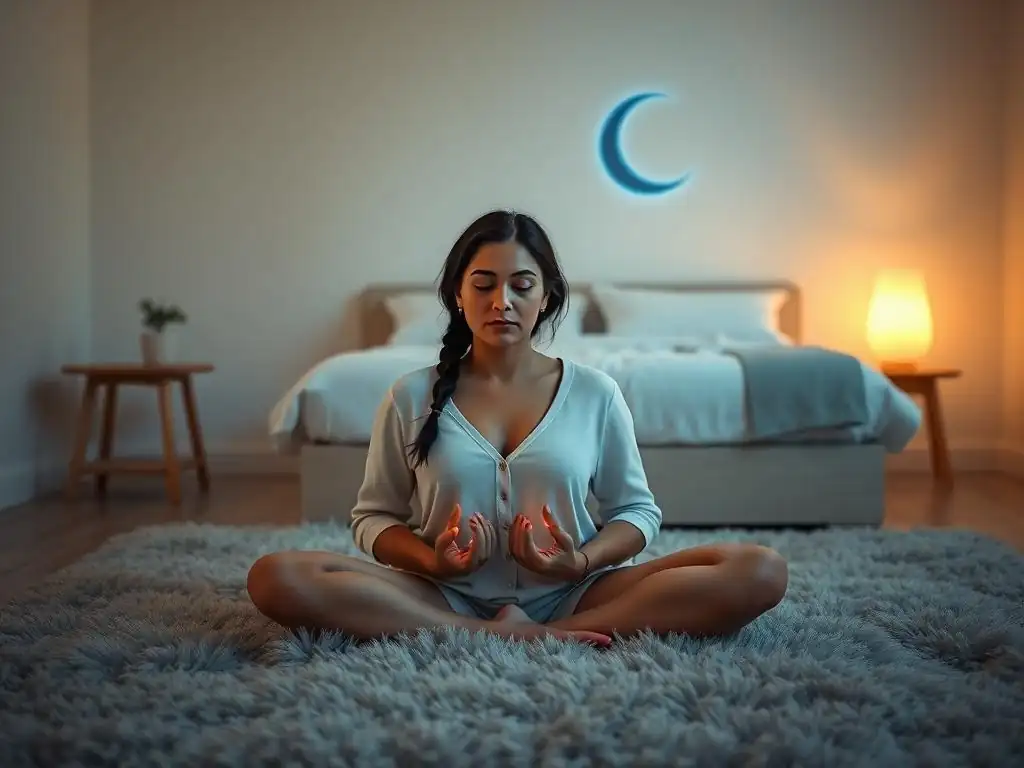
Dealing with Racing Thoughts During Meditation
One of the most common challenges when using meditation to reduce sleep anxiety is dealing with a racing mind, especially when you're already feeling agitated about sleep. It's crucial to understand that the goal of meditation is not to stop thinking, but to change your relationship with your thoughts. Expecting your mind to be completely silent is unrealistic and will only add to your frustration.
When racing thoughts arise during meditation:
- Acknowledge without Judgment: Simply notice the thought. Mentally saying, "Ah, thinking about [topic]," without criticizing yourself for having the thought.
- Gently Redirect: Imagine the thought floating away like a cloud or a leaf on a stream. Then, gently bring your attention back to your anchor – usually your breath, but it could be body sensations or the meditation guide's voice.
- Be Patient and Persistent: This process of noticing and redirecting is the essence of the practice. Each time you gently guide your mind back, you strengthen your ability to focus and detach from anxious thoughts. It takes practice, and some nights will be harder than others.
Remember, you are not failing if your mind wanders. You are succeeding each time you notice it and gently return your focus. This persistent, gentle redirection is how meditation helps to train your mind and ultimately reduce sleep anxiety by weakening the grip of intrusive thoughts.
Staying Consistent with Your Meditation Routine
Consistency is key to reaping the full benefits of using meditation to reduce sleep anxiety, yet it can be challenging to maintain, especially when you're tired or discouraged. Building a regular habit takes conscious effort.
Strategies for staying consistent include:
- Start Small: Even 5-10 minutes of meditation before bed is beneficial. Don't feel pressured to do long sessions initially.
- Schedule It: Treat your meditation time like any other important appointment. Put it in your evening routine.
- Be Flexible: If you miss a night, don't dwell on it. Just commit to practicing the next night. Progress isn't linear.
- Use Reminders: Set an alarm or leave a visual cue (like your meditation cushion or mat) to remind you.
- Track Your Progress: Keep a simple log of your meditation sessions (e.g., in your sleep diary). Seeing your consistency can be motivating.
- Find a Buddy or Community: Practicing with others or having someone to check in with can provide accountability.
Remember that the benefits of meditation accumulate over time. While you might experience some immediate relaxation, the significant reduction in sleep anxiety often comes with regular practice over weeks and months. Committing to a routine, even imperfectly, is more effective than sporadic long sessions.
Seeking Professional Guidance for Severe Sleep Anxiety
While meditation is a powerful tool, it may not be sufficient on its own for severe or chronic sleep anxiety, especially when it's part of a broader anxiety disorder or significantly impacting your health and daily life. In such cases, seeking professional help is a crucial step.
A mental health professional, such as a therapist or counselor specializing in anxiety or sleep disorders, can:
- Provide a proper diagnosis and assess underlying causes.
- Teach evidence-based therapies like Cognitive Behavioral Therapy for Insomnia (CBT-I), which is highly effective for chronic insomnia and sleep anxiety.
- Offer personalized strategies for managing anxiety.
- Address any co-occurring conditions like depression or other anxiety disorders.
- Provide support and guidance tailored to your specific challenges.
Medication may also be considered in some cases, though it's often used as a short-term solution while addressing the root causes. Combining meditation with professional therapy often yields the best results for severe sleep anxiety. A therapist can even help you integrate your meditation practice into a comprehensive treatment plan, ensuring you use meditation to reduce sleep anxiety as part of a holistic approach. Don't hesitate to reach out for support if your sleep anxiety feels overwhelming or persistent.
Benefits of Consistent Meditation for Sleep Quality
Long-Term Reduction in Sleep Anxiety Symptoms
One of the most significant long-term benefits of consistent meditation practice is a notable reduction in the severity and frequency of sleep anxiety symptoms. Over time, meditation trains your mind to be less reactive to anxious thoughts and physical sensations associated with bedtime. The practice of observing thoughts without judgment weakens their emotional charge. This means that instead of spiraling into worry the moment you lie down, you become more capable of noticing the anxiety and letting it pass, or redirecting your focus to calming anchors like the breath or body sensations.
Studies and user reports frequently indicate that after several weeks or months of regular meditation, individuals experience fewer racing thoughts at night, less physical tension, and a decreased sense of dread surrounding bedtime. For example, participants in mindfulness-based stress reduction (MBSR) programs often report significant improvements in sleep quality and reductions in insomnia severity scores, with effects lasting well after the program concludes. This sustained practice fundamentally changes your relationship with sleep-related worries, making meditation a powerful tool to reduce sleep anxiety over the long haul.
Improved Overall Sleep Quality and Duration
Beyond simply reducing anxiety, consistent meditation contributes to tangible improvements in overall sleep quality and duration. By calming the nervous system and reducing mental chatter, meditation helps shorten sleep onset latency – the time it takes to fall asleep. Instead of lying awake for an hour or more consumed by worry, many meditators find they can drift off within 20-30 minutes.
Furthermore, regular meditation can decrease wakefulness after sleep onset (WASO), meaning you're less likely to wake up during the night and find it easier to return to sleep if you do. This leads to more consolidated, restful sleep throughout the night. While individual results vary, many consistent meditators report feeling more rested upon waking and experiencing fewer nights of disruptive insomnia. This improved sleep architecture is a direct result of the reduced stress and increased relaxation fostered by regular practice, underscoring how effectively meditation can reduce sleep anxiety and its impact on sleep structure.
Enhanced Daytime Functioning and Mood
The positive effects of using meditation to reduce sleep anxiety extend far beyond the bedroom, significantly enhancing daytime functioning and mood. Chronic sleep deprivation due to anxiety can lead to fatigue, irritability, difficulty concentrating, impaired decision-making, and increased stress reactivity during the day. As meditation helps improve sleep quality and duration, these daytime impairments often diminish.
Getting sufficient, restful sleep supports cognitive function, improves focus and concentration, boosts energy levels, and stabilizes mood. Individuals who successfully use meditation to reduce sleep anxiety and improve their sleep often report feeling more alert, less irritable, more productive, and better equipped to handle daily stressors. This creates a positive feedback loop: better sleep leads to less daytime anxiety, which in turn can make it easier to relax and sleep well the following night. The ripple effect of consistent meditation practice demonstrates its holistic benefits for both mental well-being and daily life.
Beyond Meditation: Additional Tips for Managing Sleep Anxiety
Cognitive Behavioral Therapy for Insomnia (CBT-I) Techniques
While meditation is highly beneficial, Cognitive Behavioral Therapy for Insomnia (CBT-I) is considered the gold standard non-pharmacological treatment for chronic insomnia and sleep anxiety. CBT-I is a structured program that helps you identify and replace thoughts and behaviors that cause or worsen sleep problems with habits that promote sound sleep.
Key components of CBT-I include:
- Stimulus Control: Reassociating the bedroom with sleep by limiting time spent awake in bed and getting out of bed if unable to sleep after about 20 minutes.
- Sleep Restriction: Temporarily limiting time in bed to increase sleep drive, gradually increasing time as sleep efficiency improves.
- Cognitive Restructuring: Identifying and challenging negative or unhelpful thoughts about sleep (like those fueling sleep anxiety) and replacing them with more realistic ones.
- Sleep Hygiene Education: Learning about habits that influence sleep, such as diet, exercise, and environment.
- Relaxation Techniques: Often includes methods like progressive muscle relaxation or guided imagery (which overlap with meditation).
CBT-I directly addresses the cognitive and behavioral patterns underlying sleep anxiety, offering a comprehensive approach. Many find that combining elements of CBT-I, such as stimulus control or cognitive restructuring, with their meditation practice enhances the effectiveness of using meditation to reduce sleep anxiety.
Relaxation Techniques to Reduce Anxiety Before Sleep
In addition to formal meditation, various simple relaxation techniques can be used in the hour before bedtime to reduce anxiety and prepare for sleep. These techniques focus on calming the body and mind, creating a bridge to your meditation practice or acting as standalone tools.
Examples include:
- Progressive Muscle Relaxation (PMR): Tensing and then slowly releasing different muscle groups in the body to become aware of and reduce physical tension.
- Guided Imagery: Similar to visualization in meditation, but often more structured, listening to audio that guides you through imagining a peaceful scene.
- Autogenic Training: Using self-suggested phrases to induce relaxation, such as "My arms are heavy and warm," or "My breathing is calm and regular."
- Mindful Walking (if done earlier in the evening): Paying attention to the physical sensations of walking can be calming.
Incorporating one or more of these techniques into your pre-sleep routine alongside or before your meditation can create a powerful synergistic effect. They provide alternative pathways to relaxation, ensuring you have multiple tools to draw upon when sleep anxiety is high, complementing your efforts to use meditation to reduce sleep anxiety.
When to Seek Professional Help for Sleep Anxiety
It's important to know when your sleep anxiety warrants professional intervention. While meditation and lifestyle adjustments are effective for many, persistent or severe sleep anxiety may require expert support. Consider seeking professional help if:
- Your sleep anxiety significantly impacts your daily functioning, mood, or health.
- You consistently get less than 6 hours of sleep per night for several weeks or months.
- You experience symptoms of a potential underlying sleep disorder (like sleep apnea or restless legs syndrome).
- Your sleep anxiety is accompanied by other significant mental health symptoms (e.g., severe depression, panic attacks).
- You've tried self-help strategies, including meditation and sleep hygiene, consistently for several weeks without significant improvement.
- You feel overwhelmed or hopeless about your sleep problems.
A healthcare provider or sleep specialist can assess your situation, rule out physical causes, and recommend the most appropriate course of action, which might include CBT-I, medication, or treatment for co-occurring conditions. They can also advise on how meditation fits into a broader treatment plan to effectively reduce sleep anxiety and restore restful sleep. Seeking help is a sign of strength and self-care.
Conclusion: Embracing Mindful Nights for Restful Sleep
The Importance of a Holistic Approach to Sleep Anxiety
Successfully managing sleep anxiety often requires a holistic approach that addresses the issue from multiple angles – mind, body, and environment. Relying on a single strategy may not be sufficient for everyone. While using meditation to reduce sleep anxiety is a cornerstone of this approach, recognizing its place within a larger framework of healthy habits is vital. This framework includes optimizing your sleep environment, maintaining a consistent sleep schedule, practicing good sleep hygiene throughout the day, and potentially incorporating other relaxation techniques or therapies like CBT-I.
Sleep anxiety is a complex issue, often fueled by a combination of psychological patterns, physiological responses, and behavioral habits. A holistic strategy acknowledges this complexity and provides a range of tools to tackle different facets of the problem. By integrating meditation with these other practices, you build a robust defense against sleep anxiety, creating conditions that are genuinely conducive to restful, restorative sleep. This comprehensive perspective empowers you to take control of your sleep health.
Continuing Your Meditation Journey for Long-Term Well-being
Embracing mindful nights through meditation is not just a temporary fix for sleep anxiety; it's a journey towards long-term well-being. Consistent meditation practice offers benefits that extend far beyond improved sleep. It can enhance your overall ability to manage stress, increase self-awareness, improve emotional regulation, and cultivate a greater sense of calm and presence in your daily life. These broader benefits further support healthy sleep patterns over time.
Even after your sleep anxiety has significantly improved, continuing your meditation practice can help prevent relapse and maintain the positive changes you've achieved. Think of it as ongoing self-care for your mind and nervous system. Committing to using meditation to reduce sleep anxiety regularly builds resilience, making you better equipped to navigate future stressors without letting them derail your sleep. Make meditation a consistent, valued part of your life, and you'll likely find that restful nights and a more peaceful state of mind become enduring aspects of your well-being.
Frequently Asked Questions
How can meditation specifically help with sleep anxiety?
Meditation helps by calming the racing thoughts that contribute to anxiety, promoting relaxation, and training the mind to focus on the present moment, rather than future worries about sleep. This reduces physiological arousal associated with anxiety.
What types of meditation are most effective for reducing sleep anxiety?
Mindfulness meditation and body scan meditation are often recommended. Mindfulness helps you observe thoughts without judgment, while body scans promote awareness of physical sensations, reducing tension that hinders sleep. Guided meditations can also be particularly helpful.
How often should I meditate to see a noticeable reduction in sleep anxiety?
Consistency is key. Aim for at least 15-20 minutes of meditation daily, ideally before bed. It might take a few weeks of regular practice to experience significant improvements in your sleep anxiety.
What are some common challenges when starting meditation for sleep anxiety, and how can I overcome them?
Common challenges include a restless mind, feeling impatient, and experiencing increased anxiety initially. Overcome these by starting with short sessions, using guided meditations, and acknowledging thoughts without judgment.
Are there any situations where meditation is not recommended for sleep anxiety?
While generally safe, meditation might not be suitable for everyone. If you have a history of severe anxiety disorders or psychotic episodes, it's essential to consult with a mental health professional before starting a meditation practice for sleep anxiety.
Final Reflection: Cultivating Calm in a Restless World
The pervasive nature of sleep anxiety in our modern, hyper-connected world is undeniable, and the simple act of mindful meditation offers a powerful antidote. We've explored the science behind sleep anxiety, the physiological effects of stress on the body, and the practical techniques of meditation to alleviate these symptoms. But the true power of this practice lies not just in its efficacy, but in its accessibility and empowering potential.
The journey towards peaceful sleep is not a destination, but a continuous process of self-discovery and self-compassion. The impact of incorporating mindful practices into our daily lives extends far beyond the bedroom; it cultivates a sense of presence and calm that permeates every aspect of our being. As Thich Nhat Hanh wisely said, Breathing in, I calm body and mind. Breathing out, I smile.
This simple act, repeated consistently, can transform our relationship with stress and anxiety, fostering a deeper connection with ourselves and the world around us.
You now hold the key to unlocking a more restful and rejuvenated you. Don't just read about the benefits of mindful meditation for sleep anxiety; experience them. Start small, with just five minutes of quiet reflection before bed. Notice your breath, observe your thoughts without judgment, and allow yourself the space to simply be. The journey to peaceful nights begins with a single, mindful breath. Embrace the calm, and let it guide you towards a healthier, happier you.
Unlock Your Peaceful Nights: Start Your Meditation Journey Now
Thanks for taking the time to explore the power of meditation for better sleep! We hope you gained valuable insights into calming your mind and embracing restful nights. Ready to put these techniques into practice?
- Begin your mindful evening ritual tonight: Even 5 minutes of quiet reflection can make a difference. Try the guided meditation we mentioned in the article.
- Share your experience: Let us know in the comments below how meditation is impacting your sleep! Connecting with others on this journey can be incredibly supportive.
- Explore our other resources: Discover additional techniques for managing sleep anxiety on our website. You might find the perfect tool to enhance your nightly routine.
What small step will you take tonight to cultivate more peaceful sleep?