
Progressive Muscle Relaxation: Your Secret Weapon Against Sleep Anxiety


Welcome to Mind Care Guide, a sanctuary for your mental well-being.
Are you tossing and turning, your mind racing with worries as you try to fall asleep? You're not alone. Many struggle with sleep anxiety, and we understand the frustration. This guide offers a practical solution: Relaxation techniques for sleep anxiety. Discover how simple yet powerful methods, like progressive muscle relaxation, can help you reclaim your nights and find the peaceful sleep you deserve. Let's begin your journey to calmer nights and brighter days.
Progressive Muscle Relaxation: Your Secret Weapon Against Sleep Anxiety
- Understanding Sleep Anxiety and its Impact
- Progressive Muscle Relaxation (PMR): A Powerful Relaxation Technique for Sleep
-
Step-by-Step Guide to Practicing Progressive Muscle Relaxation for Sleep
- Preparing for Your PMR Session: Creating a Calm Environment
- Step 1: Tensing and Relaxing Your Facial Muscles for Anxiety Relief
- Step 2: Releasing Tension in Your Neck and Shoulders
- Step 3: Focusing on Your Arms and Hands to Reduce Anxiety
- Step 4: Relaxing Your Chest, Stomach, and Back for Better Sleep
- Step 5: Tensing and Relaxing Your Legs and Feet
- Deepening Your Relaxation: Focusing on Your Breath
- Ending Your PMR Session: Transitioning to Sleep
- Optimizing Your PMR Practice for Maximum Benefit
- Other Relaxation Techniques for Sleep Anxiety and Insomnia
- Long-Term Strategies for Managing Sleep Anxiety
- Conclusion: Embracing Relaxation Techniques for a Better Night's Sleep
-
Frequently Asked Questions
- What is Progressive Muscle Relaxation (PMR) and how does it relate to sleep anxiety?
- How does PMR specifically target the anxieties that keep me awake at night?
- How often should I practice PMR to see improvements in my sleep quality?
- Are there any risks or side effects associated with practicing PMR?
- Where can I find guided PMR exercises to help me get started?
- Final Reflection: Unlocking the Power of Calm for Restful Sleep
- Unwind Your Worries: Master Relaxation Tonight
Understanding Sleep Anxiety and its Impact
What is Sleep Anxiety and How Does it Affect Your Sleep?
Sleep anxiety is a specific form of performance anxiety centered around the act of falling asleep. It's the feeling of dread or worry that arises as bedtime approaches, often stemming from past negative experiences with insomnia or anticipating difficulty sleeping. This anxiety isn't just a mental state; it triggers a physiological stress response. When you become anxious about sleep, your body enters a state of heightened arousal, releasing stress hormones like cortisol and adrenaline. These hormones increase your heart rate, muscle tension, and alertness – precisely the opposite of what's needed for sleep.
The impact of this heightened state is significant. Instead of winding down, your mind races with worries about not sleeping, the consequences of being tired the next day, or even the anxiety itself. This creates a barrier to sleep onset. Furthermore, this state can lead to fractured sleep, with frequent awakenings throughout the night. Over time, this chronic lack of restful sleep can severely affect cognitive function, mood, physical health, and overall quality of life. It's a distressing cycle where the fear of not sleeping becomes a primary cause of sleeplessness.
The Vicious Cycle of Anxiety and Insomnia
The relationship between anxiety and insomnia is a classic example of a vicious cycle. Anxiety about sleep makes it harder to fall asleep, and lack of sleep often increases anxiety levels during the day. This feedback loop can quickly escalate, making both conditions worse. For instance, someone might have a bad night's sleep due to stress, which then makes them worry excessively about sleep the following night. This worry activates the sympathetic nervous system, keeping them awake, thus reinforcing the fear and leading to another poor night.
Breaking this cycle requires addressing both components. Simply trying harder to sleep rarely works when anxiety is the culprit, as the effort itself can be counterproductive. Similarly, ignoring the sleep problem while only treating daytime anxiety might leave the nighttime worries unaddressed. Effective strategies, including relaxation techniques for sleep anxiety, aim to interrupt this cycle by calming the nervous system and reducing the fear association with bedtime. Research indicates that this interrelationship is strong, with studies showing that individuals with anxiety disorders are significantly more likely to experience chronic insomnia.
Recognizing sleep-related anxiety is the first step toward managing it. Symptoms can manifest both mentally and physically as bedtime approaches or during the night. Mentally, you might experience persistent worrying thoughts about sleep, dwelling on past sleepless nights, calculating how little sleep you might get, or anticipating failure to fall asleep. You might feel a sense of dread or panic as you prepare for bed or enter your bedroom.
Physically, sleep anxiety can cause a range of symptoms that mirror general anxiety but are specifically tied to the sleep context. These include increased heart rate or palpitations, shortness of breath or shallow breathing, muscle tension (especially in the jaw, neck, and shoulders), restlessness, trembling, sweating, or gastrointestinal distress. You might feel keyed up or wired, unable to relax despite feeling exhausted. These physical sensations further fuel the mental anxiety, making relaxation and sleep seem impossible.
Progressive Muscle Relaxation (PMR): A Powerful Relaxation Technique for Sleep
What is Progressive Muscle Relaxation (PMR)? A Detailed Explanation
Progressive Muscle Relaxation (PMR) is a relaxation technique developed by physician Edmund Jacobson in the early 20th century. It is based on the principle that physical tension is a response to anxiety-producing thoughts and that muscular relaxation can lead to mental relaxation. The technique involves systematically tensing specific muscle groups in the body for a short period (typically 5-10 seconds) and then deliberately releasing that tension, focusing on the feeling of relaxation that follows.
The standard practice involves working through muscle groups in a specific order, often starting with the hands and arms, moving to the head and face, then the neck and shoulders, chest and stomach, and finally the legs and feet. The core idea is to become acutely aware of the difference between the sensation of tension and the sensation of deep relaxation. By practicing this contrast repeatedly, individuals learn to recognize and release physical tension more effectively, which in turn helps to alleviate the mental and emotional components of anxiety, including sleep anxiety.
The Science Behind PMR: How it Calms the Nervous System
The effectiveness of PMR as a relaxation technique for sleep anxiety is rooted in its physiological effects on the nervous system. Anxiety and stress activate the sympathetic nervous system, triggering the "fight or flight" response characterized by increased heart rate, breathing, and muscle tension. PMR actively counteracts this by engaging the parasympathetic nervous system, the body's "rest and digest" system.
When you tense a muscle group, you create a peak of physiological arousal in that area. When you suddenly release the tension, there's a rapid drop in activity. This sudden release, especially when done systematically across the body, sends signals to the brain that promote a state of calm.
This process helps to lower heart rate, slow breathing, and reduce overall muscle tension, making it easier for the body and mind to transition from a state of hyperarousal to a state conducive to sleep. It essentially provides a physical pathway to switch off the stress response that fuels sleep anxiety.
Benefits of Using PMR for Anxiety and Sleep Disorders
PMR offers several significant benefits when used as a relaxation technique for sleep anxiety. Firstly, it provides a concrete, physical action you can take to combat the abstract feeling of anxiety, giving you a sense of control. Secondly, by systematically releasing tension, PMR directly addresses one of the key physical manifestations of anxiety – muscle tightness – which can interfere with comfort and sleep. Thirdly, regular practice helps individuals become more attuned to their body's signals, enabling them to recognize tension earlier in the day and manage it before it escalates into significant sleep disruption.
Beyond its direct effects on muscle tension, PMR has been shown in various studies to reduce overall anxiety levels, decrease symptoms of depression, and improve sleep quality. For individuals with insomnia linked to anxiety, practicing PMR before bed can significantly reduce the time it takes to fall asleep (sleep latency) and decrease nighttime awakenings. One study on older adults with insomnia found that regular PMR practice led to improvements in sleep efficiency and subjective sleep quality within a few weeks. It's a non-pharmacological approach that empowers individuals to actively participate in their sleep management.
Step-by-Step Guide to Practicing Progressive Muscle Relaxation for Sleep
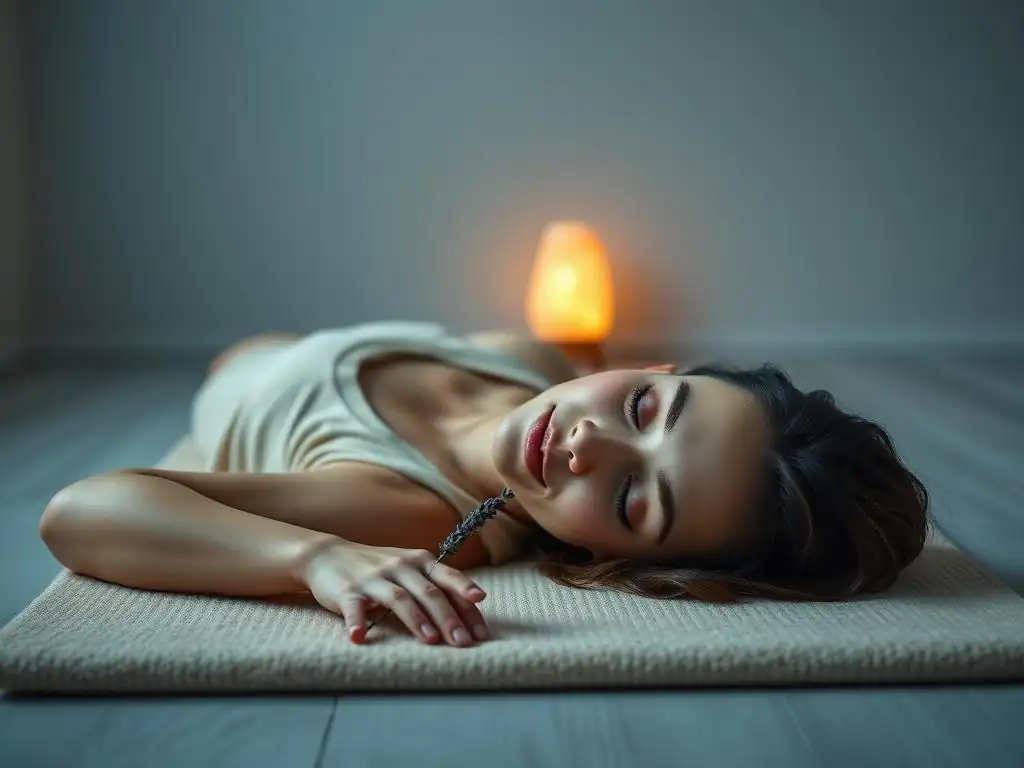
Preparing for Your PMR Session: Creating a Calm Environment
Before beginning your Progressive Muscle Relaxation practice, it's helpful to create an environment that supports relaxation. Choose a quiet space where you won't be interrupted. This could be your bedroom, a comfortable living room, or any other peaceful spot. Dim the lights or make the room dark, as light can signal wakefulness. Ensure the temperature is comfortable – not too hot or too cold.
Wear loose, comfortable clothing that doesn't restrict movement or breathing. You can practice PMR either lying down (which is often preferred if using it for sleep) or sitting comfortably in a chair with your feet flat on the floor and hands resting on your lap or armrests. The goal is to minimize external distractions and maximize physical comfort, setting the stage for your mind and body to relax fully.
Step 1: Tensing and Relaxing Your Facial Muscles for Anxiety Relief
Begin by focusing on your facial muscles. This area often holds significant tension due to stress and anxiety, manifesting as clenched jaws, furrowed brows, or strained eyes. Start with your forehead: raise your eyebrows as high as possible, feeling the tension across your forehead and scalp. Hold this tension for about 5-10 seconds. Notice the feeling of tightness.
Now, suddenly release the tension. Let your eyebrows drop back to their normal position. Allow your forehead to feel smooth and relaxed. Take a moment to notice the difference between the tense feeling and the relaxed feeling. Next, focus on your eyes and cheeks: squint your eyes tightly and clench your cheeks.
Hold for 5-10 seconds, feeling the strain. Then, release completely, letting your eyes and cheeks relax. Finally, clench your jaw tightly, pressing your teeth together (but without excessive force). Hold for 5-10 seconds, then release and let your jaw hang loose. Allow your tongue to rest naturally in your mouth.
Step 2: Releasing Tension in Your Neck and Shoulders
The neck and shoulders are notorious areas for storing tension, especially with anxiety. To address this, gently roll your shoulders forward, bringing them up towards your ears. Hold this hunched position, feeling the tension build in your neck and upper back. Hold for 5-10 seconds.
Exhale and drop your shoulders back down. Let them fall heavily, feeling the tension drain away. Notice the sensation of release and relaxation in your neck and shoulders. You can also gently tilt your head from side to side or forward and back (avoiding any movements that cause pain) to further enhance the sense of release in the neck area after tensing. Remember to breathe slowly and deeply throughout this process, allowing each exhale to assist in the release of tension.
Step 3: Focusing on Your Arms and Hands to Reduce Anxiety
Move your attention to your hands and arms. These are muscle groups where tension is often held unconsciously. Start with your dominant hand: make a tight fist, squeezing it as hard as you comfortably can. Feel the tension run up your forearm. Hold for 5-10 seconds.
Now, release the fist completely. Let your fingers uncurl and your hand become limp. Notice the warmth or tingling sensation as blood flow returns and the muscles relax. Repeat this process with your other hand. Then, tense both biceps by bending your elbows and making a muscle. Hold for 5-10 seconds, feeling the tension in your upper arms. Release and straighten your arms, letting them rest heavily. This systematic tensing and releasing throughout the arms helps to dissipate stored physical anxiety.
Step 4: Relaxing Your Chest, Stomach, and Back for Better Sleep
Next, focus on the large muscle groups in your torso, which are often affected by anxiety and can impede comfortable breathing and sleep. Start with your chest: take a deep breath and hold it tightly, tensing your chest and upper back. Hold for 5-10 seconds.
Exhale slowly and completely, letting the tension drain from your chest and back. Notice your breathing become more relaxed. Now, focus on your stomach: tighten your abdominal muscles as if preparing for a punch. Hold for 5-10 seconds. Release the tension, allowing your stomach to relax and soften. You might also gently arch your back slightly while lying down (if comfortable) to tense back muscles, hold, and then release, settling your back flat against the surface. Relaxing these core areas is crucial for promoting the physical ease necessary for sleep.
Step 5: Tensing and Relaxing Your Legs and Feet
Finally, move down to your legs and feet. Start with your thighs: tighten your thigh muscles by pressing your knees together or pressing your legs down (if lying) or straightening them slightly (if sitting). Hold for 5-10 seconds. Release the tension, letting your thighs relax completely.
Next, focus on your calves: point your toes towards your shins, feeling the tension in your calf muscles. Hold for 5-10 seconds. Release. Finally, curl your toes downward, scrunching the muscles in your feet. Hold for 5-10 seconds. Release completely, letting your feet feel loose and heavy. Work through each leg and foot individually or simultaneously. By systematically releasing tension from head to toe, you create a full-body state of relaxation conducive to sleep.
Deepening Your Relaxation: Focusing on Your Breath
After systematically tensing and releasing each muscle group, take a few moments to simply rest and notice the feeling of relaxation throughout your body. Your breath can be a powerful tool to deepen this state. Without trying to change it, simply observe your natural breathing pattern. Notice the gentle rise and fall of your chest and abdomen.
Now, begin to breathe slowly and deeply. Inhale gently through your nose, allowing your abdomen to expand. Exhale slowly through your mouth or nose, perhaps slightly longer than your inhale. Focus your attention entirely on the sensation of your breath entering and leaving your body. With each exhale, imagine any remaining tension or worry leaving your body. Continue this slow, deep breathing for several minutes, allowing yourself to sink further into a state of calm and readiness for sleep.
Ending Your PMR Session: Transitioning to Sleep
Once you have completed the systematic muscle tension and release sequence and spent time focusing on your breath, you should feel significantly more relaxed. If you are practicing PMR specifically to fall asleep, the goal is to allow yourself to drift off naturally from this relaxed state. Avoid the temptation to immediately get up or engage in stimulating activities.
If you are lying in bed, simply turn off any audio guidance (if using) and allow yourself to settle into a comfortable sleeping position. Continue to focus on your breath or the feeling of relaxation in your body until you fall asleep. If your mind starts to wander back to worries, gently redirect your attention back to the physical sensations of relaxation or your breathing. The practice aims to reduce the physical and mental arousal that prevents sleep, making the transition smoother.
Optimizing Your PMR Practice for Maximum Benefit
Timing is Key: When to Practice PMR for Sleep Anxiety
For managing sleep anxiety, the most effective time to practice PMR is right before bedtime. Performing the full sequence in bed, after you've completed your other nighttime routines, signals to your body that it's time to wind down and prepare for sleep. This helps to create a strong association between the technique, the location (bed), and the desired outcome (sleep).
However, if you find that practicing the full routine in bed is too stimulating or if you tend to fall asleep before finishing, you can adapt the timing. Some individuals find it helpful to do a longer session earlier in the evening, perhaps on a comfortable couch or mat, and then simply do a shorter, abbreviated version in bed focusing only on areas where they typically hold tension. Consistency is often more important than precise timing, so finding a schedule that you can stick to is crucial. Aim for at least 15-20 minutes per session.
Incorporating Mindfulness and Meditation with PMR
Combining PMR with mindfulness or meditation practices can significantly enhance its effectiveness as a relaxation technique for sleep anxiety. Mindfulness involves paying attention to the present moment without judgment, while meditation often involves focusing the mind on a single point, such as the breath or a mantra. Both cultivate awareness and the ability to detach from racing thoughts that fuel anxiety.
After completing the physical tension and release sequence of PMR, transitioning into a period of mindful breathing or a guided sleep meditation can deepen the state of relaxation. The physical relaxation achieved through PMR makes it easier to settle the mind for meditation. This combination helps to quiet both the body and the mind, addressing the physical arousal and cognitive rumination that contribute to sleep anxiety. Simply spending 5-10 minutes focusing on your breath or listening to a guided meditation after PMR can make a significant difference.
Adapting PMR to Your Individual Needs and Preferences
While a standard PMR script exists, it's important to adapt the practice to what works best for you. Not everyone experiences tension in the same muscle groups, and some may find certain parts of the routine more helpful than others. Pay attention to where you typically hold tension – is it your jaw, shoulders, or maybe your stomach? You might choose to spend extra time on these specific areas during your practice.
Furthermore, the intensity of the tension can be adjusted. You don't need to strain your muscles to the point of pain; a noticeable but comfortable level of tension is sufficient. If you have physical limitations or injuries, you can modify or skip certain muscle groups. For example, someone with knee pain might skip the leg tension exercises or modify them significantly. The goal is relaxation, so the technique should feel supportive, not painful or frustrating. Experiment with the pace, the order of muscle groups, and the duration of tension/release cycles to find what promotes the deepest relaxation for you.
Troubleshooting Common Challenges with PMR
Like any new skill, practicing PMR can come with challenges, especially when dealing with the frustration of sleep anxiety. A common issue is finding it difficult to "feel" the tension or relaxation, particularly in the beginning. This is normal; it takes practice to develop body awareness. Be patient and keep trying; the ability to distinguish between tension and relaxation improves over time.
Another challenge is the mind wandering. It's difficult to keep thoughts from popping up, especially anxious ones. When your mind drifts, gently acknowledge the thought without judgment and redirect your attention back to the physical sensations of tension and release, or your breath. Don't view mind-wandering as a failure. If tensing feels counterproductive or increases anxiety, you can modify the technique to focus solely on the release phase, simply allowing each muscle group to relax deeply without the preceding tension. Finding a comfortable position and ensuring the room is truly dark and quiet are also key to minimizing distractions.
Other Relaxation Techniques for Sleep Anxiety and Insomnia

Diaphragmatic Breathing: A Simple Technique for Anxiety Reduction
Diaphragmatic breathing, also known as deep belly breathing, is a fundamental relaxation technique that can be particularly effective for calming the nervous system and reducing anxiety before sleep. Unlike shallow chest breathing, which is associated with the stress response, diaphragmatic breathing engages the diaphragm, allowing for fuller oxygen exchange and activating the parasympathetic nervous system.
To practice, find a comfortable position, either lying down or sitting. Place one hand on your chest and the other on your abdomen, just below your rib cage. Inhale slowly through your nose, feeling your abdomen rise against your hand while your chest remains relatively still. Exhale slowly through your mouth, gently pursing your lips, feeling your abdomen fall. Focus on making your exhales slightly longer than your inhales. Practice for 5-10 minutes before bed. This simple technique provides a direct way to slow your heart rate and calm the physiological arousal associated with sleep anxiety.
Guided Imagery: Using Visualization to Promote Relaxation and Sleep
Guided imagery is a relaxation technique that involves creating mental pictures of peaceful scenes or situations to promote a sense of calm and well-being. For individuals struggling with sleep anxiety, visualizing a tranquil environment can help distract the mind from anxious thoughts and evoke feelings of safety and relaxation conducive to sleep.
You can use guided imagery by listening to pre-recorded scripts or creating your own. Imagine yourself in a serene place, like a quiet beach, a peaceful forest, or a cozy cabin. Engage all your senses: what do you see, hear, smell, feel? Focus on the details of this calming scene. If anxious thoughts arise, gently acknowledge them and guide your attention back to your peaceful imagery. This technique helps shift focus away from worries and activates the mind's capacity for creating calming experiences, making it a valuable addition to other relaxation techniques for sleep anxiety.
Mindfulness meditation, distinct from simple mindful breathing, involves paying non-judgmental attention to the present moment, including thoughts, feelings, and bodily sensations, without getting carried away by them. For sleep anxiety, mindfulness helps to cultivate an awareness of anxious thoughts without reacting to them or believing them implicitly.
By practicing mindfulness regularly, individuals can learn to observe their anxious thoughts about sleep as just thoughts, rather than immediate threats. This detachment reduces the power of these thoughts to trigger the stress response. A simple mindfulness practice for sleep anxiety might involve lying in bed and gently noticing your breath, bodily sensations, and any thoughts or feelings that arise, letting them pass without engaging with them. This practice helps to quiet the mental chatter and emotional reactivity that often keeps people awake, complementing physical relaxation techniques like PMR.
Long-Term Strategies for Managing Sleep Anxiety
Cognitive Behavioral Therapy for Insomnia (CBT-I): A Comprehensive Approach
While relaxation techniques for sleep anxiety like PMR offer immediate relief and coping mechanisms, addressing chronic sleep anxiety often requires a more comprehensive approach. Cognitive Behavioral Therapy for Insomnia (CBT-I) is a highly effective, evidence-based treatment that targets the underlying thoughts, feelings, and behaviors contributing to insomnia and sleep anxiety.
CBT-I typically involves several components, including stimulus control (associating the bed only with sleep and intimacy), sleep restriction (temporarily reducing time in bed to consolidate sleep), cognitive restructuring (challenging unhelpful beliefs about sleep), and relaxation techniques (like PMR or breathing exercises). Studies show that CBT-I can improve sleep onset latency and total sleep time significantly, often more effectively than sleep medication in the long term, with lasting results for approximately 70-80% of individuals who complete the therapy. It empowers individuals with strategies to change their relationship with sleep and anxiety.
Creating a Relaxing Bedtime Routine for Improved Sleep
A consistent and relaxing bedtime routine signals to your body and mind that it's time to wind down and prepare for sleep, helping to mitigate sleep anxiety. This routine should ideally start 60-90 minutes before your desired bedtime and involve calming activities.
Examples of activities to include are reading a physical book (avoiding screens which emit blue light), taking a warm bath, listening to quiet music or a podcast, gentle stretching or yoga, or practicing one of the relaxation techniques for sleep anxiety discussed, such as PMR or deep breathing. It's crucial to avoid stimulating activities like intense exercise, working, engaging in stressful conversations, or consuming caffeine or alcohol close to bedtime. Consistency is key; performing the same sequence of calming activities each night helps train your body to recognize these signals as precursors to sleep.
The Role of Diet and Exercise in Managing Anxiety and Promoting Sleep
Lifestyle factors, including diet and exercise, play a significant role in managing overall anxiety levels and promoting healthy sleep patterns. Regular physical activity can act as a powerful stress reliever, helping to reduce the physiological arousal that contributes to sleep anxiety. Aim for moderate-intensity exercise most days of the week, but avoid vigorous workouts close to bedtime (within 2-3 hours).
Dietary choices also impact sleep and anxiety. Limiting caffeine, especially in the afternoon and evening, is crucial, as caffeine is a stimulant that can interfere with sleep onset and quality. Alcohol might initially make you feel sleepy, but it disrupts sleep later in the night.
Eating balanced meals and avoiding heavy meals close to bedtime can also support better sleep. Staying hydrated throughout the day is important, though reducing fluid intake closer to bedtime can minimize nighttime awakenings for bathroom trips. A holistic approach that includes healthy habits alongside relaxation techniques for sleep anxiety provides the strongest foundation for restful sleep.
Conclusion: Embracing Relaxation Techniques for a Better Night's Sleep
PMR as a Tool for Long-Term Anxiety and Sleep Management
Progressive Muscle Relaxation stands out as a powerful and accessible relaxation technique for sleep anxiety. By systematically addressing the physical tension that often accompanies worry, PMR provides a direct pathway to calm the nervous system and create a state conducive to sleep. Its effectiveness is backed by research and its practice empowers individuals with a tangible skill they can use whenever sleep anxiety strikes. While it may require consistent practice to master, the ability to consciously release tension is an invaluable tool for managing both acute nighttime anxiety and chronic stress.
Integrating PMR into a regular routine, especially before bed, can help break the negative association between bedtime and anxiety, replacing it with a positive association with relaxation. For many, it becomes a cornerstone of their sleep hygiene, offering a natural way to transition from the demands of the day to the restfulness of the night. When combined with other strategies like mindful breathing or part of a larger CBT-I program, PMR's benefits for anxiety and sleep disorders are amplified, offering a path towards more consistent and restorative sleep.
Taking the First Step Towards a More Restful Life
If you're struggling with sleep anxiety, know that you are not alone, and effective strategies are available. Embracing relaxation techniques for sleep anxiety, such as Progressive Muscle Relaxation, is a significant first step towards reclaiming control over your sleep and reducing the grip of nighttime worry. Start small, perhaps by practicing PMR for just 10-15 minutes each night. Be patient with yourself; mastering relaxation takes time and practice.
By consistently applying these techniques and exploring other supportive strategies like improving sleep hygiene, managing daytime stress, and considering therapies like CBT-I, you can significantly improve your relationship with sleep. Taking action to address sleep anxiety not only leads to more restful nights but also enhances your overall well-being during the day. Committing to these practices is an investment in your health and peace of mind, paving the way for a calmer, more restorative life.
Frequently Asked Questions
What is Progressive Muscle Relaxation (PMR) and how does it relate to sleep anxiety?
PMR is a relaxation technique involving tensing and releasing different muscle groups. It helps reduce sleep anxiety by promoting physical and mental calmness, making it easier to fall asleep.
How does PMR specifically target the anxieties that keep me awake at night?
By focusing on the physical sensations of tension and release, PMR helps shift your focus away from anxious thoughts. This mind-body connection reduces the overstimulation that often fuels sleep anxiety.
How often should I practice PMR to see improvements in my sleep quality?
Consistency is key. Aim to practice PMR daily, ideally before bed. With regular practice, you should begin to see improvements in your sleep quality within a few weeks.
Are there any risks or side effects associated with practicing PMR?
PMR is generally safe. However, if you have any pre-existing muscle injuries or chronic pain, consult your doctor before starting. Listen to your body and avoid tensing muscles too forcefully.
Where can I find guided PMR exercises to help me get started?
Mind Care Guide and other reputable mental health resources offer audio recordings and step-by-step guides for PMR. You can also find them on YouTube and other streaming platforms.
Final Reflection: Unlocking the Power of Calm for Restful Sleep
Progressive muscle relaxation isn't just a technique; it's a pathway to reclaiming your nights from the grip of sleep anxiety. The pervasive nature of stress and anxiety in modern life makes finding peaceful sleep a daily challenge for millions. This article explored a simple yet powerful tool to combat this, offering a practical and accessible method for anyone struggling to quiet their racing mind before bed.
The impact of chronic sleep deprivation extends far beyond mere tiredness; it affects our mood, productivity, and overall well-being. Learning to consciously relax our bodies, as progressive muscle relaxation teaches, is a crucial step in addressing this widespread issue. The body achieves what the mind believes.
This quote highlights the profound mind-body connection, emphasizing that by training our bodies to relax, we directly influence our mental state and pave the way for restful sleep.
You now possess a valuable tool to navigate the challenges of sleep anxiety. I encourage you to integrate progressive muscle relaxation into your nightly routine. Start small, be patient with yourself, and experience the transformative power of consciously releasing tension. Remember, the journey to peaceful sleep begins with a single, mindful breath and the gentle release of tension in your muscles. Embrace the calm, and reclaim the restorative power of sleep.
Unwind Your Worries: Master Relaxation Tonight
Thanks for taking the time to explore the power of progressive muscle relaxation! You've now learned a valuable tool to combat sleep anxiety and find calm amidst the chaos. Ready to put your newfound knowledge into practice?
- Begin your relaxation journey tonight: Set aside 15 minutes before bed to practice the techniques outlined in the article. Focus on even just one muscle group if that's all you have time for.
- Share your experience: Tell us in the comments how your first relaxation session went – what worked best for you, and what challenges you encountered. Your insights might help others on their path to peaceful sleep.
- Consider exploring guided meditation apps: Many free apps offer guided progressive muscle relaxation exercises to support your practice.
So, what small step will you take tonight to prioritize your relaxation and improve your sleep?