
Finding Meaning in Uncertainty: Embracing the Unknown Spiritually


Welcome to Mind Care Guide, your sanctuary for navigating the complexities of mental well-being.
Feeling adrift in a sea of uncertainty? You're not alone. This is a space where we understand the anxieties that arise when the future feels unclear. Let's explore how you can find solace and strength through spiritual practices. Dive into our comprehensive guide on spiritually coping with uncertainty anxiety and discover tools to cultivate inner peace amidst the unknown. Are you ready to uncover a path toward resilience and a deeper connection to yourself?
- Understanding Uncertainty and Its Impact on Mental Health
- Spiritually Coping with Uncertainty Anxiety: Practical Approaches
- The Benefits of Spiritually Coping with Uncertainty
-
Frequently Asked Questions
- How can spirituality help me cope with uncertainty anxiety?
- What are some spiritual practices I can use to manage uncertainty anxiety?
- How does finding meaning in uncertainty help reduce anxiety?
- What if I'm not traditionally religious, can spirituality still help?
- How can I start exploring my spirituality to cope with uncertainty anxiety?
- Final Reflection: Finding Peace in the Unfolding Mystery
- Ignite Your Inner Compass: Embrace the Journey
Understanding Uncertainty and Its Impact on Mental Health
Life is inherently unpredictable, a truth that becomes especially apparent during times of significant change, global events, or personal challenges. While a degree of uncertainty is normal, prolonged or intense periods can significantly strain our mental and emotional resources. This section explores how the unknown affects our psychological state and introduces the concept of spiritually coping with uncertainty anxiety as a powerful pathway to resilience.
The Psychological Effects of Uncertainty
Uncertainty is a primary driver of anxiety. When faced with unknown outcomes, our brains, wired for prediction and safety, perceive a potential threat. This can trigger the 'fight or flight' response, leading to physical symptoms like increased heart rate, muscle tension, and digestive issues, alongside psychological distress.
Research consistently shows a strong correlation between intolerance of uncertainty and various anxiety disorders, including generalized anxiety disorder (GAD) and obsessive-compulsive disorder (OCD). For instance, studies have indicated that individuals with high intolerance of uncertainty are significantly more likely to develop GAD, with some estimates suggesting this trait accounts for a substantial portion of the variance in worry levels. The constant mental effort required to anticipate potential problems or outcomes becomes exhausting, diminishing cognitive resources and impacting daily functioning.
Moreover, uncertainty erodes our sense of control, a fundamental human need. When we feel we cannot predict or influence future events, feelings of helplessness and powerlessness can emerge. This lack of control fuels fear, as the mind races through worst-case scenarios.
Consider the anxiety experienced by many during the initial phase of the COVID-19 pandemic in early 2020; the sheer lack of information about the virus, its spread, and its long-term impact created widespread psychological distress. Surveys from that period revealed significant increases in reported anxiety and depression symptoms globally, directly linked to the pervasive uncertainty. Learning to navigate this discomfort, rather than seeking absolute control, is key to managing the psychological burden of the unknown.
Spiritual Perspectives on Uncertainty
Across various spiritual traditions, the concept of impermanence is central. Eastern philosophies like Buddhism teach that all things are in a constant state of flux; clinging to permanence is seen as a source of suffering. Embracing this truth allows for acceptance of the transient nature of life, including its inherent uncertainties.
The Buddhist concept of anicca (impermanence) encourages mindfulness of the present moment and detachment from fixed outcomes, offering a framework for spiritually coping with uncertainty anxiety by acknowledging that change is the only constant. Similarly, Taoism emphasizes living in harmony with the flow of the Tao, accepting the natural unfolding of events without resistance. These perspectives don't deny the difficulty of uncertainty but offer a lens through which it can be viewed as a natural part of existence, rather than a personal failure or threat.
Abrahamic religions, such as Christianity, Judaism, and Islam, often emphasize trust and faith in a divine plan or higher power. While acknowledging the human desire for certainty, these traditions encourage surrendering anxieties and fears to God. The idea that there is a purpose or order, even if not fully understood, can provide solace and a sense of security amidst chaos.
For example, in Christianity, verses like Philippians 4:6-7 encourage believers to "not be anxious about anything, but in every situation, by prayer and petition, with thanksgiving, present your requests to God." This practice of casting anxieties upon a higher power is a direct form of spiritually coping with uncertainty anxiety, shifting the burden from the individual to a perceived divine providence. This trust doesn't eliminate challenges but offers a foundation of hope and reliance that transcends immediate circumstances.
Spiritually Coping with Uncertainty Anxiety: Practical Approaches
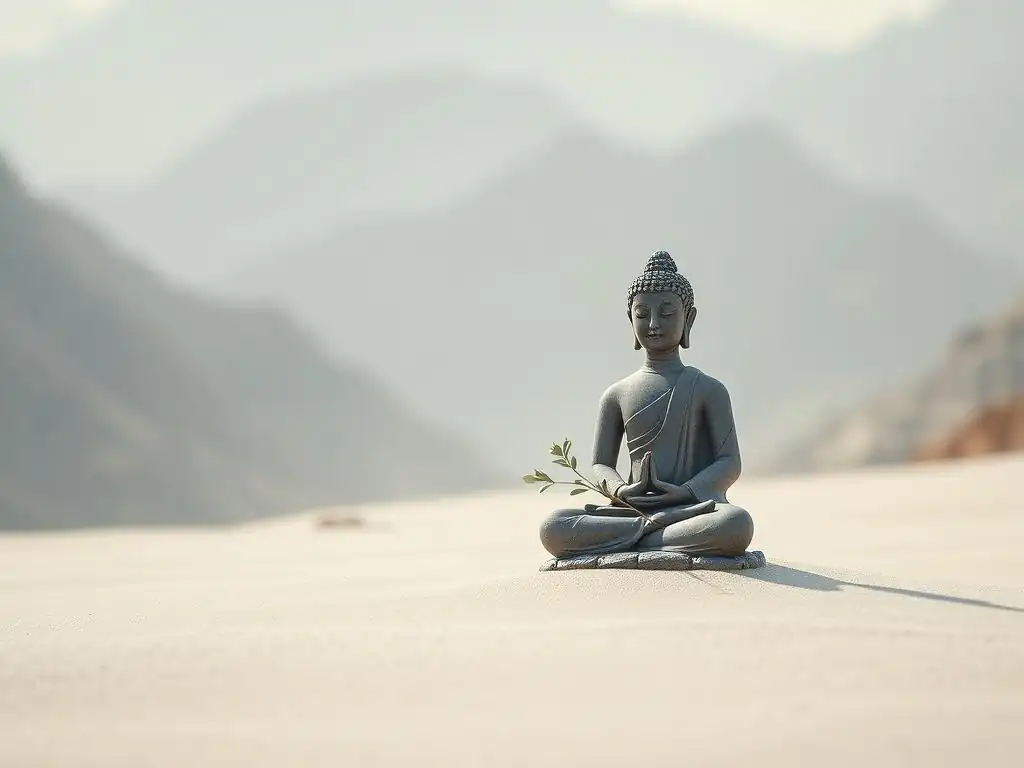
Engaging with spiritual practices can provide profound tools for navigating the discomfort and fear associated with uncertainty. These approaches often involve cultivating inner peace, fostering connection, and reframing challenges within a broader context of meaning and purpose. Spiritually coping with uncertainty anxiety moves beyond just managing symptoms; it seeks to address the root discomfort by strengthening one's inner core and connection to something larger than oneself.
Cultivating Mindfulness and Presence
Mindfulness is the practice of intentionally bringing one's attention to the present moment without judgment. When uncertainty triggers anxious thoughts about the future, mindfulness acts as an anchor, pulling the mind back to the here and now.
Regular mindfulness meditation, even for just 10-15 minutes daily, has been shown in numerous studies to reduce activity in the amygdala, the brain region associated with fear and anxiety. By observing thoughts and feelings without getting swept away by them, individuals can create a space between the trigger (uncertainty) and the reaction (anxiety), learning to experience the discomfort without being consumed by it.
Practicing presence throughout the day involves consciously engaging with sensory experiences – the taste of food, the feeling of the chair, the sounds around you. This simple act grounds you in reality, interrupting the cycle of worry about potential future events. Using sensory awareness, such as focusing on the sensation of breath or the feeling of your feet on the ground, provides immediate, tangible anchors when the mind feels adrift in uncertainty.
For instance, if a difficult financial situation is causing anxiety, taking a moment to simply feel the solidity of the ground beneath you can offer a small but significant shift away from overwhelming future-oriented worries, helping you to be present and better able to think clearly about current steps. This focus on presence is a foundational technique in spiritually coping with uncertainty anxiety.
Connecting with a Higher Power or Inner Wisdom
For many, connecting with a higher power provides immense comfort during uncertain times. Prayer, whether structured or spontaneous, offers a means to voice fears, seek guidance, and express trust. Affirmations, positive statements aligned with one's spiritual beliefs (e.g., "I am guided," "I am safe," "All is well"), can help reprogram anxious thought patterns.
A 2018 study on the effects of prayer found that it was associated with lower levels of anxiety and greater emotional well-being among participants facing significant life stressors. These practices reinforce a sense of not being alone and can foster belief in a benevolent force or order guiding events.
Seeking guidance through spiritual practices can take many forms, including reading sacred texts, consulting spiritual mentors, or engaging in contemplative practices like silent reflection or walking meditations. These activities can offer new perspectives on challenges and reinforce core beliefs that provide stability. Trusting your intuition, often seen as a form of inner wisdom or divine guidance, is also crucial during uncertain times.
Learning to listen to that quiet inner knowing, rather than being solely driven by fear, can help in making decisions or simply finding peace with not having all the answers immediately. This cultivation of inner connection is a vital aspect of spiritually coping with uncertainty anxiety.
Embracing Acceptance and Letting Go
The human tendency is to resist what is uncomfortable, and uncertainty is certainly uncomfortable. However, spiritual traditions often teach that resistance prolongs suffering. The power of acceptance lies not in liking the uncertain situation, but in acknowledging its reality without fighting against it.
This radical acceptance frees up energy that was previously spent on resistance and worry, allowing for a more peaceful state. As the serenity prayer states, "Grant me the serenity to accept the things I cannot change, the courage to change the things I can, and the wisdom to know the difference." This wisdom is central to spiritually coping with uncertainty anxiety.
Spiritual practices for letting go of control can include symbolic rituals, journaling to release worries, or simply repeating a mantra of surrender. For example, some traditions use the practice of metaphorically placing burdens in the hands of a higher power. This isn't about passive resignation but about releasing the need to control outcomes that are genuinely beyond one's influence. Finding peace in surrendering to the unknown involves recognizing that while you can influence your actions and attitude, the future remains open. This surrender allows for a deeper trust in the unfolding of life, even when it's unpredictable.
Finding Meaning and Purpose Amidst Uncertainty

Uncertainty can strip away familiar structures and routines, forcing us to confront fundamental questions about what truly matters. Identifying your core values and guiding principles becomes particularly important during these times. Are you guided by compassion, creativity, integrity, or resilience? Anchoring yourself in these values provides a compass when external circumstances are shifting. For instance, if compassion is a core value, uncertainty might become an opportunity to practice kindness towards yourself and others facing similar challenges, giving the situation a deeper meaning.
Creating a meaningful life despite uncertainty involves focusing on what you can control – your responses, your actions, and how you choose to spend your time and energy. It's about building meaning from the inside out. Uncertainty can paradoxically serve as a powerful catalyst for growth.
When faced with the unknown, people are often pushed outside their comfort zones, leading to the development of new skills, perspectives, and a deeper understanding of their own capabilities. A study published in the Journal of Personality and Social Psychology in 2006, focusing on post-traumatic growth, highlighted how confronting significant life challenges, often characterized by immense uncertainty, can lead to positive psychological changes, including a greater appreciation for life and a stronger sense of personal strength. This reframing of uncertainty as an opportunity is a key element in spiritually coping with uncertainty anxiety.
Building Resilience Through Spiritual Practices
Resilience is the ability to bounce back from adversity, and spiritual practices are potent tools for strengthening this capacity. Practices like meditation, prayer, and connecting with a spiritual community can foster a sense of inner stability and belonging, which are critical components of resilience. For example, regular meditation has been shown to increase grey matter in brain regions associated with emotional regulation and self-awareness, effectively building the neural pathways for handling stress and uncertainty.
Developing a strong sense of self, rooted not in external achievements or circumstances but in one's intrinsic worth and spiritual identity, provides a stable foundation when the external world feels shaky. Nurturing hope and optimism, often seen as spiritual virtues, is also vital. Hope is not a naive belief that everything will be easy, but a quiet confidence that meaning and possibility exist even in difficult times.
This can be cultivated through focusing on past instances of overcoming challenges, connecting with inspiring stories, or simply choosing to look for the 'light' or lessons within the uncertainty. These spiritual tools collectively equip individuals for spiritually coping with uncertainty anxiety and building enduring resilience.
The Benefits of Spiritually Coping with Uncertainty
Embracing spiritual approaches to uncertainty offers a wide range of benefits that extend beyond simply managing anxiety symptoms. It fosters a deeper connection with oneself, others, and the world, leading to a more fulfilling and peaceful life. Spiritually coping with uncertainty anxiety is not just a coping mechanism; it's a path towards holistic well-being.
Improved Mental and Emotional Well-being
Perhaps the most immediate benefit is a reduction in anxiety and stress levels. By cultivating presence, acceptance, and trust, spiritual practices interrupt the cycle of worry and fear that uncertainty often triggers. This leads to increased feelings of peace and calm, replacing frantic energy with a sense of groundedness. A meta-analysis of over 200 studies on meditation, for instance, found consistent evidence for its effectiveness in reducing symptoms of anxiety and depression.
Furthermore, spiritual practices enhance emotional regulation. Instead of being overwhelmed by difficult emotions like fear or frustration, individuals develop the capacity to observe these feelings without being controlled by them. They learn to respond thoughtfully rather than react impulsively to uncertain situations. This improved emotional landscape allows for greater clarity, better decision-making, and a more stable internal state, crucial for spiritually coping with uncertainty anxiety effectively.
Deeper Sense of Meaning and Purpose
Navigating uncertainty through a spiritual lens often reveals deeper layers of meaning in life's challenges. Difficult periods can become crucibles for personal growth, empathy, and a re-evaluation of priorities. Finding meaning in difficult times transforms suffering from senseless hardship into a purposeful journey. This process often leads to living a more authentic and fulfilling life, aligned with one's core values and spiritual beliefs, rather than external expectations or material pursuits.
This approach also strengthens the connection to something greater than oneself – whether that's a higher power, humanity, nature, or a universal consciousness. This connection combats feelings of isolation and provides a sense of belonging and shared experience, offering solace and strength when facing the unknown. This profound sense of connection is a cornerstone of spiritually coping with uncertainty anxiety and living a life rich in purpose.
Enhanced Resilience and Adaptability
Spiritual practices build inner strength, making individuals more resilient in the face of change and adversity. They develop a greater ability to cope with change not just by enduring it, but by seeing it as a natural part of life's flow. This leads to increased flexibility and openness to new experiences and possibilities that arise from uncertainty.
Finally, spiritually grounded individuals often exhibit improved problem-solving skills. With a calmer mind and a broader perspective gained from their practices, they are better equipped to assess situations, identify potential solutions, and act effectively, even when the path forward is not entirely clear. They approach challenges with a blend of faith, practicality, and inner wisdom, demonstrating the powerful impact of spiritually coping with uncertainty anxiety on overall resilience and adaptability.
Frequently Asked Questions
How can spirituality help me cope with uncertainty anxiety?
Spirituality offers a sense of purpose and meaning beyond the material world, providing a framework for understanding and accepting the unknown. It can help you find inner peace amidst chaos.
What are some spiritual practices I can use to manage uncertainty anxiety?
Practices like meditation, prayer, mindfulness, and connecting with nature can help ground you in the present moment and reduce anxious thoughts about the future. These practices foster inner resilience and emotional regulation.
How does finding meaning in uncertainty help reduce anxiety?
When you find meaning, even in difficult situations, it shifts your focus from the fear of the unknown to the potential for growth and learning. This creates a sense of agency and control over your response to anxiety.
What if I'm not traditionally religious, can spirituality still help?
Absolutely! Spirituality doesn't necessarily require religious affiliation. It's about connecting to something larger than yourself, finding inner peace, and living with purpose and intention.
How can I start exploring my spirituality to cope with uncertainty anxiety?
Begin by exploring different practices like mindfulness, journaling, or spending time in nature. Focus on what resonates with you and helps you feel grounded and connected. Experiment and be patient with yourself as you discover your own path.
Final Reflection: Finding Peace in the Unfolding Mystery
The persistent anxieties surrounding uncertainty are not merely modern woes; they are a fundamental human experience, amplified in our rapidly changing world. The ability to find meaning and peace amidst the unknown, however, is not a passive acceptance of chaos, but an active cultivation of spiritual resilience. This article has explored various spiritual practices and perspectives that can help us navigate the turbulent waters of uncertainty, transforming anxiety into a catalyst for growth.
The journey of embracing uncertainty is not a linear path; it's a continuous process of letting go and trusting in something larger than ourselves. It's a journey I've personally undertaken, learning to find solace in the present moment rather than clinging to the illusion of control. This process has been profoundly transformative, teaching me the importance of self-compassion and the power of faith, however that faith is defined. The oak sleeps in the acorn; the bird waits in the egg; and in the highest vision of the soul a waking angel stirs. Dreams are the seedlings of realities.
- James Allen. This quote beautifully captures the potential for growth and transformation that lies dormant within the uncertainty we face.
Now, I invite you to reflect on your own relationship with uncertainty. What spiritual practices resonate with you? How can you cultivate a deeper sense of trust and acceptance in the face of the unknown? Embrace the unfolding mystery of your life, not with fear, but with curiosity and a courageous heart. The path to peace lies not in eliminating uncertainty, but in learning to dance with it.
Ignite Your Inner Compass: Embrace the Journey
Thanks for taking the time to explore the power of spiritual growth amidst uncertainty. We hope you've gained new perspectives on navigating life's unpredictable path. Now, it's time to put these insights into action!
- Start a daily mindfulness practice: Even 5 minutes of quiet reflection can make a world of difference in finding inner peace. Consider trying a guided meditation or simply focusing on your breath.
- Share your reflections: Connect with others on their spiritual journeys. Discuss your insights and experiences with friends, family, or in an online community. This shared experience can deepen your understanding and provide support.
- Uncover your unique spiritual path: Take some time to reflect on what truly resonates with you. Explore different practices, beliefs, and perspectives to find what best nurtures your soul. This is your journey – be brave enough to explore!
What unique spiritual practice are you most inspired to explore today?