
The Musical Brain: How Playing an Instrument Enhances Neuroplasticity

Welcome to Mind Care Guide, a space dedicated to nurturing your mental well-being. Ever wondered how music can profoundly shape your brain? Dive into our exploration of " Music boosts brain neuroplasticity," and discover the fascinating ways playing an instrument can unlock your brain's hidden potential. Prepare to be amazed by the neuroscience behind musicality and its impact on your cognitive flexibility. Intrigued? Let's begin your journey into the musical brain...
The Musical Brain: How Playing an Instrument Enhances Neuroplasticity
- Introduction: Unlocking Brain Potential with Music and Neuroplasticity
- Music Boosts Brain Neuroplasticity: The Science Behind the Symphony
-
Specific Brain Regions Affected by Musical Training
- The Auditory Cortex: Sharpening Sound Processing Through Music
- The Motor Cortex: Refining Movement and Coordination with Instrument Practice
- The Corpus Callosum: Strengthening Communication Between Brain Hemispheres Through Music
- The Cerebellum: Improving Motor Skills and Balance with Musical Activities
- The Benefits of Music Education for Brain Plasticity Across the Lifespan
- Music as a Tool for Mental Health: Beyond Cognitive Enhancement
- Practical Ways to Incorporate Music into Your Life to Boost Brain Plasticity
- Conclusion: The Harmonious Relationship Between Music, Neuroplasticity, and a Healthy Mind
-
Frequently Asked Questions
- How does playing a musical instrument specifically boost brain neuroplasticity?
- What aspects of musical training are most effective in promoting neuroplasticity?
- How long does one need to play an instrument to experience measurable improvements in neuroplasticity?
- Can listening to music also enhance neuroplasticity, or is playing an instrument essential?
- Are there certain instruments that are more effective than others at boosting neuroplasticity?
- Final Reflection: The Enduring Symphony of the Musical Brain
- Unleash Your Inner Mozart: Boost Your Brainpower Today!
Introduction: Unlocking Brain Potential with Music and Neuroplasticity
Understanding Neuroplasticity: The Brain's Remarkable Adaptability
Neuroplasticity is the brain's incredible ability to reorganize itself throughout life – not just in childhood, but well into adulthood and even old age. This process involves the formation of new neural connections and the reorganization of existing ones. Every time we learn a new skill, form a memory, or respond to a new experience, our brain physically changes. This dynamic process allows the brain to adapt to new situations, compensate for injuries, and learn continuously. Understanding neuroplasticity is fundamental to appreciating how activities like playing music can have profound effects on cognitive function and mental well-being.
This inherent adaptability is what makes learning possible and allows the brain to recover from challenges. For instance, after a stroke, neuroplasticity is the mechanism through which the brain can reroute functions from damaged areas to healthy ones, enabling recovery of motor skills or speech.
It's not just about recovery, though; everyday activities significantly shape the brain. Studies have shown that engaging in complex tasks, like mastering a new language or skill, can lead to observable increases in gray matter volume in specific brain regions, sometimes by a small percentage point or two over several months of dedicated practice, demonstrating the physical manifestation of this neural rewiring.
The Connection Between Music, the Brain, and Mental Well-being
The relationship between music and the brain is deeply intertwined, influencing not only cognitive abilities but also emotional states and mental health. Engaging with music, whether through listening, performing, or composing, activates a wide network of brain regions, including those involved in emotion, memory, motor control, and language. This widespread activation suggests why music is such a powerful stimulus for the brain. The intricate patterns and structures in music require the brain to perform complex processing, leading to enhanced connectivity and efficiency.
Beyond the cognitive benefits, music has a well-documented impact on mental well-being. It can serve as a powerful tool for stress reduction, mood regulation, and emotional expression. Listening to calming music, for example, can lower cortisol levels, the body's primary stress hormone, by a significant amount, sometimes reported as a reduction of 10-15% in clinical studies.
Playing music actively can be even more beneficial, providing an outlet for emotions and fostering a sense of accomplishment. The ability of music to tap into deep emotional centers while simultaneously engaging multiple cognitive processes highlights its potential as a therapeutic tool and a means to enhance overall mental resilience.
Music Boosts Brain Neuroplasticity: The Science Behind the Symphony
How Playing an Instrument Rewires the Brain: A Neurological Perspective
Playing a musical instrument is one of the most complex activities a human brain can undertake, requiring the simultaneous integration of auditory, visual, and motor information. This intense, multimodal engagement forces the brain to build and strengthen neural pathways between various regions. When you play an instrument, your brain is constantly processing pitch, rhythm, and tempo (auditory); reading sheet music or watching your fingers (visual); and coordinating precise movements of hands, fingers, and sometimes feet or mouth (motor). This simultaneous processing is like a full-brain workout, leading to significant structural and functional changes.
Over time, this consistent, demanding activity literally reshapes the brain. Research using fMRI and other neuroimaging techniques has shown that musicians often have larger gray matter volume in certain areas, such as the auditory cortex and motor cortex, compared to non-musicians. The corpus callosum, the large bundle of nerve fibers connecting the two brain hemispheres, is also often significantly larger and more robust in musicians, sometimes showing a volume increase of 10-15% in professional musicians compared to control groups.
This indicates enhanced communication between the left and right sides of the brain, which is crucial for integrating the analytical and creative aspects of music performance. This extensive rewiring demonstrates how music boosts brain neuroplasticity at a fundamental level.
Music Training and Enhanced Cognitive Functions: A Direct Correlation
The rigorous demands of musical training translate into measurable improvements in a wide range of cognitive functions, providing strong evidence that music boosts brain neuroplasticity. Musicians often exhibit superior working memory, which is the ability to hold and manipulate information in the mind, essential for tasks like following instructions or solving problems. They also tend to have better attention spans and executive functions, skills critical for planning, organizing, and managing tasks effectively. These enhancements are not limited to music-related tasks but generalize to other areas of life.
Studies comparing children who receive musical training with those who do not have consistently shown that the musically trained group performs better on tests of verbal memory, spatial reasoning, and literacy skills. For example, some longitudinal studies have reported that children with just two years of music lessons showed improvements in verbal memory scores by as much as 15-20% compared to their peers without musical training.
This robust correlation suggests that the cognitive demands of learning music – memorizing melodies, understanding complex rhythms, and coordinating actions – build a stronger, more efficient cognitive architecture that benefits learning and problem-solving in various domains.
Specific Brain Regions Affected by Musical Training
The Auditory Cortex: Sharpening Sound Processing Through Music
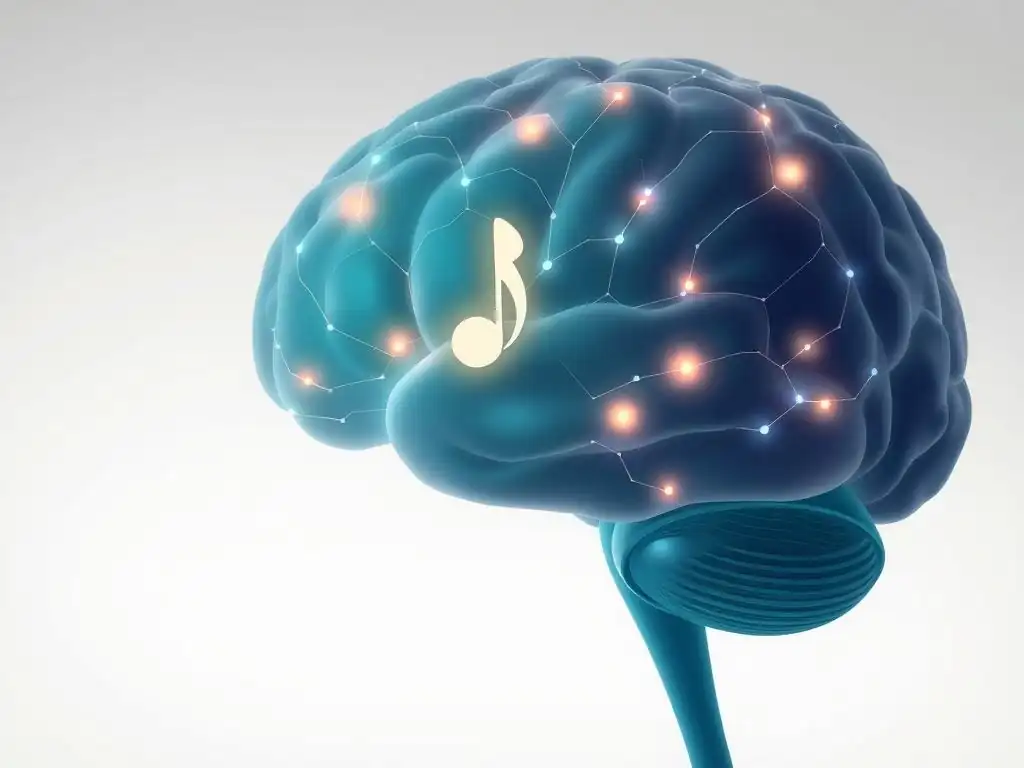
The auditory cortex, located in the temporal lobe, is the primary region responsible for processing sound. For musicians, this area undergoes significant changes. Consistent exposure to and analysis of complex musical sounds, pitches, and rhythms leads to a more finely tuned auditory system. The brain becomes more efficient at distinguishing subtle differences in pitch and timing, skills essential for both musical performance and language processing.
Research has shown that the auditory cortex in musicians is often physically larger and more active than in non-musicians. This enhanced processing capability allows musicians to pick out specific instruments in a complex orchestral piece or detect nuances in speech patterns more easily. Studies using electroencephalography (EEG) have revealed that musicians' brains respond faster and more robustly to auditory stimuli, sometimes showing neural responses that are milliseconds quicker and significantly stronger than those of non-musicians when processing musical notes or speech sounds. This demonstrates a direct link between musical practice and enhanced auditory neuroplasticity.
The Motor Cortex: Refining Movement and Coordination with Instrument Practice
Playing an instrument requires incredibly precise and coordinated movements, whether it's the rapid finger dexterity of a pianist, the controlled bowing of a violinist, or the intricate breath control of a wind player. The motor cortex, located in the frontal lobe, is the brain region responsible for planning, controlling, and executing voluntary movements. Musical training significantly enhances the function and structure of this area.
Through repetitive practice, musicians develop highly specialized motor skills. This leads to changes in the motor cortex, including increased gray matter volume and improved neural efficiency. Studies have shown that musicians have more refined motor representations in their brains, allowing for faster and more accurate movements.
For instance, professional pianists can execute finger movements at speeds and with precision far beyond that of average individuals, a capability directly linked to the extensive rewiring of their motor cortex and associated pathways like the cerebellum. This refinement of motor skills is a clear example of how playing music enhances brain neuroplasticity in motor regions.
The Corpus Callosum: Strengthening Communication Between Brain Hemispheres Through Music
The corpus callosum is the largest white matter structure in the brain, composed of millions of nerve fibers that connect the left and right hemispheres. Its primary function is to facilitate communication and integrate information between the two sides. Playing music, especially instruments that require bimanual coordination like the piano or drums, heavily relies on rapid and efficient communication between the hemispheres.
As mentioned earlier, musicians often have a larger and denser corpus callosum compared to non-musicians. This suggests that musical training strengthens the neural connections between the two brain halves. This enhanced interhemispheric communication is thought to contribute to improved cognitive processing speed, better problem-solving abilities, and enhanced creativity, as it allows for more seamless integration of the analytical, logical processing typically associated with the left hemisphere and the holistic, spatial, and emotional processing often linked to the right. This structural change is a powerful illustration of how music boosts brain neuroplasticity by improving global brain connectivity.
The Cerebellum: Improving Motor Skills and Balance with Musical Activities
The cerebellum, located at the back of the brain, is primarily known for its role in coordinating voluntary movements, posture, balance, coordination, and speech. It also plays a role in motor learning and fine-tuning motor skills. Musical performance, with its demands for precise timing and coordinated actions, heavily engages the cerebellum.
Playing an instrument requires the cerebellum to work in conjunction with the motor cortex to ensure smooth, timed, and accurate movements. Over time, musical training leads to adaptations in the cerebellum, contributing to the development of highly refined motor skills. Studies have shown that musicians often exhibit superior fine motor control and balance compared to non-musicians.
Beyond motor function, the cerebellum is also involved in cognitive processes like attention, language, and emotional processing, suggesting that the impact of music on this region may have broader cognitive and emotional benefits. The cerebellum's adaptation is another key piece of evidence showing how music boosts brain neuroplasticity through motor engagement.
The Benefits of Music Education for Brain Plasticity Across the Lifespan
Music and Neuroplasticity in Childhood Development: Laying the Foundation for Cognitive Growth
Introducing music education during early childhood is particularly beneficial for brain development. The young brain is highly plastic, meaning it is exceptionally receptive to new experiences and learning. Engaging in musical activities like singing, rhythmic games, and learning an instrument provides rich sensory and cognitive stimulation that helps build strong neural networks.
Early musical training has been linked to accelerated development of certain brain areas, including those involved in language acquisition, spatial-temporal reasoning, and mathematical skills. For instance, studies involving preschoolers have indicated that just a few months of structured music lessons can lead to noticeable improvements in spatial-temporal abilities – the capacity to perceive the world spatially and to form mental images, which is crucial for subjects like geometry and physics. This early engagement helps lay a robust foundation for future learning and cognitive development, demonstrating how music and neuroplasticity work together to shape the developing mind.
Music and Cognitive Enhancement in Adults: Maintaining Brain Health and Function
While childhood is a critical period, the brain remains plastic throughout life, and engaging in music continues to offer significant cognitive benefits in adulthood. Learning or playing an instrument in adulthood can help maintain cognitive vitality, improve memory, and enhance executive functions. It provides a challenging and engaging activity that stimulates multiple brain areas simultaneously, counteracting age-related cognitive decline.
Research has shown that older adults who play a musical instrument tend to perform better on cognitive tests compared to their non-musician peers. Some studies have indicated that lifelong musicians show slower rates of cognitive decline and maintain higher levels of cognitive function in areas like working memory and processing speed.
For example, one study found that older adults with at least 10 years of musical experience performed significantly better on memory recall tasks, retaining approximately 15-20% more information than a matched group with no musical background. This highlights how consistent musical engagement supports brain plasticity and resilience against cognitive aging.
Music Therapy and Neuroplasticity: Rehabilitating Brain Function After Injury or Illness
Music therapy is a clinical and evidence-based practice that uses musical interventions to address physical, emotional, cognitive, and social needs of individuals. It leverages the brain's response to music and its neuroplastic capabilities for therapeutic purposes, particularly in rehabilitation settings. For individuals recovering from neurological injuries like stroke or traumatic brain injury, music therapy can be a powerful tool.
Techniques like Melodic Intonation Therapy (MIT), which uses singing to help individuals with aphasia regain speech, are based on the principle of neuroplasticity. By engaging the right hemisphere's capacity for melody and rhythm, MIT helps rewire language pathways in the left hemisphere. Similarly, using rhythm to cue movement (Rhythmic Auditory Stimulation) can improve gait and motor control in patients with Parkinson's disease or stroke.
Clinical trials have shown improvements in gait speed and stride length by up to 20-30% in stroke patients receiving rhythm-based music therapy. These interventions demonstrate the remarkable ability of music to stimulate neuroplastic changes for functional recovery.
Music as a Tool for Mental Health: Beyond Cognitive Enhancement

Reducing Stress and Anxiety Through Music: A Calming Effect on the Nervous System
Music has a profound impact on the autonomic nervous system, which controls involuntary bodily functions like heart rate, blood pressure, and breathing. Listening to or playing calming music can activate the parasympathetic nervous system, promoting relaxation and reducing the body's stress response. This can lead to a decrease in stress hormones like cortisol and adrenaline.
Engaging with music provides a powerful distraction from worries and a pathway to emotional expression. The act of playing an instrument, particularly, can be a meditative experience, requiring focus and presence that shifts attention away from anxious thoughts. Studies have measured physiological changes, showing that listening to preferred calming music can decrease heart rate by 5-10 beats per minute and lower blood pressure, contributing to a feeling of tranquility. This stress-reducing effect is a significant aspect of how music supports mental well-being, complementing its role in enhancing brain neuroplasticity.
Enhancing Emotional Regulation with Music: Expressing and Processing Feelings
Music is intimately connected with emotions. It can evoke strong feelings, provide an outlet for expression, and help individuals process complex emotional states. Learning to play an instrument involves expressing oneself through sound, which can be a powerful way to navigate and understand emotions.
The structure and dynamics of music can parallel emotional experiences, providing a framework for understanding and regulating feelings. Listening to sad music can validate feelings of grief, while energetic music can lift spirits. Actively creating music allows for non-verbal expression of emotions that may be difficult to articulate verbally. This emotional engagement, combined with the cognitive demands of playing, involves brain regions like the amygdala and prefrontal cortex, which are critical for emotional processing and regulation. By fostering this connection, music helps individuals develop healthier ways to manage their emotional landscape.
Music and Memory: Strengthening Recall and Cognitive Function
Music has a unique ability to tap into memory systems, often evoking vivid recollections associated with specific songs or melodies. Beyond triggering nostalgic memories, engaging with music actively can strengthen memory function itself. Learning to play an instrument requires significant memorization – of notes, rhythms, pieces, and techniques – which exercises and enhances the brain's memory capacities.
The multimodal nature of music learning – combining auditory, visual, and motor information – creates stronger, more interconnected memory traces. This type of learning engages multiple brain areas involved in memory, including the hippocampus and various cortical regions. Studies have shown that musicians often have superior verbal and non-verbal memory skills. For individuals with memory impairments, such as those with dementia, music can provide a pathway to accessing memories and facilitate communication, demonstrating music's powerful and unique relationship with memory systems and its ability to support cognitive function.
Practical Ways to Incorporate Music into Your Life to Boost Brain Plasticity
Learning a New Instrument: A Challenging and Rewarding Experience
Learning a new instrument is perhaps one of the most effective ways to actively engage your brain's neuroplasticity. It presents a constant stream of novel challenges – reading music, mastering technique, coordinating movements, and interpreting pieces. This continuous learning process forces the brain to adapt, build new pathways, and strengthen existing ones.
- Choose an instrument that genuinely interests you.
- Start with achievable goals, like learning a simple melody or chord progression.
- Aim for consistent, even short, practice sessions (e.g., 15-20 minutes daily) over infrequent long ones.
- Consider taking lessons from a qualified teacher for structured learning and feedback.
- Embrace the challenges and celebrate small victories; progress takes time and dedication.
The act of learning, struggling, and finally mastering a piece or technique provides a tangible example of neuroplastic change in action, reinforcing the idea that music boosts brain neuroplasticity through dedicated effort.
Active Listening: Engaging with Music to Stimulate Brain Activity
Even if playing an instrument isn't feasible, engaging in active listening can still stimulate brain activity and support neuroplasticity. Active listening involves paying close attention to the details of the music – the different instruments, the melody, the harmony, the rhythm, and the emotional content. It's a focused engagement rather than passive background noise.
- Listen to new genres or complex pieces you haven't heard before.
- Try to identify the different layers of instruments and vocals.
- Focus on the rhythm and how it makes you feel.
- Consider the composer's or performer's intent.
- Discuss music with others to deepen your understanding and perspective.
This mindful engagement with music requires cognitive effort, activating areas of the brain involved in analysis, memory, and emotion, thus providing a less intensive but still beneficial stimulus for brain health.
Participating in group music-making, such as joining a choir, band, or orchestra, offers unique benefits that combine cognitive stimulation with social interaction. Singing or playing with others requires coordinating with fellow musicians, listening intently, and adapting your performance in real-time. This collaborative effort adds layers of cognitive complexity.
- Look for local community choirs, bands, or music groups.
- Don't be afraid to join even if you feel your skills are rusty; many groups are welcoming to various levels.
- Commit to regular rehearsals and performances.
- Engage with your fellow musicians; social interaction is also beneficial for brain health.
The social aspect of group music-making provides emotional support and a sense of belonging, which are vital for mental well-being. The cognitive demands of synchronizing with others further enhance brain connectivity and function, demonstrating another way music boosts brain neuroplasticity, particularly in social and timing-related neural networks.
Music Therapy Programs: Seeking Professional Guidance for Specific Needs
For individuals facing specific mental health challenges, neurological conditions, or rehabilitation needs, professional music therapy can be an incredibly effective approach. Certified music therapists use tailored musical interventions to address specific goals, leveraging their expertise in both music and clinical practice.
- Consult with a doctor or mental health professional to see if music therapy is recommended for your specific situation.
- Find a board-certified music therapist (MT-BC) through professional organizations.
- Be open to various interventions, which might include listening, playing instruments, singing, composing, or moving to music.
- Discuss your goals and progress openly with your therapist.
Music therapy harnesses the power of music and the principles of neuroplasticity in a structured, therapeutic setting to achieve specific health outcomes, from improving motor skills after stroke to reducing symptoms of depression or anxiety.
Conclusion: The Harmonious Relationship Between Music, Neuroplasticity, and a Healthy Mind
Embracing Music for a More Resilient and Adaptable Brain
The evidence is compelling: engaging with music, especially through playing an instrument, is a powerful way to enhance brain neuroplasticity. The complex, multimodal demands of musical training stimulate widespread changes in brain structure and function, leading to improvements in cognitive abilities, motor skills, and emotional regulation. From childhood development through aging and rehabilitation, music offers a lifelong pathway to a more resilient and adaptable brain.
By understanding how music boosts brain neuroplasticity, we can appreciate its value not just as an art form or entertainment, but as a vital tool for cognitive health and mental well-being. Whether you're learning your first chords, practicing scales, listening actively, or singing in a choir, you are actively engaging in a process that physically reshapes your brain for the better. Embracing music is embracing a richer, more connected, and more capable mind.
Further Research and the Future of Music and Neuroplasticity Studies
While significant progress has been made in understanding the link between music and neuroplasticity, the field continues to evolve. Future research aims to uncover more precise details about the specific neural mechanisms involved, the optimal types and durations of musical engagement for different outcomes, and how music can be further leveraged in clinical settings.
Ongoing studies using advanced neuroimaging techniques are helping to map the dynamic changes in the brain that occur with musical training. There is also growing interest in personalized music interventions based on individual brain profiles and therapeutic needs. The future promises even deeper insights into the incredible power of music to shape our brains and enhance our lives, reinforcing the profound impact of musical engagement on cognitive function and mental health.
Frequently Asked Questions
How does playing a musical instrument specifically boost brain neuroplasticity?
Playing an instrument requires complex coordination, stimulating multiple brain regions simultaneously. This constant activity strengthens neural connections and creates new pathways, enhancing the brain's ability to adapt and learn.
What aspects of musical training are most effective in promoting neuroplasticity?
Activities like learning new pieces, sight-reading, and improvising are highly effective. These challenges force the brain to adapt to novel information and problem-solve, driving neuroplastic changes.
How long does one need to play an instrument to experience measurable improvements in neuroplasticity?
While individual results vary, studies suggest that even short periods of consistent musical training can lead to observable changes. Significant improvements are often seen after several months of regular practice.
Can listening to music also enhance neuroplasticity, or is playing an instrument essential?
Listening to music can provide some cognitive benefits. However, actively playing an instrument requires more complex brain activity and provides a stronger stimulus for neuroplastic changes than passively listening.
Are there certain instruments that are more effective than others at boosting neuroplasticity?
The specific instrument is less important than the level of engagement and challenge involved. Any instrument that requires learning new skills, coordinating movements, and interpreting musical notation can effectively enhance brain plasticity.
Final Reflection: The Enduring Symphony of the Musical Brain
The ability to learn and adapt, to reshape our very neural pathways, is a remarkable human trait, and music plays a surprisingly powerful role in enhancing this neuroplasticity. The research presented throughout this article demonstrates a clear and compelling link between musical training and improved cognitive function, impacting everything from memory and attention to language processing and emotional regulation. This isn't just a niche interest; it's a potential key to unlocking greater cognitive potential in individuals of all ages.
The impact of music on the brain extends far beyond the concert hall or practice room; it's woven into the very fabric of our cultural and social landscape. Music has been a constant companion throughout human history, shaping our rituals, our emotions, and our collective understanding of the world. Its influence on our brains is a testament to the profound connection between art and human development. As Oliver Sacks eloquently stated, Music can name the unnameable and communicate the unknowable.
This resonates deeply with the findings presented here, highlighting music's capacity to not only improve cognitive function but also to enrich our emotional lives and foster deeper connections with ourselves and others.
Consider the potential within you. This isn't merely about becoming a virtuoso; it's about harnessing the power of music to cultivate a more agile, resilient, and creative mind. Whether you pick up an instrument for the first time, rediscover an old passion, or simply listen more attentively to the music around you, you are engaging in an act of neural sculpting. Embrace the opportunity to nurture your musical brain; the rewards, both cognitive and emotional, are immeasurable. Let the symphony of your own neural pathways begin.
Unleash Your Inner Mozart: Boost Your Brainpower Today!
Thanks for exploring the fascinating world of music and brain health! You've just discovered how powerful playing an instrument can be for enhancing neuroplasticity. Ready to put this knowledge into action?
- Pick up an instrument (or dust off an old one!): This is your primary step towards unlocking your brain's potential. Even a few minutes of practice each day can make a difference.
- Share your musical journey: Tell us about your experience (or your plans!) in the comments below. Let's inspire each other!
- Explore online resources for beginner musicians: There's a wealth of free tutorials and lessons available to get you started.
What musical instrument are you most excited to learn (or re-learn) and why?