
Building SelfCompassion Through Your Yoga Practice

Welcome to Mind Care Guide.
Feeling overwhelmed? It's okay, you're not alone. We understand the journey to mental well-being can be challenging. Discover a path towards greater self-compassion and inner peace with our comprehensive guide on Yoga selfcompassion mindfulness practice. Curious how your yoga mat can become a sanctuary for self-kindness? Explore further and unlock the transformative power within you...
Cultivating Self-Compassion Through Yoga
- Understanding Self-Compassion and Yoga's Role in Mental Well-being
-
Yoga Self-Compassion Mindfulness Practice: A Step-by-Step Guide
- Setting Intentions for Self-Compassionate Yoga
- Cultivating Awareness: Mindfulness in Asana Practice
- Embracing Imperfection: Letting Go of Judgement on the Mat
- Using Breathwork (Pranayama) to Foster Self-Compassion
- Yoga Poses for Self-Love and Acceptance
- Savasana: A Sanctuary for Self-Compassionate Reflection
- Integrating Self-Compassion into Your Daily Yoga Routine
- Overcoming Challenges in Your Self-Compassionate Yoga Journey
- The Benefits of Yoga Self-Compassion Mindfulness Practice for Mental Health
- Advanced Techniques for Deepening Your Yoga Self-Compassion Mindfulness Practice
- Resources for Continued Learning and Support in Yoga and Self-Compassion
-
Frequently Asked Questions
- How can yoga help me develop self-compassion?
- What role does mindfulness play in fostering self-compassion during yoga?
- Can I incorporate self-compassion techniques outside of a formal yoga class?
- What are some specific yoga poses that promote self-compassion?
- How often should I engage in yoga self-compassion mindfulness practice to see benefits?
- Final Reflection: Cultivating Inner Peace Through Self-Compassionate Yoga
- Unleash Your Inner Peace: Cultivate Self-Compassion Now
Understanding Self-Compassion and Yoga's Role in Mental Well-being
Defining Self-Compassion: A Key to Mental Wellness
Self-compassion, as defined by leading researcher Dr. Kristin Neff, involves three core components: self-kindness versus self-judgment, common humanity versus isolation, and mindfulness versus over-identification. It's about treating ourselves with the same warmth, understanding, and acceptance we would offer a dear friend who is struggling. Instead of harshly criticizing ourselves when we make mistakes or face difficulties, self-compassion encourages us to be gentle and understanding, recognizing that imperfection and suffering are part of the shared human experience.
This crucial aspect of mental wellness is not about self-pity or complacency, but rather a courageous way of relating to ourselves that motivates growth from a place of support, not self-punishment. Research consistently shows a strong correlation between higher levels of self-compassion and improved psychological well-being, including reduced symptoms of anxiety and depression, increased happiness, and greater life satisfaction. For example, a meta-analysis published in Clinical Psychology Review in 2015, synthesizing data from over 20 studies, found a significant inverse relationship between self-compassion and psychopathology.
The Mind-Body Connection: How Yoga Enhances Self-Kindness
Yoga is a practice deeply rooted in the principle of connection – the union of body, mind, and spirit. This inherent focus on integration makes it a powerful tool for cultivating self-kindness. Through mindful movement, breath awareness, and meditation, yoga invites us to become more present in our bodies and observe our inner landscape without immediate judgment. It teaches us to listen to physical sensations, emotional states, and thought patterns from a place of curiosity rather than criticism.
The physical postures (asana) themselves provide a tangible pathway to understanding and accepting our current state. On any given day, our bodies may feel different – some poses might feel easy, others challenging or even impossible. This fluctuating experience on the mat mirrors the unpredictable nature of life and our emotional states. By approaching these variations with patience and acceptance, rather than frustration or self-scolding, we begin to practice self-compassion in action. This practice of yoga selfcompassion mindfulness helps bridge the gap between physical experience and emotional response, fostering a more nurturing internal dialogue.
Yoga Self-Compassion Mindfulness Practice: A Step-by-Step Guide
Setting Intentions for Self-Compassionate Yoga
Beginning your yoga practice with a clear intention sets the stage for cultivating self-compassion. Before you even move, take a few moments to sit quietly, close your eyes, and bring awareness to your breath. Ask yourself what you need from this practice today. Perhaps it's patience, acceptance, or simply being present without judgment. Articulate this intention gently, such as "My intention is to approach myself with kindness today" or "I intend to listen to my body without judgment."
Holding this intention throughout your practice acts as a gentle anchor, guiding your choices on the mat. When you encounter difficulty in a pose or notice self-critical thoughts arising, you can return to this intention as a reminder to soften and be present with compassion. This conscious act of setting a yoga selfcompassion mindfulness practice intention shifts the focus from performance or achievement to self-care and inner well-being.
Cultivating Awareness: Mindfulness in Asana Practice
Mindfulness is the practice of paying attention to the present moment without judgment, and it is fundamental to a self-compassionate yoga practice. As you move through different poses, bring your awareness fully to the physical sensations in your body. Notice where you feel tension or ease, stretch or compression. Observe your breath – is it shallow or deep, ragged or smooth? Simply notice, without needing to change or evaluate what you find.
This non-judgmental observation extends to your thoughts and emotions as well. It's natural for the mind to wander or for challenging feelings to arise during practice. Instead of pushing them away or getting caught up in them, simply acknowledge their presence. Think of thoughts like clouds drifting across the sky – you see them, but you don't need to grab onto them or analyze them. This mindful awareness builds the capacity to witness your inner experience with greater acceptance and less reactivity, a core component of self-compassion.
Embracing Imperfection: Letting Go of Judgement on the Mat
One of the most significant barriers to self-compassion is self-judgment, often amplified when we compare ourselves to others or to an idealized version of a pose. Yoga offers a powerful opportunity to challenge this tendency. Recognize that there is no "perfect" pose; there is only the pose that is right for your body on this day. If a pose feels too intense, modify it. If you wobble or fall, acknowledge it without harsh criticism.
Letting go of judgment involves actively choosing kindness over criticism when faced with perceived limitations or mistakes. For instance, if you find yourself unable to touch your toes in a forward fold, instead of thinking "I'm not flexible enough," try reframing it as "My body is experiencing this stretch today, and that is okay." This shift in internal dialogue is a direct practice of self-kindness and acceptance, reinforcing the principles of yoga selfcompassion mindfulness.
Using Breathwork (Pranayama) to Foster Self-Compassion
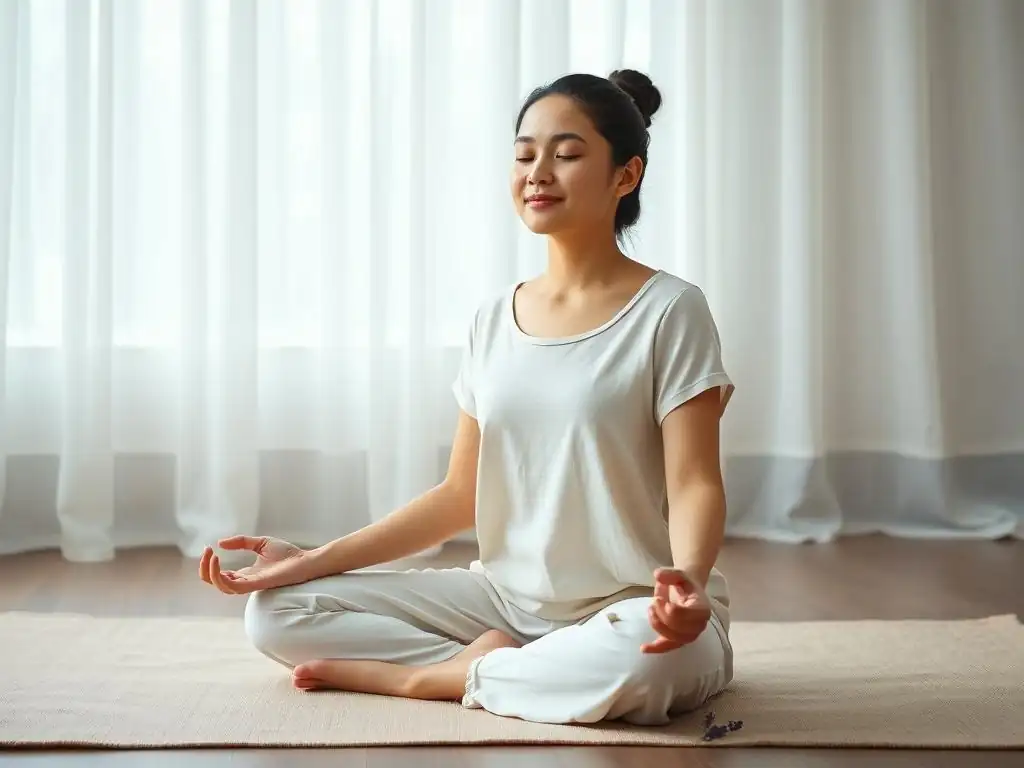
The breath is an ever-present anchor for mindfulness and a powerful tool for regulating the nervous system, which in turn supports emotional regulation and self-compassion. Simple breath awareness, focusing on the inhale and exhale, can ground you in the present moment. When challenging emotions or self-critical thoughts arise, consciously deepening your breath can create space and calm.
Specific pranayama techniques can also cultivate a sense of self-nurturing. For example, practicing Ujjayi breath (victorious breath), with its gentle constriction in the back of the throat, creates a soothing sound and rhythmic flow that can be deeply calming. Alternate Nostril Breathing (Nadi Shodhana) balances the energy channels and promotes a sense of centeredness. By consciously working with your breath, you are actively nurturing your physical and emotional state, a direct expression of self-kindness.
Yoga Poses for Self-Love and Acceptance
Certain yoga poses can be particularly supportive in cultivating feelings of self-love and acceptance, connecting mind and body in a nurturing way. These poses often work with areas associated with emotional centers, promoting a sense of opening, grounding, or surrender. Incorporating these into your yoga selfcompassion mindfulness practice can deepen the experience.
Gentle Backbends: Opening the Heart Chakra
Poses like Cobra Pose (Bhujangasana) or Sphinx Pose (Salamba Bhujangasana) gently open the chest and shoulders. Energetically, the chest area is often associated with the heart chakra, related to love, compassion, and connection. Physically opening this area can help release stored tension and create a feeling of vulnerability and openness, fostering a sense of self-acceptance.
Holding these gentle backbends allows you to breathe into the expansion across the front of the body. Focus on softening rather than forcing, embodying kindness towards your physical limitations. This physical opening can sometimes lead to emotional releases, which, when met with self-compassion, can be incredibly healing.
Forward Folds: Practicing Surrender and Self-Forgiveness
Forward folds, such as Child's Pose (Balasana) or Standing Forward Fold (Uttanasana), offer opportunities for introspection and surrender. In Child's Pose, you curl inward, finding comfort and safety, a physical representation of nurturing and self-care. Standing Forward Fold allows you to release tension in the back and hamstrings, and symbolically, to bow inward, acknowledging your inner experience.
These poses encourage letting go – of physical tension, of racing thoughts, of self-judgment. They provide a space for quiet reflection and acceptance of whatever is present. Practicing surrender in these poses can be a powerful way to cultivate self-forgiveness, releasing the need to hold onto past mistakes or self-criticism.
Restorative Poses: Nurturing Self-Care
Restorative yoga poses, often supported by props like bolsters, blankets, and blocks, are specifically designed to promote deep relaxation and healing. Poses like Supported Bridge Pose (Setu Bandhasana) or Legs-Up-the-Wall Pose (Viparita Karani) held for extended periods, signal to the nervous system that it is safe to rest and repair.
These poses are an active practice of self-care, prioritizing rest and restoration over effort. They embody the principle of self-kindness, giving yourself permission to pause, be still, and simply be. Engaging in restorative yoga selfcompassion mindfulness practice is a tangible way to demonstrate that you are worthy of rest and gentle nurturing.
Savasana: A Sanctuary for Self-Compassionate Reflection
Savasana, or Corpse Pose, is arguably the most important pose in any yoga practice, and it is a profound opportunity for self-compassionate reflection. Lying still, allowing your body to fully relax, is an act of surrender and trust. This is where the physical practice integrates, and the mind has a chance to settle.
During Savasana, you can gently bring awareness to how you feel – physically, emotionally, mentally – without trying to change anything. If self-critical thoughts arise, simply notice them and let them pass, returning your attention to the sensation of your body resting or the rhythm of your breath. It is a time to simply be with yourself, offering unconditional acceptance to your current state, embodying the culmination of your yoga selfcompassion mindfulness practice.
Integrating Self-Compassion into Your Daily Yoga Routine
Modifying Poses for Your Body and Needs
A truly self-compassionate yoga practice is one that honors the unique needs and capabilities of your body on any given day. This means being willing and able to modify poses without feeling like you are failing or not doing "real" yoga. For example, using blocks under your hands in a forward fold, keeping your knees bent, or taking a vinyasa flow on your hands and knees instead of Chaturanga are all valid and self-compassionate choices.
Listening to your body's signals – whether it's fatigue, pain, or simply a need for less intensity – and adjusting your practice accordingly is a tangible way to practice self-kindness. It demonstrates that you value your well-being over external appearances or perceived expectations. This flexibility in your approach is essential for a sustainable and nurturing yoga selfcompassion mindfulness practice.
Practicing Non-Judgmental Observation of Thoughts and Feelings
The mat is a laboratory for life. The thoughts and feelings that arise during yoga practice are often the same ones we experience off the mat. A key aspect of integrating self-compassion is practicing non-judgmental observation of these internal states. When a self-critical thought pops up ("I'm not good at this pose") or a difficult emotion surfaces (like frustration), notice it without immediately believing it or reacting to it.
Simply acknowledging "Ah, there is the thought that I'm not good enough" or "I notice frustration arising" creates a space between you and the internal experience. This mindful distance allows you to respond with compassion rather than getting swept away. This skill, honed during your yoga selfcompassion mindfulness practice, is directly transferable to navigating challenging moments in daily life.
The ultimate goal is to carry the principles of yoga selfcompassion mindfulness cultivated on the mat into all areas of your life. When you are engaged in a challenging conversation, instead of spiraling into self-blame or defensiveness, can you offer yourself kindness? Acknowledge that this is difficult and that you are doing your best in the moment.
Similarly, when experiencing physical pain outside of yoga, perhaps chronic discomfort or a temporary injury, can you treat your body with understanding and patience rather than frustration? Can you offer yourself the same gentle care you might extend to a friend in pain? When facing work-related stress or setbacks, instead of harsh self-criticism, can you recognize that difficulty is part of the common human experience and offer yourself support and encouragement? This consistent effort to apply self-compassion in everyday challenges is where the transformative power of the practice truly lies.
Overcoming Challenges in Your Self-Compassionate Yoga Journey
Dealing with Self-Criticism During Practice
It is highly likely that self-critical thoughts will arise during your yoga selfcompassion mindfulness practice. This is a normal part of the process, not a failure. When you notice self-criticism ("My balance is terrible," "I should be stronger by now"), acknowledge the thought without identifying with it. You might mentally say, "Ah, there's that critical voice again."
Then, consciously choose to respond with kindness. You can counter the critical thought with a compassionate one ("It's okay, balance takes time and practice") or simply return your awareness gently to your breath or body sensations. Think of self-criticism as a habit you are retraining; each time you choose compassion instead, you strengthen the new, kinder pathway.
Addressing Feelings of Unworthiness or Shame
Yoga practice can sometimes bring deep-seated feelings of unworthiness or shame to the surface, especially in poses that feel vulnerable or challenging. If these feelings arise, try to meet them with the same gentle curiosity you would offer a physical sensation. Remember the principle of common humanity – these difficult feelings are part of being human, not a sign that something is fundamentally wrong with you.
Ground yourself with your breath or the feeling of the mat beneath you. You might place a hand on your heart as a gesture of self-comfort. If the feelings are overwhelming, it is always okay to pause, rest in Child's Pose, or even step off the mat. Meeting these feelings with presence and acceptance, rather than avoidance or judgment, is a profound act of self-compassion.
Finding a Supportive Yoga Community
While yoga selfcompassion mindfulness practice is deeply personal, practicing in a supportive community can be incredibly beneficial. Being in a class where the teacher emphasizes mindful movement, acceptance, and non-judgment can reinforce these principles. Seeing others modify poses or take rests can normalize the experience of listening to your body's needs.
Sharing your experiences (if you feel comfortable) with fellow students or a trusted teacher can also help dismantle feelings of isolation often associated with self-criticism or unworthiness. A supportive community provides a sense of belonging and validation, reinforcing the idea that you are not alone in your struggles and that your journey towards self-compassion is shared.
The Benefits of Yoga Self-Compassion Mindfulness Practice for Mental Health
Reducing Stress and Anxiety
Regular engagement in yoga selfcompassion mindfulness practice has a significant impact on stress and anxiety levels. The combination of physical movement, breath control, and mindful presence helps to calm the nervous system, shifting it from a "fight or flight" state to a more relaxed "rest and digest" state.
Mindfulness teaches you to observe anxious thoughts without getting caught in their spiral, reducing their power. Self-compassion helps you meet the discomfort of anxiety with kindness rather than adding layers of self-judgment ("Why am I so anxious? I shouldn't feel this way"), which often exacerbates the feeling. Studies have shown that mindfulness-based interventions, often incorporating yoga, can lead to measurable reductions in stress hormones like cortisol.
Improving Mood and Emotional Regulation
Yoga and mindfulness practice enhance your ability to recognize and sit with emotions without being overwhelmed by them. This improved emotional literacy and regulation are key benefits. By cultivating self-compassion, you create a safe internal space to experience the full range of human emotions, including sadness, anger, or frustration, without feeling defined or consumed by them.
Instead of suppressing or reacting impulsively to difficult feelings, you learn to acknowledge them with kindness and curiosity. This capacity to relate to your internal experience with greater acceptance contributes to a more stable and positive mood over time. Research, such as studies published in the Journal of Affective Disorders, has linked self-compassion training to significant improvements in symptoms of depression.
Fostering Resilience and Self-Acceptance
Resilience is the ability to bounce back from adversity. Yoga selfcompassion mindfulness practice builds resilience by equipping you with tools to navigate challenges from a place of inner strength and acceptance. When faced with difficulty, self-compassion allows you to acknowledge the pain or struggle without adding the burden of self-blame.
By consistently practicing acceptance on the mat – accepting where your body is today, accepting the thoughts that arise – you build the capacity for self-acceptance off the mat. This foundational acceptance of yourself, including your flaws and imperfections, is crucial for navigating life's inevitable ups and downs with greater grace and fortitude.
Enhancing Body Image and Self-Esteem
Many people struggle with negative body image. Traditional exercise can sometimes focus on performance or aesthetic outcomes, potentially reinforcing self-critical tendencies. In contrast, yoga selfcompassion mindfulness practice encourages a shift in focus from how your body looks to how it feels and what it can do.
By mindfully inhabiting your body and treating it with kindness and respect, you build a more positive and accepting relationship with yourself. Self-compassion helps dismantle the harsh inner critic that often fuels negative body image. This practice fosters genuine self-esteem, which is based on inherent worthiness, not on achieving a certain physical standard. A study published in the Journal of Body Image found that self-compassion was a stronger predictor of positive body image than mindfulness alone.
Advanced Techniques for Deepening Your Yoga Self-Compassion Mindfulness Practice
Incorporating Affirmations and Mantras
Once you have established a consistent yoga selfcompassion mindfulness practice, you can deepen it by consciously incorporating affirmations or mantras. These are short, positive phrases repeated silently or aloud that reinforce self-kindness and acceptance. Examples include "I am enough," "May I be kind to myself," or "I accept myself as I am."
You can repeat an affirmation during specific poses, during moments of stillness, or throughout your entire practice. Choosing a mantra that resonates deeply with your intention for self-compassion can help to quiet the inner critic and cultivate a more nurturing internal environment. This intentional use of language supports the mindset shift towards self-kindness.
Exploring Metta Meditation (Loving-Kindness Meditation)
Metta meditation, often translated as loving-kindness meditation, is a powerful practice that directly cultivates compassion, starting with oneself and extending outward. While not strictly a yoga posture practice, it is a form of mindfulness meditation that pairs beautifully with yoga. It typically involves silently repeating phrases like "May I be happy. May I be healthy. May I be safe. May I live with ease."
Practicing Metta for yourself can profoundly deepen your capacity for self-compassion. It moves beyond simply accepting difficulties to actively wishing yourself well-being and freedom from suffering. Integrating Metta meditation before or after your yoga selfcompassion mindfulness practice can amplify its emotional and psychological benefits.
Journaling Prompts for Self-Compassion
Journaling is an excellent way to process thoughts and feelings that arise during or related to your yoga practice and your journey towards self-compassion. After your practice, or at a dedicated time, use specific prompts to explore your experiences.
Consider prompts such as:
- What did I notice about my body and mind during practice today?
- When did I feel challenged on the mat, and how did I respond internally?
- How did I show myself kindness today, both on and off the mat?
- What is one way I can be more compassionate towards myself tomorrow?
- What difficult emotion or thought arose, and can I offer it understanding?
This reflective process helps integrate the lessons learned on the mat into your conscious awareness and daily life.
Seeking Guidance from a Yoga Therapist or Mental Health Professional
For individuals working through significant mental health challenges, trauma, or deep-seated self-criticism, deepening your yoga selfcompassion mindfulness practice may be best supported by a qualified professional. A certified yoga therapist can tailor practices specifically to your needs, integrating gentle movement, breathwork, and mindfulness techniques to address emotional and psychological concerns in a safe and supportive environment.
Similarly, a mental health professional who understands the mind-body connection can provide invaluable guidance. They can help you process difficult emotions or experiences that may surface during practice and integrate the principles of self-compassion into a broader therapeutic context. Combining yoga with professional support can be a powerful path towards healing and lasting well-being.
Resources for Continued Learning and Support in Yoga and Self-Compassion
Recommended Books and Articles
To further your understanding of yoga selfcompassion mindfulness practice, delve into literature that explores the intersection of these fields. Books by authors like Kristin Neff ("Self-Compassion: The Proven Power of Being Kind to Yourself") or Tara Brach ("Radical Acceptance: Embracing Your Life With the Heart of a Buddha") offer deep dives into the principles of self-compassion and mindfulness.
Look for articles in reputable mental health or yoga publications that discuss the therapeutic benefits of yoga and mindfulness for emotional well-being. These resources can provide scientific backing, practical exercises, and inspiring perspectives to support your journey.
Online Yoga Classes and Workshops Focused on Self-Compassion
Many online platforms and studios now offer yoga classes and workshops specifically themed around self-compassion, mindfulness, and mental wellness. These resources can provide guided practices tailored to cultivating kindness towards oneself.
Look for teachers or programs that emphasize gentle movement, mindful awareness, and a non-judgmental approach. Participating in these focused sessions can provide structured guidance and connect you with practices designed to specifically enhance your yoga selfcompassion mindfulness journey.
Yoga Therapy Organizations and Practitioners
If you are interested in a more personalized approach to using yoga for mental health and self-compassion, consider seeking out a certified yoga therapist. Organizations like the International Association of Yoga Therapists (IAYT) maintain directories of certified practitioners.
Yoga therapists have specialized training in applying yoga techniques to address specific physical, mental, and emotional conditions. They can create a bespoke yoga selfcompassion mindfulness practice plan that aligns with your individual needs and therapeutic goals, offering a supportive and expert-guided path.
Frequently Asked Questions
How can yoga help me develop self-compassion?
Yoga provides a space for body awareness and mindful presence. By noticing your physical sensations and thoughts without judgment during your practice, you cultivate self-acceptance and compassion.
What role does mindfulness play in fostering self-compassion during yoga?
Mindfulness allows you to observe your thoughts and emotions without getting carried away by them. This non-judgmental awareness is crucial for recognizing your suffering and responding to it with kindness and understanding, fostering self-compassion.
Can I incorporate self-compassion techniques outside of a formal yoga class?
Absolutely! Simple techniques like self-compassionate breathing and mindful self-talk can be practiced anywhere. These strategies help you navigate difficult emotions with greater empathy and reduced self-criticism.
What are some specific yoga poses that promote self-compassion?
Poses that open the heart, like backbends and chest openers, can be particularly helpful. These postures may evoke feelings of vulnerability, creating an opportunity to practice self-acceptance and gentleness.
How often should I engage in yoga self-compassion mindfulness practice to see benefits?
Consistency is key. Even short, regular sessions (15-20 minutes several times a week) can make a significant difference. Focusing on self-compassion during your practice can lead to improved mental well-being over time.
Final Reflection: Cultivating Inner Peace Through Self-Compassionate Yoga
The practice of yoga, interwoven with mindfulness and self-compassion, isn't just a physical exercise; it's a powerful tool for navigating the complexities of modern life. In a world that often prioritizes external validation and relentless self-improvement, cultivating a gentle, accepting inner voice is revolutionary. This internal shift, fostered through mindful movement and compassionate self-reflection, is crucial for building resilience and genuine well-being.
The journey towards self-compassion, as explored throughout this article, is a deeply personal one, profoundly impacting how we relate to ourselves and the world. It's a continuous process of unlearning harsh self-criticism and replacing it with understanding and kindness. This transformation isn't merely about feeling good; it's about building a stronger foundation for navigating life's inevitable challenges. As Kristin Neff eloquently states, Self-compassion involves treating yourself with the same kindness, concern, and understanding that you would offer a good friend.
This simple yet profound act of self-care ripples outwards, influencing our relationships, our work, and our overall sense of peace.
Now, consider your own yoga practice. How can you integrate more self-compassion into your poses, your breathing, and your overall experience? Don't strive for perfection; strive for progress. Embrace the wobbles, the moments of frustration, and the imperfections as opportunities for growth and self-acceptance. Remember the breath, the gentle guidance of your body, and the unwavering kindness you deserve. Let your yoga mat become a sanctuary where self-compassion blossoms, transforming your practice and your life.
Unleash Your Inner Peace: Cultivate Self-Compassion Now
Thank you for taking the time to explore the powerful connection between yoga and self-compassion. We hope you've gained valuable insights into nurturing yourself through mindful movement. Ready to deepen your practice and embrace inner peace?
- Prioritize a daily self-compassion break: Even 5 minutes of gentle stretching and mindful breathing can make a world of difference. Try the sun salutation sequence we discussed, focusing on your breath and body's sensations.
- Share your experience: Tell us about your favorite self-compassionate yoga pose or practice in the comments below! Let's build a supportive community.
- Explore Mindful Movement further: Discover additional resources on our website to deepen your understanding of mindful practices and how they can transform your life.
What small step will you take today to cultivate more self-compassion in your life?