
The Power of Presence: Staying Grounded in the Moment for Balance


Welcome to Mind Care Guide, a sanctuary for your mental well-being.
Feeling overwhelmed or emotionally adrift? You're not alone. In a world demanding constant attention, finding inner peace can seem like an impossible task. This week, we delve into the transformative power of Mindfulness for emotional balance. Discover how cultivating presence can help you navigate life's challenges with greater calm, clarity, and resilience. But how exactly can mindfulness help you achieve emotional equilibrium? Read on to unlock practical techniques and begin your journey toward a more grounded and balanced you.
- Cultivating Emotional Resilience Through Mindfulness
- Understanding Mindfulness and Emotional Regulation
- Practical Mindfulness Techniques
- Overcoming Challenges in Mindfulness Practice
- Integrating Mindfulness into Daily Life
- Advanced Mindfulness Practices
- The Science of Mindfulness and Emotional Regulation
- Resources for Mindfulness Exploration
- Conclusion: Embracing Presence for a Balanced Life
-
Frequently Asked Questions
- What is mindfulness and how does it relate to emotional balance?
- How can practicing mindfulness help with managing stress and anxiety?
- What are some simple mindfulness exercises I can incorporate into my daily routine?
- How long does it typically take to experience the benefits of mindfulness for emotional balance?
- Where can I find resources and support for learning more about mindfulness and emotional well-being?
- Final Reflection: Embracing the Present, Cultivating Calm
- Unlock Your Inner Calm: Embrace Presence Today
Cultivating Emotional Resilience Through Mindfulness
The Importance of Mindfulness for Emotional Well-being
Emotional well-being is not merely the absence of negative feelings, but the capacity to navigate the full spectrum of human emotions with grace and resilience. In our fast-paced world, it's easy to get swept away by stress, worry, and the constant demands on our attention. This often leads to emotional imbalance, where we might feel overwhelmed, anxious, or disconnected from ourselves.
Cultivating mindfulness for emotional balance offers a powerful antidote, providing tools to observe our internal landscape without getting lost in it. By intentionally bringing awareness to our present experience, we create space between our feelings and our reactions, fostering a sense of calm and control.
Studies have consistently shown the positive impact of mindfulness on various aspects of emotional health. For instance, research conducted at institutions like the University of Massachusetts Medical School, where the Mindfulness-Based Stress Reduction (MBSR) program originated, has demonstrated significant reductions in reported stress levels and improvements in mood among participants. While specific percentages vary depending on the study and population, findings often indicate reductions in anxiety symptoms by 20-30% and decreases in depression symptoms. This suggests that dedicated practice in mindfulness for emotional balance can lead to tangible improvements in how we experience and manage our feelings daily.
Presence as a Pathway to Inner Peace
Achieving inner peace isn't about eliminating challenges or difficult emotions; it's about developing a stable core from which to face them. Presence, the state of being fully engaged in the current moment, is the fundamental building block of mindfulness and a direct pathway to this inner stability. When we are truly present, our minds are less likely to dwell on past regrets or future anxieties, which are common sources of emotional turmoil.
Instead, we can observe our thoughts and feelings as they arise, acknowledging them without judgment or the need to immediately change them. This simple act of observation cultivates a sense of spaciousness and calm.
Consider a moment of intense frustration. Without presence, we might immediately react with anger or withdrawal. However, by pausing and bringing mindful awareness to the physical sensations in our body, the thoughts racing through our mind, or the feeling itself, we interrupt the automatic reaction cycle. This pause, born of presence, allows us to choose a response rather than simply react. This capacity for conscious choice is a cornerstone of emotional regulation and a key benefit of practicing mindfulness for emotional balance, enabling us to respond to life's difficulties from a place of greater peace and understanding.
Understanding Mindfulness and Emotional Regulation
Defining Mindfulness: Paying Attention Intentionally
Mindfulness, at its core, is the practice of paying attention, on purpose, to the present moment, without judgment. It's not about emptying the mind or achieving a state of perpetual bliss, but rather about developing a heightened awareness of our ongoing experience – our thoughts, feelings, bodily sensations, and the environment around us – as it unfolds, moment by moment. This intentional focus is what distinguishes mindfulness from merely being 'aware'; it requires a conscious effort to direct and sustain attention, even when faced with distractions or discomfort.
This definition highlights the active nature of mindfulness. It is a skill that needs to be cultivated through regular practice. By intentionally bringing our attention back to the present whenever it wanders (as it inevitably will), we train our minds to be less reactive and more observant.
This training is crucial for developing mindfulness for emotional balance, as it allows us to recognize emotional patterns, triggers, and intensities without getting caught in the emotional storm itself. We learn to see thoughts as just thoughts and feelings as just feelings, temporary states rather than absolute truths about ourselves or our situation.
Core Principles: Attention, Acceptance, Non-Judgment
Mindfulness practice is guided by several core principles that work together to foster emotional well-being. The first is attention, the deliberate focusing of awareness on the present moment, whether it's the breath, bodily sensations, or external stimuli. This sustained attention forms the foundation upon which other principles are built.
The second crucial principle is acceptance. This involves acknowledging our present experience, including difficult thoughts or uncomfortable emotions, exactly as it is, without trying to push it away or pretend it's not there. Acceptance doesn't mean approval or resignation, but simply a willingness to face reality as it is in this moment.
The third principle, non-judgment, is perhaps one of the most challenging yet transformative aspects of mindfulness. It involves observing our thoughts, feelings, and sensations without labeling them as "good" or "bad," "right" or "wrong." Our minds are naturally wired to evaluate, but in mindfulness practice, we consciously step back from this evaluative process. By letting go of judgment, we reduce the internal conflict and self-criticism that often fuel emotional distress. Embracing these core principles—attention, acceptance, and non-judgment—is fundamental to effectively using mindfulness for emotional balance, allowing us to relate to our inner world with greater kindness and clarity.
Mental Health Benefits of Cultivating Presence
Cultivating presence through mindfulness offers a wide array of mental health benefits that contribute significantly to emotional balance. One of the most widely recognized benefits is stress reduction. By learning to observe stressors without immediate reactivity, individuals can lower cortisol levels, often referred to as the stress hormone. Research, including studies from major universities like Harvard, has linked regular mindfulness practice to changes in brain structures associated with stress regulation, such as decreased gray matter density in the amygdala (the brain's fear center) and increased density in the prefrontal cortex (associated with higher-order cognitive functions and emotional regulation).
Beyond stress, consistent mindfulness practice has been shown to improve symptoms of anxiety and depression. By training the mind to stay grounded in the present, mindfulness reduces rumination about the past and worry about the future, common features of these conditions. A meta-analysis published in JAMA Internal Medicine in 2014, reviewing 47 trials with 3,515 participants, concluded that mindfulness meditation programs had moderate evidence of improving anxiety and depression symptoms. Furthermore, mindfulness enhances self-awareness, improves focus and concentration, and fosters a greater capacity for emotional regulation, all contributing to a more stable and balanced emotional life.
Practical Mindfulness Techniques
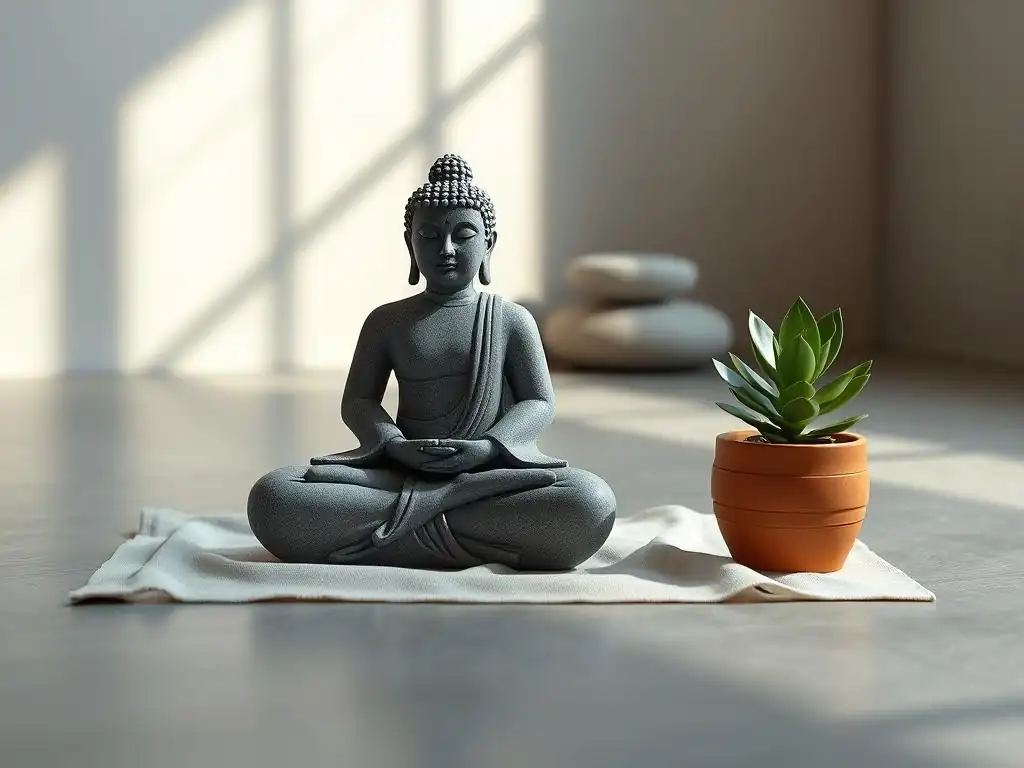
Mindfulness Meditation: A Beginner's Approach
Mindfulness meditation is a foundational practice for cultivating presence and enhancing mindfulness for emotional balance. For beginners, it often starts simply: find a comfortable seated position, either on a cushion on the floor or in a chair, with your spine relatively straight but not rigid. Gently close your eyes or soften your gaze. The primary focus is typically the breath, as it is always present and serves as an anchor to the current moment. Notice the sensation of the breath entering and leaving the body, perhaps at the nostrils or the rise and fall of the abdomen.
As you sit, your mind will inevitably wander. This is completely normal. The practice isn't about stopping thoughts, but noticing when your mind has drifted – perhaps to a worry about tomorrow or a memory from yesterday – and gently guiding your attention back to the breath without judgment. Start with short sessions, perhaps 5-10 minutes a day, and gradually increase the duration as you feel comfortable. Consistency is more important than duration when you are beginning to explore mindfulness for emotional balance through meditation.
Body Scan Meditation: Focusing on Physical Sensations
The body scan meditation is another powerful technique for developing present moment awareness and understanding the connection between physical sensations and emotional states. It involves systematically bringing attention to different parts of the body, noticing any sensations present – warmth, coolness, tingling, pressure, tension, or the absence of sensation – without judgment. Begin by lying down comfortably on your back, perhaps with knees bent or a pillow under your head. Close your eyes.
Start by bringing attention to your toes, noticing any sensations there. Then, gently move your awareness up through your feet, ankles, lower legs, knees, thighs, hips, and so on, gradually scanning through the torso, arms, neck, and head. Linger in areas where you notice strong sensations or tension, simply observing them with curiosity.
If your mind wanders, gently bring it back to the part of the body you were focusing on. This practice helps anchor you firmly in the present moment and can reveal how emotions manifest physically, improving your ability to use mindfulness for emotional balance by recognizing bodily cues.
Breathing Exercises: Anchoring in the Present
Breathing exercises are simple yet effective techniques for instantly bringing awareness to the present moment and calming the nervous system. One basic exercise is mindful breathing: simply pay attention to the natural rhythm of your breath for a few moments. Notice the inhale, the slight pause, the exhale, and the pause before the next inhale. There's no need to change your breath, just observe it. This can be done anywhere, anytime you feel stressed or overwhelmed, serving as a quick anchor to the present.
Another technique is counting the breath. Inhale slowly, and on the exhale, count "one." On the next exhale, count "two," and continue up to ten, then start over. If you lose count, simply begin again at one. This gentle focus on counting helps keep the mind from wandering and provides a concrete object of attention. These breathing exercises are accessible tools for anyone seeking to cultivate mindfulness for emotional balance throughout their day, offering immediate relief and a pathway back to presence.
Sensory Awareness: Engaging the Senses
Engaging the senses is a simple yet profound way to practice mindfulness and connect with the present moment. Our senses – sight, sound, smell, taste, and touch – are direct conduits to the here and now. By intentionally bringing our attention to sensory input, we ground ourselves and interrupt the cycle of ruminative thoughts or worries about the future. This can be practiced formally or informally throughout the day.
For example, take a moment to truly see the colors, shapes, and textures around you. Listen intently to the sounds in your environment, both near and far, without labeling or judging them. Notice the feeling of your clothes against your skin, the temperature of the air, or the texture of an object you are holding.
When eating, pay attention to the aroma, taste, and texture of the food. Actively engaging your senses shifts your focus from the internal mental chatter to the external, tangible reality of the present, strengthening your capacity for mindfulness for emotional balance by anchoring you in sensory experience.
Mindful Movement: Yoga and Walking Meditation
Mindful movement integrates present moment awareness with physical activity, offering a dynamic way to cultivate mindfulness for emotional balance. Practices like yoga and walking meditation encourage you to pay attention to bodily sensations, the breath, and the movement itself, rather than just going through the motions or letting your mind drift elsewhere. In yoga, this means noticing the feeling of a stretch, the strength required to hold a pose, or the coordination of breath with movement.
Walking meditation involves paying attention to the physical sensations of walking – the lifting and placing of the feet, the shift of weight, the movement of the legs – as well as the rhythm of your breath and the environment around you. You can practice this at a slow, deliberate pace or integrate mindful awareness into your regular walk. By bringing intentional awareness to physical activity, mindful movement helps release tension, improve body awareness, and provide an active way to stay grounded, enhancing both physical and emotional well-being.
Overcoming Challenges in Mindfulness Practice
Managing Distractions During Meditation
Distractions are a universal experience in mindfulness meditation; they are not a sign of failure, but simply part of the process. The most common distractions come from the mind itself: thoughts, memories, worries, and fantasies. External distractions, such as sounds or physical discomfort, also arise. The key to managing distractions is not to eliminate them, but to change your relationship with them. When you notice your mind has wandered, acknowledge the thought or sensation without judgment.
Instead of getting frustrated, gently redirect your attention back to your chosen anchor, whether it's the breath, bodily sensations, or sounds. Think of it as training a puppy – when it wanders off, you gently lead it back, patiently, without scolding. Each time you notice a distraction and return your focus, you are strengthening the 'muscle' of attention. This practice of recognizing and returning is fundamental to cultivating mindfulness for emotional balance, teaching you resilience in the face of mental clutter.
Addressing Anxious Thoughts and Emotional Overload
When practicing mindfulness, you may encounter difficult emotions like anxiety, sadness, or frustration, or experience periods of emotional overload. It's important to approach these experiences with kindness and patience, rather than trying to suppress or push them away. Mindfulness offers a way to be with difficult feelings without being consumed by them. When anxious thoughts or intense emotions arise, try acknowledging them: "Ah, there is anxiety," or "I notice a feeling of sadness."
You can then bring your attention to the physical sensations associated with the emotion in your body. Where do you feel it? What does it feel like?
Observe these sensations with curiosity, noticing that they are often dynamic and change over time. If the emotion feels overwhelming, you can gently shift your focus to the breath or another grounding anchor for a few moments before returning to observe the emotion if you feel able. Learning to observe difficult feelings in this way, without immediately reacting or getting swept away, is a powerful application of mindfulness for emotional balance, building your capacity to tolerate discomfort.
Cultivating Patience and Self-Compassion
Patience and self-compassion are essential qualities to cultivate in mindfulness practice, especially when facing challenges. Learning to be present and navigate difficult internal states takes time and effort. There will be days when your mind feels particularly restless, your emotions are intense, or you simply don't feel like practicing. In these moments, it's easy to become self-critical or discouraged. However, treating yourself harshly undermines the very purpose of mindfulness.
Approach your practice, and yourself, with patience, understanding that progress is not linear. Some days will be easier than others. When you struggle, acknowledge the difficulty without judgment. Offer yourself the same kindness and understanding you would offer a friend who is learning a new skill. Recognize that encountering challenges is a normal part of the process. Cultivating this gentle, compassionate attitude towards yourself is vital for sustaining a long-term mindfulness practice and effectively utilizing mindfulness for emotional balance, fostering resilience and inner strength.
Integrating Mindfulness into Daily Life
Mindful Eating: Savoring Each Meal
Mindful eating is a practice that brings full awareness to the experience of eating, transforming a routine activity into an opportunity for presence. Instead of rushing through meals or eating while distracted by screens or other tasks, mindful eating encourages you to engage all your senses. Before eating, take a moment to appreciate the appearance and aroma of the food. As you eat, notice the textures, temperatures, and flavors. Chew slowly and deliberately, paying attention to the sensations in your mouth.
Pay attention to the signals of hunger and fullness from your body. Are you truly hungry, or eating out of habit, boredom, or stress? Mindful eating not only enhances the enjoyment of food but also improves digestion and helps cultivate a healthier relationship with eating. By grounding you in the present moment through sensory experience, mindful eating strengthens your ability to use mindfulness for emotional balance, particularly in relation to food-related emotions and habits.
Mindful Communication: Active Listening
Mindful communication involves bringing full, non-judgmental attention to interactions with others. A key component is active listening – truly hearing what the other person is saying, both verbally and nonverbally, without interrupting, formulating your response, or letting your mind wander to other topics. It requires setting aside your own agenda and opinions for the moment and focusing solely on understanding the speaker's perspective.
When speaking mindfully, you choose your words with care, speaking truthfully and constructively while being aware of the impact of your language on others. You also remain aware of your own emotions and reactions during the conversation, responding thoughtfully rather than reacting impulsively. Practicing mindful communication enhances empathy, reduces misunderstandings, and strengthens relationships, contributing to overall emotional well-being and demonstrating the application of mindfulness for emotional balance in interpersonal contexts.
Mindful Work: Focused Attention
Bringing mindfulness to the workplace can significantly reduce stress, improve productivity, and enhance job satisfaction. Mindful work involves intentionally focusing your attention on the task at hand, minimizing distractions, and approaching challenges with presence and non-judgment. This might mean dedicating specific periods to focused work without checking email or social media, or simply bringing full awareness to a single task, no matter how mundane.
When faced with deadlines or difficult colleagues, mindful awareness allows you to observe your stress or frustration without getting overwhelmed. You can take a few mindful breaths, ground yourself in the present moment, and respond more effectively. Integrating mindfulness into your work routine helps manage the emotional demands of professional life, proving that mindfulness for emotional balance is applicable even in demanding environments, leading to greater efficiency and reduced burnout.
Mindful Relationships: Deep Connection
Mindful relationships are built on a foundation of presence, empathy, and open communication. It involves being fully present when interacting with loved ones, truly listening, and responding with awareness rather than reactivity. In mindful relationships, you pay attention to your own emotional responses during interactions and try to understand the perspective of the other person with compassion.
Disagreements or challenges in relationships are inevitable. Mindfulness helps navigate these by allowing you to pause before reacting impulsively, observing your emotions, and choosing a more constructive response. It also involves appreciating the moments of connection and joy with full presence. By fostering deeper understanding, empathy, and conscious interaction, mindfulness strengthens bonds and contributes significantly to emotional fulfillment within relationships, highlighting the relational benefits of mindfulness for emotional balance.
Advanced Mindfulness Practices

Vipassana Meditation: Insight Through Observation
Vipassana, meaning "to see things as they really are," is an ancient Indian meditation technique that emphasizes deep, sustained observation of sensations in the body to gain insight into the impermanent nature of reality. Often practiced in intensive retreat settings lasting ten days or longer, it involves silent, rigorous meditation sessions focused on sweeping attention through the body, noting physical sensations without reacting to them.
The core principle is observing the arising and passing away of sensations, thoughts, and feelings without judgment or attachment. This practice aims to purify the mind by eradicating mental defilements rooted in craving, aversion, and ignorance. While challenging, Vipassana offers a profound path to self-knowledge and liberation from suffering, representing a deep dive into the core principles of mindfulness for emotional balance and wisdom.
Loving-Kindness Meditation: Developing Compassion
Loving-kindness meditation, also known as Metta meditation, is a practice focused on cultivating unconditional kindness, warmth, and compassion towards oneself and others. Unlike mindfulness meditation which focuses on non-judgmental awareness of present experience, Metta actively cultivates positive emotional states. The practice typically involves silently repeating phrases that express goodwill, starting with oneself, then extending it to loved ones, neutral persons, difficult persons, and finally to all beings.
Examples of phrases include: "May I be happy. May I be healthy. May I be safe. May I live with ease." As the practice progresses, these phrases are directed outwards. Research suggests that regular Metta practice can increase positive emotions, reduce negative emotions, and enhance empathy and social connection. It is a powerful complement to mindfulness for emotional balance, actively fostering the positive aspects of emotional life.
Walking Meditation: Enhanced Present Moment Awareness
While introduced earlier as a practical technique, walking meditation can also be explored at a more advanced level, deepening present moment awareness and insight. Beyond simply noticing the feet, advanced walking meditation involves a more refined attention to the subtle movements and sensations involved in each step – the lifting, moving forward, and placing down of the foot, the balance shifts, the swing of the arms, and the interaction with the ground.
This practice can also integrate awareness of the breath or sounds while maintaining focus on the physical act of walking. It cultivates continuity of awareness in motion, demonstrating that mindfulness is not limited to seated practice but can permeate all activities. Extended periods of walking meditation, often practiced during retreats, can lead to profound states of presence and insight, further enhancing mindfulness for emotional balance in active states.
The Science of Mindfulness and Emotional Regulation
Research Supporting Mindfulness Benefits
A substantial body of scientific research now supports the benefits of mindfulness for emotional regulation and overall well-being. Studies have used various methodologies, including randomized controlled trials and neuroimaging, to investigate the effects of mindfulness practices. For example, a meta-analysis published in Health Psychology in 2017, pooling data from over 200 studies, found that mindfulness interventions were effective in reducing symptoms of depression, anxiety, and stress.
Further research has explored specific populations. A study published in the Journal of Consulting and Clinical Psychology in 2010 demonstrated that Mindfulness-Based Cognitive Therapy (MBCT), which combines mindfulness with cognitive therapy principles, was as effective as maintenance antidepressant medication in preventing relapse in individuals with recurrent depression. These findings underscore the empirical support for using mindfulness for emotional balance across various mental health challenges.
Mindfulness's Impact on the Brain
Neuroscientific research has shed light on how mindfulness practice physically changes the brain, impacting regions crucial for emotional regulation. Studies using fMRI scans have shown that long-term meditators often exhibit increased gray matter density in areas like the prefrontal cortex, associated with executive functions, attention, and emotional control, and the hippocampus, involved in memory and learning.
Conversely, some studies have observed decreased gray matter density in the amygdala, the brain region responsible for processing fear and threat. This suggests that mindfulness can reduce the brain's reactivity to stress and negative stimuli. The strengthening of connections between the prefrontal cortex and the amygdala is also noted, indicating improved top-down regulation of emotional responses. These neurobiological changes provide a compelling scientific basis for the effectiveness of mindfulness for emotional balance.
Mindfulness as a Complementary Therapy for Anxiety and Depression
Mindfulness-based interventions are increasingly recognized as valuable complementary therapies for anxiety and depression, often used alongside traditional treatments like therapy and medication. Programs like MBSR and MBCT teach individuals skills to relate differently to anxious thoughts and depressive rumination. Instead of getting caught in cycles of worry or self-blame, participants learn to observe these mental states with non-judgmental awareness.
This allows individuals to recognize that thoughts are not facts and that feelings are temporary. By practicing present moment awareness, they can interrupt negative thought loops and reduce reactivity to distressing emotions. While not a substitute for professional medical advice or treatment, integrating mindfulness for emotional balance provides individuals with active tools to manage symptoms, prevent relapse, and build greater resilience in the face of these common mental health challenges.
Resources for Mindfulness Exploration
Recommended Books on Mindfulness
For those wishing to deepen their understanding and practice of mindfulness, several influential books offer guidance. Wherever You Go, There You Are by Jon Kabat-Zinn provides accessible introductions to mindfulness meditation and integrating presence into daily life. Mindfulness in Plain English by Henepola Gunaratana offers clear, straightforward instructions on meditation practice, particularly for beginners.
Another valuable resource is The Mindful Way through Depression: Freeing Yourself from Chronic Unhappiness by Mark Williams, John Teasdale, Zindel Segal, and Jon Kabat-Zinn, which outlines the principles and practices of MBCT. These books offer practical exercises, philosophical insights, and encouragement for cultivating mindfulness for emotional balance through reading and personal practice.
Online Mindfulness Courses and Apps
The digital age has made mindfulness training more accessible than ever through online courses and mobile applications. Platforms like Headspace, Calm, and Insight Timer offer guided meditations, breathing exercises, and mindfulness programs ranging from beginner introductions to more advanced topics. Many are subscription-based, while others offer extensive free content.
Online courses, such as those based on MBSR or MBCT, are available through various educational institutions and dedicated mindfulness centers. These courses often include video lectures, guided practices, and sometimes even live interaction with instructors. These digital resources provide flexible and convenient ways for individuals to learn and practice mindfulness for emotional balance at their own pace and in their own environment.
Mindfulness Retreats and Workshops
For a more immersive experience, attending mindfulness retreats or workshops can be profoundly beneficial. Retreats typically involve periods of silent practice, guided meditations, mindful movement (like yoga or walking meditation), and sometimes dharma talks or discussions. They offer an opportunity to step away from daily distractions and dedicate focused time to cultivating presence.
Workshops, often shorter in duration (ranging from a few hours to a weekend), focus on specific aspects of mindfulness, such as mindful self-compassion, mindful communication, or using mindfulness for stress reduction. These in-person experiences provide structured learning environments, the support of a community, and direct guidance from experienced teachers, offering a deep dive into the practice of mindfulness for emotional balance.
Conclusion: Embracing Presence for a Balanced Life
The Continuous Journey of Mindfulness
Embracing mindfulness is not a one-time achievement but a continuous journey of learning, practice, and growth. It involves a lifelong commitment to cultivating present moment awareness and applying it to the ever-changing landscape of internal and external experiences. There will be times when practice feels easy and rewarding, and times when it feels challenging or unproductive. The key is persistent, gentle effort and a willingness to begin again whenever the mind wanders or difficulties arise.
This journey towards mindfulness for emotional balance is about developing a deeper understanding of ourselves, our patterns, and our relationship with the world. It's about building resilience, fostering self-compassion, and learning to navigate life's inevitable ups and downs with greater equanimity. Each moment of bringing presence back is a step forward on this path.
Final Thoughts on Presence in a Fast-Paced World
In a world that constantly pulls our attention in multiple directions, the simple act of cultivating presence is a radical and necessary practice. It offers an anchor in the storm of information overload, societal pressures, and personal challenges. The power of presence lies in its ability to ground us, allowing us to respond to life from a place of calm awareness rather than automatic reaction.
By consciously choosing to inhabit the present moment, we unlock our capacity for mindfulness for emotional balance, build stronger relationships, enhance our well-being, and find moments of peace amidst the chaos. Making presence a priority isn't selfish; it's essential self-care that benefits not only ourselves but also those around us, contributing to a more balanced and harmonious life.
Frequently Asked Questions
What is mindfulness and how does it relate to emotional balance?
Mindfulness is the practice of paying attention to the present moment without judgment. It helps achieve emotional balance by increasing awareness of emotions and reducing reactivity to them.
How can practicing mindfulness help with managing stress and anxiety?
Mindfulness techniques, such as meditation, can reduce stress and anxiety by focusing on present sensations rather than future worries. This allows you to detach from overwhelming thoughts and find calm.
What are some simple mindfulness exercises I can incorporate into my daily routine?
Try focusing on your breath for a few minutes each day, practicing mindful walking by paying attention to each step, or engaging in mindful eating by savoring each bite. These small acts cultivate present moment awareness.
How long does it typically take to experience the benefits of mindfulness for emotional balance?
The timeframe varies, but many people notice benefits within a few weeks of consistent practice. Regularity is key; even short, daily sessions can lead to significant improvements over time.
Where can I find resources and support for learning more about mindfulness and emotional well-being?
Websites like Mind Care Guide offer information and resources. You can also explore mindfulness apps, meditation classes, or consult with a mental health professional for personalized guidance.
Final Reflection: Embracing the Present, Cultivating Calm
The relentless pace of modern life often leaves us feeling fragmented, disconnected, and emotionally overwhelmed. The pursuit of mindfulness, however, offers a powerful antidote—a pathway to reclaiming our inner peace and achieving lasting emotional balance. This article explored practical techniques for cultivating presence, emphasizing the profound impact even small moments of mindful awareness can have on our overall well-being. The ability to ground ourselves in the present moment is not a luxury, but a necessity in navigating the complexities of the 21st century.
The journey towards emotional balance is not a destination, but a continuous practice. It's a process of learning to observe our thoughts and feelings without judgment, to acknowledge the ebb and flow of emotions, and to respond rather than react. This journey has deeply impacted my own life, teaching me the importance of self-compassion and the power of simply being present. As Thich Nhat Hanh wisely said, Peace is every step. Every breath we take, every step we take, can be a step of peace.
This simple yet profound statement encapsulates the essence of mindful living and its transformative potential.
Now, I invite you to consider your own relationship with presence. What small changes can you incorporate into your daily routine to cultivate more mindful moments? Perhaps it's taking a few deep breaths before responding to an email, savoring the taste of your food, or simply noticing the beauty of your surroundings. Begin with small steps, and gradually, you'll discover the profound impact of living fully in the present moment. Embrace the power of presence, and watch as your emotional landscape transforms, leading to a more balanced, peaceful, and fulfilling life.
Unlock Your Inner Calm: Embrace Presence Today
Thanks for taking the time to explore the power of presence with us! We hope you've gained valuable insights into finding more balance in your daily life. Ready to put this newfound knowledge into practice?
- Prioritize a 5-minute mindfulness exercise: Even a short period of focused breathing can make a significant difference in your overall sense of calm. Try it now – you might be surprised by the results!
- Share your experience: Connect with others and inspire them to embrace presence by sharing your thoughts and reflections on social media using #MindfulMoments. Let's build a supportive community together!
- Explore a new grounding technique: Research different grounding techniques online or in a book – experiment to discover which method best suits your needs and preferences.
What small step will you take today to cultivate more presence in your life?