
Your Brain's Architects: How Meditation Builds New Neural Connections


Welcome to Mind Care Guide, a haven for navigating the complexities of mental well-being. Feeling overwhelmed by the noise? Discover how Meditation strengthens brain connections better, potentially reshaping your mental landscape and fostering resilience. Are you ready to unlock your inner architect and build a stronger, more connected you? Dive in and explore the transformative power of mindfulness.
Your Brain's Architects: How Meditation Builds New Neural Connections
- Unveiling the Neuroscience of Meditation: Building a Stronger Brain
- Meditation and Neurogenesis: Growing New Brain Cells
- Rewiring the Brain: Meditation's Influence on Neural Pathways
- Meditation Strengthens Brain Connections Better: Specific Brain Regions Affected
- Types of Meditation for Optimal Brain Connectivity
- Practical Tips for Building New Neural Connections with Meditation
- Meditation's Long-Term Effects on Brain Health and Cognitive Function
- The Future of Meditation and Neuroscience: Further Research and Applications
- Conclusion: Meditation - A Powerful Tool for Brain Enhancement
-
Frequently Asked Questions
- How does meditation actually strengthen brain connections?
- What specific types of meditation are most effective for building neural connections?
- How long does it take to see noticeable changes in brain connections through meditation?
- Can meditation reverse the effects of stress on brain connections?
- Is meditation a substitute for professional mental health treatment?
- Final Reflection: The Ever-Expanding Landscape of the Mind
- Unlock Your Brain's Potential: Start Meditating Today!
Unveiling the Neuroscience of Meditation: Building a Stronger Brain
Understanding Neuroplasticity: The Foundation for Brain Change Through Meditation
The human brain is not a static organ; it possesses an incredible capacity for change and adaptation throughout life. This phenomenon is known as neuroplasticity – the brain's ability to reorganize itself by forming new neural connections throughout life. Every experience, thought, feeling, and action can subtly or significantly alter the structure and function of our neural networks.
This inherent flexibility is the biological basis for learning, memory, and recovery from brain injury. Understanding neuroplasticity is crucial because it explains how practices like meditation can fundamentally reshape the brain. It demonstrates that our brains are not fixed at a certain age, but are dynamic systems capable of continuous growth and modification.
Neuroplasticity operates on various levels, from changes in individual synapses (the junctions between neurons) to alterations in the size of entire brain regions. When we repeatedly engage in a particular activity or thought pattern, the neural pathways associated with that activity become stronger and more efficient. Conversely, pathways that are used infrequently tend to weaken.
This principle, often summarized as "neurons that fire together, wire together," is the engine behind habit formation, skill acquisition, and, importantly, the brain changes observed with regular meditation practice. It's through harnessing this natural process that meditation strengthens brain connections better than simply letting the brain operate on autopilot.
How Meditation Strengthens Brain Connections: An Overview
Meditation, particularly consistent practice, acts as a powerful catalyst for positive neuroplastic changes. It doesn't just calm the mind in the moment; it actively trains the brain, leading to measurable structural and functional alterations. Research utilizing techniques like fMRI (functional magnetic resonance imaging) and EEG (electroencephalography) has provided compelling evidence that regular meditation strengthens brain connections in key areas associated with attention, emotional regulation, self-awareness, and cognitive flexibility. This isn't merely anecdotal; it's a process observable at the neurological level.
The mechanisms by which meditation strengthens brain connections involve several interconnected processes. Firstly, it promotes the growth of gray matter density in certain brain regions, such as the hippocampus (involved in memory and learning) and areas of the prefrontal cortex (involved in executive functions like planning and decision-making). Secondly, it can decrease gray matter density in areas linked to stress and anxiety, like the amygdala.
Thirdly, it enhances the connectivity between different brain networks, improving communication efficiency. For instance, it can strengthen the link between the prefrontal cortex and the amygdala, allowing for better emotional regulation. This integrated effect is why studies suggest meditation strengthens brain connections better for overall mental well-being than many passive activities.
Meditation and Neurogenesis: Growing New Brain Cells
The Link Between Mindfulness and Neurogenesis
Neurogenesis, the process of generating new neurons, was once thought to largely cease after childhood. However, modern neuroscience has revealed that neurogenesis continues into adulthood, particularly in specific brain regions like the hippocampus. Mindfulness, a core component of many meditation practices, involves paying deliberate attention to the present moment without judgment. This intentional focus and non-reactive awareness appear to create an environment conducive to the birth and survival of new neurons. While the direct causal link is still being explored, correlational studies show that individuals who practice mindfulness meditation often exhibit signs associated with increased neurogenesis.
The exact pathways linking mindfulness to neurogenesis are complex and likely involve multiple factors. Chronic stress, for example, is known to inhibit neurogenesis, while practices that reduce stress, like mindfulness meditation, seem to mitigate this effect. Furthermore, mindfulness may influence the levels of neurotrophic factors, which are proteins that support the survival, growth, and differentiation of neurons.
Brain-Derived Neurotrophic Factor (BDNF) is one such key protein, and some research suggests that practices enhancing cognitive activity and reducing stress, like meditation, may positively influence BDNF levels, thereby supporting neurogenesis. This link suggests that mindfulness meditation strengthens brain connections better not just by reorganizing existing ones, but potentially by adding new building blocks.
Meditation's Impact on Hippocampal Neurogenesis: Enhancing Memory and Learning
The hippocampus is a critical brain structure heavily involved in learning, memory formation, and spatial navigation. It is also one of the primary sites in the adult brain where neurogenesis occurs. Research has shown that chronic stress can lead to a reduction in hippocampal volume and impair its function, negatively impacting memory and learning.
Conversely, activities that promote relaxation and cognitive engagement are linked to increased hippocampal volume and improved function. Meditation, particularly mindfulness meditation, has been shown in studies to increase gray matter density in the hippocampus. For example, a seminal study published in Psychiatry Research: Neuroimaging in 2011 found that participants who completed an 8-week mindfulness-based stress reduction (MBSR) program had increased gray matter density in the hippocampus compared to a control group.
This increase in hippocampal volume and density is thought to be partly attributable to enhanced neurogenesis and the growth of existing neurons and their connections. A larger, more robust hippocampus supports better memory recall, improved learning capacity, and enhanced emotional regulation, as the hippocampus also plays a role in contextualizing emotional responses. By fostering neurogenesis and structural changes in this vital area, regular meditation strengthens brain connections better for functions essential to daily life, making it a powerful tool for cognitive health and resilience, especially as we age.
Rewiring the Brain: Meditation's Influence on Neural Pathways
Strengthening Existing Neural Connections Through Meditation Practice
Just as a well-worn path becomes easier to navigate, frequently used neural pathways become more efficient. Meditation practice involves repeatedly engaging certain cognitive processes, such as focused attention, non-judgmental awareness, and emotional detachment from transient thoughts. By consistently directing attention and cultivating specific states of mind, meditators strengthen the neural circuits involved in these processes.
For instance, focusing on the breath repeatedly strengthens the pathways associated with sustained attention in the prefrontal cortex and parietal lobe. Similarly, practicing non-reactivity to distracting thoughts weakens the habitual pathways that lead to rumination and worry, often involving the default mode network and amygdala.
This strengthening isn't just about making existing connections faster; it also involves increasing the density of myelin sheath around axons (the insulation that speeds up nerve impulses) and increasing the number of synapses (connections) between neurons in the relevant networks. Imagine a highway system: meditation helps widen key lanes, add more on-ramps, and improve the flow of traffic along beneficial routes. Studies have demonstrated increased connectivity within networks related to executive control and attention in long-term meditators.
For example, research published in Frontiers in Human Neuroscience has shown enhanced functional connectivity between the dorsal anterior cingulate cortex and the ventrolateral prefrontal cortex – regions crucial for cognitive control and emotional regulation – in experienced meditators compared to novices. This enhanced connectivity is a direct way meditation strengthens brain connections better, making the brain more efficient at managing attention and emotions.
Creating New Neural Pathways: Meditation's Role in Cognitive Flexibility
Beyond strengthening existing routes, meditation also facilitates the creation of entirely new neural pathways. This is particularly evident in areas related to cognitive flexibility – the ability to switch between different tasks or thought processes and adapt to new situations. By regularly disengaging from the mind's default wandering mode (often linked to the Default Mode Network) and intentionally redirecting attention, meditators build alternative pathways for processing information and responding to stimuli. Instead of automatically following a well-trodden path of habitual reactions, the brain develops the capacity to choose a different route, allowing for more thoughtful and less reactive responses.
This creation of new pathways is a key aspect of how meditation strengthens brain connections better for adaptability and resilience. For example, when faced with a stressful situation, a non-meditator's brain might automatically activate pathways leading to fight-or-flight responses originating in the amygdala and stress networks. A meditator, having practiced observing thoughts and feelings without immediate reaction, has strengthened alternative pathways involving the prefrontal cortex.
These new or strengthened pathways allow for a pause, a moment of conscious choice before responding, enabling a more measured and effective reaction. This rewiring supports improved problem-solving, enhanced creativity, and a greater ability to navigate life's challenges with equanimity.
Meditation Strengthens Brain Connections Better: Specific Brain Regions Affected
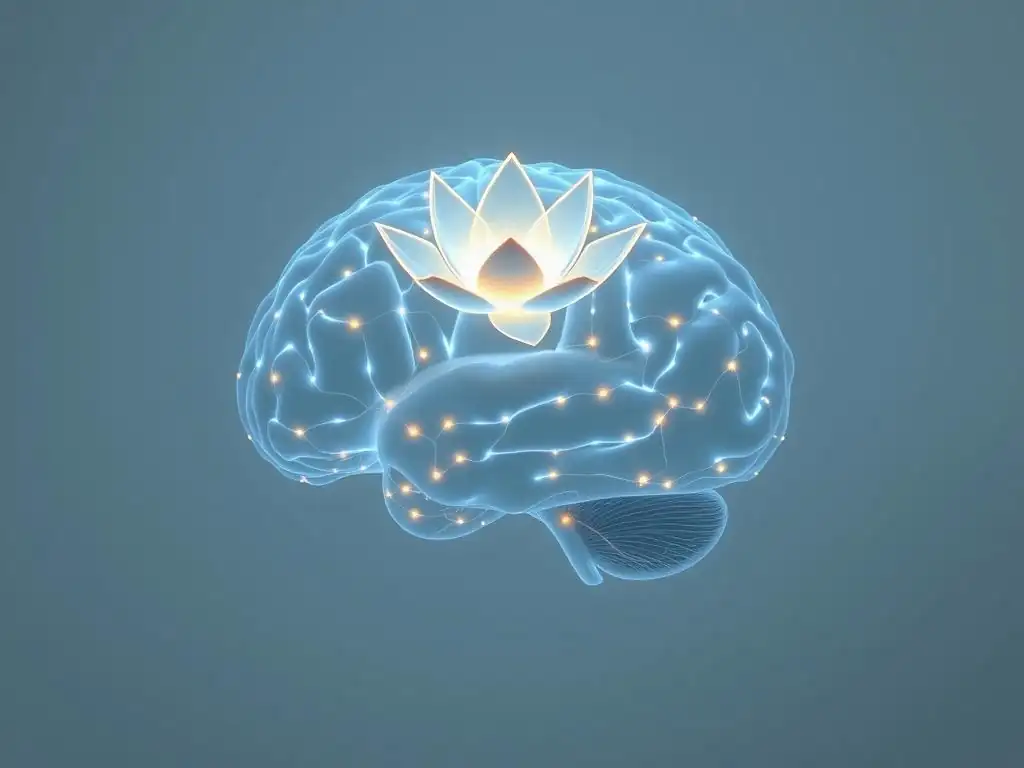
Meditation and the Prefrontal Cortex: Enhancing Focus and Decision-Making
The prefrontal cortex (PFC), located at the front of the brain, is the command center for executive functions. This includes crucial abilities like planning, decision-making, working memory, impulse control, and sustained attention. Regular meditation practice has been consistently shown to induce structural and functional changes in the PFC, particularly in the dorsolateral and ventromedial regions. Studies using MRI have reported increased cortical thickness and gray matter density in areas of the PFC in experienced meditators compared to control groups. For instance, research has indicated thicker cortical areas in regions associated with attention and sensory processing in long-term meditators.
Functionally, meditation enhances activity and connectivity within the prefrontal cortex and its connections to other brain regions. This leads to tangible improvements in cognitive performance. Meditators often exhibit better sustained attention, reduced mind-wandering, and improved ability to focus on tasks. Decision-making can become more deliberate and less impulsive, as the PFC gains better regulatory control over more primitive brain areas. This strengthening of the PFC is a prime example of how meditation strengthens brain connections better for higher-order cognitive functions essential for navigating complex modern life.
Meditation and the Amygdala: Reducing Stress and Anxiety
The amygdala is a small, almond-shaped structure deep within the brain that plays a central role in processing emotions, particularly fear and threat detection. In individuals experiencing chronic stress or anxiety disorders, the amygdala can become hyperactive, leading to heightened states of fear and reactivity.
Meditation has a significant impact on the amygdala, typically leading to a reduction in its size and activity in response to stressors. The same 2011 Psychiatry Research: Neuroimaging study mentioned earlier also found a decrease in gray matter density in the amygdala of participants after just 8 weeks of MBSR, correlated with reductions in stress levels.
Beyond structural changes, meditation also alters the functional connectivity between the amygdala and the prefrontal cortex. By strengthening the pathways from the PFC to the amygdala, the 'thinking' part of the brain gains better control over the 'alarm' part. This allows the individual to appraise potential threats more rationally and regulate emotional responses more effectively. This dampening of the amygdala's reactivity and the strengthening of its regulatory connections with the PFC is a key mechanism by which meditation strengthens brain connections better for managing stress, anxiety, and fear, promoting a greater sense of calm and emotional stability.
Meditation's Effects on the Default Mode Network (DMN): Cultivating Present Moment Awareness
The Default Mode Network (DMN) is a network of brain regions that becomes active when the mind is at rest or not focused on the external world. It's associated with mind-wandering, self-referential thinking, rumination about the past, and worrying about the future. While the DMN serves some necessary functions, excessive or uncontrolled DMN activity is linked to unhappiness, anxiety, and depression.
Meditation, particularly mindfulness practices, is remarkably effective at reducing DMN activity and altering its connectivity patterns. Studies using fMRI have shown decreased activity in key DMN nodes, such as the medial prefrontal cortex and posterior cingulate cortex, during meditation.
Furthermore, meditation strengthens the connections between the DMN and areas associated with executive control and attention, while weakening the connectivity within the DMN itself. This means that meditators become better at observing their mind-wandering thoughts without getting "stuck" in them. They can recognize when the DMN becomes active and disengage from its narrative pull, bringing their attention back to the present moment. This ability to step out of habitual thought loops and cultivate present-moment awareness is a significant outcome of how meditation strengthens brain connections better for metacognition and mental clarity.
Types of Meditation for Optimal Brain Connectivity
Mindfulness Meditation: Cultivating Awareness and Strengthening Neural Networks
Mindfulness meditation is perhaps the most widely studied form in neuroscience research. It involves bringing one's attention to the present moment, typically focusing on the breath, bodily sensations, or sounds, and observing thoughts and feelings without judgment. This practice directly trains the brain in attention regulation, body awareness, and emotional non-reactivity. By repeatedly returning attention to the chosen anchor, individuals strengthen the neural circuits in the prefrontal cortex and parietal lobe responsible for sustained attention and inhibitory control – the ability to ignore distractions.
Regular mindfulness meditation strengthens brain connections better by enhancing connectivity between the salience network (which detects important internal and external stimuli) and the executive control network (which manages attention and behavior). This improved integration allows for better prioritization of information and more adaptive responses. Furthermore, the non-judgmental observation aspect of mindfulness helps to weaken the automatic, reactive pathways associated with the amygdala and parts of the DMN, fostering a more balanced emotional landscape and reducing the tendency towards rumination.
Loving-kindness meditation (Metta) involves cultivating feelings of warmth, compassion, and kindness towards oneself and others. This practice focuses on generating positive emotional states and expanding them outwards. While perhaps less studied than mindfulness regarding basic attention networks, research indicates that loving-kindness meditation specifically impacts brain regions associated with empathy, social cognition, and emotional processing. Studies using fMRI have shown increased activity in areas like the temporal-parietal junction (involved in perspective-taking) and the insula (involved in processing emotions and bodily sensations) during loving-kindness meditation.
Practicing loving-kindness meditation strengthens brain connections better within the social brain network. It appears to enhance the brain's capacity for empathy and prosocial behavior by strengthening pathways involved in understanding others' emotional states and generating compassionate responses. This type of meditation can be particularly beneficial for individuals struggling with social anxiety or difficulty connecting with others, actively rewiring the brain towards greater openness and connection.
Focused Attention Meditation: Improving Concentration and Cognitive Control
Focused attention meditation involves directing attention to a single object, such as the breath, a mantra, or a candle flame, and returning the attention whenever the mind wanders. This is a rigorous workout for the brain's attentional systems. It directly strengthens the neural circuits involved in sustaining focus and inhibiting distracting stimuli, primarily within the prefrontal cortex and parietal lobe. The act of recognizing mind-wandering and intentionally bringing attention back is a key mechanism for building these cognitive muscles.
Consistent practice of focused attention meditation strengthens brain connections better for pure concentration and cognitive control. It enhances the efficiency of the executive attention network, making it easier to stay on task, resist distractions, and regulate impulses. This form of meditation is excellent for improving performance on tasks requiring sustained mental effort and can lay a strong foundation for other cognitive benefits derived from meditation.
Practical Tips for Building New Neural Connections with Meditation
Establishing a Consistent Meditation Practice: Frequency and Duration
Neuroplasticity, the brain's ability to change, is driven by consistent stimulation. Just as going to the gym once won't build muscle, meditating sporadically won't lead to significant, lasting changes in brain structure and function. The key to how meditation strengthens brain connections better lies in regularity.
Research suggests that noticeable changes can occur with relatively modest amounts of practice. Studies on mindfulness-based interventions often involve daily practice, typically ranging from 10 to 45 minutes, over a period of several weeks (e.g., 8 weeks for MBSR). Even short, consistent sessions – say, 10-15 minutes daily – can begin to yield benefits over time.
The cumulative effect of consistent practice is what facilitates the formation of new neural pathways and the strengthening of existing ones. It reinforces the desired cognitive patterns, making them more automatic. Aim for daily practice, even if it's brief. Scheduling it at the same time each day can help build a habit. Consider setting a realistic duration based on your schedule, starting small if necessary, and gradually increasing it as you become more comfortable. Consistency over intensity is generally more effective for long-term neuroplastic change.
Guided Meditations vs. Unguided Meditations: Choosing the Right Approach
For beginners, guided meditations can be incredibly helpful in establishing a practice and understanding the techniques. Guided meditations, often available through apps, websites, or recorded sessions, provide instruction on what to focus on, how to handle distractions, and how to cultivate specific states of mind. This structure can make it easier to stay engaged and learn the fundamentals without feeling lost or frustrated. They can help illustrate how meditation strengthens brain connections better by directing attention and awareness in specific ways.
As practice matures, individuals may transition to unguided meditations. Unguided meditation offers more freedom to explore one's own experience and develop internal discipline. Both approaches have value. Guided meditations can be great for learning new techniques (like loving-kindness) or for days when focus is challenging. Unguided practice allows for deeper self-exploration and strengthens the internal capacity to direct attention. Experiment with both to see what supports your practice best at different times.
Integrating Meditation into Daily Life: Maximizing Brain Benefits
While dedicated sitting practice is crucial, integrating mindful awareness into daily activities can significantly enhance the brain-boosting effects. This isn't about formal meditation sessions but about bringing the principles of mindfulness – attention, non-judgment, presence – to everyday moments. This could involve mindful eating (paying attention to the taste, texture, and smell of food), mindful walking (noticing the sensation of your feet on the ground), or simply taking a few conscious breaths before responding to an email or a challenging situation.
By extending mindful awareness beyond the formal sitting period, you are reinforcing the neural pathways cultivated during meditation throughout the day. This constant, gentle practice helps to solidify the brain changes, making the benefits more pervasive. It trains the brain to stay present and less reactive in real-world scenarios, demonstrating how integrating meditation strengthens brain connections better for practical, everyday resilience and well-being.
Meditation's Long-Term Effects on Brain Health and Cognitive Function
As we age, the brain naturally undergoes changes, sometimes leading to cognitive decline, including issues with memory, attention, and executive function. However, research suggests that practices like meditation can act as a protective factor against some aspects of age-related cognitive decline. The structural changes observed in meditators' brains, such as increased gray matter in the prefrontal cortex and hippocampus, are in areas that are often vulnerable to age-related atrophy. Maintaining or even increasing the volume and connectivity of these regions through meditation can help preserve cognitive function.
Long-term meditators, even older adults, often show better performance on cognitive tests compared to non-meditators of the same age. For example, studies have indicated that older adults with extensive meditation experience exhibit less age-related decline in gray matter volume in certain brain regions and perform better on tasks assessing attention and conflict monitoring. This suggests that meditation strengthens brain connections better over the lifespan, contributing to a more resilient and functional brain in later years.
Meditation as a Tool for Managing Mood Disorders
Mood disorders, such as depression and anxiety, are often associated with specific patterns of brain activity and connectivity, including hyperactivity in the amygdala and altered connectivity within the DMN. Meditation, particularly mindfulness-based interventions like MBSR and MBCT (Mindfulness-Based Cognitive Therapy), has been shown to be effective in reducing symptoms of these disorders. MBCT, for instance, is recognized as an effective relapse prevention treatment for individuals with recurrent depression, partly by training individuals to become more aware of negative thought patterns without getting drawn into them.
The brain changes induced by meditation directly counteract some of the neural correlates of mood disorders. By reducing amygdala reactivity, altering DMN activity, and strengthening the regulatory control of the prefrontal cortex, meditation helps to break the cycle of negative rumination and emotional reactivity characteristic of depression and anxiety. This demonstrates how meditation strengthens brain connections better to foster emotional regulation and mental resilience, offering a valuable complementary approach for managing these conditions.
The Future of Meditation and Neuroscience: Further Research and Applications
Emerging Technologies for Measuring Brain Changes During Meditation
The field of meditation neuroscience is rapidly evolving, driven by advancements in brain imaging and measurement technologies. While fMRI and EEG have provided foundational insights, newer techniques are offering even more detailed perspectives. For instance, magnetoencephalography (MEG) offers superior temporal resolution compared to fMRI, allowing researchers to track rapid changes in neural activity during meditation with greater precision. Diffuse optical imaging (DOI) and functional near-infrared spectroscopy (fNIRS) are portable technologies that can measure brain activity in more naturalistic settings, moving research out of the traditional lab environment.
Furthermore, the integration of artificial intelligence and machine learning is enabling researchers to analyze complex brain data from meditation studies more effectively, identifying subtle patterns of connectivity and activity. Wearable brain-sensing devices are also becoming more sophisticated, holding the potential for real-time feedback on brain states during meditation and potentially allowing individuals to track their own neuroplastic progress. These emerging technologies promise to deepen our understanding of exactly how meditation strengthens brain connections better and for whom.
Personalized Meditation Practices Based on Brain Activity
As our understanding of the brain's response to meditation grows, the potential for personalized meditation practices emerges. Future applications might involve using brain imaging or simpler neurofeedback tools to assess an individual's specific neural patterns – perhaps identifying areas of hyperactive amygdala, excessive DMN activity, or weak prefrontal connectivity. Based on this assessment, a personalized meditation "prescription" could be developed, recommending specific techniques (e.g., more loving-kindness for social connection, more focused attention for cognitive control) or even tailoring the duration and style of practice to target the individual's unique neurobiological profile.
This personalized approach could maximize the efficiency and effectiveness of meditation for specific goals or clinical conditions. By understanding precisely how meditation strengthens brain connections better for a given individual's brain architecture, interventions could become more targeted and impactful. While still largely in the realm of research, this future direction highlights the exciting potential for neuroscience to inform and enhance the ancient practice of meditation.
Conclusion: Meditation - A Powerful Tool for Brain Enhancement
The evidence from neuroscience is clear: meditation is far more than just a relaxation technique. It is a profound practice that actively reshapes the brain through the principles of neuroplasticity. Regular meditation strengthens brain connections better in areas critical for attention, emotional regulation, self-awareness, and cognitive flexibility. It promotes growth in structures like the hippocampus and prefrontal cortex while helping to dial down the activity in stress centers like the amygdala and quiet the incessant chatter of the Default Mode Network.
Whether through mindfulness, loving-kindness, or focused attention, consistent meditation practice builds new neural connections and fortifies existing ones, leading to tangible improvements in cognitive function, emotional resilience, and overall mental well-being. As research continues to uncover the intricate ways meditation influences brain architecture, its role as a powerful, accessible tool for enhancing brain health and navigating the complexities of modern life becomes increasingly evident. Embracing meditation is, in essence, choosing to become a more conscious architect of your own brain.
Frequently Asked Questions
How does meditation actually strengthen brain connections?
Meditation encourages neuroplasticity, meaning the brain can reorganize itself by forming new neural connections. Regular practice promotes stronger and more efficient pathways, improving cognitive function.
What specific types of meditation are most effective for building neural connections?
While mindfulness meditation is widely studied, practices focusing on compassion and loving-kindness also show promise. The key is consistent practice regardless of the specific type.
How long does it take to see noticeable changes in brain connections through meditation?
Significant changes vary, but studies suggest measurable improvements can be observed after just eight weeks of consistent meditation. Long-term practice yields even more profound benefits.
Can meditation reverse the effects of stress on brain connections?
Yes, chronic stress can weaken neural pathways. Meditation helps regulate the stress response and promotes the growth of new, resilient connections, potentially reversing some damage.
Is meditation a substitute for professional mental health treatment?
No, meditation is a complementary tool. While beneficial, it's not a replacement for therapy or medication when needed. It can enhance the effectiveness of professional treatment.
Final Reflection: The Ever-Expanding Landscape of the Mind
The ability to consciously reshape our brains through practices like meditation is not just a scientific curiosity; it's a revolutionary tool for personal growth and societal well-being. Understanding how meditation strengthens brain connections offers a powerful pathway to enhanced cognitive function, emotional regulation, and overall mental health—a critical need in our increasingly demanding world. The implications are vast, extending far beyond the individual to impact communities and even the future of human potential.
The profound impact of meditation on neuroplasticity is undeniable, reshaping our understanding of the brain's capacity for change throughout life. This isn't just about improved focus or stress reduction; it's about cultivating a more resilient, adaptable, and compassionate mind. As the Dalai Lama wisely stated, The time to repair the roof is when the sun is shining.
Meditation, in this context, is the act of proactively strengthening our mental architecture, preparing us for life's inevitable storms. This proactive approach to mental health is a cultural shift we are only beginning to fully appreciate.
Consider the potential. Imagine a world where mindfulness practices are integrated into education, workplaces, and healthcare systems. Imagine the reduced stress, increased empathy, and improved cognitive abilities that could result. You have the power to harness the transformative potential of meditation. Start small, be consistent, and witness the remarkable changes that unfold within your own mind. Embrace the opportunity to become the architect of your own brain, building a stronger, more resilient, and more compassionate self, one mindful moment at a time.
Unlock Your Brain's Potential: Start Meditating Today!
Thanks for exploring the incredible power of meditation and its impact on your brain's architecture! You've just discovered how this simple practice can cultivate new neural pathways, leading to enhanced focus, reduced stress, and a deeper sense of well-being. Now it's time to put this knowledge into action.
- Begin your meditation journey today: Even 5 minutes of daily practice can make a profound difference. Find a quiet space, close your eyes, and focus on your breath.
- Share your experience: Tell a friend or family member about the benefits you've learned – inspire them to join you on this transformative path.
- Explore guided meditations: Numerous free resources are available online; find one that resonates with you and makes the experience enjoyable.
Ready to witness the transformative power of meditation firsthand? What small step will you take today to build a stronger, more resilient mind?