
Mindfulness in Buddhist Philosophy for Daily Wellbeing


Welcome to Mind Care Guide, your sanctuary for nurturing inner peace and understanding.
Feeling overwhelmed by the daily grind? Ever wondered how ancient wisdom could unlock a more balanced and fulfilling life? Delve into our exploration of Mindfulness in Buddhist Philosophy for Daily Wellbeing, and discover how these timeless principles can be practically applied to cultivate calm, clarity, and resilience in your own journey. This isn't just about theory; it's about actionable steps towards a more mindful you. Ready to begin?
- Mindfulness in Daily Life: A Practical Guide
- Understanding Mindfulness
- Benefits of Mindfulness for Mental Health
- Integrating Mindfulness into Daily Life
- Applying Mindfulness to Life Challenges
- Deepening Your Mindfulness Practice
- The Science Behind Mindfulness and Wellbeing
- Common Misconceptions About Mindfulness
- Sustaining Your Mindfulness Journey
- Conclusion: Embracing Mindfulness for Lasting Wellbeing
- Frequently Asked Questions
- Final Reflection: Cultivating Inner Peace in a Frantic World
- Ignite Your Inner Peace: Start Your Mindfulness Journey Today
Mindfulness in Daily Life: A Practical Guide
Mindfulness, a practice rooted in ancient traditions, particularly within Buddhist philosophy, offers a profound path to navigating the complexities of modern life with greater ease and clarity. It involves paying deliberate attention to the present moment, without judgment. This simple yet powerful practice can significantly impact our mental and emotional states, fostering a sense of calm and perspective amidst daily challenges. Embracing mindfulness for daily wellbeing is a journey of self-discovery and conscious living.
This guide explores how the principles of mindfulness, drawing from its rich Buddhist heritage, can be integrated into your everyday routine to enhance mental health and overall wellbeing. We will delve into its core concepts, practical applications, and the scientific insights that support its effectiveness. By understanding and practicing mindfulness, we can cultivate a more peaceful, resilient, and fulfilling existence, truly embodying the potential for daily wellbeing that mindfulness offers.
Understanding Mindfulness
Mindfulness is often described as bringing one's complete attention to the present experience on a moment-by-moment basis. It's about observing thoughts, feelings, bodily sensations, and the surrounding environment without getting carried away by them or judging them as good or bad. This attentive awareness, central to the Mindfulness Buddhist approach to daily wellbeing, allows us to step out of autopilot and engage more fully with life as it unfolds.
The practice encourages a gentle curiosity and acceptance towards whatever arises in our awareness. It's not about emptying the mind or achieving a state of perpetual bliss, but rather about developing a skillful relationship with our internal and external experiences. Understanding mindfulness is the first step toward unlocking its potential for enhancing our daily wellbeing.
Core Principles of Mindfulness
The foundation of mindfulness practice rests on several core principles, deeply embedded in Buddhist teachings. One fundamental principle is non-judgment: observing experiences without labeling them or reacting emotionally. This allows for a clearer perception of reality, free from the distortions of our biases and expectations. Another key principle is acceptance, which involves acknowledging and allowing things to be as they are, rather than resisting or trying to change them. This acceptance doesn't mean resignation, but rather a realistic starting point for understanding and potentially responding skillfully.
A third crucial principle is beginner's mind, approaching each moment with freshness and curiosity, as if seeing it for the first time. This principle helps to break free from habitual thought patterns and preconceptions. Finally, non-striving emphasizes simply being present rather than trying to achieve a particular outcome or state. These principles, when cultivated through practice, form the bedrock for integrating mindfulness for daily wellbeing, allowing us to engage with life from a place of greater wisdom and peace, reflecting the essence of the Mindfulness Buddhist path.
Mindfulness and Wellbeing
Mindfulness and wellbeing are intrinsically linked. By training our attention to rest in the present moment, we reduce the time spent dwelling on past regrets or future anxieties, common sources of distress that detract from daily wellbeing. This shift in focus allows for a greater appreciation of the present, leading to increased feelings of contentment and peace. The ability to observe thoughts and emotions without immediate reactivity also provides space to choose a more skillful response, rather than being swept away by automatic reactions.
Furthermore, mindfulness cultivates self-awareness, helping us to recognize our patterns of thought and behavior that may be contributing to suffering. This insight is crucial for making positive changes and fostering psychological flexibility. Regular practice has been associated with numerous benefits, including reduced symptoms of depression and anxiety, improved sleep quality, and enhanced overall life satisfaction. This demonstrates the profound impact that embracing mindfulness for daily wellbeing can have on our mental and emotional health.
Key Concepts in Mindfulness Practice
Several key concepts underpin the practice of mindfulness, offering deeper insights into its application for daily wellbeing. One such concept is impermanence (anicca in Pali), the understanding that all things are constantly changing. Reflecting on impermanence helps to loosen our attachment to pleasant experiences and our aversion to unpleasant ones, fostering a sense of equanimity. Another concept is non-self (anatta), the understanding that there is no permanent, unchanging self. This can help to reduce the burden of ego and self-centered thinking, opening the door to greater compassion.
A core practice concept is concentration (samadhi), the ability to focus the mind on a single object. While not the sole aim of mindfulness, developing concentration provides a stable foundation for clear awareness. Equally important is insight (vipassana), the clear seeing of the nature of reality, often arising from sustained mindful attention. These concepts, drawn from the rich tapestry of Buddhist philosophy, provide a framework for a deeper understanding and practice of mindfulness, guiding practitioners towards profound daily wellbeing.
Benefits of Mindfulness for Mental Health
The adoption of mindfulness practices has been widely recognized for its significant positive effects on mental health. By training the mind to be present and non-reactive, individuals can develop greater resilience to stress and emotional challenges. This section explores specific mental health benefits derived from consistently applying mindfulness techniques, highlighting how this practice serves as a powerful tool for psychological wellness.
Integrating mindfulness into one's routine contributes to a more balanced and stable mental state. It provides practical strategies for managing difficult emotions and thoughts, thereby reducing their potential to overwhelm us. The cultivation of a mindful attitude is not just about moments of calm, but about building a sustainable foundation for improved mental health in the long run.
Reducing Stress and Anxiety
One of the most well-documented benefits of mindfulness is its effectiveness in reducing stress and anxiety. By focusing on the present moment, mindfulness helps to interrupt the cycle of worry and rumination that often fuels anxious states. Studies have shown that participation in an 8-week Mindfulness-Based Stress Reduction (MBSR) program can lead to a reduction in perceived stress levels by approximately 30% and a significant decrease in anxiety symptoms. For example, individuals reporting high baseline stress often show marked improvements, sometimes moving from severe anxiety classifications to moderate or mild after a structured course.
Mindfulness teaches individuals to observe stressful thoughts and physical sensations associated with anxiety without becoming entangled in them. This creates a psychological distance, allowing for a more measured response rather than an automatic fight-or-flight reaction. Regular practice can also lower physiological markers of stress, such as cortisol levels. A study on healthcare professionals, a high-stress group, found that a brief daily mindfulness practice (around 10-15 minutes) over several weeks resulted in a measurable decrease in self-reported stress and an improvement in mood, illustrating the power of even small amounts of mindfulness for daily wellbeing.
Enhancing Emotional Regulation
Mindfulness significantly enhances our ability to regulate emotions, a crucial skill for maintaining mental health. Instead of suppressing or being overwhelmed by emotions, mindfulness teaches us to acknowledge them with awareness and acceptance. This process, often referred to as "riding the wave" of emotion, allows intense feelings to arise, exist, and eventually pass without leading to impulsive or destructive behaviors. For instance, someone feeling intense anger might learn to recognize the physical sensations and thoughts associated with the anger without immediately acting on them, choosing instead to pause and respond thoughtfully.
Research indicates that mindfulness training can improve emotional regulation skills. Participants in mindfulness interventions often report a greater ability to tolerate distress and a reduced tendency to react negatively to unpleasant emotional experiences. For example, a study involving individuals with difficulties in emotional regulation showed improvements in affect tolerance and decreased emotional intensity after just a few weeks of consistent mindfulness practice. This enhanced capacity for emotional regulation is a cornerstone of psychological resilience and a key benefit of cultivating mindfulness for daily wellbeing.
Cultivating Compassion and Self-Acceptance
Mindfulness practice naturally fosters compassion, both towards oneself and others. By developing a non-judgmental awareness of our own internal experiences, including our struggles and imperfections, we build a foundation of self-compassion. This involves treating ourselves with the same kindness and understanding we would offer a friend facing similar difficulties. For someone struggling with self-criticism, mindfulness can help them observe critical thoughts without believing them absolutely, creating space for a gentler inner dialogue.
Extending this mindful awareness outwards cultivates empathy and compassion for others. Understanding our shared human vulnerability and the universal experience of suffering can lead to deeper connections and more compassionate interactions. Studies have shown that mindfulness meditation can increase activity in brain regions associated with empathy and compassion, such as the insula and temporoparietal junction. For example, a study on participants practicing loving-kindness meditation, a mindfulness variation focused on compassion, demonstrated increased positive emotions and social connection. This cultivation of compassion and self-acceptance is a transformative aspect of the Mindfulness Buddhist path to daily wellbeing.
Integrating Mindfulness into Daily Life
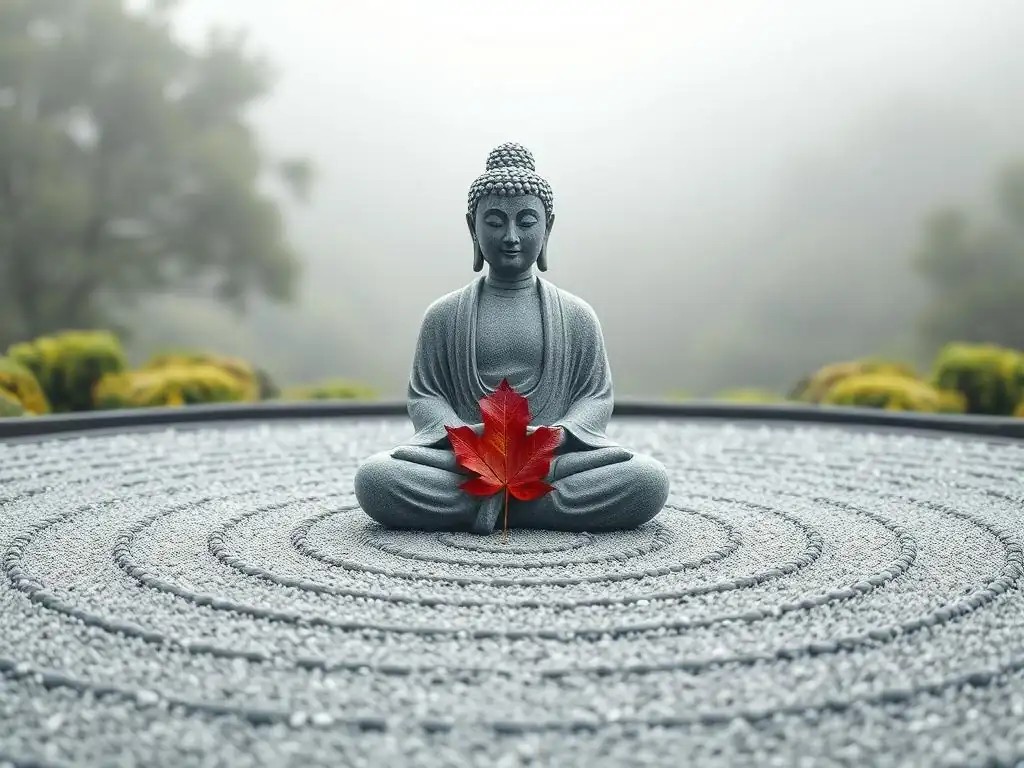
Bringing mindfulness off the meditation cushion and into the ebb and flow of daily life is where its true power for enhancing wellbeing lies. It's not about adding another task to an already busy schedule, but about shifting the way we engage with our existing activities. This integration transforms routine moments into opportunities for present moment awareness, making mindfulness accessible and sustainable for everyone seeking daily wellbeing.
Finding creative and simple ways to weave mindful moments throughout the day is key. This section offers practical guidance on incorporating mindfulness into various aspects of your routine, from formal meditation techniques to informal practices that can be done anywhere, anytime. The goal is to cultivate a continuous thread of awareness that supports a more peaceful and engaged way of living.
Practical Mindfulness Exercises
Integrating mindfulness into daily life doesn't always require sitting meditation. Numerous short, practical exercises can be performed throughout the day. One simple exercise is mindful breathing: take a few moments to simply notice the sensation of breath entering and leaving the body. This can be done while waiting in line, before a meeting, or during a break. Another exercise is mindful walking: pay attention to the sensations in your feet as they touch the ground, the movement of your legs, and the rhythm of your steps.
Another valuable practice is mindful eating: paying full attention to the experience of eating, noticing the colors, smells, textures, and tastes of your food, chewing slowly, and observing the sensations of hunger and fullness. Even simple tasks like washing dishes or brushing teeth can become opportunities for mindfulness by focusing entirely on the sensory experience. Regularly incorporating these brief practices helps build the muscle of attention and presence, contributing significantly to mindfulness for daily wellbeing. For example, dedicating just 5 minutes during your commute to mindful breathing can shift your state for the rest of the morning.
Mindfulness Meditation Techniques
Formal mindfulness meditation techniques provide a structured way to train attention and cultivate awareness. One common technique is focused attention meditation, where you choose an object of focus, such as the breath, and gently return your attention to it whenever the mind wanders. This practice strengthens concentration and helps you become more aware of thought patterns. A typical session might involve sitting comfortably for 10-20 minutes, simply observing the breath.
Another technique is open monitoring meditation, where you observe whatever arises in your awareness – thoughts, feelings, sounds – without latching onto anything in particular or judging it. This cultivates a broader, non-reactive awareness. Body scan meditation involves systematically bringing attention to different parts of the body, noticing physical sensations.
Regular practice of these techniques, even for short durations like 15 minutes daily, has been shown to build mental resilience and enhance overall mindfulness for daily wellbeing. Studies on regular meditators often show structural changes in the brain associated with attention and emotional regulation after consistent practice over several months.
Creating a Mindful Environment
Creating a mindful environment, both externally and internally, supports the integration of mindfulness into daily life. Externally, this might involve simplifying your physical space to reduce distractions, incorporating elements that promote calm (like plants or natural light), or setting aside a specific quiet spot for formal practice if possible. It's about intentionally arranging your surroundings to make presence easier.
Internally, creating a mindful environment involves cultivating an attitude of intentionality and awareness in your interactions and activities. This means approaching tasks with full attention, minimizing multitasking, and consciously choosing how to spend your time and energy. It also involves setting boundaries to protect your mental space, perhaps by limiting exposure to overwhelming news or social media.
By consciously shaping both our external and internal worlds, we create fertile ground for mindfulness to flourish, supporting sustained mindfulness for daily wellbeing. For instance, dedicating the first 15 minutes of your day to quiet presence before checking emails can significantly impact your mindset.
Applying Mindfulness to Life Challenges
Life inevitably presents challenges, from physical discomfort to difficult emotions and setbacks. Mindfulness offers powerful tools for navigating these experiences with greater wisdom, resilience, and less suffering. It teaches us how to meet difficulty not with resistance or avoidance, but with presence and a willingness to learn. Applying mindfulness in these moments is crucial for maintaining our equilibrium and fostering daily wellbeing.
This section explores how mindfulness can be specifically applied to common life challenges, demonstrating its practical utility beyond moments of calm. By learning to face adversity mindfully, we transform potential sources of stress into opportunities for growth and deeper self-understanding.
Mindfulness for Pain Management
Mindfulness has shown significant promise as a complementary approach to managing chronic pain. Rather than trying to make the pain disappear, mindfulness teaches individuals to relate differently to the sensation of pain. This involves bringing non-judgmental awareness to the physical sensations, observing their intensity, location, and quality without adding layers of fear, frustration, or catastrophic thinking. This conscious observation can often reduce the psychological suffering associated with pain.
Programs like MBSR were initially developed, in part, to help patients cope with chronic pain. Studies have demonstrated that mindfulness training can lead to a reduction in pain intensity ratings by approximately 25-30% and a significant decrease in pain-related interference with daily activities in various patient populations, including those with back pain or fibromyalgia. By shifting attention from the narrative about the pain to the direct experience of the sensation, individuals can often find moments of relief and develop greater functional capacity, highlighting the practical benefits of mindfulness for daily wellbeing even amidst physical difficulty.
Overcoming Negative Thoughts
Negative thought patterns, such as rumination, worry, and self-criticism, are major contributors to mental distress. Mindfulness provides a framework for working with these thoughts skillfully. Instead of trying to suppress or argue with negative thoughts, mindfulness teaches us to recognize them simply as mental events – thoughts, not facts. We learn to observe them arriving and passing, like clouds in the sky, without getting caught up in their content.
This practice of 'decentering' from thoughts weakens their power and reduces their emotional impact. For example, someone experiencing self-critical thoughts might learn to say internally, "Ah, there is the thought 'I'm not good enough'," rather than getting lost in the feeling of inadequacy. Regular mindfulness meditation, particularly open monitoring, strengthens this ability. Research suggests that consistent practice can reduce the frequency and intensity of negative intrusive thoughts, improving mood and overall mental clarity, demonstrating its efficacy in overcoming significant mental hurdles and fostering mindfulness for daily wellbeing.
Cultivating Resilience
Resilience is the capacity to bounce back from adversity, and mindfulness is a key factor in its development. By cultivating present moment awareness and non-judgmental acceptance, mindfulness helps us to navigate difficult experiences with greater equanimity. When faced with a setback, a mindful person is better equipped to observe their emotional reaction without being overwhelmed, assess the situation clearly, and respond deliberately rather than react impulsively.
Mindfulness enhances resilience by improving emotional regulation, increasing self-awareness, and fostering a sense of perspective. It helps individuals recognize that difficult feelings and situations are temporary and that they possess the inner resources to cope. Longitudinal studies tracking mindfulness practitioners over time have shown improvements in psychological resilience scores and a reduced likelihood of developing mental health issues following stressful life events compared to non-practitioners. This ability to meet challenges with presence and acceptance is a powerful outcome of cultivating mindfulness for daily wellbeing.
Deepening Your Mindfulness Practice
Embarking on a mindfulness journey is often just the beginning. For those who wish to explore the practice more deeply and integrate it more fully into their lives, there are various avenues available. Deepening your practice can lead to more profound insights, greater stability of mind, and a more sustained experience of mindfulness for daily wellbeing.
This section provides guidance on how to progress beyond the initial stages of mindfulness, suggesting resources and pathways for continued learning and development. Engaging with experienced teachers and structured programs can provide invaluable support and understanding as you navigate the nuances of mindful living.
Recommended Resources on Mindfulness
Numerous resources are available to support and deepen mindfulness practice, many drawing from the rich lineage of Buddhist philosophy. Seminal books like "Wherever You Go, There You Are" by Jon Kabat-Zinn offer accessible introductions, while works like "Mindfulness in Plain English" by Henepola Gunaratana provide clear, practical guidance rooted in Buddhist tradition. More in-depth texts, such as "The Heart of the Buddha's Teaching" by Thich Nhat Hanh, offer a broader philosophical context.
Audio recordings and guided meditations are also excellent resources. Many apps and websites offer guided sessions ranging from a few minutes to longer practices. While specific names cannot be listed here, searching for "mindfulness guided meditation" or "Buddhist mindfulness talks" will yield numerous options. Utilizing a variety of resources can help practitioners find approaches that resonate with them and sustain their motivation to integrate mindfulness for daily wellbeing.
Finding a Qualified Mindfulness Teacher
Learning mindfulness from a qualified teacher can significantly enhance your practice and understanding. A good teacher can provide personalized guidance, clarify doubts, and help navigate difficulties that may arise. Look for teachers who have undergone rigorous training, often through established mindfulness centers or programs, and who have a strong personal practice background, potentially rooted in contemplative traditions like Buddhism.
Many mindfulness centers offer introductory courses (like MBSR or MBCT - Mindfulness-Based Cognitive Therapy) led by certified instructors. These programs provide a structured curriculum and group support, which can be highly beneficial. Online platforms also connect students with qualified teachers, offering live or recorded sessions. Engaging with a teacher provides accountability and deeper insights into the subtleties of mindful awareness, fostering a more robust and sustainable mindfulness for daily wellbeing.
Local Mindfulness Programs
Participating in local mindfulness programs offers the benefit of in-person instruction and community support. Many cities have meditation centers, community centers, or healthcare facilities that offer mindfulness classes or workshops. These programs often range from short introductory sessions to multi-week courses or ongoing practice groups.
Joining a local group provides a sense of connection with fellow practitioners, which can be motivating and provide opportunities to share experiences and learn from others. Search online for "mindfulness classes near me" or check with local spiritual centers, universities, or hospitals. Engaging in a local program offers a structured path and a supportive environment, crucial for establishing and maintaining a consistent mindfulness for daily wellbeing practice.
The Science Behind Mindfulness and Wellbeing

While mindfulness has ancient roots, modern science is increasingly validating its benefits for mental and physical health. Neuroscientific research, psychological studies, and clinical trials are shedding light on how mindfulness impacts the brain, reduces stress, and improves overall wellbeing. Understanding the scientific basis can strengthen confidence in the practice and highlight its potential for enhancing daily wellbeing.
This section explores some of the key scientific findings related to mindfulness, providing evidence for its efficacy. It bridges the gap between ancient wisdom and contemporary understanding, demonstrating that the benefits of mindfulness are supported by empirical data.
Research on the Effects of Mindfulness on the Brain
Neuroimaging studies, particularly using fMRI (functional magnetic resonance imaging), have provided fascinating insights into how mindfulness practice affects brain structure and function. Research shows that long-term meditators often have increased gray matter density in areas associated with attention, self-awareness, and emotional regulation, such as the prefrontal cortex and the insula. Conversely, areas associated with the fight-or-flight response and stress, like the amygdala, may show reduced activity or structural changes.
Studies have also observed changes in brain connectivity patterns. Mindfulness practice appears to strengthen connections between the prefrontal cortex (involved in executive control and attention) and the amygdala, suggesting improved regulation of emotional responses. For example, research at institutions like Harvard and the University of Wisconsin-Madison has consistently reported these structural and functional changes after just 8 weeks of regular mindfulness practice. These findings provide a biological basis for the reported improvements in emotional regulation and stress reduction, underpinning the impact of mindfulness on daily wellbeing.
Mindfulness and its Impact on Physiological Stress
Beyond subjective reports of reduced stress, mindfulness practice has been shown to impact physiological stress markers. The body's stress response involves the release of hormones like cortisol. Chronic stress, characterized by elevated cortisol levels, is linked to various health problems. Research indicates that regular mindfulness meditation can lead to a reduction in cortisol levels.
For instance, studies have shown that participants in mindfulness-based programs exhibit lower levels of cortisol in saliva or blood samples compared to control groups, particularly in response to stress induction tasks. Mindfulness also influences the autonomic nervous system, shifting it towards a more parasympathetic (rest and digest) state and away from a sympathetic (fight or flight) state. This is often reflected in changes like reduced heart rate and blood pressure in mindful individuals. These physiological changes underscore how mindfulness practice directly counteracts the effects of stress, contributing significantly to physical and mental daily wellbeing.
Future Research Directions on Mindfulness
Despite the substantial research already conducted, the scientific exploration of mindfulness is ongoing, with many exciting avenues for future investigation. Researchers are increasingly interested in understanding the specific mechanisms through which mindfulness exerts its effects, such as its impact on gene expression, the microbiome, and neuroplasticity in different populations and conditions.
Future research aims to explore the effectiveness of mindfulness interventions for a wider range of physical and mental health conditions, including specific psychiatric disorders, chronic illnesses, and cognitive decline. There is also interest in tailoring mindfulness programs to different age groups and cultural contexts. Longitudinal studies are needed to track the long-term effects of mindfulness practice over decades. These research efforts continue to deepen our understanding of the profound potential of mindfulness for enhancing daily wellbeing across diverse contexts.
Common Misconceptions About Mindfulness
As mindfulness gains popularity, it's important to address common misunderstandings that can hinder practice or create unrealistic expectations. Clearing up these misconceptions helps to approach mindfulness with a realistic and informed perspective, essential for cultivating genuine mindfulness for daily wellbeing.
This section tackles some frequently encountered myths and concerns about mindfulness, providing clarity and encouraging a more accurate understanding of what the practice entails and what it can realistically offer.
Addressing Misconceptions About Mindfulness
One common misconception is that mindfulness is about emptying the mind or stopping thoughts. This is inaccurate; the mind naturally produces thoughts. Mindfulness is about observing thoughts without judgment, not eliminating them. Another myth is that mindfulness is a quick fix for problems. While benefits can emerge relatively quickly, it is a practice that requires consistent effort over time, not a magical solution.
Some people mistakenly believe mindfulness is a religious practice, specifically tied to Buddhism. While its roots are in Buddhist philosophy, modern mindfulness programs are secular and accessible to people of all backgrounds. It is a universal human capacity that can be cultivated. Addressing these points is vital for anyone beginning or continuing their journey, ensuring they approach mindfulness for daily wellbeing with accurate expectations. For example, recognizing that your mind will wander during meditation is not a failure, but a normal part of the process.
Addressing Concerns About Mindfulness Practice
Concerns about mindfulness practice often arise regarding its difficulty or potential negative effects. Some worry they "can't do it" because their mind is too busy; however, mindfulness is precisely for training a busy mind. The challenge is the practice. Another concern is that mindfulness might make things worse, particularly for individuals with certain mental health conditions. While rare, it's true that for some individuals, especially those with trauma or severe mental illness, mindfulness should be approached cautiously and ideally under the guidance of a therapist or teacher familiar with their condition.
It's also a concern that mindfulness can feel uncomfortable when first confronting difficult emotions or thoughts that have been avoided. This discomfort is a normal part of the process of increasing awareness. It's important to practice with self-compassion and gentleness, perhaps starting with shorter durations. Acknowledging these potential concerns allows individuals to approach mindfulness for daily wellbeing with realistic expectations and appropriate support if needed.
Clarifying Ethical Considerations
While mindfulness practice itself is generally considered beneficial, there are ethical considerations, particularly regarding its application and teaching. One key consideration is the importance of qualified teaching. As mindfulness grows, so does the number of individuals offering training; ensuring teachers have adequate training, personal practice, and ethical guidelines is crucial to protect participants.
Another consideration is the potential for "McMindfulness" – the decontextualization and commercialization of mindfulness, stripping it of its ethical and compassionate dimensions rooted in Buddhist thought, and using it solely for stress reduction or performance enhancement without addressing underlying causes of suffering or promoting ethical conduct. Clarifying that authentic mindfulness, particularly when drawing from its Buddhist source, involves cultivating ethical awareness, compassion, and wisdom alongside attention training is important. This ensures that the pursuit of mindfulness for daily wellbeing is holistic and grounded in integrity.
Sustaining Your Mindfulness Journey
Establishing a consistent mindfulness practice is a significant step, but sustaining it over time presents its own set of challenges and opportunities. Life's demands, fluctuations in motivation, and the natural tendency for the mind to revert to old habits can make ongoing practice difficult. This section offers strategies and encouragement for maintaining your mindfulness journey, ensuring its benefits for daily wellbeing are lasting.
Building mindfulness into a sustainable habit requires intentionality, patience, and adaptability. Connecting with others and finding ways to refresh your practice can provide valuable support and renewed inspiration.
Making Mindfulness a Habit
Making mindfulness a habit involves integrating it seamlessly into your daily routine, much like brushing your teeth or eating meals. One effective strategy is to start small – commit to just 5-10 minutes of formal practice each day. Consistency is more important than duration, especially in the beginning. Try linking your practice to an existing habit, such as meditating immediately after waking up or before going to bed.
Another strategy is to schedule your practice. Treat it like any other important appointment in your calendar. Utilize reminders on your phone or computer if helpful. Don't aim for perfection; simply show up for the practice, even when you don't feel like it or your mind is particularly restless. Over time, with repeated effort, the neural pathways associated with mindfulness strengthen, and the practice becomes more natural, solidifying mindfulness for daily wellbeing as a core part of your life. A study on habit formation suggests that consistency over approximately 66 days can be sufficient to form a lasting habit.
Overcoming Obstacles to Mindfulness
Practitioners inevitably encounter obstacles on their mindfulness journey. Common challenges include feeling too busy, experiencing boredom or restlessness during practice, doubting its effectiveness, or getting discouraged by a wandering mind. Recognizing these as normal parts of the process is the first step.
When feeling too busy, remember that even a few mindful breaths can be beneficial; mindfulness isn't about finding extra time but about changing how you use the time you have. If bored or restless, try gently bringing curiosity to those sensations themselves. Doubts are natural thoughts; observe them without getting caught up.
A wandering mind is not a failure; each time you notice your mind has wandered and gently bring it back to the present, you are strengthening the muscle of attention. Approach obstacles with patience, self-compassion, and a sense of humor, viewing them as opportunities for deeper learning and practice, reinforcing your commitment to mindfulness for daily wellbeing.
Connecting with a Community of Practitioners
Connecting with others who are also practicing mindfulness can provide invaluable support, motivation, and shared wisdom. Joining a meditation group, attending retreats or workshops, or participating in online forums can foster a sense of community and reduce feelings of isolation that can sometimes arise in a solitary practice.
Sharing experiences, challenges, and insights with others can normalize difficulties and provide new perspectives. Group practice can also deepen the experience of meditation through shared presence. Many centers offer drop-in sessions or ongoing classes. For example, a local Buddhist center might host weekly sitting groups open to the public. Engaging with a community strengthens your commitment and enriches your understanding, helping you sustain your mindfulness for daily wellbeing journey over the long term.
Conclusion: Embracing Mindfulness for Lasting Wellbeing
Mindfulness, with its roots in profound Buddhist philosophy, offers a powerful and accessible path to enhancing daily wellbeing. It is a practice of cultivating present moment awareness, approached with non-judgment and curiosity. As we have explored, integrating mindfulness into our lives, whether through formal meditation or informal daily exercises, yields significant benefits for mental health, including reduced stress and anxiety, improved emotional regulation, and increased compassion.
Embracing mindfulness is not about eliminating challenges but about developing the capacity to meet them with greater presence, wisdom, and resilience. While misconceptions exist, understanding the core principles and scientific backing of mindfulness can empower us to practice effectively. By making mindfulness a consistent habit, overcoming obstacles with patience, and connecting with supportive communities, we can sustain this transformative journey. Ultimately, cultivating mindfulness for daily wellbeing allows us to live more fully, peacefully, and authentically, experiencing the richness of each moment.
Frequently Asked Questions
What is Mindfulness in Buddhist Philosophy?
Mindfulness is a core principle in Buddhist philosophy that emphasizes being fully present in the moment. It involves cultivating awareness of thoughts, feelings, and surroundings to achieve mental clarity and emotional balance.
How can Mindfulness improve daily well-being?
Practicing mindfulness can enhance daily well-being by reducing stress, improving focus, and fostering a sense of calm. Regular practice encourages individuals to engage more deeply with their experiences, leading to greater life satisfaction.
What are some effective Mindfulness practices from Buddhism?
Effective mindfulness practices include meditation, breath awareness, and mindful walking. These techniques help individuals develop a deeper connection with their thoughts and feelings, promoting overall mental wellness.
How does the concept of impermanence relate to Mindfulness?
The concept of impermanence teaches that all experiences are transient. Understanding this principle helps individuals embrace mindfulness, as it encourages acceptance of change and reduces attachment to negative emotions, enhancing daily well-being.
Can anyone practice Mindfulness for better mental health?
Yes, mindfulness is accessible to everyone. By integrating mindfulness techniques into daily routines, individuals can effectively manage stress, improve focus, and support their mental health journey, regardless of their background or experience level.
Final Reflection: Cultivating Inner Peace in a Frantic World
The pursuit of mindfulness, rooted in Buddhist philosophy, is not a fleeting trend; it's a timeless antidote to the pervasive stress and anxiety of modern life. The practices explored in this article – from mindful breathing to loving-kindness meditation – offer tangible tools for navigating the complexities of daily existence and cultivating a deeper sense of wellbeing. These aren't just abstract concepts; they are practical techniques that can be integrated into anyone's life, regardless of their background or beliefs.
The enduring relevance of Buddhist mindfulness lies in its ability to connect us to the present moment, a crucial counterpoint to our often future-oriented or regret-laden past. It's a practice that has profoundly shaped my own life, fostering a greater appreciation for the simple joys and a more compassionate understanding of myself and others. As the Dalai Lama wisely stated, Peace is not merely the absence of war, but the presence of justice, compassion, and the understanding of others.
Mindfulness, in its essence, cultivates precisely these qualities, leading to a more peaceful and fulfilling life.
Now, consider how you can incorporate these practices into your own daily routine. Start small – perhaps with just five minutes of mindful breathing each morning. Observe the sensations in your body, the thoughts in your mind, without judgment. Let this be your starting point on a journey towards greater self-awareness, inner peace, and a more meaningful connection with the world around you. The path to wellbeing is a personal one, but the tools provided by Buddhist mindfulness are readily available to guide you.
Ignite Your Inner Peace: Start Your Mindfulness Journey Today
Thanks for taking the time to explore the power of mindfulness within Buddhist philosophy! We hope you gained valuable insights into cultivating inner peace and wellbeing. Now it's time to put these principles into practice. Ready to transform your daily life?
- Begin a daily mindfulness practice: Even 5 minutes a day can make a significant difference. Try focusing on your breath, body sensations, or sounds around you. This is the cornerstone of your journey.
- Share your experience: Connect with others and discuss your mindfulness journey. Perhaps start a conversation with a friend or family member about your newfound insights.
- Explore further: Dive deeper into Buddhist teachings by researching a specific practice that resonates with you, such as loving-kindness meditation or mindful walking.
What small step will you take today to integrate mindfulness into your daily life?