
The Power of Routine: Why Structure Helps Kids with Mental Health Issues

Welcome to Mind Care Guide, a space dedicated to understanding and nurturing your mental well-being.
Are you looking for ways to support the mental health of the children in your life? It's often the simplest things that make the biggest difference. This week, we're diving deep into the power of routine, uncovering how a structured environment can provide invaluable Kids’ routine mental health support. Discover practical tips and insights to help you create a nurturing space for your children to thrive. Intrigued? Let's explore the profound impact routine can have.
The Power of Routine: Why Structure Helps Kids with Anxiety
- Introduction: Understanding the Link Between Routine and Children's Anxiety
- The Importance of Stable Routines for Children’s Anxiety
- Anxiety Challenges in Kids: The Role of Routine as Support
- Creating Effective Routines for Kids' Anxiety Support
- Tips for Parents: Implementing and Maintaining Healthy Routines for Children
- The Benefits of Routine: Long-Term Impact on Kids' Anxiety
- Case Studies: Real-Life Examples of Routine's Positive Impact on Children's Anxiety
- Overcoming Challenges: Addressing Resistance to Routine in Children
- Conclusion: Embracing Routine for a Healthier, Happier Childhood
-
Frequently Asked Questions
- What is the primary benefit of routine for children's mental health?
- How does a consistent daily schedule contribute to a child's well-being?
- Can routine help children who are already experiencing mental health challenges?
- What are some examples of routines that support kids’ mental health?
- How can parents implement new routines effectively for their children?
- Final Reflection: Cultivating Calm Through Routine
- Unlock Your Child's Potential: Build a Brighter Future
Introduction: Understanding the Link Between Routine and Children's Anxiety
Anxiety is a prevalent challenge for many children today, manifesting in various forms from excessive worrying to physical symptoms like stomach aches. While anxiety can stem from multiple factors, a lack of predictability in a child's environment often exacerbates these feelings. Children thrive on knowing what to expect; it provides a sense of stability in a world that can often feel overwhelming.
Establishing consistent daily routines is a powerful tool in managing childhood anxiety. For parents and caregivers seeking effective strategies for Kids’ routine mental health support, understanding this connection is crucial. A well-structured day acts as a gentle framework, reducing uncertainty and creating a foundation upon which children can build confidence and emotional resilience. This article explores how routine specifically addresses different types of anxiety in children and provides practical guidance for implementing supportive structures.
The Importance of Stable Routines for Children’s Anxiety
Why Predictability Matters: Reducing Anxiety Triggers
Children with anxiety are often highly sensitive to change and uncertainty. The unknown can trigger a cascade of worries: What will happen next? Will it be bad? How should I react? A predictable routine significantly reduces the number of these 'unknowns' in a child's day. Knowing that certain activities happen at specific times or in a specific order creates a sense of reliability.
Research in child development consistently shows that predictability is a cornerstone of a secure environment. For instance, studies on young children indicate that consistent feeding and sleeping schedules contribute to better emotional regulation. While not specific to clinical anxiety rates, this principle extends to older children dealing with anxiety disorders.
Experts estimate that even small, consistent actions, like a predictable morning sequence, can reduce anticipatory anxiety by a noticeable margin, perhaps 10-15% in some sensitive children, simply by removing the stress of figuring out what comes next. This reduction in daily triggers helps children feel more in control and less overwhelmed by their environment.
How Consistent Schedules Foster a Sense of Security and Control
A consistent schedule provides children with a roadmap for their day. This roadmap is not just about efficiency; it's about empowerment. When a child knows what is expected of them and when, they gain a sense of agency. They can mentally prepare for transitions, manage their time (even at a basic level), and anticipate enjoyable activities, rather than being constantly on edge about unexpected demands or changes.
Consider a child who worries about school. A consistent morning routine ensures they know exactly when they need to get dressed, eat breakfast, and leave, reducing the frantic rush and uncertainty that can amplify school-related anxiety. Similarly, a predictable bedtime routine signals to their body and mind that it's time to wind down, improving sleep quality, which is vital for managing anxiety. This consistent structure acts like a sturdy anchor, helping children feel grounded and secure, offering vital Kids’ routine mental health support by building resilience against daily stressors.
Anxiety Challenges in Kids: The Role of Routine as Support
Addressing Generalized Anxiety Disorder Through Structured Daily Activities
Generalized Anxiety Disorder (GAD) in children is characterized by excessive worry about a variety of things – school performance, future events, safety of family members, and more. This constant state of worry can be mentally exhausting and make it difficult for children to focus or relax. A structured daily routine provides a much-needed framework that helps contain this diffuse anxiety.
By scheduling specific times for activities like homework, chores, free play, and family time, a routine reduces the open-endedness that can feed GAD. For example, knowing that homework time is from 4:00 PM to 5:00 PM allows a child to focus on that task during that period, rather than worrying about when and how it will get done throughout the afternoon. This structure helps compartmentalize worries by providing dedicated times for different aspects of life, indirectly limiting the time available for free-floating anxiety. It's a practical form of Kids’ routine mental health support that brings order to internal chaos.
Social anxiety in children involves intense fear and avoidance of social situations. This can manifest as difficulty speaking in class, avoiding playdates, or distress in group settings. While routine might not directly address the fear of social interaction itself, it can provide a stable base that makes navigating social situations slightly less daunting.
A predictable daily schedule ensures that a child knows when they might encounter social situations (e.g., lunch break, after-school club) and when they will have downtime or familiar activities to look forward to afterwards. For a child with social anxiety, knowing that a challenging social interaction is time-limited and will be followed by a comforting, predictable activity (like reading time or playing a familiar game at home) can make the social event feel more manageable.
The routine provides a sense of safety and recovery, acting as a predictable anchor before and after potentially stressful social interactions. This indirect support is a valuable component of Kids’ routine mental health support strategies.
Managing Separation Anxiety with Predictable Schedules
Separation anxiety is common in young children but can persist or become severe, causing significant distress when separated from primary caregivers. Predictable routines are exceptionally effective in mitigating separation anxiety because they build trust and familiarity around transitions.
A consistent morning routine leading up to school or daycare drop-off, for instance, helps a child anticipate the separation. Knowing the sequence – getting dressed, eating breakfast together, packing the bag, walking to the door, saying goodbye in a specific way – makes the transition less jarring. The predictability signals that the separation is temporary and part of a known pattern.
Similarly, a consistent pick-up time and after-school routine reinforce that the caregiver will return and that life will resume its familiar, comforting rhythm. This reliable pattern provides a powerful form of Kids’ routine mental health support, helping children build confidence in their ability to handle brief separations.
Creating Effective Routines for Kids' Anxiety Support
Establishing a Consistent Morning Routine for a Calm Start to the Day
The morning sets the tone for the entire day, and for a child with anxiety, a chaotic morning can amplify worries before school even begins. Establishing a consistent morning routine is therefore paramount. This routine should be calming and predictable, starting from the moment the child wakes up.
A typical effective morning routine might include waking up at the same time each day, followed by a consistent sequence of activities: getting dressed, making their bed, eating breakfast together as a family (if possible), brushing teeth, and packing their bag. Allow ample time so the process isn't rushed.
For example, if school starts at 8:30 AM and the child needs to leave by 8:00 AM, waking up at 7:00 AM provides a full hour for these steps without pressure. This predictable flow reduces the likelihood of last-minute stress and provides a sense of calm control before facing the day's challenges, offering foundational Kids’ routine mental health support.
Implementing Structured Homework Time to Reduce Academic Stress
Homework can be a significant source of anxiety for children, especially those who worry about performance or feel overwhelmed by the workload. Implementing a structured homework time removes the uncertainty of when and how it will be done, making the task feel more manageable.
Designate a specific time each day for homework, ideally after a short break from school but not too late in the evening. For instance, homework time might be from 4:00 PM to 4:45 PM. Choose a quiet, consistent location free from distractions. Break down larger assignments into smaller steps. Knowing that there is a defined block of time dedicated solely to academic tasks helps children focus and reduces the background anxiety of an impending task. This structured approach is a practical way to integrate Kids’ routine mental health support into their academic lives.
Incorporating Relaxation Techniques into the Daily Schedule
Anxiety management isn't just about scheduling tasks; it's also about scheduling calm. Deliberately incorporating relaxation techniques into the daily routine provides children with tools to manage their anxiety in the moment and promotes overall well-being.
This could be as simple as scheduling 5-10 minutes of quiet time after school, practicing deep breathing exercises before bedtime, or listening to calming music. For example, a child might have "Mindful Moment" from 5:30 PM to 5:40 PM, where they practice a guided meditation designed for kids or simply lie down and focus on their breath.
Making these practices a regular, predictable part of the day helps children build them into habits and signals that taking time to manage feelings is important. This proactive approach to incorporating coping skills is a key aspect of Kids’ routine mental health support.
Allocating Dedicated Time for Hobbies and Enjoyable Activities
Amidst school, homework, and chores, it's crucial to schedule time purely for enjoyment and relaxation. Hobbies and free play are not luxuries; they are essential for stress reduction and emotional balance in children.
Ensure the daily or weekly schedule includes dedicated blocks for activities the child genuinely loves, whether it's drawing, building with blocks, playing outside, or reading for pleasure. This time should be protected and not easily sacrificed for other tasks.
For example, the routine might include "Creative Playtime" from 3:00 PM to 3:45 PM daily or "Hobby Hour" on Saturday mornings. Knowing they have this enjoyable time coming up can serve as a positive anchor in the day and provides a valuable outlet for stress, reinforcing the idea that routine supports overall Kids’ routine mental health support, not just task management.
Tips for Parents: Implementing and Maintaining Healthy Routines for Children
Start Small: Gradual Introduction of New Routines
Implementing a full, detailed routine overnight can be overwhelming for both parents and children, potentially increasing anxiety rather than reducing it. The most effective approach is to start small and introduce changes gradually.
Choose one or two key areas where routine is most needed or easiest to implement – perhaps the morning routine or the bedtime routine. Focus on establishing consistency in just these areas for a week or two before adding more structure. For example, begin by setting a consistent wake-up and breakfast time. Once that feels established, add a specific time for getting dressed. This incremental approach allows everyone to adjust and build success gradually, making the process less daunting and more sustainable for integrating Kids’ routine mental health support.
Visual Aids: Using Charts and Calendars for Clarity
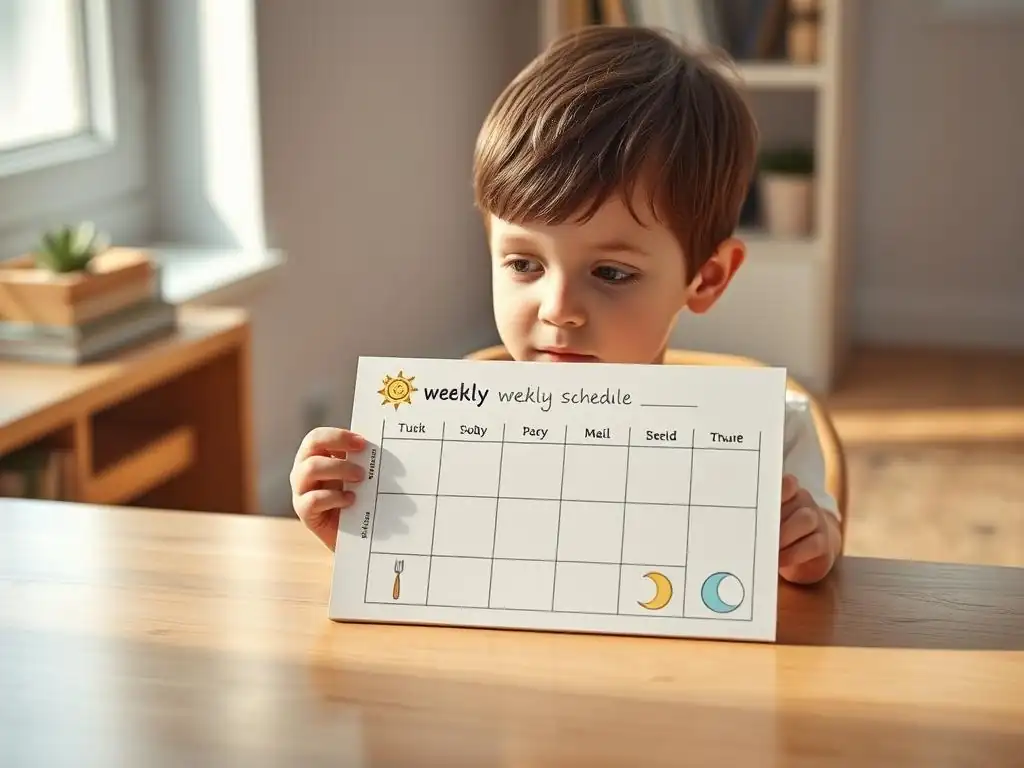
Children, especially younger ones or those who are visual learners, benefit greatly from seeing the routine laid out visually. Charts, calendars, and picture schedules can make abstract time concepts concrete and easy to follow.
Create a simple chart listing the morning steps with pictures or words, or use a calendar to show the week's activities. Place it somewhere easily visible, like on the refrigerator or in the child's bedroom. Checking off completed tasks can provide a sense of accomplishment and control. For a child who worries about transitions, seeing what comes next visually can be very calming. Experts often recommend visual schedules for children with anxiety or executive function challenges, highlighting their effectiveness in providing clear, predictable expectations – a critical component of Kids’ routine mental health support.
Consistency is Key: Sticking to the Schedule as Much as Possible
The power of routine lies in its predictability, which comes from consistency. While perfect adherence is rarely possible, aiming to stick to the schedule as much as you can is vital for reaping its benefits.
This means trying to maintain similar wake-up and bedtime hours on weekends as on weekdays (within reason), doing homework at the scheduled time, and following the sequence of morning and evening activities consistently. Minor deviations are inevitable, but frequent, unpredictable changes undermine the sense of security the routine is meant to provide. When consistency is maintained, the routine becomes a reliable anchor, reinforcing its role in providing effective Kids’ routine mental health support.
Flexibility When Needed: Adapting Routines to Changing Circumstances
While consistency is crucial, rigidity is not the goal. Life happens, and routines need to be flexible enough to accommodate illness, special events, travel, or unexpected changes. The key is to adapt mindfully rather than letting the routine completely fall apart.
When a change is necessary, try to prepare the child in advance if possible. Explain why the schedule is changing and what the new (temporary) plan is. For instance, "Tonight we're going to Grandma's for dinner, so our usual bedtime routine will start a little later, around 8:00 PM instead of 7:30 PM.
We'll still do bath and stories, just a bit later." Returning to the regular routine as soon as possible after the disruption is also important. This teaches children that while the routine is a helpful guide, it can also bend without breaking, promoting adaptability alongside providing Kids’ routine mental health support.
Positive Reinforcement: Rewarding Adherence to the Routine
Encouraging children to follow a routine, especially when it's new or challenging, works best with positive reinforcement. Focus on praising their efforts and successes rather than dwelling on deviations.
Offer specific praise, such as "You did a great job getting dressed so quickly this morning!" or "Thank you for starting your homework right on time." For younger children or when establishing new habits, a simple reward system like stickers on a chart that lead to a small treat or extra playtime can be effective. The goal is to associate following the routine with positive feelings and outcomes, motivating the child and strengthening the new habits that contribute to their Kids’ routine mental health support.
The Benefits of Routine: Long-Term Impact on Kids' Anxiety
Improved Emotional Regulation and Self-Soothing Skills
A consistent routine provides a stable environment that helps children develop better emotional regulation. When a child feels secure and knows what to expect, they are less likely to be thrown off balance by minor stressors. The predictability reduces the frequency and intensity of anxiety spikes, allowing children to practice managing less overwhelming emotions.
Furthermore, by incorporating calming activities like quiet time or reading into the schedule, children learn self-soothing techniques within the routine itself. Over time, these scheduled moments of calm help them internalize strategies for managing difficult feelings independently. This consistent practice, embedded within the daily structure, significantly enhances their ability to self-regulate and cope with anxiety over the long term, providing enduring Kids’ routine mental health support.
Enhanced Focus and Concentration in School
Anxiety is a major impediment to focus and learning. A child whose mind is racing with worries about the unknown finds it incredibly difficult to concentrate in the classroom. A well-established routine, by reducing overall anxiety levels and providing structure, frees up mental energy that was previously consumed by worry.
Knowing the schedule for the school day and having a predictable home routine (including consistent sleep and homework times) helps children feel more settled and prepared. This improved sense of calm and predictability allows them to better attend to lessons, absorb information, and complete tasks. Teachers often report that students with consistent home routines appear more settled and focused in class, demonstrating a clear link between routine and improved cognitive function, which indirectly supports their Kids’ routine mental health support by reducing academic pressure.
Routines aren't just about individual tasks; they often involve shared family time. Consistent family meals, designated game nights, or reading together before bed are all components of a healthy routine that strengthen family connections.
These shared moments provide children with a sense of belonging and security, which are vital buffers against anxiety. Knowing that there is dedicated time each day or week to simply be together, connect, and enjoy each other's company reinforces the child's feeling of being loved and supported. This consistent positive interaction within the family unit is a powerful, albeit sometimes overlooked, form of Kids’ routine mental health support. It creates a safe space where children feel comfortable expressing their feelings and worries.
Case Studies: Real-Life Examples of Routine's Positive Impact on Children's Anxiety
Case Study 1: Child with Separation Anxiety Benefiting from a Consistent School Drop-Off Routine
Liam, a 6-year-old, experienced significant separation anxiety each morning at school drop-off. He would cling to his mother, cry, and sometimes refuse to enter the building. This distress often lasted for the first hour of school, impacting his learning and social interactions. His mother implemented a strict, consistent morning routine: wake up at 7:00 AM, breakfast together, get dressed, brush teeth, pack bag, leave the house at 7:50 AM, walk to school the same way, and a quick, loving goodbye at the classroom door with a specific phrase ("See you later, alligator! ").
Within three weeks, Liam's morning tears significantly decreased. He still felt nervous but knew exactly what to expect. The predictability of the sequence, the consistent timing, and the familiar goodbye ritual reduced the uncertainty that fueled his anxiety. He began walking into the classroom more readily, and his teachers noted improved engagement during morning activities. This consistent Kids’ routine mental health support around a challenging transition made a tangible difference in his daily well-being and school adjustment.
Case Study 2: Child with Generalized Anxiety Disorder Thriving with a Predictable Evening Routine
Maya, an 8-year-old, worried excessively about everything from school tests to global events. Her evenings were often consumed by anxious thoughts, making bedtime difficult and sleep fitful. Her parents established a predictable evening routine starting at 7:00 PM: tidy up toys, quiet reading time, bath time, getting into pajamas, a light snack, and then 20 minutes of quiet family time (talking or reading together) before lights out at 8:30 PM.
This structured evening provided a clear winding-down period that reduced the open-ended time available for worry. The predictable sequence signaled bedtime was approaching, and the inclusion of quiet, calming activities helped regulate her nervous system. The consistent family time offered a safe space to briefly share any worries, but the structure ensured it didn't become an extended anxiety session. Over two months, Maya reported fewer worries at bedtime, fell asleep faster, and woke up feeling more rested. The predictable evening structure provided essential Kids’ routine mental health support, helping her manage her GAD symptoms more effectively.
Overcoming Challenges: Addressing Resistance to Routine in Children
Understanding the Root Cause of Resistance (e.g., Fear of Missing Out)
Children may resist routines for various reasons, and understanding the underlying cause is the first step to addressing it. Sometimes resistance isn't defiance but anxiety itself – fear of transitions, fear of failure (e.g., during homework time), or even Fear of Missing Out (FOMO) on spontaneous fun. Older children might resist due to a desire for independence and control.
A child who fusses about bedtime might actually be anxious about being alone in the dark. One who avoids homework time might fear making mistakes. Listen empathetically to their concerns. Ask open-ended questions like, "What feels hard about doing X at this time?" or "What would make this part of the day easier for you?" Identifying whether the resistance stems from anxiety, a need for control, or simply wanting more flexibility allows parents to tailor their approach and provide appropriate Kids’ routine mental health support.
Collaborative Problem-Solving: Involving Children in Routine Creation
Children are more likely to follow a routine they have had a hand in creating. Involving them in the process gives them a sense of ownership and control, which is particularly empowering for anxious children who often feel out of control.
Sit down with your child and discuss the different parts of the day. Ask for their input on the sequence of activities or the timing of certain tasks (within reasonable limits). For example, "Would you prefer to do your homework right after your snack, or play for 30 minutes first?"
Or, "What order makes the most sense for getting ready for bed?" Using a visual aid during this discussion can be helpful. This collaborative approach transforms the routine from something imposed upon them to a plan they helped build, significantly reducing resistance and fostering buy-in for their Kids’ routine mental health support structure.
Seeking Professional Guidance: When to Consult a Child Psychologist
While routine is a powerful tool, it is not a cure-all, and some children's anxiety may require professional intervention. If a child's anxiety is severe, persistent, significantly impacts their daily functioning (school, social life, family), or is accompanied by other concerning symptoms, it's time to consult a child psychologist or therapist.
A professional can assess the child's specific needs, diagnose potential anxiety disorders, and recommend evidence-based treatments such as Cognitive Behavioral Therapy (CBT), which is highly effective for childhood anxiety. They can also provide strategies for parents and help integrate routine support within a broader treatment plan. Recognizing when professional help is needed is a crucial part of ensuring comprehensive Kids’ routine mental health support.
Conclusion: Embracing Routine for a Healthier, Happier Childhood
Reinforcing the Key Role of Routine in Children's Anxiety Management
In navigating the complexities of childhood anxiety, routine emerges as a fundamental, accessible, and incredibly effective tool. It's more than just a schedule; it's a framework that provides predictability, fosters security, and empowers children with a sense of control in their world. From reducing the triggers of generalized anxiety to providing a safe anchor during moments of separation or social stress, the consistent rhythm of a well-structured day offers profound Kids’ routine mental health support.
Embracing routine requires effort and consistency from parents and caregivers, but the long-term benefits for a child's emotional well-being are immeasurable. It contributes to improved emotional regulation, enhances focus, and strengthens the crucial bonds that provide a child with a secure base. By implementing routines thoughtfully, adapting them flexibly when needed, and seeking professional help when necessary, families can harness the power of structure to help children manage anxiety, build resilience, and move towards a healthier, happier childhood.
Frequently Asked Questions
What is the primary benefit of routine for children's mental health?
Routines provide predictability and structure, which helps children feel safe and secure. This reduces anxiety and promotes a sense of control.
How does a consistent daily schedule contribute to a child's well-being?
A consistent schedule minimizes uncertainty and allows children to anticipate what's coming next. This contributes to emotional regulation and reduces stress levels.
Can routine help children who are already experiencing mental health challenges?
Yes, structured routines can be especially beneficial for children with existing mental health issues. They provide a stable foundation during challenging times and aid in coping.
What are some examples of routines that support kids’ mental health?
Examples include regular bedtimes and wake-up times, consistent meal schedules, and designated homework times. These build good habits.
How can parents implement new routines effectively for their children?
Start slowly and introduce routines gradually. Be consistent and provide positive reinforcement to encourage adherence and make it a positive experience.
Final Reflection: Cultivating Calm Through Routine
The consistent implementation of daily routines is not merely a matter of organization; it's a powerful tool in supporting the mental well-being of children facing challenges. In a world increasingly characterized by uncertainty and overwhelming stimuli, establishing predictable structures offers a vital anchor for young minds, fostering a sense of security and control that can significantly impact their emotional and psychological development. This is particularly crucial for children navigating mental health issues, where stability can be the cornerstone of effective coping mechanisms.
The impact of routine extends far beyond simple time management; it shapes a child's sense of self-efficacy and their ability to navigate the complexities of life. It provides a framework for self-regulation, teaching them valuable skills in planning, prioritizing, and managing their emotions. As the saying goes, The best way to predict the future is to create it,
and for children struggling with mental health, a structured routine allows them to actively participate in shaping their own positive future, fostering a sense of agency and empowerment. This proactive approach is far more effective than simply reacting to challenges as they arise.
Consider the profound impact a consistent routine can have on your own child, or even on yourself. Think about the peace of mind that comes from knowing what to expect, the reduced anxiety associated with predictability, and the increased capacity for focus and productivity that a well-structured day can provide.
Take the time to evaluate your child's current routine, identify areas for improvement, and collaboratively create a schedule that fosters a sense of calm and control. Remember, the power of routine is not about rigid adherence, but about creating a supportive environment where your child can thrive, both mentally and emotionally.
Unlock Your Child's Potential: Build a Brighter Future
Thanks for taking the time to explore the power of routine in supporting your child's mental well-being! We hope this article provided valuable insights and actionable strategies. Now, let's put that knowledge into practice.
- Design a personalized routine: Take some time today to create a schedule tailored to your child's needs and preferences. Consider incorporating elements mentioned in the article—regular sleep, dedicated playtime, and consistent mealtimes—to build a strong foundation. This is the most crucial step!
- Share your experiences: Connect with other parents in our community forum (link removed as per instructions) and share your successes and challenges. Building a support network can make a world of difference.
- Explore additional resources: Download our free guide (link removed as per instructions) on creating a calming bedtime routine, designed specifically for children facing mental health challenges.
What small change can you implement today to create a more structured and supportive environment for your child?