
The Power of 'Yet': Teaching Your Child Resilience Through a Growth Mindset


Welcome to Mind Care Guide, a safe space dedicated to nurturing your mental well-being.
Feeling overwhelmed by the challenges of raising resilient children? You're not alone. Discover the transformative power of a growth mindset and learn how to instill 'Resilience through growth mindset kids' in your family. Unlocking this potential can be easier than you think, and the journey starts right here. Ready to explore how the simple word "yet" can change everything? Let's begin.
The Power of 'Yet': Teaching Your Child Resilience Through a Growth Mindset
- Understanding Resilience and the Growth Mindset in Children
- Implementing the Power of 'Yet' to Foster Resilience
- Practical Strategies for Cultivating a Growth Mindset and Resilience
- Building Resilience through Growth Mindset: Age-Specific Approaches
- Overcoming Common Obstacles to Teaching Resilience through Growth Mindset
- Measuring Progress and Celebrating Growth in Resilience
-
Frequently Asked Questions
- What is a growth mindset and how does it relate to resilience in children?
- Why is teaching a growth mindset important for kids facing mental health challenges?
- How can I practically implement a growth mindset approach in my parenting?
- What are some signs that my child might be struggling with a fixed mindset, and how can I help them shift towards a growth mindset?
- Where can I find additional resources and support for fostering resilience and a growth mindset in my children?
- Final Reflection: Embracing the "Yet" – Cultivating Resilience in Our Children
- Unleash Your Child's Inner Resilience!
Understanding Resilience and the Growth Mindset in Children
Defining Resilience: Bouncing Back from Challenges
Resilience is the remarkable capacity of a child to recover quickly from difficulties, adapt well in the face of adversity, and continue to strive despite setbacks. It's not about avoiding stress or challenges altogether, which is an unrealistic expectation in life. Instead, it's about developing the internal strength and coping mechanisms to navigate these difficulties effectively. Think of it like a spring; it can be compressed or stretched, but it returns to its original shape, perhaps even stronger or more flexible from the experience. This ability to 'bounce back' is fundamental to a child's long-term well-being and success.
Developing resilience in children helps them face life's inevitable ups and downs, from minor disappointments like not being chosen for a team to more significant challenges such as academic struggles or social difficulties. Research consistently shows that resilient children tend to have better mental health outcomes, higher academic achievement, and stronger social skills.
For example, a study following children through primary school might find that those with higher resilience scores in early years demonstrated greater persistence in learning tasks and reported lower levels of anxiety related to school performance later on, perhaps showing a measurable difference in test scores or teacher ratings of effort.
What is a Growth Mindset? Shifting from Fixed to Flexible Thinking
A growth mindset, a term popularized by psychologist Carol Dweck, is the belief that abilities and intelligence can be developed through dedication and hard work. This stands in contrast to a fixed mindset, which assumes that talents and intelligence are static traits. Children with a fixed mindset might believe they are either "good at something" or "not good at it," and that effort won't change this fundamental ability. This can lead them to avoid challenges, give up easily when faced with obstacles, and feel threatened by the success of others.
Conversely, children with a growth mindset understand that their brains are like muscles that can grow stronger with exercise. They see challenges as opportunities to learn, persist through difficulties, and view effort as the path to mastery. When they encounter a setback, like failing a test, they don't see it as proof of their inherent lack of ability.
Instead, they might think, "I didn't understand this yet, but if I study differently or ask for help, I can improve." This shift in thinking from a rigid 'is' to a flexible 'can be' is incredibly empowering and lays the foundation for effective resilience through growth mindset kids.
Why a Growth Mindset is Crucial for Building Resilience in Kids
The connection between a growth mindset and resilience is profound. A growth mindset provides the internal framework necessary for a child to approach challenges with optimism and determination rather than fear and avoidance. When a child believes they can improve, they are far more likely to pick themselves up after a fall, learn from their mistakes, and try again. This persistent effort in the face of difficulty is, at its core, the definition of resilience.
For instance, consider two children struggling with a complex math problem. The child with a fixed mindset might quickly become frustrated, declare "I'm just not good at math," and give up. The child with a growth mindset, however, might say, "This is hard, but I haven't figured it out yet."
They might try different strategies, ask a parent for a hint, or revisit their notes. This willingness to engage with the struggle, fueled by the belief in their capacity to learn, is a direct manifestation of resilience. By cultivating a growth mindset, parents are directly equipping their children with the tools they need to build robust resilience through growth mindset kids.
Implementing the Power of 'Yet' to Foster Resilience
Introducing the Concept of 'Yet' to Your Child
The simple word 'yet' is a powerful tool in the growth mindset vocabulary. It transforms a statement of limitation ("I can't do it") into a statement of potential ("I can't do it yet"). Introducing this concept to your child involves explaining that learning is a process, and not knowing how to do something right now doesn't mean they will never be able to do it.
You can use relatable examples from their own lives, like learning to tie shoes, ride a bike, or read. Remind them that there was a time they couldn't do these things, but with practice and time, they learned.
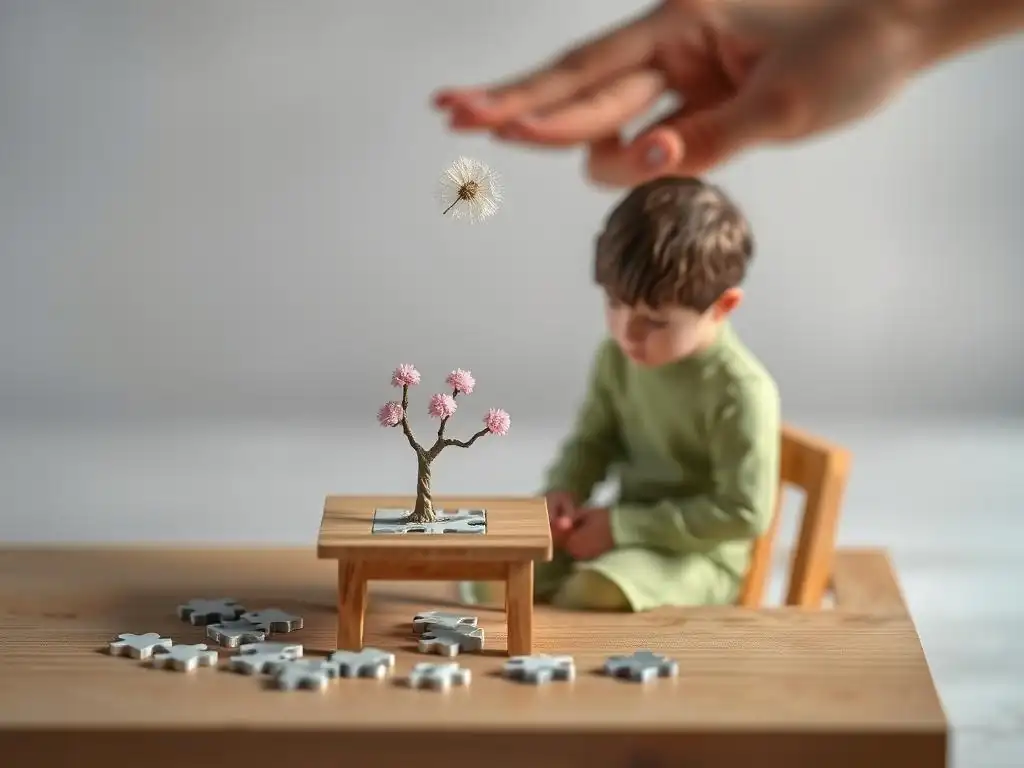
Explain that 'yet' is like a pause button on their abilities. It acknowledges the current state but signals that growth is possible and expected. For a young child, you might use a visual metaphor, like a plant that hasn't bloomed yet. For older children, you can discuss how even adults are constantly learning new things and encountering challenges they haven't mastered yet. The goal is to normalize the state of "not knowing" or "not being able to" as a temporary phase on the path to mastery, making it a core part of building resilience through growth mindset kids.
How to Use 'Yet' to Reframe Challenges and Setbacks
Using 'yet' effectively means actively listening to your child's language and gently correcting fixed-mindset statements. When your child says, "I'm terrible at drawing," you can respond empathetically, "You might feel that way, but you're not terrible at drawing; you just haven't mastered certain techniques yet. Let's practice together." Or if they fail a test and say, "I'm stupid," you can counter with, "No, you're not stupid. You didn't understand this material yet. Let's look at what went wrong and figure out how to learn it better for next time."
This reframing shifts the focus from a permanent label of failure or inadequacy to a temporary state of learning. It teaches children that setbacks are not endpoints but rather information points. They indicate where more effort, different strategies, or additional help is needed. By consistently using 'yet' in these moments, you help your child internalize this growth-oriented perspective, significantly strengthening their ability to build resilience through growth mindset kids. It encourages them to see challenges as solvable problems rather than insurmountable barriers.
Examples of 'Yet' in Action: Turning "I Can't" into "I Can't Yet"
Let's look at some specific scenarios where the power of 'yet' can be applied. Imagine a child struggling with a new video game level, exclaiming, "This is too hard! I can't beat it!" A parent can respond, "It seems like a tricky level. You can't beat it yet, but what's one thing you could try differently? Maybe watch how someone else does it, or practice that jump a few more times?" This acknowledges their difficulty but immediately pivots to potential and strategy.
Another example: A teenager doesn't make the school sports team and feels devastated, saying, "I'm just not good enough." An empathetic growth mindset response would be, "It hurts not to make the team, and it's okay to feel disappointed. But you're not 'not good enough'; you haven't developed the skills needed for that team yet. What feedback did the coach give? What could you work on this year to improve for next time?" These responses validate feelings while instilling hope and a path forward, demonstrating practical ways to build resilience through growth mindset kids.
Practical Strategies for Cultivating a Growth Mindset and Resilience

Focusing on Effort and Process, Not Just Outcome
One of the most critical strategies for fostering a growth mindset and resilience through growth mindset kids is to praise effort and the learning process, not just the final outcome or inherent ability. Instead of saying, "You're so smart!" when your child does well on a test, try, "Wow, you worked really hard studying for that test, and your effort paid off!" When they complete a challenging task, focus on their persistence: "You stuck with that puzzle even when it was tricky. That's great effort!"
This focus teaches children that their actions and dedication are what lead to success, not some innate, uncontrollable talent. When they understand that effort is the key, they are more likely to apply themselves to difficult tasks and persist when they encounter obstacles. Praising process – like trying a new strategy, asking for help, or spending extra time practicing – reinforces the value of the journey toward mastery, making them more resilient learners and individuals.
Providing Constructive Feedback: Guiding Growth, Not Judgment
Feedback is a powerful tool, and how it's delivered significantly impacts a child's mindset. Constructive feedback focuses on specific behaviors and actions, offering guidance for improvement, rather than making judgments about a child's character or ability. Instead of saying, "Your room is a disaster, you're so messy," you could say, "I see some clothes on the floor and toys out of the bin. Let's make a plan to put things away so your room is tidy and easy to play in."
When it comes to academic or skill-based feedback, be specific about what was done well and what could be improved, focusing on strategies. For example, after reviewing a paper, instead of "This isn't very good," try, "You have some interesting ideas here, but the paragraphs are a bit disorganized. Let's look at how topic sentences can help make your arguments clearer." This type of feedback empowers the child to see where they can direct their effort, reinforcing the idea that they can improve and building their resilience through growth mindset kids.
Encouraging Experimentation and Embracing Mistakes as Learning Opportunities
Creating an environment where mistakes are seen as valuable learning opportunities is essential for cultivating a growth mindset and resilience. Children need to feel safe to try new things, even if they don't succeed on the first attempt. Encourage them to experiment, explore different approaches, and view errors not as failures, but as information. Ask questions like, "What did you learn from that?" or "Why do you think that didn't work?"
Share examples of famous people who failed multiple times before succeeding – like inventors, scientists, or athletes. Talk about your own mistakes and what you learned from them. When a child spills milk or breaks something accidentally, focus on problem-solving ("How can we clean this up?") rather than blame. This approach teaches children that mistakes are a natural and necessary part of learning and growth, equipping them with the courage to take risks and bounce back when things don't go as planned, a crucial element in developing resilience through growth mindset kids.
Modeling a Growth Mindset: Show Your Own Resilience
Children learn best by observing the adults in their lives. To effectively teach your child resilience through growth mindset kids, you must model these behaviors yourself. Talk openly about challenges you are facing, whether it's learning a new skill, dealing with a difficult work project, or overcoming a personal setback. Share your frustrations but also your strategies for tackling the problem and your belief that you can learn and improve.
When you make a mistake, acknowledge it without excessive self-criticism and show how you learn from it. For example, if you try a new recipe and it doesn't turn out well, say something like, "Well, that didn't work out as planned! I think I added too much salt. Next time I'll measure more carefully." This demonstrates humility, problem-solving, and the belief in your ability to improve. Seeing you navigate challenges with effort and a positive attitude provides a powerful, real-world lesson in resilience and the practical application of a growth mindset.
Building Resilience through Growth Mindset: Age-Specific Approaches
Growth Mindset for Preschoolers: Simple Language and Playful Activities
Teaching resilience through growth mindset kids at the preschool age requires simplicity and playfulness. Focus on concrete examples and positive reinforcement. Use simple language to talk about trying new things and practicing. When a toddler is learning to stack blocks and the tower falls, instead of fixing it for them, say, "Oops, it fell! That's okay. Sometimes things fall. Let's try again!" Celebrate their effort in trying, regardless of the outcome.
Encourage activities that involve repetition and gradual mastery, like puzzles, building with blocks, or learning to jump. Point out their progress: "Remember when you couldn't jump that high? Look at you now!" Use stories and characters that demonstrate persistence. The focus should be on celebrating effort, trying again after a setback, and understanding that learning takes practice. For instance, if a child is learning to use a spoon, praise their attempt even if food falls, saying, "Good try! It takes practice to get the food on the spoon. Keep trying!"
Growth Mindset for Elementary School Children: Tackling Academic Challenges
Elementary school is a key time for developing resilience through growth mindset kids, as they begin to face more structured academic challenges and social dynamics. This is when they start to receive grades and compare themselves to peers. Teach them that grades are a snapshot of their learning at that moment, not a final judgment of their intelligence. If they get a low grade, help them analyze why and what steps they can take to improve for the next assignment or test.
Introduce the concept of "productive struggle" – that feeling of difficulty is the brain growing stronger. Use analogies like lifting weights for muscles or practicing an instrument. Encourage them to break down big tasks into smaller, manageable steps. If they are struggling with reading, focus on celebrating the mastery of new words or the completion of a chapter, highlighting the effort involved. Discuss how different people learn in different ways and encourage them to find strategies that work for them, fostering independence and persistence.
Teenagers face significant academic pressure, complex social landscapes, and intense emotional experiences. Fostering resilience through growth mindset kids during these years involves helping them apply these principles to more abstract and personal challenges. Discuss how social rejections, relationship difficulties, or academic failures are painful but are also opportunities for growth and learning about themselves and others.
Help them identify their thought patterns. When they experience a setback, like not getting into a desired college or having a friendship end, guide them to challenge fixed-mindset thoughts ("I'm a loser," "Nobody likes me") and replace them with growth-oriented perspectives ("This is painful, but I can learn from this experience," "I can focus on building other positive relationships"). Encourage them to seek support, develop coping strategies, and understand that their identity and worth are not defined by these temporary challenges. Discuss how effort applies not just to schoolwork but to building relationships and managing emotions.
Overcoming Common Obstacles to Teaching Resilience through Growth Mindset
Addressing Fixed Mindset Beliefs in Parents
Sometimes, the biggest obstacle to teaching resilience through growth mindset kids is a parent's own fixed mindset. If a parent believes they themselves are "not good at math," they might inadvertently pass this belief onto their child. If a parent fears failure, they might prevent their child from taking healthy risks. Recognizing your own beliefs about intelligence, talent, and failure is the first step. Are you modeling a growth mindset in your own life?
Challenge your own fixed-mindset language and behaviors. Instead of saying, "I could never learn to code," try, "Learning to code looks challenging, but I bet with enough practice and resources, I could learn the basics yet." Be open about your own learning process and mistakes. Seeking personal growth, whether through learning a new skill or working on your own reactions to setbacks, provides an authentic example for your child and removes a potential barrier to their own development of resilience through growth mindset kids.
Dealing with Perfectionism and Fear of Failure
Perfectionism and fear of failure are significant hurdles to developing a growth mindset and resilience. A child who is a perfectionist may avoid trying anything unless they are certain they can do it perfectly, or they may become excessively distressed by minor mistakes. This often stems from a fixed mindset where errors are seen as proof of inadequacy rather than steps in learning.
To counter this, emphasize that "perfect" is not the goal; learning and improving are. Celebrate "brave mistakes" – instances where your child tried something challenging and learned from an error. Share stories of innovation where countless failures led to eventual success (e.g., Edison and the lightbulb, perhaps trying thousands of filaments before finding one that worked). Help them redefine success as effort, learning, and progress, not just flawless outcomes. This shift in perspective is crucial for building resilience through growth mindset kids who are willing to take risks and persevere.
Handling External Pressure and Competition
Children today often face intense external pressure from school, peers, and even competitive extracurricular activities. This pressure can foster a fixed mindset, where the focus shifts from learning and effort to simply performing better than others or achieving a specific, often unrealistic, standard. Navigating this environment while trying to build resilience through growth mindset kids can be challenging.
Talk to your child about the nature of healthy competition – that it can be a motivator for improvement, but their worth is not tied to winning or losing. Help them focus on their personal progress and effort rather than solely on rankings or comparisons to others. Encourage them to learn from competitors but stay focused on their own goals and development. Teach them coping strategies for dealing with stress and disappointment, reinforcing that their effort and willingness to learn are what truly matter in the long run, regardless of external outcomes.
Measuring Progress and Celebrating Growth in Resilience
Recognizing and Acknowledging Effort and Improvement
Measuring resilience isn't like measuring height; it's about observing behaviors and attitudes over time. Instead of looking for a sudden transformation, look for small signs of growth mindset and resilience through growth mindset kids. Did your child persist at a difficult task for a few minutes longer than before? Did they try a different strategy after an initial failure? Did they talk about a setback as a learning opportunity rather than proof they aren't good enough?
Acknowledge and specifically praise these moments of effort and improvement. For example, "I noticed you didn't give up on that math problem right away today; you kept trying different methods. That shows great persistence!" Or, "It took courage to try out for the play even though you were nervous, and you handled not getting the lead role with maturity. What did you learn from the audition experience?" Focusing on the process and the choices they made to persevere reinforces the value of effort and helps them see their own growth in resilience.
Creating a Supportive Home Environment for Growth
A supportive home environment is the foundation for cultivating resilience through growth mindset kids. This means creating a safe space where children feel loved unconditionally, regardless of their successes or failures. It involves open communication, where children feel comfortable sharing their struggles and mistakes without fear of harsh judgment. It means offering encouragement and belief in their potential, even when they doubt themselves.
This environment also includes providing opportunities for challenge and growth appropriate for their age, allowing them to experience productive struggle and learn from setbacks in a controlled setting. It's about balancing support with the opportunity for independence and problem-solving. When children feel secure and supported at home, they are more likely to take risks, persist through difficulties, and develop the internal fortitude characteristic of resilient individuals.
Long-Term Benefits of Resilience through Growth Mindset for Kids
The investment in teaching resilience through growth mindset kids yields significant long-term benefits that extend far beyond childhood. Children who develop these traits are better equipped to handle the academic pressures of higher education, the challenges of entering the workforce, and the complexities of adult relationships. They are more adaptable in the face of change, more persistent in pursuing their goals, and more capable of recovering from personal and professional setbacks.
Ultimately, fostering resilience through a growth mindset contributes to greater overall well-being, mental health, and life satisfaction. These children are more likely to embrace learning throughout their lives, face challenges with optimism, and view obstacles as opportunities for growth rather than insurmountable barriers. This foundational strength is perhaps one of the most valuable gifts parents can give their children, preparing them to navigate the world with confidence and determination.
Frequently Asked Questions
What is a growth mindset and how does it relate to resilience in children?
A growth mindset, unlike a fixed mindset, emphasizes that abilities and intelligence can be developed through dedication and hard work. This belief fosters resilience by encouraging children to view challenges as opportunities for growth, not as limitations.
Why is teaching a growth mindset important for kids facing mental health challenges?
A growth mindset equips children with the tools to cope with adversity. It helps them see that setbacks are temporary and that they can develop strategies to overcome them, which is crucial for managing mental health challenges.
How can I practically implement a growth mindset approach in my parenting?
Focus on praising effort and progress, not just innate talent. Use the power of "yet": instead of saying "I can't do it," encourage your child to say "I can't do it yet." Create a safe space for mistakes.
What are some signs that my child might be struggling with a fixed mindset, and how can I help them shift towards a growth mindset?
Signs include fear of failure, avoiding challenges, and giving up easily. You can help by modeling a growth mindset yourself, sharing stories of people who overcame obstacles, and reframing failures as learning opportunities.
Where can I find additional resources and support for fostering resilience and a growth mindset in my children?
The Mind Care Guide website offers a wealth of information, articles, and resources on mental well-being and growth mindset strategies. You can also find books and workshops dedicated to promoting resilience in children.
Final Reflection: Embracing the "Yet" – Cultivating Resilience in Our Children
The power of "yet" is not merely a pedagogical tool; it's a revolutionary shift in how we approach challenges, fostering resilience in children and shaping a future generation equipped to navigate adversity. This simple word, strategically placed, transforms a perceived failure into a stepping stone, a testament to the ongoing journey of learning and growth. It's a potent antidote to the pervasive culture of instant gratification, replacing feelings of inadequacy with a sense of hopeful possibility.
The impact of instilling a growth mindset, emphasizing the power of "yet," ripples far beyond the classroom. It shapes not only academic achievement but also emotional intelligence, fostering a sense of self-efficacy that extends to all aspects of life. This understanding resonates deeply with me, as I've witnessed firsthand the transformative effect of embracing challenges with a positive attitude. The key is not to prioritize what's on your schedule, but to schedule your priorities.
– Stephen Covey. This quote highlights the importance of focusing on long-term growth and resilience, rather than immediate results. By prioritizing the development of a growth mindset, we empower our children to prioritize their own personal growth and development, leading to greater resilience in the face of setbacks.
Now, consider your own approach to challenges. Do you allow yourself the space to learn and grow, embracing the "yet" in your own life? I invite you to consciously incorporate this powerful word into your vocabulary and your interactions with children.
Encourage them to see setbacks not as failures, but as opportunities for learning and growth. By nurturing a growth mindset, we equip our children not just with the skills to succeed, but with the resilience to overcome adversity and thrive in a complex and ever-changing world. Let the power of "yet" be your guiding light in fostering resilience in the young minds entrusted to our care.
Unleash Your Child's Inner Resilience!
Thanks for taking the time to explore the power of "yet" and its impact on fostering a growth mindset in your children. You've now equipped yourself with valuable tools to nurture their resilience! Let's put this knowledge into action.
- Prioritize incorporating "yet" into your conversations with your child today. Notice how it shifts the focus from fixed ability to ongoing progress. This small change can make a big difference!
- Share this article with other parents who could benefit from these insights. Let's build a community of support around raising resilient children!
- Consider starting a journal together, reflecting on challenges overcome and celebrating the power of "yet" in your child's growth. This creates a powerful record of their journey.
What small step will you take today to help your child embrace the power of "yet" and unlock their incredible potential?