
Autogenic Training: Tapping into Your Body's Natural Relaxation Response


Welcome to Mind Care Guide, your haven for navigating the complexities of mental well-being. Feeling overwhelmed by anxiety and stress? Discover how Autogenic Training can unlock your body's natural relaxation response, offering a powerful and accessible path to inner peace. Explore this transformative technique and begin your journey towards a calmer, more centered you. Let's delve deeper...
Autogenic Training: Tapping into Your Body's Natural Relaxation Response
- What is Autogenic Training and How Can it Reduce Anxiety & Stress?
- The Core Principles of Autogenic Training for Stress Reduction
- Benefits of Autogenic Training: Beyond Stress and Anxiety Relief
- Learning Autogenic Training: Methods and Resources
- Practical Tips for Successful Autogenic Training Sessions
- Autogenic Training and Mindfulness: Complementary Practices for Mental Well-being
- Is Autogenic Training Right for You? Considerations and Contraindications
- Autogenic Training: A Path to Reduced Anxiety and Enhanced Well-being
-
Frequently Asked Questions
- What is Autogenic Training and how does it help with anxiety and stress?
- How does Autogenic Training differ from other relaxation techniques like meditation?
- Can Autogenic Training be practiced at home, or do I need a professional?
- How long does it typically take to see results from Autogenic Training in reducing anxiety and stress?
- Are there any potential side effects or contraindications to Autogenic Training?
- Final Reflection: Unlocking Inner Calm Through Autogenic Training
- Unlock Your Inner Calm: Start Your Autogenic Training Journey Today!
What is Autogenic Training and How Can it Reduce Anxiety & Stress?
Autogenic Training (AT) is a desensitization-relaxation technique developed by German psychiatrist Johannes Heinrich Schultz in the early 20th century. It is based on the principle that you can influence your body's autonomic nervous system by focusing on specific bodily sensations. Unlike many active relaxation methods, Autogenic Training utilizes passive concentration, guiding the mind to induce physical states of relaxation through autosuggestion. This process involves repeating specific phrases silently to oneself, focusing on feelings like heaviness and warmth in the limbs.
The core mechanism by which Autogenic Training works to reduce anxiety and stress lies in its ability to counteract the "fight or flight" response. When we experience stress or anxiety, our sympathetic nervous system activates, leading to increased heart rate, muscle tension, and shallow breathing. By consciously inducing states of deep physical relaxation through focusing on heaviness and warmth, AT activates the parasympathetic nervous system, promoting rest and recovery. This consistent practice trains the body and mind to access a calm state more readily, making autogenic training reduce anxiety stress effectively over time.
Understanding the Autogenic Response: A Pathway to Inner Peace
The autogenic response refers to the body's inherent ability to enter a state of deep relaxation when specific physiological cues are provided through focused attention. By concentrating on sensations like heaviness in the muscles or warmth in the limbs, the practice sends signals to the brain that inhibit the sympathetic nervous system, responsible for the stress response. Simultaneously, it encourages the activation of the parasympathetic nervous system, leading to observable physiological changes such as a decrease in heart rate, a reduction in blood pressure, and a significant easing of muscle tension.
Beyond the physical changes, inducing the autogenic response fosters a profound state of mental calm and a reduction in intrusive thoughts often associated with chronic stress and anxiety. As the body relaxes deeply, the mind tends to quiet down, allowing for a sense of inner peace and detachment from worries. Regular practice of autogenic training helps individuals become more attuned to their body's signals and develop the capacity to consciously shift from a state of tension to relaxation, significantly aiding in the management and reduction of stress and anxiety.
Autogenic Training vs. Progressive Muscle Relaxation: A Comparative Overview
Autogenic Training and Progressive Muscle Relaxation (PMR) are both popular and effective techniques for promoting relaxation and reducing stress, but they differ in their approach. Autogenic Training relies on passive concentration on internal bodily sensations like heaviness and warmth, using autosuggestion to induce a relaxed state. It is often described as a more internalized and imaginative process, focusing on the feeling states associated with relaxation rather than direct physical manipulation.
In contrast, Progressive Muscle Relaxation is an active technique that involves systematically tensing and then releasing different muscle groups throughout the body. The focus in PMR is on consciously creating tension to then experience the contrast of releasing it, thereby becoming more aware of muscle tension and how to release it.
While both techniques aim to reduce physical tension and promote relaxation, AT tends to lead to a more generalized, deeper relaxation state over time and can influence vascular and organ responses, whereas PMR is excellent for immediate, localized muscle tension relief, offering distinct pathways to reduce stress and anxiety.
The Core Principles of Autogenic Training for Stress Reduction
The fundamental principle behind Autogenic Training for stress reduction is the concept of "passive concentration." This involves focusing gently on specific bodily sensations without actively trying to make them happen, allowing the body to naturally respond and enter a state of deep relaxation. By repeating specific verbal formulas or images related to heaviness, warmth, and other physiological states, the practitioner learns to access the body's innate self-regulatory mechanisms, effectively counteracting the physiological arousal caused by stress and anxiety.
This passive approach distinguishes AT from techniques that require active effort or forceful control. The goal is not to command the body but to invite it into a state of relaxation by focusing attention on the feeling of relaxation. Over time, through consistent practice, the body and mind become conditioned to respond to these cues, making it increasingly easy to induce the autogenic state and leverage autogenic training to reduce anxiety and stress in daily life. The six standard exercises form the systematic foundation for achieving this.
Six Standard Exercises for Autogenic Relaxation: A Step-by-Step Guide
The original Autogenic Training system developed by Schultz is built upon six standard exercises, each designed to target a specific physiological system and deepen the state of relaxation. These exercises are typically learned and practiced sequentially, building upon the mastery of the previous ones.
- Exercise 1: Heaviness - Achieving Muscular Relaxation
- Exercise 2: Warmth - Promoting Vascular Dilation
- Exercise 3: Heart Regulation - Calming Your Heart Rate
- Exercise 4: Breathing Regulation - Achieving Natural Rhythmic Breathing
- Exercise 5: Abdominal Warmth - Promoting Digestive Relaxation
- Exercise 6: Cool Forehead - Reducing Mental Tension
Exercise 1: Heaviness - Achieving Muscular Relaxation
This is typically the first exercise learned in Autogenic Training and focuses on inducing a feeling of heaviness in the limbs. Practitioners repeat phrases such as "My right arm is very heavy" or "My legs are very heavy" silently to themselves, moving through each limb. The sensation of heaviness is physiologically linked to muscle relaxation, as relaxed muscles feel heavier than tense ones. The goal is to passively concentrate on this feeling until it becomes palpable throughout the arms and legs.
Mastering the Heaviness exercise directly addresses muscular tension, which is a pervasive physical symptom of stress and anxiety. By training the body to feel and induce this state of relaxation, individuals can effectively release chronic muscle tightness in the shoulders, neck, back, and limbs. This foundational step significantly contributes to the physical aspect of autogenic training reduce anxiety stress, providing a tangible sense of ease and groundedness.
Exercise 2: Warmth - Promoting Vascular Dilation
Building upon the Heaviness exercise, the second standard exercise focuses on inducing a feeling of warmth in the limbs. Practitioners repeat phrases like "My right arm is very warm" or "My hands are warm," concentrating on the sensation of heat spreading throughout their arms and legs. Physiologically, warmth in the extremities is associated with vasodilation, the widening of blood vessels, which increases blood flow.
Promoting vascular dilation through the Warmth exercise has several benefits for stress reduction. Improved circulation can help lower blood pressure and enhance the delivery of oxygen and nutrients throughout the body, further deepening the state of physical relaxation. This exercise directly counteracts the vasoconstriction that often occurs during the stress response, aiding in a feeling of expansion and comfort and contributing to the overall effectiveness of autogenic training reduce anxiety stress.
Exercise 3: Heart Regulation - Calming Your Heart Rate
This exercise involves passively focusing on the sensation of the heart beating, repeating phrases such as "My heart is beating calmly and regularly." The emphasis is on observing the heart's natural rhythm without trying to actively control or slow it down. The aim is to foster a sense of acceptance and calm observation of the cardiac rhythm.
Focusing on a calm and regular heartbeat helps to regulate a rapid or pounding heart rate, a common and distressing symptom of anxiety and stress. By gently directing attention to a desired state of cardiac rhythm, the practitioner can influence the autonomic nervous system to promote a slower, more stable heart rate. This exercise is particularly powerful for individuals whose anxiety manifests strongly in cardiovascular symptoms, offering a direct pathway to calming the physical sensations of panic or stress.
Exercise 4: Breathing Regulation - Achieving Natural Rhythmic Breathing
The fourth exercise centers on passively observing the breath, repeating phrases like "My breathing is calm and regular" or "It breathes me." Similar to the heart exercise, the goal is not to force or manipulate the breath but to observe its natural, effortless rhythm. This passive focus encourages the breath to deepen and slow down spontaneously.
Addressing dysfunctional breathing patterns, such as shallow or rapid breathing common during stress, is crucial for relaxation. By simply observing the breath with passive concentration, the natural rhythm of breathing tends to assert itself, leading to slower, deeper breaths that promote relaxation and improve oxygenation. This exercise is a fundamental component of stress reduction techniques and integrates seamlessly into the broader practice of Autogenic Training.
Exercise 5: Abdominal Warmth - Promoting Digestive Relaxation
This exercise involves focusing on a feeling of warmth spreading through the solar plexus or upper abdominal area, repeating phrases like "My abdomen is warm" or "Warmth flows into my solar plexus." The abdomen is a region rich in nerve endings and is often where physical symptoms of stress, such as nausea or digestive upset, are experienced.
Inducing warmth and relaxation in the abdominal area can help alleviate stress-related gastrointestinal issues. By promoting a sense of ease in this region, the exercise can soothe nervous stomachs and contribute to overall physical comfort. This focus acknowledges the strong mind-body connection and helps to release tension held deep within the core, enhancing the ability of autogenic training to reduce anxiety and stress on multiple physiological levels.
Exercise 6: Cool Forehead - Reducing Mental Tension
The final standard exercise focuses on experiencing a feeling of coolness on the forehead, repeating phrases such as "My forehead is cool." This sensation is often associated with a reduction in mental activity and the easing of tension headaches. The aim is to induce a feeling of mental clarity and quietude.
Focusing on a cool forehead helps to counteract the feeling of a "hot," tense head that can accompany intense concentration, worry, or stress-related headaches. This exercise is particularly beneficial for reducing mental tension and quieting a racing mind, which are hallmark symptoms of anxiety. By promoting a sense of coolness and calm in the head, this exercise complements the physical relaxation achieved in the previous steps, offering a comprehensive approach through autogenic training reduce anxiety stress from both physical and mental perspectives.
Benefits of Autogenic Training: Beyond Stress and Anxiety Relief

While renowned for its efficacy in helping with autogenic training reduce anxiety stress, the benefits of consistent practice extend significantly into other areas of health and well-being. By training the body and mind to enter a deep state of relaxation, AT can positively impact various physiological and psychological functions.
Autogenic Training for Improved Sleep Quality
Autogenic Training has shown considerable promise as a non-pharmacological intervention for improving sleep quality, particularly for individuals struggling with insomnia related to stress and anxiety. By effectively calming the nervous system and reducing physical and mental tension, AT makes it easier to fall asleep and maintain sleep throughout the night. The exercises, especially Heaviness, Warmth, and Breathing Regulation, directly address the physiological arousal that often prevents restful sleep.
Approximations from studies indicate that individuals consistently practicing AT report noticeable improvements in sleep metrics. For instance, some findings suggest practitioners may experience a reduction in the time it takes to fall asleep, potentially decreasing sleep onset latency by 15-20 minutes on average. Furthermore, reports often include fewer awakenings during the night and a greater feeling of being rested upon waking, highlighting AT's potential to significantly enhance sleep hygiene for those whose sleep is disrupted by stress and anxiety.
Autogenic Training for Pain Management
The relaxation response induced by Autogenic Training can be a valuable tool in managing various types of chronic pain, especially those exacerbated by tension and stress. By reducing muscle tightness through the Heaviness exercise and promoting overall relaxation, AT can decrease the intensity and frequency of tension headaches, back pain, and other musculoskeletal discomforts. The practice also influences pain perception by shifting focus and promoting a calmer state.
Approximating data from clinical applications, individuals using AT as an adjunct therapy for conditions like chronic tension headaches or fibromyalgia have reported significant reductions in pain levels. For example, some studies suggest a 30-40% decrease in headache frequency or severity after several months of consistent practice. This demonstrates how learning autogenic training reduce anxiety stress can have a beneficial ripple effect on associated physical symptoms, including chronic pain.
Autogenic Training for Managing High Blood Pressure
Chronic stress is a known contributor to high blood pressure, and Autogenic Training offers a complementary approach to managing this condition. The Warmth exercise, by promoting vasodilation, can have a modest effect on lowering blood pressure. More importantly, the overall relaxation induced by AT reduces the activity of the sympathetic nervous system, which is a key driver of elevated blood pressure, thereby supporting cardiovascular health.
Approximating research findings, studies on hypertensive individuals practicing AT alongside their medical treatment have indicated positive outcomes. For instance, results might show an average reduction of 5-10 mmHg in systolic blood pressure and 3-7 mmHg in diastolic pressure over a period of consistent practice. While not a substitute for prescribed medication, incorporating autogenic training can be a valuable part of a holistic strategy to manage hypertension and its connection to chronic stress.
Learning Autogenic Training: Methods and Resources
Learning Autogenic Training is a skill that requires instruction and practice. While it can be learned independently, many people benefit from guided instruction, especially when first starting out or if dealing with significant stress or anxiety. There are several avenues available for learning AT, catering to different preferences and needs.
Finding a Certified Autogenic Training Practitioner
Learning Autogenic Training from a certified practitioner offers structured guidance and personalized feedback, which can be particularly beneficial for ensuring correct technique and addressing any difficulties encountered during practice. Practitioners can tailor instructions to individual needs and help navigate potential psychological responses that may arise during deep relaxation. They provide a supportive environment for learning this introspective technique.
Certified practitioners can often be found through professional associations for psychology, psychotherapy, or specific stress management and relaxation therapy organizations. Referrals from healthcare providers are also a good source. While the cost and accessibility may vary, learning from a qualified professional can accelerate the learning process and provide a solid foundation for using autogenic training to reduce anxiety and stress effectively, especially for those with clinical levels of these issues.
Self-Guided Autogenic Training: Books, Apps, and Online Resources
For many individuals, self-guided learning using books, audio recordings, mobile applications, or online courses is a convenient and accessible way to learn Autogenic Training. These resources provide step-by-step instructions and often include guided practice sessions that can be used anytime, anywhere. This method offers flexibility and allows individuals to learn at their own pace.
While self-guided learning requires discipline and commitment to consistent practice, it is a viable option for those motivated to learn independently. It is advisable to choose resources from reputable sources, ideally developed by experienced practitioners or based on established AT protocols. While effective for many, individuals with severe anxiety or complex health issues might find guided instruction more beneficial initially compared to purely self-guided methods for leveraging autogenic training reduce anxiety stress.
Resources: "Autogenic Training" by Dr. Johannes Schultz and "The Relaxation & Stress Reduction Workbook" by Davis, Eshelman, and McKay
For those interested in delving into the origins and practical application of Autogenic Training, specific resources stand out. "Autogenic Training" by Dr. Johannes Heinrich Schultz himself provides the foundational text, outlining the physiological and psychological basis of the technique from the perspective of its creator. While academic in nature, it offers deep insight into the principles behind the exercises.
A more widely accessible and practical resource is "The Relaxation & Stress Reduction Workbook" by Martha Davis, Elizabeth Robbins Eshelman, and Matthew McKay. This popular workbook includes detailed, easy-to-follow instructions for numerous relaxation techniques, including a comprehensive section on Autogenic Training. It is designed for self-guided learning and provides scripts and guidance for practicing the exercises, making it an excellent tool for individuals seeking practical ways to learn and utilize autogenic training reduce anxiety stress.
Practical Tips for Successful Autogenic Training Sessions
To gain the maximum benefit from Autogenic Training and effectively reduce anxiety and stress, consistent and mindful practice is essential. Creating the right conditions and maintaining a realistic perspective on the learning process can significantly enhance your success.
Creating a Relaxing Environment for Autogenic Practice
Establishing a dedicated, relaxing environment is crucial for successful Autogenic Training sessions. Find a quiet space where you are unlikely to be interrupted, such as a comfortable chair in a quiet room or a peaceful corner. Dim the lights if possible, ensure a comfortable room temperature, and wear loose, comfortable clothing that doesn't restrict your breathing or circulation. Turn off phones and other potential distractions.
Practicing in the same peaceful setting consistently helps to create a positive association with that space, making it easier to enter a relaxed state each time you begin. A calm environment minimizes external stimuli that could pull your attention away from the internal sensations you are focusing on, thereby facilitating the induction of the autogenic state. This dedicated space supports your efforts to use autogenic training reduce anxiety stress by providing a sanctuary for your practice.
Maintaining Consistency and Patience in Autogenic Training
Like any skill, proficiency in Autogenic Training improves with regular practice. Aim to practice at least once, ideally twice, daily, even if only for a short duration (e.g., 10-15 minutes per session). Consistency is far more important than the length of individual sessions, especially in the beginning. The benefits of AT are cumulative; the more you practice, the more readily your body and mind will respond.
Patience is also key. It takes time to reliably induce the autogenic state and feel the sensations strongly. Do not get discouraged if you don't experience deep relaxation or feel the heaviness and warmth immediately. Some days may feel easier than others. Trust the process and continue practicing regularly. Over time, your ability to use autogenic training reduce anxiety stress will deepen, leading to more profound and lasting benefits.
Overcoming Common Challenges in Autogenic Training
Practitioners new to Autogenic Training may encounter common challenges, such as mind-wandering, falling asleep, or difficulty feeling the sensations. If your mind wanders, simply notice the thought without judgment and gently redirect your focus back to the exercise or phrase you were repeating. For falling asleep, try practicing in a seated position rather than lying down. If you struggle to feel the sensations of heaviness or warmth, focus initially on the idea or image of the sensation, trusting that the physical feeling will develop with practice.
Persistence and a willingness to troubleshoot are important. If you are consistently struggling, consider revisiting the instructions, trying a different time of day for practice, or seeking guidance from a book, app, or practitioner. Remember that overcoming these hurdles is part of the learning process. Each session is practice, and with dedication, you can improve your ability to effectively use autogenic training reduce anxiety stress and achieve deeper states of relaxation.
Autogenic Training and Mindfulness: Complementary Practices for Mental Well-being
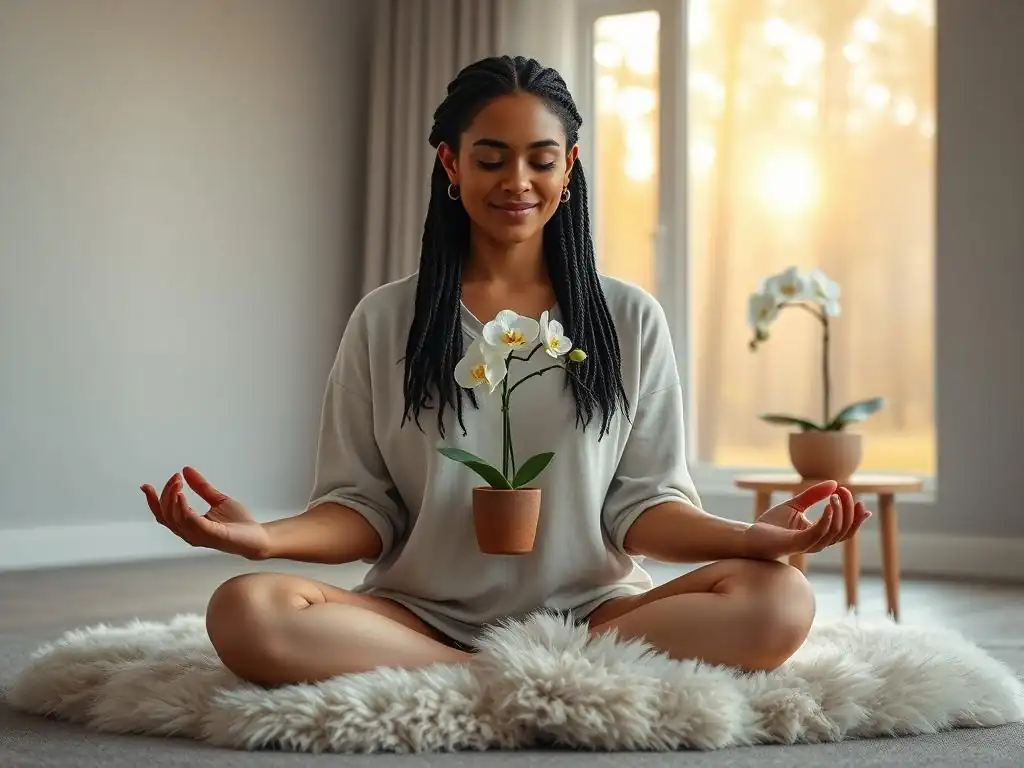
Autogenic Training and mindfulness are distinct yet highly complementary practices that can be integrated to enhance overall mental well-being and more effectively reduce anxiety and stress. Both cultivate present-moment awareness, but they do so with different focuses.
Integrating Autogenic Training into Your Daily Mindfulness Routine
Autogenic Training can serve as an excellent preparatory exercise for mindfulness meditation. While mindfulness involves open, non-judgmental awareness of whatever arises in the present moment (thoughts, feelings, sensations, sounds), AT focuses attention on specific, induced bodily sensations. Practicing AT first can help calm the body and quiet the mind, creating a more settled state that makes it easier to engage in broader mindfulness practice.
For example, you might begin your daily mindfulness session with 5-10 minutes dedicated to the core Autogenic exercises (Heaviness, Warmth, Heart, Breath). This sequence helps to ground you in your physical body and reduce immediate physiological tension. Once a state of calm is established, transitioning into a period of open-awareness mindfulness meditation can feel more accessible and profound. This integration leverages the targeted relaxation of AT to support the broader awareness cultivated by mindfulness, enhancing your capacity for reducing anxiety and stress.
Combining Autogenic Techniques with Deep Breathing Exercises
While the breathing exercise in Autogenic Training is about passive observation, consciously incorporating deep breathing techniques before or after your AT practice can amplify the relaxation response. Deep, diaphragmatic breathing is a powerful tool for immediately activating the parasympathetic nervous system and promoting a sense of calm.
Consider starting your Autogenic Training session with a few minutes of intentional deep breathing – inhaling slowly and deeply into your abdomen, and exhaling fully. This can help to quickly settle your nervous system and prepare your body and mind for the more subtle work of passive concentration in the AT exercises. Alternatively, using deep breathing to recenter yourself if you become distracted during AT can help regain focus. This combination utilizes the immediate calming power of breathwork alongside the cumulative, deeper relaxation induced by Autogenic Training, providing a robust approach to stress reduction.
Is Autogenic Training Right for You? Considerations and Contraindications
Autogenic Training is a safe and effective technique for many people seeking to manage stress and anxiety. However, it is not suitable for everyone, and certain conditions require caution or may be contraindications.
When to Consult a Healthcare Professional Before Starting Autogenic Training
Before beginning Autogenic Training, especially if you have any pre-existing medical conditions, it is advisable to consult with a doctor or mental health professional. This is particularly important for individuals with cardiovascular issues, diabetes, neurological disorders, or severe mental health conditions. A professional can assess whether AT is appropriate for your specific health status and how it might interact with any existing treatments.
Consultation is crucial to ensure that the physiological changes induced by deep relaxation (like potential drops in blood pressure or heart rate) are safe for you. It also allows your healthcare provider to integrate AT into your overall treatment plan if you are managing a specific health condition or significant anxiety or stress. They can provide guidance and help monitor your progress, ensuring that you are using AT safely and effectively.
Potential Contraindications: Schizophrenia, Psychosis
Autogenic Training is generally considered contraindicated for individuals with certain severe psychiatric conditions, most notably active schizophrenia or acute psychosis. The introspective nature of the technique and the potential for altered states of consciousness or heightened body awareness might be unsettling or could potentially exacerbate symptoms in these populations.
For individuals with a history of or current severe mental illness, it is essential to seek professional guidance to determine the most appropriate relaxation or therapeutic approaches. Other techniques may be more suitable and safer. This highlights the importance of informed decision-making and professional assessment when considering Autogenic Training as a tool for stress reduction, especially in the context of complex mental health challenges.
Autogenic Training: A Path to Reduced Anxiety and Enhanced Well-being
Autogenic Training offers a powerful, evidence-based method for tapping into the body's natural capacity for relaxation. Through consistent practice of its systematic exercises, individuals can learn to consciously counteract the physiological effects of stress and anxiety, paving the way for significant improvements in both mental and physical health.
Long-Term Benefits of Regular Autogenic Practice
The most profound benefits of Autogenic Training emerge through regular, long-term practice. Over time, the body and mind become increasingly skilled at entering the autogenic state quickly and efficiently. This leads to enhanced resilience to daily stressors, improved emotional regulation, and a greater sense of control over one's internal state. Physical benefits, such as more stable blood pressure, reduced muscle tension, and better sleep quality, become more pronounced and sustained.
Consistent practice transforms AT from a technique into a self-regulatory skill that can be accessed whenever needed. This leads to a significant reduction in chronic anxiety and stress, fostering a greater sense of peace, calm, and balance in life. The cumulative effects of AT contribute to a deeper connection with one's body and a proactive approach to maintaining well-being.
Embrace Autogenic Training for a Calmer, More Balanced Life
If you are seeking effective strategies to manage stress and anxiety and enhance your overall well-being, Autogenic Training is a technique worth exploring. It offers a scientifically supported method to harness your body's innate relaxation response. While it requires commitment and patience, the potential rewards – a calmer nervous system, a quieter mind, and improved physical health – are substantial.
Embracing Autogenic Training means investing time in yourself and learning a skill that can serve you for a lifetime. Whether through guided instruction or self-guided resources, taking the step to learn how autogenic training reduce anxiety stress can be a transformative journey towards a more peaceful, balanced, and resilient life. Start small, practice consistently, and discover the power within you to cultivate deep relaxation and inner peace.
Frequently Asked Questions
What is Autogenic Training and how does it help with anxiety and stress?
Autogenic Training is a relaxation technique that uses self-hypnosis to reduce anxiety and stress. It involves focusing on physical sensations like warmth and heaviness to induce a state of deep relaxation.
How does Autogenic Training differ from other relaxation techniques like meditation?
While both promote relaxation, Autogenic Training focuses on specific physical sensations, whereas meditation often emphasizes mindfulness or focused attention. Autogenic Training is more structured and involves a specific sequence of exercises.
Can Autogenic Training be practiced at home, or do I need a professional?
Autogenic Training can be learned with the guidance of a professional, but once learned, it can be practiced independently at home. It's important to learn the correct techniques initially to ensure effectiveness.
How long does it typically take to see results from Autogenic Training in reducing anxiety and stress?
The time it takes to see results varies, but with regular practice, many individuals experience noticeable reductions in anxiety and stress within a few weeks to a few months. Consistency is key for effective results.
Are there any potential side effects or contraindications to Autogenic Training?
Autogenic Training is generally safe, but it's not recommended for individuals with certain psychiatric conditions or those prone to dissociation without professional guidance. Consult a healthcare provider if you have concerns.
Final Reflection: Unlocking Inner Calm Through Autogenic Training
The pervasive anxiety and stress of modern life demand effective coping mechanisms, and Autogenic Training offers a powerful, accessible pathway to inner peace. Its ability to directly influence the body's relaxation response isn't just a theoretical concept; it's a tangible skill that can be learned and utilized to navigate the daily challenges that contribute to overwhelming stress and anxiety.
The impact of Autogenic Training extends beyond individual well-being; it ripples outwards, influencing our capacity for empathy, productivity, and overall societal harmony. By fostering a deeper connection with our internal physiological states, we cultivate a greater sense of self-awareness and resilience. As Viktor Frankl so eloquently stated, Between stimulus and response there is a space. In that space is our power to choose our response. In our response lies our growth and our freedom.
Autogenic Training provides the tools to inhabit that space, to consciously choose a response of calm amidst the storm.
Now, consider how you can integrate this powerful technique into your own life. Perhaps start with just five minutes of practice each day, focusing on the sensations of warmth and heaviness. Observe the subtle shifts in your body and mind. Don't be discouraged by initial challenges; consistency is key. By nurturing your body's natural relaxation response through Autogenic Training, you are not only reducing stress and anxiety but also cultivating a profound sense of self-mastery and inner peace – a gift that will enrich every aspect of your life.
Unlock Your Inner Calm: Start Your Autogenic Training Journey Today!
Thanks for taking the time to explore the power of autogenic training with us! We hope you gained valuable insights into this effective relaxation technique. Ready to experience its benefits firsthand?
Here's how to begin your journey toward deeper relaxation:
- Begin your first autogenic training session today. Even 5 minutes can make a difference. Find a quiet space, get comfortable, and try the breathing exercises outlined in the article.
- Share your experience! Tell us about your initial session in the comments below. What did you notice? What challenges did you encounter, and how did you overcome them?
- Explore additional resources: Search for guided autogenic training meditations online (or offline!). Experiment to find what works best for you.
Will you commit to just one session this week to see how autogenic training can impact your relaxation response?