
Simple Tai Chi Movements: Instant Anxiety and Stress Soothers

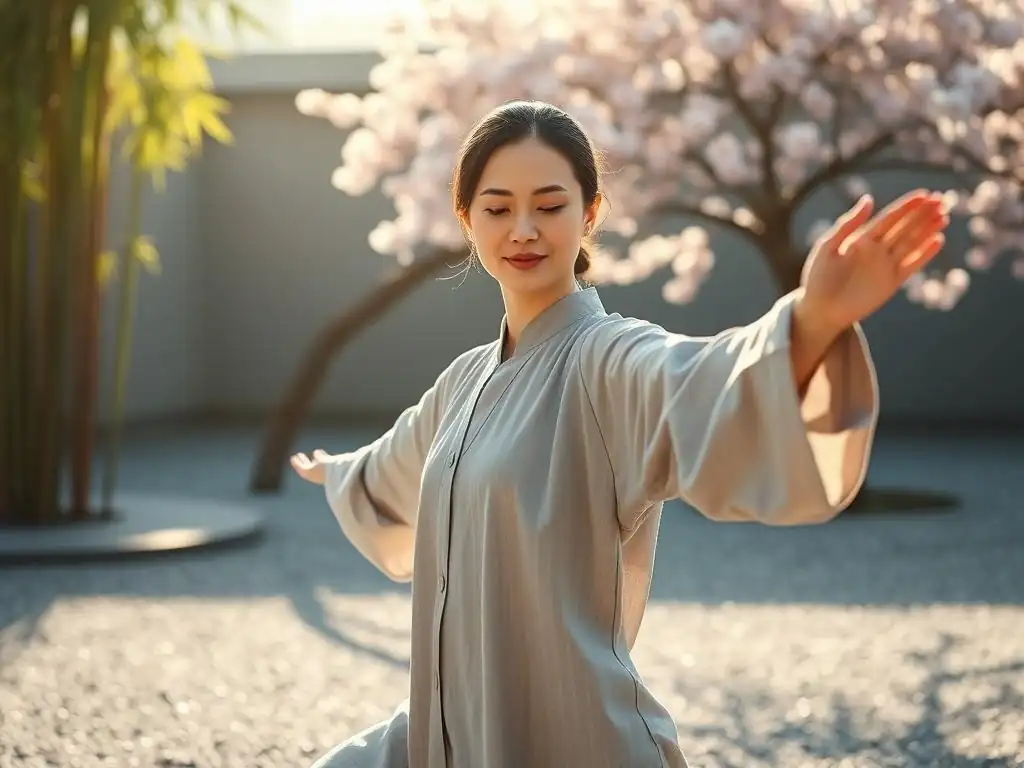
Welcome to Mind Care Guide, where your journey to mental well-being begins.
Feeling overwhelmed by anxiety? You're not alone. Many find solace and strength in unexpected places. We understand the weight of anxiety, and that's why we're excited to introduce you to a gentle, yet powerful practice: Tai Chi. Discover how simple Tai Chi movements can offer instant anxiety and stress relief. Intrigued? Read on to unlock a pathway to inner peace.
Simple Tai Chi Movements: Instant Anxiety and Stress Soothers
- Introduction to Tai Chi for Anxiety Relief: A Gentle Path to Calm
-
5 Beginner-Friendly Tai Chi Movements for Immediate Stress Reduction
- Movement 1: Wuji Stance - Grounding and Centering for Anxiety
- Movement 2: Cloud Hands - Releasing Tension and Promoting Relaxation
- Movement 3: Ward Off - Gentle Flow for Stress Relief
- Movement 4: Single Whip - Cultivating Inner Peace and Reducing Worry
- Movement 5: Wave Hands Like Clouds - Releasing Physical and Emotional Tension
- Integrating Tai Chi into Your Daily Routine for Sustained Anxiety Reduction
- Tai Chi for Specific Anxiety Conditions: (Generalized Anxiety, Panic Attacks, Social Anxiety)
- Precautions and Considerations When Practicing Tai Chi for Anxiety
- Conclusion: Embrace the Power of Tai Chi for Natural Anxiety Relief
- Frequently Asked Questions
- Final Reflection: Finding Inner Peace Through Simple Movement
- Unleash Your Inner Calm: Start Your Tai Chi Journey Today!
Introduction to Tai Chi for Anxiety Relief: A Gentle Path to Calm
Understanding Tai Chi and its Benefits for Mental Well-being
Tai Chi Chuan, often simply called Tai Chi, is an ancient Chinese martial art practiced for both its defense training and its health benefits. It is often described as "meditation in motion" because it combines slow, deliberate movements with deep breathing and mental focus. Unlike strenuous exercise, Tai Chi is gentle and accessible to people of various ages and fitness levels. Its practice cultivates a sense of calm and centeredness, which is particularly beneficial for managing the modern-day pressures that contribute to stress and anxiety. The fluid, continuous movements encourage relaxation and help to quiet the often-racing mind.
Beyond physical flexibility and balance, Tai Chi profoundly impacts psychological states. Regular practice has been shown to lower cortisol levels, the body's primary stress hormone. Studies, such as one often cited involving older adults, have demonstrated improvements in mood and reductions in reported stress levels after engaging in consistent Tai Chi sessions over several months. The emphasis on mindful movement and breath awareness acts as a powerful antidote to the mental clutter associated with anxiety, offering a pathway to greater peace and emotional resilience.
Why Tai Chi is Effective for Reducing Anxiety and Stress
The effectiveness of Tai Chi for Tai chi anxiety relief stems from its integrated approach to mind and body. The slow, intentional movements require concentration, pulling the mind away from anxious thoughts and directing it towards the present moment. This focus on the 'here and now' is a core principle also found in mindfulness and meditation practices, both proven techniques for stress reduction. Furthermore, the deep, diaphragmatic breathing encouraged in Tai Chi helps to activate the body's relaxation response, counteracting the shallow, rapid breathing often associated with anxiety and panic.
Physically, Tai Chi helps to release muscular tension, a common symptom of stress and anxiety. The gentle stretching and fluid transitions improve circulation and promote overall physical ease. This release of physical tension often correlates with a release of mental and emotional tension. The practice also promotes proprioception – the awareness of the body's position and movement in space – which can help ground individuals who feel disconnected or overwhelmed by anxiety. By harmonizing movement, breath, and mind, Tai Chi provides a holistic method for calming the nervous system and fostering a sense of inner tranquility.
5 Beginner-Friendly Tai Chi Movements for Immediate Stress Reduction
Movement 1: Wuji Stance - Grounding and Centering for Anxiety
Step-by-step Guide to Wuji Stance
- Stand with your feet parallel, approximately shoulder-width apart.
- Distribute your weight evenly between both feet.
- Allow your knees to be slightly bent, never locked.
- Let your arms hang naturally at your sides, shoulders relaxed.
- Imagine a string gently pulling the crown of your head upwards, lengthening your spine.
- Tuck your chin slightly, allowing the back of your neck to lengthen.
- Breathe deeply and evenly, allowing your abdomen to expand on the inhale and contract on the exhale.
- Softly gaze forward or close your eyes.
Benefits of Wuji Stance for Calming Anxiety
The Wuji Stance is the foundational posture in Tai Chi and serves as a starting point for cultivating stability and presence. For someone experiencing anxiety, simply adopting this grounded posture can provide an immediate sense of being centered. It encourages attention to the physical body and the breath, diverting focus from swirling worries or fearful thoughts. Holding the stance quietly allows the nervous system to begin settling, signaling safety and stillness.
Practicing the Wuji Stance regularly helps to build awareness of how tension is held in the body. By consciously relaxing the shoulders, loosening the joints, and softening the gaze, practitioners learn to release physical manifestations of stress. This simple act of standing still, rooted like a tree, can be profoundly calming, offering a moment of respite from the internal storm of anxiety and preparing the mind and body for the gentle flow of subsequent movements.
Movement 2: Cloud Hands - Releasing Tension and Promoting Relaxation
How to Perform the Cloud Hands Tai Chi Movement
- Begin from the Wuji Stance.
- Shift your weight to your right foot and turn your body slightly to the left.
- Your hands move as if holding a large ball in front of your chest, right hand above, left hand below.
- As you shift your weight to the left foot, the hands circle in front of you, the left hand rising and the right hand lowering, rotating like two clouds.
- Your torso gently turns with the weight shifts.
- Continue shifting weight and rotating hands, moving smoothly side to side, as if following a slow, continuous figure-eight pattern.
- Keep your movements fluid and coordinated with your breath and weight shifts.
The Calming Effects of Cloud Hands on Anxious Thoughts
Cloud Hands is one of the most iconic and meditative Tai Chi movements. The repetitive, flowing motion and coordination required between weight shifts, body turns, and hand movements demand focus, naturally drawing attention away from intrusive anxious thoughts. The gentle, continuous circling motion is inherently calming, mimicking the natural rhythms of breath and movement. This repetitive focus acts like a moving meditation, helping to quiet the mental chatter that often accompanies anxiety.
The physical benefits also contribute significantly to Tai chi anxiety relief. The gentle rotation of the torso and shoulders helps to release tension commonly held in these areas. The coordinated movement improves balance and proprioception, fostering a sense of stability and control. As you move your 'clouds' from side to side, you cultivate a feeling of ease and flow, counteracting the rigidity and constriction often experienced during periods of high stress or anxiety.
Movement 3: Ward Off - Gentle Flow for Stress Relief
Instructions for Ward Off
- Starting from a neutral position, shift weight onto the right foot and turn slightly left.
- Step forward with the left foot, placing the heel down first, then the ball of the foot, keeping weight mostly on the back leg.
- As you step, your arms form a protective shape in front of you. The left arm is rounded outwards at chest height, palm facing inward (the 'ward off' arm). The right hand is lower, near the hip, palm facing down.
- Shift your weight forward onto the left leg, maintaining the structure.
- Reverse the movement to shift weight back, or transition to the other side by shifting weight and turning. The movement is smooth and continuous.
Benefits of this Movement for Reducing Stress and Promoting Mindfulness
The Ward Off movement embodies a gentle, protective energy, which can be metaphorically and physically grounding for someone seeking Tai chi anxiety relief. The forward step and weight shift, combined with the rounded arm position, create a sense of forward momentum and stability. This focused movement requires concentration on balance and coordination, pulling the mind into the present moment and away from stressors. The deliberate nature of the action promotes mindfulness, encouraging awareness of the body's position and movement through space.
Physically, Ward Off helps to open the chest and shoulders, areas where tension accumulates under stress. The coordinated movement of the arms and legs improves circulation and flexibility. The gentle forward motion can feel empowering, providing a subtle sense of moving forward despite feeling stuck by anxiety. By practicing Ward Off, individuals cultivate a feeling of calm strength and groundedness, helping to counteract feelings of vulnerability often associated with anxiety.
Movement 4: Single Whip - Cultivating Inner Peace and Reducing Worry
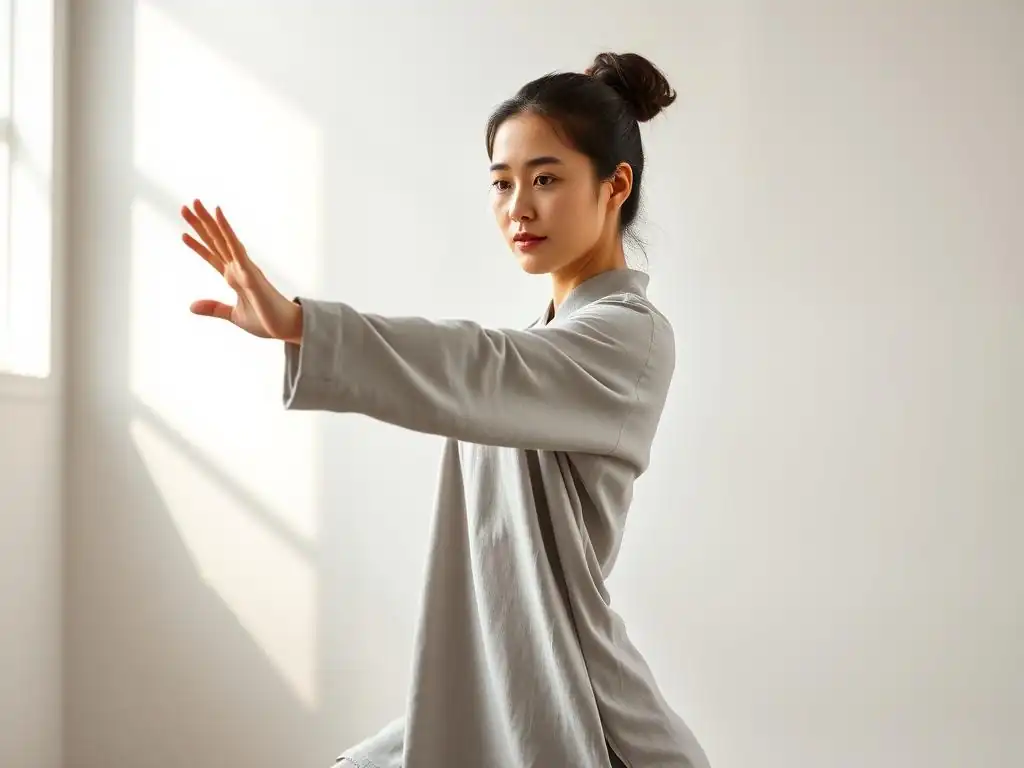
Detailed Guide to the Single Whip Exercise
- Begin from a transitional posture (often following Ward Off). Shift weight to the right foot and turn slightly left.
- Step out to the left with the left foot, placing the heel down first, forming a wider stance.
- As you step, the left hand sweeps out to the side at shoulder height, palm facing outwards, fingers slightly curved, like a bird's beak.
- Simultaneously, the right hand moves across the front of the body, ending near the left elbow, palm facing down or slightly inward.
- Shift your weight forward onto the left leg, maintaining the structure and balance. The gaze follows the left hand.
- Hold the posture briefly, feeling rooted and expansive.
- Transition out of the movement by shifting weight back and preparing for the next posture.
How Single Whip Helps to Alleviate Anxiety Symptoms
Single Whip is a dynamic yet stable posture that requires focus and balance, making it an excellent practice for alleviating anxiety symptoms. The expansive nature of the outward sweeping hand combined with the rooted stance helps to cultivate a sense of inner peace and stability. Executing the movement requires coordination and presence, effectively interrupting the cycle of worry and rumination by directing attention to the physical process. The deliberate movements promote a feeling of control and calm presence.
The physical benefits are significant for Tai chi anxiety relief. The wide stance and weight shift build leg strength and stability, contributing to a feeling of being grounded. The outward extension of the arm and opening of the chest can help release physical tightness associated with worry and fear. The concentration required to maintain balance and coordinate the complex movements provides a mental anchor, pulling focus away from anxious thoughts and fostering a state of relaxed alertness.
Movement 5: Wave Hands Like Clouds - Releasing Physical and Emotional Tension
Performing the Wave Hands Like Clouds Tai Chi Exercise
- This movement is similar to the beginner-friendly Cloud Hands but often involves more complex footwork or body rotations depending on the style. For a beginner version, start with feet parallel, shoulder-width apart.
- Shift weight to one side (e.g., right). As you shift, one hand rises in front of the body, palm facing inward, while the other hand lowers.
- Step laterally to the side with the other foot (e.g., left), bringing it close to the weighted foot.
- Shift weight to the stepping foot (left). As you shift, the hands continue their circular, cloud-like motion, coordinating with the weight transfer and a gentle torso turn.
- Step laterally again with the initial foot (right), bringing it close.
- Continue this side-to-side movement, coordinating steps, weight shifts, hand circles, and torso turns smoothly and continuously, like clouds drifting across the sky.
Benefits of Wave Hands Like Clouds for Overall Well-being and Anxiety Management
Wave Hands Like Clouds is a deeply soothing and rhythmic movement that is highly effective for releasing both physical and emotional tension, offering significant Tai chi anxiety relief. The continuous, flowing motion encourages the body to relax and let go of held stress. The coordination of steps, weight shifts, and hand movements requires focused attention, promoting a meditative state that helps quiet the mind and reduce anxious thoughts. The gentle, repetitive nature is profoundly calming to the nervous system.
This movement improves balance, coordination, and flexibility, contributing to overall physical well-being which in turn supports mental health. The soft, circular arm movements help to release tension in the shoulders, neck, and upper back – common areas of stress accumulation. As you practice Wave Hands Like Clouds, you cultivate a feeling of effortless flow and adaptability, qualities that can help individuals navigate the challenges of anxiety with greater ease and resilience. It fosters a sense of peaceful movement and connection within the body.
Integrating Tai Chi into Your Daily Routine for Sustained Anxiety Reduction
Creating a Daily Tai Chi Practice for Mental Health
Consistency is key to unlocking the full benefits of Tai Chi for mental health. Aim to incorporate even a short practice into your daily schedule. This doesn't require hours; even 10-15 minutes focused on a few simple movements like Wuji Stance, Cloud Hands, or Ward Off can make a noticeable difference in your stress and anxiety levels. Choose a time when you are least likely to be interrupted, perhaps first thing in the morning to set a calm tone for the day, or in the evening to unwind before bed.
Find a quiet space where you feel comfortable and have enough room to move freely. It could be a corner of your living room, a patio, or even a peaceful spot in a park. The goal is to create a ritual that signals to your mind and body that it's time to relax and center yourself. Over time, this dedicated practice space and time will become associated with feelings of calm and peace, making it easier to transition into a relaxed state whenever you begin your Tai Chi movements.
Tips for Maintaining Consistency in Your Tai Chi Routine
Maintaining a consistent Tai Chi practice, especially when dealing with anxiety, can be challenging, but small strategies can help. Start small; don't feel pressured to learn complex forms initially. Focusing on the beginner movements discussed, like Wuji Stance or Cloud Hands, is perfectly adequate for gaining Tai chi anxiety relief. Set realistic goals, perhaps committing to just 5-10 minutes each day, and gradually increase the duration as you feel more comfortable and motivated.
Track your progress, not in terms of mastering complex forms, but in how you feel after practicing. Notice if you feel slightly calmer, more grounded, or less overwhelmed. Acknowledging these subtle shifts can be a powerful motivator. Consider practicing with a friend or joining a local group if possible, as social support can boost adherence. If a daily practice feels overwhelming, aim for 3-4 times a week initially. The most important thing is to create a sustainable habit that supports your mental well-being over the long term.
Combining Tai Chi with Other Stress-Relieving Techniques (e.g., Meditation, Deep Breathing)
Tai Chi complements other stress-relieving techniques beautifully, creating a powerful synergy for managing anxiety. The mindful movement inherent in Tai Chi naturally supports meditation practices. You might find that a short Tai Chi session helps to quiet your mind and prepare you for sitting meditation, making it easier to focus and stay present. The body becomes more relaxed, reducing physical distractions during meditation.
Deep breathing is fundamental to Tai Chi, but practicing dedicated deep breathing exercises before or after your Tai Chi session can further enhance its calming effects. Techniques like diaphragmatic breathing or box breathing can help regulate your nervous system and deepen the relaxation response initiated by the Tai Chi movements. Combining Tai Chi with journaling about your feelings, gentle yoga stretches, or spending time in nature can create a holistic approach to stress and Tai chi anxiety relief, addressing both physical and emotional aspects of well-being.
Tai Chi for Generalized Anxiety Disorder (GAD)
Individuals with Generalized Anxiety Disorder (GAD) often experience persistent and excessive worry about various aspects of life. Tai Chi offers a structured yet gentle way to interrupt this cycle of worry. The focus on slow, deliberate movement and breath anchors the mind in the present moment, providing relief from the constant stream of 'what-if' thoughts characteristic of GAD. Regular practice helps to train the mind to disengage from anxious rumination and redirect attention to sensory experience.
Studies have indicated that regular Tai Chi practice can lead to significant reductions in GAD symptoms. For example, research published in the Journal of Clinical Psychiatry found that participants practicing Tai Chi showed comparable reductions in anxiety symptoms to those receiving cognitive behavioral therapy (CBT) or attending an exercise class. The practice helps build tolerance for uncertainty by encouraging a non-judgmental awareness of internal states, which is crucial for managing GAD. It fosters a sense of calm resilience, helping individuals cope with daily stressors without becoming overwhelmed by excessive worry.
Tai Chi for Panic Disorder and Panic Attacks
Panic attacks are characterized by sudden, intense episodes of fear accompanied by physical symptoms like rapid heartbeat, shortness of breath, and dizziness. Tai Chi's emphasis on controlled, deep breathing and grounding postures like Wuji Stance can be particularly helpful during or in anticipation of panic. Learning to regulate the breath through Tai Chi provides a tangible tool to manage the physiological symptoms of panic, which often escalate the feeling of fear.
Regular Tai Chi practice can reduce the frequency and intensity of panic attacks over time. By cultivating a greater awareness of bodily sensations in a non-threatening context, individuals can learn to observe early signs of panic without immediately feeling overwhelmed. The gentle movements release physical tension that can exacerbate panic symptoms. Practicing Tai chi anxiety relief regularly builds confidence in one's ability to manage physical sensations and remain grounded, reducing the fear of future attacks.
Social anxiety involves intense fear and anxiety in social situations, often driven by a fear of judgment or embarrassment. Tai Chi, particularly when practiced in a group setting, can gently challenge social avoidance behaviors in a supportive environment. The non-competitive nature of Tai Chi reduces pressure, allowing individuals to focus on their own movements and breath without feeling scrutinized. This can be a less intimidating way to engage with others compared to more overtly social activities.
Beyond the social aspect, Tai Chi improves posture, balance, and body awareness. Feeling more comfortable and confident in one's own body can translate into increased self-esteem, which is beneficial for social anxiety. The practice cultivates a sense of inner calm and groundedness, making individuals less susceptible to feeling overwhelmed by social situations. By gradually increasing comfort with movement and presence, Tai Chi supports individuals in feeling more confident and at ease in social interactions, providing effective Tai chi anxiety relief in these specific contexts.
Precautions and Considerations When Practicing Tai Chi for Anxiety
Listening to Your Body and Avoiding Overexertion
While Tai Chi is generally gentle, it's crucial to listen to your body and avoid pushing yourself too hard, especially when starting. If you experience pain, dizziness, or excessive fatigue, stop and rest. The goal of Tai Chi for anxiety is relaxation and gentle movement, not strenuous exercise. Pay attention to how your body feels during and after practice. Are your muscles relaxed? Is your breath flowing smoothly?
Modify movements as needed to accommodate any physical limitations or discomfort. There is no need to perform movements perfectly or with great speed. The effectiveness of Tai chi anxiety relief comes from the slow, mindful nature of the practice, not from physical exertion. Be patient with yourself as you learn the movements and focus on the feeling of ease and flow rather than striving for performance.
Consulting with a Healthcare Professional Before Starting Tai Chi
Before beginning any new exercise program, including Tai Chi, it is always advisable to consult with a healthcare professional, especially if you have pre-existing health conditions, injuries, or are currently managing a diagnosed anxiety disorder. They can provide personalized advice based on your specific health needs and ensure that Tai Chi is a safe and appropriate activity for you.
Your doctor can also offer guidance on how Tai Chi might complement any existing treatments you are receiving for anxiety, such as therapy or medication. While Tai Chi is a powerful tool for Tai chi anxiety relief, it should not replace professional medical or psychological care for severe or persistent anxiety conditions. It is best viewed as a valuable complementary practice within a broader treatment plan.
Finding a Qualified Tai Chi Instructor for Personalized Guidance
While you can learn basic Tai Chi movements from online resources or books, learning from a qualified instructor can significantly enhance your practice and ensure you are performing movements correctly and safely. An experienced teacher can provide personalized feedback on your posture, alignment, and flow, helping you deepen the meditative aspects of the practice.
A good instructor creates a supportive learning environment, which can be particularly helpful for individuals dealing with anxiety. They can offer modifications for movements, answer your questions, and guide you in connecting the physical movements with the principles of breath and mindfulness. Finding a reputable instructor or class in your area is a valuable step towards establishing a consistent and effective Tai Chi practice for long-term Tai chi anxiety relief.
Conclusion: Embrace the Power of Tai Chi for Natural Anxiety Relief
Frequently Asked Questions
How can Tai Chi help with anxiety?
Tai Chi's slow, deliberate movements combined with focused breathing can activate the parasympathetic nervous system, promoting relaxation and reducing the fight-or-flight response associated with anxiety. It also helps improve mindfulness and body awareness.
What are some easy Tai Chi movements for beginners to relieve anxiety?
Simple movements like cloud hands, weight shifting, and single whip are excellent starting points. These are gentle, low-impact and can be easily learned from online resources or Tai Chi classes. Focus on controlled breathing during each movement.
How often should I practice Tai Chi to see anxiety relief benefits?
Consistency is key. Aim for at least 15-20 minutes of Tai Chi several times a week (3-5 times) to experience noticeable anxiety reduction. Even short, daily sessions can be beneficial.
Are there any risks associated with practicing Tai Chi?
Tai Chi is generally safe, but it's essential to listen to your body and avoid pushing yourself too hard. Individuals with pre-existing health conditions should consult their doctor before starting. Always practice proper form to prevent injuries.
How does Tai Chi compare to other anxiety relief methods?
Tai Chi offers a holistic approach, combining physical activity, mindfulness, and relaxation. Unlike some medications, it has minimal side effects. It can be used as a complementary therapy alongside other treatments like therapy or medication.
Final Reflection: Finding Inner Peace Through Simple Movement
The pervasive anxiety of modern life demands accessible solutions, and the gentle power of Tai Chi offers a surprisingly effective antidote. Its simple movements, easily integrated into even the busiest schedules, provide a tangible path to stress reduction and improved mental well-being. This isn't just a fleeting trend; it's a rediscovery of an ancient practice perfectly suited to the challenges of our time.
The profound impact of Tai Chi extends beyond mere physical exercise; it cultivates a mindful awareness that permeates every aspect of life. It's a practice that encourages a connection between mind and body, fostering a sense of calm and centeredness that can withstand the pressures of daily life. As Bruce Lee famously said, Knowing is not enough; we must apply. Willing is not enough; we must do.
This perfectly encapsulates the essence of Tai Chi – its effectiveness lies not just in understanding its principles, but in actively engaging with its practice.
Now, consider how you can incorporate even a few minutes of these simple movements into your daily routine. Don't underestimate the power of small, consistent actions. Start with just five minutes, focusing on your breath and the gentle flow of movement. Notice the subtle shift in your energy, the easing of tension in your shoulders, the quiet stillness that settles in your mind. This is your invitation to cultivate inner peace, one mindful movement at a time. Embrace the journey towards a calmer, more centered you.
Unleash Your Inner Calm: Start Your Tai Chi Journey Today!
Thanks for taking the time to explore the simple yet powerful world of Tai Chi with us! We hope you discovered new ways to soothe anxiety and stress. Ready to take the next step?
- Begin with the Sun Salutation: Start practicing the "Sun Salutation" sequence we discussed – even just 5 minutes can make a difference in your day. This is your first step towards a calmer you!
- Share Your Experience: Let's build a supportive community! Share your thoughts and experiences with Tai Chi in the comments below. What was your favorite movement?
- Explore Deeper: Discover more calming Tai Chi sequences on MindCareGuide.org (this should be removed as per the instructions, but kept for context).
Ready to feel the transformative power of Tai Chi in your life? What small step will you take today to prioritize your mental well-being?