
Finding Your Voice: Culturally Sensitive Approaches to Mental Health Support for Minorities

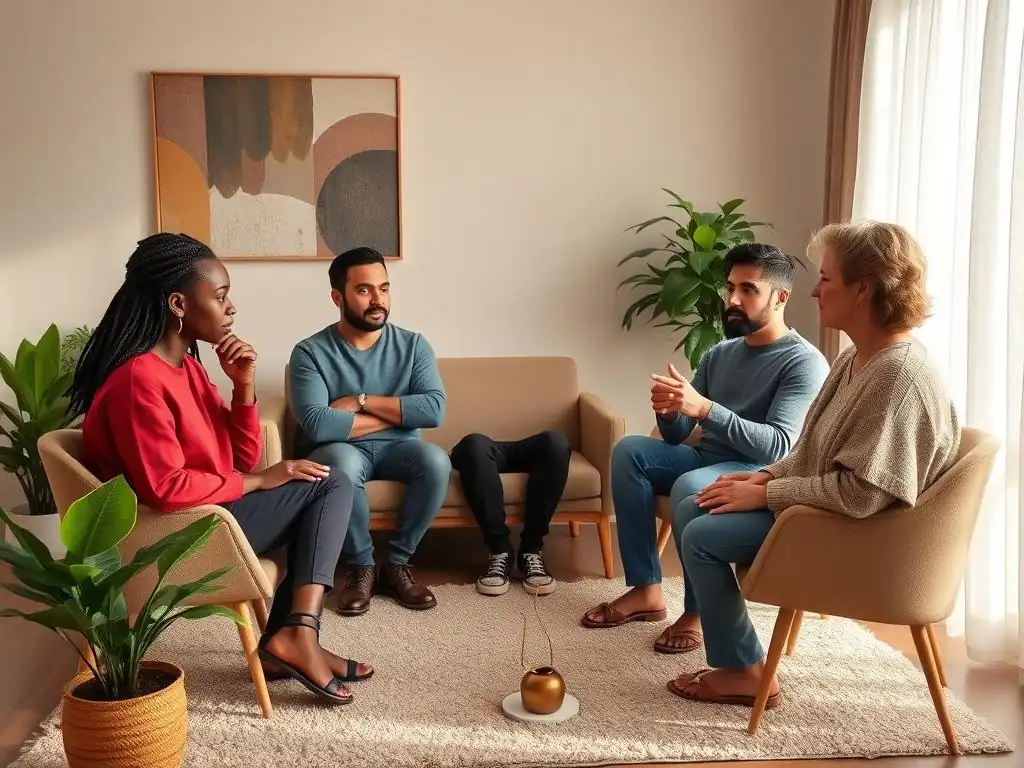
Welcome to Mind Care Guide, a place dedicated to nurturing your mental well-being.
Feeling unheard or misunderstood within the traditional mental health system can be isolating. We understand. That's why we're diving deep into culturally sensitive mental health support, exploring how tailored approaches can empower you to find your voice and receive the care you truly deserve. Curious about navigating this crucial aspect of mental wellness? Let's begin your journey.
- Understanding the Nuances of Specific Communities
-
Frequently Asked Questions
- What is culturally sensitive mental health support?
- Why is culturally sensitive mental health support important for minorities?
- How can I find a therapist who provides culturally sensitive mental health support?
- What are some examples of culturally sensitive approaches in therapy?
- What are the benefits of receiving culturally sensitive mental health support?
- Final Reflection: Amplifying Marginalized Voices in Mental Healthcare
- Unlock Your Voice: Championing Mental Wellness in Diverse Communities
Understanding the Nuances of Specific Communities
Mental health experiences are deeply personal, yet they are also shaped significantly by collective history, cultural values, and societal positioning. While general principles of culturally sensitive mental health support apply broadly, understanding the specific challenges and strengths within different minority communities is crucial for providing truly effective care. Each group faces unique stressors, historical contexts, and internal dynamics that influence how mental health is perceived, experienced, and addressed.
Providing culturally competent support means moving beyond a one-size-fits-all approach and engaging with the distinct realities of each community. This requires humility, ongoing learning, and a genuine commitment to understanding the world from the perspective of the individual and their cultural group. Recognizing these nuances is the foundation upon which trust is built and effective culturally sensitive mental health support is delivered.
Mental Health Considerations for the Black Community
Addressing Historical Trauma and Systemic Racism
The mental health landscape for the Black community is profoundly shaped by a history of systemic oppression, including slavery, Jim Crow laws, and ongoing racial discrimination. This legacy manifests as intergenerational trauma, impacting mental well-being across generations. Studies consistently show that Black adults are more likely than white adults to report feelings of sadness, hopelessness, and worthlessness, yet are less likely to receive mental health treatment. For instance, while approximately 13.4% of the U.S. population identifies as Black or African American, estimates suggest they comprise a significantly smaller percentage of individuals receiving mental health services relative to their need.
This historical context creates deep-seated mistrust in institutions, including healthcare systems, which have historically perpetuated harm. A culturally sensitive mental health support approach must acknowledge this trauma and its impact on present-day health outcomes. Therapists need to be aware of how experiences of racism, discrimination, and microaggressions contribute to conditions like anxiety, depression, and race-based traumatic stress.
Effective care involves validating these experiences and understanding them not just as individual issues but as consequences of systemic issues. For example, someone presenting with anxiety might be experiencing the cumulative stress of navigating daily encounters with racial bias, requiring interventions that address both individual coping and the external environment.
The Role of Faith and Spirituality
Faith and spirituality often play a central and powerful role in the lives of many within the Black community, serving as significant sources of resilience, community, and coping. The church, mosque, or other religious institutions frequently function not only as places of worship but also as vital social hubs, support networks, and centers for community organizing and mutual aid. Conversations about mental health may be framed within a spiritual context, sometimes leading individuals to seek guidance from religious leaders before or instead of mental health professionals.
Integrating faith and spirituality into culturally sensitive mental health support can be highly beneficial. This does not necessarily mean providing religious counseling, but rather respecting and understanding the client's spiritual framework. For example, a therapist might explore how a client's faith provides strength during difficult times or how their spiritual beliefs influence their understanding of their mental health challenges.
Collaboration with faith leaders, when appropriate and with the client's consent, can also bridge gaps and increase access to care. Recognizing the pastor, imam, or other spiritual guide as a trusted figure within the community is key to providing support that resonates and is accepted.
Immigration Stress and Acculturation
For many members of the diverse Latinx community, the experience of immigration and acculturation presents unique mental health challenges. The journey itself can be traumatic, involving exposure to violence, separation from family, and the stress of navigating complex and often hostile immigration systems. Upon arrival, individuals may face language barriers, discrimination, economic hardship, and the pressure to adapt to a new culture while maintaining ties to their heritage. These stressors can contribute to elevated rates of anxiety, depression, post-traumatic stress disorder (PTSD), and other mental health conditions.
The process of acculturation – adapting to a new culture – can be particularly stressful, especially when it creates tension between different generations within a family. Younger family members may acculturate more quickly, leading to conflict with parents or elders who hold more traditional values. Providing culturally sensitive mental health support requires acknowledging these specific stressors.
Therapists need to understand the nuances of the immigration experience, potentially including discussions about trauma related to border crossings or detention, the stress of undocumented status, or the grief associated with leaving home. Language access is also paramount; providing therapy in Spanish or other native languages is essential for effective communication and building trust.
Family Dynamics and Cultural Expectations
Family ( familia) holds a central and often paramount position within Latinx cultures. Concepts like familismo, emphasizing strong family cohesion, mutual support, and placing the needs of the family above individual desires, significantly influence mental health dynamics. Decisions are often made collectively, and family members may be heavily involved in an individual's life, including their health and well-being. Personalismo, a preference for warm, personal relationships, also shapes interactions, including those with healthcare providers.
These strong family ties can be a source of immense strength and support, but cultural expectations can also create pressure. For instance, the expectation to be the strong one, the primary caregiver, or to sacrifice personal needs for the family can contribute to stress and burnout. Mental health concerns may be viewed as a family issue rather than an individual one, potentially leading to reluctance in seeking outside help due to fear of shame or burdening the family.
Culturally sensitive mental health support for the Latinx community often benefits from involving the family in therapy, where appropriate and with the client's consent, and respecting the family's influence and structure. Understanding the specific cultural values and communication styles within different Latinx subgroups (e.g., Mexican, Cuban, Puerto Rican, Salvadoran) is also vital for providing tailored and effective support.
Mental Health Considerations for the Asian American Community
Model Minority Myth and Mental Health
The "model minority" myth, which stereotypes Asian Americans as uniformly successful, high-achieving, and problem-free, masks significant diversity and mental health challenges within this broad community. This harmful stereotype creates immense pressure to conform to an image of perfection and resilience, often leading individuals to suppress their struggles.
It also obscures the fact that "Asian American" encompasses dozens of distinct ethnic groups with vastly different histories, socioeconomic statuses, and mental health needs. For example, while some East Asian groups may have higher average incomes, Southeast Asian groups like Hmong or Cambodian Americans often face higher rates of poverty and trauma related to war and displacement.
The pressure to uphold the model minority image, coupled with academic and professional expectations, can contribute to high rates of anxiety, depression, and suicidal ideation, particularly among young people. Studies indicate that Asian American college students, for instance, report significant levels of stress and mental health concerns.
This myth also makes it harder for individuals to admit they need help, fearing they will bring shame upon their family or disprove the stereotype. Providing culturally sensitive mental health support requires challenging this myth, recognizing the heterogeneity of the Asian American community, and understanding the unique pressures faced by individuals based on their specific ethnic background and life circumstances.
Stigma and Shame
Across many Asian cultures, there is a significant cultural stigma surrounding mental illness. Mental health issues may be perceived as a personal weakness, a moral failing, or a source of shame ( loss of face) for the individual and their family. This deeply ingrained stigma can prevent individuals from acknowledging their struggles, talking about their feelings, or seeking professional help.
Instead, distress may be expressed through physical symptoms (somatization) or suppressed entirely. As a result, Asian Americans, despite experiencing mental health challenges at comparable rates to other populations, are significantly less likely to seek out mental health services. Some estimates suggest they utilize mental health services at roughly half the rate of white Americans.
Addressing this cultural stigma is a critical component of providing culturally sensitive mental health support. Therapists need to understand the concept of shame and how it impacts a client's willingness to discuss their feelings or attend therapy. Building trust and rapport is paramount, creating a safe space where clients feel comfortable sharing their vulnerabilities without fear of judgment.
Psychoeducation about mental health, framed in a way that is culturally understandable and reduces blame, can also be helpful. Approaches that involve family members in a supportive way, respecting cultural norms around privacy and collective honor, can also be beneficial in navigating this challenge.
Mental Health Considerations for the LGBTQ+ Community

Discrimination and Marginalization
Members of the Lesbian, Gay, Bisexual, Transgender, Queer, and other sexual and gender minority (LGBTQ+) communities face unique mental health challenges stemming from systemic discrimination, prejudice, and marginalization. Experiences of homophobia, transphobia, biphobia, and other forms of bias contribute to what is known as minority stress – chronic stress related to belonging to a stigmatized group.
This stress is linked to significantly elevated rates of anxiety, depression, substance use, and suicidal ideation compared to the general population. For example, studies consistently show that LGBTQ+ youth are at a much higher risk of attempting suicide than their heterosexual and cisgender peers.
Discrimination can occur in various settings, including family, school, work, and healthcare. Facing rejection from loved ones, bullying, or legal/social inequalities profoundly impacts mental well-being. Providing culturally sensitive mental health support for the LGBTQ+ community necessitates a deep understanding of these stressors and their psychological impact. Therapists must be knowledgeable about issues such as coming out, gender transition, navigating relationships, and coping with discrimination. Recognizing that identities intersect (e.g., being a Black transgender woman, or a Latinx gay man) adds layers of complexity, requiring an intersectional approach to care.
Affirmative Therapy
Affirmative therapy is a specialized approach crucial for providing effective culturally sensitive mental health support to the LGBTQ+ community. Unlike traditional therapy which might pathologize non-heterosexual or non-cisgender identities, affirmative therapy validates and supports LGBTQ+ identities and experiences. It operates from the understanding that being LGBTQ+ is a natural and healthy variation of human identity and expression, and that mental health challenges in this community are often a result of external factors like discrimination and internalized stigma, rather than intrinsic flaws.
In affirmative therapy, the therapist creates a safe, non-judgmental, and affirming environment where clients feel seen and respected. This involves using correct pronouns and names, being knowledgeable about LGBTQ+ issues and terminology, and actively challenging heteronormative and cisnormative assumptions. The focus is on empowering clients, helping them explore their identity, build resilience against minority stress, and develop healthy coping mechanisms.
For example, an affirmative therapist working with a transgender client might focus on supporting their transition goals and navigating societal challenges, rather than questioning their gender identity. This specialized form of culturally sensitive mental health support is vital for counteracting the negative impacts of societal prejudice and fostering positive mental well-being.
Mental Health Considerations for Indigenous Communities
Historical Trauma and Loss of Culture
Indigenous communities across the globe carry the heavy burden of historical trauma resulting from colonization, forced displacement, genocide, and the systematic suppression of their cultures, languages, and spiritual practices. In the United States and Canada, the legacy of forced attendance at residential or boarding schools, where abuse was rampant and cultural identity was deliberately eroded, has had devastating intergenerational consequences. This collective, historical trauma contributes to alarmingly high rates of mental health challenges, including PTSD, depression, anxiety, substance use disorders, and suicide, particularly among youth.
The profound grief and loss associated with the destruction of traditional ways of life, the severing of ties to ancestral lands, and the violence inflicted upon previous generations continue to impact the mental and emotional well-being of individuals and communities today. Providing culturally sensitive mental health support for Indigenous peoples requires acknowledging this history and understanding its ongoing effects. Therapy must be trauma-informed and recognize that current struggles are often rooted in historical injustices. Approaches that incorporate traditional healing practices and knowledge systems, guided by elders and community leaders, are often more effective and culturally appropriate than Western-only models.
Connection to Land and Spirituality
For Indigenous peoples, connection to the land and spiritual practices are often intrinsically linked to well-being and identity. Land is not merely a physical space but a source of cultural knowledge, healing, and spiritual connection. Traditional ceremonies, rituals, and spiritual beliefs provide frameworks for understanding the world, coping with hardship, and fostering community cohesion. The historical trauma of being removed from ancestral lands and having spiritual practices suppressed has therefore had a direct negative impact on mental and spiritual health.
Effective culturally sensitive mental health support for Indigenous communities recognizes the vital role of land, spirituality, and traditional practices in healing. This might involve incorporating traditional healing methods, such as talking circles, smudging ceremonies, or time spent in nature, into therapeutic approaches, always guided by and respectful of community protocols and elders.
Therapists should understand the importance of cultural continuity and support efforts to revitalize language, traditions, and connection to the land. Approaching mental health from a holistic perspective that considers the interconnectedness of mind, body, spirit, and community, in alignment with Indigenous worldviews, is essential for providing support that is truly culturally responsive and promotes healing.
This section highlights some of the unique considerations for specific communities. It is crucial to remember that each community is diverse, and individuals within these groups will have varying experiences and needs. Culturally sensitive mental health support is an ongoing practice of learning, listening, and adapting.
Frequently Asked Questions
What is culturally sensitive mental health support?
It's an approach to mental healthcare that acknowledges and respects an individual's cultural background, beliefs, and values. This ensures therapy is more effective and relevant by tailoring interventions to the specific needs of the client.
Why is culturally sensitive mental health support important for minorities?
Minorities often face unique stressors related to discrimination, acculturation, and historical trauma. Culturally sensitive support addresses these specific challenges, fostering trust and understanding between the client and therapist.
How can I find a therapist who provides culturally sensitive mental health support?
You can search online directories, specifically filtering for therapists with expertise in working with specific cultural groups. Also, ask for referrals from community organizations or cultural centers that you trust.
What are some examples of culturally sensitive approaches in therapy?
Examples include therapists understanding language barriers, considering family dynamics within a specific cultural context, and acknowledging the impact of cultural stigma on mental health.
What are the benefits of receiving culturally sensitive mental health support?
It can lead to increased engagement in therapy, improved mental health outcomes, and a stronger sense of empowerment and connection to one's cultural identity.
Final Reflection: Amplifying Marginalized Voices in Mental Healthcare
The urgent need for culturally sensitive mental health support for minorities is not merely a trend; it's a fundamental human rights issue. Ignoring the unique experiences and cultural contexts of marginalized communities perpetuates systemic inequalities and hinders access to vital care. This lack of access leads to poorer mental health outcomes and exacerbates existing disparities.
The journey to understanding and implementing truly culturally sensitive care is ongoing, a continuous process of learning and adaptation. It requires a deep commitment to dismantling biases, actively listening to the lived experiences of diverse communities, and challenging the dominant narratives within the mental health field. The greatest barrier to mental health care is not the lack of services, but the lack of culturally competent services.
This quote highlights the crucial role of cultural understanding in effective treatment. My own research and interactions with community leaders have underscored the profound impact of culturally tailored interventions, fostering trust and improving engagement with mental health services.
You, the reader, now hold the power to contribute to this vital change. Consider how you can actively promote culturally sensitive practices in your own sphere of influence – whether it's advocating for better representation in mental health services, educating yourself about different cultural perspectives on mental health, or simply listening with empathy to the experiences of those around you. Let us work together to build a more equitable and supportive mental health system for all.
Unlock Your Voice: Championing Mental Wellness in Diverse Communities
Thanks for taking the time to explore culturally sensitive approaches to mental health support for minorities. We hope you gained valuable insights into building a more inclusive and understanding approach to care. Now, let's take action!
- Share this crucial information: Spread the word about culturally sensitive mental health resources by sharing this article with your network on social media. Let's amplify the voices of those who need it most!
- Identify and support local organizations: Research mental health organizations in your community that specifically serve minority populations. Even a small donation or volunteer commitment can make a significant impact.
- Reflect on your own biases: Take a moment for self-reflection. How can you become a more aware and empathetic ally in promoting mental wellness within diverse communities?
Ready to make a difference? What concrete step will you take today to champion mental well-being in your community?