
Awaken Your Senses: Enhancing Your Walking Meditation Experience.

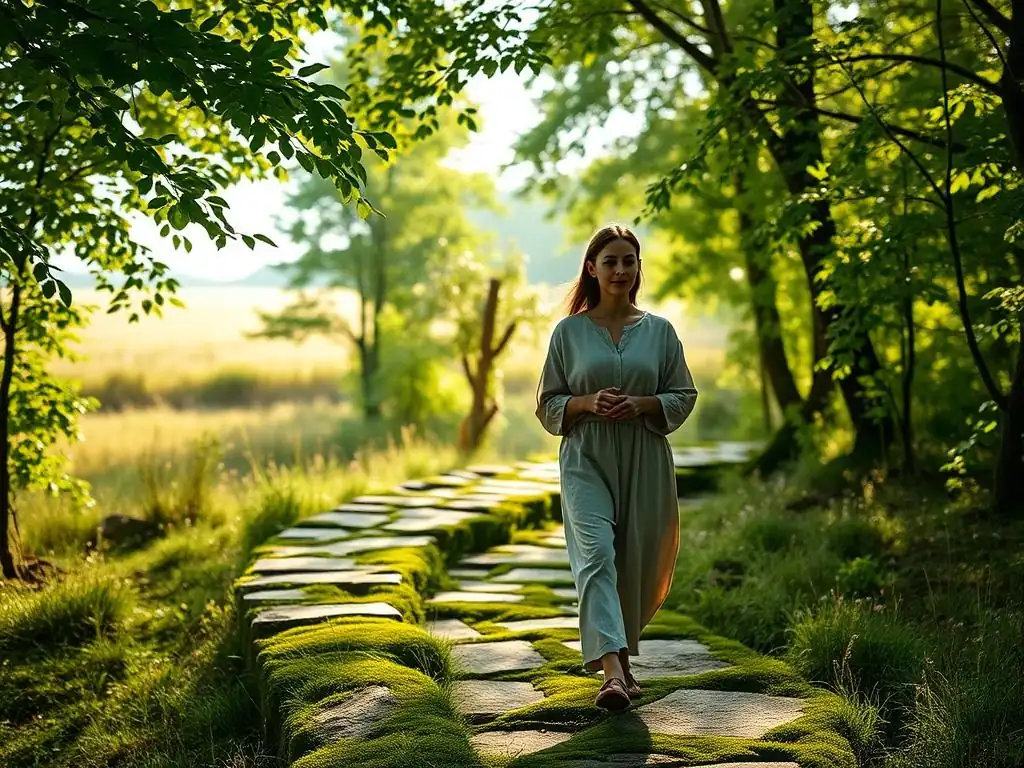
Welcome to Mind Care Guide, a sanctuary for your mental well-being.
Are you feeling overwhelmed by the daily grind and searching for a simple yet profound way to find inner peace? Perhaps you've heard whispers of tranquility found in motion. Discover how the practice of walking meditation mindfulness benefits can transform your everyday walk into a powerful tool for stress reduction and enhanced awareness. Intrigued? Let's take the first step together.
Awaken Your Senses: Enhancing Your Walking Meditation Experience
- Introduction to Walking Meditation and Mindfulness
- Preparing for Your Walking Meditation Session
- Engaging Your Senses During Walking Meditation
- Deepening Your Walking Meditation Practice
- Troubleshooting Common Challenges in Walking Meditation
- Maximizing the Benefits of Walking Meditation Mindfulness
- The Science Behind Walking Meditation Mindfulness Benefits
- Walking Meditation Variations for Enhanced Sensory Awareness
- Conclusion: Embracing the Present Moment Through Walking Meditation
-
Frequently Asked Questions
- What are the main benefits of incorporating mindfulness into walking meditation?
- How does walking meditation differ from regular walking or exercise?
- Can anyone practice walking meditation, regardless of physical ability?
- What are some practical tips for beginners to start a walking meditation practice?
- How does walking meditation specifically enhance mental well-being, as highlighted by Mind Care Guide?
- Final Reflection: The Transformative Power of the Walking Meditation
- Unleash the Power of Mindful Walking
Introduction to Walking Meditation and Mindfulness
Understanding the Core Principles of Walking Meditation
Walking meditation is a form of mindfulness practice that involves paying deliberate attention to the physical sensations of walking. Unlike traditional seated meditation, where the focus is often on the breath or a mantra while remaining still, walking meditation uses the movement of the body as the primary anchor for awareness. The core principle is to bring mindful attention to each step, noticing the lifting, moving, and placing of the foot, as well as the subtle shifts in balance and posture. This transforms a seemingly mundane activity into a powerful tool for cultivating presence and awareness.
This practice is not about reaching a destination quickly, but rather about the journey itself – the present moment unfolding with each stride. It encourages you to slow down and observe the mechanics of walking, typically done at a slower pace than usual to allow for heightened sensory awareness. By grounding your attention in the physical act of walking, you create a portable form of meditation that can be practiced almost anywhere, offering a dynamic alternative or complement to seated practices. It's a way to embody mindfulness while engaging with the world.
The Connection Between Walking Meditation and Mindfulness Benefits
Walking meditation inherently connects the physical act of movement with the principles of mindfulness, leading to a range of walking meditation mindfulness benefits. Mindfulness involves paying attention, on purpose, to the present moment, without judgment. When applied to walking, this means consciously observing sensations, thoughts, and feelings as they arise during the walk, without getting carried away by them. The rhythmic nature of walking can make it easier for some people to maintain focus compared to seated meditation.
The benefits derived from this practice are manifold. Regular walking meditation can significantly reduce stress and anxiety by training the mind to stay anchored in the present, rather than dwelling on worries about the past or future. It can improve focus and concentration, as the practice involves sustained attention on a specific physical process. Furthermore, it can enhance self-awareness and emotional regulation, helping practitioners notice and process emotions more effectively. These walking meditation mindfulness benefits contribute to overall mental well-being and a greater sense of calm and presence in daily life.
Preparing for Your Walking Meditation Session
Choosing the Right Environment for Mindful Walking
Selecting an appropriate environment is key to a successful walking meditation experience. Ideally, choose a location where you feel safe and relatively undisturbed. A quiet park path, a peaceful garden, a less-trafficked sidewalk, or even a designated space indoors like a hallway can work. The goal is to minimize external distractions as much as possible, especially when you are new to the practice. A consistent location can also help establish a routine and make it easier to slip into a mindful state.
Consider the ground surface – a relatively flat and even path is often best, particularly when starting out, to allow you to focus on the sensations of walking rather than navigating challenging terrain. While walking meditation in nature offers unique sensory experiences, any location can serve as a meditation space if approached with the right intention. Some find a simple loop or straight path that allows for walking back and forth is easier than navigating a long trail, as it requires less attention to direction.
Setting Intentions for Your Walking Meditation Practice
Before you begin walking, take a moment to set an intention for your practice. An intention acts as a gentle guide for your awareness. It doesn't need to be complex; it could be as simple as "to pay attention to my feet," "to notice the sounds around me," or "to simply walk and be present." Setting an intention helps to focus your mind from the outset and reminds you why you are engaging in the practice.
Your intention can also be related to specific walking meditation mindfulness benefits you hope to cultivate, such as reducing stress or increasing self-compassion. For example, you might set the intention "to walk with kindness towards myself." Hold this intention lightly; it's not a rigid rule, but a gentle reminder of your purpose. If your mind wanders, you can simply return to your intention as an anchor point.
Dress Comfortably and Minimize Distractions
Your physical comfort is important for allowing your mind to settle and focus on the walking meditation experience. Wear comfortable clothing that doesn't restrict your movement or cause discomfort. Choose footwear that is appropriate for the surface you'll be walking on – supportive shoes are generally recommended, though some variations explore barefoot walking.
Minimize potential distractions before you start. This includes silencing your phone or leaving it behind if possible. If you wear glasses, ensure they are comfortable and clean. Hydrate adequately beforehand, especially if walking outdoors for a longer duration. By taking care of these basic physical needs, you create a foundation of comfort that supports your ability to stay present and fully engage with the practice.
Engaging Your Senses During Walking Meditation
Focusing on the Sensation of Your Feet
The sensation of your feet connecting with the ground is often the primary anchor in walking meditation. Begin by bringing your awareness down to your feet. Notice the subtle movements involved in taking a single step: the lifting of the heel, the push-off from the toes, the swing of the leg, the placement of the heel, and the rolling forward onto the ball of the foot. Feel the pressure changes, the texture of the ground through your shoes, and the warmth or coolness of your feet.
Slow down your pace significantly to allow yourself to fully register these sensations. You might even break down the movement into distinct phases: lifting, moving, placing. As you become more attuned, you can notice even finer details, like the muscles engaging in your calves and thighs, or the slight rocking motion of your body's weight shifting from one foot to the other. This deep focus on the physical act of walking grounds you firmly in the present moment.
Paying Attention to Your Breath While Walking
While the feet are a primary anchor, the breath can also serve as a valuable point of focus during walking meditation, complementing the sensory awareness of movement. Notice the natural rhythm of your breathing as you walk. Is it deep or shallow? Fast or slow? Does it synchronize with your steps? There's no need to change your breath; simply observe it as it is.
You might find that your breath naturally falls into a pattern with your steps, perhaps inhaling for two steps and exhaling for two steps, or another rhythm. Alternatively, you can simply let your breath be its own independent anchor, returning your attention to it whenever you notice your mind wandering from the sensations of walking. Integrating breath awareness enhances the overall walking meditation mindfulness benefits by adding another layer of present-moment connection.
Noticing the Sounds Around You Without Judgment
As you walk, open your awareness to the soundscape around you. Notice the sounds of your own footsteps, the rustle of leaves, distant traffic, birdsong, or the murmur of voices. The practice is not to identify or label these sounds, but simply to notice their presence. Hear them as pure vibrations entering your ears.
Crucially, practice non-judgment. You might encounter sounds you find pleasant or unpleasant. The invitation is to simply observe the sound without getting caught up in liking or disliking it. If a sound triggers a thought or emotion, simply notice that thought or emotion, and gently bring your attention back to the sounds themselves, or back to the sensation of walking. This trains the mind to observe reality as it is, enhancing the benefits of mindfulness.
Observing the Visual Landscape with a Mindful Gaze

Bring your attention to the visual world around you. Rather than focusing intensely on specific objects, practice a soft, open gaze. Allow your peripheral vision to take in the colors, shapes, and light. Notice the textures of leaves, the patterns in the pavement, the play of light and shadow. Again, the key is to observe without getting lost in thought about what you are seeing.
You might notice the vibrant green of the grass, the deep blue of the sky, or the intricate details of a flower. If your mind starts to label or analyze what you see ("That's a beautiful rose," "That building looks old"), simply note that thought and gently return your attention to the pure visual experience. This mindful observation of the visual landscape adds richness to the walking meditation experience and deepens your connection to your surroundings.
Connecting with the Earth Beneath Your Feet
Beyond just the mechanical sensation of walking, cultivate a sense of connection with the earth itself. Feel the solidity and support of the ground beneath you. Imagine the energy flowing between you and the planet. This can add a layer of grounding and stability to your practice.
This connection can be particularly potent when practicing walking meditation in nature, but it can also be felt when walking on pavement or indoors. It's about recognizing that you are part of a larger system, supported by the earth with every step. This feeling of connection can foster a sense of peace and belonging, contributing to the overall walking meditation mindfulness benefits.
Deepening Your Walking Meditation Practice
Incorporating Mantras or Affirmations
For some practitioners, incorporating a mantra or affirmation can help to deepen focus and bring a specific quality to the walking meditation. A mantra is typically a word, sound, or phrase repeated internally. For walking meditation, you might synchronize a short mantra with your steps or breath. For example, you could silently repeat "In, Out" with your breath, or "Lift, Step" with your feet.
An affirmation is a positive statement that you repeat to yourself. This could be related to your intention, such as "I am present with each step," or "I walk in peace." Choose a mantra or affirmation that resonates with you and supports the quality of mind you wish to cultivate. Use it as a gentle anchor, returning to it when your mind wanders. This technique can provide an additional layer of focus and reinforce positive mental states, contributing to the walking meditation mindfulness benefits.
Using Body Scans to Enhance Sensory Awareness
A body scan involves systematically bringing your attention to different parts of your body and noticing the sensations present there. While typically done lying down or seated, a modified body scan can be incorporated into walking meditation to enhance sensory awareness. As you walk, you might periodically shift your awareness up through your body, noticing sensations in your ankles, calves, knees, thighs, hips, and torso.
Spend a few moments with each area before moving on, simply observing what you feel – perhaps warmth, coolness, tingling, pressure, or nothing at all. This broadens your field of sensory awareness beyond just your feet and breath, helping you to become more attuned to your physical self in motion. It can also help you notice and release tension you might be holding, further enhancing the overall walking meditation mindfulness benefits.
Cultivating Gratitude During Your Walk
Walking meditation can be a wonderful opportunity to cultivate gratitude. As you walk, bring to mind things you are grateful for. This could be the simple ability to walk, the beauty of your surroundings, the support of loved ones, or any small positive aspect of your life. Focus on the feeling of gratitude in your body as you walk.
You might choose one or two things to focus on for the entire walk, or allow different things to come to mind organically. This practice shifts your mental state towards positivity and appreciation. By consciously focusing on gratitude while engaging in mindful movement, you amplify the emotional benefits of the practice, adding a layer of joy and contentment to the walking meditation mindfulness benefits.
Troubleshooting Common Challenges in Walking Meditation
Dealing with a Wandering Mind
One of the most common challenges in any meditation practice, including walking meditation, is a wandering mind. It is completely natural for thoughts to arise – the mind thinks. The practice is not to stop thinking, but to notice when your mind has drifted and gently guide it back to your chosen anchor, whether that's the sensation of walking, your breath, or sounds.
When you notice your mind has wandered, acknowledge the thought without judgment. You can mentally label it, perhaps as "thinking," and then compassionately redirect your attention back to your feet, breath, or surroundings. Think of it as training a puppy – you gently guide it back without scolding. Each time you notice and return, you strengthen your capacity for focus and presence, a key walking meditation mindfulness benefit.
Managing Physical Discomfort
Occasionally, you might experience physical discomfort during walking meditation, such as a tired muscle, a slight ache, or simply fatigue. It's important to approach physical sensations with mindfulness and self-compassion. First, assess if the discomfort requires you to stop or adjust your activity (e.g., if it's pain indicating potential injury). If so, listen to your body and take a break.
If the discomfort is minor and safe to continue with, try bringing mindful awareness to the sensation itself. Where exactly do you feel it? What is the quality of the sensation – is it throbbing, aching, tingling? Can you breathe into it? Often, simply acknowledging the sensation without resistance can lessen its intensity. Remember, mindfulness isn't about feeling only pleasant sensations, but about being present with whatever arises, including discomfort.
Overcoming Boredom During Long Walks
For longer walking meditation sessions, boredom can sometimes arise. This is a normal mental state that can occur when the mind craves novelty or stimulation. When boredom appears, first, acknowledge it without judgment. Notice the feeling of boredom itself. Where do you feel it in your body? What thoughts are associated with it?
Then, you can gently shift your focus or introduce a different anchor. If you've been focusing primarily on your feet, perhaps shift your attention to sounds or the visual landscape. You could also introduce a mantra or gratitude practice. Sometimes, simply acknowledging the boredom and continuing to walk mindfully is the practice – learning to be present even with unpleasant or monotonous feelings. This builds mental resilience and deepens the walking meditation mindfulness benefits.
Maximizing the Benefits of Walking Meditation Mindfulness

Integrating Walking Meditation into Your Daily Routine
To truly maximize the walking meditation mindfulness benefits, consistency is key. Look for opportunities to integrate mindful walking into your daily life. This doesn't always require setting aside a dedicated long session. Even a 5-10 minute mindful walk around your block, through your office building, or during your commute can be beneficial.
Consider replacing a hurried walk with a mindful one. Instead of rushing to the store, try walking mindfully there and back. Use your walk to lunch or a meeting as a short meditation practice. Start small and gradually increase the duration as you become more comfortable. The more regularly you practice, the more you'll embed mindfulness into your nervous system and experience lasting benefits.
Combining Walking Meditation with Other Mindfulness Practices
Walking meditation can be a powerful standalone practice, but its benefits are often amplified when combined with other mindfulness techniques. For example, you might start your day with a short seated meditation to calm the mind, then transition into a walking meditation. Or, use mindful walking as a way to process emotions or thoughts that arose during a stationary practice.
Other complementary practices include mindful eating, mindful listening, or body scan meditation. By engaging in a variety of mindful activities, you strengthen your overall capacity for presence and awareness in different contexts. This holistic approach to mindfulness can significantly enhance the overall walking meditation mindfulness benefits you experience.
Tracking Your Progress and Reflecting on Your Experiences
Reflecting on your walking meditation experiences can help you deepen your practice and better understand the walking meditation mindfulness benefits you are gaining. After a walk, take a few moments to sit quietly and notice how you feel physically, mentally, and emotionally. Did you feel more relaxed? More focused? Did you notice anything new about your surroundings or yourself?
You might also consider keeping a simple journal to jot down your observations. Note the date, duration of the walk, location, your intention, any challenges you faced, and any insights or feelings that arose. Reviewing these notes over time can help you see patterns, track your progress, and stay motivated to continue your practice. This reflective step solidifies the learning and growth gained from mindful walking.
The Science Behind Walking Meditation Mindfulness Benefits
Research on the Physiological Effects of Mindful Walking
Research into the physiological effects of mindful walking provides scientific support for its numerous benefits. Studies have shown that engaging in walking meditation can lead to positive changes in the body. For instance, some research indicates a reduction in heart rate and blood pressure during and after mindful walking sessions compared to regular walking or sedentary activity. This suggests a calming effect on the cardiovascular system.
Furthermore, mindful walking has been linked to changes in brain activity. Neuroimaging studies sometimes show increased activity in areas of the brain associated with attention and emotional regulation, such as the prefrontal cortex. While more extensive research is ongoing, these findings provide a physiological basis for the reported walking meditation mindfulness benefits, such as reduced stress and improved focus.
Understanding the Mental Health Benefits of Walking Meditation
The mental health benefits of walking meditation are widely reported by practitioners and increasingly supported by scientific investigation. This practice is known to effectively reduce symptoms of anxiety and depression. By focusing on the present moment, individuals are less likely to ruminate on negative thoughts about the past or worry about the future, which are common features of these conditions.
Studies have shown that regular walking meditation can lead to significant improvements in mood and emotional well-being. Participants in mindfulness programs that include walking meditation often report feeling more positive, less overwhelmed, and better equipped to handle daily stressors. These mental health benefits underscore the value of mindful walking as a therapeutic tool and a practice for cultivating resilience.
Walking Meditation for Stress Reduction and Emotional Regulation
One of the most prominent walking meditation mindfulness benefits is its effectiveness in stress reduction and enhancing emotional regulation. When the mind is focused on the present experience of walking, it has less capacity to engage in the stress-inducing thought loops that often contribute to anxiety and worry. The rhythmic movement combined with focused attention creates a calming effect on the nervous system.
Mindful walking also teaches you to observe emotions without getting swept away by them. If frustration, anger, or sadness arises during your walk, the practice encourages you to simply notice these feelings as sensations or thoughts, rather than reacting impulsively. This skill of non-reactive observation is fundamental to emotional regulation, helping you to respond to challenging emotions with greater awareness and composure in all areas of life. Reported stress reductions of 20-40% over several weeks of consistent practice are not uncommon findings in studies exploring mindfulness interventions.
Walking Meditation Variations for Enhanced Sensory Awareness
Walking Meditation in Nature
Practicing walking meditation in nature offers a unique opportunity to engage your senses with the natural world. The sights, sounds, smells, and textures of a natural environment can deepen your connection to the present moment. Walk along a forest trail, beside a lake, or through a park, bringing your mindful attention to the rustling leaves, the scent of pine or damp earth, the warmth of the sun on your skin, or the feel of the ground beneath your feet.
This variation can be particularly grounding and restorative. Studies suggest that spending time in nature itself has mental health benefits, and combining it with mindful walking can amplify these effects. Noticing the intricate details of a flower, the patterns of light filtering through leaves, or the diverse calls of birds adds layers of richness to the walking meditation experience, potentially enhancing the walking meditation mindfulness benefits gained.
Walking Meditation with Eyes Closed (Advanced)
Note: This variation should only be attempted in a safe, controlled environment, such as a private, clear room or garden path, and is not recommended for beginners or in public/unfamiliar areas. Walking meditation with eyes closed significantly heightens your reliance on other senses, particularly the sensation of walking itself and proprioception (your body's sense of position and movement).
Closing your eyes forces you to tune into the subtle cues from your body – the shifting of weight, the balance required with each step, the feel of the ground, and the position of your limbs in space. It can intensify the focus on the mechanics of walking and the internal experience. Because you lose visual input, this variation requires greater trust and body awareness and is best practiced slowly and cautiously.
Mindful Walking with Bare Feet
Mindful walking with bare feet, when possible and safe, provides an even more direct sensory connection to the earth. Walking barefoot allows you to feel the texture, temperature, and contours of the ground in a much more nuanced way than with shoes on. This can range from the cool smoothness of indoor flooring to the varied textures of grass, sand, or soil outdoors.
Choose a safe, clean area like a patch of grass, a beach, or even your home. Walk slowly, paying exquisite attention to the sensations in the soles of your feet – the pressure, the tickle, the warmth, the coolness, the subtle unevenness of the surface. This practice can be deeply grounding and invigorating, offering a profound opportunity to connect with your physical body and the earth, enhancing the sensory aspect of the walking meditation mindfulness benefits.
Conclusion: Embracing the Present Moment Through Walking Meditation
Walking meditation offers a simple yet profound pathway to cultivate mindfulness and experience its many benefits. By transforming the ordinary act of walking into a conscious, sensory-rich experience, you train your mind to stay present, reduce stress, improve focus, and enhance emotional well-being. Whether you walk for five minutes or fifty, indoors or outdoors, slowly or at a moderate pace, the core practice remains the same: bringing gentle, non-judgmental awareness to each step and the sensations that arise.
Embracing walking meditation allows you to integrate mindfulness into the rhythm of your daily life, making presence accessible even when you are on the move. The cumulative effects of regular practice contribute significantly to overall mental resilience and a greater capacity to navigate life's challenges with calm and clarity. By awakening your senses and paying attention, you unlock the powerful walking meditation mindfulness benefits that support a more peaceful and engaged way of living.
Frequently Asked Questions
What are the main benefits of incorporating mindfulness into walking meditation?
Mindful walking meditation offers numerous benefits, including reduced stress and anxiety, improved focus and concentration, and a heightened sense of present moment awareness.
How does walking meditation differ from regular walking or exercise?
Walking meditation emphasizes mindful awareness of each step and sensation, unlike regular walking which is often goal-oriented. It aims to cultivate inner peace and presence, rather than physical fitness.
Can anyone practice walking meditation, regardless of physical ability?
Yes, walking meditation can be adapted to various physical abilities. Even short, slow walks or modified movements can bring the mindfulness benefits to individuals with limitations.
What are some practical tips for beginners to start a walking meditation practice?
Begin with short sessions and focus on the sensations of your feet touching the ground. Gradually increase the duration and try to redirect your attention back to the present moment when your mind wanders.
How does walking meditation specifically enhance mental well-being, as highlighted by Mind Care Guide?
Mind Care Guide emphasizes that walking meditation promotes emotional regulation, reduces negative thinking patterns, and fosters a deeper connection with self and the present environment, leading to overall improved mental well-being.
Final Reflection: The Transformative Power of the Walking Meditation
The mindful practice of walking meditation, once a niche pursuit, is experiencing a surge in popularity as more and more individuals seek solace and grounding in an increasingly frenetic world. Its benefits extend far beyond simple relaxation; it offers a potent pathway to self-awareness, stress reduction, and a deeper connection with the present moment. This accessibility, coupled with its profound impact on mental and physical well-being, makes it a vital practice for navigating the complexities of modern life.
The exploration of walking meditation throughout this article has highlighted its ability to not only calm the mind but also to cultivate a heightened sense of presence and appreciation for the world around us. It's a practice that transcends cultural boundaries and speaks to the inherent human need for connection – connection with ourselves, with nature, and with the subtle rhythms of life. The journey of a thousand miles begins with a single step.
This ancient proverb perfectly encapsulates the essence of walking meditation: a simple act with the potential to unlock profound inner transformation.
Now, consider how you can integrate this practice into your own life. Perhaps begin with just five minutes each day, focusing on the sensation of your feet on the ground, the rhythm of your breath, and the gentle sway of the trees. Don't aim for perfection; simply aim for presence. Let the walking meditation become a sanctuary, a space where you can reconnect with yourself and find a deeper sense of peace amidst the chaos. Embrace the journey, and discover the transformative power that awaits within each mindful step.
Unleash the Power of Mindful Walking
Thanks for taking the time to explore the transformative power of walking meditation! We hope you've gained valuable insights into deepening your practice. Ready to take the next step?
- Prioritize a dedicated walking meditation session this week. Even 15 minutes can make a significant difference. Notice the subtle sensations of your feet on the ground, the gentle rhythm of your breath, and the world around you.
- Share your experience! Tell us about your favorite walking meditation spot or a moment of clarity you discovered. We'd love to hear from you in the comments!
- Challenge yourself to try a different walking meditation technique: Perhaps incorporate mindful movement or focus on a specific sensory detail. Let curiosity be your guide.
What unique sensory detail will you focus on during your next mindful walk?