
Dealing with Distractions During Your Vipassana Session

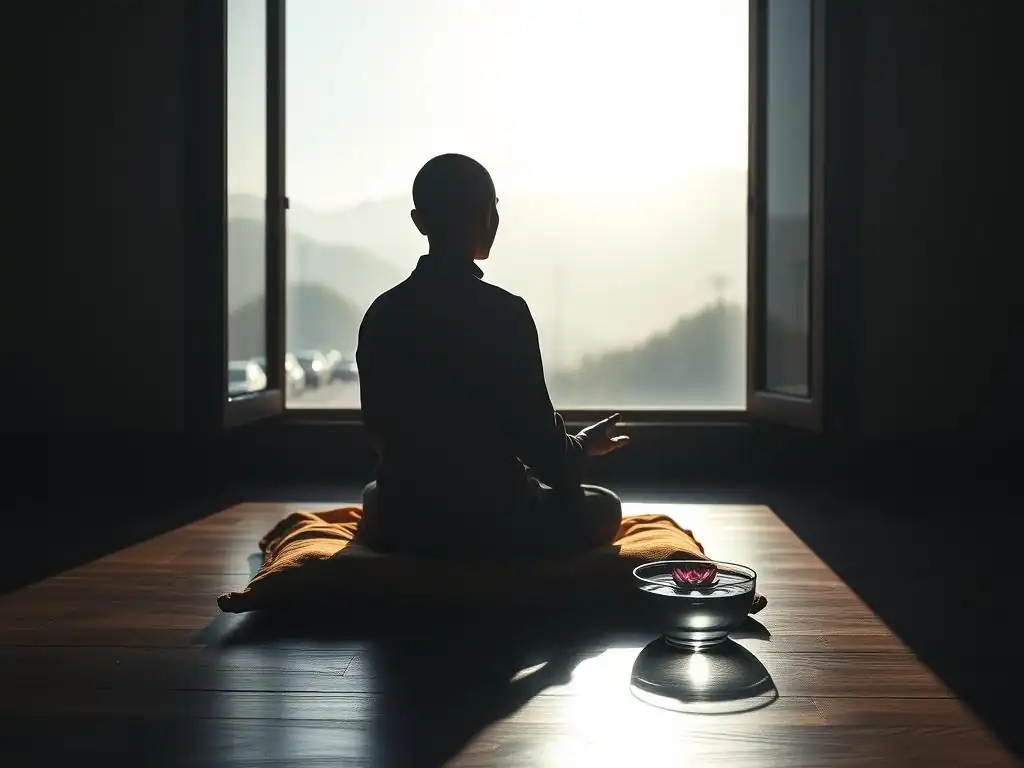
Welcome to Mind Care Guide.
Feeling overwhelmed by distractions during your Vipassana practice? You're not alone. It's a common hurdle on the path to inner peace. Explore this article to discover effective Vipassana distraction management techniques that can help you deepen your meditation and find greater focus. Ready to reclaim your calm?
Managing Distractions During Vipassana Meditation: A Guide to Deeper Practice
- Understanding Distractions in Vipassana Meditation
- Foundational Principles for Managing Distractions in Vipassana
- Practical Techniques for Managing Distractions
- Advanced Strategies for Distraction Management
- Creating a Supportive Environment for Focused Meditation
- Troubleshooting Common Challenges
- The Benefits of Mastering Distraction Management
- Integrating Mindfulness into Daily Life
- Resources for Further Learning
-
Frequently Asked Questions
- What is Vipassana meditation and why is managing distractions important during practice?
- What are some common distractions encountered during Vipassana meditation?
- How can I deal with physical discomfort that arises during Vipassana?
- What are some effective techniques for managing wandering thoughts during Vipassana?
- Where can I find additional resources and support for practicing Vipassana meditation and managing distractions?
- Final Reflection: Finding Stillness Amidst the Storm
- Unlock Your Inner Calm: Next Steps to Deeper Meditation
Understanding Distractions in Vipassana Meditation
Defining Distractions: Mental and Physical Interruptions in Vipassana
Distractions during Vipassana meditation are essentially anything that pulls the mind away from the chosen object of attention, which is typically the breath or subtle physical sensations. These can manifest in myriad forms, ranging from intrusive thoughts about the past or future to persistent physical discomforts like an itch or ache, or even external sounds that penetrate the silence of your meditation space.
Understanding these interruptions is the first step in applying effective Vipassana distraction management techniques. It's crucial to recognize that experiencing distractions is not a sign of failure, but a natural function of the untrained mind and a fundamental part of the meditation process itself.
These interruptions are not just 'noise'; they are the very material the Vipassana practitioner works with. A physical distraction might be a sudden urge to shift posture due to discomfort in the legs after sitting for just five minutes. A mental distraction could be a detailed replay of a conversation from earlier in the day, or anxious planning for an event tomorrow.
Even subtle internal states, like a feeling of warmth or a faint smell, can become distractions if the mind fixates on them instead of maintaining awareness on the primary object. Learning to observe these without getting entangled is key to developing robust Vipassana distraction management techniques.
The Root Causes of Distractions During Vipassana
The primary root cause of distractions in Vipassana meditation lies in the inherent nature of the mind. The mind is restless, conditioned by years of flitting from one thought or sensation to another. This constant movement is often driven by craving (wanting pleasant experiences to stay or return) and aversion (wanting unpleasant experiences to go away). These underlying tendencies, rooted in ignorance of the true nature of reality (impermanence, suffering, non-self), fuel the mind's perpetual search for stimulation and avoidance of stillness, leading to a constant stream of distractions.
Furthermore, physiological and environmental factors significantly contribute to distractions. Tiredness can lead to sleepiness, making it hard to stay alert. Hunger or physical discomfort can become overwhelming sensations demanding attention. External noises, visual stimuli, or even the temperature of the room can pull the mind away. Internal states like stress, anxiety, or excitement from daily life also spill over into meditation, manifesting as racing thoughts or physical tension. Effective Vipassana distraction management techniques must address this complex interplay of mental conditioning, internal states, and external influences.
Common Types of Distractions: Thoughts, Sensations, and Emotions
Distractions commonly fall into three broad categories: thoughts, physical sensations, and emotions. Thoughts are perhaps the most recognized form of distraction – the endless stream of memories, plans, judgments, fantasies, and worries that populate the mind. These can range from fleeting images to elaborate mental narratives that can easily consume attention for minutes at a time before the practitioner realizes their mind has wandered.
Physical sensations include anything felt in the body: itches, aches, tingling, warmth, coolness, pressure, discomfort, or even pleasant feelings. The mind's tendency towards aversion often makes discomfort particularly distracting, leading to strong urges to move or adjust. Emotions, such as boredom, frustration, joy, sadness, fear, or anger, are another major source of distraction. These can manifest both mentally (as thoughts about the emotion) and physically (as sensations in the body), often leading to a powerful pull that requires skillful application of Vipassana distraction management techniques to navigate without getting overwhelmed.
Foundational Principles for Managing Distractions in Vipassana
Non-Judgmental Observation: The Key to Working with Distractions
A cornerstone of Vipassana distraction management techniques is the principle of non-judgmental observation. This means noticing whatever arises in the mind or body – be it a thought, a sensation, or an emotion – without labeling it as 'good' or 'bad,' 'right' or 'wrong.' Instead of criticizing yourself for getting distracted ("I'm so bad at this! "), you simply acknowledge the distraction ("Ah, there is thinking"). This gentle awareness disarms the distraction, preventing the mind from getting caught in secondary reactions like frustration or self-criticism, which only add layers to the initial interruption.
Practicing non-judgment involves cultivating a sense of curiosity and acceptance towards your inner experience. Imagine you are a scientist observing phenomena in a lab; you are interested in what is happening, not in evaluating its worth. When a painful sensation arises, instead of thinking "This is terrible, I must move," you observe its qualities: where is it located? What is its intensity? Does it change? This detached observation, free from judgment, is a powerful Vipassana distraction management technique that allows you to see the impermanent nature of all phenomena, including the distractions themselves.
Breath Awareness: Anchoring the Mind in the Present Moment
Breath awareness serves as the primary anchor in Vipassana practice, providing a constant, neutral object to which the mind can return when it gets distracted. Focusing on the natural, unforced sensation of the breath – perhaps at the nostrils as the air enters and leaves, or the gentle rise and fall of the abdomen – grounds the mind in the present moment. When a distraction arises, the technique is to simply notice it, acknowledge it without judgment, and then gently, but firmly, bring your attention back to the sensation of the breath.
This return to the breath is not a forceful suppression of the distraction, but a redirection of attention. It's like tethering a balloon (the wandering mind) to a post (the breath). The balloon may sway and dip, but the tether always brings it back. Consistent practice of this return is one of the most fundamental Vipassana distraction management techniques. Even if you have to return to the breath hundreds of times in a single session, each return is a moment of practice, strengthening the 'muscle' of concentration and mindful awareness.
Equanimity: Developing a Balanced Response to Disruptions
Equanimity is the ability to maintain mental balance and composure in the face of whatever arises, whether pleasant or unpleasant. In the context of Vipassana distraction management techniques, this means meeting distractions – be they irritating noises, uncomfortable sensations, or captivating thoughts – with an even keel. Instead of reacting with aversion (trying to push the distraction away) or craving (clinging to a pleasant state of focus), you simply observe with acceptance, recognizing that the distraction, like everything else, is impermanent.
Cultivating equanimity involves understanding the universal truth of anicca (impermanence). When you observe a distraction, you see that it is not solid or permanent; it arises, stays for a while, and passes away. By not reacting with judgment or emotional turmoil, you allow the distraction to simply run its course. This balanced response weakens the mind's habitual reactivity and is a powerful Vipassana distraction management technique that fosters inner peace and stability, even amidst internal or external turbulence.
Practical Techniques for Managing Distractions
Acknowledging and Releasing Wandering Thoughts
One of the most effective Vipassana distraction management techniques for dealing with thoughts is to simply acknowledge their presence and then gently release them. When you notice your mind has wandered into thinking, mentally note 'thinking' or 'planning' or 'remembering'. This simple act of labeling creates a slight distance between you (the observer) and the thought (the observed). It interrupts the automatic process of getting lost in the narrative.
After acknowledging, there's no need to analyze the thought or push it away forcefully. Imagine the thought is like a cloud passing in the vast sky of your mind. You see it, perhaps note its shape or nature, and then allow it to drift on by. The key is the gentle release and the subsequent return of attention to your primary object, the breath or body sensations. This practice of acknowledging and returning weakens the habitual tendency for thoughts to completely hijack your awareness.
Body Scan: Shifting Focus to Physical Sensations
When the mind is particularly restless or caught in a loop of thoughts, shifting attention to physical sensations through a body scan can be a highly effective Vipassana distraction management technique. Instead of fighting the thoughts directly, you redirect your awareness systematically through different parts of the body, noticing whatever sensations are present – warmth, coolness, tingling, pressure, emptiness, etc.
Begin by bringing attention to the top of your head, then slowly move down through your face, neck, shoulders, arms, torso, hips, legs, and feet. Linger in each area for a few moments, simply observing the raw sensations without judgment. This practice anchors the mind firmly in the present moment and in the physical reality of the body, often calming the mental chatter. If thoughts arise during the scan, simply notice them and gently return your awareness to the current body part you are observing.
Labeling: Reducing the Power of Thoughts and Emotions
Labeling is a specific Vipassana distraction management technique that involves giving a brief, neutral mental label to whatever arises in your awareness. When a thought appears, you might label it 'thinking.' If you feel irritation, you label it 'irritation.' If you hear a sound, 'hearing.' This practice is not about getting caught up in the content of the distraction, but simply recognizing its category.
The power of labeling lies in its ability to de-personalize and de-escalate the distraction. By labeling a strong emotion like anger as simply 'anger,' you acknowledge its presence without getting swept away by the anger. It creates a micro-pause, an opportunity to observe the phenomenon rather than being consumed by it. This technique, when applied consistently, helps to reduce the mind's reactivity and strengthens the capacity for objective observation.
Returning to the Present: Re-Establishing Focus on the Breath
The act of returning to the present moment, typically by re-establishing focus on the breath, is perhaps the most fundamental Vipassana distraction management technique. It's not about not getting distracted; it's about the practice of returning. Every time you notice your mind has wandered – whether for a second or several minutes – that moment of noticing is a moment of mindfulness.
Upon noticing the distraction, gently release it and bring your attention back to the sensation of the breath. There is no need for self-recrimination or frustration. Think of it as training a puppy; when it wanders off, you gently guide it back, patiently, again and again. This repeated act of returning strengthens the mental muscle of concentration and reinforces the intention to be present. The more you practice this gentle return, the shorter the periods of distraction tend to become over time.
Advanced Strategies for Distraction Management
Working with Intense Emotions: Fear, Anger, and Sadness
Intense emotions like fear, anger, or sadness can be powerful distractions, often accompanied by strong physical sensations and compelling thought narratives. Advanced Vipassana distraction management techniques involve turning towards these emotions with mindful awareness rather than trying to suppress or escape them. The practice is to observe the raw sensations associated with the emotion in the body – perhaps tightness in the chest with fear, heat with anger, or heaviness with sadness.
By focusing on the ever-changing physical sensations without getting lost in the story or judgment about the emotion, you can experience its impermanent nature. For example, observing anger might reveal pulsating heat, tension in the jaw, or rapid heartbeat, all of which fluctuate. This direct, non-reactive observation weakens the emotion's grip. While challenging, this approach, cultivated through consistent practice, builds significant emotional resilience and insight into the nature of suffering.
Managing Physical Pain and Discomfort During Meditation
Physical pain or discomfort is a common and often challenging distraction in Vipassana meditation. Advanced Vipassana distraction management techniques for pain involve observing the sensation of pain itself, rather than reacting to the idea of pain. Instead of labeling it simply "pain," you can investigate its specific qualities: Is it throbbing, sharp, dull, burning, tingling? Where exactly is it located? Does it have a boundary? Does it stay constant or does it change in intensity, location, or quality?
This detailed, analytical observation of the physical sensation, coupled with equanimity, can dramatically alter your relationship with pain. You learn that while the sensation might be unpleasant, your suffering often arises from the mind's reaction to it – the aversion, the thoughts about how long it will last, the desire for it to go away. By observing the sensation with detached curiosity, you see its impermanence and reduce the secondary layer of mental suffering. Many practitioners report that pain either diminishes or becomes much more bearable when observed in this way.
Cultivating Patience and Acceptance in Your Practice
Patience and acceptance are not just passive states but active Vipassana distraction management techniques cultivated over time. Distractions will happen. There will be days when the mind feels like a wild monkey, jumping from branch to branch with relentless energy. There will be moments of intense discomfort or emotional turbulence. Cultivating patience means accepting that this is part of the process. Change in meditation practice is often gradual, not instantaneous.
Acceptance means acknowledging your current experience exactly as it is, without wishing it were different. This includes accepting the presence of distractions, the difficulty of certain sittings, or the apparent lack of progress. Resisting what is happening only creates more tension and suffering. By patiently returning to the breath or body sensations and accepting the flow of distractions with equanimity, you deepen your practice and allow insight to arise naturally, rather than trying to force it.
Creating a Supportive Environment for Focused Meditation
Optimizing Your Meditation Space: Reducing Sensory Input
Creating a dedicated and optimized meditation space is a practical Vipassana distraction management technique that can significantly enhance focus. While Vipassana teaches you to work with distractions wherever you are, minimizing external sensory input helps to quiet the mind initially. Choose a quiet room or corner where you are unlikely to be interrupted. Ensure the lighting is soft, or dim if preferred.
Consider the temperature of the space – too hot or too cold can be distracting. Use a comfortable cushion or bench that supports your posture without causing excessive discomfort too quickly. Removing potential visual distractions, like clutter or electronic devices (especially phones! ), from your line of sight is also helpful. While you practice accepting sounds, starting in a quiet environment can make the initial stages of developing concentration easier.
Establishing a Consistent Practice: Time, Place, and Routine
Consistency is arguably one of the most powerful Vipassana distraction management techniques. Establishing a regular time and place for meditation helps to train the mind and body to settle more easily. Whether it's first thing in the morning, during a lunch break, or before bed, choosing a specific time slot and sticking to it helps build a habit. Meditating at the same time and in the same place each day creates a sense of routine that signals to your mind that it's time to be still and mindful.
Even short, consistent sessions (e.g., 15-20 minutes daily) are more beneficial than infrequent, long sessions. Regular practice strengthens your ability to recognize distractions more quickly and apply the techniques to return to the object of meditation. Over weeks and months, this consistency builds mental resilience and concentration power, making it easier to navigate the inevitable distractions that arise.
Seeking Guidance: The Role of Teachers and Community
While Vipassana is often practiced individually, seeking guidance from experienced teachers and connecting with a community of practitioners can provide invaluable support for Vipassana distraction management techniques. A qualified teacher can offer personalized advice on specific challenges you face, clarify principles you might misunderstand, and provide encouragement when practice feels difficult.
Joining a meditation group or attending retreats offers a supportive environment where you can practice alongside others. Hearing about the experiences of fellow practitioners can normalize your own struggles with distractions and provide a sense of shared journey. Many Vipassana centers offer structured courses (like the well-known 10-day retreats) that provide intensive training in these techniques under expert guidance, which can be transformative for deepening practice and improving distraction management.
Troubleshooting Common Challenges
Dealing with Restlessness: Finding Stillness in Movement
Restlessness, often manifesting as an urge to fidget, shift posture, or simply get up and move, is a frequent distraction. When restlessness arises, the Vipassana distraction management technique is to observe the sensation of restlessness itself. Where is it located in the body? What does it feel like – a buzzing, a tension, an energy? Observe it with the same non-judgmental curiosity you apply to other sensations.
Often, the urge to move is more intense than the actual discomfort. By observing the sensation without immediately reacting, you create space. You might notice that the sensation of restlessness changes or even passes if you simply observe it for a minute or two. If the physical discomfort is significant, it's okay to adjust your posture mindfully, bringing full awareness to the movement itself, and then settling back into stillness and returning to your primary object of attention. The goal isn't rigid stillness at all costs, but mindful awareness of what is happening.
Managing Sleepiness: Staying Alert and Present
Sleepiness can be a pervasive distraction, especially during longer sits or when meditating while tired. While the mind is technically 'still' when sleepy, it's not mindful or aware. Vipassana distraction management techniques for sleepiness aim to increase alertness. One common approach is to open your eyes slightly and focus your gaze loosely on a spot on the floor a few feet in front of you. This can help to keep the mind from drifting into sleep.
Another technique is to adjust your posture to be more upright and alert, perhaps sitting on the front edge of your cushion. You can also intensify your focus on the sensation of the breath, paying closer attention to the subtle feeling of air entering and leaving the nostrils, which requires more precise attention. If sleepiness is overwhelming, a brief period of mindful walking meditation can sometimes help to re-energize the mind before returning to sitting.
Overcoming Boredom: Rekindling Interest in the Present Moment
Boredom can arise when the meditation object feels monotonous or practice feels difficult. As a Vipassana distraction management technique, boredom is treated like any other sensation or mental state to be observed. Notice the feeling of boredom itself. What thoughts accompany it? ("This is boring," "How much longer?"). What physical sensations are present?
Often, boredom stems from the mind's craving for novelty or stimulation. By observing the feeling of boredom with curiosity and acceptance, you can see its impermanent nature. You can also try to rekindle interest in your meditation object by bringing fresh attention to the subtle nuances of the breath or body sensations. Is the breath always the same? Do the sensations in your body remain constant? Discovering the ever-changing nature of present-moment experience is the antidote to boredom and a key insight in Vipassana.
The Benefits of Mastering Distraction Management

Enhanced Concentration: Improved Focus in Daily Life
Regular practice of Vipassana distraction management techniques directly strengthens your ability to concentrate, not just on the meditation cushion but in all aspects of life. The repeated process of noticing when the mind has wandered and gently bringing it back is essentially training your attention span. This enhanced focus can translate into improved performance at work, better listening skills in conversations, and the ability to stay present during tasks that require sustained attention.
Studies on mindfulness meditation, which shares core principles with Vipassana, have shown measurable improvements in attention networks in the brain. For example, research suggests that regular meditators may exhibit a greater capacity for sustained attention and reduced mind-wandering during cognitive tasks compared to non-meditators. This demonstrates the tangible benefits of mastering these Vipassana distraction management techniques for overall cognitive function.
Emotional Regulation: Increased Resilience and Stability
Learning to observe thoughts, sensations, and emotions without getting swept away by them is a core outcome of effective Vipassana distraction management techniques. By practicing non-judgmental observation and equanimity towards difficult internal states, you develop a greater capacity to tolerate discomfort and navigate challenging emotions. You learn that while emotions arise, they are not permanent and do not define you.
This leads to improved emotional regulation – the ability to respond to emotional triggers with greater awareness and less reactivity. Instead of being overwhelmed by stress or frustration, you can notice these feelings arising, observe their physical and mental manifestations, and choose a skillful response rather than acting out of habit. This increased resilience contributes to greater mental stability and overall well-being.
Deeper Self-Awareness: Gaining Insight Through Observation
Vipassana, meaning "insight," aims to develop deep understanding of the true nature of reality, particularly the impermanence of all phenomena (anicca), the suffering inherent in craving and aversion (dukkha), and the illusion of a permanent, separate self (anatta). Mastering Vipassana distraction management techniques is essential because distractions are the very material through which these insights are gained.
By observing the constant arising and passing away of thoughts, sensations, and emotions – the very essence of distractions – you gain direct insight into impermanence. By noticing the suffering that arises from resisting unpleasant distractions or clinging to pleasant states of focus, you understand dukkha. By seeing that thoughts and sensations are impersonal phenomena arising and passing, you begin to see through the illusion of a fixed self. This deeper self-awareness, cultivated through the mindful observation of distractions, is the profound fruit of the practice.
Integrating Mindfulness into Daily Life
Applying Mindfulness Techniques in Everyday Activities
The skills developed through Vipassana distraction management techniques on the cushion are intended to be integrated into daily life. Mindfulness can be applied to virtually any activity, transforming mundane tasks into opportunities for practice. For example, mindful eating involves paying attention to the sensations of taste, texture, and smell, rather than eating on autopilot. Mindful walking involves being aware of the physical sensations of movement – the lifting, moving, and placing of the feet.
You can practice mindful listening by focusing completely on the speaker's words without planning your response. Even simple tasks like washing dishes or brushing your teeth can become moments of mindfulness by bringing full attention to the sensory experience. These practices strengthen your capacity to stay present and aware throughout the day, reducing mind-wandering and enhancing your overall engagement with life.
Cultivating a Mindful Approach to Challenging Situations
The principles learned in managing distractions during meditation are particularly valuable when facing challenging situations in daily life. When confronted with stress, conflict, or difficulty, the mind's natural tendency is often to react with automatic patterns of thought and emotion (e.g., anger, fear, worry). Applying Vipassana distraction management techniques involves pausing, taking a mindful breath, and observing what is happening internally and externally without immediate judgment.
You can notice the physical sensations of stress or tension in your body, the thoughts that are arising (e.g., blaming, catastrophizing), and the emotions present (e.g., frustration, anxiety). By observing these reactions with awareness and equanimity, you create space to choose a more skillful response rather than being driven by knee-jerk reactions. This mindful approach allows you to navigate challenges with greater clarity, composure, and wisdom.
Maintaining a Consistent Practice for Continued Growth
Sustained growth in mindfulness and the ability to manage distractions effectively requires ongoing commitment to practice. Just as physical fitness requires regular exercise, mental well-being and concentration require consistent training. Maintaining a regular meditation schedule, even if it's just for a short period each day, reinforces the neural pathways associated with attention and emotional regulation.
Beyond formal sitting, consciously bringing mindfulness into everyday activities throughout the day reinforces the practice. It's not about achieving a state of perpetual calm, but about consistently applying the techniques of awareness, non-judgment, and returning to the present moment. Over time, this consistent effort deepens your understanding of yourself and the world, making Vipassana distraction management techniques an integral and effortless part of your life.
Resources for Further Learning
Recommended Books on Vipassana and Mindfulness
For those interested in deepening their understanding of Vipassana and mindfulness, several foundational texts offer comprehensive guidance. S.N. Goenka's discourses, often available in book format, provide a thorough explanation of the Vipassana technique as taught in his tradition. Joseph Goldstein's "Mindfulness: A Practical Guide to Awakening" offers clear instructions and profound insights drawn from his extensive practice and teaching experience within the Insight Meditation tradition.
Other valuable resources include books by authors like Sharon Salzberg, Jack Kornfield, and Jon Kabat-Zinn, who have been instrumental in bringing mindfulness and Vipassana principles to a wider audience. These books often delve into the theory behind the practices, offer practical advice for dealing with common challenges like distractions, and explore how these techniques can be applied to cultivate wisdom and compassion in daily life.
Vipassana Meditation Centers Worldwide
Structured Vipassana meditation courses, particularly the traditional 10-day residential retreats, offer an intensive environment to learn and practice Vipassana distraction management techniques under the guidance of experienced teachers. Organizations like the Vipassana International Academy (which follows the tradition of S.N. Goenka) operate numerous centers globally, offering courses based purely on voluntary donations.
Other centers, such as those within the Insight Meditation Society tradition (like the IMS in Barre, Massachusetts), also offer retreats and courses rooted in the Vipassana practice, often with a focus on developing insight and compassion. Attending a retreat provides an opportunity for sustained, deep practice away from the distractions of daily life, accelerating the development of concentration and awareness skills necessary for effective distraction management.
Online Resources and Guided Meditations
For those unable to attend in-person courses or retreats, a wealth of online resources and guided meditations are available to support Vipassana practice and learning Vipassana distraction management techniques. Numerous websites and mobile applications offer guided meditations led by various teachers, providing instruction and support for different durations and focusing on specific aspects of practice, including working with distractions.
Many meditation teachers and centers also make talks, lectures, and guided meditations freely available online. These resources can help clarify aspects of the practice, offer encouragement, and provide structured guidance for both beginners and experienced practitioners. While not a substitute for personal instruction from a teacher, these online tools can be valuable aids in establishing and maintaining a consistent meditation practice.
Frequently Asked Questions
What is Vipassana meditation and why is managing distractions important during practice?
Vipassana meditation is an ancient Indian technique focusing on self-observation and mindfulness. Managing distractions is crucial because it allows for deeper concentration and a clearer understanding of the nature of reality.
What are some common distractions encountered during Vipassana meditation?
Common distractions can include physical discomfort (itchiness, aches), wandering thoughts, and external noises. These can all significantly hinder your ability to maintain focus on your breath or body sensations.
How can I deal with physical discomfort that arises during Vipassana?
Acknowledge the discomfort without judgment and try to observe the sensation rather than react to it. If it becomes unbearable, gently adjust your posture while maintaining mindfulness of the movement.
What are some effective techniques for managing wandering thoughts during Vipassana?
When you notice your mind wandering, gently guide your attention back to your chosen object of focus, like your breath. Avoid getting caught up in the thoughts; simply observe and release them.
Where can I find additional resources and support for practicing Vipassana meditation and managing distractions?
Mind Care Guide offers a wealth of information, support, and resources for mental well-being, including tips on Vipassana distraction management techniques. You can also explore local meditation centers and online communities.
Final Reflection: Finding Stillness Amidst the Storm
The relentless onslaught of distractions during Vipassana meditation is a universal experience, a testament to the power of the mind's inherent tendency to wander. This article has explored various techniques to manage these distractions, from subtle shifts in posture to the mindful acceptance of discomfort, ultimately highlighting the importance of compassionate self-awareness in the pursuit of inner peace. The ability to navigate these mental currents is not merely a skill for seasoned meditators; it's a crucial life skill applicable to navigating the complexities of modern life.
The journey of Vipassana is not about eliminating distractions entirely, but about cultivating a relationship with them. It's about learning to observe the arising and passing of thoughts and sensations without judgment, a process that mirrors our engagement with the external world. This practice fosters a resilience and equanimity that extends far beyond the meditation cushion. As Thich Nhat Hanh wisely said, Breathing in, I calm body and mind. Breathing out, I smile. Dwelling in the present moment I know this is the only moment.
This quote encapsulates the essence of managing distractions – finding peace not by fighting them, but by acknowledging and accepting their presence.
You, the reader, now hold the tools to navigate your own internal landscape with greater ease and understanding. Consider how these techniques can be applied not just to your meditation practice, but to the everyday challenges that pull you away from presence and peace. Embrace the discomfort of distraction as an opportunity for growth, for deepening your awareness, and for cultivating a more mindful and fulfilling life. The journey towards stillness is a continuous process, and each moment of mindful awareness is a step closer to the serenity you seek.
Unlock Your Inner Calm: Next Steps to Deeper Meditation
Thanks for taking the time to explore the art of minimizing distractions during your Vipassana practice. We hope you gained valuable insights into cultivating a more focused and peaceful meditation experience. Now it's time to put those insights into action!
- Prioritize your practice: Schedule a dedicated time for meditation each day, even if it's just for five minutes. Consistency is key!
- Experiment with different techniques: Try the breathing exercises we discussed or explore other mindfulness methods to find what best supports your focus. Consider keeping a journal to track your progress and notice patterns in your distractions.
- Share your journey: Connect with our community on social media and share your experiences. Let's support each other on this path to inner peace!
Ready to deepen your meditative journey and truly experience the benefits of a distraction-free practice? What small step will you take today to cultivate more mindfulness?