
Finding Grounding and Stability with Walking Meditation.

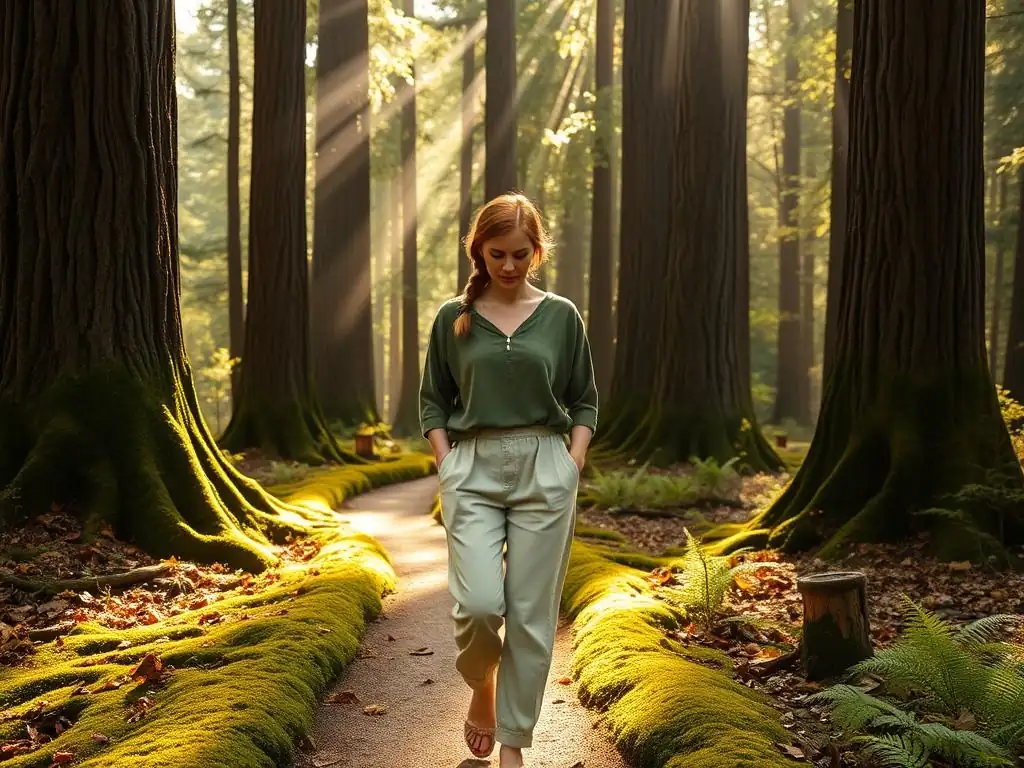
Welcome to Mind Care Guide, a supportive space dedicated to nurturing your mental well-being.
Feeling overwhelmed? You're not alone. Many find solace in simple practices. This week, we delve into a powerful technique that can help you reclaim your inner peace: walking meditation. Discover how walking meditation anxiety relief can become a grounding force in your life, offering stability and calm amidst the storm. Ready to take the first step towards a more centered you? Let's begin.
Cultivating Calm: A Guide to Walking Meditation for Anxiety and Stress Reduction
- Understanding Walking Meditation
- Preparing for Mindful Walking
- Practicing Walking Meditation: A Step-by-Step Approach
- Techniques to Deepen Your Walking Meditation
- Addressing Common Challenges
- Integrating Walking Meditation into Daily Life
- Scientific Basis of Walking Meditation for Anxiety and Stress
- Walking Meditation for Emotional Well-being
-
Frequently Asked Questions
- How does walking meditation specifically help with anxiety relief?
- What are the key differences between regular meditation and walking meditation?
- Can I practice walking meditation anywhere, or are there specific environments that are better?
- How long should a walking meditation session be to experience anxiety relief benefits?
- Are there any potential drawbacks or challenges to walking meditation for anxiety?
- Final Reflection: The Enduring Power of Walking Meditation
- Unveil Your Inner Calm: Start Walking Towards Peace
Understanding Walking Meditation
Walking meditation is a practice that brings the principles of mindfulness to the simple act of walking. Unlike a casual stroll or power walk, the focus is not on reaching a destination or getting exercise (though these can be secondary benefits), but on the experience of walking itself. It involves paying deliberate attention to the sensations of the body in motion, the rhythm of steps, and the surrounding environment, all without judgment. This mindful approach can be a powerful tool for finding grounding and stability, particularly for individuals seeking walking meditation anxiety relief.
The essence of mindful walking lies in cultivating present-moment awareness. As you walk, you bring your attention repeatedly back to the physical sensations – the lifting and placing of the feet, the swing of the arms, the feeling of the ground beneath you. Thoughts and feelings will inevitably arise, but the practice encourages you to notice them without getting carried away, gently redirecting your attention back to the walking experience. This process helps to interrupt the cycle of anxious thoughts and worries, fostering a sense of calm and presence.
Principles and Practice of Mindful Walking
The core principles of mindful walking are non-striving, non-judgment, patience, beginner's mind, trust, non-attachment, and self-compassion. You don't walk to achieve a state of relaxation, but rather you practice being present while walking. This involves paying close attention to the mechanics of each step: the lifting, moving, and placing of the foot, noticing the contact with the ground, and the subtle shifts in balance. The pace is typically slower than usual, allowing for heightened awareness of these sensations.
Practicing mindful walking involves setting aside a specific time and space, even if just for 10-15 minutes. During this time, the primary focus is on the sensory experience of walking. You might begin by standing still for a moment, feeling your feet on the ground.
Then, start walking slowly, focusing on the sensations in your legs and feet. When your mind inevitably wanders to worries or future plans, you simply notice the thought without judgment and gently bring your attention back to the walking experience. This repeated redirection is the practice itself, building mental discipline and fostering walking meditation anxiety relief.
Benefits for Mental and Emotional Well-being
Regular practice of walking meditation offers numerous benefits for mental and emotional health. It can significantly reduce symptoms of anxiety and stress by interrupting negative thought patterns and promoting a sense of calm. Studies, including some focused on mindfulness-based stress reduction (MBSR) programs that incorporate walking meditation, have indicated reductions in perceived stress levels, sometimes showing decreases of 20% or more over an 8-week period among participants compared to control groups. This suggests its efficacy as a method for walking meditation anxiety relief.
Beyond reducing anxiety, mindful walking can improve mood, enhance self-awareness, and increase feelings of connection to the present moment and the environment. It provides a healthy way to process emotions and gain perspective on challenging situations. For instance, someone feeling overwhelmed by work stress might use a 15-minute mindful walk to step away from their thoughts, ground themselves in their physical sensations, and return with a clearer, more balanced perspective. This active form of meditation makes it accessible for those who find sitting still challenging, offering a dynamic path to greater emotional resilience.
Choosing Between Walking and Seated Meditation
The choice between walking and seated meditation often comes down to personal preference, physical comfort, and the specific needs of the moment. Seated meditation is excellent for cultivating stillness and deep concentration, often emphasizing breath awareness or body scanning in a stable posture. It can be ideal for developing sustained focus and exploring subtle internal experiences. For some, however, the physical discomfort of sitting for extended periods or the feeling of being "stuck" can be a barrier.
Walking meditation, on the other hand, can feel more accessible and natural, especially for beginners or those with restless energy. It allows for movement, which can help release physical tension often associated with anxiety. For someone seeking walking meditation anxiety relief, the gentle rhythm of walking can be inherently soothing and grounding. It also offers the flexibility to practice in various environments, integrating mindfulness into daily activities. Many practitioners find value in incorporating both forms into their routine, recognizing that each offers unique benefits.
Preparing for Mindful Walking
Preparation for walking meditation is minimal but thoughtful. It's about creating the conditions that support your ability to stay present and focused on the experience of walking itself. This isn't about elaborate rituals, but simple considerations that remove potential distractions and enhance the practice's effectiveness for achieving walking meditation anxiety relief. A little planning can make a significant difference in your ability to drop into mindfulness.
The goal of preparation is to simplify your experience. By addressing practicalities beforehand – where you'll walk, what you'll wear, and what you'll carry – you free up mental space that might otherwise be occupied by minor concerns during your practice. This allows your full attention to be directed towards the sensations of walking and the cultivation of present-moment awareness, which is crucial for unlocking the benefits of walking meditation for anxiety relief.
Selecting a Suitable Location
Choosing the right location is important for minimizing distractions and fostering a sense of ease. An ideal spot is relatively quiet, safe, and offers a clear path where you can walk back and forth or in a loop without needing to navigate complex obstacles or heavy traffic. This could be a quiet park path, a garden, a long hallway indoors, a backyard, or even a designated space in your home. The key is predictability and relative tranquility.
For instance, a local botanical garden with paved, winding paths can be excellent, offering natural beauty without the unpredictability of city streets. If outdoors isn't an option, a long corridor in your home or office building during off-peak hours can serve just as well. The most important factor is that you feel comfortable and secure enough to turn your attention inward without constantly being on high alert for external hazards, allowing you to focus on walking meditation for anxiety relief.
Defining Your Intention
Before you begin walking, take a moment to set an intention for your practice. This isn't a goal to achieve, but rather a gentle reminder of what you hope to cultivate or explore during your walk. Your intention might be simply to be present with each step, to notice the sensations in your body, or perhaps to practice self-compassion. For those seeking walking meditation anxiety relief, the intention might be to notice moments of calm or to simply allow anxious thoughts to pass without engaging with them.
Stating your intention, even silently to yourself, helps to focus your mind and align your actions with your purpose. It provides a gentle anchor when your mind inevitably drifts. For example, your intention could be, "I intend to walk with awareness, noticing the connection between my body and the earth," or "My intention is to simply be present with my breath and my steps, allowing any worries to fade." This simple act of defining intention enhances the mindful quality of the walk.
Comfortable Attire and Essential Items
Wearing comfortable clothing and appropriate footwear is essential for a positive walking meditation experience. You want to eliminate any physical discomfort that could become a distraction. Choose loose-fitting clothing that allows for ease of movement and doesn't restrict your breath or circulation. Layers can be helpful if you're practicing outdoors in variable weather.
Footwear should be comfortable and supportive, allowing you to feel the ground beneath your feet. Sneakers or comfortable walking shoes are usually best. Avoid anything that pinches, rubs, or requires constant adjustment. If you're practicing indoors on a clean surface, you might even choose to walk barefoot to heighten your awareness of the sensations in your feet. Beyond clothing and shoes, you typically need nothing else, reinforcing the simplicity and accessibility of walking meditation for anxiety relief.
Practicing Walking Meditation: A Step-by-Step Approach
Embarking on a walking meditation practice is straightforward, breaking the process down into simple, manageable steps. There's no right or wrong way to do it perfectly, only the willingness to try and to be present with whatever arises. This step-by-step guide provides a framework, but feel free to adapt it to suit your own pace and comfort level. The key is gentle attention and patience.
Remember that the goal isn't to clear your mind entirely, but to become more aware of your internal and external experience without getting lost in thought. Each step is an opportunity to return to the present moment, offering a pathway to walking meditation anxiety relief through embodied presence. Be kind to yourself throughout the process; your mind will wander, and that's perfectly normal.
Establishing Posture and Initial Awareness
Begin by standing still at the start of your chosen path. Bring your awareness to your body. Feel your feet on the ground, notice your posture – upright but relaxed, shoulders down, head balanced. You might close your eyes for a moment or keep them softly focused a few feet ahead of you. Take a few conscious breaths, noticing the sensation of air entering and leaving your lungs. This initial pause helps you transition from whatever you were doing before into the practice of mindful walking.
As you stand, scan your body gently, noticing any areas of tension or ease. Acknowledge how you are feeling in this moment, both physically and emotionally, without needing to change anything. This simple act of present-moment awareness sets the stage for the mindful walking that follows, creating a foundation of groundedness before you even take your first step towards walking meditation anxiety relief.
Focusing on the Physical Sensation of Walking
Once you begin to walk, shift your primary focus to the sensations in your feet and legs. Pay attention to the process of lifting one foot, moving it forward, and placing it down. Notice the heel touching the ground, the rolling motion through the sole, and the push-off from the toes. Feel the weight shifting from one leg to the other. You can slow down your usual pace to make these sensations more apparent.
Beyond the feet, expand your awareness to other physical aspects of walking: the swing of your arms, the subtle movement in your hips, the rhythm of your breath accompanying your steps. This deep sensory engagement with the physical act of walking anchors your attention firmly in the present moment. By immersing yourself in these tangible sensations, you create less space for anxious thoughts to take hold, facilitating walking meditation anxiety relief.
Observing Thoughts and Emotions Non-Judgmentally
As you walk, your mind will inevitably produce thoughts, memories, plans, and worries. This is a natural function of the mind. The practice here is not to stop thinking, but to notice these mental events without judgment and without getting swept away by them. Imagine your thoughts as clouds passing in the sky; you see them, but you don't need to jump on them or analyze them.
When you notice your mind has wandered, simply acknowledge the thought or emotion – perhaps labeling it gently in your mind ("thinking," "planning," "worrying") – and then compassionately guide your attention back to the physical sensations of walking. There's no need to be frustrated with yourself for getting distracted; simply recognize it as an opportunity to practice returning to the present. This gentle, persistent redirection is key to developing mental resilience and finding walking meditation anxiety relief.
Expanding Awareness to the Environment

After establishing a connection with the internal sensations of walking, you can gently expand your awareness to include the external environment. Notice the sights around you – the colors of leaves, the texture of a wall, the patterns of light and shadow – without getting lost in analyzing or naming everything. Simply allow the visual information to enter your awareness.
Similarly, become aware of sounds – birdsong, distant traffic, your own footsteps – hearing them simply as vibrations, without needing to identify their source or meaning. Notice smells, the feeling of the air on your skin, the temperature. Integrate these sensory inputs into your present-moment awareness while still maintaining a connection to the physical sensation of walking. This broader awareness can deepen your sense of connection to the world around you, further supporting walking meditation anxiety relief.
Returning to Breath and Body Sensations
Throughout your walk, and especially as you prepare to conclude, gently bring your primary focus back to the core sensations of your breath and body. Notice the natural rhythm of your breathing – is it deep or shallow, fast or slow? Feel the movement of air in your nostrils or the rise and fall of your chest or abdomen. Synchronize your awareness of breath with your steps if that feels natural, perhaps noticing an inhale for two steps and an exhale for two steps.
Reconnecting with these fundamental physical anchors reinforces your presence in the moment. As you slow down your pace and eventually come to a stop, spend a moment standing still, feeling your feet firmly planted on the ground. Acknowledge the practice you have just completed, perhaps offering a silent word of gratitude to yourself for taking this time. This final grounding helps consolidate the benefits gained from practicing walking meditation for anxiety relief.
Techniques to Deepen Your Walking Meditation
Once you are comfortable with the basic practice of walking meditation, you can explore various techniques to deepen your experience and enhance its benefits. These techniques can help to refine your focus, cultivate specific qualities like compassion, or integrate the practice more fully with other mindfulness approaches. Experiment with these methods to discover what resonates most with you and supports your journey towards walking meditation anxiety relief.
Deepening your practice isn't about making it more complicated, but about bringing a richer quality of attention and intention to your walk. Whether it's focusing intently on the breath-step connection or expanding your awareness to encompass feelings of kindness, these techniques offer ways to engage more fully with the present moment and cultivate a sense of inner peace while in motion.
Focused Attention on Breath and Movement
A powerful technique to deepen your walking meditation is to synchronize your awareness of breath with your movement. This creates a rhythmic anchor that can be very grounding. You might choose to inhale for a set number of steps (e.g., 3 steps) and exhale for the same number. Or, you could simply notice the breath flowing in as you step with one foot and flowing out as you step with the other.
This deliberate linking of breath and movement helps to focus the mind and create a strong sense of embodied presence. It provides a constant point of return for your attention, making it easier to notice when your mind has wandered and gently guide it back. This focused attention can be particularly effective for disrupting the cycle of anxious thoughts and reinforcing the calming effect of walking meditation for anxiety relief.
Body Scan Integration
Integrating elements of a body scan into your walking meditation can enhance your awareness of physical sensations. As you walk, you can systematically bring your attention to different parts of your body, noticing the sensations there without judgment. Start with your feet and ankles, then move up to your calves, knees, thighs, hips, torso, shoulders, arms, hands, neck, and head.
This technique helps to cultivate a deeper connection with your physical self and can reveal areas of tension you might not have been aware of. By simply noticing these sensations, you create space for them to be without needing to fix or change them. This increased body awareness can be incredibly grounding and can help release stored tension, contributing significantly to walking meditation anxiety relief.
Cultivating Loving-Kindness During Walking
Walking meditation can also be a practice of cultivating loving-kindness (Metta). As you walk, you can silently repeat phrases of well-wishing, initially towards yourself, and then extending outwards. Phrases like "May I be happy," "May I be peaceful," "May I be free from suffering" can be repeated silently with each step or breath.
Once you feel a sense of warmth or kindness towards yourself, you can extend these wishes outwards – to loved ones, to neutral people, to difficult people, and eventually to all beings. Synchronizing these phrases with your steps or breath adds a layer of compassionate intention to your walk. This practice can help counteract negative self-talk and anxious rumination, fostering a sense of connection and inner warmth that supports walking meditation anxiety relief.
Connecting with Nature Through Mindful Walking
When practicing outdoors, mindfully connecting with the natural world can profoundly deepen your experience. Instead of just seeing nature as a backdrop, actively engage your senses with it. Notice the intricate details of a leaf, the texture of bark, the way the light filters through the trees, the scent of damp earth or flowers, the sounds of birds or wind in the branches.
Allow yourself to feel a sense of connection to the earth beneath your feet and the living things around you. This attunement to nature can evoke feelings of awe, peace, and interconnectedness, which can be incredibly soothing and grounding. Walking mindfully in nature offers a powerful antidote to feelings of isolation and stress, enhancing the benefits of walking meditation for anxiety relief.
Addressing Common Challenges
Like any mindfulness practice, walking meditation comes with its own set of challenges. It's important to view these not as failures, but as opportunities to deepen your practice and cultivate patience and self-compassion. Recognizing common difficulties can help you navigate them more skillfully and maintain consistency in your practice of walking meditation for anxiety relief.
Approaching challenges with curiosity rather than frustration is key. Each time you encounter a difficulty – whether it's a wandering mind, physical discomfort, or external distractions – it's a chance to practice bringing gentle awareness and acceptance to the present moment. These moments are often where the real growth in mindfulness occurs.
Managing Distractions
Distractions are perhaps the most common challenge in any meditation practice, including walking meditation. These can be internal (thoughts, emotions, bodily sensations) or external (sounds, sights, other people). The practice is not to eliminate distractions, but to change your relationship with them. When you notice you've been distracted, simply acknowledge it without judgment.
Gently guide your attention back to your primary anchor, whether it's the sensation of walking, your breath, or a chosen intention. It can be helpful to silently label the distraction, such as "thinking," "hearing," or "seeing," before returning to your focus. With consistent practice, you build the capacity to notice distractions sooner and return to presence more easily, strengthening your ability to find walking meditation anxiety relief.
Overcoming Physical Discomfort
Sometimes, physical discomfort can arise during walking meditation, whether it's a mild ache, stiffness, or fatigue. It's important to listen to your body and differentiate between slight discomfort that can be mindfully observed and pain that requires attention or rest. If you experience significant pain, it's wise to stop or modify your practice.
For minor discomfort, try bringing a sense of gentle curiosity to the sensation. Can you breathe into it? Can you soften around it? Sometimes, simply acknowledging the discomfort without resisting it can lessen its intensity. Adjusting your pace or posture slightly might also help. Remember to be compassionate with your body; walking meditation for anxiety relief is a practice of kindness, not pushing through pain unnecessarily.
Maintaining Presence and Groundedness
Even without obvious distractions or discomfort, you might find it challenging to maintain a consistent sense of presence and groundedness throughout your walk. The mind has a tendency to drift into planning, worrying, or rehashing the past. This is normal. The key is the intention to return.
If you feel your mind scattering or losing connection with your body and the environment, gently reaffirm your intention to be present. Bring your attention back to the most tangible sensations – the feeling of your feet on the ground, the weight of your body, the rhythm of your breath. Re-anchoring yourself in these physical realities can quickly restore a sense of groundedness and presence, reinforcing the benefits of walking meditation for anxiety relief.
Integrating Walking Meditation into Daily Life

One of the great advantages of walking meditation is its portability and adaptability, making it relatively easy to integrate into your daily routine. You don't need special equipment or a dedicated meditation cushion; you just need your willingness to walk mindfully. Finding ways to weave mindful walking into your day can provide consistent opportunities for stress reduction and walking meditation anxiety relief.
Even short bursts of mindful walking can be beneficial. Look for moments in your day when you are already walking and see if you can bring a greater level of awareness to the experience. This integration helps to bridge the gap between formal practice and everyday life, making mindfulness a more continuous presence.
Mindful Walking During Commuting
Your daily commute, whether it involves walking to a train station, from a parking lot to your office, or simply walking around your workplace, offers a prime opportunity for mindful walking. Instead of rushing or letting your mind race ahead to the day's tasks or back to morning stresses, use this time to practice being present.
As you walk, pay attention to the sights and sounds around you without judgment. Notice the feeling of your feet on the pavement, the movement of your body. If you encounter obstacles or delays, practice patience and acceptance. Using your commute for mindful walking can transform a potentially stressful part of the day into a grounding practice, offering a consistent dose of walking meditation anxiety relief. Even 5-10 minutes of mindful walking during your commute can make a difference.
Stress Reduction in the Workplace
Incorporating short periods of mindful walking during the workday can be an effective strategy for managing stress and maintaining focus. Instead of taking a break to scroll through your phone or grab a quick snack mindlessly, try a 5-minute mindful walk around the office building or outside if possible.
This brief practice can help you step away from demanding tasks, clear your head, and return feeling more centered. Pay attention to your steps, your breath, and the immediate environment. It's a simple yet powerful way to interrupt stress cycles and regain perspective. Many find that even a short mindful walk can significantly reduce tension and improve concentration, contributing to walking meditation anxiety relief throughout the day.
Sample Walking Meditation Schedule
Integrating walking meditation doesn't require hours of dedicated time. Even short, consistent periods can yield significant benefits. Here is a sample schedule illustrating how you might weave mindful walking into your week:
- Morning (Weekdays): 10-15 minutes mindful walk outdoors or indoors before starting work. Focus on grounding and setting a calm tone for the day.
- Lunch Break (Weekdays): 5-10 minutes mindful walk around the block or office area. Use this to break from work stress and regain focus.
- Evening (Weekdays): 10 minutes mindful walk after dinner or before bed. Reflect gently on the day or simply focus on relaxing the body.
- Weekend: Longer 20-30 minute mindful walk in a park or natural setting. Dedicate this time to deeper practice and connection with the environment.
This sample is flexible; the key is finding times that work for you and committing to them consistently, even if it's just a few minutes daily. Regular practice, however brief, is more effective than infrequent long sessions for experiencing the cumulative benefits of walking meditation for anxiety relief.
Scientific Basis of Walking Meditation for Anxiety and Stress
The effectiveness of mindfulness practices, including walking meditation, for reducing anxiety and stress is supported by a growing body of scientific research. Studies utilizing brain imaging techniques and psychological assessments are beginning to shed light on how these practices impact the brain and nervous system, providing a scientific foundation for the anecdotal evidence of walking meditation anxiety relief.
Research suggests that mindfulness practices can lead to measurable changes in brain structure and function, particularly in areas related to stress regulation, emotional processing, and self-awareness. Understanding the science behind it can strengthen conviction in the practice and encourage consistent engagement.
Research Findings on Anxiety Reduction
Numerous studies have demonstrated the efficacy of mindfulness-based interventions, which often include walking meditation, in reducing symptoms of generalized anxiety disorder, social anxiety, and stress-related conditions. For example, research on Mindfulness-Based Stress Reduction (MBSR) programs has consistently shown significant reductions in anxiety scores among participants. One meta-analysis of over 209 studies found that mindfulness-based therapy was moderately effective for reducing anxiety, depression, and stress across various populations.
Specifically regarding movement-based mindfulness like walking meditation, studies have shown that combining physical activity with mindful attention can enhance mood and reduce rumination, a key component of anxiety. A study involving university students practicing mindful walking found significant decreases in stress and improvements in positive affect after just a few sessions, highlighting its potential for walking meditation anxiety relief even in short durations.
Neurobiological Effects of Mindful Walking
Neuroimaging studies suggest that regular mindfulness practice can lead to changes in brain regions associated with anxiety and stress. The amygdala, often referred to as the brain's "fear center," tends to show reduced activity in response to stressful stimuli after mindfulness training. Simultaneously, areas of the prefrontal cortex, responsible for executive functions like attention, planning, and emotional regulation, often show increased activity and connectivity.
Mindful walking, by engaging both physical movement and focused attention, may further enhance these neurobiological effects. The rhythmic nature of walking combined with conscious attention to sensations can help regulate the nervous system, shifting it away from a "fight or flight" response towards a calmer, more balanced state. This dual action on both physical and mental states contributes to the profound effects of walking meditation for anxiety relief.
Walking Meditation and Mindfulness-Based Interventions
Walking meditation is a core component of many established mindfulness-based interventions (MBIs) like MBSR and Mindfulness-Based Cognitive Therapy (MBCT). These programs use a combination of seated meditation, body scan, yoga, and mindful movement (including walking meditation) to teach participants how to relate differently to their thoughts and feelings, particularly those associated with stress, anxiety, and depression.
The inclusion of walking meditation in these evidence-based programs underscores its recognized value as a therapeutic tool. Participants in MBIs often report finding the walking meditation practice particularly accessible and helpful for managing restlessness and integrating mindfulness into their active lives. The success of these programs further validates the role of walking meditation as a powerful practice for achieving walking meditation anxiety relief and improving overall mental well-being.
Walking Meditation for Emotional Well-being
Beyond simply reducing negative states like anxiety and stress, walking meditation actively cultivates positive emotional qualities and enhances overall well-being. It's not just about feeling less anxious; it's also about fostering inner peace, improving focus, and building resilience against future challenges. Engaging in mindful walking is an investment in your emotional health, providing a pathway to greater stability and contentment.
The practice offers a unique blend of physical movement and mental stillness, creating fertile ground for emotional growth. By consistently returning to the present moment while in motion, you train your mind to be less reactive and more responsive, skills that are invaluable for navigating the ups and downs of life and solidifying the benefits of walking meditation for anxiety relief.
Developing Inner Peace Through Movement
The rhythmic, repetitive nature of walking, combined with focused awareness, can create a deeply calming effect, fostering a sense of inner peace. As you settle into the rhythm of your steps and breath, the internal chatter of the mind often begins to quiet down. The physical act of moving can also help to release pent-up energy and tension, which are often associated with feelings of restlessness and anxiety.
This combination of physical release and mental focus allows for a state of calm alertness. It's a form of active peace, where you are engaged with the present moment rather than trying to escape it. Regular practice helps to cultivate this sense of inner tranquility, making it a more accessible state even when you are not formally walking, thereby enhancing walking meditation anxiety relief in daily life.
Enhancing Focus and Concentration
Walking meditation is an excellent practice for training attention and improving concentration. The simple task of bringing your awareness back to the sensations of walking, repeatedly, whenever the mind wanders, is a powerful exercise in focus. Over time, this strengthens your ability to direct and sustain your attention, not just during meditation but in other areas of your life as well.
Improved concentration can help you feel more present and engaged in your daily activities, reducing the tendency to be distracted by worries or irrelevant thoughts. This enhanced focus can make tasks feel less overwhelming and increase your sense of effectiveness, indirectly contributing to reduced stress and supporting walking meditation anxiety relief.
Building Resilience Through Regular Practice
Consistency in practicing walking meditation helps build emotional resilience – the capacity to bounce back from adversity and navigate challenges with greater ease. By repeatedly facing and gently working with a wandering mind, physical discomfort, or external distractions during your walk, you develop patience, perseverance, and acceptance.
These qualities translate into a greater ability to handle difficult emotions and stressful situations in everyday life. Instead of being easily overwhelmed by anxiety or frustration, you learn to observe these states with a degree of detachment, recognizing them as temporary experiences rather than defining truths. This cultivated resilience is a lasting benefit of regular walking meditation for anxiety relief and overall emotional well-being.
Frequently Asked Questions
How does walking meditation specifically help with anxiety relief?
Walking meditation helps with anxiety relief by shifting your focus to the present moment through mindful movement and breath. This reduces dwelling on anxious thoughts and promotes a sense of calm.
What are the key differences between regular meditation and walking meditation?
Regular meditation typically involves sitting still, while walking meditation incorporates movement. The core principle of mindfulness remains the same, but the physical activity can be easier for some to focus on.
Can I practice walking meditation anywhere, or are there specific environments that are better?
While you can practice walking meditation almost anywhere, quieter and more natural environments are often preferred. Minimize distractions and focus on the sensory experience of walking.
How long should a walking meditation session be to experience anxiety relief benefits?
Even short sessions of 10-15 minutes can be beneficial, but aim for at least 20-30 minutes for more noticeable anxiety relief. Consistency is key, so regular practice is more important than duration.
Are there any potential drawbacks or challenges to walking meditation for anxiety?
Some individuals may find it difficult to focus on both walking and mindfulness simultaneously. It's important to start slowly and be patient with yourself. Also, consider any physical limitations that might impact your practice.
Final Reflection: The Enduring Power of Walking Meditation
The simple act of walking, when infused with mindful intention, offers a potent antidote to the anxieties of modern life. In a world saturated with constant stimulation and relentless demands, the practice of walking meditation provides a much-needed anchor, a pathway to calm amidst the storm. Its accessibility and profound impact make it a vital tool for navigating the challenges of our increasingly stressful world.
The influence of walking meditation extends far beyond the individual; it's a practice that fosters a deeper connection with oneself and the environment. It encourages a slowing down, a conscious engagement with the present moment that counters the frenetic pace of contemporary society. This mindful movement cultivates a sense of groundedness and presence, qualities often lost in the whirlwind of daily life. The mind is everything. What you think you become.
– Buddha. This quote perfectly encapsulates the transformative power of walking meditation, highlighting how cultivating a calm and focused mind through this practice can profoundly shape our experience of reality.
Now, consider how you might integrate this practice into your own life. Perhaps start with just five minutes each day, focusing on the sensation of your feet on the ground, the rhythm of your breath, and the gentle sway of your body. Don't strive for perfection; simply allow yourself to be present. Let the practice become a refuge, a source of strength and resilience in the face of life's inevitable anxieties. Embrace the journey, and discover the profound peace that awaits you on the path of walking meditation.
Unveil Your Inner Calm: Start Walking Towards Peace
Thanks for taking the time to explore the power of walking meditation with us! We hope you gained valuable insights into finding grounding and stability in your daily life. Now it's time to put these insights into practice.
- Begin your own walking meditation today: Even 10 minutes can make a difference. Find a quiet space, set an intention, and simply walk, focusing on your breath and your body’s movement. This is your primary step towards inner peace.
- Share your experience: Tell us about your first walking meditation session! What did you notice? What challenges or breakthroughs did you experience? Your insights might inspire others on their journey.
- Consider experimenting with different walking paces and locations to discover what works best for you – a bustling city park or a tranquil forest path?
Ready to embark on your journey towards greater presence and inner harmony? What's the first step you'll take to incorporate walking meditation into your routine?