
Simple Secrets to Getting the Most Out of Walking Meditation.

Welcome to Mind Care Guide, your haven for navigating the journey to mental well-being. Feeling overwhelmed by anxiety? You're not alone. Discover simple secrets and profound insights in our latest article, exploring the walking meditation benefits anxiety relief can offer. Curious to uncover how a mindful stroll can transform your day? Let's begin...
Simple Secrets to Getting the Most Out of Walking Meditation
- Walking Meditation Benefits Anxiety Relief: An Introduction
- Preparing for Your Walking Meditation Session
- Walking Meditation Techniques for Anxiety Relief
- Maximizing the Benefits of Walking Meditation
- Overcoming Challenges in Walking Meditation
- Advanced Walking Meditation Practices
- The Science Behind Walking Meditation and Anxiety
- Walking Meditation: A Path to Inner Peace and Reduced Anxiety
-
Frequently Asked Questions
- What is walking meditation and how does it differ from sitting meditation?
- How can walking meditation specifically help with anxiety relief?
- What are some key techniques to maximize the benefits of walking meditation for anxiety?
- How often should I practice walking meditation to experience noticeable anxiety relief?
- Are there any specific environments or settings that are best suited for walking meditation for anxiety relief?
- Final Reflection: The Unfolding Path of Walking Meditation
- Unlock Your Inner Peace: Take the Next Step in Your Walking Meditation Journey
Walking Meditation Benefits Anxiety Relief: An Introduction
Understanding the Core Principles of Walking Meditation
Walking meditation is a simple yet profound practice that transforms the act of walking from a means to an end into a form of mindful movement. It involves bringing your full, conscious awareness to the physical sensations of walking – the lifting and placing of each foot, the swing of the arms, the rhythm of your breath, and the connection of your body to the ground. Unlike casual walking, where the mind might be preoccupied with destinations, errands, or worries, walking meditation centers the mind firmly in the present moment, focusing solely on the process of movement itself.
The core principle is presence. It's about being fully awake to each step, noticing the subtle details of motion and sensation without judgment. This practice isn't about speed or distance; it's about cultivating a state of awareness while in motion. It can be practiced indoors in a small space or outdoors in nature, adapting to various environments. The simplicity of the act makes it highly accessible, requiring no special equipment or location, just your willingness to be present with your steps.
Why Walking Meditation is Effective for Reducing Anxiety
Walking meditation offers a powerful antidote to the cycle of anxious thoughts that often keeps the mind trapped in worries about the past or future. By focusing attention on the immediate physical experience of walking – the grounding sensation of feet on the earth, the rhythm of breath, the gentle movement of the body – the practice pulls the mind out of abstract rumination and anchors it in the concrete reality of the present. This shift in focus can significantly reduce the intensity and frequency of anxious thought patterns.
Furthermore, the combination of gentle physical exercise and mindfulness has a synergistic effect on the nervous system. Rhythmic walking can activate the parasympathetic nervous system, promoting relaxation and reducing the physiological symptoms of anxiety, such as rapid heart rate and shallow breathing. Studies suggest that even brief periods of mindful movement can decrease cortisol levels, the body's primary stress hormone. This makes the walking meditation benefits anxiety relief not just psychological, but physiological as well, offering a holistic approach to managing worry and stress.
Preparing for Your Walking Meditation Session
Choosing the Right Environment for Mindful Walking
Selecting an appropriate environment is key to minimizing distractions and fostering a sense of calm during walking meditation, especially when starting out. Ideal locations are often quiet and safe, such as a secluded park trail, a peaceful garden, a less-trafficked sidewalk during off-peak hours, or even a spacious room or hallway indoors. The goal is to find a place where you feel comfortable and where external stimuli are manageable, allowing you to focus inward on your practice.
However, the beauty of walking meditation is its adaptability. While a serene setting is helpful, it's not strictly necessary. You can practice mindful walking in more urban environments, learning to navigate and incorporate sounds and sights into your awareness without being overwhelmed. The most important aspect is that the chosen environment feels safe and allows you to walk at a pace that supports your focus, whether that's a dedicated 20-minute session or just a few mindful minutes during a daily commute.
Setting Intentions for a Calming Walk
Before you even take your first mindful step, pausing to set an intention can profoundly shape your walking meditation experience. An intention is a gentle reminder of what you hope to cultivate or focus on during your practice. For anxiety relief, intentions might include "To be present with each breath," "To notice the feeling of my feet on the ground," or "To cultivate a sense of peace with every step."
Setting an intention helps to direct your awareness and provides a touchstone to return to when your mind inevitably wanders. It's not a rigid command but a soft guiding principle. Take a moment to stand still, perhaps close your eyes briefly, take a few deep breaths, and silently state your intention. This simple act of conscious preparation helps transition your mind from its usual busy state to one of mindful awareness, enhancing the potential walking meditation benefits anxiety relief by setting a positive tone for the practice.
Comfortable Attire and Posture for Effective Meditation
To fully engage in walking meditation without physical distraction, comfortable clothing and appropriate footwear are essential. Choose attire that is loose and non-restrictive, allowing for ease of movement and comfortable breathing. Tight waistbands or constricting fabrics can pull your attention away from the meditative focus and towards physical discomfort.
Your posture while walking should be relaxed yet upright. Keep your shoulders relaxed, not hunched, and allow your arms to swing naturally. Your head should be balanced comfortably on your neck, and your gaze can be lowered gently a few feet in front of you. This soft gaze helps prevent tripping while minimizing visual distractions. The aim is to move with ease and awareness, allowing the physical comfort to support your mental focus during the practice.
Walking Meditation Techniques for Anxiety Relief

The Basic Steps: Focusing on Breath and Movement
The fundamental technique in walking meditation involves bringing your full attention to the physical process of walking. Begin by standing still for a moment, feeling your weight grounded through your feet. As you start to walk slowly, bring your awareness to the sensations in your feet and legs: the lifting of one foot, its movement through the air, the placing of the heel, and the rolling forward onto the toes. Notice the subtle shifts in weight from one foot to the other.
Coordinate this awareness with your breath. You might try inhaling for the duration of one step and exhaling for the duration of the next, or perhaps inhaling for two steps and exhaling for two steps. The specific rhythm is less important than the gentle linking of breath and movement. When your mind inevitably drifts to anxious thoughts or external stimuli, simply notice where it went without judgment and gently guide your attention back to the sensations of walking and breathing. This consistent, kind redirection is key to practicing mindfulness in motion and accessing the walking meditation benefits anxiety relief.
Body Scan Walking Meditation: A Deeper Connection
Adding a body scan element to your walking meditation can deepen your connection to your physical self and further ground your awareness in the present moment. As you walk, systematically bring your attention to different parts of your body, noticing the sensations present without trying to change them. Start with your feet – the pressure on the soles, the feeling of socks or shoes, the movement of toes.
Gradually move your awareness up through your body: notice your ankles, calves, knees, thighs, hips, torso, arms, shoulders, neck, and head. Be aware of how each part of your body is involved in the act of walking. This technique is particularly effective for those who hold tension in their bodies due to anxiety, as it encourages conscious release and acceptance of physical sensations. By focusing on the physical reality of your body moving through space, you create less mental space for anxious rumination, enhancing the walking meditation benefits anxiety relief.
Counting Steps: A Technique for Anchoring Your Awareness
For minds prone to wandering, counting steps can serve as a simple yet effective anchor for attention during walking meditation. There are various ways to incorporate counting. One common method is to count each step up to a certain number, such as ten, and then start counting from one again. For example, you might silently count "one, two, three... ten," and then repeat.
Alternatively, you can coordinate counting with your breath, similar to the basic technique. For instance, inhale for a count of three steps and exhale for a count of three steps. The specific count doesn't matter as much as the consistent application of the technique to keep your mind gently focused on the present activity. This repetitive, rhythmic counting provides a structured way to prevent thoughts from spiraling into worry, contributing to the overall walking meditation benefits anxiety relief by providing a concrete point of focus.
Walking Meditation Using Mantras and Affirmations
Incorporating a mantra or affirmation can add another layer of focus and positive intention to your walking meditation, making it a powerful tool specifically for anxiety relief. A mantra is typically a word or short phrase that you repeat silently or softly as you walk. For anxiety, calming mantras might include "Peace," "Calm," "Release," or "Let go."
Affirmations are positive statements about yourself or your state of being, such as "I am safe," "I am present," or "With each step, I release tension." You can synchronize the repetition of your chosen mantra or affirmation with your steps or breath. For example, silently say "Peace" with each inhale and "Calm" with each exhale. This practice not only anchors your mind but also actively introduces calming and reassuring thoughts, directly counteracting anxious narratives and amplifying the walking meditation benefits anxiety relief.
Maximizing the Benefits of Walking Meditation
Cultivating Patience and Non-Judgment During Meditation
A cornerstone of any mindfulness practice, including walking meditation, is the cultivation of patience and non-judgment. It's a fundamental misunderstanding to think that the goal is to empty the mind of all thoughts. The mind will inevitably wander, bringing up anxious thoughts, distractions, or planning. This is not a failure; it is simply what minds do.
The practice lies in recognizing when your mind has strayed, and with kindness and patience, gently guiding your attention back to your chosen anchor – the sensations of walking, the breath, or a mantra. Do not judge yourself for getting distracted. Each time you notice the wandering and return your focus, you are strengthening the neural pathways associated with mindfulness and self-regulation. This compassionate approach to your practice is crucial for experiencing the full walking meditation benefits anxiety relief.
Integrating Walking Meditation into Your Daily Routine
Consistency is more impactful than intensity when it comes to reaping the long-term walking meditation benefits anxiety relief. Finding ways to weave mindful walking into your existing daily routine makes it sustainable. Look for opportunities throughout your day: walk mindfully during your commute from the bus stop to the office, take a 10-minute mindful walk during your lunch break, practice it while walking the dog, or even dedicate a short period in the morning or evening specifically for a mindful walk.
Start small – even 5-10 minutes of conscious walking can make a difference. The key is to make it a regular habit, like brushing your teeth. Setting a specific time or linking it to another activity (e.g., "after lunch, I will take a 10-minute mindful walk") can help establish the routine. Regular practice reinforces the calming effects and builds your capacity to manage anxiety over time.
Dealing with Distractions During Your Practice
Distractions are a natural part of walking meditation, especially when practicing outdoors. They can be external, like traffic noise, other people, or weather, or internal, like thoughts, emotions, or physical sensations. The mindful approach to distractions is not to eliminate them, but to acknowledge their presence without getting caught up in them.
When you notice a distraction, simply observe it without judgment. For example, if you hear a loud noise, mentally note "sound" and gently bring your attention back to your steps. If an anxious thought arises, acknowledge it ("thinking") and return your focus to your breath or movement. Over time, you train your mind to observe distractions without automatically reacting or getting pulled into them, a skill that is incredibly valuable for managing anxiety in daily life and enhancing the walking meditation benefits anxiety relief.
Overcoming Challenges in Walking Meditation
Addressing Physical Discomfort During Meditation
While walking is generally a low-impact activity, physical discomfort can sometimes arise during walking meditation. This might include tired feet, tight muscles, or joint stiffness. It's important to listen to your body during practice. Mindfulness involves being aware of physical sensations, including discomfort.
If you notice pain, pause and assess. Can you adjust your posture or pace? Is the discomfort a signal to stop or rest? Walking meditation should be a gentle, supportive practice, not a source of strain. Ensure you have appropriate footwear and are walking on a suitable surface. If discomfort persists, consider stretching before your walk or consulting a healthcare professional to rule out any underlying issues. Adapting the duration or intensity of your walk can also help ensure the practice remains comfortable and beneficial.
Managing Wandering Thoughts and Mental Chatter
One of the most common challenges in walking meditation, particularly for those experiencing anxiety, is the persistent stream of wandering thoughts and mental chatter. The mind is naturally active, and trying to force it to be silent is often counterproductive and can lead to frustration.
Instead of fighting the thoughts, practice observing them with gentle curiosity. Imagine them like leaves floating down a stream or clouds drifting across the sky – you see them, but you don't need to jump on them or follow them. Simply acknowledge the thought ("Ah, thinking about tomorrow's meeting") and then gently, repeatedly, bring your attention back to your anchor – the sensations of walking, the breath, the mantra.
This process of noticing and returning is the core practice of building mental focus and resilience, directly contributing to the walking meditation benefits anxiety relief. Be patient and kind with yourself; it takes practice.
Adapting Walking Meditation for Different Physical Abilities
Walking meditation is remarkably adaptable and can be modified to suit various physical abilities, ensuring its benefits are accessible to many. For individuals who cannot walk long distances or stand for extended periods, the practice can be done in shorter bursts, interspersed with rest. It can also be practiced indoors in a small, safe space, perhaps using a walker or cane for support if needed.
For those with significant mobility limitations, mindful movement can be practiced while seated. This might involve focusing awareness on the subtle sensations of shifting weight, the movement of hands or arms, or even just the feeling of breath in the body while remaining still. The essence of the practice is mindful presence with whatever movement or stillness is possible. The walking meditation benefits anxiety relief are derived from the cultivation of awareness, which can be achieved through various forms of mindful movement or stillness.
Advanced Walking Meditation Practices
Walking Meditation in Nature: Enhancing Sensory Awareness
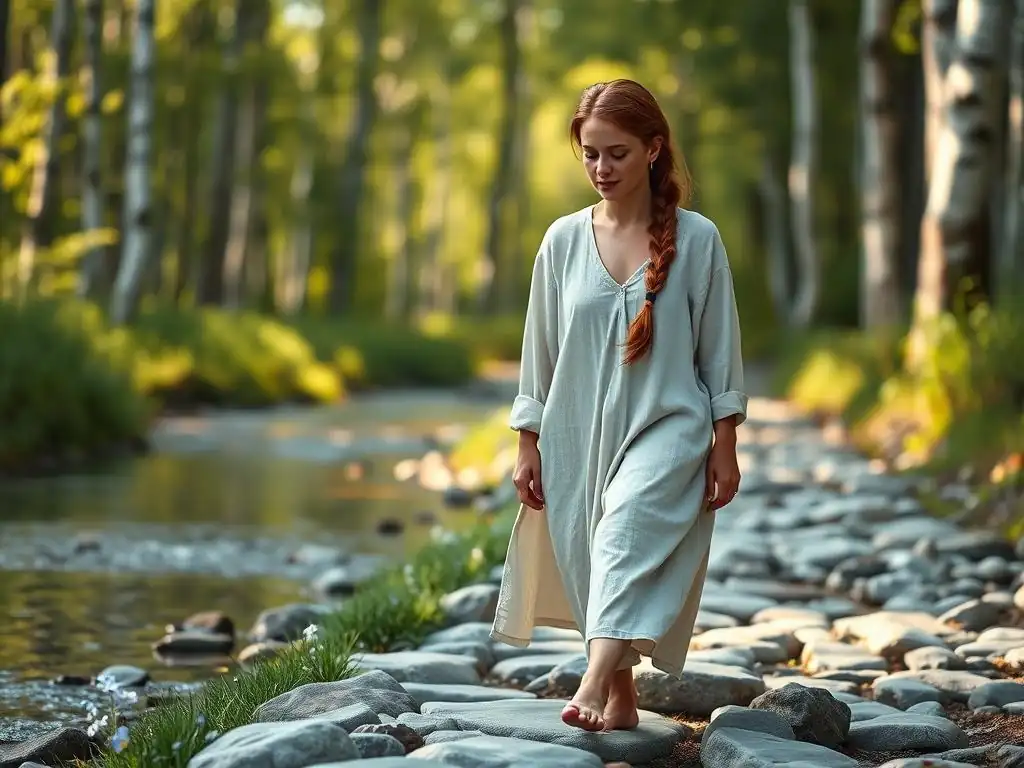
Taking your walking meditation practice into nature can significantly deepen the experience and amplify its benefits, especially for anxiety relief. Natural environments offer a rich tapestry of sensory input that can help anchor your awareness and soothe the nervous system. As you walk, consciously open your senses: notice the colors of leaves and flowers, the textures of bark or stone, the sounds of birdsong or rustling leaves, the scent of earth or blossoms, the feeling of the breeze on your skin or the sun's warmth.
Engaging multiple senses in this way helps to ground you more fully in the present moment, leaving less room for anxious thoughts to take hold. Studies suggest that spending time in nature can reduce stress hormones and improve mood. Combining this with mindful walking creates a potent practice that leverages the inherent calming qualities of natural environments, offering profound walking meditation benefits anxiety relief by fostering a sense of connection to the wider world.
Combining Walking Meditation with Other Mindfulness Practices
Integrating walking meditation with other mindfulness techniques can create a more comprehensive and robust overall practice. For example, you might start your day with a short period of sitting meditation to calm the mind, followed by a mindful walk to energize the body and integrate mindfulness into movement. Or, use a mindful walk as a transition between a busy task and a period of focused work or relaxation.
Walking meditation can also be combined with practices like mindful eating (noticing sensations while walking to a meal), mindful listening (paying attention to sounds while walking), or mindful stretching (incorporating gentle stretches into your walk). By practicing mindfulness in various forms, you strengthen your capacity for awareness and presence in different contexts, making the principles of mindfulness more accessible throughout your day and enhancing the overall walking meditation benefits anxiety relief you experience.
Deepening Your Practice: Guided Walking Meditations
For those looking to deepen their practice or seeking structure, guided walking meditations can be a valuable resource. These can be found through meditation apps, online platforms, or led by mindfulness instructors. A guided session typically involves a voice offering prompts for awareness, guiding you to focus on specific sensations, the breath, or themes like gratitude or releasing tension.
Guided meditations can be particularly helpful when starting out, as they provide instruction and help keep your mind focused. They can also be useful when you feel distracted or stuck in your solo practice. Choosing guided meditations specifically focused on anxiety or stress relief can help direct your awareness towards calming techniques and affirmations, providing targeted support and potentially unlocking new dimensions of the walking meditation benefits anxiety relief.
The Science Behind Walking Meditation and Anxiety
Exploring the Neuroscientific Benefits of Walking Meditation
The growing body of research into mindfulness and meditation, including mindful movement like walking meditation, points to tangible changes in brain structure and function. Studies, often utilizing fMRI scans, have shown that regular mindfulness practice can lead to increased gray matter density in brain regions associated with attention, self-awareness, and emotional regulation, such as the prefrontal cortex and insula. Conversely, some research suggests a decrease in the size and activity of the amygdala, the brain's alarm center responsible for processing fear and initiating the stress response.
The rhythmic nature of walking, combined with focused attention, may also influence brainwave activity, promoting states associated with relaxation (alpha and theta waves). This neurobiological evidence provides a scientific basis for understanding how practices like walking meditation can physically reshape the brain over time, making individuals less reactive to stressors and better equipped to manage anxious feelings. These documented changes underscore the profound walking meditation benefits anxiety relief at a foundational level.
Research Supporting Walking Meditation for Anxiety Relief
Specific research focusing on walking meditation and its impact on anxiety has yielded promising results. Meta-analyses of mindfulness-based interventions, which frequently include walking meditation components, have demonstrated significant reductions in symptoms across various anxiety disorders. For instance, a review of multiple studies published in the Journal of Anxiety Disorders found that mindfulness-based stress reduction (MBSR) programs, incorporating mindful walking, led to a substantial decrease in anxiety scores among participants.
More targeted studies have shown that even short periods of mindful walking can reduce state anxiety (temporary anxiety) in individuals compared to unstructured walking or sedentary activities. For example, a study involving college students experiencing exam stress reported that those who engaged in a 15-minute mindful walk showed lower self-reported anxiety levels immediately afterward compared to a control group. While specific percentages can vary, the consistent finding across research is that integrating mindful walking into one's routine positively impacts anxiety levels, validating the significant walking meditation benefits anxiety relief. (Note: Specific study percentages can fluctuate, using general findings here).
The Mind-Body Connection and Walking Meditation
Walking meditation is a powerful demonstration of the intricate connection between the mind and body. Anxiety often manifests not only as racing thoughts but also as physical tension, restlessness, and physiological arousal. By consciously engaging the body in gentle, rhythmic movement while simultaneously focusing the mind, walking meditation directly addresses this mind-body link.
The physical act of walking helps to release stored tension in the muscles and promotes circulation, while the mental focus on the present moment interrupts the feedback loop between anxious thoughts and physical stress responses. This integrated approach allows practitioners to become more aware of how anxiety affects their physical state and to use mindful movement as a tool for self-regulation. By consciously connecting breath, movement, and awareness, walking meditation helps to calm the nervous system and foster a sense of groundedness, reinforcing the direct link between mindful movement and the powerful walking meditation benefits anxiety relief.
Walking Meditation: A Path to Inner Peace and Reduced Anxiety
Long-Term Benefits of Regular Walking Meditation Practice
Engaging in walking meditation regularly over time yields cumulative benefits that extend far beyond temporary stress reduction. Consistent practice helps build resilience, making individuals better equipped to handle daily challenges without becoming overwhelmed by anxiety. The strengthened capacity for present-moment awareness cultivated during mindful walks naturally spills over into other areas of life, leading to improved focus, enhanced emotional regulation, and a greater ability to navigate difficult feelings with greater ease.
Furthermore, regular walking meditation can contribute to improved sleep quality, reduced physical symptoms of stress (like headaches or digestive issues), and a more positive overall mood. It fosters a deeper connection with oneself and the environment, promoting a sense of peace and well-being that acts as a buffer against the onset of anxiety. These lasting effects solidify the long-term walking meditation benefits anxiety relief, transforming it from a simple technique into a powerful tool for cultivating inner peace.
Creating a Sustainable Walking Meditation Practice for Lasting Anxiety Relief
Building a sustainable walking meditation practice is key to unlocking its potential for lasting anxiety relief. Sustainability comes from making the practice enjoyable, accessible, and adaptable to your life. Experiment with different times of day, various locations, and different techniques (focusing on breath, steps, body scan, mantras) to find what resonates most with you. Don't strive for perfection; some days your mind will feel calmer, others more restless. The value is in the consistent effort to show up and practice.
Start small – perhaps commit to just 10 minutes a few times a week. As it becomes more comfortable, you can gradually increase the duration or frequency. Be patient with yourself on days when it feels challenging. View walking meditation not as another task on your to-do list, but as an act of self-care and a valuable investment in your mental well-being. By integrating mindful walking into your routine in a way that feels manageable and supportive, you create a powerful, sustainable pathway to reduced anxiety and greater inner peace.
Frequently Asked Questions
What is walking meditation and how does it differ from sitting meditation?
Walking meditation is a form of mindfulness practice where you focus on the sensations of walking, such as the feeling of your feet on the ground. It differs from sitting meditation by incorporating movement and focusing on physical sensations rather than stillness.
How can walking meditation specifically help with anxiety relief?
Walking meditation promotes anxiety relief by grounding you in the present moment, reducing rumination on stressful thoughts. The rhythmic movement and focused attention can also help regulate the nervous system and decrease feelings of overwhelm.
What are some key techniques to maximize the benefits of walking meditation for anxiety?
Focus on your breath and the sensations of your feet touching the ground. Maintain a slow, deliberate pace and gently redirect your attention back to the present moment whenever your mind wanders. Avoid distractions like phones or conversations.
How often should I practice walking meditation to experience noticeable anxiety relief?
Consistency is key. Aim for at least 15-20 minutes of walking meditation most days of the week to experience significant anxiety reduction. Even shorter sessions can be beneficial if practiced regularly.
Are there any specific environments or settings that are best suited for walking meditation for anxiety relief?
Quiet, natural environments like parks or gardens are ideal, as they offer a sense of calm and connection with nature. However, walking meditation can be practiced anywhere, even indoors, as long as you can focus on your breath and movement.
Final Reflection: The Unfolding Path of Walking Meditation
The simple act of walking, when approached with mindful intention, becomes a powerful antidote to the anxieties of modern life. This isn't just a fleeting trend; it's a rediscovery of an ancient practice perfectly suited to address the pervasive stress and uncertainty we face daily. The benefits outlined – from reduced cortisol levels to enhanced self-awareness – are not merely theoretical; they are tangible experiences waiting to be unlocked.
The profound impact of walking meditation extends far beyond individual stress reduction. It's a quiet revolution, a reclaiming of presence in a world obsessed with speed and distraction. It fosters a deeper connection with ourselves and the world around us, reminding us of the inherent beauty and peace that exists even amidst chaos. The journey of a thousand miles begins with a single step.
This ancient proverb takes on new meaning when we consider the transformative power of each mindful stride. The practice isn't about achieving a perfect state of stillness, but about cultivating a gentle awareness of the present moment, step by step.
Now, consider your own journey. What anxieties weigh on your mind? What small steps can you take today to incorporate the principles of walking meditation into your life? Perhaps it's a five-minute walk around your block, focusing on the sensation of your feet on the ground. Or maybe it's a longer trek in nature, allowing your senses to fully engage with the world around you. No matter the length or location, the key is intention. Embrace the simplicity, embrace the present moment, and allow the unfolding path of walking meditation to guide you towards a calmer, more centered you.
Unlock Your Inner Peace: Take the Next Step in Your Walking Meditation Journey
Thanks for taking the time to explore the simple yet profound practice of walking meditation with us! We hope you’ve gained a new appreciation for its calming and centering effects. Now, it's time to translate that knowledge into mindful movement.
Here's how you can deepen your practice:
- Begin your daily walking meditation today: Even 5-10 minutes can make a significant difference in your daily well-being. Find a quiet space and focus on the sensations of your feet on the ground, the rhythm of your breath, and the world around you.
- Share your experience: Connect with others on their walking meditation journey. Tell us about your experience—what was most impactful for you?
- Experiment with different environments: Try walking meditation in nature, in your home, or even while listening to calming music. Notice how the environment affects your experience.
Ready to discover the transformative power of consistent walking meditation? What unique challenges or benefits have you found in your practice so far?