
Instant Calm: 1Minute Mindfulness Hacks for Any Situation


Welcome to Mind Care Guide, a sanctuary for your mental well-being.
Feeling overwhelmed? You're not alone. We understand the daily pressures that can weigh you down. Discover how to reclaim your peace with our guide to quick mindfulness hacks for stress. Explore proven techniques to find instant calm, even amidst the chaos, and unlock a more centered, resilient you. Ready to breathe easier? Let's begin.
Instant Calm: 1-Minute Mindfulness Hacks for Any Situation
- Introduction: Finding Calm in Chaos with Quick Mindfulness Hacks
- Understanding Stress and the Need for Instant Calm
-
Quick Mindfulness Hacks for Stress Relief: Your 1-Minute Toolkit
- 1. The Mindful Breathing Exercise: Your Go-To Stress Reducer
- 2. Sensory Awareness: Anchoring Yourself in the Present Moment
- 3. Body Scan Meditation: A Mini-Version for Instant Relaxation
- 4. Mindful Observation: Detaching from Overwhelming Thoughts
- 5. Gratitude Pause: Shifting Your Perspective in Seconds
- 6. Mindful Stretching: Releasing Physical Tension Quickly
- 7. Focused Attention: Single-Tasking for Instant Clarity
- Integrating 1-Minute Mindfulness into Your Daily Routine: Practical Tips
- The Science Behind Quick Mindfulness Techniques: How They Work
- Conclusion: Embracing the Power of 1-Minute Mindfulness for a Calmer Life
-
Frequently Asked Questions
- What exactly are mindfulness hacks, and how do they relate to stress management?
- How quickly can these 1-minute mindfulness hacks actually reduce stress?
- Can I use these mindfulness hacks in any situation, even during a stressful meeting or presentation?
- Are these mindfulness hacks a replacement for therapy or professional mental health help?
- How often should I practice these 1-minute mindfulness hacks to see a noticeable improvement in my overall well-being?
- Final Reflection: Finding Stillness in the Storm
- Unlock Your Inner Peace: Start Practicing Now!
Introduction: Finding Calm in Chaos with Quick Mindfulness Hacks
Mindfulness, at its core, is the practice of bringing your attention to the present moment without judgment. It's about noticing your thoughts, feelings, bodily sensations, and the world around you with a sense of curiosity and acceptance. The benefits of cultivating mindfulness are vast, ranging from reduced stress and anxiety to improved focus, emotional regulation, and overall well-being. In today's fast-paced world, however, finding extended periods for meditation can feel like another daunting task.
This is where the power of quick mindfulness techniques comes in. Life throws curveballs – a stressful email, a difficult conversation, a moment of overwhelm. Having access to instant calm through quick mindfulness hacks for stress allows you to pause, reset, and regain composure right when you need it most.
These brief practices aren't meant to replace longer meditation sessions, but rather to serve as accessible tools you can deploy anytime, anywhere, to anchor yourself and navigate challenging moments with greater ease. This article will equip you with a toolkit of actionable 1-minute mindfulness hacks designed to provide instant relief in any situation.
Understanding Stress and the Need for Instant Calm
The Impact of Stress on Mental Wellbeing
Chronic stress is a pervasive challenge in modern life, significantly impacting both our mental and physical health. When we experience stress, our body activates the "fight or flight" response, releasing hormones like cortisol and adrenaline. While useful in short bursts for dealing with immediate threats, prolonged exposure to these hormones can lead to serious health issues, including increased risk of heart disease, digestive problems, and a weakened immune system. Mentally, chronic stress contributes to anxiety, depression, difficulty concentrating, irritability, and sleep disturbances, creating a vicious cycle that erodes overall well-being.
Effectively managing stress is not just about avoiding difficult situations, which is often impossible, but about developing healthy coping mechanisms. Without strategies to interrupt the stress response, we can feel overwhelmed, losing our ability to think clearly or respond constructively to challenges. This highlights the critical need for accessible and effective stress management techniques that can be integrated into the fabric of our daily lives, providing moments of respite and control amidst the pressure.
Why 1-Minute Mindfulness?
The beauty of 1-minute mindfulness lies in its unparalleled accessibility and practicality. Many people feel they lack the time or discipline for lengthy meditation sessions, which can become a barrier to practice. A 1-minute hack removes this obstacle, making mindfulness feel achievable even on the busiest days. Whether you're in between meetings, stuck in traffic, waiting in line, or simply feeling a wave of stress wash over you, one minute is almost always available.
Even these brief moments of mindful attention can make a profound difference. They serve as micro-breaks that interrupt the automatic stress response, allowing your nervous system to downshift. Regularly incorporating these quick mindfulness hacks for stress helps build the "mindfulness muscle" – the ability to notice your internal state and external environment without getting carried away by reactive thoughts and emotions. Over time, these small practices accumulate, fostering greater resilience, self-awareness, and a more balanced approach to life's challenges.
Quick Mindfulness Hacks for Stress Relief: Your 1-Minute Toolkit
1. The Mindful Breathing Exercise: Your Go-To Stress Reducer
One of the most immediate ways to calm the nervous system is through conscious breathing. A simple technique like "Box Breathing" (inhaling for a count of four, holding for four, exhaling for four, holding for four) can be incredibly effective. In just 60 seconds, you can complete several cycles, focusing solely on the rhythm and sensation of your breath entering and leaving your body. This simple act redirects your attention away from stressful thoughts and anchors you firmly in the present moment.
Focused breathing directly impacts the vagus nerve, which plays a key role in regulating the body's stress response. By deliberately slowing and deepening your breath, you signal to your brain that you are safe, counteracting the "fight or flight" response. This physiological shift can lead to an almost instant reduction in heart rate, blood pressure, and muscle tension, providing a tangible sense of calm and control when stress levels are high.
2. Sensory Awareness: Anchoring Yourself in the Present Moment
Engaging your senses is a powerful way to ground yourself when feeling overwhelmed. The 5-4-3-2-1 technique is a popular method: take a minute to notice 5 things you can see, 4 things you can touch, 3 things you can hear, 2 things you can smell, and 1 thing you can taste. This exercise pulls your attention out of your head and into your immediate physical environment, interrupting the loop of stressful thoughts.
By deliberately focusing on sensory input, you shift your brain's activity from the areas associated with worry and rumination to those processing present experience. This act of anchoring yourself in the "here and now" provides a mental break from anxieties about the past or future. It's a simple yet effective way to disrupt the stress cycle and create a sense of stability, even in a chaotic situation.
3. Body Scan Meditation: A Mini-Version for Instant Relaxation
A full body scan can take 20 minutes or more, but a mini-version can be done in just one minute. Close your eyes (if possible) and quickly bring your attention to different parts of your body, perhaps starting with your feet, moving up through your legs, torso, arms, and finally your head. As you focus on each area, simply notice any sensations – tension, warmth, tingling – without trying to change them.
This rapid scan helps you become aware of where you hold stress physically. Many people carry tension in their shoulders, neck, or jaw without even realizing it. By briefly acknowledging these areas, you create an opportunity for conscious release. This increased body awareness not only helps you identify physical signs of stress but also promotes a sense of embodiment, bringing you back into your physical self and out of your anxious thoughts.
4. Mindful Observation: Detaching from Overwhelming Thoughts
When stressed, our thoughts can feel like an unstoppable flood. Mindful observation involves stepping back and viewing your thoughts as transient events, like clouds drifting across the sky. For one minute, simply notice the thoughts that arise without getting caught up in them or judging them. Acknowledge a thought ("Oh, there's a thought about my deadline") and then let it pass, bringing your attention back to your breath or another anchor.
This practice cultivates psychological distance from your thoughts. You realize that you are not your thoughts; they are just mental events. By observing them from a detached perspective, you reduce their power to trigger emotional reactions. This creates space between you and your stressful thoughts, allowing you to respond more thoughtfully rather than reacting automatically out of anxiety or fear.
5. Gratitude Pause: Shifting Your Perspective in Seconds
Stress often narrows our focus onto problems and difficulties. Taking a moment for gratitude intentionally broadens your perspective. For one minute, pause and identify just one thing you are genuinely grateful for in that moment. It could be something simple like a warm cup of tea, the sun shining, or a supportive friend. Allow yourself to truly feel the positive emotion associated with that gratitude.
Research indicates that practicing gratitude can significantly boost positive emotions and reduce feelings of stress and negativity. Even a brief moment of focusing on something positive can interrupt the stress response and shift your mood. This simple hack helps counteract the brain's negativity bias and reminds you that even amidst challenges, there are sources of comfort and joy.
6. Mindful Stretching: Releasing Physical Tension Quickly
Stress manifests physically, often as muscle tension. A simple mindful stretch can release some of this stored tension in just one minute. Try a gentle neck roll, shoulder shrugs, or reaching your arms overhead. As you perform the movement, pay close attention to the sensations in your body – the stretch, the release, any areas of tightness.
Combining physical movement with mindfulness allows you to address both the mental and physical aspects of stress simultaneously. Releasing physical tension through mindful stretching can send calming signals to the brain, helping to alleviate mental stress. It's a quick way to become aware of your body's needs and provide immediate relief to tight muscles often exacerbated by stress.
7. Focused Attention: Single-Tasking for Instant Clarity
In a world of constant multitasking, the feeling of being overwhelmed by too many demands is a major stressor. For one minute, choose a single, simple task and devote your full attention to it. This could be mindfully washing your hands, focusing on the taste and warmth of a drink, or simply looking out a window and observing the details you see.
This intentional act of single-tasking provides a mental break from the cognitive load of juggling multiple things. By bringing your attention fully to one activity, you quiet the mental chatter associated with planning, worrying, and switching between tasks. This brief period of focused attention can reduce feelings of overwhelm, improve clarity, and create a sense of accomplishment, even if the task is minimal.
Integrating 1-Minute Mindfulness into Your Daily Routine: Practical Tips
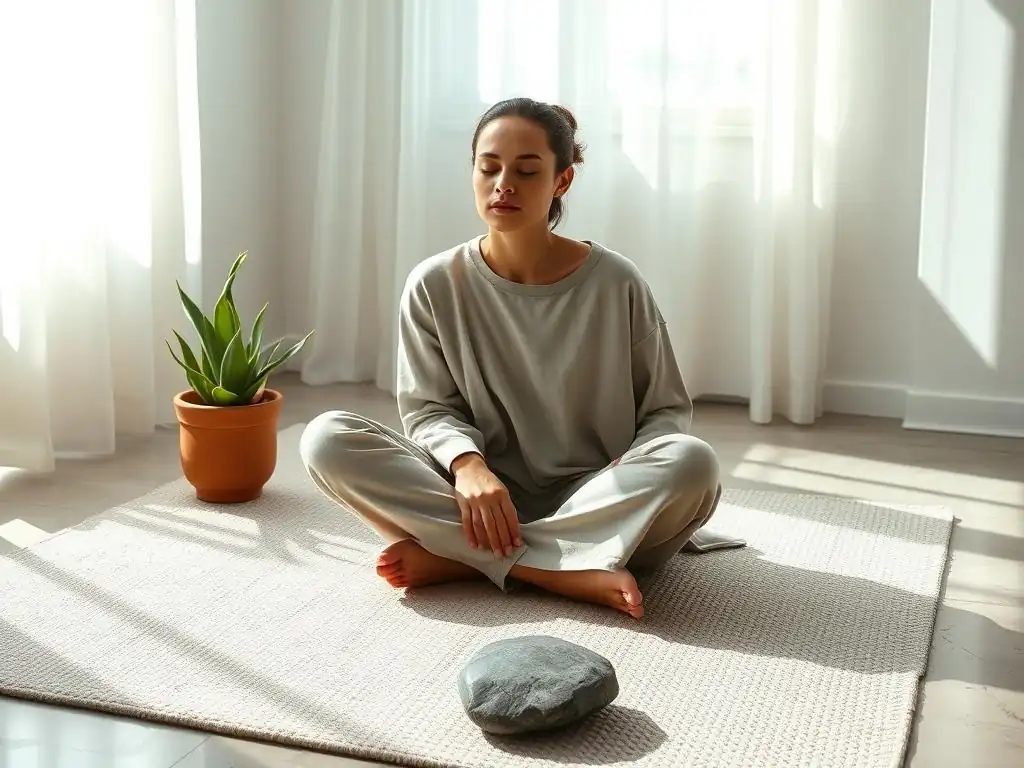
Identifying Trigger Moments for Mindfulness
Becoming aware of your personal stress triggers is the first step in effectively deploying quick mindfulness hacks for stress. Pay attention throughout your day to situations, interactions, or times when you typically feel stress or overwhelm rising. This could be before a challenging meeting, during your commute, when dealing with a difficult email, or even during routine transitions like arriving home from work.
Once you identify these moments, you can consciously decide to use them as cues for your 1-minute mindfulness practice. Instead of automatically reacting with tension or frustration, the trigger becomes a reminder to pause and apply a quick hack. For example, the moment you sit down at your desk to check email could be your cue for a 1-minute mindful breathing exercise, or feeling impatient in a queue could signal a sensory awareness practice.
- [ ] Identify 3 common stress triggers in your day.
- [ ] Choose a 1-minute mindfulness hack for each trigger.
- [ ] Practice the chosen hack the next time you encounter the trigger.
Making Mindfulness a Habit: Consistency is Key
Like any skill, mindfulness improves with practice. While 1-minute hacks are short, doing them consistently is what builds lasting resilience. Think about incorporating these quick mindfulness hacks for stress into your existing daily routines. Could you do a mindful breathing exercise while your coffee brews, a mini body scan before you get out of bed, or a gratitude pause before lunch?
Setting reminders on your phone or calendar can also be helpful in the beginning. Even practicing for just one minute at the same time each day can help cement the habit. Remember, the goal isn't perfection, but consistency. Don't worry if your mind wanders; simply notice it and gently bring your attention back. Over time, these small, consistent efforts accumulate, making mindfulness a more natural and accessible response to stress.
Overcoming Challenges: Staying Committed to Mindfulness
It's easy to feel enthusiastic about mindfulness initially, but sticking with it can be challenging. Common obstacles include feeling too busy ("I don't even have 1 minute! "), thinking it's not working ("I don't feel completely calm"), or forgetting to practice. It's important to approach these challenges with self-compassion and flexibility. Acknowledge the obstacle without judgment.
If you feel too busy, remember that even 30 seconds of mindful breathing is better than none. If you don't feel instantly calm, that's okay; the goal is awareness, not immediate eradication of stress. The benefits of quick mindfulness hacks for stress are cumulative. If you forget, simply notice it and recommit to practicing the next time you remember. Be kind to yourself, celebrate small successes, and view setbacks as part of the learning process.
The Science Behind Quick Mindfulness Techniques: How They Work
Understanding the Neuroscience of Mindfulness and Stress Reduction
When we experience stress, the amygdala, the brain's alarm center, becomes highly active, triggering the release of stress hormones. Simultaneously, activity in the prefrontal cortex, responsible for higher-level thinking, decision-making, and emotional regulation, can decrease. This shift makes us more reactive and less able to think clearly or manage our emotions.
Mindfulness practices, even brief ones, work by strengthening the connection between the prefrontal cortex and the amygdala. Regular practice can actually lead to structural changes in the brain, potentially decreasing the size and activity of the amygdala while increasing density in areas of the prefrontal cortex associated with attention, awareness, and emotional regulation. This neurological shift helps us respond to stress more calmly and thoughtfully, rather than being hijacked by the stress response.
Research-Backed Benefits of Short Mindfulness Practices
Numerous studies have explored the effectiveness of mindfulness interventions, and a growing body of research specifically supports the benefits of brief practices. For instance, studies have shown that even short periods of mindfulness meditation (as little as 5-10 minutes) can lead to significant reductions in self-reported stress and anxiety levels among various populations, including students and healthcare professionals.
Research also indicates that brief mindfulness exercises can improve attention and focus. For example, participants in studies who engaged in short mindfulness practices often perform better on cognitive tasks compared to control groups. Furthermore, studies using physiological measures have demonstrated that short mindfulness sessions can lead to decreases in stress markers like heart rate variability and cortisol levels, reinforcing the idea that these quick mindfulness hacks for stress have a real, measurable impact on the body's stress response and overall well-being.
Conclusion: Embracing the Power of 1-Minute Mindfulness for a Calmer Life
Navigating the complexities of modern life often means encountering stress regularly. While eliminating stress entirely may not be possible, equipping yourself with effective tools to manage it is crucial for maintaining mental and physical well-being. The quick mindfulness hacks for stress discussed here offer accessible, powerful ways to find moments of calm and clarity, even in the midst of chaos.
These 1-minute techniques – from mindful breathing and sensory awareness to gratitude pauses and mini body scans – provide immediate anchors to the present moment, interrupting the stress cycle and helping you regain control. They are not a substitute for deeper self-care or addressing the root causes of stress, but they serve as invaluable, on-the-spot resources.
We encourage you to experiment with these different quick mindfulness hacks for stress and discover which ones resonate most with you. By integrating these brief practices into your daily routine, you can cultivate greater resilience, improve your emotional regulation, and foster a more peaceful and centered life, one mindful minute at a time.
Frequently Asked Questions
What exactly are mindfulness hacks, and how do they relate to stress management?
Mindfulness hacks are quick, easily accessible techniques designed to bring you into the present moment. They are valuable for stress management because they help interrupt the cycle of anxious thoughts and promote a sense of calm.
How quickly can these 1-minute mindfulness hacks actually reduce stress?
These hacks are designed for instant relief. While the effects can vary, many people experience a noticeable reduction in stress within that single minute. This is due to the focus on the present.
Can I use these mindfulness hacks in any situation, even during a stressful meeting or presentation?
Yes, that's the beauty of them! They are designed to be discreet and adaptable. You can use breathing exercises or mindful observation techniques even in a high-pressure environment to regain composure.
Are these mindfulness hacks a replacement for therapy or professional mental health help?
No, these hacks are supplemental tools. They can be beneficial for managing everyday stress, but they are not a substitute for professional help if you are struggling with a more serious mental health condition.
How often should I practice these 1-minute mindfulness hacks to see a noticeable improvement in my overall well-being?
Integrating these hacks into your daily routine is key. Even practicing them a few times a day can lead to a cumulative effect, improving your overall ability to cope with stress and enhance your mental well-being.
Final Reflection: Finding Stillness in the Storm
The relentless pace of modern life leaves many of us feeling overwhelmed, perpetually teetering on the edge of burnout. The need for quick, accessible stress-relief strategies has never been greater, and the simple mindfulness hacks explored in this article offer a powerful antidote to the chaos. These aren't just fleeting fixes; they are tools to cultivate a deeper, more resilient relationship with ourselves and our experiences.
The impact of consistent mindfulness practice extends far beyond the immediate reduction of stress. It cultivates a sense of presence and self-awareness that permeates every aspect of life, influencing our relationships, our work, and our overall well-being. As Thich Nhat Hanh wisely said, Peace is every step. Every step you take can be a step of peace.
This article's focus on accessible, one-minute practices aims to make that peace more readily available, weaving it into the fabric of our daily routines.
Now, I invite you to consider how you might integrate these simple yet profound techniques into your own life. Choose one hack that resonates with you most, and commit to practicing it daily for a week. Observe the subtle shifts in your mood, your energy levels, and your overall sense of calm. Remember, the journey to inner peace is not a destination, but a continuous practice, a mindful unfolding of each moment. Embrace the stillness within, and watch as it transforms your world.
Unlock Your Inner Peace: Start Practicing Now!
Thanks for taking the time to explore these quick mindfulness hacks! We hope you discovered some new techniques to help you navigate daily stress. Ready to integrate these practices into your life?
- Prioritize your breath: Start with a single, focused minute of mindful breathing – right now. Feel the difference it makes.
- Share this article with someone who could benefit from these simple techniques. Let's build a more mindful community together!
- Explore a guided meditation: Spend 5-10 minutes later today experiencing deeper relaxation. This will build upon today's learning.
What small step will you take today to cultivate more inner peace?