
Mindfulness for Social Anxiety: Navigating Interactions Calmly


Welcome to Mind Care Guide, a sanctuary for your mental well-being.
Feeling overwhelmed in social situations? You're not alone. Many experience the stifling grip of social anxiety. Perhaps you've heard whispers about mindfulness, but wondered if it could really make a difference. Our latest article, "Mindfulness for Social Anxiety: Navigating Interactions Calmly," delves into how simple mindfulness techniques can empower you to reclaim control and find calm amidst the chaos. Curious to discover how mindfulness can help you breathe easier and connect more authentically? Let's explore together.
Mindfulness for Social Anxiety: Navigating Interactions Calmly
- Understanding Social Anxiety and the Role of Mindfulness
- Practical Mindfulness Techniques to Reduce Social Anxiety
- Integrating Mindfulness into Daily Social Interactions
- Benefits of Mindfulness Training for Social Anxiety Relief
- Sample Mindfulness Exercises for Social Anxiety
- Overcoming Challenges and Maintaining a Mindfulness Practice for Social Anxiety
- Resources for Further Learning About Mindfulness and Social Anxiety
- Conclusion: Embracing Mindfulness for a More Confident and Connected Social Life
-
Frequently Asked Questions
- What is mindfulness, and how can it help with social anxiety?
- How does mindfulness differ from other anxiety management techniques?
- Can anyone learn mindfulness, even if they have no prior experience with meditation?
- How often should I practice mindfulness to see a reduction in social anxiety?
- Are there any potential drawbacks or limitations to using mindfulness for social anxiety?
- Final Reflection: Cultivating Calm in a Connected World
- Unlock Your Social Confidence: Start Practicing Mindfulness Today!
Social Anxiety Disorder, often referred to as SAD or social phobia, is characterized by intense fear or anxiety about social situations in which an individual might be scrutinized, observed, or judged by others. This fear often revolves around the possibility of acting in a way or showing anxiety symptoms that will be negatively evaluated, leading to humiliation or embarrassment. The anxiety experienced is typically out of proportion to the actual threat posed by the social situation.
This condition is more common than many people realize, affecting millions worldwide. While specific prevalence rates vary by region and study, estimates suggest that approximately 7% of the adult population in the United States experiences social anxiety disorder in any given year, and up to 13% may experience it at some point in their lives. The fear can be specific to certain situations, like public speaking or meeting new people, or it can be generalized, encompassing almost all social interactions.
The pervasive fear associated with social anxiety can significantly impair an individual's ability to function in various aspects of life. Academically, students with social anxiety may avoid participating in class, giving presentations, or even attending school altogether, potentially impacting their educational attainment. In professional settings, it can hinder networking, participating in meetings, or pursuing promotions that require public interaction, often leading to underemployment or job dissatisfaction.
Beyond education and career, social anxiety severely restricts personal relationships. The fear of judgment can lead to avoidance of social gatherings, difficulty making friends, dating challenges, and strained family interactions. This isolation can exacerbate feelings of loneliness and depression. Research consistently shows that individuals with untreated social anxiety report lower quality of life, reduced social support networks, and higher rates of co-occurring mental health conditions.
Introduction to Mindfulness: A Powerful Tool for Anxiety Reduction
Mindfulness is the practice of intentionally bringing one's attention to the present moment without judgment. It involves observing thoughts, feelings, bodily sensations, and the surrounding environment with an attitude of acceptance and curiosity. Rooted in ancient contemplative traditions, mindfulness has gained significant traction in modern psychology and healthcare as an effective strategy for managing stress, improving focus, and enhancing emotional well-being.
Developing a mindfulness practice typically involves techniques such as meditation, mindful breathing, body scans, and mindful movement. The core principle is to cultivate awareness of what is happening now, rather than getting lost in worries about the future or ruminating on the past. This shift in attention can help individuals detach from distressing thought patterns and respond to challenges with greater calm and clarity.
Mindfulness addresses the core mechanisms that fuel social anxiety. Social anxiety is often characterized by excessive self-focused attention, rumination on potential negative outcomes, and a strong fear of internal physical sensations (like blushing or trembling) interpreted as signs of weakness or anxiety. Mindfulness helps by shifting attention away from these internal anxieties and towards the present moment, including external reality and non-judgmental observation of internal experiences.
Studies exploring how mindfulness reduce social anxiety have shown promising results. Mindfulness-Based Cognitive Therapy (MBCT) and Mindfulness-Based Stress Reduction (MBSR), two structured programs incorporating mindfulness, have been adapted for and tested in individuals with social anxiety.
Findings from various studies indicate that these interventions can lead to significant reductions in social anxiety symptoms, sometimes showing average symptom score decreases of 30% or more in participants compared to control groups or baseline levels. The practice helps individuals become more aware of their anxious thoughts and feelings without automatically believing or reacting to them, fostering a greater sense of control and acceptance.
Deep breathing is a fundamental mindfulness technique that can be particularly effective in managing acute social anxiety symptoms. When faced with a triggering social situation, the body's fight-or-flight response often kicks in, leading to shallow, rapid breathing, increased heart rate, and muscle tension. Consciously slowing and deepening the breath can counteract this response, activating the body's relaxation system.
To practice mindful deep breathing before or during a social interaction, find a discreet place if possible, or simply focus inward. Inhale slowly and deeply through your nose, allowing your abdomen to expand as if filling a balloon. Count to four as you inhale. Hold the breath gently for a count of one or two, then exhale slowly through your mouth, counting to six or eight.
Focus your attention entirely on the sensation of the breath entering and leaving your body. Repeat this for several cycles. This simple act of focusing on the breath helps ground you in the present moment and interrupts the cycle of escalating anxiety, making mindfulness reduce social anxiety in real-time situations.
The body scan meditation involves systematically bringing mindful attention to different parts of the body, noticing sensations without judgment. While often practiced lying down, a modified body scan can be a powerful tool for developing body awareness and managing physical symptoms of anxiety in social settings. Social anxiety often manifests physically, and fear of these symptoms can be a major concern.
Before entering a potentially stressful social event, or even while seated during one, take a moment to quietly bring your awareness to your body. Start with your feet and slowly move your attention upward – ankles, calves, knees, thighs, hips, abdomen, chest, back, arms, hands, neck, and head. Simply notice any sensations present – tension, warmth, coolness, tingling, or numbness.
Acknowledge these sensations with curiosity rather than fear. This practice helps you become more familiar with your physical experience, reducing the tendency to panic when anxiety-related sensations arise. It teaches you that these sensations are temporary and manageable, strengthening your ability to navigate social situations more comfortably.
Social anxiety is heavily driven by negative thoughts (e.g., "Everyone thinks I'm awkward," "I'm going to say something stupid") and uncomfortable feelings (fear, embarrassment). Mindful observation involves noticing these thoughts and feelings as mental events, rather than identifying with them as absolute truths or getting swept away by them.
During a conversation or social gathering, try to step back mentally and observe your internal landscape. Notice the thoughts that arise – perhaps label them mentally as "a judgment thought" or "a worry thought." Observe the feelings present – acknowledge "fear" or "unease." The key is to observe these internal experiences without judgment or immediate reaction.
Imagine them like clouds floating by in the sky. This creates space between you and your anxiety, allowing you to respond more intentionally rather than react automatically from a place of fear. This practice is central to how mindfulness reduce social anxiety by changing your relationship with your internal critic and emotional responses.
Grounding techniques are specific mindfulness practices designed to bring your awareness back to the present moment when you feel overwhelmed by anxiety, panic, or intrusive thoughts. They are particularly useful when feeling dissociated or trapped in a spiral of anxious rumination during a social event.
One common grounding technique is the "5-4-3-2-1" method. When feeling overwhelmed, notice: 5 things you can see, 4 things you can touch, 3 things you can hear, 2 things you can smell, and 1 thing you can taste. This simple exercise forces your attention onto sensory input from the external environment, pulling you out of your internal anxious world and anchoring you in the present reality of the social setting.
Another technique is to simply feel your feet on the ground or the chair beneath you, focusing on the physical connection to the earth. These techniques provide immediate relief and help you stay present and engaged rather than retreating mentally.
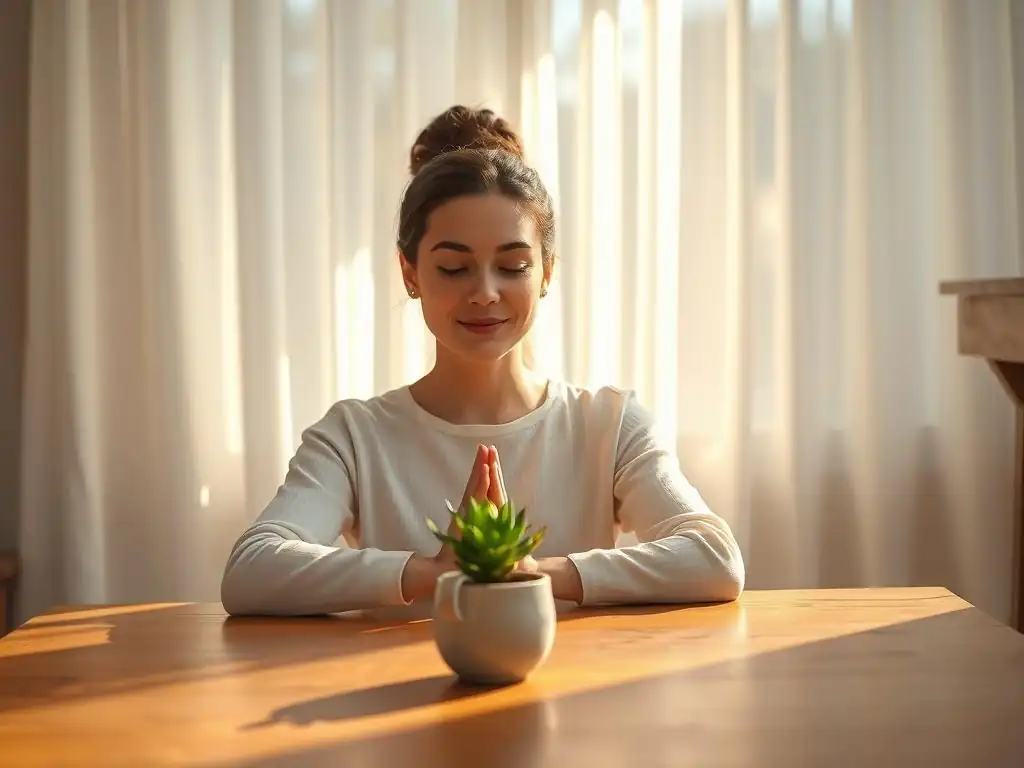
Practicing Mindful Listening in Conversations
Mindful listening is a powerful way to shift attention away from self-focused anxiety and genuinely connect with others during conversations. Social anxiety often leads to being preoccupied with what you should say next, how you are being perceived, or analyzing past conversational missteps, rather than truly hearing the other person.
To practice mindful listening, make a conscious effort to fully focus on the speaker. Pay attention not just to their words, but also to their tone of voice, body language, and emotional expression. Try to listen with curiosity and empathy, suspending your own judgments or planning your response while they are speaking. When your mind inevitably wanders to anxious thoughts, gently notice this and guide your attention back to the speaker. This practice not only helps quiet your internal critic but also allows for deeper, more meaningful connections, which can naturally reduce the fear of interaction.
Self-compassion is a core component of mindfulness practice and is crucial for individuals with social anxiety. It involves treating yourself with the same kindness, understanding, and acceptance you would offer a friend who is struggling. Social anxiety often comes with a harsh inner critic, constantly judging performance and anticipating negative outcomes.
Cultivating self-compassion means recognizing that experiencing anxiety in social situations is part of the human experience and is not a personal failing. When you make a mistake in a social interaction or feel overwhelmed by anxiety, instead of engaging in self-criticism, try acknowledging the difficulty ("This is a moment of suffering") and offering yourself kindness ("May I be kind to myself," or "It's okay to feel this way").
Research suggests that self-compassion is strongly linked to reduced anxiety and depression, as it helps to counteract the negative self-talk that fuels social fear. Embracing self-compassion is a vital step in using mindfulness reduce social anxiety's grip.
Mindful Communication Techniques for Assertiveness
Mindfulness can enhance communication skills, particularly in developing assertiveness – the ability to express your needs, thoughts, and feelings honestly and respectfully. Social anxiety often leads to either being overly passive (avoiding conflict, not speaking up) or, less commonly, overly aggressive. Mindful communication helps find a balanced middle ground.
Mindful communication involves speaking with awareness of your intentions and impact, and listening with presence. Before speaking, take a moment to check in with yourself – what are you truly trying to convey? How can you express it clearly and kindly? During the interaction, stay present, noticing your own physical and emotional responses (like anxiety rising) without letting them derail your message.
Practice responding thoughtfully rather than reacting defensively. For example, if asked a question that triggers anxiety, instead of freezing or giving a rushed, unauthentic answer, you might mindfully pause, take a breath, and respond calmly, even if you feel nervous. This conscious approach helps build confidence in your ability to handle social exchanges.
Identifying and responding mindfully to social anxiety triggers is key to managing the condition long-term. Triggers can be specific events (parties, meetings), types of people (authority figures), or even internal states (feeling tired, stressed). Mindfulness provides a framework for approaching these triggers with awareness rather than avoidance.
When you anticipate or encounter a trigger, instead of automatically reacting with fear and avoidance, pause and bring mindful awareness to the situation. Notice the physical sensations, thoughts, and emotions that arise without judgment. Ask yourself: What is happening in this moment? Can I stay present with this discomfort?
Use techniques like mindful breathing or grounding to anchor yourself. This conscious observation weakens the automatic link between the trigger and the anxious reaction. Over time, by repeatedly facing triggers with mindfulness and observing that the feared outcome often doesn't happen or is manageable, you can gradually reduce the power these triggers hold over you, illustrating how mindfulness reduce social anxiety's intensity over time.
Improved Self-Esteem and Confidence Through Mindfulness
Mindfulness practice cultivates a more accepting and less judgmental relationship with oneself. By observing thoughts and feelings without getting caught up in them, individuals with social anxiety can begin to detach from the harsh inner critic that often demolishes self-esteem. They learn to see negative thoughts as just thoughts, not absolute truths about their worth or social capabilities.
As individuals practice mindfulness reduce social anxiety symptoms, they gain confidence in their ability to handle challenging emotions and situations. Successfully navigating even small social interactions using mindful techniques builds a sense of agency and competence. This gradual accumulation of positive experiences, combined with a more compassionate self-view, leads to a significant and lasting improvement in self-esteem and overall confidence, not only in social settings but in life generally.
Reduced Fear of Judgment and Negative Evaluation
A central component of social anxiety is the intense fear of being negatively judged or evaluated by others. Mindfulness directly addresses this fear by shifting focus away from potential external judgment and internal rumination towards present-moment awareness.
By practicing mindful observation of thoughts, individuals learn to recognize the fear of judgment as a thought pattern rather than an imminent threat. They can observe the anxious prediction ("They think I'm stupid") without automatically believing it or reacting with intense fear. Furthermore, cultivating self-compassion helps to internalize the idea that even if judgment occurs, it is manageable and doesn't define one's worth. This fundamental shift in perspective significantly reduces the power that the fear of judgment holds, freeing up mental energy previously consumed by worry.
Social anxiety is often accompanied by difficulty regulating intense emotions, such as fear, embarrassment, and shame, in social contexts. Mindfulness training improves emotional regulation by increasing awareness of emotional states and teaching individuals to relate to them differently.
Through mindfulness, people learn to notice emotions as they arise in the body and mind without being immediately overwhelmed or reactive. They develop the capacity to tolerate uncomfortable feelings, understanding that emotions are temporary and fluctuate. This ability to observe and sit with discomfort, rather than trying to suppress or escape it, allows for a more measured and less reactive response to challenging social emotions. This enhanced emotional resilience is a key outcome of how mindfulness reduce social anxiety's impact.
Ultimately, the goal for many individuals with social anxiety is to participate more fully in social life and build meaningful connections. By reducing fear, improving confidence, and enhancing emotional regulation, mindfulness practice directly supports this goal.
As social anxiety symptoms lessen, the motivation to avoid social situations decreases. Individuals feel more capable of initiating or participating in conversations, attending gatherings, and expressing themselves authentically. The practice of mindful listening also fosters deeper connections by allowing for genuine engagement with others. This increased social participation combats the isolation often experienced by those with social anxiety, leading to a more connected and fulfilling life.
This exercise is perfect for a quick reset before or during a stressful social interaction.
- Find a comfortable position, either sitting or standing. You can do this discreetly if needed.
- Close your eyes gently if comfortable, or soften your gaze.
- Bring your attention to your breath. Don't try to change it, just notice it.
- Notice the physical sensations of breathing: the air entering and leaving your nostrils, the rise and fall of your chest or abdomen.
- Breathe slowly and deeply into your belly. Inhale for a count of 4, feeling your abdomen expand.
- Pause briefly.
- Exhale slowly through your mouth for a count of 6 or 8, letting go of tension.
- Continue this slow, deep breathing for 5 minutes, gently redirecting your attention back to the breath whenever your mind wanders to anxious thoughts.
- Notice any shift in your state of mind or body after the exercise.
Visualization can be a helpful tool to prepare for social situations and counter negative predictions common in social anxiety.
- Find a quiet place where you won't be disturbed.
- Close your eyes and take a few deep, calming breaths.
- Bring to mind a specific social situation that you anticipate or find challenging (e.g., a meeting, a party, a dinner with friends).
- Instead of focusing on your fears, visualize the situation unfolding in a positive, comfortable way.
- Imagine yourself feeling calm and present. See yourself engaging in conversation, perhaps listening attentively or speaking clearly.
- Focus on the feeling of ease and connection. Imagine feeling accepted and comfortable in the interaction.
- Notice the details: the environment, the sounds, the expressions on people's faces (seeing them as friendly or neutral).
- If anxious thoughts or images arise, gently acknowledge them without judgment and guide your attention back to the positive visualization.
- Spend 5-10 minutes in this visualization, allowing yourself to fully inhabit the feeling of a successful, comfortable social interaction. This prepares your mind and body for a more positive experience.

Common Obstacles to Mindfulness Practice
Starting and maintaining a mindfulness practice, especially when dealing with social anxiety, can present challenges. One common obstacle is the "monkey mind" – difficulty quieting the constant stream of thoughts, worries, and self-criticism. Individuals with social anxiety might find that during meditation, their anxious thoughts about past or future social events become even more prominent, leading to frustration or the belief that they are "doing it wrong."
Another significant hurdle is finding the time and motivation for consistent practice amidst a busy life or when feeling discouraged. The immediate benefits of mindfulness may not always be dramatic, and the initial discomfort of confronting anxious thoughts and feelings can be off-putting. Furthermore, perfectionism, which is often linked to social anxiety, can lead individuals to feel like they aren't meditating perfectly or achieving the "right" state of mind, causing them to give up.
Consistency is more important than duration or perfection when practicing mindfulness to reduce social anxiety. Start small – even 5-10 minutes of focused practice daily can make a difference. Link your practice to an existing habit, like brushing your teeth or having your morning coffee, to make it easier to remember. Don't aim for a completely blank mind; the goal is simply to notice where your attention is and gently guide it back to your chosen anchor (like the breath) without judgment.
Be patient and compassionate with yourself. Recognize that your mind will wander, especially when dealing with ingrained anxiety patterns. Each time you notice your mind has drifted and gently bring it back, you are strengthening the "muscle" of attention and non-reactivity – this is the practice.
Celebrate small victories, like staying present for a few extra seconds during a conversation or noticing an anxious thought without immediately panicking. Experiment with different techniques (breathing, body scan, mindful walking) to find what resonates most with you. Remember that the cumulative effect of regular practice is how mindfulness reduce social anxiety over time.
While self-guided mindfulness practice can be beneficial, engaging with structured, professionally led programs can significantly enhance the effectiveness of using mindfulness reduce social anxiety. Mindfulness-Based Cognitive Therapy (MBCT) is one such evidence-based approach that integrates mindfulness techniques with principles of cognitive behavioral therapy (CBT).
MBCT was originally developed for preventing relapse in depression but has been adapted and shown to be effective for anxiety disorders, including social anxiety. A typical MBCT course runs for eight weeks, with weekly group sessions and daily home practice. It teaches participants to become more aware of their negative thought patterns and emotional triggers but, crucially, to relate to them with acceptance and non-reactivity rather than trying to change or eliminate them.
Studies on MBCT for social anxiety have demonstrated significant reductions in symptom severity and improvements in quality of life for participants. Working with a therapist trained in MBCT or other mindfulness-based approaches can provide personalized guidance, support, and a structured framework for integrating mindfulness deeply into your life to manage social anxiety.
Books, Apps, and Websites for Mindfulness Practice
A wealth of resources is available for those looking to deepen their understanding and practice of mindfulness to help reduce social anxiety. Numerous books offer detailed explanations of mindfulness principles and step-by-step guides for various meditation techniques, often including specific chapters or sections on applying mindfulness to anxiety.
Mobile applications dedicated to mindfulness and meditation provide guided meditations, timers, and programs tailored to different needs, including managing anxiety. Many offer introductory courses and daily reminders to support consistent practice. Additionally, reputable websites from mental health organizations, universities, and mindfulness centers offer articles, free guided meditations, and information about local mindfulness programs, providing accessible ways to learn more and connect with practice.
Connecting with others who understand the challenges of social anxiety can be incredibly validating and supportive. Support groups, both in-person and online, offer a safe space to share experiences, challenges, and successes in managing social anxiety. While not exclusively focused on mindfulness, these groups can provide a context for discussing how using mindfulness reduce social anxiety has impacted individuals' lives.
Some support groups or workshops may specifically incorporate mindfulness techniques or discussions about their application. Engaging with a community can combat feelings of isolation and provide practical tips and encouragement from peers who are also on a journey towards greater social ease. These communities can be found through local mental health services, national anxiety organizations, or online platforms dedicated to mental wellness.
Navigating social interactions when you live with social anxiety can feel like a constant uphill battle. The fear of judgment, the intense self-scrutiny, and the physical symptoms can make connecting with others seem daunting, leading to avoidance and isolation. However, mindfulness offers a powerful and compassionate path forward.
By cultivating present-moment awareness, practicing acceptance of internal experiences, and developing self-compassion, individuals can fundamentally change their relationship with social anxiety. Techniques like mindful breathing, body scans, and mindful observation of thoughts provide practical tools to manage anxiety in real-time and respond to triggers with greater calm. Integrating mindfulness into daily life through mindful listening and communication further enhances social interactions.
The benefits are profound: improved self-esteem, reduced fear of judgment, enhanced emotional regulation, and ultimately, increased social connection. While challenges exist in establishing a consistent practice, patience, persistence, and seeking professional guidance when needed can pave the way for significant relief. Embracing mindfulness reduce social anxiety's power, opening the door to a more confident, connected, and fulfilling social life.
Frequently Asked Questions
Mindfulness is the practice of paying attention to the present moment without judgment. It can help with social anxiety by reducing overthinking and increasing awareness of anxious thoughts and feelings, allowing you to manage them more effectively.
How does mindfulness differ from other anxiety management techniques?
Unlike some anxiety management techniques that focus on avoidance or suppression, mindfulness encourages acceptance of thoughts and feelings. It helps you observe them without getting carried away, leading to greater emotional regulation.
Can anyone learn mindfulness, even if they have no prior experience with meditation?
Yes, mindfulness is a skill that can be learned by anyone. There are many resources available, including guided meditations, apps, and courses, designed for beginners.
Consistency is key. Aim for daily practice, even if it's just for a few minutes. With regular practice, you should start to notice a reduction in anxiety over time.
While generally safe and effective, mindfulness might not be suitable for everyone. Some individuals may experience increased anxiety initially. It's important to consult with a mental health professional if you have concerns.
Final Reflection: Cultivating Calm in a Connected World
The pervasive nature of social anxiety in our hyper-connected world demands innovative solutions, and mindfulness offers a powerful antidote. It's no longer a niche practice; it's a vital skill for navigating the complexities of modern life, fostering genuine connection, and reducing the debilitating effects of social anxiety. The techniques explored in this article – from mindful breathing to compassionate self-talk – are not just theoretical exercises; they are practical tools readily available to anyone seeking relief.
The journey towards managing social anxiety through mindfulness is deeply personal, a continuous process of self-discovery and acceptance. It's about recognizing the triggers, understanding the underlying anxieties, and cultivating a gentler, more compassionate inner dialogue. This process has profoundly impacted my own life, teaching me the importance of presence and self-compassion. The only way to do great work is to love what you do.
– Steve Jobs. This applies not just to professional pursuits, but to our social interactions as well. When we approach social situations with genuine self-acceptance and a mindful presence, we open ourselves to authentic connections and reduce the fear of judgment.
Now, consider your own social interactions. What anxieties hold you back? Where can you incorporate mindful practices to ease your discomfort and foster more meaningful connections? Take a moment to breathe deeply, acknowledging your feelings without judgment. Then, choose one small step – perhaps a mindful walk before a social event, or a few minutes of mindful breathing during a challenging interaction – and watch how this simple act can transform your experience. The path to calm is paved with mindful moments; embrace the journey.
Thanks for taking the time to explore the power of mindfulness in managing social anxiety. We hope you found practical strategies to navigate those tricky social situations with more ease and calm. Now it's time to put your newfound knowledge into action!
- Prioritize a daily mindfulness practice: Even 5 minutes a day can make a significant difference. Try a guided meditation or simply focus on your breath. This is your key to cultivating inner peace.
- Share your experience: Tell a friend or family member about your mindfulness journey. Talking about it can help solidify your commitment and provide support.
- Try a mindful social interaction experiment: This week, choose one social situation that typically makes you anxious and consciously practice mindful breathing and observation during the encounter. Notice your sensations, thoughts, and feelings without judgment.
Ready to experience the transformative power of mindful living in all aspects of your life? What small step will you take today to bring more peace and confidence into your interactions?