
Step into Presence: Mindful Walking Anywhere, Anytime


Welcome to Mind Care Guide, your companion on the journey to mental well-being.
Feeling overwhelmed? Perhaps the answer is simpler than you think. In a world that demands constant attention, discover how the simple act of walking can become a powerful tool. Our guide, " Step into Presence: Mindful Walking Anywhere, Anytime," explores how mindful walking can reduce stress and anxiety, offering a path to tranquility you can access anywhere, anytime. Curious to learn how to transform your daily stroll into a moment of profound peace? Let's take a step together...
Cultivating Calm: Mindful Walking for Everyday Life
- Mindful Walking: A Path to Stress Reduction and Inner Peace
- Embarking on Your Mindful Walking Journey: A Practical Guide
- Techniques to Deepen Your Mindful Walking Practice
- Integrating Mindful Walking into Your Day-to-Day Life
- Navigating Challenges in Your Mindful Walking Practice
- Advanced Practices for Enhanced Relaxation and Awareness
- The Enduring Benefits of Mindful Walking for Mental Well-being
- Resources for Further Exploration
-
Frequently Asked Questions
- How does mindful walking specifically help reduce stress and anxiety?
- Can I practice mindful walking even if I have limited mobility?
- What are some key techniques for practicing mindful walking effectively?
- How often should I engage in mindful walking to experience its benefits?
- Are there any resources or apps that can help me learn and practice mindful walking?
- Final Reflection: The Transformative Power of a Mindful Stride
- Unlock Your Inner Peace: Walk Your Way to Mindfulness
Mindful Walking: A Path to Stress Reduction and Inner Peace
Mindful walking is more than just putting one foot in front of the other; it is a practice that intentionally brings awareness to the present moment while moving. By focusing on the physical sensations of walking, the rhythm of your breath, and the environment around you, you can gently quiet the internal chatter of the mind. This simple act transforms a routine activity into a powerful tool for managing stress and finding a sense of inner peace amidst the demands of daily life. It's a portable practice, accessible to almost everyone, requiring no special equipment or location.
This deliberate act of moving with attention can interrupt the cycle of worry and rumination that often fuels stress and anxiety. Instead of being lost in thoughts about the past or future, mindful walking encourages you to anchor yourself firmly in the now. This shift in focus provides a much-needed mental break, allowing your nervous system to settle and promoting a state of calm. It's a gentle yet effective way to cultivate resilience and improve overall mental well-being.
The Essence of Mindful Walking and its Impact on Mental Well-being
At its core, mindful walking is about paying attention to the experience of walking, without judgment. This means noticing the lifting and falling of your feet, the swing of your arms, the sensation of the ground beneath you, and the subtle shifts in your posture. It involves engaging your senses to become aware of the sights, sounds, smells, and even tastes around you. This intentional focus on the present moment helps to interrupt the habitual patterns of thinking, particularly those that are negative or stress-inducing.
The practice has a tangible impact on mental well-being by providing an active form of meditation. Unlike seated meditation, which can feel challenging for some, walking offers a natural rhythm that can make it easier to stay grounded. Regular mindful walking can lead to reduced feelings of overwhelm and irritability. Participants in mindfulness programs often report feeling more centered and less reactive to stressful situations after incorporating mindful movement like walking into their routine, noting improvements in their ability to cope with daily pressures.
The Science Behind Mindful Walking: Reducing Stress and Anxiety
Research into the benefits of mindful walking supports its effectiveness in managing mental health challenges. Studies indicate that combining physical activity with mindfulness can have a synergistic effect on the brain and body. For instance, engaging in mindful movement has been linked to a decrease in cortisol levels, the body's primary stress hormone. While specific numbers vary, some findings suggest a reduction of 10-15% in cortisol after regular practice over several weeks.
Furthermore, mindful walking can influence brain activity. It can help strengthen the prefrontal cortex, the area responsible for executive functions like planning and decision-making, which can be impaired by chronic stress. Simultaneously, it can help quiet the amygdala, the brain region associated with fear and anxiety responses. This dual effect contributes significantly to the ability of mindful walking to reduce stress anxiety, making it a powerful tool for emotional regulation and improving overall psychological resilience.
Embarking on Your Mindful Walking Journey: A Practical Guide
Starting a mindful walking practice is simpler than you might think. It doesn't require a specific location or a large block of time. You can begin with just a few minutes each day, gradually increasing the duration as you become more comfortable. The key is consistency and a willingness to approach the experience with curiosity and patience. This guide will walk you through the foundational steps to begin cultivating presence with each stride.
Remember that there's no "right" way to do mindful walking, only your way. Be gentle with yourself as you start. Some days will feel easier than others, and that's perfectly normal. The practice is not about achieving a perfect state of stillness or emptying your mind, but rather about bringing awareness to your experience, whatever it may be, as you move through the world.
Step 1: Choosing Your Environment for Mindful Walking
While you can technically practice mindful walking anywhere, including indoors, choosing a suitable environment can enhance the experience, especially when you are starting. A quiet park, a less-trafficked sidewalk, or even a spacious room in your home can work. The goal is to minimize external distractions initially, allowing you to focus inward and on the immediate sensations of walking. As you become more experienced, you'll find you can maintain mindfulness even in busier settings.
Consider the elements: Is it too hot or cold? Is the ground even? Wearing comfortable shoes and clothing suitable for the weather is essential. While a bustling city street can be a place for mindful walking, starting somewhere calmer allows you to build the foundational skill of paying attention without being overwhelmed by sensory input. Aim for a place where you feel relatively safe and comfortable.
Step 2: Preparing Your Mind and Body for Mindful Movement
Before you even take your first step, take a moment to pause and prepare. Stand still for a moment, close your eyes if comfortable, or soften your gaze. Bring your awareness to your body. Notice how you are standing, the weight of your feet on the ground. Take a few deep breaths, inhaling deeply through your nose and exhaling slowly through your mouth. This brief pause helps transition your mind from whatever you were doing before to the present moment and the intention of mindful walking.
Set a gentle intention for your walk. It could be simply to be present with each step, to notice your breath, or to simply enjoy the movement. Release any expectations about how the walk "should" feel. There's no need to try and force a state of relaxation; just be open to whatever arises. This preparation phase helps to ground you and create a clear starting point for your practice.
Step 3: Anchoring Yourself to Your Breath During Walking
Your breath is a powerful anchor to the present moment, especially during mindful walking. As you begin to walk, gently bring your attention to the sensation of your breath. Notice the inhale and the exhale. You don't need to change your breathing pattern; just observe it as it is. Feel the air entering and leaving your body. You might notice the rise and fall of your chest or abdomen, or the sensation of air passing through your nostrils.
Coordinate your breath with your steps if it feels natural. For example, you might inhale for three steps and exhale for three steps. However, if this feels forced, simply allow your breath and steps to find their own rhythm. The key is to use the breath as a consistent point of focus. Whenever your mind wanders (which it will), gently guide your attention back to the sensation of breathing. This repeated act of returning to the breath is the core practice of mindfulness.
Step 4: Engaging Your Senses: Connecting with Your Surroundings
Mindful walking is not just about internal sensations; it's also about connecting with the external world through your senses. As you walk, open your awareness to what you see, hear, smell, and feel. Notice the colors of the leaves, the texture of the pavement, the sounds of birds or distant traffic, the scent of rain or flowers. Pay attention to the feeling of the air on your skin or the sun on your face.
Engaging your senses helps to pull your attention out of your head and into the immediate environment. This sensory immersion can be a powerful antidote to rumination and worry. It grounds you firmly in the 'here and now'. Approach these sensory observations with curiosity, as if seeing or hearing them for the first time. Simply notice them without judgment or analysis.
Step 5: Observing and Releasing Thoughts and Emotions
As you walk mindfully, thoughts and emotions will inevitably arise. This is a natural part of the process and not a sign that you are doing something wrong. The practice is not about stopping thoughts, but about becoming aware of them without getting caught up in them. When you notice your mind has wandered into planning, worrying, or reminiscing, simply acknowledge the thought. You might mentally label it, for example, "thinking" or "planning."
Once you've acknowledged the thought or emotion, gently release your focus from it and guide your attention back to your chosen anchor, whether that's your breath, the sensation of walking, or the environment. Imagine the thought as a cloud drifting across the sky; you see it, but you don't need to cling to it. This practice of observing and releasing helps to build mental flexibility and reduces the power that intrusive thoughts have over your state of mind, contributing to how mindful walking can reduce stress anxiety.
Techniques to Deepen Your Mindful Walking Practice

Once you've become comfortable with the basic steps of mindful walking, you can explore different techniques to enrich your practice and enhance its benefits. These variations can help you connect more deeply with your body, cultivate inner stillness, or immerse yourself more fully in your surroundings. Experiment with these approaches to find what resonates most with you and your goals for mindful movement.
Deepening your practice isn't about making it more complicated, but about refining your awareness and intention. It's about exploring different facets of the walking experience with mindfulness. These techniques can be particularly helpful on days when you feel restless or find it challenging to stay focused on the basic practice.
Body Awareness Walking: Enhancing Your Physical Connection
Body awareness walking involves bringing your full attention to the physical sensations of walking. Focus intently on the mechanics of each step: the lifting of the foot, the forward movement, the bending of the knee, the placing of the heel, the rolling through the sole to the toes, and the lifting of the other foot. Notice the subtle shifts in weight from one leg to the other. Pay attention to the movement in your hips, shoulders, and arms.
This technique helps to strengthen the mind-body connection. It can reveal areas of tension you might be holding in your body without realizing it. By bringing gentle awareness to these sensations, you can sometimes facilitate their release. Focusing on the physical process of walking can also be a very grounding experience, providing a tangible anchor to the present moment when your mind is feeling particularly scattered, further enhancing how mindful walking can reduce stress anxiety.
Walking Meditation: Fostering Inner Stillness with Each Step
Walking meditation, often practiced in formal settings like meditation retreats, involves a more deliberate and often slower pace, though it can be adapted to any speed. The primary focus is typically on the sensations in the feet and legs as they move. You might focus on the feeling of lifting, moving, and placing each foot. Some traditions break down the movement into even smaller components, like "lifting," "moving," "placing."
The goal of walking meditation is to cultivate the same quality of focused, non-judgmental awareness that is developed in seated meditation, but while in motion. This practice helps to integrate mindfulness into active states, demonstrating that presence is available not just when sitting still, but throughout all activities. It's a powerful way to train the mind to stay present even when the body is engaged.
Sensory Immersion Walking: Fully Experiencing Your Environment
While basic mindful walking involves engaging the senses, sensory immersion walking makes it the primary focus. Dedicate specific portions of your walk to focusing on one sense at a time. For example, for a few minutes, focus intently on everything you can hear: birdsong, traffic noise, your own footsteps, the rustling of leaves. Then, shift your focus to what you can see: colors, shapes, textures, light and shadow.
Continue this process with smell (the scent of flowers, damp earth, exhaust fumes) and touch (the feeling of the breeze, the sun's warmth, the ground beneath your feet). This technique can be incredibly refreshing and helps to break through the mental clutter by fully engaging with the richness of the present moment experience. It's a vivid reminder that the world is full of sensory details that we often miss when lost in thought.
Integrating Mindful Walking into Your Day-to-Day Life
The beauty of mindful walking is its adaptability. You don't need to carve out large blocks of time for dedicated practice (though that can be beneficial). You can weave moments of mindful walking into your existing daily routines. This integration makes the practice sustainable and allows you to reap the benefits of mindful walking reduce stress anxiety throughout your day, not just during a specific session.
Finding opportunities to be mindful while you're already moving is a practical way to build the habit. It transforms mundane activities into opportunities for presence and calm. Look for moments where you are already walking and simply add a layer of mindful awareness.
Mindful Commuting: Transforming Travel into Tranquility
Whether you walk to work, to the bus stop, or through a train station, your commute offers a prime opportunity for mindful walking. Instead of rushing and focusing on getting to your destination, bring your attention to the journey itself. Notice the rhythm of your steps, the sights and sounds along your route. If you're walking in a busy area, acknowledge the sensory input without letting it overwhelm you.
This simple shift in perspective can transform a potentially stressful part of your day into a calming practice. Instead of arriving at work or home feeling frazzled, mindful commuting can help you arrive feeling more centered and present. Even just five or ten minutes of mindful walking during your commute can make a significant difference in your stress levels for the rest of the day.
Mindful Breaks at Work: Recharging and Reducing Workplace Stress
Taking short mindful walking breaks throughout your workday can be incredibly beneficial for managing workplace stress. Instead of just grabbing coffee or scrolling through your phone during a break, step outside for a few minutes. Walk around the block, across the office floor, or just down a hallway. As you walk, focus on your breath and the sensation of movement.
Even a five-minute mindful walk can help clear your head, reduce mental fatigue, and provide a reset button. This practice can improve focus and productivity upon your return. For example, a quick mindful walk before a challenging meeting or after a stressful interaction can help you regain composure and approach the situation with more presence and clarity. It's an active way to practice mindful walking reduce stress anxiety right where you are.
Mindful Nature Walks: Strengthening the Mind-Body Connection
Walking in nature offers a particularly rich environment for mindful practice. The natural world provides abundant sensory input – the scent of pine, the sound of rustling leaves, the sight of changing light, the feel of uneven ground. A mindful nature walk allows you to connect with the natural environment while simultaneously connecting with your inner experience.
Spending time in nature has well-documented benefits for mental health, including reduced stress and improved mood. Combining this with mindful walking amplifies these effects. Pay attention to the ground beneath your feet, the trees, the sky, and the creatures you encounter. Allow the natural world to anchor you in the present moment, fostering a sense of peace and interconnectedness.
As with any new practice, you may encounter challenges when you begin mindful walking. It's important to approach these obstacles with patience and self-compassion, rather than frustration. Recognizing common difficulties allows you to develop strategies to work with them and deepen your commitment to the practice. Remember that challenges are simply part of the learning process.
Perseverance is key, but so is flexibility. Don't let perceived failures derail your progress. If you miss a day or a walk doesn't go as planned, simply acknowledge it and return to the practice when you can.
Managing Distractions and Wandering Thoughts
The most common challenge in mindful walking, and indeed in any mindfulness practice, is managing a wandering mind. Thoughts will arise – about your to-do list, conversations, worries, or simply random musings. External distractions like noise or other people can also pull your attention away. It's easy to feel discouraged when your mind seems to be constantly drifting.
The key is not to eliminate distractions, but to notice them without judgment and gently redirect your attention back to your chosen anchor (breath, body sensations, environment). Each time you notice your mind has wandered and you bring it back, you are strengthening your "mindfulness muscle." Think of it as training a puppy; it will wander, and your job is to gently guide it back, again and again, with patience.
Addressing Physical Discomfort During Your Walk
Sometimes, physical discomfort can arise during mindful walking, such as aching feet, a stiff back, or fatigue. It's important to listen to your body. Mindfulness involves being aware of physical sensations, and that includes discomfort. First, check if there's something you can easily adjust, like your posture or pace. Ensure you are wearing appropriate footwear.
If the discomfort persists or is significant, it's okay to modify your practice or even stop. Mindfulness is not about enduring pain unnecessarily. You can slow down, shorten your walk, or choose a different activity. If discomfort is a recurring issue, consider consulting a healthcare professional. The aim is to cultivate well-being, and that includes physical care.
Sustaining Motivation for Regular Practice
Finding the motivation to practice mindful walking regularly can be another hurdle, especially when life gets busy or you don't immediately feel the benefits. It's easy to let the practice slide down the priority list. Lack of motivation is a common human experience.
To sustain motivation, try setting realistic goals – perhaps starting with just 5-10 minutes a few times a week. Schedule your mindful walks like any other important appointment. Track your progress, perhaps in a journal, noting how you feel before and after. Connect with others who practice mindfulness. Remind yourself why you started – perhaps to help mindful walking reduce stress anxiety in your life – and focus on the cumulative benefits over time rather than expecting instant results.
Advanced Practices for Enhanced Relaxation and Awareness
Once the fundamental techniques feel comfortable, you can explore more advanced practices to deepen your mindful walking experience. These methods build upon basic awareness by adding specific intentions or qualities of mind to your movement. They can enrich your practice and cultivate deeper levels of presence, relaxation, and connection, further enhancing how mindful walking can reduce stress anxiety.
These advanced practices are not about making the walk physically harder, but about expanding your awareness and cultivating specific mental states while you move. They can transform your walk into a moving meditation that nourishes your mind and spirit.
Walking with Intention: Setting a Purpose for Your Walk
Before you begin your walk, set a clear intention for the practice. This intention can be anything you wish to cultivate or explore during your walk. Examples include:
- To cultivate patience
- To release tension
- To practice self-compassion
- To observe the beauty around you
- To simply be present
Keep this intention gently in mind throughout your walk. Whenever your mind wanders, you can return not only to your breath or steps but also to your intention. This adds a layer of purpose and focus to your mindful movement, making it a more directed practice for personal growth or emotional healing.
Walking with Gratitude: Appreciating the Present Moment
Turn your mindful walk into a practice of gratitude. As you walk, actively notice things you are grateful for. This could be the simple ability to walk, the fresh air, the beauty of nature, or even small things like a comfortable pair of shoes or a friendly face you pass. With each step, you can silently acknowledge something you appreciate.
Focusing on gratitude shifts your perspective from what might be lacking or stressful to the abundance and positive aspects of your life and the present moment. This practice can significantly boost your mood and cultivate a more positive outlook, making your mindful walk a powerful tool for emotional well-being and helping mindful walking reduce stress anxiety.
Walking with Compassion: Extending Kindness to Yourself and Others
Mindful walking can also be a practice of compassion. Begin by extending compassion to yourself. Acknowledge any difficulties you are facing without judgment. Offer yourself kindness and understanding, just as you would a friend. As you walk, you can silently repeat phrases of self-compassion, such as "May I be free from suffering," or "May I be kind to myself."
You can then extend this compassion outwards. As you encounter other people during your walk, silently offer them wishes for well-being, such as "May you be happy," or "May you be peaceful." This practice helps to cultivate empathy and connection, reducing feelings of isolation and fostering a sense of shared humanity. It transforms your walk into an act of kindness towards yourself and the world.
The Enduring Benefits of Mindful Walking for Mental Well-being
Regularly incorporating mindful walking into your life yields a wealth of benefits for your mental and emotional health. It's not just a temporary fix but a sustainable practice that can build resilience and improve your overall quality of life. The cumulative effect of consistent mindful movement can lead to profound positive changes in how you experience your thoughts, emotions, and the world around you.
These benefits extend beyond simply feeling a bit calmer after a walk. They contribute to long-term shifts in your mental landscape, making you better equipped to handle life's inevitable challenges and enjoy its simple pleasures more fully. The ability of mindful walking to reduce stress anxiety is just one piece of a larger picture of enhanced well-being.
Long-Term Stress Reduction and Anxiety Management
One of the most significant long-term benefits of regular mindful walking is its impact on chronic stress and anxiety. By consistently practicing presence and engaging the parasympathetic nervous system, you train your body and mind to respond differently to stressors. Over time, the baseline level of stress can decrease, and you may find yourself less reactive to triggers that previously caused significant anxiety.
While individual results vary, consistent practice over months can lead to a noticeable reduction in generalized anxiety symptoms. For instance, studies have shown that engaging in mindful movement several times a week can reduce reported anxiety levels by a significant percentage, sometimes upwards of 20-30% compared to baseline or control groups. This highlights the power of mindful walking reduce stress anxiety over the long haul.
Improved Focus, Concentration, and Mental Clarity
In our increasingly distracted world, the ability to focus and concentrate is a valuable asset. Mindful walking helps train the mind to stay present and return its attention when it wanders. This repeated exercise strengthens the neural pathways associated with attention and focus. As a result, you may find that your ability to concentrate on tasks improves not just during your walk, but in other areas of your life as well.
Regular mindful walking can also lead to greater mental clarity. By providing a break from rumination and allowing the mind to settle, it creates space for clearer thinking and problem-solving. Many people report feeling more focused and less mentally cluttered after incorporating mindful walking into their routine, finding it easier to concentrate on work or personal tasks.
Enhanced Emotional Regulation and Resilience
Mindful walking cultivates the ability to observe thoughts and emotions without immediately reacting to them. This practice builds emotional regulation skills, allowing you to experience difficult feelings like frustration, sadness, or anger without being overwhelmed by them. You learn to acknowledge these emotions with greater acceptance and less judgment.
Over time, this leads to increased emotional resilience – the capacity to bounce back from adversity. By regularly practicing mindful walking reduce stress anxiety, you build a stronger internal foundation that can weather life's storms more effectively. You develop a greater sense of agency over your internal state, recognizing that while you cannot always control external events, you can influence how you respond to them.
Resources for Further Exploration
Embarking on the path of mindful walking is a continuous journey of discovery. As you delve deeper into the practice, you may find yourself wanting to learn more, seek guidance, or connect with resources that can support your growth. Fortunately, there are many valuable materials and opportunities available to help you further explore the world of mindfulness and walking.
These resources can offer different perspectives, guided experiences, and deeper insights into the principles and benefits of mindful movement. Exploring them can help you refine your technique, stay motivated, and integrate mindfulness more fully into all aspects of your life.
Recommended Reading on Mindful Walking
Numerous books offer profound insights into the practice of mindful walking and its connection to broader mindfulness principles. Thich Nhat Hanh, a renowned Zen master, has written extensively on walking meditation, often referring to it as "meditation in action." His works provide gentle guidance and philosophical depth.
Other authors in the field of mindfulness and movement also offer practical advice and inspiration. Exploring these texts can deepen your understanding of the 'why' behind the practice and provide new techniques or perspectives to incorporate into your walks. Look for books that resonate with the informative and empathetic tone you've experienced here.
Guided Mindful Walking Meditations and Apps
For those who find guidance helpful, there are many guided mindful walking meditations available. These can be found through various mindfulness apps or online platforms. A guided session typically involves a voice instructing you on where to place your attention during the walk – perhaps focusing on breath, steps, or sensory input.
Using guided meditations can be particularly useful when you are starting out or on days when you find it difficult to focus on your own. They provide structure and gentle prompts that help keep you anchored in the present moment. Many popular mindfulness apps offer specific guided walks of varying lengths and themes, making it easy to find one that suits your needs and available time.
Mindfulness Centers and Retreats
For a more immersive experience, consider exploring mindfulness centers or attending a mindfulness retreat that includes walking meditation as part of its program. These settings offer opportunities to practice in a supportive community, receive instruction from experienced teachers, and dedicate focused time away from daily distractions.
Retreats, whether lasting a day, a weekend, or longer, can provide a powerful opportunity to deepen your practice significantly. Mindfulness centers often offer classes, workshops, and drop-in sessions that include walking meditation, allowing you to learn and practice in a structured environment and connect with others interested in mindfulness.
Frequently Asked Questions
How does mindful walking specifically help reduce stress and anxiety?
Mindful walking helps reduce stress and anxiety by bringing your attention to the present moment, focusing on your breath and physical sensations. This shifts your focus away from worrying thoughts, promoting a sense of calm and groundedness.
Can I practice mindful walking even if I have limited mobility?
Yes! Mindful walking doesn't require vigorous exercise. You can practice it at a slower pace or even while seated, focusing on the sensation of your feet on the ground or your breath.
What are some key techniques for practicing mindful walking effectively?
Key techniques include paying attention to your breath, noticing the sensations in your feet and legs as you walk, and gently redirecting your attention back to the present moment when your mind wanders.
How often should I engage in mindful walking to experience its benefits?
Even short sessions of 10-15 minutes of mindful walking can be beneficial. Consistency is key, so try to incorporate it into your daily routine as often as possible.
Are there any resources or apps that can help me learn and practice mindful walking?
Yes, many apps offer guided mindful walking meditations. You can also find resources on websites like Mind Care Guide that provide information and support for developing a mindful walking practice.
Final Reflection: The Transformative Power of a Mindful Stride
The simple act of walking, when infused with mindful awareness, becomes a potent antidote to the pervasive stress and anxiety of modern life. It's a readily accessible tool, requiring no special equipment or extensive training, yet offering profound benefits for both mental and physical well-being. This accessibility is precisely what makes mindful walking such a powerful and vital practice in today's fast-paced world.
The impact of mindful walking extends far beyond the individual; it ripples outwards, influencing our relationships, our productivity, and even our collective societal well-being. By cultivating a greater sense of presence and self-awareness, we become more attuned to the needs of ourselves and others. This increased self-awareness fosters empathy and compassion, creating a more peaceful and harmonious environment. As Thich Nhat Hanh so eloquently stated, Walk as if you are kissing the Earth with your feet.
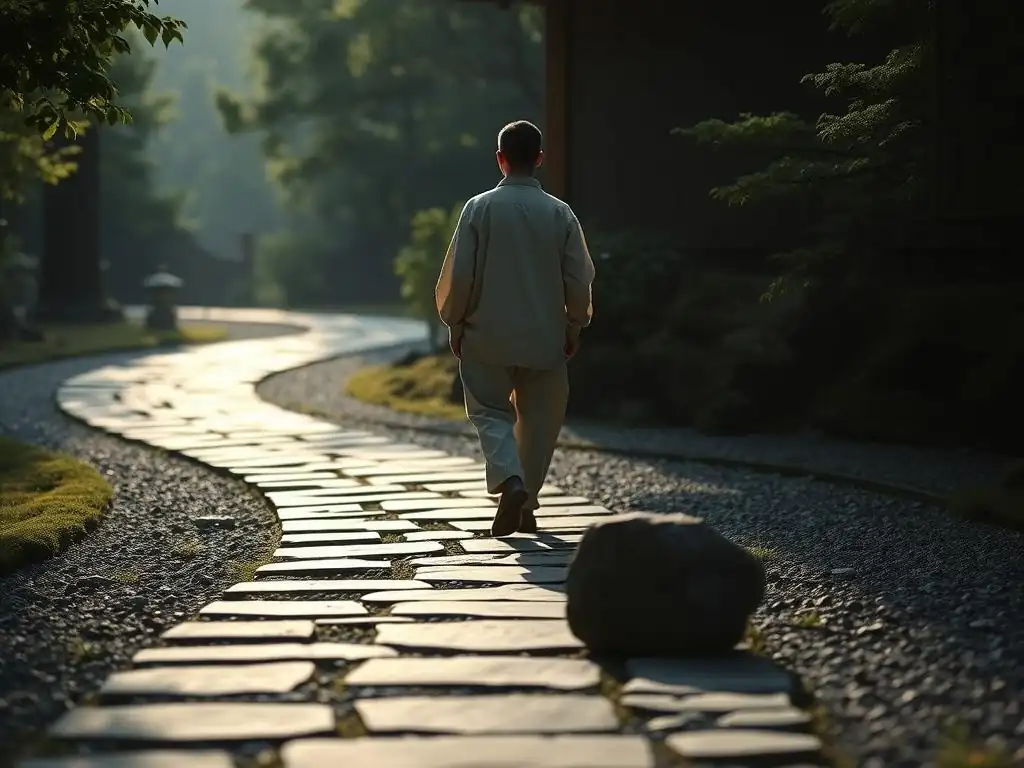
This simple image encapsulates the essence of mindful walking—a practice that connects us deeply to both ourselves and the world around us.
Now, consider your own life. How might incorporating even five minutes of mindful walking into your daily routine shift your perspective? What anxieties might melt away with each deliberate step? I invite you to experiment, to step outside (or even just to your doorway), and to experience the transformative power of presence firsthand. Let the rhythm of your breath and the feel of the ground beneath your feet guide you towards a calmer, more centered you. The journey begins with a single, mindful step.
Unlock Your Inner Peace: Walk Your Way to Mindfulness
Thanks for taking the time to explore the power of mindful walking with us! We hope you gained valuable insights into how this simple practice can transform your daily life. Ready to step into a more present and peaceful you?
- Embrace the mindful walk: Dedicate just 10 minutes today to a mindful stroll, focusing on your breath and the sensations in your body. Notice the details around you without judgment. This is your primary step to experiencing the benefits.
- Share your experience: Tell us about your mindful walk! What did you notice? What surprised you? We'd love to hear your reflections in the comments below.
- Create your mindful walking ritual: Consider adding this practice to your daily routine – perhaps during your lunch break, before bed, or as part of your commute. Experiment to find what works best for you.
What small step will you take today to cultivate more presence in your life?