
The Surprising Physical Health Benefits Linked to TM


Welcome to Mind Care Guide, a space dedicated to nurturing your mental well-being.
Feeling the weight of stress and its impact on your body? Discover the surprising connection between inner peace and physical health. This article delves into the TM meditation physical health benefits, revealing how this ancient practice can unlock a healthier, more balanced you. Curious to learn more about how calming your mind can revitalize your body? Let's explore!
- The Surprising Physical Health Benefits Linked to Transcendental Meditation: A Mind-Body Harmony Guide
- Deep Dive: TM Meditation and its Impact on Physical Well-being
- TM Meditation's Positive Effects on Cardiovascular Health
- TM Meditation and the Endocrine System: Balancing Hormones for Better Physical Health
- TM Meditation's Role in Pain Management and Physical Recovery
- The Science Behind TM's Physical Health Advantages
- Integrating TM into Your Life for Optimal Physical Wellness
- Conclusion: TM Meditation - A Powerful Tool for Enhanced Physical and Mental Health
-
Frequently Asked Questions
- What exactly is TM meditation, and how does it differ from other forms of meditation?
- What are the most significant physical health benefits associated with practicing TM meditation?
- How does TM meditation impact stress levels, and what is the mechanism behind this effect?
- How often should someone practice TM meditation to experience noticeable physical health improvements?
- Are there any potential risks or side effects associated with practicing TM meditation?
- Final Reflection: The Body's Silent Symphony: Unlocking TM's Physical Potential
- Unlock Your Body's Potential: Discover the TM Advantage
The Surprising Physical Health Benefits Linked to Transcendental Meditation: A Mind-Body Harmony Guide
Transcendental Meditation (TM): More Than Just Mental Calm
Transcendental Meditation, often simply called TM, is a widely practiced technique frequently associated with stress reduction, finding inner peace, and achieving mental clarity. Many people initially explore TM seeking respite from the pressures of daily life or to quiet an overactive mind. While these mental benefits are significant and well-documented, the practice's impact extends far more profoundly into the realm of physical wellness than is commonly understood.
Decades of scientific research, spanning hundreds of studies conducted at independent institutions worldwide, have consistently revealed tangible physiological changes and TM meditation physical health benefits. These findings position TM not merely as a psychological tool but as a powerful, evidence-based intervention capable of positively influencing various bodily systems, making it a valuable component of a holistic health strategy.
Why Explore the Physical Benefits of TM?
There is a growing recognition within the scientific and medical communities of the intricate and inseparable link between the mind and body. This understanding forms the basis of mind-body medicine, which explores how thoughts, emotions, beliefs, and spiritual attitudes can affect physical health. As interest in non-pharmacological and complementary approaches to health management increases, practices like meditation are gaining prominence.
Exploring the physical health benefits of TM meditation is particularly relevant because of the substantial body of rigorous research specifically focused on its physiological effects. Unlike some other meditative techniques, TM has been the subject of extensive scientific scrutiny regarding its impact on quantifiable physical markers and health outcomes, providing a strong foundation for understanding its role in enhancing overall well-being beyond just mental states.
Deep Dive: TM Meditation and its Impact on Physical Well-being
Understanding TM Meditation: A Mantra-Based Practice for Physical and Mental Health
Transcendental Meditation is a specific, standardized technique that involves using a mantra – a sound or word – given by a certified teacher. The practice is performed for 15-20 minutes twice daily, typically while sitting comfortably with eyes closed. The core instruction is not to concentrate on the mantra, but to use it effortlessly, allowing the mind to settle down to quieter levels of thought and ultimately transcend the thinking process altogether.
This unique approach is designed to provide a state of deep rest and relaxation, often described as being significantly deeper than ordinary sleep. While the subjective experience during TM can vary, the physiological effects are remarkably consistent across practitioners. This profound rest state is believed to activate the body's innate healing and self-repair mechanisms, contributing directly to both improved mental resilience and observable physical health benefits of TM.
How TM Differs from Other Meditation Techniques: Effortless Transcendence vs. Focused Attention
Many popular meditation techniques, such as mindfulness or concentration practices, involve focusing attention on a specific object, like the breath, bodily sensations, or a visual point. This requires a degree of effort to maintain focus and gently redirect the mind when it wanders. While highly beneficial, these techniques operate differently from TM.
TM's defining characteristic is its effortless nature, aiming for "transcendence" – a state beyond active thought. The technique utilizes the natural tendency of the mind to seek greater charm, allowing it to settle spontaneously to a state of restful alertness. Proponents and researchers suggest that this unique effortless path to deep rest is particularly effective in activating the parasympathetic nervous system and reducing stress hormones, which may explain some of the specific TM meditation physical health benefits observed in research that are distinct from or more pronounced than those seen with other types of meditation.
TM Meditation's Positive Effects on Cardiovascular Health
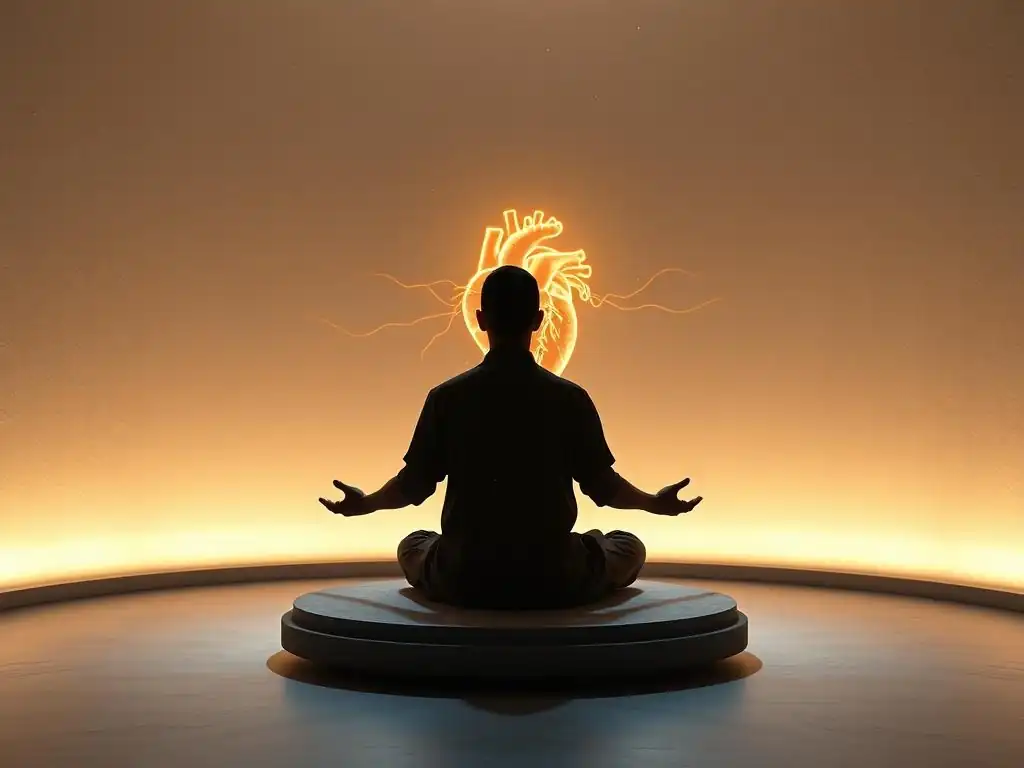
Lowering Blood Pressure with TM: A Natural Approach to Hypertension Management
High blood pressure, or hypertension, is a major risk factor for heart disease and stroke. Research has consistently shown that regular practice of Transcendental Meditation can lead to significant reductions in blood pressure. For instance, meta-analyses combining data from multiple studies have reported average reductions of several millimeters of mercury (mmHg) in both systolic and diastolic blood pressure among hypertensive individuals practicing TM, comparable in some cases to the effects of diet or exercise interventions.
The American Heart Association has even noted TM as the only meditation technique shown to lower blood pressure, based on available research at the time of their scientific statement. This effect is largely attributed to TM's profound ability to reduce stress and activate the body's relaxation response, counteracting the constriction of blood vessels often caused by chronic stress and contributing substantially to the TM meditation physical health benefits for cardiovascular health.
Reducing the Risk of Atherosclerosis: The Connection Between TM and Arterial Health
Atherosclerosis, the buildup of plaque in the arteries, is a progressive disease underlying many cardiovascular problems. Chronic stress is known to contribute to this process. Studies have investigated TM's impact on arterial health, particularly in populations at high risk, such as African Americans with hypertension.
One notable study published in stroke, for example, found that participants practicing TM showed a slower progression of atherosclerosis in their carotid arteries over several years compared to control groups who received health education. Measures like carotid intima-media thickness (CIMT), an indicator of arterial wall thickness and plaque buildup, were significantly better in the TM group. This suggests that TM's stress-reducing effects and potential anti-inflammatory properties contribute to preserving arterial health, demonstrating a critical long-term TM meditation physical health benefit.
TM and Improved Heart Rate Variability: Exploring the Potential Protective Mechanisms
Heart Rate Variability (HRV) is a measure of the variation in time between heartbeats. It reflects the balance between the sympathetic (stress/activity) and parasympathetic (rest/digestion) branches of the autonomic nervous system. Higher HRV is generally considered a marker of good cardiovascular health and resilience to stress, while lower HRV is associated with increased risk of cardiac events and other health problems.
Research indicates that regular TM practice can lead to increased HRV. This suggests a favorable shift in autonomic balance towards greater parasympathetic dominance, promoting a state of rest and recovery in the cardiovascular system. This improved regulatory capacity of the heart, as indicated by higher HRV, is considered a protective mechanism and adds another layer to the significant TM meditation physical health benefits related to cardiac function and overall resilience.
TM Meditation and the Endocrine System: Balancing Hormones for Better Physical Health
Stress Reduction and Cortisol Levels: How TM Helps Regulate the Stress Hormone
Cortisol is the body's primary stress hormone, released by the adrenal glands. While essential for the "fight or flight" response, chronic elevation of cortisol due to ongoing stress can have widespread negative effects on physical health, including impaired immune function, weight gain, sleep disruption, and increased risk of chronic diseases.
Numerous studies have examined the impact of TM on cortisol levels. Findings consistently show that individuals who practice TM regularly tend to have lower baseline cortisol levels compared to non-meditators. Furthermore, TM practice has been shown to reduce the body's physiological response to stressful situations, including a blunted or faster recovery of cortisol levels after stress exposure. This effective regulation of the stress hormone is a fundamental mechanism underlying many TM meditation physical health benefits.
Improved Sleep Quality Through TM: Restoring the Body's Natural Rhythms
Sleep disturbances are a common problem, often exacerbated by stress, anxiety, and an inability to quiet the mind at night. Poor sleep quality has detrimental effects on physical health, impacting hormone regulation, metabolic function, immune defense, and recovery processes.
Transcendental Meditation's ability to induce a state of deep rest and significantly reduce stress has a direct positive impact on sleep patterns. Many individuals who begin practicing TM report substantial improvements in their sleep quality, including falling asleep more easily, sleeping more soundly, and feeling more rested upon waking. While specific sleep study data varies, the subjective reports of better sleep from TM practitioners are common and contribute meaningfully to the overall TM meditation physical health benefits by supporting the body's essential restorative processes.
TM and Reduced Insulin Resistance: Potential Benefits for Metabolic Health
Insulin resistance, a condition where the body's cells don't respond effectively to insulin, is a key factor in the development of type 2 diabetes, metabolic syndrome, and related health issues. Chronic stress and high cortisol levels are known contributors to insulin resistance.
Preliminary research suggests that TM practice may have a positive effect on metabolic markers, including insulin sensitivity. Studies involving individuals at risk for or diagnosed with metabolic syndrome have shown improvements in indicators such as fasting glucose and insulin levels in those practicing TM compared to control groups. While more extensive research is needed in this area, these findings suggest a potential TM meditation physical health benefit related to metabolic regulation and the management or prevention of conditions linked to insulin resistance.
TM Meditation's Role in Pain Management and Physical Recovery
TM for Chronic Pain Relief: A Non-Pharmacological Approach to Managing Discomfort
Chronic pain is a complex experience influenced not only by physical factors but also by stress, emotions, and psychological state. Stress and anxiety can amplify pain perception and increase muscle tension, creating a vicious cycle. Traditional pain management often relies heavily on medication, which may have side effects.
Transcendental Meditation offers a non-pharmacological complementary approach to managing chronic pain conditions such as lower back pain, migraines, and fibromyalgia. By promoting deep relaxation, reducing stress hormones, and potentially altering pain perception pathways in the brain, TM can help individuals cope better with discomfort. While it may not eliminate pain entirely, studies and patient reports suggest that regular practice can lead to reduced pain intensity, decreased reliance on pain medication for some, and improved functional capacity, contributing to the TM meditation physical health benefits for those living with chronic pain.
Accelerating Physical Recovery After Exercise or Injury: The Relaxing Effects of TM
Physical recovery, whether after strenuous exercise or a minor injury, is a process of repair and restoration that is most efficient when the body is in a state of rest. Stress and sympathetic nervous system activation can impede these restorative processes.
The state of deep rest achieved during TM is physiologically distinct from ordinary rest. Studies measuring metabolic rate and oxygen consumption during TM have shown levels lower than during sleep, indicating a profound state of physiological quietude. This deep rest facilitates the body's natural ability to repair tissues, reduce inflammation, and clear metabolic byproducts. Athletes incorporating TM into their routine have reported feeling more recovered between training sessions, and individuals recovering from minor physical stress may find TM supports a faster return to baseline function, adding another dimension to the TM meditation physical health benefits.
TM and Inflammation Reduction: Exploring the Body's Natural Healing Response
Chronic low-grade inflammation is increasingly recognized as a key contributor to numerous chronic diseases, including cardiovascular disease, diabetes, and neurodegenerative disorders. Stress is a known trigger and perpetuator of inflammation in the body.
Research has explored the potential of TM to modulate the inflammatory response. Studies have shown that regular TM practice can be associated with reduced levels of inflammatory markers in the blood, such as C-reactive protein (CRP), a widely used indicator of inflammation. By reducing stress and promoting a state of physiological balance, TM appears to help dampen the body's inflammatory pathways. This anti-inflammatory effect is considered a significant mechanism contributing to the broad spectrum of TM meditation physical health benefits.
The Science Behind TM's Physical Health Advantages

The Relaxation Response and its Physiological Effects: A Key Mechanism of TM
Dr. Herbert Benson of Harvard Medical School identified the "relaxation response" as a physiological state opposite to the stress-induced "fight or flight" response. This state is characterized by decreased heart rate, lower blood pressure, slower breathing, reduced metabolic rate, and muscle relaxation. Eliciting this response counteracts the harmful effects of chronic stress on the body.
Transcendental Meditation is highly effective and consistent in eliciting this deep relaxation response. The effortless nature of the technique allows the nervous system to settle into a profound state of rest, activating the parasympathetic nervous system. The regular, twice-daily experience of this deep physiological state during TM practice is considered a primary mechanism through which many of the observed TM meditation physical health benefits are achieved, essentially giving the body regular opportunities to repair and reset.
Brainwave Activity and TM: Promoting Coherence for Physical Harmony
Brain activity can be measured using electroencephalography (EEG), which detects electrical patterns known as brainwaves (e.g., Delta, Theta, Alpha, Beta, Gamma). Different states of consciousness are associated with different brainwave patterns. During ordinary waking activity, Beta waves are dominant.
During Transcendental Meditation, there is often a marked increase in Alpha brainwave activity, particularly in the frontal areas of the brain, associated with relaxed alertness. As the practice deepens, Theta waves, linked to deep relaxation and access to unconscious material, may also increase.
Furthermore, research has highlighted increased EEG coherence during TM – a state where brainwaves in different areas of the brain become more synchronized. This increased brain coherence is hypothesized to reflect more integrated brain function, which in turn can positively influence the complex physiological processes throughout the body, contributing to the observed TM meditation physical health benefits.
TM and the Autonomic Nervous System: Shifting from "Fight or Flight" to "Rest and Digest"
The Autonomic Nervous System (ANS) controls involuntary bodily functions like heart rate, digestion, and breathing. It has two main branches: the sympathetic nervous system (responsible for the "fight or flight" response) and the parasympathetic nervous system (responsible for the "rest and digest" state). Chronic stress keeps the sympathetic system in overdrive, suppressing restorative functions.
Transcendental Meditation practice has been shown to significantly shift the balance of the ANS towards increased parasympathetic activity and decreased sympathetic activity. This shift is measured through various physiological indicators like heart rate variability, skin conductance, and respiration rate. By regularly promoting this "rest and digest" state, TM allows the body's natural restorative and self-regulatory processes to function optimally, directly underpinning the wide array of TM meditation physical health benefits observed in research.
Integrating TM into Your Life for Optimal Physical Wellness
Getting Started with TM: Finding a Qualified Teacher and Learning the Technique
Transcendental Meditation is a specific, systematic technique that must be learned from a certified teacher. It is not taught from books, apps, or online videos, as the personal instruction and selection of a suitable mantra are considered essential for practicing the technique correctly and effortlessly. Finding a qualified teacher ensures you receive the proper guidance and support.
The standard course involves a few structured sessions over several consecutive days, followed by check-ups to ensure the technique is being practiced correctly. This personalized approach is crucial for gaining the full experience of transcending and thereby unlocking the potential TM meditation physical health benefits. Seek out accredited TM centers or teachers.
Creating a Consistent TM Practice: Tips for Maintaining Regularity
To reap the significant and cumulative TM meditation physical health benefits, consistency is paramount. The recommended practice is 15-20 minutes twice daily. Establishing a regular routine makes it easier to maintain.
- Schedule it: Treat your TM sessions like important appointments. Try practicing before breakfast and again in the late afternoon or early evening, before dinner.
- Find a quiet spot: Choose a comfortable, quiet place where you won't be interrupted.
- Be effortless: Remember the technique is easy. Don't try to "do" it right; just follow the simple procedure learned from your teacher. Thoughts will come and go, and that's perfectly fine.
- Be patient: The benefits accrue over time. Don't get discouraged if some sessions feel deeper or more restful than others. Every session provides valuable rest.
Combining TM with Other Healthy Habits: A Holistic Approach to Well-being
While Transcendental Meditation offers profound TM meditation physical health benefits on its own, its positive effects are often amplified when integrated into a broader healthy lifestyle. TM works synergistically with other health-promoting behaviors.
For example, combining regular TM practice with a balanced diet rich in whole foods, consistent physical exercise, adequate sleep (which TM helps improve), and maintaining strong social connections creates a powerful foundation for holistic well-being. This integrated approach addresses health from multiple angles – mental, emotional, and physical – maximizing your potential for vitality and resilience and enhancing the overall physical health benefits of TM meditation.
Conclusion: TM Meditation - A Powerful Tool for Enhanced Physical and Mental Health
Recap of the Key Physical Health Benefits of TM
Transcendental Meditation, while often sought for its mental benefits, offers a compelling array of TM meditation physical health benefits supported by extensive research. We've explored how consistent TM practice can significantly impact the body, contributing to improved cardiovascular health through lower blood pressure, reduced atherosclerosis risk, and enhanced heart rate variability.
Furthermore, TM positively influences the endocrine system by lowering stress hormones like cortisol and promoting better sleep quality. There's also promising evidence suggesting benefits for metabolic health, pain management, physical recovery, and the reduction of inflammation. These diverse physical health benefits of TM meditation stem from its unique ability to induce a state of deep rest, activate the body's parasympathetic nervous system, and counter the detrimental effects of chronic stress.
The Future of TM and Holistic Wellness: Expanding Research and Applications
Research into the physiological effects of Transcendental Meditation continues to expand, exploring its potential applications in managing various health conditions and improving outcomes in diverse populations. As the medical community increasingly recognizes the critical interplay between mind and body, practices like TM are likely to play a larger role in preventative health strategies and integrated healthcare models.
The evidence strongly suggests that TM is far more than just a technique for relaxation; it is a validated tool with significant TM meditation physical health benefits. By offering a simple, natural, and effortless way to access profound rest and activate the body's innate healing capacities, TM holds promise as a valuable component in the pursuit of enhanced physical vitality and overall holistic wellness in the years to come.
Frequently Asked Questions
What exactly is TM meditation, and how does it differ from other forms of meditation?
TM, or Transcendental Meditation, is a specific technique involving the use of a mantra to quiet the mind and promote relaxation. It's different from other meditation styles because it doesn't require focus or concentration; rather, it encourages effortless transcendence.
What are the most significant physical health benefits associated with practicing TM meditation?
Studies suggest TM meditation is linked to reduced blood pressure, improved cardiovascular health, and decreased levels of stress hormones like cortisol. These benefits can contribute to overall physical well-being.
How does TM meditation impact stress levels, and what is the mechanism behind this effect?
TM meditation helps regulate the nervous system, promoting a state of calm and reducing the body's stress response. This is achieved through quieting the mind and decreasing the production of stress hormones.
How often should someone practice TM meditation to experience noticeable physical health improvements?
Consistency is key; practicing TM meditation twice a day for 20 minutes is generally recommended to experience the most significant physical health benefits. This regular practice allows for sustained stress reduction.
Are there any potential risks or side effects associated with practicing TM meditation?
TM meditation is generally considered safe, but individuals with pre-existing mental health conditions should consult with a healthcare professional before starting. Occasionally, some may initially experience increased awareness of thoughts and feelings.
Final Reflection: The Body's Silent Symphony: Unlocking TM's Physical Potential
The profound impact of Transcendental Meditation (TM) on physical health is no longer a fringe concept; it's a growing body of evidence demonstrating a tangible link between inner peace and outer well-being. This article has explored the surprising ways TM can positively influence everything from blood pressure and heart health to sleep quality and stress reduction, offering a compelling case for its inclusion in holistic wellness strategies. The research presented highlights a powerful truth: our mental and physical states are inextricably intertwined, and nurturing one inevitably benefits the other.
The journey of understanding TM's influence on the body has been a fascinating one, revealing the intricate dance between mind and matter. It's a journey that continues to unfold, with ongoing research constantly uncovering new facets of this ancient practice's modern applications. The potential for TM to contribute to preventative healthcare and improve overall quality of life is immense. As the Dalai Lama once wisely stated, The time is now to shift from a purely materialistic view of life to one that includes the development of inner peace and compassion.
This sentiment perfectly encapsulates the essence of TM's holistic approach to well-being.
Consider, for a moment, the power you hold within yourself to cultivate a healthier, more vibrant life. This article isn't just about the science of TM; it's about empowering you to take control of your well-being. Explore the possibility of incorporating TM into your daily routine. Investigate the resources available to learn this simple yet profound technique. Embrace the opportunity to listen to your body's silent symphony and discover the transformative potential that lies within. The journey to a healthier you begins with a single, mindful breath.
Unlock Your Body's Potential: Discover the TM Advantage
Thanks for exploring the surprising connection between Transcendental Meditation (TM) and physical well-being! You've now gained valuable insights into how this simple practice can significantly impact your health. Ready to take the next step?
- Experience the TM difference firsthand: Find a certified TM instructor near you and begin your journey towards improved health and well-being. This is your opportunity to discover a powerful tool for a healthier, happier you.
- Share your thoughts: Let us know in the comments below what resonates most with you from this article. What aspect of TM's physical benefits are you most excited to explore?
- Dive deeper into the research: Explore reputable sources online to learn more about the scientific studies supporting TM's impact on various health conditions.
Are you ready to unlock the transformative power of TM for your physical health?