
Processing Complex Trauma Through the Power of Art


Welcome.
Do you feel trapped by the invisible chains of past trauma? At Mind Care Guide, we understand the complex journey toward healing. This space is dedicated to providing compassionate guidance and practical resources to nurture your mental well-being. In this article, we delve into Art Therapy for Trauma Processing, exploring how creative expression can unlock pathways to understanding and recovery. Curious about how paint, clay, and other mediums can help you reclaim your story? Let's begin.
Healing from Complex Trauma Through Art Therapy
Complex trauma, stemming from repeated and prolonged exposure to traumatic events, presents unique challenges in healing. Traditional talk therapies can be beneficial, but for many, accessing and articulating deeply buried pain through words alone is difficult or impossible. This is where creative modalities, particularly art therapy, offer a powerful pathway for processing complex trauma. Art therapy provides a non-verbal language, allowing individuals to express, explore, and integrate traumatic experiences in a safe and contained manner. It facilitates the processing of trauma through art, offering a unique avenue for healing and recovery.
- Understanding Complex Trauma
- Art Therapy as a Therapeutic Modality
- Art Therapy Techniques for Complex Trauma
- Specialized Art Therapy Approaches
- Art Therapy for Specific Complex Trauma Symptoms
- Case Examples: Illustrating Art Therapy's Impact
- Finding a Qualified Art Therapist
- Self-Care and Support During Art Therapy
- Conclusion: Art as a Pathway to Healing
-
Frequently Asked Questions
- How can art therapy specifically help in processing trauma?
- What types of art activities are commonly used in art therapy for trauma?
- Is art therapy a substitute for traditional talk therapy when dealing with trauma?
- How does art therapy help individuals regain a sense of control after experiencing trauma?
- What are the potential benefits of art therapy for individuals struggling with complex trauma?
- Final Reflection: The Healing Canvas: Art's Enduring Power in Trauma Recovery
- Unleash Your Inner Artist: Heal and Grow
Understanding Complex Trauma
Understanding the nature of complex trauma is the first step toward effective intervention. Unlike single-incident trauma, complex trauma often occurs within interpersonal relationships, starting early in life, and can profoundly shape an individual's development, sense of self, and ability to connect with others. These repeated experiences can lead to pervasive difficulties across multiple areas of functioning.
Defining Complex Trauma: Repeated and Prolonged Traumatic Experiences
Complex trauma refers to the impact of exposure to multiple traumatic events, often of an invasive, interpersonal nature, and frequently occurring during critical developmental periods. Examples include chronic child abuse, neglect, domestic violence, war, or prolonged captivity. The term "complex" highlights the layered and often long-lasting effects these experiences have on an individual's psychological, emotional, and physiological systems. It's not just about the events themselves, but the cumulative and relational context in which they occur.
Individuals who have experienced complex trauma often face challenges with emotional regulation, dissociation, relationship difficulties, and a negative self-concept. The consistent threat or lack of safety in their environment fundamentally alters their view of the world and their place within it. Processing complex trauma requires addressing these deep-seated impacts rather than just focusing on isolated traumatic memories.
The Impact of Complex Trauma on the Brain
Complex trauma significantly alters brain development and function, particularly areas involved in threat perception, emotional regulation, and memory. The amygdala, responsible for detecting threats, can become hyperactive, leading to a state of constant alert. Simultaneously, the prefrontal cortex, involved in executive functions like planning and decision-making, may show reduced activity, impairing the ability to manage stress and regulate behavior.
Furthermore, the hippocampus, crucial for forming and retrieving explicit memories, can be affected, leading to fragmented or disorganized memories of traumatic events. Studies, such as those cited in research on the neurobiology of trauma, suggest measurable differences in brain structure and activity in individuals with complex trauma histories compared to those without. This neurobiological impact underscores why traditional verbal processing can be challenging; the trauma is often encoded in non-verbal, sensory, and emotional forms. Art therapy offers a way to access and work with these non-verbal, body-based memories.
Psychological and Emotional Effects of Complex Trauma
The psychological and emotional fallout from complex trauma is extensive and varied. Individuals may struggle with chronic feelings of shame, guilt, worthlessness, and hopelessness. Emotional dysregulation is common, manifesting as intense mood swings, difficulty managing anger, or feeling numb and disconnected. Dissociation, a disconnection from one's thoughts, feelings, memories, or sense of self, is a frequent coping mechanism.
Interpersonal relationships are often fraught with difficulty due to issues with trust, boundaries, and fear of intimacy or abandonment. Mental health conditions such as depression, anxiety disorders, and substance use disorders are also highly prevalent among those with complex trauma histories. A study published in the Journal of Traumatic Stress found that individuals with complex trauma were significantly more likely to experience multiple co-occurring mental health conditions compared to those with single-incident trauma. These pervasive effects highlight the need for comprehensive and multi-faceted therapeutic approaches like art therapy for trauma processing.
Art Therapy as a Therapeutic Modality
Art therapy is a form of psychotherapy that uses creative processes and the resulting artwork to explore difficult feelings, enhance self-awareness, reduce anxiety, and process traumatic experiences. It's not about artistic skill; it's about the therapeutic journey facilitated by creating art.
Principles of Art Therapy
The core principles of art therapy revolve around the belief that the creative process is healing and life-enhancing. It provides a safe space for individuals to express thoughts and feelings that may be too difficult or painful to verbalize. The artwork serves as a tangible representation of internal experiences, allowing for reflection, insight, and communication with the therapist. Key principles include:
- Non-verbal expression: Art allows for expression beyond words, accessing deeper levels of the psyche.
- Symbolic representation: Images can symbolize complex emotions, relationships, and traumatic events.
- Tangible product: The artwork is a physical object that can be reflected upon and discussed.
- Therapeutic relationship: The relationship with the art therapist is crucial for safety, containment, and processing.
A typical art therapy session might last between 50-90 minutes, with frequency often ranging from weekly to bi-weekly, depending on the individual's needs and the stage of processing complex trauma.
Art Therapy Techniques for Trauma
Art therapists utilize a wide range of techniques tailored to the individual's needs and capacity for processing. These techniques can range from structured directives to spontaneous free expression. For trauma work, techniques often focus on grounding, containment, emotional expression, narrative building, and integration. Examples include creating a "safe place" image, drawing feelings associated with a memory, building a container to hold difficult emotions, or creating a visual timeline of one's life.
The choice of materials also plays a significant role; materials like clay or paint can evoke different sensory experiences and emotional responses compared to pencils or markers. A meta-analysis of studies on art therapy's effectiveness in trauma populations indicated positive outcomes across various techniques, with approximately a 30-50% reduction in trauma-related symptoms reported in many studies. These techniques are specifically designed to support the gradual and safe processing of complex trauma experiences.
Benefits of Art Therapy in Trauma Recovery
Art therapy offers numerous benefits for individuals recovering from complex trauma. It provides a sense of control and agency, which is often lost in traumatic experiences. By externalizing traumatic memories and emotions through art, individuals can gain distance and perspective, making these experiences less overwhelming.
- Benefits include:
- Reduced anxiety and stress
- Improved emotional regulation
- Increased self-awareness and self-compassion
- Enhanced ability to tolerate difficult feelings
- Integration of fragmented memories
- Improved communication skills
- Strengthened sense of self
Studies have shown that art therapy can lead to significant reductions in symptoms of PTSD, depression, and anxiety among trauma survivors. For instance, a pilot study with veterans showed an average reduction of 25% in PTSD symptom severity after a 10-week art therapy program focused on processing trauma through art.
Art Therapy Techniques for Complex Trauma
Specific art therapy techniques are particularly effective in addressing the unique challenges presented by complex trauma. These methods help individuals navigate dissociation, emotional dysregulation, fragmented narratives, and difficulty with embodiment.
Drawing: Exploring Emotions and Experiences
Drawing is a fundamental art therapy technique that allows for direct and immediate expression. For individuals with complex trauma, drawing can be used to externalize overwhelming emotions like fear, anger, or sadness that feel too intense to verbalize. Abstract drawing can represent internal states without the need for literal depiction, reducing pressure and increasing safety. Drawing a "body map" can help individuals reconnect with physical sensations and areas of tension related to trauma, aiding in processing trauma through art in a somatic way.
Drawing can also be used to depict relationships, family dynamics, or specific traumatic scenes from a safe distance. The act of putting the image onto paper allows the individual and therapist to observe, discuss, and process the experience from an external viewpoint. For example, someone struggling with childhood neglect might draw their childhood home, not necessarily realistically, but focusing on the feelings associated with different rooms or spaces, perhaps using color or line to represent emotional states.
Clay Modeling: Fostering Embodiment and Grounding
Working with clay or other tactile materials is highly beneficial for individuals with complex trauma, particularly those who experience dissociation or feel disconnected from their bodies. The sensory experience of touching, shaping, and manipulating clay can be deeply grounding, bringing awareness back to the present moment and the physical self. This is crucial for processing trauma through art when the trauma has led to a disconnection between mind and body.
Clay can be used to create containers to hold difficult emotions, sculpt representations of parts of the self, or physically embody feelings that are hard to name. For someone who experienced physical abuse, the act of molding clay might allow them to explore feelings of vulnerability or strength in a non-threatening way. The tangible nature of the clay object provides a concrete anchor in reality, counteracting feelings of unreality often associated with dissociation.
Collage: Integrating Fragmented Narratives
Complex trauma often results in fragmented memories and a disjointed sense of self or life narrative. Collage techniques are particularly effective for helping individuals piece together these fragments into a more coherent story. By selecting and arranging images and text from magazines, newspapers, or other sources, individuals can create visual narratives that represent their experiences, feelings, and identity.
Collage allows for symbolic storytelling, where different images represent different aspects of the trauma, coping mechanisms, or hopes for the future. The process of choosing, cutting, and pasting provides a sense of control and agency over the narrative. For instance, a survivor of multiple traumas might create a collage representing different periods of their life, using contrasting images to depict times of safety versus times of danger, helping them to see patterns and integrate disparate experiences during the art therapy trauma processing.
Journaling and Art: Combining Visual and Written Expression
Combining visual art with written journaling offers a powerful way to bridge non-verbal and verbal processing. After creating a piece of art related to a feeling or memory, individuals can write about the experience of making the art, the thoughts and feelings that arose, or reflections on the finished piece. This dual approach can deepen insight and provide a more complete picture of the internal landscape.
The journal entry can serve as a verbal anchor for the non-verbal art expression. It allows for the articulation of thoughts that may have been just below the surface during the art-making process. For someone processing a traumatic event, they might draw the feeling associated with the event and then write about the physical sensations or specific thoughts the drawing evokes. This combination supports comprehensive art therapy trauma processing by engaging both hemispheres of the brain.
Specialized Art Therapy Approaches

Beyond general techniques, several specialized art therapy approaches are particularly relevant for addressing the complexities of trauma. These models often integrate principles from other trauma-informed modalities.
Trauma-Informed Art Therapy: Safety and Empowerment
Trauma-informed art therapy prioritizes creating a safe, predictable, and empowering therapeutic environment. It recognizes the pervasive impact of trauma and avoids re-traumatization. This approach emphasizes choice, collaboration, trustworthiness, and empowerment throughout the art-making process. The art therapist is highly attuned to the individual's window of tolerance, ensuring that exploring difficult material happens gradually and only when the individual feels ready and resourced.
Safety protocols might include establishing clear boundaries around what is created or discussed, allowing the individual to choose their materials and themes, and providing grounding techniques before, during, and after sessions. The focus is less on interpreting the art and more on the individual's experience of creating it and the feelings that arise. A key element is restoring a sense of control, which is often compromised by trauma. This approach ensures that processing trauma through art is a healing, not a re-wounding, experience.
Sensorimotor Art Therapy: Addressing Trauma in the Body
Sensorimotor art therapy integrates principles from sensorimotor psychotherapy, focusing on how trauma is held in the body and accessed through physical sensations and movements. This approach uses art materials and directives that encourage body awareness, movement, and the expression of physical impulses related to trauma. It helps individuals track physical sensations while creating art, linking bodily experiences to emotions and memories.
Techniques might involve using large paper and movement to express energy related to a traumatic event, or using materials like clay or wire to sculpt bodily sensations or protective stances. The goal is to help individuals complete thwarted defensive responses (like fight or flight) that were interrupted during the traumatic event, which are often held as chronic tension or dysregulation in the body. By engaging the body in the art-making process, sensorimotor art therapy facilitates the processing of trauma through art on a physiological level.
Mindfulness-Based Art Therapy: Cultivating Present Moment Awareness
Mindfulness-based art therapy combines mindfulness practices with art creation to help individuals cultivate present moment awareness, reduce reactivity to difficult thoughts and feelings, and increase self-compassion. This approach is particularly helpful for managing anxiety, flashbacks, and emotional overwhelm associated with complex trauma.
Practices might include mindful observation of art materials, mindful breathing while drawing, or creating art based on a guided meditation. The focus is on the process of creating without judgment, observing thoughts and feelings as they arise without getting swept away by them. This helps individuals develop greater tolerance for difficult internal states and enhances their ability to stay grounded while processing trauma through art. A small study on mindfulness-based art therapy for trauma survivors showed a significant decrease in anxiety and an increase in self-compassion scores after an 8-week program.
Attachment-Based Art Therapy: Repairing Relational Wounds
Complex trauma often occurs within the context of significant relationships (e.g., parent-child, partner). Attachment-based art therapy focuses on exploring and repairing the impact of relational trauma on an individual's ability to form secure attachments. The therapeutic relationship with the art therapist becomes a crucial vehicle for healing.
Art activities might involve creating images representing past or present relationships, exploring attachment patterns, or visualizing secure connections. The art serves as a medium through which attachment dynamics can be explored safely within the secure relationship with the therapist. This approach helps individuals understand how their relational history impacts their present, mourn past losses, and build capacity for healthier connections. For example, creating a series of images representing different relationship experiences can help identify patterns and process the emotional impact of relational wounds, facilitating the processing of trauma through art within a relational framework.
Art Therapy for Specific Complex Trauma Symptoms
Art therapy can be specifically tailored to address common symptoms experienced by individuals with complex trauma, providing targeted support for healing.
Art for Dissociation: Reconnecting with Self
Dissociation is a common coping mechanism in response to overwhelming trauma, leading to feelings of detachment from one's body, emotions, or reality. Art therapy can help individuals gently reconnect with themselves and the present moment. Using sensory-rich materials like clay, paint, or even natural objects can bring awareness back to the physical senses. Simple, repetitive art actions like scribbling, coloring within boundaries, or creating mandalas can be grounding and help anchor the individual in the present.
Creating a visual representation of "parts" of the self can also help integrate fragmented aspects of identity often associated with dissociation. The artwork provides a tangible representation of these internal experiences, making them feel less overwhelming and more accessible for processing. For instance, using different colors or shapes to represent different internal states can help someone map their internal world and begin to understand their dissociated parts, supporting the processing of trauma through art by fostering integration.
Art for Emotional Regulation: Managing Intense Feelings
Difficulty regulating intense emotions is a hallmark of complex trauma. Art therapy provides a safe outlet for expressing and exploring overwhelming feelings without judgment. Individuals can use art to externalize emotions, giving them form and color, which can make them feel less overwhelming and more manageable. Using dynamic materials like paint or pastels can facilitate the expression of strong emotions like anger or fear.
Techniques like creating "emotional weather maps" or "feeling monsters" can help individuals identify, name, and understand their emotional states. The art process itself can be regulating; the focus required for creation can be calming, and the act of completing a piece can provide a sense of accomplishment and containment. Learning to express intense feelings through art builds tolerance and capacity for managing them outside of therapy sessions, aiding in art therapy trauma processing.
Art for Anxiety: Promoting Calm and Safety
Chronic anxiety is a frequent companion to complex trauma. Art therapy can offer calming and grounding techniques to reduce anxiety symptoms and foster a sense of safety. Creating images of a "safe place" – real or imagined – is a common and effective technique. Focusing on the details of this safe space through drawing, painting, or collage can evoke feelings of calm and security.
Repetitive, rhythmic art activities like Zentangle, knitting with yarn, or creating patterns can be meditative and reduce anxious arousal. Using soothing colors and gentle materials can also contribute to a calming experience. The art space itself is designed to be a safe haven, and the consistent, predictable nature of art therapy sessions can help reduce hypervigilance and promote relaxation, supporting the processing of trauma through art in a non-threatening environment.
Art for Relational Trauma: Building Trust and Connection
Complex trauma often originates in relational contexts and profoundly impacts the ability to form healthy bonds. Art therapy within a secure therapeutic relationship can help heal relational wounds and build capacity for connection. Creating art with the therapist (collaborative art) or creating art about relationships can provide insight into relational patterns and dynamics.
Using art to explore boundaries, trust issues, and communication styles can be less confrontational than verbal discussion alone. For example, creating a sculptural piece representing boundaries or drawing a diagram of interpersonal space can make abstract concepts tangible. The therapeutic relationship built during art therapy, characterized by safety, empathy, and consistency, serves as a template for healthy connection, essential for processing trauma through art when relational trauma is present.
Case Examples: Illustrating Art Therapy's Impact
Real or approximated case examples demonstrate the transformative power of art therapy in processing complex trauma. These illustrations, while potentially composites for privacy, reflect common therapeutic journeys.
Case Example 1: Childhood Neglect and Emotional Expression
"Sarah," an adult in her late 30s, sought therapy for chronic depression and feelings of emptiness stemming from severe childhood emotional neglect. She struggled to identify or express her emotions verbally. In art therapy, initially, she created abstract pieces using dark, muted colors, often filling the entire page with dense scribbles, reflecting her internal chaos and lack of clear emotional understanding.
Over several months of processing trauma through art, the therapist introduced directives encouraging the use of color and varying pressure. Sarah began to experiment, using brighter colors to represent fleeting moments of peace and sharp lines for feelings of frustration. A breakthrough occurred when she used vibrant reds and oranges to depict a swirling vortex, identifying it as "unseen anger."
This externalization allowed her to verbalize feelings she had suppressed for decades. By creating and discussing these visual representations, Sarah gradually developed an emotional vocabulary, leading to a significant reduction in depressive symptoms and a greater sense of internal coherence.
Case Example 2: Domestic Violence and Empowerment
"Maria," a woman in her early 50s, entered art therapy after leaving a long-term abusive relationship. She felt powerless, isolated, and struggled with flashbacks and hypervigilance. Initially, her art was small, contained, and often depicted cages or figures hidden away. The art therapy trauma processing focused on safety, grounding, and gradually reclaiming personal space and power.
The therapist introduced materials like clay and encouraged Maria to create something strong or protective. Maria sculpted a powerful, rooted figure, which she identified as representing her inner strength she hadn't realized she possessed. Later, she created a large, vibrant collage titled "My Space," filling it with images of things that brought her joy, safety, and independence.
This visual affirmation reinforced her autonomy and resilience. Through the process of creating these empowering images, Maria reported a decrease in flashbacks, an increased ability to set boundaries, and a greater sense of self-efficacy, demonstrating the role of art in reclaiming power after trauma.
Case Example 3: Group Art Therapy for Military Veterans
A group of military veterans experiencing complex trauma from combat exposure participated in a 12-week art therapy program. Many struggled with isolation, hyperarousal, and difficulty trusting others. The group format provided a sense of camaraderie, and the art offered a non-verbal way to connect and share experiences that were too difficult to articulate verbally.
Activities included creating masks to represent how they presented themselves versus how they felt inside, collaborative murals depicting their shared experiences, and individual pieces exploring themes of loss and resilience. One veteran who had been largely non-verbal in previous therapies created a series of small, detailed sculptures representing different moments of intense stress during deployment.
Sharing these sculptures with the group allowed him to communicate his experiences indirectly and feel understood. The group setting, combined with the power of processing trauma through art together, led to reported reductions in isolation, improved sleep, and a greater sense of connection among participants, with approximately 60% reporting improved social functioning according to program feedback.
Finding a Qualified Art Therapist
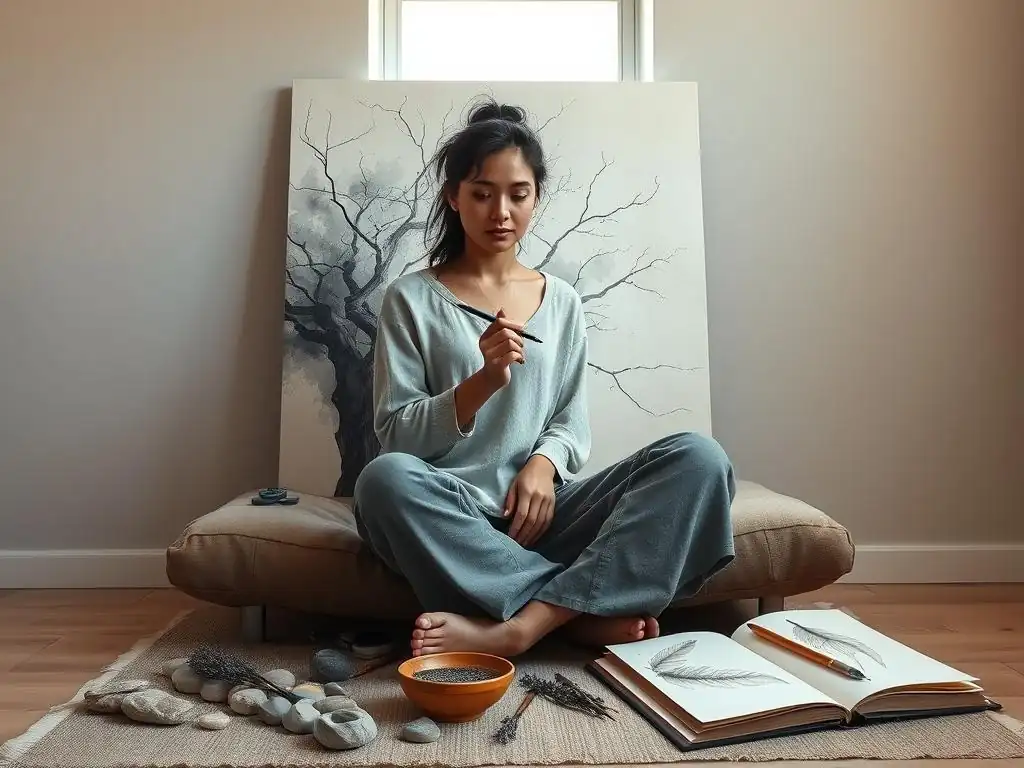
Choosing the right art therapist is crucial for effective processing of complex trauma. Not all therapists who use art are art therapists, and specific training in trauma-informed care is essential.
Credentials and Experience to Consider
A qualified art therapist typically holds a Master's degree or higher in Art Therapy from an accredited program. Look for credentials such as ATR (Registered Art Therapist) or ATR-BC (Board Certified Art Therapist) from the Art Therapy Credentials Board (ATCB). Board certification indicates a higher level of training and experience. Experience working specifically with trauma survivors, particularly those with complex trauma histories, is also vital.
It is important to inquire about their training in trauma-informed care models, such as Trauma-Focused Cognitive Behavioral Therapy (TF-CBT), Sensorimotor Psychotherapy, or Somatic Experiencing, as these principles often inform effective art therapy for trauma processing. A therapist who understands the nuances of complex trauma will be better equipped to create a safe and effective therapeutic environment.
Questions to Ask a Potential Therapist
When interviewing potential art therapists, prepare questions to assess their suitability for your specific needs related to processing complex trauma.
- What is your training and experience working with complex trauma?
- Are you a registered or board-certified art therapist?
- What is your approach to trauma-informed care?
- How do you ensure safety and containment in art therapy sessions?
- What types of art materials and techniques do you typically use?
- How do you integrate verbal processing with the art-making?
- What is your understanding of dissociation or other specific symptoms you experience?
- How long do you typically work with clients with complex trauma?
Asking these questions can help you determine if their approach aligns with your goals for art therapy trauma processing and if you feel a sense of safety and connection with them.
Resources for Locating Art Therapists
Several resources can help you find a qualified art therapist specializing in trauma.
- The American Art Therapy Association (AATA) website has a "Find an Art Therapist" directory.
- The Art Therapy Credentials Board (ATCB) website allows you to verify credentials and search for board-certified therapists.
- Psychology Today's therapist directory often lists art therapists and their areas of specialization.
- Local mental health clinics or hospitals may have art therapy programs.
When using online directories, filter your search by specialization in trauma, PTSD, or complex trauma. Reading therapist profiles carefully can provide insight into their specific expertise in art therapy trauma processing.
Self-Care and Support During Art Therapy
Engaging in art therapy for complex trauma can be intense. Prioritizing self-care and building a strong support system are essential components of the healing journey.
Creating a Safe and Supportive Space
Your physical environment and social connections play a significant role in supporting your therapy. Ensure you have a safe and comfortable space at home where you can process feelings that arise between sessions, perhaps even a dedicated area for personal art-making if that feels helpful. Minimize stressors in your life as much as possible during this time.
Building a supportive network of trusted friends, family members, or support groups is also invaluable. Sharing your experiences with understanding individuals can reduce feelings of isolation. Remember that healing from complex trauma is a marathon, not a sprint, and having a supportive environment makes the process more sustainable.
Grounding Techniques for Emotional Stability
Art therapy, especially when processing trauma through art, can sometimes bring up intense emotions or trigger dissociation. Having grounding techniques readily available is crucial for managing these moments and maintaining emotional stability.
- Examples of grounding techniques:
- Focusing on your senses: Name five things you can see, four things you can touch, three things you can hear, two things you can smell, and one thing you can taste.
- Deep breathing exercises: Focus on the sensation of breath entering and leaving your body.
- Physical movement: Gentle stretching, walking, or simply feeling your feet on the ground.
- Holding a comforting object: A smooth stone, a soft blanket, or a fidget toy.
- Mindful observation: Describe an object in detail (e.g., its color, texture, shape) without judgment.
Practice these techniques regularly, not just during moments of distress, so they become readily accessible when needed during or after art therapy sessions focused on processing complex trauma.
Integrating Art Therapy with Other Therapies
Art therapy is often most effective when integrated with other therapeutic modalities as part of a comprehensive treatment plan for complex trauma. Depending on your specific needs, combining art therapy trauma processing with approaches like Sensorimotor Psychotherapy, Internal Family Systems (IFS), Eye Movement Desensitization and Reprocessing (EMDR), or talk therapy can provide a multi-faceted approach to healing.
Discuss with your art therapist and other healthcare providers how different therapies can complement each other. For example, art therapy might help you access pre-verbal trauma memories, while a talk therapist helps you integrate insights verbally. EMDR might help process specific traumatic memories, while art therapy supports emotional regulation and self-expression throughout the process. A collaborative approach ensures all aspects of complex trauma are addressed.
Conclusion: Art as a Pathway to Healing
Processing complex trauma is a profound journey, and art therapy offers a unique and powerful pathway towards healing. By engaging in the creative process, individuals can access and express experiences that words cannot capture, providing a safe and contained space for emotional exploration, narrative building, and integration. From drawing and clay modeling to specialized trauma-informed approaches, art therapy techniques support individuals in navigating dissociation, regulating intense emotions, and building a stronger sense of self and connection.
Through the power of art, survivors can reclaim their voice, rebuild a sense of agency, and transform their relationship with their past. Finding a qualified art therapist and integrating self-care and support are vital steps in this process. Art therapy trauma processing is not just about making art; it is about using creativity as a tool for profound psychological repair and discovering resilience in the face of overwhelming adversity.
Frequently Asked Questions
How can art therapy specifically help in processing trauma?
Art therapy provides a safe and non-verbal outlet to express difficult emotions and memories associated with trauma. It allows individuals to bypass the cognitive processing that can sometimes be blocked by trauma, enabling deeper exploration and healing. This process can foster emotional regulation.
What types of art activities are commonly used in art therapy for trauma?
Common activities include drawing, painting, sculpting, and collage. The specific activity is chosen based on the individual's needs and preferences. The focus is on the process of creation rather than the final product, allowing for self-expression and exploration.
Is art therapy a substitute for traditional talk therapy when dealing with trauma?
No, art therapy is often used as a complementary therapy to traditional talk therapy. It can help individuals access and process emotions that are difficult to articulate verbally. A holistic approach is key in trauma recovery.
How does art therapy help individuals regain a sense of control after experiencing trauma?
Engaging in art provides a sense of agency and mastery. The individual has the power to create, manipulate, and express themselves in a way that feels safe and empowering. This helps to rebuild self-efficacy and reduce feelings of helplessness.
What are the potential benefits of art therapy for individuals struggling with complex trauma?
Art therapy can help reduce symptoms of PTSD, anxiety, and depression. It can also improve emotional regulation, self-esteem, and overall well-being. The creative process itself can be deeply healing and transformative, fostering resilience.
Final Reflection: The Healing Canvas: Art's Enduring Power in Trauma Recovery
The transformative potential of art therapy in processing complex trauma is not merely a theoretical concept; it's a vital lifeline for countless individuals navigating the complexities of their past. The evidence presented throughout this article underscores the profound impact art can have on emotional regulation, self-expression, and ultimately, healing. This is not just about creating aesthetically pleasing pieces; it's about reclaiming narrative and rebuilding a shattered sense of self.
The journey of trauma recovery is a long and winding road, but the consistent thread woven throughout countless personal accounts and research studies is the undeniable power of artistic expression to facilitate healing. Art provides a non-verbal pathway to access and process deeply buried emotions, offering a safe space to explore experiences that may be too painful to articulate verbally. As the renowned psychiatrist Carl Jung stated, The creation of something new is not accomplished by the intellect but by the play instinct acting from inner necessity. The creative mind plays with the objects it loves.
This playful exploration, facilitated by art therapy, allows for a re-imagining of the self and a reclaiming of agency in the face of overwhelming adversity.
Consider the ways in which art has touched your own life. Perhaps it's a song that resonated deeply during a difficult time, a photograph that captured a fleeting moment of joy, or a piece of visual art that stirred something within you. Now, imagine harnessing that same power to actively process and heal from trauma.
This article has hopefully illuminated the possibilities of art therapy as a powerful tool for recovery. Take a moment to reflect on your own relationship with art, and consider how you might integrate creative expression into your life – whether through painting, sculpting, writing, music, or any other medium that speaks to your soul. The healing canvas awaits.
Unleash Your Inner Artist: Heal and Grow
Thanks for taking the time to explore the powerful connection between art and healing complex trauma. We hope you gained valuable insights into how creative expression can foster self-discovery and resilience. Now it's time to put that knowledge into action!
- Begin your healing journey today: Start a simple art project – even 15 minutes of doodling or coloring can make a difference. Let your feelings flow onto the page without judgment.
- Share your creative process: Connect with others on a similar path. Consider sharing your artwork (if you feel comfortable) or simply discussing your experiences in the comments below. Your story can inspire others!
- Explore different art forms: Experiment with various creative outlets like painting, sculpting, music, or even writing poetry. Find what resonates most deeply with you and helps you process your emotions.
Ready to transform your pain into powerful self-expression? What small creative step will you take today?