
Finding Focus: Using Biofeedback to Quiet Anxious Thoughts at Home

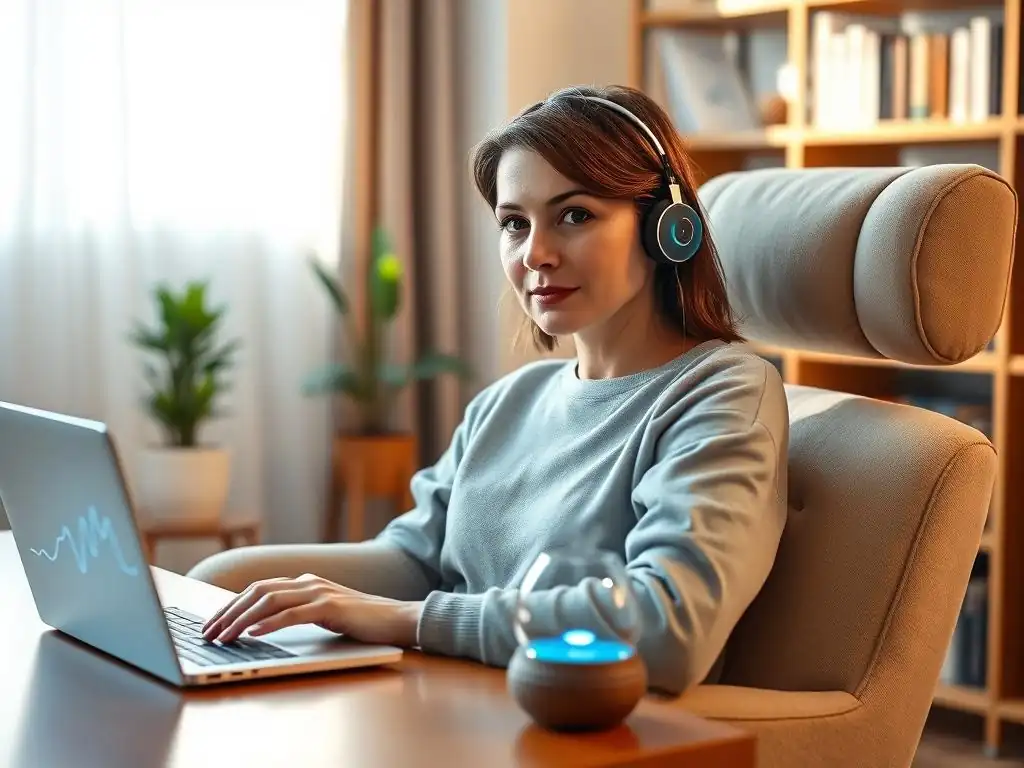
Welcome to Mind Care Guide, a sanctuary dedicated to nurturing your mental well-being. Feeling overwhelmed by the relentless chatter of anxious thoughts? You're not alone. In this guide, we'll explore a powerful technique – biofeedback – and how it can help you quiet those anxious thoughts, potentially even from the comfort of your own home. Intrigued? Let's delve deeper into how this innovative approach, particularly in the realm of wearable tech, can offer a pathway to a calmer, more focused you.
Finding Focus: Using Biofeedback to Quiet Anxious Thoughts at Home
- Understanding Anxiety and the Power of Biofeedback
- Biofeedback for Anxiety: A Home-Based Solution
- Choosing the Right Biofeedback Device to Calm Anxiety
- Setting Up Your Home Biofeedback Practice for Anxiety Relief
- Integrating Biofeedback with Other Anxiety Management Techniques
- Real-Life Success Stories: Biofeedback Quiet Anxious Thoughts
- Maximizing Your Biofeedback Investment: Tips and Tricks
- Conclusion: Embracing Biofeedback for a Calmer, More Focused Mind
-
Frequently Asked Questions
- How does biofeedback help quiet anxious thoughts?
- Can I really use biofeedback at home, or is it strictly a clinical treatment?
- What kind of commitment is required to see results from biofeedback for anxiety?
- What are some potential benefits of using biofeedback to manage anxiety besides quieting thoughts?
- Are there any risks or side effects associated with using biofeedback at home?
- Final Reflection: The Quiet Revolution Within
- Unlock Your Inner Calm: Start Your Biofeedback Journey Today!
Understanding Anxiety and the Power of Biofeedback
What is Anxiety and How Does it Affect Your Mind?
Anxiety is a natural human response to stress, a feeling of fear or apprehension about what's to come. While a small amount of anxiety can be motivating, chronic or excessive anxiety can significantly disrupt daily life. It often manifests as persistent worry, racing thoughts, and a sense of impending doom or danger, even when there is no immediate threat. This constant state of alert puts immense strain on the mind, making it difficult to concentrate, make decisions, and enjoy activities. It's like having a mental alarm system that won't switch off, leading to mental fatigue and emotional exhaustion.
The impact of anxiety on the mind extends beyond just thoughts and feelings. It affects cognitive functions like memory, attention, and problem-solving. Studies indicate that individuals with generalized anxiety disorder (GAD) often report difficulty concentrating, with some research suggesting a reduction in working memory capacity. The constant internal dialogue of worry can consume cognitive resources, leaving less mental energy available for tasks that require focus and sustained attention. Learning how to quiet anxious thoughts becomes crucial for regaining mental clarity and improving overall well-being.
The Science Behind Biofeedback: A Natural Approach to Calm
Biofeedback is a mind-body technique that teaches people to control physiological processes that are normally involuntary, such as heart rate, breathing rate, muscle tension, and skin temperature. It works by using electronic sensors to measure and display real-time information about these bodily functions. Seeing this data provides immediate feedback, allowing individuals to become more aware of their body's responses to stress and anxiety. For example, a device might show your heart rate spiking when you think about a stressful situation, giving you direct insight into the body's reaction.
Through this increased awareness, guided by a therapist or software, individuals can learn techniques to consciously alter these physiological responses. If your heart rate is elevated due to anxiety, biofeedback training helps you practice relaxation techniques, like deep breathing, while observing how your heart rate data changes on the screen. Over time, with practice, the goal is to gain voluntary control over these functions without the need for the device, essentially retraining your body and mind to enter a calmer state. This capacity to self-regulate physiological responses is fundamental to using biofeedback to quiet anxious thoughts effectively.
How Biofeedback Can Help Quiet Racing Thoughts
Racing thoughts are a hallmark symptom of anxiety, often feeling uncontrollable and overwhelming. They are closely linked to the body's stress response, involving elevated heart rate, increased muscle tension, and changes in brainwave activity. Biofeedback directly addresses the physiological underpinnings of these symptoms. By providing real-time feedback on metrics like heart rate variability (HRV), muscle tension (EMG), or brainwave patterns (EEG/Neurofeedback), biofeedback training helps individuals identify the specific bodily responses associated with their racing thoughts.
Once these links are identified, biofeedback guides the user in practicing relaxation and self-regulation techniques. For instance, an individual using HRV biofeedback might see their chaotic heart rhythm become more balanced as they practice slow, deep breathing. This learned ability to regulate physiological states—moving from a state of high arousal to a calmer one—directly impacts the mental state.
As the body quiets down, the intensity and frequency of racing thoughts tend to diminish, making it easier to find focus and quiet anxious thoughts. It's a process of learning to consciously influence the body's stress reaction, which in turn helps to settle the overactive mind.
Biofeedback for Anxiety: A Home-Based Solution
The Benefits of At-Home Biofeedback Training
Accessing biofeedback therapy traditionally involved appointments at a clinic, often requiring travel and significant time commitments. Home-based biofeedback solutions have revolutionized this by offering unprecedented convenience and flexibility. Users can practice biofeedback techniques whenever and wherever they feel comfortable, making it easier to integrate into a busy schedule. This accessibility is particularly beneficial for individuals whose anxiety makes leaving the house challenging or for those living in areas with limited access to clinical services.
Furthermore, training at home allows for more frequent practice sessions. Instead of perhaps one clinical session per week, individuals can practice daily, sometimes even multiple times a day, for shorter durations (e.g., 10-20 minutes). This increased frequency can accelerate the learning process and lead to faster results in managing anxiety symptoms.
While the initial investment in a device is required, it can often be more cost-effective in the long run compared to multiple clinical sessions. The privacy and comfort of one's own home can also create a more relaxed environment conducive to learning self-regulation skills and effectively helping biofeedback quiet anxious thoughts.
Is Home Biofeedback Right for You? Assessing Your Needs
Deciding if home biofeedback is the right approach involves considering your specific anxiety symptoms, learning style, and comfort level with technology. Home biofeedback is often most effective for individuals who are motivated to learn self-regulation techniques and are comfortable using a device and accompanying software. It can be particularly helpful for managing symptoms such as muscle tension headaches, panic attacks, hyperventilation, and the racing thoughts associated with general anxiety.
However, home biofeedback is not a substitute for professional medical advice or therapy, especially for severe anxiety disorders, panic disorder, or if anxiety is linked to complex trauma. It's crucial to consult with a healthcare provider or mental health professional before starting home biofeedback, particularly if you have underlying health conditions.
They can help determine if biofeedback is appropriate for your situation, recommend specific types of biofeedback, and potentially integrate it into a broader treatment plan. Understanding that home biofeedback is a tool for self-management, best used alongside professional guidance when needed, is key to its successful application in helping biofeedback quiet anxious thoughts.
Types of Biofeedback Devices for Home Use
Home biofeedback devices primarily focus on measuring and providing feedback for key physiological signals related to stress and anxiety. The most common types available for home use include devices that measure Heart Rate Variability (HRV), Electromyography (EMG), and Electroencephalography (EEG), often referred to as neurofeedback. Each type targets a different aspect of the body's stress response.
HRV biofeedback devices typically use a finger or ear sensor to monitor the variations in time between heartbeats, which is a key indicator of the nervous system's state. EMG biofeedback devices use sensors placed on the skin over muscles to measure electrical activity, reflecting muscle tension. EEG (Neurofeedback) devices, often worn on the head, measure brainwave patterns. While clinical systems are complex, home neurofeedback devices like meditation headbands simplify the process, focusing on promoting calm brainwave states. Each type offers a unique pathway to gaining awareness and control over physiological responses, contributing to the ability to quiet anxious thoughts.
Choosing the Right Biofeedback Device to Calm Anxiety
Heart Rate Variability (HRV) Biofeedback: Finding Your Rhythm
Heart Rate Variability (HRV) is a powerful metric reflecting the balance between the sympathetic ("fight or flight") and parasympathetic ("rest and digest") branches of your autonomic nervous system. High HRV generally indicates a healthy, resilient nervous system that can adapt well to stress, while low HRV is often associated with stress, anxiety, and depression. HRV biofeedback teaches you to increase your HRV, specifically focusing on achieving 'coherence' – a state where heart rhythms, breathing, and blood pressure are synchronized. This coherent state is strongly linked to feelings of calm and improved emotional regulation.
Training involves watching your HRV data in real-time while practicing slow, rhythmic breathing, often guided by the device's software. The goal is to find a breathing pace (typically around 5-6 breaths per minute) that maximizes HRV and promotes coherence. Consistent practice helps train your nervous system to more easily enter this calm state, effectively counteracting the physiological arousal that fuels anxious thoughts. Improving HRV resilience is a core mechanism by which this type of biofeedback helps quiet anxious thoughts and promotes a sense of inner peace.
Product Spotlight: The HeartMath Inner Balance Sensor for HRV Training
The HeartMath Inner Balance sensor is a popular and accessible device for home-based HRV biofeedback training. It typically connects via a cable or Bluetooth to a smartphone or tablet. The sensor clips onto your earlobe or finger to measure pulse waves and calculate your HRV in real-time. The accompanying app provides visual feedback, often using graphics like a breath pacer and a coherence score, to guide your practice.
The Inner Balance system offers various training sessions and tracks progress over time, showing improvements in coherence levels. It's designed to be user-friendly, making the complex concept of HRV tangible and actionable. Users can see their coherence score increase as they relax and synchronize their breathing with their heart rhythm, providing immediate positive reinforcement. This direct visual feedback is instrumental in learning the skill of shifting from a state of stress to a state of physiological coherence.
How HeartMath Inner Balance helps quiet anxious thoughts through coherence.
Using the HeartMath Inner Balance system helps individuals learn to quiet anxious thoughts by training them to achieve physiological coherence. When you are anxious, your sympathetic nervous system is often dominant, leading to a chaotic heart rhythm pattern and low HRV. The Inner Balance app guides you through exercises where you focus on positive emotions and practice paced breathing while monitoring your HRV. As your breathing becomes regular and your emotional state shifts, the app shows your heart rhythm pattern becoming smoother and more ordered – the state of coherence.
This shift to coherence is not just a change in heart rhythm; it signals a shift in the nervous system towards a more balanced state. In coherence, the parasympathetic nervous system becomes more active, counteracting the "fight or flight" response. Physiologically, this reduces the physical symptoms associated with anxiety, such as rapid heart rate and shallow breathing.
Mentally, this calmer physiological state directly impacts the brain, making it much harder for racing thoughts to take hold. By practicing with Inner Balance, users build the skill of intentionally entering this coherent state, which they can then access during moments of anxiety to quiet anxious thoughts and regain composure.
Electromyography (EMG) Biofeedback: Relaxing Tense Muscles
Electromyography (EMG) biofeedback focuses on muscle tension, a common physical manifestation of anxiety. When people are stressed or anxious, they often unconsciously clench muscles, leading to symptoms like tension headaches, neck pain, back pain, and jaw clenching (TMJ). EMG biofeedback uses sensors placed on the skin over specific muscle groups (like the forehead, neck, or shoulders) to detect the electrical activity produced by muscle contractions. This activity is then translated into a visual or auditory signal, such as a graph on a screen or an audible tone, that changes as the muscle tension increases or decreases.
The training involves watching or listening to the feedback while practicing relaxation techniques, such as progressive muscle relaxation or guided imagery. Seeing the muscle activity data decrease as you relax provides concrete proof that your efforts are working. Over time, you learn to recognize the subtle sensations of muscle tension and consciously release it, even without the device. Reducing chronic muscle tension helps alleviate associated physical discomfort and can also have a calming effect on the mind, contributing to the ability to quiet anxious thoughts.
Product Spotlight: The Thought Technology MyoTrac Infiniti System for EMG Biofeedback
The Thought Technology MyoTrac Infiniti System is a professional-grade biofeedback system that is also used in some home settings, particularly for individuals with significant muscle tension issues related to anxiety or pain. While more complex and expensive than typical consumer devices, it offers highly accurate EMG measurement capabilities. The system typically includes a sensor unit and software that runs on a computer, providing detailed graphs and feedback on muscle activity from one or more sites simultaneously.
Sensors are placed over the target muscles using adhesive electrodes. The software allows for customized training protocols, displaying real-time muscle activity levels. Users learn to lower the displayed value through relaxation techniques. The system can track baseline tension levels and monitor progress in reducing muscle activity over time. Its precision makes it a powerful tool for individuals needing detailed insight into their muscle tension patterns.
Using MyoTrac Infiniti System to reduce muscle tension linked to anxiety.
The MyoTrac Infiniti System is used to reduce muscle tension linked to anxiety by providing precise feedback on muscle electrical activity. For someone experiencing frequent tension headaches due to anxiety, sensors might be placed on the forehead muscles. The system displays the level of tension, often in microvolts (µV). During a session, the user practices relaxation techniques aimed at lowering this µV reading. For example, they might focus on breathing deeply and consciously relaxing the forehead muscles, observing the number on the screen decrease from, say, 8 µV down to 3 µV.
This real-time feedback reinforces the relaxation effort. The user learns what 'relaxed' feels like in that specific muscle group by correlating the physical sensation with the lowered µV reading. With consistent practice, perhaps 15-20 minutes daily, the individual becomes more aware of their muscle tension habits and develops the skill to release tension proactively throughout the day, before it builds up into pain or exacerbates feelings of anxiety. Reducing this physical symptom helps create a calmer bodily state, which in turn supports the mental effort to quiet anxious thoughts.
Neurofeedback (EEG) Biofeedback: Retraining Your Brain Waves
Neurofeedback, or EEG biofeedback, is a type of biofeedback that focuses on brainwave activity. Our brains produce electrical activity in different frequency bands (e.g., Delta, Theta, Alpha, Beta, Gamma), and the dominant frequencies correlate with different states of mind (e.g., relaxed, focused, anxious). For example, excessive high-frequency Beta waves are often associated with anxiety and racing thoughts, while Alpha and Theta waves are linked to calmer, more meditative states. Neurofeedback uses sensors placed on the scalp to measure these brainwave patterns in real-time.
The feedback is often presented visually or auditorily, such as a video game that only progresses when your brain produces the desired brainwave pattern (e.g., more Alpha, less Beta). The goal is to train your brain to spend more time in calmer, more focused states and less time in states associated with anxiety. This is achieved through operant conditioning – the brain learns to produce the desired pattern to get the 'reward' of the feedback changing positively. By directly influencing brainwave activity, neurofeedback offers a powerful way to help quiet anxious thoughts at their source.
Product Spotlight: The Muse 2 Meditation Headband for Neurofeedback at Home
The Muse 2 is a popular consumer-grade neurofeedback device designed primarily for meditation and stress reduction. It's a headband with multiple EEG sensors that rest on the forehead and behind the ears. It connects wirelessly to a smartphone or tablet app. While not a clinical-grade neurofeedback system, it provides accessible brainwave feedback tailored for meditation practice.
The Muse 2 app translates your brain activity into real-time audio feedback, often using sounds of weather (e.g., calm breezes for a relaxed state, stormy weather for an active mind). The goal is to keep the 'weather' calm by bringing your brain into a more relaxed state. It also provides feedback on heart rate, breathing, and body movement, integrating multiple biofeedback modalities. After each session, the app provides data summaries, showing how much time you spent in 'calm,' 'neutral,' and 'active' states.
Benefits of using Muse 2 to improve focus and manage anxiety.
Using the Muse 2 headband offers several benefits for improving focus and managing anxiety through accessible neurofeedback and integrated biofeedback. By providing immediate feedback on brainwave activity during meditation, Muse 2 helps users understand what a 'calm' or 'focused' mental state feels like physiologically. The audio feedback (like the calming sounds of nature when in a relaxed brain state) serves as a clear indicator, reinforcing the desired mental state. This makes the abstract concept of brainwave training concrete and easier to achieve.
For individuals struggling with racing thoughts and difficulty concentrating due to anxiety, the Muse 2's focus on achieving a 'calm' brain state is particularly helpful. Regular practice teaches the brain to spend more time in Alpha and Theta states, which are conducive to relaxation and focused attention, and less time in high-Beta states associated with worry.
Over time, this training helps to quiet anxious thoughts and improve the ability to concentrate, not just during meditation sessions but also in daily life. The integrated feedback on breathing and heart rate further enhances the ability to manage anxiety by promoting overall physiological calm.
Setting Up Your Home Biofeedback Practice for Anxiety Relief
Creating a Calm and Focused Environment
The physical space where you practice biofeedback can significantly impact your results. To effectively use biofeedback to quiet anxious thoughts, choose a quiet room free from distractions. Turn off televisions, silence your phone, and inform others in your household that you need uninterrupted time. The environment should be comfortable and conducive to relaxation.
Ensure you have a comfortable chair or cushion to sit on, and that the lighting is soft. Some people find it helpful to dim the lights or use natural light. The temperature should be pleasant – not too hot or too cold. Eliminating external stressors and creating a peaceful sanctuary signals to your mind and body that it is time to relax and focus inward, maximizing the effectiveness of your biofeedback training session.
Establishing a Consistent Biofeedback Routine
Consistency is arguably the most critical factor in achieving lasting results with home biofeedback for anxiety. Just like learning any new skill, regular practice is necessary to train your physiological responses. Aim to incorporate biofeedback sessions into your daily schedule, ideally at the same time each day. Even short sessions, such as 10-15 minutes, practiced consistently can be highly beneficial.
Think of it as 'training' your nervous system. Daily practice helps reinforce the learned skills of self-regulation. For example, committing to a 15-minute HRV biofeedback session every morning can help set a calm tone for the day. A regular evening session might help unwind and quiet anxious thoughts before sleep. Find a routine that fits your lifestyle, but prioritize making it a non-negotiable part of your day for optimal results in managing anxiety.
Understanding the Biofeedback Device's Software and Features
Each home biofeedback device comes with specific software or an app that serves as your interface for training and tracking progress. Taking the time to thoroughly understand how your device's software works is essential. Explore all the features, including different training modes, feedback options (visual, auditory), and data tracking capabilities.
Most apps provide tutorials or guides on how to get started. Pay attention to how the software displays your physiological data (e.g., graphs, scores, sounds) and how it indicates whether you are achieving the desired state (e.g., increasing coherence, decreasing muscle tension, shifting brainwaves). Understanding these indicators allows you to correlate your internal sensations with the objective data, deepening your self-awareness and making your practice more effective in helping biofeedback quiet anxious thoughts.
Tracking Your Progress and Adjusting Your Approach
Tracking your progress is a motivating way to see the tangible benefits of your biofeedback practice. Most biofeedback apps automatically record data from your sessions, showing trends over time. Monitor metrics relevant to your device, such as average coherence scores (HRV), baseline muscle tension levels (EMG), or time spent in calm brain states (EEG). Look for gradual improvements over weeks and months.
Beyond the device data, also track your subjective experience of anxiety. Keep a simple journal noting your anxiety levels before and after sessions, how easy it was to quiet anxious thoughts, and any changes in physical symptoms like muscle tension or sleep quality. If you feel stuck or aren't seeing the results you hoped for after several weeks of consistent practice (e.g., 4-6 weeks), consider adjusting your approach. This might involve trying different breathing techniques, changing the time of day you practice, or even consulting with a biofeedback professional to refine your technique or troubleshoot issues.
Integrating Biofeedback with Other Anxiety Management Techniques
Combining Biofeedback with Mindfulness Meditation
Biofeedback and mindfulness meditation are highly complementary practices, each enhancing the effectiveness of the other in managing anxiety. Mindfulness involves paying non-judgmental attention to the present moment, including bodily sensations, thoughts, and feelings. Biofeedback provides objective, real-time data on physiological states, making the subtle bodily sensations often noticed in mindfulness practice more apparent and concrete.
For example, when using a device like Muse 2 for neurofeedback during meditation, the audio feedback helps anchor your attention to the present moment and reinforces the desired calm brain state. This combination makes it easier to stay focused during meditation and provides immediate rewards for achieving a state of relaxed awareness. Conversely, a regular mindfulness practice can deepen your ability to notice subtle physiological shifts, making you more attuned to the biofeedback signals even when not actively using the device. This synergy helps to build a more robust capacity to quiet anxious thoughts.
Using guided meditations alongside Muse 2 for enhanced results.
Many biofeedback apps, including the Muse app, offer guided meditations. Using these guided sessions while wearing the device can significantly enhance the learning process. The guidance helps structure your meditation practice, offering prompts for focusing on breath, body sensations, or cultivating specific emotional states.
Simultaneously receiving the real-time biofeedback (like the weather sounds in Muse) provides an objective layer to the subjective experience of meditation. If the guided meditation helps you relax, the biofeedback confirms this by showing a shift towards a calmer state (e.g., more 'birds,' less 'storm'). This immediate correlation between the guided instructions and the physiological feedback makes it easier to learn what specific mental and physical actions lead to a state of calm, accelerating your ability to effectively quiet anxious thoughts during meditation and beyond.
The Role of Breathing Exercises in Amplifying Biofeedback's Effects
Breathing is one of the most direct and powerful ways to influence the autonomic nervous system and is a cornerstone of many anxiety management techniques. Biofeedback, particularly HRV and EMG biofeedback, often incorporates breathing exercises as a primary method for achieving physiological change. Slow, deep, diaphragmatic breathing activates the parasympathetic nervous system, promoting relaxation and reducing the "fight or flight" response.
When you combine specific breathing exercises with biofeedback, you receive immediate feedback on how your breathing is impacting your physiological state. This allows you to refine your breathing technique to maximize its calming effect. For instance, while practicing biofeedback, you might discover that breathing at a rate of 5.5 breaths per minute significantly increases your HRV or decreases your muscle tension compared to a slightly faster or slower rate. This precision training makes breathing a much more effective tool for self-regulation.
Combining diaphragmatic breathing with HRV biofeedback from HeartMath Inner Balance.
A highly effective combination is practicing diaphragmatic (belly) breathing while using an HRV biofeedback device like the HeartMath Inner Balance. Diaphragmatic breathing maximizes oxygen intake and promotes a deeper relaxation response than shallow chest breathing. When you breathe deeply into your belly, your diaphragm moves down, which helps to stimulate the vagus nerve, a key component of the parasympathetic nervous system.
As you practice this deep, slow breathing guided by the Inner Balance app, you can watch your real-time HRV feedback and coherence score. The app often includes a breath pacer to help you find your optimal breathing rhythm for coherence. Seeing your coherence score increase as you breathe slowly and deeply provides immediate positive reinforcement and helps you learn precisely how this type of breathing impacts your heart rhythm and nervous system state. This makes diaphragmatic breathing a potent tool, amplified by biofeedback, for quickly shifting your physiology towards calm and helping to quiet anxious thoughts.
Diet and Lifestyle Changes to Support Anxiety Reduction
While biofeedback is a powerful tool, its effectiveness in helping biofeedback quiet anxious thoughts is significantly enhanced when integrated into a holistic approach to anxiety management that includes healthy diet and lifestyle choices. What you eat, how much you sleep, and how physically active you are all profoundly impact your nervous system and overall resilience to stress.
Maintaining a balanced diet rich in whole foods, limiting caffeine and sugar intake, and staying hydrated can help stabilize mood and energy levels. Regular physical activity is a well-documented stress reliever, releasing endorphins and helping to reduce muscle tension. Ensuring adequate sleep (7-9 hours per night for most adults) is crucial, as sleep deprivation exacerbates anxiety symptoms. Integrating biofeedback practice alongside these fundamental health habits creates a powerful synergy, addressing anxiety from multiple angles for more comprehensive and lasting relief.
Real-Life Success Stories: Biofeedback Quiet Anxious Thoughts
Using Biofeedback to Manage Test Anxiety in College Students
Many college students struggle with test anxiety, experiencing racing thoughts, difficulty concentrating, and physical symptoms like rapid heartbeat and sweating during exams. A study involving college students with test anxiety used home-based HRV biofeedback training. Participants practiced with a device for 10-15 minutes daily for six weeks. Before the intervention, many reported anxiety levels around 8 out of 10 before major exams.
After the six-week program, students reported significantly lower anxiety levels, averaging around 4 out of 10 before tests. They also reported improved focus during exams. One student shared that by using the HRV biofeedback during practice sessions, they learned to recognize the early signs of their heart rate increasing and thoughts racing. They then practiced slowing their breathing to lower their heart rate and regain composure. This learned skill allowed them to employ the technique during actual exams, successfully helping biofeedback quiet anxious thoughts and improve performance.
Managing Generalized Anxiety Disorder with Home Biofeedback
Individuals with Generalized Anxiety Disorder (GAD) often experience persistent, excessive worry about everyday things, making it difficult to relax and quiet anxious thoughts. Sarah, a 38-year-old professional diagnosed with GAD, found traditional therapy helpful but still struggled with daily racing thoughts. She decided to try home EMG biofeedback, focusing on tension in her neck and shoulders, where she held significant stress.
Using a home EMG device for 20 minutes each evening, Sarah saw her muscle tension readings decrease from an average of 15 µV to around 5 µV over three months. More importantly, she learned to recognize the subtle onset of tension throughout her day. By consciously relaxing her muscles using the techniques practiced with biofeedback, she found she could interrupt the physical stress response that often triggered her racing thoughts. This practice helped her significantly reduce the frequency and intensity of her daily worries, allowing her to feel more in control and less overwhelmed.
Improving Focus and Reducing Anxiety in Individuals with ADHD
Anxiety is a common comorbidity with Attention-Deficit/Hyperactivity Disorder (ADHD), and the racing thoughts of anxiety can further impair focus and attention. Neurofeedback (EEG biofeedback) has shown promise in helping individuals with ADHD improve focus by training specific brainwave patterns, and it can also help manage co-occurring anxiety by promoting calmer states. Mark, a 25-year-old with ADHD and anxiety, used a home neurofeedback device similar to Muse for daily 20-minute sessions.
Mark's goal was to increase Alpha and decrease high Beta brainwave activity, aiming for both improved focus and reduced anxiety. After two months of consistent practice, he reported feeling less restless and agitated. He noticed it was easier to quiet anxious thoughts that previously distracted him. His ability to sustain attention on tasks improved, and he felt less overwhelmed by internal noise. While neurofeedback didn't eliminate his ADHD symptoms, his improved capacity to manage anxiety and quiet racing thoughts significantly enhanced his overall ability to focus and function more effectively in his daily life.
Maximizing Your Biofeedback Investment: Tips and Tricks
Understanding Your Biofeedback Device's Data
Your biofeedback device collects valuable data about your physiological responses during training sessions. Don't just go through the motions; take time to understand what the numbers, graphs, or sounds mean. For HRV biofeedback, pay attention to your coherence score trends. For EMG, monitor your average tension levels. For neurofeedback, look at the percentage of time spent in different brainwave states.
Relate this objective data back to your subjective experience during the session. Were you able to quiet anxious thoughts more easily on days with higher coherence scores? Did your muscle tension readings correlate with how stressed you felt? Analyzing the data helps you identify which techniques are most effective for you and understand the mind-body connection on a deeper level. Many apps provide historical data, allowing you to track progress over weeks and months, which can be highly motivating.
Seeking Professional Guidance: When to Consult a Therapist
While home biofeedback devices are designed for self-use, they are tools that can be significantly enhanced by professional guidance. If you have a diagnosed anxiety disorder, severe symptoms, or if your anxiety is impacting your ability to function daily, it is crucial to consult with a licensed mental health professional. A therapist can help you understand the root causes of your anxiety and develop a comprehensive treatment plan that may include biofeedback.
A biofeedback therapist or technician can also provide personalized training protocols, help you troubleshoot issues with your device or technique, and interpret your progress data. They can ensure you are using the device correctly and safely. Think of home biofeedback as a powerful supplement to therapy, not a replacement. If you find yourself struggling to make progress, experiencing increased anxiety, or if your symptoms worsen, seek professional help immediately.
Troubleshooting Common Biofeedback Challenges
Like any new skill, learning to use biofeedback effectively can present challenges. One common issue is difficulty achieving the desired physiological state, such as low coherence or high muscle tension readings despite feeling like you are relaxing. This might indicate that your technique needs refinement or that the sensors aren't placed correctly. Review your device's instructions and try adjusting sensor placement or experimenting with different relaxation methods.
Another challenge can be maintaining consistency with practice. Life gets busy, and it's easy to let daily sessions slide. Try scheduling your biofeedback time like any other important appointment. If motivation wanes, revisit your reasons for starting biofeedback and review your progress data to see how far you've come. If you encounter persistent technical issues with the device or software, consult the manufacturer's support resources. Patience and persistence are key to overcoming initial hurdles and successfully using biofeedback to quiet anxious thoughts.
Conclusion: Embracing Biofeedback for a Calmer, More Focused Mind
The Future of Biofeedback in Anxiety Management
The field of biofeedback, particularly home-based solutions, is rapidly evolving. Advancements in sensor technology, wireless connectivity, and sophisticated yet user-friendly software are making biofeedback more accessible and effective than ever before. We are likely to see devices become smaller, more comfortable, and capable of measuring an even wider range of physiological signals with greater accuracy.
Integration with artificial intelligence could lead to more personalized training programs that adapt in real-time to an individual's specific responses and progress. As research continues to validate the effectiveness of biofeedback for various conditions, including anxiety, it is poised to become an even more mainstream and accepted tool for self-regulation and mental wellness. The future holds exciting possibilities for leveraging technology to empower individuals to take control of their physiological states and proactively manage symptoms like racing thoughts.
Taking the First Step Towards a Quieter Mind
Living with persistent anxiety and racing thoughts can feel overwhelming, but tools like biofeedback offer a tangible path towards regaining control and finding focus. Biofeedback provides a unique window into your body's stress response, allowing you to see the physiological roots of your anxious feelings. By learning to consciously influence these bodily signals through consistent practice, you build resilience and develop the skill to quiet anxious thoughts naturally.
Whether you choose HRV, EMG, or EEG biofeedback, the core principle remains the same: increased self-awareness leads to increased self-control. Starting with a reputable home biofeedback device and committing to a regular practice routine can be a powerful first step. Remember that progress may be gradual, but with patience and persistence, you can cultivate a calmer nervous system and a more focused, peaceful mind. Embrace this journey of self-discovery and empower yourself to quiet anxious thoughts and live with greater ease.
Frequently Asked Questions
How does biofeedback help quiet anxious thoughts?
Biofeedback helps by providing real-time feedback on your body's physiological responses, such as heart rate and muscle tension. This allows you to consciously learn to control these responses, reducing the physical symptoms of anxiety and leading to quieter thoughts.
Can I really use biofeedback at home, or is it strictly a clinical treatment?
Yes, home biofeedback devices are available and can be effective for managing anxiety. They provide a convenient way to practice relaxation techniques and monitor your progress in quieting anxious thoughts.
What kind of commitment is required to see results from biofeedback for anxiety?
Consistent practice is key. While some may experience initial relief quickly, significant and lasting changes typically require regular sessions (e.g., 20-30 minutes daily) over several weeks or months.
What are some potential benefits of using biofeedback to manage anxiety besides quieting thoughts?
Beyond reducing anxious thoughts, biofeedback can lead to improved sleep, reduced muscle tension, and a greater sense of overall well-being by promoting relaxation and self-awareness.
Are there any risks or side effects associated with using biofeedback at home?
Biofeedback is generally considered safe, but it's important to choose reputable devices and follow instructions carefully. Rarely, some individuals might experience mild discomfort or increased anxiety initially, but this usually subsides with practice. If concerns persist, consult a professional.
Final Reflection: The Quiet Revolution Within
The ability to quiet anxious thoughts is no longer a luxury, but a vital skill for navigating the complexities of modern life. The overwhelming pace of technology, social pressures, and global uncertainty leaves many feeling perpetually on edge. This article explored how biofeedback, a powerful yet accessible tool, can empower individuals to regain control over their internal landscape and cultivate a sense of calm amidst the storm.
The journey towards inner peace is a deeply personal one, and the impact of biofeedback extends far beyond simply reducing anxiety levels. It's about fostering a deeper understanding of the mind-body connection, learning to recognize the subtle signals your body sends, and developing the self-awareness necessary to manage stress proactively. The greatest weapon against stress is our ability to choose one thought over another.
– William James. This quote underscores the empowering potential of biofeedback; it's not about eliminating anxiety entirely, but about gaining the agency to choose a more peaceful response.
Now, consider your own relationship with anxiety. What are the subtle signs your body gives you when stress builds? Are you willing to explore the potential of biofeedback to cultivate a more mindful and balanced approach to your mental well-being? Take the first step. Research available resources, experiment with simple breathing exercises, and perhaps even consider investing in a home biofeedback system. The journey to a quieter, more focused mind begins with a single, conscious breath – and the courage to explore the incredible power within you.
Unlock Your Inner Calm: Start Your Biofeedback Journey Today!
Thanks for taking the time to explore the power of biofeedback in managing anxiety. We hope you gained valuable insights into how this simple technique can help you find more peace and focus in your daily life. Ready to take the next step?
- Begin your personalized biofeedback practice: Start with just 10 minutes a day, focusing on your breath and noticing subtle shifts in your body. Even small consistent practice makes a big difference!
- Share your experience: Let's build a supportive community! Share your initial biofeedback experience and any questions you have in the comments below.
- Explore free guided meditations: Many resources are available online to guide you through the process and deepen your relaxation techniques.
What simple biofeedback exercise will you try first to quiet your mind and enhance your focus?