
Sleep Trackers: Your Secret Weapon for Calmer Mornings and Better Mental Health?


Welcome to Mind Care Guide.
Are you tossing and turning, feeling the day's anxieties creep into your precious sleep? We understand. It's more common than you think. What if we told you that a simple tool could be your first step towards unlocking calmer mornings and a brighter mental state? Dive into our insightful exploration of how sleep trackers improve mental health, and discover the surprising ways technology can empower you to take control of your well-being. Ready to uncover the secrets to a more restful night and a more peaceful mind?
Sleep Trackers: Your Secret Weapon for Calmer Mornings and Better Mental Health?
- The Vicious Cycle: How Poor Sleep Affects Mental Well-being
- The Problem: Identifying Your Sleep Disruptors and Their Impact
- The Solution: Leveraging Sleep Trackers to Improve Mental Health
- Choosing the Right Sleep Tracker for Your Needs: A Buying Guide
- Using Your Sleep Tracker to Improve Mental Health: A Step-by-Step Guide
- Beyond Sleep Trackers: Complementary Approaches for Mental Wellness
- The Long-Term Benefits of Improved Sleep for Mental Health
-
Frequently Asked Questions
- How can sleep trackers actually improve my mental health?
- Are sleep trackers accurate enough to rely on for mental health improvements?
- What type of sleep tracker is best for monitoring mental health related sleep issues?
- How often should I check my sleep tracker data to see improvements in my mental health?
- What else can I do besides use a sleep tracker to improve my mental health through better sleep?
- Final Reflection: Unlocking the Power of Sleep for a Healthier You
- Unlock Your Best Sleep: Start Your Journey to Calmer Mornings
The Vicious Cycle: How Poor Sleep Affects Mental Well-being
Understanding the Connection Between Sleep Deprivation and Mental Health Issues
Sleep deprivation is far more than just feeling tired; it has a profound and direct impact on mental health. Research consistently shows a strong correlation between chronic poor sleep and an increased risk of developing mental health conditions like anxiety disorders and depression. When sleep is insufficient or disrupted, the brain's ability to regulate emotions, manage stress, and maintain cognitive function is significantly impaired.
For instance, studies have indicated that individuals with insomnia are up to 10 times more likely to experience clinical depression and 17 times more likely to experience clinical anxiety compared to those who sleep well. This isn't just a minor inconvenience; it's a critical factor in overall psychological well-being.
Furthermore, lack of quality sleep can exacerbate existing mental health symptoms. Someone already dealing with anxiety might find their worries amplified after a poor night's sleep, or a person managing depression might experience deeper lows. The prefrontal cortex, responsible for complex decision-making and emotional regulation, is particularly affected by sleep loss, while the amygdala, involved in processing fear and emotional responses, becomes more reactive.
This imbalance makes it harder to cope with daily stressors, leading to increased irritability, difficulty concentrating, and a reduced capacity for resilience. Understanding this intricate link is the first step in recognizing why addressing sleep issues is so vital for improving mental health.
Why Addressing Sleep Problems is Crucial for Mental Wellness
Prioritizing and improving sleep is not merely a supplementary measure; it's a foundational pillar for maintaining and enhancing mental wellness. Addressing sleep problems can break the vicious cycle where poor sleep fuels mental health issues, which in turn disrupt sleep further.
By focusing on getting sufficient, restorative sleep, individuals can significantly improve their mood stability, reduce symptoms of anxiety and depression, and boost their cognitive functions like memory and problem-solving. For example, improving sleep hygiene has been shown in clinical settings to be as effective as cognitive behavioral therapy (CBT) for insomnia (CBT-I) in reducing depressive symptoms in some individuals.
Investing time and effort into improving sleep quality yields tangible benefits for mental health. It empowers the brain to recover and consolidate memories, process emotional experiences, and restore neurochemical balance. This restoration process is critical for emotional resilience and stress management. As sleep patterns improve, many people report feeling more in control of their emotions, experiencing less reactivity to stressful situations, and having a more positive outlook on life. Therefore, integrating strategies to improve sleep, potentially including the use of tools like sleep trackers to understand patterns, becomes an indispensable part of a holistic approach to mental well-being.
The Problem: Identifying Your Sleep Disruptors and Their Impact
Recognizing the Signs of Sleep Deprivation Affecting Your Mental State
Identifying the signs of sleep deprivation is crucial, especially when they begin to impact your mental state. Beyond the obvious fatigue, watch for changes in mood, increased irritability, or heightened emotional reactivity. Difficulty concentrating, impaired decision-making, and memory problems are also common indicators that poor sleep is taking its toll on your cognitive function and mental clarity. You might find yourself feeling more stressed or overwhelmed by tasks that were previously manageable.
Another significant sign is an increase in feelings of anxiety or worry, particularly at night when trying to fall asleep. This can manifest as racing thoughts or an inability to switch off. Depression symptoms, such as persistent sadness, loss of interest, and feelings of hopelessness, can also worsen or even be triggered by chronic sleep loss. Recognizing these mental and emotional shifts as potential consequences of poor sleep is the first step toward seeking solutions and using tools like sleep trackers improve mental health outcomes.
Common Culprits: Stress, Anxiety, and Technology's Role in Poor Sleep
Several factors commonly contribute to poor sleep, often creating a complex web of disruption. High levels of stress and anxiety are primary culprits, as they can make it difficult to relax and quiet the mind before sleep, leading to insomnia or fragmented sleep. Worries about work, relationships, or finances can keep the brain in a state of alertness, preventing the transition into restorative sleep stages. This constant state of hyperarousal is a significant barrier to achieving restful nights.
Technology also plays a substantial role in disrupting sleep patterns. The blue light emitted from screens like smartphones, tablets, and computers can suppress melatonin production, the hormone that regulates sleep-wake cycles, making it harder to fall asleep. Furthermore, the constant stimulation and engagement provided by social media, emails, or late-night browsing can keep the mind active when it should be winding down. Many people spend their last hour before bed interacting with screens, inadvertently sabotaging their sleep quality and contributing to the cycle of poor sleep and its negative effects on mental health.
Case Study: Sarah's Journey from Insomnia to Improved Mental Clarity (Using Data from a Sleep Tracker)
Sarah, a 34-year-old marketing professional, struggled with chronic insomnia and increasing anxiety. She often lay awake for hours, her mind racing, averaging only about 4.5 hours of fragmented sleep per night according to her self-reports. This lack of sleep left her irritable, unable to focus at work, and feeling overwhelmed by daily tasks, significantly impacting her mental well-being. She decided to try using a sleep tracker to understand her patterns better.
Her sleep tracker data initially confirmed her subjective experience, showing an average time in bed of 8 hours, but an actual sleep duration of only 4 hours 15 minutes, with frequent awakenings (averaging 15-20 per night) and minimal time spent in deep or REM sleep stages (often less than 10% for each). Armed with this objective data, Sarah worked with a therapist and implemented strategies like setting a consistent bedtime, reducing screen time before sleep, and incorporating a 20-minute mindfulness practice.
After three months of consistently applying these changes, her sleep tracker data showed a dramatic improvement: average sleep duration increased to 6 hours 50 minutes, awakenings reduced to 5-7 per night, and time in deep/REM sleep increased to around 18-22%.
Correlating this data with her subjective experience, Sarah reported significantly reduced anxiety, improved focus at work, and a much calmer, more positive outlook, demonstrating how using sleep tracker data can help identify issues and track the impact of interventions on sleep, and subsequently, mental health.
The Solution: Leveraging Sleep Trackers to Improve Mental Health
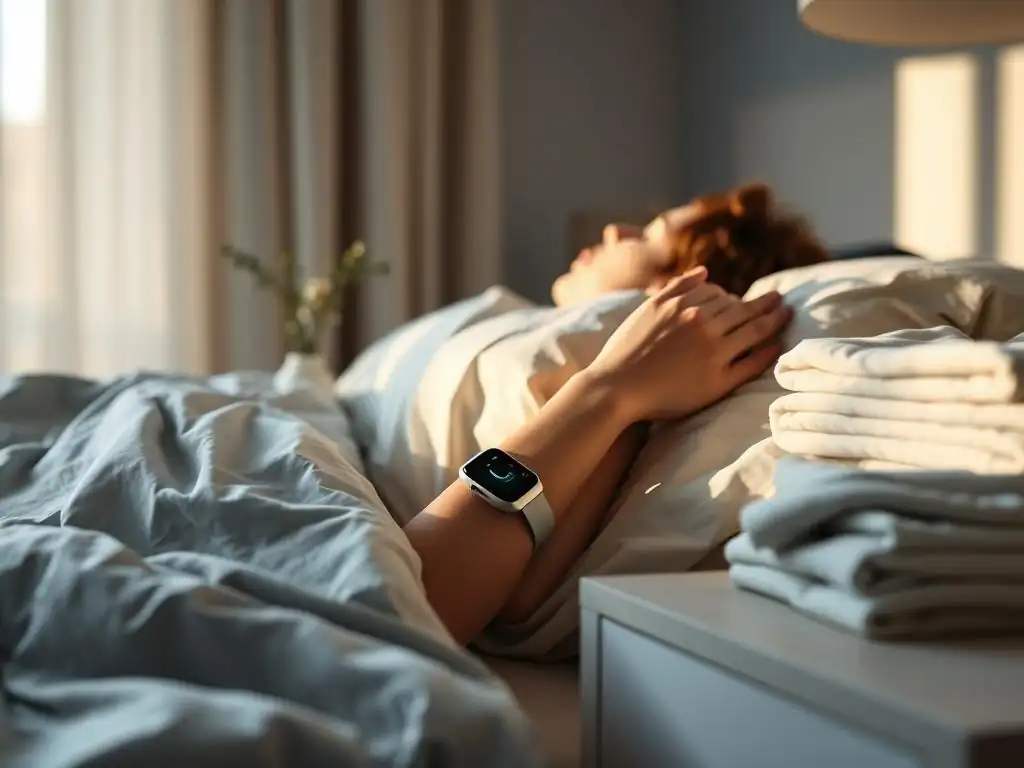
How Sleep Trackers Work: A Deep Dive into Data Collection and Analysis
Sleep trackers, typically worn on the wrist or finger, or placed under a mattress, utilize sensors to collect data about your sleep patterns. Accelerometers are commonly used to detect movement throughout the night, helping to differentiate between periods of wakefulness, light sleep, and potentially deeper sleep based on movement levels. Some advanced trackers also incorporate heart rate variability (HRV), skin temperature, and even oxygen saturation sensors to provide a more comprehensive picture of physiological states during sleep. These sensors continuously record data points throughout the night.
This raw data is then processed by algorithms within the device or a connected app. The algorithms analyze the patterns of movement, heart rate, and other metrics to estimate when you fell asleep, when you woke up, and how long you spent in different sleep stages (like light, deep, and REM sleep).
While the accuracy of stage detection can vary between devices, the overall trends in sleep duration, consistency, and disturbances provide valuable insights. This analyzed data is typically presented in easy-to-understand graphs and summaries within a mobile application, empowering users to visualize their sleep habits and identify potential issues impacting their mental health.
Beyond the Numbers: Understanding Sleep Stages and Their Significance for Mental Health
While total sleep duration is important, understanding the different sleep stages and the time spent in each is crucial for appreciating sleep's impact on mental health. Sleep cycles typically involve periods of light sleep, deep sleep (often called slow-wave sleep), and REM sleep (rapid eye movement). Deep sleep is physically restorative; it's when the body repairs tissues, builds bone and muscle, and strengthens the immune system. Sufficient deep sleep is linked to improved cognitive function and reduced physical stress, which indirectly supports mental resilience.
REM sleep, often characterized by vivid dreaming, is primarily associated with cognitive functions like memory consolidation, learning, and emotional processing. Adequate REM sleep is thought to be particularly important for emotional regulation and processing stressful experiences. A lack of sufficient deep or REM sleep, even if total duration seems adequate, can leave you feeling unrested and contribute to irritability, difficulty concentrating, and heightened emotional reactivity. Sleep trackers that provide insights into these stages can help you understand if you're getting truly restorative sleep, guiding efforts to improve sleep quality and, in turn, support better mental health.
Choosing the Right Sleep Tracker for Your Needs: A Buying Guide
Key Features to Look For in a Sleep Tracker for Mental Health
When selecting a sleep tracker with the goal of improving mental health, certain features are more valuable than others in providing actionable insights and supporting your journey.
Accuracy and Reliability: Ensuring Data You Can Trust
The foundation of any effective sleep tracker is its ability to provide reasonably accurate and reliable data. While consumer-grade trackers are not medical devices, consistent measurements of sleep duration, wake times, and estimated sleep stages allow you to identify patterns and track changes over time. Look for trackers from reputable brands with positive user reviews regarding data consistency. Inconsistent data can lead to confusion and make it difficult to assess the impact of interventions aimed at helping sleep trackers improve mental health.
Comfort and Wearability: Finding a Tracker You'll Actually Use
A sleep tracker is only useful if you wear it consistently. Consider the form factor – wristband, ring, or under-mattress mat – and choose one that feels comfortable for you to wear all night, every night. A bulky or irritating device will likely end up in a drawer, rendering it useless for long-term tracking and analysis of how sleep patterns affect your mental state.
Data Visualization and Reporting: Making Sense of Your Sleep Patterns
The way the data is presented is key to understanding your sleep. Look for an app that offers clear, intuitive graphs showing sleep duration, time in different stages, and metrics like bedtime consistency. Features like daily or weekly summaries and trends over time can help you spot patterns you might not notice otherwise. The ability to easily review your sleep history is essential for identifying potential disruptors and tracking progress as you work to improve sleep and mental health.
Integration with Mental Health Apps: Connecting the Dots
Some sleep tracker apps offer integration with popular mental health or mindfulness apps. This can be incredibly beneficial for seeing how practices like meditation or journaling might influence your sleep patterns, or how your sleep quality correlates with your mood reported in a separate app. This integration helps connect the dots between sleep habits and mental well-being more explicitly.
Recommended Sleep Trackers for Mental Health Improvement
While specific features and prices can change, here are examples of popular sleep trackers often recommended for those focusing on sleep and mental health:
Fitbit Sense 2: Comprehensive Health Tracking with Advanced Sleep Analysis (Affiliate Link)
Features: Stress Management Score, Sleep Stages, Skin Temperature Variation
Price: $299.95
Benefit: Offers a holistic view of health, including stress levels and their potential impact on sleep, providing data points that can inform efforts to improve mental health through better rest.
Garmin Venu 3: Detailed Sleep Insights and Body Battery Monitoring (Affiliate Link)
Features: Sleep Score, Personalized Sleep Coaching, Nap Detection
Price: $449.99
Benefit: Provides actionable insights and personalized guidance based on your sleep data, helping you make concrete changes to improve sleep habits and supporting your journey towards better mental health.
Oura Ring: Discreet and Accurate Sleep Tracking with Personalized Recommendations (Affiliate Link)
Features: Sleep Stages, Readiness Score, Body Temperature Tracking
Price: $399
Benefit: Known for its discreet design and focus on recovery metrics like the Readiness Score, which considers sleep and other factors to indicate your energy levels for the day, helping you manage your activities in a way that supports both sleep and mental well-being.
Using Your Sleep Tracker to Improve Mental Health: A Step-by-Step Guide

Setting Up Your Sleep Tracker and Establishing Baseline Data
- Charge your sleep tracker fully.
- Download the associated app on your smartphone.
- Follow the app's instructions to pair the device.
- Wear the tracker every night, including weekends, for at least one to two weeks without making significant changes to your routine.
- Resist the urge to analyze the data obsessively during this period; the goal is to capture your typical sleep patterns.
- Record how you feel each day (mood, energy levels, stress) in a journal or the tracker app's notes section.
- Review the initial data after the baseline period to get a clear picture of your starting point regarding sleep duration, consistency, and quality metrics.
Establishing this baseline is critical. It provides objective data on your current sleep habits before you implement any changes. This initial data set serves as a benchmark against which you can measure the effectiveness of future interventions. Without understanding your starting point – average sleep duration, typical bedtime and wake time, frequency of disturbances, estimated time in different sleep stages – it's challenging to identify specific problems or track progress effectively as you use your sleep tracker to improve mental health.
Analyzing Your Sleep Data to Identify Patterns and Triggers
Once you have baseline data, regularly analyzing your sleep patterns becomes a powerful tool. Look for trends over several nights or weeks. Are you consistently getting less than the recommended 7-9 hours of sleep? Is your bedtime or wake time highly variable? Do you notice frequent awakenings, or is your estimated time in deep or REM sleep consistently low? Pay attention to the correlation between your sleep metrics and how you felt on specific days. For example, did a night with very little deep sleep precede a day where you felt particularly anxious or had trouble concentrating?
Beyond the basic metrics, try to identify potential triggers by correlating your sleep data with your daily activities logged in the app or your journal. Did staying up late watching TV result in a later bedtime and shorter overall sleep duration? Did a stressful day at work lead to more awakenings during the night? Did consuming caffeine late in the afternoon correlate with taking longer to fall asleep? By linking specific behaviors or external factors to negative sleep patterns shown by your tracker, you can pinpoint the most significant disruptors impacting your sleep and mental health.
Implementing Strategies to Improve Sleep Based on Tracker Insights
Based on the patterns and triggers identified from your sleep tracker data, you can begin implementing targeted strategies to improve your sleep quality. These strategies should be based on established principles of sleep hygiene and tailored to your specific issues revealed by the data. For instance, if your tracker shows a highly variable bedtime, focus on establishing a consistent sleep schedule. If frequent awakenings are common, explore techniques to manage stress before bed or optimize your sleep environment.
The key is to make gradual, sustainable changes informed by your data. If your tracker indicates late-night screen time is delaying your sleep onset, commit to putting devices away an hour before bed. If low deep sleep is a concern, consider incorporating relaxation techniques that promote deeper rest. By using the objective data from your sleep tracker, you can prioritize which strategies are most likely to address your specific sleep problems and work towards using sleep trackers improve mental health through better rest.
Optimizing Your Sleep Environment: Temperature, Light, and Noise
Your sleep environment plays a critical role in the quality of your rest. Sleep trackers often show fragmented sleep or increased wakefulness associated with environmental disturbances. Aim for a cool room temperature, typically between 60-67°F (15-19°C), as this range is conducive to falling and staying asleep. Ensure your bedroom is as dark as possible, using blackout curtains if necessary, as light can disrupt melatonin production.
Minimize noise distractions by using earplugs or a white noise machine if needed. A quiet, dark, and cool environment signals to your body that it's time to rest, reducing the likelihood of disturbances that your sleep tracker might pick up as awakenings or shifts out of deeper sleep stages. Making these simple adjustments can significantly improve sleep continuity and restorative sleep, positively impacting your mental state the next day.
Establishing a Consistent Sleep Schedule: The Power of Routine
One of the most impactful strategies for improving sleep quality, often highlighted by sleep tracker data showing inconsistent bedtimes and wake times, is establishing a regular sleep schedule. Go to bed and wake up at roughly the same time every day, even on weekends. This consistency helps regulate your body's internal clock, or circadian rhythm, making it easier to fall asleep and wake up naturally.
While it might be tempting to "catch up" on sleep on weekends, significant deviations can actually disrupt your rhythm further, sometimes referred to as "social jet lag." Aiming for no more than a one-hour difference on weekends can help maintain a stable schedule. Your sleep tracker data can provide feedback on how well you're sticking to your schedule and how consistency impacts metrics like sleep duration and time to fall asleep, reinforcing the importance of routine for improving sleep and mental health.
Mindful Practices for Better Sleep: Meditation and Relaxation Techniques
Stress and a racing mind are major barriers to sleep, often reflected in sleep tracker data showing long periods of wakefulness at the start of the night or frequent awakenings. Incorporating mindful practices before bed can help calm the nervous system and prepare your mind for rest. Techniques like guided meditation, deep breathing exercises, or progressive muscle relaxation can reduce anxiety and quiet intrusive thoughts.
Spending 10-20 minutes engaging in a relaxing activity before bed, such as reading a book (not on a screen) or taking a warm bath, can also signal to your body that it's time to wind down. Your sleep tracker might show improvements in time to fall asleep or reduced awakenings as these practices help you transition more smoothly into sleep. Integrating mindfulness helps address the mental component of sleep difficulties, supporting your overall goal to use sleep trackers improve mental health by fostering better sleep.
Tracking Progress and Adjusting Your Strategy
Using a sleep tracker is not a one-time fix; it's an ongoing process of monitoring, analyzing, and adjusting. Regularly review your sleep data (e.g., weekly or monthly) to see how your implemented strategies are impacting your sleep metrics. Are you consistently getting more sleep? Is your time in deep or REM sleep increasing? Are awakenings decreasing? Compare current data to your baseline to quantify the improvements.
Based on your progress, be prepared to adjust your strategies. If a particular change isn't yielding results according to your tracker data, try a different approach. For example, if reducing caffeine didn't help with sleep onset, perhaps focus more on bedtime relaxation techniques. The data provides objective feedback, helping you refine your approach to improving sleep quality and consequently supporting your mental health journey. This iterative process allows you to find what works best for your unique sleep patterns and needs.
Beyond Sleep Trackers: Complementary Approaches for Mental Wellness
The Role of Therapy and Counseling in Addressing Underlying Mental Health Issues
While using sleep trackers improve mental health by addressing sleep patterns, it's essential to recognize that sleep problems can often be symptoms of underlying mental health conditions like anxiety or depression. Therapy and counseling play a crucial role in addressing these root causes. A mental health professional can provide strategies for managing anxiety, processing difficult emotions, and challenging negative thought patterns that contribute to both mental distress and sleep disturbances.
Cognitive Behavioral Therapy for Insomnia (CBT-I), a specific type of therapy, is highly effective in treating chronic sleep problems by addressing the thoughts and behaviors that interfere with sleep. Integrating therapy with sleep tracking can be a powerful combination: the tracker provides objective data on sleep patterns, while therapy addresses the psychological factors influencing those patterns and overall mental health.
The Importance of Diet and Exercise for Sleep and Mental Well-being
Lifestyle factors like diet and exercise significantly impact both sleep quality and mental health. Regular physical activity, particularly aerobic exercise, has been shown to improve sleep quality, reduce stress, and alleviate symptoms of anxiety and depression. Aim for at least 30 minutes of moderate exercise most days of the week, but avoid intense workouts close to bedtime, as this can be stimulating.
Diet also plays a role. Avoiding heavy meals, caffeine, and alcohol close to bedtime can prevent sleep disruption. Consuming a balanced diet rich in fruits, vegetables, lean proteins, and whole grains supports overall physical and mental health. Staying hydrated throughout the day is also important. By nourishing your body and staying active, you create a foundation that supports both restorative sleep and greater mental resilience, complementing the insights gained from using a sleep tracker.
Building a Supportive Network: Connecting with Others for Emotional Support
Mental wellness is deeply connected to our social connections. Building and maintaining a supportive network of friends, family, or support groups provides emotional support, reduces feelings of isolation, and offers a space to share challenges. Talking about your struggles with sleep or mental health with trusted individuals can alleviate stress and provide different perspectives.
Connecting with others can also indirectly support better sleep by reducing stress levels, which are often a major sleep disruptor. Sharing experiences, whether related to sleep difficulties or mental health challenges, can normalize your struggles and provide valuable coping strategies. Prioritizing social connections is a vital, often overlooked, component of a holistic approach to improving mental health and overall well-being.
The Long-Term Benefits of Improved Sleep for Mental Health
Reduced Anxiety and Depression Symptoms
Consistently achieving quality sleep over time leads to significant long-term benefits for mental health, notably a reduction in symptoms of anxiety and depression. As sleep patterns stabilize and become more restorative, the brain's ability to regulate mood and stress improves. Studies have shown that individuals who successfully treat their insomnia often see a marked decrease in the severity of their depressive and anxious symptoms, sometimes even achieving remission.
This reduction isn't just about feeling less low or worried; it's about building greater emotional resilience. Improved sleep helps the amygdala become less reactive and the prefrontal cortex more effective at managing emotional responses. Over weeks and months of better sleep, many people report feeling a greater sense of calm, less overwhelmed by daily stressors, and a more stable emotional baseline, reinforcing how sleep trackers improve mental health outcomes over time by facilitating better sleep habits.
Increased Focus and Concentration
Chronic sleep deprivation impairs cognitive functions, making it difficult to focus, concentrate, and make decisions. As sleep quality improves, these cognitive deficits often reverse, leading to increased mental clarity and sharpness. Adequate sleep, particularly sufficient time in REM and deep sleep stages, is crucial for consolidating memories and enhancing problem-solving abilities.
Individuals who improve their sleep often report feeling more alert, productive, and able to sustain attention for longer periods. This enhanced cognitive function can have a positive ripple effect on daily life, from performing better at work or school to feeling more present in personal interactions. The ability to focus more effectively also contributes to a sense of accomplishment and control, further supporting mental well-being.
Improved Mood and Overall Quality of Life
Ultimately, the long-term benefit of improved sleep for mental health culminates in a better mood and a significantly enhanced overall quality of life. Waking up feeling rested and restored impacts every aspect of your day. Irritability decreases, patience increases, and you're often better equipped to handle challenges with a positive attitude.
Better sleep allows you to engage more fully in activities you enjoy, strengthen relationships, and pursue goals with greater energy and optimism. It breaks the cycle of fatigue and low mood that can lead to social withdrawal and reduced participation in life. By prioritizing and improving sleep, potentially aided by tools like sleep trackers to understand and track progress, you invest in a fundamental aspect of your health that pays dividends in greater happiness, resilience, and a higher quality of life.
Frequently Asked Questions
How can sleep trackers actually improve my mental health?
Sleep trackers provide data on your sleep patterns, allowing you to identify and address sleep disturbances. Improved sleep leads to better mood regulation and reduced stress, directly impacting mental well-being.
Are sleep trackers accurate enough to rely on for mental health improvements?
While not medical-grade devices, modern sleep trackers offer reasonably accurate estimations of sleep duration, sleep stages, and heart rate. This data, when interpreted correctly, can be valuable for identifying potential sleep-related issues affecting your mental state.
The best type depends on your needs. Consider features like heart rate monitoring, sleep stage analysis, and ease of use. Wearable devices like smartwatches and fitness trackers are popular, but sleep apps are also available.
How often should I check my sleep tracker data to see improvements in my mental health?
Avoid obsessively checking the data. Aim for a review once or twice a week to identify trends and patterns. Focus on long-term improvements rather than daily fluctuations, as sleep quality varies.
What else can I do besides use a sleep tracker to improve my mental health through better sleep?
Combine sleep tracking with healthy sleep hygiene practices like establishing a consistent sleep schedule, creating a relaxing bedtime routine, and optimizing your sleep environment. Consider consulting a healthcare professional if sleep problems persist.
Final Reflection: Unlocking the Power of Sleep for a Healthier You
The pursuit of better mental health is a journey, not a destination, and understanding the crucial role of sleep is a significant step along the way. The data presented in this article clearly demonstrates the powerful connection between consistent, quality sleep and improved mental well-being. Sleep trackers, far from being mere gadgets, are emerging as valuable tools in this pursuit, offering personalized insights and empowering individuals to take control of their sleep hygiene.
The impact of sleep on our mental landscape is profound and often underestimated. We live in a culture that glorifies sleep deprivation, but the consequences are far-reaching, affecting mood, focus, and overall cognitive function. Sleep is the golden chain that ties health and our bodies together.
This quote, though not directly about sleep trackers, perfectly encapsulates the importance of prioritizing sleep for a healthier and happier life. The insights gained from using sleep trackers allow us to actively address sleep disturbances, fostering a more positive and productive relationship with rest and ultimately, with ourselves.
Now, consider your own sleep habits. Are you consistently getting enough restorative sleep? What steps can you take to improve your sleep hygiene? Perhaps it's time to explore the world of sleep trackers and discover the personalized insights they can offer. Don't underestimate the power of a good night's sleep – it's an investment in your mental and physical well-being, and the journey to a calmer, more balanced you starts tonight.
Unlock Your Best Sleep: Start Your Journey to Calmer Mornings
Thanks for taking the time to explore the world of sleep trackers with us! We hope you gained valuable insights into how they can improve your sleep quality and overall well-being. Now, it's time to put that knowledge into action.
- Prioritize your sleep hygiene: Start small – identify one sleep-improving habit from the article (e.g., consistent sleep schedule, limiting screen time before bed) and commit to it for a week. Track your progress!
- Consider exploring different sleep tracker apps: Research the various features and find one that best suits your needs and lifestyle. Many offer free trials!
- Share your experience! What’s one thing you learned today that you're excited to try? Let us know in the comments below – your insights could help others on their sleep journey.
Ready to take control of your sleep and unlock a more peaceful you? What's the first step you'll take towards better sleep tonight?