
Stress Tracking Rings, Watches, and Bands: Which is Best for You?

Welcome to Mind Care Guide, your companion on the journey to mental well-being. Feeling overwhelmed? You're not alone. We understand the impact stress can have on your life, and we're here to help you explore practical solutions. Dive into our latest article where we delve into the world of stress tracking wearables, offering insightful reviews on rings, watches, and bands that can empower you to understand and manage your stress levels. Ready to take control? Let's explore which wearable could be the perfect fit for you.
Stress Tracking Rings, Watches, and Bands: Which is Best for You? (Mind Care Guide)
- Understanding Stress Tracking Wearables for Mental Well-being
-
Stress Tracking Wearable Reviews: Rings vs. Watches vs. Bands
- Examining Key Features for Accurate Stress Measurement
- Heart Rate Variability (HRV) Monitoring: A Crucial Metric
- Skin Conductance (EDA) Sensors: Unveiling Physiological Stress Responses
- Sleep Tracking: The Link Between Sleep and Stress
- Accuracy and Reliability: Are Stress Tracking Wearables Trustworthy?
- Comparing Sensor Technologies for Precision
- Real-World Testing and User Experiences
- Best Stress Tracking Rings: Subtle and Discreet Monitoring
- Top Stress Tracking Watches: Feature-Rich and Versatile
- Leading Stress Tracking Bands: Affordable and Focused
- Maximizing the Benefits of Your Stress Tracking Wearable
- Conclusion: Empowering Your Mental Health with Stress Tracking Technology
-
Frequently Asked Questions
- What are the primary benefits of using a stress tracking wearable?
- What are the key differences between stress tracking rings, watches, and bands?
- How accurate are stress tracking wearables, and what factors can affect their reliability?
- What features should I prioritize when choosing a stress tracking wearable?
- Are there any potential drawbacks or limitations to using stress tracking wearables?
- Final Reflection: Choosing Your Path to Wellness Through Wearable Tech
- Unlock Your Stress-Free Potential: Take Control Now!
Understanding Stress Tracking Wearables for Mental Well-being
The Growing Need for Stress Monitoring Technology
In today's fast-paced world, stress has become an almost constant companion for many. Global surveys consistently indicate that a significant portion of the population experiences moderate to high levels of stress regularly. For instance, a 2022 survey by the American Psychological Association found that 76% of adults reported symptoms of stress, such as fatigue or feeling overwhelmed, in the past month. This pervasive issue impacts not only mental clarity and emotional resilience but also manifests physically through symptoms like muscle tension, sleep disturbances, and digestive issues.
This escalating prevalence of stress highlights a critical need for effective tools and strategies for monitoring and managing it. Traditional methods often involve subjective self-assessment or waiting until stress reaches a crisis point. However, the subtle, insidious nature of chronic stress often means it goes unnoticed until it significantly impacts health. This growing awareness of stress's detrimental effects has fueled interest in proactive monitoring solutions, leading to the rise of wearable technology designed specifically to track physiological indicators linked to stress.
How Wearable Stress Trackers Can Support Your Mental Health Journey
Wearable stress trackers offer a novel approach to mental well-being by providing objective data about your body's physiological state throughout the day and night. Unlike subjective feelings, these devices measure metrics like heart rate variability (HRV), skin conductance (EDA), and sleep patterns – all of which are known to be influenced by stress levels. By continuously monitoring these signals, wearables can help individuals gain a deeper understanding of their body's response to various situations and stressors, whether it's a demanding work meeting, a challenging workout, or even just daily commutes.
The insights provided by these devices can be incredibly empowering. For example, seeing a consistent drop in HRV during specific times of the day or noticing restless sleep patterns correlated with busy periods can serve as an early warning system. This data allows users to identify potential stress triggers they might not have consciously recognized.
Furthermore, many wearables offer features like guided breathing exercises or mindfulness prompts based on detected stress levels, providing immediate tools for managing acute stress in the moment. Integrating these stress tracking wearable reviews and the data they provide into a holistic mental health approach can foster greater self-awareness and encourage proactive steps towards stress reduction and improved resilience.
Stress Tracking Wearable Reviews: Rings vs. Watches vs. Bands
Examining Key Features for Accurate Stress Measurement
Reliable stress tracking wearable reviews often focus on the core physiological metrics these devices measure. While features vary between types and brands, several key sensors and data points are crucial for attempting to quantify stress. Understanding what these features track and how they relate to stress is essential when comparing rings, watches, and bands in stress tracking wearable reviews.
Heart Rate Variability (HRV) Monitoring: A Crucial Metric
Heart Rate Variability (HRV) is one of the most widely used metrics in stress tracking wearables. It measures the variation in the time interval between consecutive heartbeats. Contrary to what one might expect, a healthy, well-rested individual typically has higher HRV, indicating a more adaptable nervous system. Lower HRV, on the other hand, is often associated with stress, fatigue, illness, or overtraining, signaling that the body's fight-or-flight (sympathetic) system might be more dominant than its rest-and-digest (parasympathetic) system.
Wearables track HRV primarily during sleep, as this is when the body is typically in a stable state, providing a baseline measurement. Some devices also track HRV during the day, but these readings can be significantly influenced by activity, making them less reliable for a pure stress assessment compared to nocturnal readings. Analyzing trends in HRV over time in stress tracking wearable reviews can provide valuable insights into your overall stress load and recovery status. For example, a consistent downward trend in your overnight HRV could indicate chronic stress or insufficient recovery.
Skin Conductance (EDA) Sensors: Unveiling Physiological Stress Responses
Skin conductance, also known as electrodermal activity (EDA) or galvanic skin response (GSR), measures changes in the electrical conductivity of the skin. This conductivity is influenced by the activity of sweat glands, which are controlled by the sympathetic nervous system – the branch activated during stress responses. When you experience stress, your sweat glands become more active, even if you don't visibly sweat, leading to an increase in skin conductivity.
Certain stress tracking wearables, particularly some watches and bands, incorporate EDA sensors to detect these subtle changes. For instance, the Fitbit Sense series uses an EDA Scan app that measures small electrical changes on your skin's surface. These micro-sweat releases are not related to temperature regulation but are direct physiological responses to emotional or psychological arousal, including stress. Monitoring EDA fluctuations can provide real-time snapshots of acute stress responses, offering a different perspective on stress than the longer-term trends seen in HRV data.
Sleep Tracking: The Link Between Sleep and Stress
Sleep is intricately linked to stress, forming a bidirectional relationship. High stress levels often lead to poor sleep quality, difficulty falling asleep, or frequent awakenings. Conversely, insufficient or poor-quality sleep significantly impairs the body's ability to cope with stress, lowers resilience, and can exacerbate feelings of anxiety and being overwhelmed. Therefore, comprehensive sleep tracking is a vital component of many stress tracking wearables, providing crucial context for other physiological data.
Wearables track various sleep metrics, including total sleep duration, time spent in different sleep stages (light, deep, REM), sleep onset latency, and awakenings. By analyzing these patterns alongside HRV and potentially EDA data, devices can offer a more holistic view of your body's recovery and stress load. For example, a device might report low HRV and poor sleep efficiency on a night following a particularly stressful day, reinforcing the connection between your daily experiences and your body's physiological state. Stress tracking wearable reviews often highlight the importance of robust sleep tracking for a complete picture of well-being.
Accuracy and Reliability: Are Stress Tracking Wearables Trustworthy?
When evaluating stress tracking wearable reviews, a key consideration is the accuracy and reliability of the data. While these devices offer valuable insights, it's important to understand their limitations. Wearables are generally designed for consumer use and wellness tracking, not medical diagnosis. Their accuracy can be influenced by factors like device fit, skin contact, movement, and individual physiological differences.
Comparing Sensor Technologies for Precision
Different types of wearables and brands employ varying sensor technologies, which can impact precision. Optical heart rate sensors (PPG), commonly found in watches and bands, measure blood flow changes to estimate heart rate and HRV. While convenient, their accuracy can be affected by movement, skin tone, and ambient light, especially during high-intensity activity.
Rings like the Oura Ring often position sensors on the underside of the finger, which some argue provides a more stable signal less prone to motion artifacts, potentially leading to more consistent HRV measurements during sleep. EDA sensors also vary in sensitivity and placement. Stress tracking wearable reviews often compare how different devices handle these variables and the consistency of their readings.
Real-World Testing and User Experiences
Beyond technical specifications, real-world testing and user experiences are crucial for assessing reliability. While manufacturers conduct internal testing, independent reviews and user feedback provide valuable perspectives on how devices perform in daily life. Some users report high confidence in the trends observed by their devices, finding them to correlate well with their perceived stress levels or lifestyle changes. Others may find inconsistencies or question specific readings.
For example, some stress tracking wearable reviews mention instances where a device's stress score didn't align with how the user felt. It's important to remember that these devices provide indicators of physiological stress responses, which should be interpreted in the context of your personal feelings and circumstances. They are tools for self-exploration and awareness, not definitive stress meters.
Best Stress Tracking Rings: Subtle and Discreet Monitoring
Stress tracking rings offer a unique form factor: a discreet ring worn on the finger. This design is preferred by those who want to avoid wearing a watch or band, especially during sleep. Rings like the Oura and Circular are leading contenders in this category, focusing heavily on sleep and recovery metrics which are closely tied to stress.
Oura Ring: A Comprehensive Analysis of Features and Accuracy
The Oura Ring is arguably the most well-known stress tracking ring, highly regarded for its focus on sleep tracking and recovery metrics. It utilizes infrared LEDs, NTC temperature sensors, and a 3D accelerometer to collect data. The ring measures metrics including heart rate, heart rate variability (HRV), respiratory rate, body temperature, and movement. These data points are used to calculate daily Readiness and Sleep Scores, which are key indicators of your body's capacity to handle stress and recover.
Accuracy is a major selling point for Oura, with the company publishing research suggesting high accuracy for sleep stage detection (around 79% agreement with polysomnography in laboratory settings) and resting heart rate/HRV (often within a few milliseconds of ECG readings in controlled conditions). While real-world accuracy can vary, many users in stress tracking wearable reviews report finding the Oura's data, particularly HRV and temperature trends, to be reliable indicators of their stress and recovery status. The ring's discreet design and comfortable fit make it ideal for continuous wear, which is essential for gathering comprehensive data.
Oura Ring's Stress Score: Understanding the Data
Oura doesn't have a single, explicit "stress score" in the same way some watches do, but its Readiness Score serves a similar purpose by indicating your capacity to handle physical and mental load on any given day. The Readiness Score is calculated using a combination of factors measured the previous night and day, including:
- Previous night's sleep quality and quantity
- Overnight HRV and resting heart rate
- Body temperature
- Activity from the previous day
- Recovery index (how quickly your resting heart rate stabilized after activity)
A low Readiness Score suggests that your body may be under stress, fatigued, or not fully recovered, prompting you to take it easier. Conversely, a high score indicates readiness for challenges. Many stress tracking wearable reviews highlight how users leverage the Readiness Score to adjust their daily plans, opting for rest or lighter activities when their body signals stress or fatigue, based on Oura's data.
Oura Ring Membership: Is it Worth the Investment?
Accessing the full suite of Oura Ring features and detailed insights requires an Oura Membership, which is a recurring subscription fee. Without the membership, users only get basic scores (Readiness, Sleep, Activity) and core metrics, but lack access to detailed sleep stage breakdowns, in-depth analysis of trends, educational content, and features like the Explore tab or guided sessions.
The value of the Oura Membership is subjective and depends on how deeply you want to engage with your data. For users who are committed to understanding their physiological responses to stress and recovery, tracking long-term trends, and utilizing the app's guided content, the membership is often seen as essential. Stress tracking wearable reviews for Oura frequently discuss the membership, with opinions split between those who find the detailed insights invaluable for managing stress and recovery, and those who feel the core device cost should include full feature access.
Circular Ring: A New Contender in the Stress Tracking Ring Market
The Circular Ring is another entrant in the smart ring market, aiming to compete with devices like the Oura Ring. It also focuses on providing health and wellness insights from the finger. The Circular Ring tracks metrics such as heart rate, HRV, blood oxygen saturation (SpO2), respiratory rate, and body temperature. It aims to provide personalized recommendations based on the collected data, including insights related to sleep, energy, and potentially stress.
While newer than Oura, the Circular Ring positions itself as a device offering continuous monitoring in a comfortable format. Stress tracking wearable reviews for the Circular Ring are still emerging compared to the more established Oura, but initial impressions often focus on its design, battery life, and the comprehensiveness of the metrics it tracks. Its approach to stress tracking is often integrated into broader energy and resilience metrics derived from HRV, sleep, and activity data.
Circular Ring's Biometric Data and Insights
The Circular Ring collects a range of biometric data points throughout the day and night. In addition to the core metrics like heart rate, HRV, and temperature, it includes features like blood oxygen monitoring, which can be relevant for overall health and sleep quality assessment. The accompanying app processes this data to generate personalized insights and recommendations.
The app aims to identify patterns and correlations within your data, helping you understand how different factors influence your sleep, energy levels, and recovery. While it may not have a dedicated "stress score" in the same vein as some other devices, its analysis of HRV, sleep quality, and energy levels provides indicators of your body's physiological state, which can be interpreted in the context of stress. Stress tracking wearable reviews for Circular often highlight the app's attempt to provide actionable insights based on the collected biometrics.
Circular Ring's Sleep Tracking Capabilities
Sleep tracking is a primary focus for the Circular Ring, similar to the Oura Ring. It aims to accurately track sleep duration, time spent in different sleep stages (light, deep, REM), and sleep efficiency. By wearing the ring continuously, especially overnight, users can gather detailed data about their sleep patterns.
The quality and consistency of sleep are critical factors influencing stress levels and recovery. Circular's detailed sleep tracking data, combined with its HRV measurements taken during sleep, contributes significantly to its ability to infer your body's recovery state and potential stress load. Reviews of stress tracking wearables like the Circular Ring emphasize the importance of accurate sleep data as a foundation for understanding overall physiological well-being and stress resilience.
Choosing the Right Stress Tracking Ring for Your Lifestyle
Selecting a stress tracking ring involves considering factors like budget, desired features, design preference, and the importance of continuous wear. Both Oura and Circular offer discreet, comfortable options for 24/7 monitoring. Oura has a longer track record and more extensive research backing its technology, particularly regarding sleep and HRV accuracy, but it requires a subscription for full features. Circular is a newer option, potentially offering competitive features and different subscription models.
Consider how you plan to use the data. If you prioritize detailed sleep and recovery metrics and are comfortable with a subscription model for deep insights, Oura might be a better fit. If you are interested in a newer device with a range of biometrics including SpO2, Circular could be an option, but thorough stress tracking wearable reviews comparing its accuracy and feature set to established competitors are still developing. Ultimately, the best ring for you depends on your specific needs and how you value the balance between established performance, cost, and feature set.
Top Stress Tracking Watches: Feature-Rich and Versatile
Stress tracking watches are arguably the most common form factor for wearable health tracking. They offer a wide array of features beyond just stress monitoring, including extensive activity tracking, GPS, smart notifications, and often larger displays for easier data viewing. Several major players in the wearable market offer robust stress tracking capabilities integrated into their smartwatches.
Fitbit Sense 2: A Deep Dive into its Stress Management Capabilities
The Fitbit Sense 2 is specifically marketed with a strong focus on stress management and mental well-being. Building on its predecessor, the Sense 2 includes an all-day body response sensor that detects electrodermal activity (EDA) throughout the day, in addition to spot checks. This allows the device to provide notifications when it detects signs of stress or excitement, prompting users to reflect on their emotional state.
The Sense 2 also tracks key metrics like heart rate, HRV (measured during sleep), skin temperature variation, and comprehensive sleep stages. These data points are combined to contribute to Fitbit's daily Stress Management Score. This score ranges from 1 to 100, with a higher number indicating fewer physical signs of stress.
The device aims to provide a holistic view of how your body is responding to potential stressors throughout the day, supported by features like guided breathing exercises and mindfulness content within the Fitbit app. Stress tracking wearable reviews often highlight the Sense 2's dedicated EDA sensor as a key differentiator for real-time stress detection.
Fitbit Sense 2's EDA Scan App: How it Works
The EDA Scan app on the Fitbit Sense 2 works by measuring tiny electrical changes on the surface of your skin. When you place your palm over the watch face, the sensors detect electrodermal activity, which is influenced by sweat gland activity regulated by the sympathetic nervous system. The more EDA responses detected during a scan, the higher the indication of physiological arousal, which can be linked to stress, excitement, or nervousness.
The Sense 2 takes this a step further with its all-day body response sensor, continuously monitoring for significant EDA fluctuations without requiring a manual scan. If a notable response is detected, the watch can send a notification prompting you to log your mood or engage in a stress-reducing activity. This proactive approach to stress detection based on physiological cues is a central feature often praised in stress tracking wearable reviews of the Sense 2.
Fitbit Premium: Unlocking Advanced Stress Insights
Similar to Oura, Fitbit offers a premium subscription service, Fitbit Premium, which enhances the stress tracking experience on devices like the Sense 2. While the basic Fitbit app provides your daily Stress Management Score and core metrics, Premium unlocks deeper insights and personalized guidance.
Fitbit Premium provides a detailed breakdown of the factors influencing your Stress Management Score, including your responsiveness (EDA activity), exertion balance, and sleep patterns. It also offers access to a vast library of guided meditations, mindfulness sessions, breathing exercises, and sleep tools from partners like Calm and Headspace.
For users who want to fully leverage their Sense 2's stress data and actively engage in stress reduction practices guided by the app, the Premium subscription adds significant value, though it comes at an additional cost. Stress tracking wearable reviews should consider this ongoing expense when evaluating the total cost of ownership.
Garmin Venu 3: Comprehensive Health Metrics and Stress Tracking
Garmin, known for its robust sports and outdoor watches, also offers comprehensive health and wellness tracking in its Venu series, including the Venu 3. While not solely focused on stress like the Sense 2, the Venu 3 incorporates several key metrics that contribute to stress assessment, integrated into Garmin's broader health ecosystem.
The Venu 3 tracks heart rate, HRV (measured during sleep), respiration rate, blood oxygen (Pulse Ox), and sleep stages. It uses these data points, along with activity levels, to calculate several proprietary metrics relevant to stress and recovery, most notably Body Battery and an all-day stress score. Garmin's focus is on providing a complete picture of your physiological state, linking stress levels to your energy reserves and recovery needs. Stress tracking wearable reviews for Garmin devices often highlight their comprehensive data presentation and long battery life.
Garmin Body Battery: Optimizing Energy Levels and Reducing Stress
Garmin's Body Battery is an energy monitoring feature that uses a combination of HRV, stress levels, sleep quality, and activity data to estimate your body's energy reserves on a scale of 0 to 100. Activities and stress drain your Body Battery, while rest and sleep recharge it.
This metric is highly intuitive and serves as a practical indicator of how stress is impacting your overall vitality. Seeing your Body Battery deplete rapidly during a stressful workday or fail to fully recharge after a poor night's sleep provides a clear visualization of stress's physiological cost. Conversely, engaging in relaxing activities or getting good sleep helps recharge your Body Battery. Stress tracking wearable reviews often praise Body Battery as a useful tool for understanding the link between stress, recovery, and energy levels, helping users decide when to push themselves and when to prioritize rest.
Garmin Stress Score: Interpreting the Data
Garmin provides an all-day stress score, calculated based on Heart Rate Variability (HRV) data collected throughout the day. The watch analyzes the patterns in your HRV to determine your stress level on a scale of 0 to 100, categorized into levels like Rest, Low, Medium, and High stress.
Unlike some other devices that rely heavily on EDA for acute stress detection, Garmin's stress score is primarily derived from HRV, offering a more continuous assessment of your autonomic nervous system's state. Periods of high stress typically correspond to lower HRV. The Garmin Connect app allows you to view your stress levels over time, identifying peak stress periods and correlating them with events in your day (if you log them).
Stress tracking wearable reviews of Garmin's stress feature note that while useful for identifying trends and periods of tension, the score can sometimes be influenced by physical activity, which also lowers HRV. Garmin attempts to filter this out, but it's a limitation inherent in using HRV as a sole indicator during active times.
Apple Watch Series 9 with Stress Tracking Apps: Leveraging Third-Party Solutions
The Apple Watch Series 9, while not having a dedicated, built-in stress score like Fitbit or Garmin, is a powerful health platform that can be augmented with numerous third-party apps for stress tracking and management. The watch's advanced sensors, including electrical and optical heart sensors and temperature sensing, provide the raw data that these apps can utilize.
Users can download various apps from the App Store that focus on stress tracking, mindfulness, and mental well-being. These apps often integrate with the Apple Health platform to access data like heart rate, HRV (measured during sleep or via spot checks), and sleep data collected by the watch. This allows for a highly customizable approach to stress monitoring, leveraging the Apple Watch's hardware capabilities with specialized software. Stress tracking wearable reviews for Apple Watch often focus on the ecosystem and the variety of apps available.
Exploring Popular Stress Tracking Apps for Apple Watch (e.g., Breathe, Calm)
The Apple Watch comes with some basic built-in features relevant to stress, such as the Breathe app (now called Mindfulness), which guides users through deep breathing exercises. Beyond these native features, a wealth of third-party apps offer more comprehensive stress tracking and management tools. Apps like AutoSleep or Sleep Cycle track sleep and HRV, providing data that can be indicative of stress. Apps like Calm and Headspace offer guided meditations and mindfulness sessions accessible directly from the watch, which are excellent tools for stress reduction.
Some apps specifically aim to provide a stress score or analysis based on the data they pull from the Apple Watch sensors via Apple Health. For example, apps might analyze your overnight HRV trends, resting heart rate, and sleep patterns to give you a daily "readiness" or "stress" indication. The effectiveness of the stress tracking features on Apple Watch heavily depends on the quality and methodology of the chosen third-party app. Stress tracking wearable reviews for Apple Watch often compare the capabilities of these various apps.
Apple Watch's Heart Rate Monitoring: Accuracy and Reliability
The Apple Watch is generally considered highly accurate for heart rate monitoring during rest and moderate activity due to its advanced optical sensor and algorithms. It also provides HRV data, typically measured during sleep when the user is still. This HRV data is crucial for many third-party stress tracking apps.
While the Apple Watch's hardware is capable, the interpretation and presentation of stress-related insights are left to the apps. This means the reliability of stress tracking on Apple Watch varies depending on the app used.
Some stress tracking wearable reviews suggest that while the raw data from the Apple Watch is reliable, the algorithms used by third-party apps to derive a "stress score" may differ significantly, leading to variations in results compared to devices with proprietary stress metrics. However, for users already invested in the Apple ecosystem, leveraging the watch's capabilities with a well-regarded stress app can be a convenient solution.
Selecting the Best Stress Tracking Watch for Your Needs
Choosing a stress tracking watch involves balancing comprehensive features with your specific needs and ecosystem preferences. The Fitbit Sense 2 is a strong contender if stress management is your primary focus, offering dedicated EDA sensing and a clear Stress Management Score, although the subscription cost for full features is a consideration. The Garmin Venu 3 provides robust all-around health tracking, including stress and Body Battery, within a durable platform, suitable for users who want a versatile fitness and health watch.
The Apple Watch Series 9 is ideal for iPhone users who prefer leveraging a vast app ecosystem for a customizable approach to stress tracking and management. Its strength lies in its hardware and the flexibility provided by third-party developers. When reading stress tracking wearable reviews, consider which device's approach to stress (dedicated sensor, proprietary score, or app-driven analysis) aligns best with how you want to monitor and manage your stress.
Leading Stress Tracking Bands: Affordable and Focused
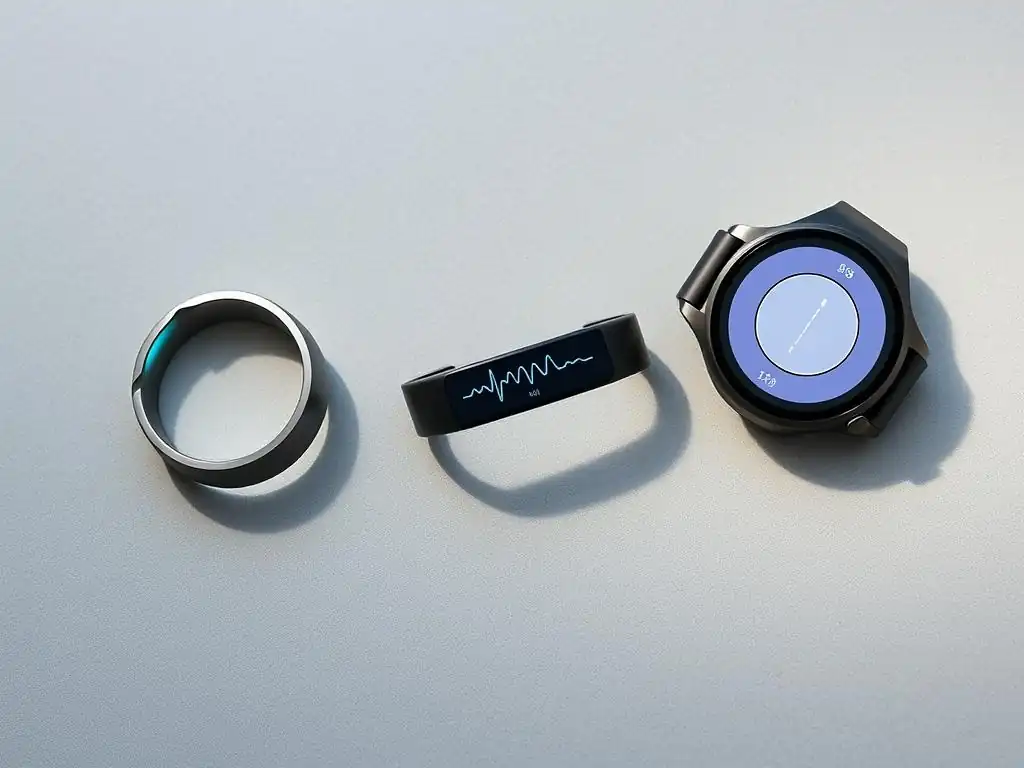
Stress tracking bands, often more minimalist than watches, tend to focus on core health and activity metrics. They are typically more affordable and less obtrusive than smartwatches, making them appealing for continuous wear. Some bands, like Whoop and Muse S, offer specialized approaches to stress, recovery, or mental well-being.
Whoop 4.0: Performance-Focused Stress and Recovery Tracking
The Whoop 4.0 band is distinct in that it operates on a subscription-only model; the hardware is effectively part of the membership. Whoop is heavily focused on providing athletes and health enthusiasts with detailed data on recovery, strain, and sleep to optimize performance and well-being. Stress tracking is integrated into its broader recovery and strain analytics.
Whoop tracks heart rate, HRV, respiratory rate, skin temperature, and blood oxygen (SpO2). These metrics are used to calculate daily Recovery and Strain scores. The Recovery score is a key indicator of your body's readiness, heavily influenced by sleep and HRV, making it a direct proxy for your ability to handle stress and physical load. Whoop's detailed analytics allow users to see how daily activities, sleep, and lifestyle choices impact their recovery and, by extension, their resilience to stress. Stress tracking wearable reviews for Whoop often highlight its in-depth data analysis and coaching features.
Whoop's Strain Score: Understanding Your Body's Limits
Whoop calculates a daily Strain score based on the cardiovascular load accumulated throughout the day from exercise and non-exercise activity. This score helps you understand how much physiological stress you've put on your body.
The Strain score, viewed alongside the Recovery score, provides valuable context for managing stress. On days with high physical or mental stress, your Strain score might be elevated. If your Recovery score is low, indicating your body isn't well-rested, a high Strain score suggests you're pushing your body when it's not ready, potentially increasing your overall stress burden.
Whoop encourages users to balance Strain and Recovery – taking on more Strain (activity/stress) when Recovery is high, and prioritizing rest when Recovery is low. This framework directly relates physical/mental load (Strain) to the body's ability to cope (Recovery, influenced by stress).
Whoop Membership: A Data-Driven Approach to Stress Management
The Whoop experience is entirely dependent on its membership. The subscription provides access to the Whoop app, which processes the raw data from the band into actionable insights, scores, and coaching recommendations. Without the membership, the band is non-functional.
The membership includes detailed analytics on sleep stages, HRV trends, resting heart rate, recovery status, and strain. It also offers features like the Sleep Coach, Strain Coach, and a monthly performance report that summarizes your data and trends. For users who want a deep, data-driven understanding of their physiological state, including how stress impacts their recovery and performance, the Whoop membership provides the necessary tools and analysis. Stress tracking wearable reviews for Whoop always emphasize that the membership cost is the primary investment, not just the hardware.
Muse S (Gen 2): Brainwave Sensing for Real-Time Stress Reduction
The Muse S (Gen 2) is different from typical stress tracking wearables because it focuses on providing real-time feedback during meditation and sleep using electroencephalography (EEG) brainwave sensing. While it tracks basic metrics like heart rate and sleep, its primary function is as a tool for active stress reduction through guided mindfulness and meditation.
The headband is worn during meditation sessions or overnight sleep. During meditation, it provides audio feedback based on your brain activity, heart rate, and body movement, guiding you towards a calmer state. This real-time feedback helps users learn to recognize and manage their mental state, which is directly relevant to stress reduction. For sleep, it offers sleep tracking and guided "Sleep Journeys" designed to help users fall asleep more easily. Stress tracking wearable reviews for Muse focus on its unique biofeedback approach rather than passive stress monitoring.
Muse S's Meditation Programs: Guided Mindfulness for Stress Relief
Muse S offers a variety of guided meditation programs within the Muse app. These programs use the headband's sensors to provide real-time auditory feedback. For example, during a "Mindfulness" meditation, if your mind is active, you might hear stormy weather sounds; as your mind calms, the sounds transition to peaceful birdsong. This immediate feedback helps users stay focused and learn what it feels like to enter a calm state.
This active engagement with managing one's mental state is a direct method of addressing stress. By practicing with Muse, users can develop skills to quiet a racing mind, reduce anxiety, and cultivate a sense of calm, which are essential for building resilience to stress. Stress tracking wearable reviews of Muse often highlight the effectiveness of its biofeedback in making meditation more accessible and engaging for beginners and experienced practitioners alike.
Muse App: Tracking Your Brain Activity During Meditation
The Muse app is where all the data from the headband is processed and presented. For meditation sessions, the app shows graphs of your brain activity (EEG), heart rate, and stillness levels throughout the session. It provides scores for Mind Calm, Heart, and Body, giving you objective feedback on your performance.
Over time, the app tracks your progress, showing trends in your ability to reach a calm state during meditation. While it doesn't give a single "stress score" for the day, the data from meditation sessions provides insight into your mental state and your ability to manage it.
The sleep tracking features in the app provide data on sleep stages and position, with reports on how your body and mind performed during guided sleep journeys. Stress tracking wearable reviews for Muse emphasize that its value lies in using the technology to actively train your mind for stress reduction, rather than just passively monitoring stress levels.
Deciding if a Stress Tracking Band is Right for You
Stress tracking bands offer a focused approach, often prioritizing specific metrics like recovery (Whoop) or active mental training (Muse S). They are generally less feature-rich than smartwatches but are typically more comfortable for 24/7 wear and sleep tracking. Whoop is ideal for those who want deep, continuous physiological data focused on recovery, performance, and how stress impacts these areas, and are comfortable with a subscription model.
The Muse S is best suited for individuals who want a tool specifically for improving their meditation practice and learning to manage their mental state in real-time, rather than just tracking stress passively. When considering stress tracking wearable reviews for bands, evaluate whether their specific focus aligns with your primary goal – is it detailed recovery data, or is it a tool to help you practice mindfulness and reduce stress actively?
Maximizing the Benefits of Your Stress Tracking Wearable
Simply wearing a stress tracking device isn't enough to effectively manage stress. The real power lies in understanding the data it provides and integrating those insights into your daily routine and mental well-being practices. These tools are designed to be catalysts for self-awareness and action.
Integrating Stress Data into Your Mental Well-being Routine
Once you have your stress tracking wearable, make a habit of checking your data regularly – perhaps daily or weekly. Look at your stress scores, HRV trends, recovery metrics, and sleep patterns. How do these metrics correlate with your subjective feelings of stress? Did a particularly busy day at work result in lower HRV overnight? Did practicing meditation or going for a walk lower your stress score?
Use the data as prompts for reflection and action. If your device consistently shows high stress during certain times or after specific activities, that's a signal to pay attention. You might then decide to schedule short breaks, try a breathing exercise, or adjust your schedule to reduce exposure to those triggers. Integrating the data means making it a part of your self-care planning, not just a number to observe. Stress tracking wearable reviews often highlight that the most successful users are those who actively engage with their data.
Understanding Your Stress Patterns and Triggers
Wearable data is invaluable for identifying your personal stress patterns and triggers, which can often be subtle or unconscious. Over time, by correlating the objective data from your device with your daily activities, thoughts, and feelings (perhaps through journaling or mental notes), you can gain profound insights.
For example, you might notice that your HRV consistently drops on days you skip breakfast, even if you don't feel particularly stressed. Or perhaps meetings with a specific person always lead to a spike in EDA readings on your watch. These insights allow you to move from a general awareness of "feeling stressed" to understanding what specifically stresses you and how your body responds. This detailed understanding is a critical step in developing targeted coping strategies. Stress tracking wearable reviews frequently mention the power of longitudinal data for identifying these personal patterns.
Combining Wearable Data with Professional Guidance
While stress tracking wearables are powerful tools for self-awareness, they are not a substitute for professional medical or psychological advice. The data they provide offers valuable insights into your physiological state, but a therapist, counselor, or doctor can help you interpret complex patterns, understand the root causes of your stress, and develop personalized, evidence-based strategies for managing it.
Sharing your wearable data with a healthcare professional can provide them with objective information about your stress levels, sleep quality, and recovery, complementing your subjective reports. This can lead to more informed discussions and tailored interventions. For example, seeing consistently low HRV might prompt a doctor to investigate underlying health issues, or a therapist might use your stress score data to help you identify specific situations to work on in therapy. Stress tracking wearable reviews should always emphasize that these devices are aids to well-being, best used in conjunction with professional support when needed.
Conclusion: Empowering Your Mental Health with Stress Tracking Technology
Stress tracking wearables – whether rings, watches, or bands – represent a significant advancement in personal health technology, offering individuals new ways to monitor their physiological responses to stress. By providing objective data on metrics like HRV, EDA, and sleep, these devices move beyond subjective feelings, offering tangible insights into how daily life impacts our bodies and minds. Stress tracking wearable reviews consistently demonstrate that while no device is a magic bullet, they can be powerful tools for fostering self-awareness, identifying triggers, and motivating healthier habits.
Choosing the right device depends on your priorities: discreetness (rings), comprehensive features (watches), or focused metrics/approaches (bands). Regardless of the form factor, the key to maximizing benefits lies in actively engaging with the data, understanding what it signifies for your body, and using it to inform positive changes in your lifestyle and stress management techniques.
Finding the Right Balance Between Technology and Self-Care
It's crucial to remember that stress tracking technology is a tool to support self-care, not replace it. Becoming overly fixated on numbers or scores can sometimes increase anxiety. The goal is to use the data as a guide, not a rigid dictator of your well-being. Listen to your body and your feelings first, and use the wearable data as supplementary information.
The most effective approach involves using the insights from your device to reinforce healthy behaviors known to reduce stress, such as getting adequate sleep, exercising regularly, practicing mindfulness, spending time in nature, and connecting with loved ones. The wearable can help you see the impact of these behaviors on your physiological state, providing positive reinforcement and motivation. Stress tracking wearable reviews should always encourage a balanced perspective, where technology enhances, but does not dominate, your mental wellness journey.
Future Trends in Stress Tracking Wearables
The field of stress tracking wearables is continuously evolving. Future trends are likely to include more sophisticated sensors, improved algorithms for interpreting complex physiological signals, and greater integration of environmental data (like noise or air quality) that can impact stress. We may see more personalized insights and coaching driven by artificial intelligence, offering tailored recommendations based on individual patterns.
Furthermore, the integration of stress data with other health platforms and potentially even healthcare systems could become more seamless, allowing for a more holistic view of an individual's health. As technology advances, stress tracking wearables are poised to become even more valuable allies in the ongoing effort to understand, manage, and build resilience against the pervasive challenge of stress. Continued stress tracking wearable reviews will be essential to evaluate these advancements and guide consumers towards the most effective tools.
Frequently Asked Questions
What are the primary benefits of using a stress tracking wearable?
Stress tracking wearables offer real-time data on your stress levels, helping you identify stress triggers and allowing for proactive stress management. They can also promote self-awareness.
What are the key differences between stress tracking rings, watches, and bands?
Rings are typically discreet and comfortable, while watches offer additional health tracking features beyond stress. Bands are often more sport-focused and may have longer battery life.
How accurate are stress tracking wearables, and what factors can affect their reliability?
Accuracy varies by device and sensor technology. Factors like skin contact, movement, and individual physiological differences can impact the reliability of stress readings.
What features should I prioritize when choosing a stress tracking wearable?
Prioritize accurate stress detection, ease of use, comfortable fit, and compatibility with your smartphone or desired apps. Consider battery life and data visualization options.
Are there any potential drawbacks or limitations to using stress tracking wearables?
Over-reliance on data can lead to anxiety about stress levels. The devices are not a substitute for professional mental health care, and some may have limited accuracy for certain individuals.
Final Reflection: Choosing Your Path to Wellness Through Wearable Tech
The proliferation of stress-tracking wearables highlights a crucial societal shift: we're finally prioritizing mental health alongside physical well-being. This isn't just a trend; it's a recognition that managing stress is paramount to a fulfilling life, and technology is offering innovative tools to help us achieve this. The sheer variety of options, from sleek rings to robust watches, underscores the growing demand for accessible and personalized stress management solutions.
The journey through this review process has underscored the profound impact technology can have on our self-awareness. It's not just about numbers on a screen; it's about gaining a deeper understanding of our own responses to stress, identifying triggers, and developing coping mechanisms. As the philosopher Seneca once wrote, Every new beginning comes from some other beginning's end.
This applies perfectly to our relationship with stress; understanding our patterns allows us to consciously break negative cycles and begin anew, healthier and more resilient.
Consider this your call to action. Don't just passively consume information; actively engage with it. Research the options presented, consider your lifestyle and personal preferences, and choose the stress-tracking wearable that best suits your needs. The path to wellness is a personal one, and these devices are merely tools to empower you on your journey. Embrace the opportunity for self-discovery, and begin building a healthier, more mindful relationship with yourself and your stress levels.
Unlock Your Stress-Free Potential: Take Control Now!
Thanks for diving into the world of stress-tracking wearables with us! We hope you gained a clearer understanding of which device might best suit your needs. Ready to take the next step towards a more balanced and mindful you?
- Choose your perfect stress-tracking companion: Consider the features we discussed and select the ring, watch, or band that resonates most with your lifestyle and goals. This is your first step to mindful self-monitoring!
- Share your experience: Tell us (and others!) which device you chose and why! Join the conversation in the comments below – sharing your journey helps others find their path to better stress management.
- Explore mindful practices: Complement your tech with mindfulness exercises. Even a few minutes a day can make a big difference. Discover resources and techniques online or in your local community.
Ready to start your journey toward a calmer, more focused you? What's your biggest stress trigger, and how will this new tool help you manage it?