
Effortless Peace: How to Integrate Mindfulness Seamlessly


Welcome to Mind Care Guide.
Feeling overwhelmed? You're not alone. In today's fast-paced world, finding moments of genuine peace can seem impossible. But what if we told you there's a simple, yet powerful tool you already possess? Our latest article, " Mindfulness for everyday peace," explores how you can cultivate a sense of calm and presence, even amidst the chaos. Curious to discover how to weave mindfulness into your daily life for effortless tranquility? Let's begin your journey to inner peace...
Effortless Peace: How to Integrate Mindfulness Seamlessly
- Mindfulness for Everyday Peace: A Mind Care Guide
- Integrating Mindfulness Seamlessly into Your Daily Routine
- Mindfulness in Everyday Activities: Practical Tips
- Overcoming Challenges in Your Mindfulness Journey
- Advanced Mindfulness Techniques for Deeper Peace
- Resources for Continued Mindfulness Practice
- Maintaining Long-Term Mindfulness for Lasting Peace
-
Frequently Asked Questions
- What exactly is mindfulness, and how does it relate to everyday peace?
- How can I integrate mindfulness into my daily routine, even when I'm busy?
- Are there different types of mindfulness exercises I can try?
- What are the potential benefits of practicing mindfulness regularly?
- Where can I find resources and support to help me learn and practice mindfulness effectively?
- Final Reflection: Cultivating Everyday Peace Through Effortless Mindfulness
- Unveil Your Inner Calm: Start Practicing Mindfulness Today
Mindfulness for Everyday Peace: A Mind Care Guide
What is Mindfulness? Defining the Core Principles
Mindfulness, at its core, is the practice of intentionally bringing one's attention to the present moment without judgment. This means simply observing your thoughts, feelings, bodily sensations, and the surrounding environment as they arise, without getting caught up in them or trying to change them. It's about being fully present, awake to your current experience, rather than dwelling on the past or worrying about the future. This fundamental principle forms the basis for cultivating mindfulness for everyday peace, allowing you to connect more deeply with yourself and the world around you.
This practice isn't about emptying the mind or achieving a state of perpetual calm, which are common misconceptions. Instead, it's about developing a specific kind of awareness – one that is open, curious, and accepting. Think of it like learning to watch the weather: you observe the clouds, the rain, or the sun without trying to make them go away or cling to them.
Similarly, with mindfulness, you learn to observe your inner landscape – the 'weather' of your mind and emotions – with the same non-judgmental acceptance. This awareness is a powerful tool for enhancing mental well-being and finding a sense of everyday peace amidst life's inevitable ups and downs.
Benefits of Practicing Mindfulness for Mental Well-being
Regularly engaging in mindfulness practices has been shown to yield a wide array of psychological benefits, significantly contributing to overall mental well-being. One of the most well-documented advantages is the reduction of rumination – the tendency to dwell on negative thoughts. By training the mind to focus on the present, individuals can interrupt cycles of negative thinking, leading to decreased feelings of sadness and worry. Studies often show that participants in mindfulness programs report statistically significant improvements in mood states compared to control groups, highlighting its tangible impact on emotional health.
Beyond reducing negative states, mindfulness also fosters the growth of positive psychological capacities. It can enhance self-compassion, enabling a kinder and more understanding relationship with oneself, especially during difficult times. Furthermore, it improves focus and concentration, as the practice trains the mind to stay present and less prone to distraction. Many individuals find that even short, consistent periods of mindfulness practice over several weeks can lead to noticeable improvements in their ability to concentrate on tasks and appreciate daily experiences, paving the way for greater mindfulness for everyday peace.
How Mindfulness Reduces Stress and Anxiety
Mindfulness directly addresses the root causes of stress and anxiety by altering our relationship with stressful thoughts and sensations. Stress often arises not just from external pressures, but from our reaction to them – the worrying, the catastrophizing, the feeling of being overwhelmed. Mindfulness teaches us to observe these reactions without getting swept away by them. By simply noticing the physical sensations of stress (like a tight chest or rapid heartbeat) and the anxious thoughts ("I can't handle this") without judgment, their power over us diminishes. This observational stance creates a vital space between the trigger and our response.
Scientific research consistently supports the efficacy of mindfulness in stress and anxiety reduction. Programs like Mindfulness-Based Stress Reduction (MBSR) have demonstrated significant decreases in reported stress levels and symptoms of anxiety in participants across various populations. For instance, a meta-analysis of multiple studies found that mindfulness interventions led to moderate effect sizes in reducing anxiety and stress. This is often linked to observed changes in brain activity, particularly in areas associated with emotional regulation and self-awareness, illustrating how cultivating mindfulness for everyday peace can rewire our response to stressors.
Cultivating Inner Peace: The Role of Mindfulness
True inner peace isn't the absence of challenges, but the ability to navigate them with equanimity and resilience. Mindfulness plays a crucial role in cultivating this state by helping us accept the present reality, including discomfort or difficulty, without excessive struggle. When we fully acknowledge what is happening in the present moment, rather than resisting it or wishing it were different, we reduce the internal conflict that often disrupts peace. This acceptance doesn't mean resignation; it means seeing things clearly so we can respond wisely.
Furthermore, mindfulness practice strengthens our capacity for non-reactivity. We become less likely to be impulsively driven by strong emotions like anger or fear. By observing these feelings with mindful awareness, we gain the freedom to choose a response that aligns with our values, rather than being automatically controlled by the emotion. This ability to pause, observe, and choose a response is fundamental to maintaining composure and finding a sense of mindfulness for everyday peace, even when faced with external chaos or internal turbulence.
Integrating Mindfulness Seamlessly into Your Daily Routine
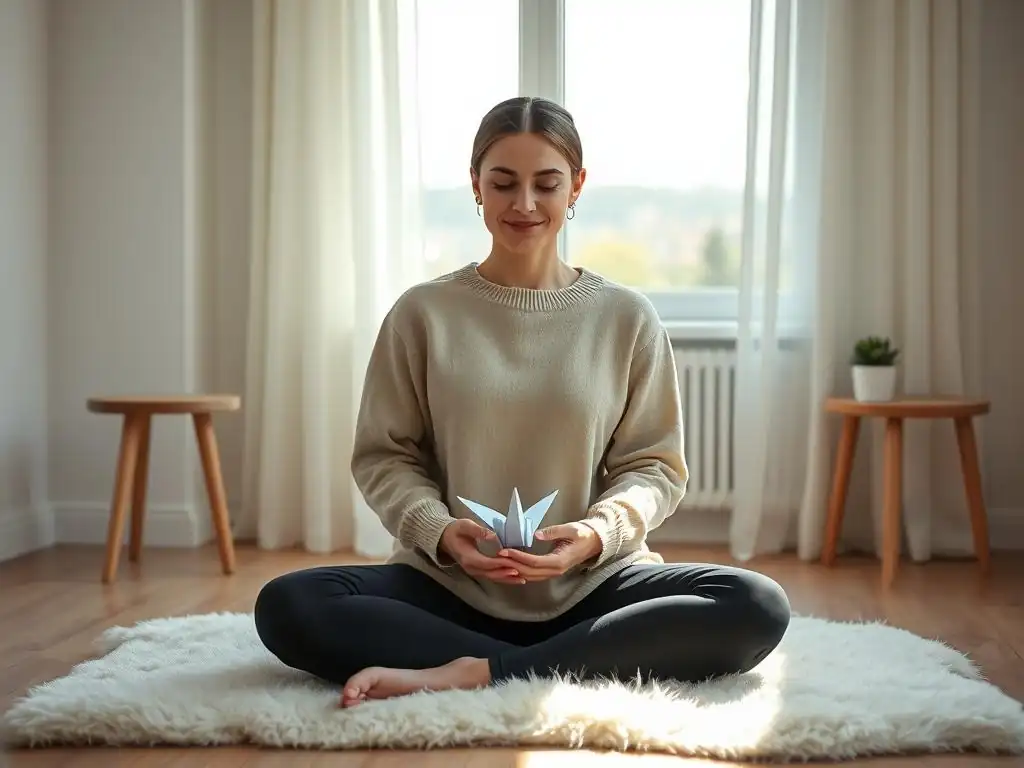
Simple Mindfulness Exercises for Beginners
Starting a mindfulness practice doesn't require hours of dedicated meditation time; small, consistent efforts can make a significant difference. One simple exercise is mindful breathing, which you can do anywhere, anytime. Just take a few moments to bring your attention to the sensation of your breath entering and leaving your body.
Notice the rise and fall of your chest or abdomen, the feeling of air in your nostrils. When your mind wanders (which it will), gently guide it back to the breath without self-criticism. Even practicing this for just one minute a few times a day can begin to anchor you in the present and foster mindfulness for everyday peace.
Another accessible exercise is a short body scan. While sitting or lying down, bring your attention sequentially to different parts of your body, starting from your toes and moving up to your head. Simply notice any sensations present – warmth, coolness, tingling, tension – without trying to change them. This helps you connect with your physical self and ground yourself in the present moment. These simple techniques can be woven into existing routines, like waiting in line or during a commute, making mindfulness for everyday peace a practical reality rather than an abstract concept.
Mindfulness Meditation Techniques for Everyday Peace
Dedicated mindfulness meditation sessions, even brief ones, can deepen your practice and enhance your ability to find everyday peace. Sitting meditation is a common form: find a comfortable seated position, either on a cushion on the floor or on a chair, with your spine relatively straight but relaxed. Close your eyes gently or soften your gaze. Choose an anchor for your attention, such as the breath, bodily sensations, or sounds. When your mind inevitably gets distracted, acknowledge the thought or sensation without judgment and gently return your attention to your anchor.
Walking meditation is another powerful technique that integrates mindfulness into movement. Find a quiet space where you can walk slowly back and forth or in a circle. Bring your attention to the physical sensations of walking – the lifting of the foot, the movement through the air, the placement of the foot on the ground, the shift of weight.
Notice the rhythm and pace. If your mind wanders, gently bring it back to the sensations of walking. Practicing these techniques, even for 5-10 minutes daily, can significantly strengthen your capacity for mindfulness for everyday peace by training your attention and cultivating present moment awareness.
Mindful Breathing Exercises to Reduce Stress
Mindful breathing is perhaps the most fundamental and accessible mindfulness technique, particularly effective for managing stress in the moment. The basic practice involves simply paying attention to the natural flow of your breath. Notice the inhale and the exhale. You can focus on the physical sensations: the cool air entering your nostrils, the warmth leaving; the expansion and contraction of your belly or chest; the subtle pause between breaths. The key is to observe the breath as it is, without trying to control or change it, using it as an anchor to the present moment.
A slightly more structured mindful breathing exercise is the 4-7-8 technique, though it borders on breath control rather than pure mindful observation, it can be useful for calming the nervous system. Inhale deeply through your nose for a count of 4, hold your breath for a count of 7, and exhale completely through your mouth for a count of 8.
Repeat this cycle a few times. While this technique involves manipulation of the breath, focusing on the counting and the physical sensations still brings attention to the present, effectively interrupting stress responses and helping to restore a sense of mindfulness for everyday peace.
Body Scan Meditation for Increased Self-Awareness
The body scan meditation is a systematic practice designed to bring mindful awareness to different regions of the body, enhancing physical self-awareness and promoting relaxation. It typically involves lying down comfortably, closing your eyes, and bringing your attention sequentially to each part of your body, starting usually from the toes and moving all the way up to the crown of the head. As you focus on each area, you simply notice any sensations present – warmth, coldness, tingling, pressure, tension, absence of sensation – without trying to change them or judge them.
This process helps you become more attuned to the subtle signals your body sends, which can be particularly useful for recognizing early signs of stress or tension that you might otherwise overlook. By systematically moving your attention through the body, the practice also helps to quiet the busy mind by giving it a specific, concrete object of focus. Regular body scans can improve interoceptive awareness (the ability to perceive internal bodily states) and help release physical tension, contributing significantly to a sense of grounding and mindfulness for everyday peace.
Mindfulness in Everyday Activities: Practical Tips
Mindful Eating: Savoring Each Bite
Mindful eating is about bringing full awareness to the experience of eating, transforming a routine activity into an opportunity for present moment connection. Instead of rushing through meals or eating while distracted, mindful eating encourages you to pay attention to the entire process. Begin by observing the food with your senses: notice its appearance, colors, and textures. As you lift the food, pay attention to the weight and smell. Chew slowly, focusing on the flavors, the texture, and how the food feels in your mouth. Notice the impulse to swallow and the sensation as the food moves down.
This practice helps you become more aware of your body's hunger and fullness signals, potentially leading to healthier eating habits. It also allows you to truly appreciate your food, enhancing the pleasure of eating. Consider taking just one minute before a meal to simply sit with your food, breathe, and set an intention to eat mindfully. This simple step can significantly shift your experience from rushed consumption to a nourishing, present activity, contributing to a sense of mindfulness for everyday peace in a fundamental daily routine.
Mindful Walking: Connecting with Your Surroundings
Mindful walking transforms the simple act of getting from one place to another into a practice of awareness. It can be done anywhere – in a park, down a street, or even indoors. The core principle is to bring your attention fully to the experience of walking. Pay attention to the physical sensations in your feet and legs: the lifting, the movement, the contact with the ground, the shift of weight. Notice the rhythm of your steps and your breathing.
Beyond the physical sensations, expand your awareness to your surroundings. Notice the sights, sounds, and smells around you without getting lost in thought about them. Observe the colors of the leaves, the sounds of traffic, the feeling of the air on your skin. When your mind wanders to destinations or to-do lists, gently bring your attention back to the present experience of walking. This practice not only provides physical activity but also grounds you in the present environment, making even a short walk an opportunity to cultivate mindfulness for everyday peace.
Mindful Communication: Active Listening and Empathetic Responses
Mindful communication involves bringing present moment awareness and intention to our interactions with others. It starts with active listening – truly paying attention to what the other person is saying, rather than formulating your response while they are still speaking. This means focusing on their words, tone of voice, and non-verbal cues, and trying to understand their perspective without interruption or judgment. Put away distractions like phones and give the speaker your full attention.
Responding mindfully means taking a moment before speaking to consider your words and their potential impact. It involves checking in with your own emotions and intentions and choosing a response that is clear, honest, and delivered with kindness and empathy. Instead of reacting impulsively, mindful communication allows for a more thoughtful and compassionate exchange. Practicing mindful communication can improve relationships, reduce misunderstandings, and contribute to a more peaceful and connected experience in your daily interactions, fostering mindfulness for everyday peace in your social life.
Mindful Working: Enhancing Focus and Productivity
Integrating mindfulness into your workday can significantly enhance focus, reduce stress, and improve overall productivity and job satisfaction. This doesn't mean meditating at your desk for hours, but rather bringing mindful awareness to your tasks and transitions throughout the day. When starting a task, take a moment to set an intention and focus your attention solely on the work at hand. When your mind wanders to other tasks or distractions, gently notice the thought and guide your attention back to the current activity.
Taking short mindful breaks can also be highly beneficial. Instead of scrolling through social media, take a few minutes to simply focus on your breath, stretch mindfully, or look out a window and notice the details of the external environment. When transitioning between tasks, take a conscious pause to clear your mind and set your intention for the next activity. By bringing present moment awareness to your work, you can reduce errors, manage stress more effectively, and experience a greater sense of engagement and accomplishment, supporting mindfulness for everyday peace in your professional life.
Overcoming Challenges in Your Mindfulness Journey
Common Obstacles to Mindfulness Practice
Embarking on a mindfulness journey often reveals common hurdles that can challenge consistency and progress. One frequent obstacle is the belief that you are "doing it wrong," especially when the mind is very busy during meditation. It's important to remember that a wandering mind is not a sign of failure; it's simply what the mind does. The practice is in noticing the wandering and gently returning your attention, over and over. This internal critique ("I'm not good at this") can be a significant barrier to cultivating mindfulness for everyday peace.
Another common challenge is impatience – expecting immediate, dramatic results or feeling frustrated when peace doesn't instantly arrive. Mindfulness is a skill that develops over time with consistent effort, much like learning a musical instrument or a sport. Progress is often subtle and gradual. External factors like a noisy environment, lack of dedicated time, or physical discomfort can also make practice difficult. Recognizing these common obstacles as normal parts of the process, rather than insurmountable barriers, is the first step in navigating them effectively.
Tips for Staying Consistent with Mindfulness
Consistency is often more important than duration when it comes to reaping the benefits of mindfulness. To stay consistent, try integrating short bursts of mindfulness into your existing daily routines. Link a mindfulness practice to an activity you already do, such as brushing your teeth (mindful brushing), waiting for coffee to brew (mindful waiting), or before starting your car (mindful pause). This requires less willpower than setting aside entirely new blocks of time. Even 1-2 minutes of mindful breathing or awareness can be beneficial.
Another helpful tip is to be flexible and kind to yourself. If you miss a day or a session, don't dwell on it or use it as an excuse to stop entirely. Simply acknowledge it without judgment and recommit to practicing again as soon as you can.
Consider using reminders on your phone or calendar to prompt your practice. Finding an accountability partner or joining a group can also provide motivation. Remembering why you want to cultivate mindfulness for everyday peace – the desire for less stress, more focus, or greater well-being – can also be a powerful motivator to stay consistent.
Dealing with Distractions During Meditation
Distractions are a completely normal and expected part of mindfulness meditation. The goal is not to eliminate distractions, but to change your relationship with them. When you notice your mind has wandered – perhaps to a thought about the future, a memory of the past, a sound, or a physical sensation – acknowledge the distraction gently. Simply note it, perhaps silently saying "thinking," "hearing," or "feeling." The key is to do this without judgment or getting swept away by the content of the distraction.
Once you've acknowledged the distraction, gently guide your attention back to your chosen anchor, whether it's the breath, bodily sensations, or sounds. Think of it like training a puppy; when it wanders off, you gently lead it back, patiently and repeatedly. Each time you notice a distraction and redirect your attention, you are strengthening your capacity for focus and present moment awareness.
This repeated act of noticing and returning is the core practice, not the absence of distractions. Practicing this skill helps you manage distractions not just in meditation, but also in daily life, enhancing your ability to maintain mindfulness for everyday peace.
Finding Time for Mindfulness in a Busy Schedule
Many people feel they don't have enough time for mindfulness, especially in demanding modern lives. However, mindfulness isn't just about formal meditation; it's also about bringing awareness to everyday activities. Start small – even 5 minutes a day can make a difference. Can you wake up 5 minutes earlier? Can you use 5 minutes of your commute? Can you take 5 minutes during your lunch break? Look for pockets of time that are already available.
Consider integrating mindfulness into activities you already do, as mentioned earlier (mindful eating, walking, etc.). This "informal" practice allows you to cultivate awareness throughout the day without needing extra time. You can also break up longer sessions into shorter ones; two 10-minute sessions might be more feasible than one 20-minute session. Ultimately, finding time for mindfulness for everyday peace often requires prioritizing it and recognizing that even short periods of practice can have a cumulative positive effect on your well-being and ability to navigate a busy schedule.
Advanced Mindfulness Techniques for Deeper Peace
Cultivating Loving-Kindness Meditation
Loving-kindness meditation, also known as Metta meditation, is a powerful practice that complements mindfulness by cultivating feelings of warmth, compassion, and friendliness towards oneself and others. While traditional mindfulness often focuses on observing the present moment with non-judgmental awareness, Metta actively generates positive emotional states. The practice typically involves silently repeating phrases that express goodwill, such as "May I be happy," "May I be healthy," "May I be safe," and "May I live with ease."
These phrases are first directed towards oneself, then towards loved ones, neutral persons, difficult persons, and finally towards all beings. The intention is to sincerely wish well-being for each group. Regularly practicing loving-kindness can reduce self-criticism, improve relationships, and decrease feelings of anger and resentment. It fosters a sense of interconnectedness and warmth that can significantly deepen your experience of inner peace and extend the benefits of mindfulness for everyday peace into your interactions with the world.
Developing Insight Through Mindfulness
Beyond simply observing the present moment, sustained mindfulness practice can lead to profound insights into the nature of reality, the mind, and the self. This deeper understanding often arises spontaneously as awareness sharpens. Through mindful observation, one begins to see how thoughts and emotions are impermanent, arising and passing away like waves. This insight into impermanence (anicca) can reduce suffering caused by clinging to pleasant experiences or resisting unpleasant ones.
Mindfulness also helps reveal the impersonal nature of mental phenomena – seeing thoughts and feelings as simply mental events, rather than absolute truths or intrinsic aspects of a fixed "self." This insight into non-self (anatta) can loosen the grip of ego and self-referential thinking. Furthermore, it can illuminate the nature of suffering (dukkha) itself – how it often stems from craving and aversion. These insights, cultivated through diligent mindfulness practice, can lead to a more profound and stable sense of peace that transcends temporary circumstances, enriching your capacity for mindfulness for everyday peace at a deeper level.
Integrating Mindfulness into Difficult Emotions
One of the most challenging yet rewarding aspects of mindfulness is learning to be present with difficult emotions. Our natural tendency is often to avoid, suppress, or be overwhelmed by unpleasant feelings like sadness, anger, or fear. Mindfulness offers an alternative: approaching these emotions with curiosity and acceptance. When a difficult emotion arises, instead of getting lost in the story surrounding it, you can practice simply noticing the physical sensations associated with it in the body. Where do you feel the anger? Is it heat in the chest, tightness in the jaw?
You can also observe the thoughts that accompany the emotion without necessarily believing them. Use phrases like "Here is sadness" or "This is anger" to acknowledge the emotion as a temporary experience. By bringing non-judgmental awareness to difficult emotions, you create space around them and reduce their intensity. This doesn't mean the emotion disappears immediately, but its power to control you diminishes. Learning to sit with discomfort mindfully is a crucial skill for emotional resilience and is essential for maintaining mindfulness for everyday peace even during life's most challenging moments.
Resources for Continued Mindfulness Practice
Recommended Books on Mindfulness and Meditation
For those wishing to deepen their understanding and practice of mindfulness, books offer a wealth of wisdom and guidance. Many foundational texts explore the principles of mindfulness, its historical context, and practical instructions for various meditation techniques. Look for books by established teachers in the field who offer clear, accessible explanations and step-by-step guidance. Some books focus specifically on applying mindfulness to stress reduction, while others delve into its role in emotional regulation or cultivating compassion.
Finding a book that resonates with your learning style and current level of experience is key. Some texts are more theoretical, exploring the philosophy behind mindfulness, while others are highly practical, filled with specific exercises and guided meditations presented in written form. Reading about the experiences and insights of long-term practitioners can also be incredibly inspiring and provide valuable context for your own journey towards cultivating mindfulness for everyday peace.
Online Mindfulness Courses and Apps
The digital age provides numerous convenient resources for learning and practicing mindfulness. Online courses offer structured programs, often including video lessons, guided audio meditations, and supplementary materials. These courses can range from introductory programs for beginners to more advanced studies, allowing you to learn at your own pace and from the comfort of your home. Many are based on established curricula like MBSR or MBCT (Mindfulness-Based Cognitive Therapy).
Mindfulness apps offer accessible tools for daily practice. They typically feature a library of guided meditations of varying lengths and themes (e.g., stress reduction, sleep, focus), timers for unguided practice, and sometimes mood tracking or progress features. While apps can be a great way to start and maintain a regular practice, it's worth exploring different options to find one whose style and content resonate with you. These digital resources make incorporating mindfulness for everyday peace into a busy life more manageable.
Local Mindfulness Groups and Retreats
Practicing mindfulness within a community can be incredibly supportive and enriching. Many cities and towns have local meditation or mindfulness groups that meet regularly for guided practice and discussion. These groups provide an opportunity to connect with others on a similar path, share experiences (if desired), and receive guidance from experienced facilitators. The shared intention and energy of a group can deepen individual practice and provide a sense of belonging.
Attending a mindfulness retreat, ranging from a single day to several days or even weeks, offers an immersive experience away from daily distractions. Retreats provide extended periods for silent practice, guided meditations, teachings, and often opportunities for one-on-one guidance from a teacher. While potentially more intensive, retreats can lead to significant breakthroughs in practice and understanding, offering a profound opportunity to cultivate mindfulness for everyday peace in a dedicated environment.
Maintaining Long-Term Mindfulness for Lasting Peace
The Importance of Regular Practice
Just like physical exercise builds strength and stamina, regular mindfulness practice builds mental resilience and present moment awareness. The benefits of mindfulness are cumulative; consistent, even short, daily practice is far more effective in the long run than infrequent, lengthy sessions. Think of it as training a muscle – you need to work it consistently for it to become strong and reliable. Regular practice helps to strengthen the neural pathways associated with focus, emotional regulation, and self-awareness.
Maintaining a routine, even when motivation wanes, is key to experiencing the lasting benefits of mindfulness for everyday peace. It allows the skills learned in formal or informal practice to become more integrated into your default way of being. Over time, you may find that you naturally bring more awareness and less judgment to your experiences throughout the day, even when not actively "practicing." This consistent effort transforms mindfulness from a technique into a way of life.
Integrating Mindfulness into Your Personal Values
For mindfulness to become a sustainable and deeply embedded part of your life, it's helpful to connect the practice with your core personal values. Consider why mindfulness matters to you. Is it because you value peace, patience, compassion, clarity, or connection? Understanding how mindfulness supports these values can provide intrinsic motivation to continue practicing, especially when faced with challenges or plateaus.
For example, if you value being a patient parent, recognizing how mindful breathing can help you respond more calmly to a child's tantrum aligns mindfulness directly with that value. If you value meaningful work, seeing how mindfulness enhances your focus and presence in your job connects the practice to your professional goals. By weaving mindfulness into the fabric of what is most important to you, you create a compelling reason to maintain your commitment and cultivate mindfulness for everyday peace not just as a skill, but as an expression of who you want to be.
Sharing your mindfulness journey and insights with others can be a powerful way to reinforce your own practice and contribute to the well-being of those around you. This doesn't necessarily mean becoming a teacher, but simply talking about your experiences with friends or family who are curious, or modeling mindful behavior in your interactions. Explaining how mindfulness has helped you manage stress or find peace can inspire others to explore it for themselves.
You might also consider inviting others to practice with you, perhaps starting a small informal group for mindful walking or a short guided meditation. Sharing resources you've found helpful, like a book or an app, can also support others. By sharing the principles and benefits of mindfulness for everyday peace, you not only deepen your own understanding through articulation but also help spread its positive effects, creating a ripple effect of greater awareness and calm in your community and relationships.
Frequently Asked Questions
What exactly is mindfulness, and how does it relate to everyday peace?
Mindfulness is paying attention to the present moment without judgment. It allows you to observe your thoughts and feelings, creating inner peace by reducing reactivity to stress and promoting acceptance.
How can I integrate mindfulness into my daily routine, even when I'm busy?
Start small! Try mindful breathing for a few minutes each day or focus on your senses while doing everyday activities like eating or walking. Consistency, even in small doses, is key to building a mindfulness practice.
Are there different types of mindfulness exercises I can try?
Yes, there are many! Common practices include meditation, yoga, body scans, and mindful walking. Experiment to find what resonates with you and fits your lifestyle for increased inner peace.
What are the potential benefits of practicing mindfulness regularly?
Regular mindfulness practice can lead to reduced stress and anxiety, improved focus and concentration, and a greater sense of overall well-being. It's a powerful tool for cultivating everyday peace.
Where can I find resources and support to help me learn and practice mindfulness effectively?
Mind Care Guide offers a comprehensive guide to mental well-being, including information, resources, and support for integrating mindfulness into your life. Explore our website for expert advice and guided practices.
Final Reflection: Cultivating Everyday Peace Through Effortless Mindfulness
The pursuit of peace is not a distant aspiration; it's a daily practice woven into the fabric of our lives. The techniques explored in this article – from mindful breathing exercises to cultivating present moment awareness – are not merely theoretical concepts, but practical tools readily available to transform our experiences, reducing stress and fostering a sense of calm amidst the chaos of modern life. This isn't about escaping reality, but about engaging with it fully and consciously.
The integration of mindfulness into daily life is a journey, not a destination, and its impact resonates far beyond individual tranquility. It ripples outwards, influencing our relationships, our work, and our overall well-being. The subtle shift in perspective, the increased self-awareness, and the ability to respond rather than react – these are transformative changes. As Thich Nhat Hanh so eloquently stated: Peace is not something you can obtain. It is something you create.
This resonates deeply, highlighting the active role we each play in cultivating inner peace and sharing it with the world.
Now, consider how you can weave these practices into your own life. Start small, with a few minutes of mindful breathing each day. Notice the sensations in your body, the sounds around you, and the thoughts that arise without judgment. Let this become a daily ritual, a moment of connection with yourself and the present moment. The path to effortless peace begins with a single, mindful breath. Embrace the journey, and discover the profound tranquility that awaits.
Unveil Your Inner Calm: Start Practicing Mindfulness Today
Thank you for taking the time to explore the path to effortless peace with us! We hope you gained valuable insights into incorporating mindfulness into your daily life. Now it’s time to put these insights into action.
- Begin your mindfulness journey with a 5-minute guided meditation. Even a short session can have a profound impact on your well-being. This is your primary step towards a calmer you.
- Share this article with someone who might benefit from discovering the power of mindfulness. Let’s spread the peace!
- Consider joining a local mindfulness group or exploring online resources for further exploration. This will help you connect and deepen your practice.
Ready to cultivate a more peaceful and present you? What small step will you take today to integrate mindfulness into your life?