
The Future is Calm: Innovations in Home Biofeedback for Anxiety


Welcome to Mind Care Guide, your sanctuary for navigating the complexities of mental well-being.
Feeling overwhelmed by anxiety? You're not alone. In this digital age, finding effective and accessible relief is crucial. Dive into our exploration of innovative solutions for managing anxiety from the comfort of your own home. Discover how home biofeedback can be a game-changer, and unlock the potential for a calmer, more centered you. Intrigued? Let's explore how wearable tech is revolutionizing stress management, starting with the power of home biofeedback for anxiety relief.
The Future is Calm: Innovations in Home Biofeedback for Anxiety - Mind Care Guide
- Understanding Home Biofeedback for Anxiety Relief: A Mind Care Guide Introduction
- The Landscape of Home Biofeedback Devices for Anxiety Management
- Top Home Biofeedback Devices for Anxiety Relief in 2024
- Comparing Home Biofeedback Devices: Finding the Right Fit for Your Needs
- How to Use Home Biofeedback Effectively for Anxiety Reduction
- Beyond Devices: Combining Home Biofeedback with Other Anxiety Management Techniques
- The Future of Home Biofeedback: Innovations and Emerging Technologies
- Investing in Your Calm: Choosing the Right Home Biofeedback Device
-
Frequently Asked Questions
- What is home biofeedback, and how can it help with anxiety?
- How does home biofeedback differ from traditional biofeedback therapy?
- What types of home biofeedback devices are available for anxiety relief?
- How effective is home biofeedback for reducing anxiety?
- What are the potential benefits and drawbacks of using home biofeedback for anxiety?
- Final Reflection: Finding Calm in the Digital Age
- Unlock Your Inner Calm: Start Your Biofeedback Journey Today!
Understanding Home Biofeedback for Anxiety Relief: A Mind Care Guide Introduction
What is Biofeedback and How Does it Help with Anxiety?
Biofeedback is a technique used to learn to control bodily functions, such as heart rate, breathing, and muscle tension. During a biofeedback session, you are connected to sensors that measure these physiological responses. The device then provides real-time information about these measurements, often displayed on a screen or through auditory signals. This immediate feedback allows you to become more aware of your body's reactions to stress and anxiety. For instance, you might see your heart rate spike when you think about a stressful situation or notice muscle tension increase in your shoulders.
By observing these responses, you can learn to consciously influence them using relaxation techniques like deep breathing, meditation, or guided imagery. The goal is to practice these techniques while monitoring your biofeedback data, training your body and mind to respond differently to stressors. Over time, with consistent practice, you can develop the ability to lower your heart rate, relax tense muscles, or alter other physiological responses without the aid of the biofeedback device.
This learned self-regulation can significantly reduce the physical symptoms associated with anxiety, offering a practical pathway towards home biofeedback anxiety relief. Studies have indicated that biofeedback can help individuals achieve a state of calm, with some participants reporting a noticeable reduction in anxiety symptoms after a structured training program.
The Growing Need for Accessible Anxiety Relief Solutions
Anxiety disorders are among the most common mental health conditions globally, affecting millions of people. According to the World Health Organization, anxiety disorders impact approximately 4% of the world's population. The demand for effective, non-pharmacological anxiety management tools is high, driven by factors such as the desire for alternative or supplementary treatments, concerns about medication side effects, and the simple need for convenient access to support. Traditional therapy and clinical biofeedback sessions require appointments, travel, and can be costly, creating barriers for many individuals seeking help.
This growing need has fueled innovation in the field of mental wellness technology, particularly in developing solutions that can be used from the comfort and privacy of one's home. Home biofeedback devices offer a promising avenue for accessible anxiety relief. They provide individuals with the tools to practice stress and anxiety management techniques on their own schedule, whenever and wherever they feel the need. This accessibility democratizes biofeedback training, making it a viable option for a wider range of people looking to gain better control over their physiological responses to stress and improve their overall mental well-being.
The Landscape of Home Biofeedback Devices for Anxiety Management
Heart Rate Variability (HRV) Biofeedback: A Cornerstone of Calm
Heart Rate Variability (HRV) biofeedback focuses on the natural variation in the time interval between consecutive heartbeats. Contrary to what might seem intuitive, a higher HRV generally indicates a healthier, more resilient nervous system that can adapt effectively to stress. Low HRV, on the other hand, is often associated with stress, anxiety, and burnout. HRV biofeedback devices measure this variability, typically using sensors placed on a finger or earlobe. The feedback, often presented visually as graphs or engaging exercises on an app, helps users see how their breathing patterns and mental state influence their HRV.
The core principle behind HRV biofeedback for anxiety is learning to increase your HRV through paced breathing and relaxation exercises. By practicing slow, diaphragmatic breathing at a specific rate (often around 5-6 breaths per minute), individuals can synchronize their heart rate and respiration, leading to an increase in HRV. This coherent state promotes a shift towards the parasympathetic nervous system, often referred to as the "rest and digest" state, which counteracts the "fight or flight" response associated with anxiety.
Consistent HRV biofeedback training can help individuals build resilience to stress, reduce feelings of being overwhelmed, and achieve a greater sense of calm, directly contributing to home biofeedback anxiety relief. Many devices provide scores or visual cues to track progress, encouraging regular practice.
Brainwave (EEG) Biofeedback: Training Your Mind for Serenity
Brainwave biofeedback, also known as neurofeedback, measures electrical activity in the brain using electroencephalography (EEG) sensors placed on the scalp. Different brainwave frequencies (Delta, Theta, Alpha, Beta, Gamma) are associated with different states of consciousness, ranging from deep sleep (Delta) to alert focus (Beta) and relaxed awareness (Alpha). For anxiety management, EEG biofeedback often focuses on training individuals to increase Alpha wave activity, which is characteristic of a calm, relaxed state, while potentially reducing high-frequency Beta waves that can be associated with worry and agitation.
During an EEG biofeedback session, the device provides real-time feedback based on your brainwave patterns. This feedback might come in the form of sounds, visuals (like a calming scene that brightens as your Alpha waves increase), or even controlling elements within a simple game. By observing the feedback, users learn which mental states or strategies (e.g., focusing on breathing, letting go of thoughts) help them achieve the desired brainwave patterns.
Over time, this conscious effort leads to unconscious learning, enabling individuals to more easily access relaxed mental states independent of the device. While clinical neurofeedback often involves trained practitioners, home-use EEG devices offer a more accessible way to explore brainwave training for home biofeedback anxiety relief.
Electrodermal Activity (EDA) Biofeedback: Understanding Your Body's Stress Response
Electrodermal Activity (EDA), also known as skin conductance or galvanic skin response (GSR), measures changes in the electrical conductivity of the skin. This conductivity is influenced by the activity of sweat glands, which are controlled by the sympathetic nervous system – the part of the nervous system responsible for the "fight or flight" response. When you experience stress or anxiety, your sweat glands become more active, increasing skin conductivity. EDA biofeedback devices, typically worn on the fingers or wrist, detect these subtle changes.
The feedback from an EDA device allows you to see or hear how your body's physiological arousal changes in response to thoughts, feelings, or external stimuli. For example, you might notice your EDA levels rise when you anticipate a stressful event. By practicing relaxation techniques like deep breathing or progressive muscle relaxation while observing your EDA feedback, you learn to consciously lower your physiological arousal levels.
The device provides objective evidence of your body calming down, reinforcing the effectiveness of your relaxation efforts. This awareness and control over your body's stress response is a key component of home biofeedback anxiety relief, helping individuals manage the physical manifestations of anxious feelings.
Top Home Biofeedback Devices for Anxiety Relief in 2024

Muse S (Gen 2): Brainwave Biofeedback for Meditation and Sleep
The Muse S (Gen 2) is a comfortable, fabric headband designed to be worn during meditation or sleep. It primarily uses EEG sensors to measure brain activity, providing real-time audio feedback based on your brainwaves. The device also includes PPG and accelerometer sensors to track heart rate, body movement, and breathing. Its main focus is guiding users through meditation sessions by translating brain states into environmental sounds – for example, calm brain activity might produce peaceful weather sounds, while a wandering mind might trigger sounds of a storm.
Features and Benefits of Muse S (Gen 2) for Anxiety Reduction
The Muse S (Gen 2) offers several features beneficial for home biofeedback anxiety relief. Its core strength is providing objective feedback on your meditation practice, helping you learn to quiet your mind and enter a more relaxed state characterized by increased Alpha wave activity. The 'Mind' meditation sessions specifically target mental calmness. The device also tracks heart rate and breathing, offering a multi-modal approach.
Its 'Sleep' features include soundscapes and guided meditations designed to promote relaxation before bed, addressing sleep disturbances often linked with anxiety. The companion app provides detailed session summaries, allowing users to track their progress over time and see how their brain activity, heart rate, and stillness change with practice. This data-driven approach can be highly motivating for consistent use. The device typically costs around $400 USD, often requiring a subscription for full access to guided content and detailed tracking.
Price and Availability of Muse S (Gen 2)
The Muse S (Gen 2) is available for purchase directly from the manufacturer's website and through various online retailers. As of early 2024, the device itself usually retails for approximately $400 USD.
It's important to note that access to the full library of guided meditations, biofeedback soundscapes, and advanced tracking features typically requires a subscription to the Muse Premium service, which is an additional recurring cost, potentially around $13 USD per month or an annual fee offering a slight discount. While the initial device cost is an investment, the subscription model provides ongoing content and support for consistent home biofeedback anxiety relief training.
Sensate 2: Vagus Nerve Stimulation for Immediate Relaxation
Sensate 2 is a unique device that uses infrasound resonance and guided soundscapes to stimulate the vagus nerve, a major nerve pathway connecting the brain to the body's organs, playing a key role in regulating stress and relaxation. The device is a smooth, pebble-shaped object placed on the chest bone (sternum). When activated, it emits gentle, non-invasive vibrations combined with specially designed audio tracks played through headphones. This combination is intended to send signals through the vagus nerve pathway, promoting a sense of calm and relaxation.
How Sensate 2 Works to Reduce Anxiety Symptoms
The principle behind Sensate 2 is vagal nerve toning. A well-toned vagus nerve is associated with better stress resilience and a quicker recovery from stress responses. By emitting specific infrasound frequencies alongside therapeutic music, Sensate 2 aims to gently stimulate the vagus nerve from the chest area.
Users report feeling a sense of calm and reduced physical tension during and after sessions, which typically last 10-30 minutes. While not traditional biofeedback that measures your own physiological response directly, it's included here because it works on a key physiological system involved in stress and is used in a similar self-management context for home biofeedback anxiety relief. The device is designed to help interrupt the stress cycle and provide a rapid relaxation response.
User Experience and Long-Term Benefits of Sensate 2
Users typically find Sensate 2 easy to use; you simply lie down, place the device on your chest, put on headphones, and start a session via the app. The experience is designed to be passive and relaxing. Many users report feeling calmer and less tense after just one session.
Long-term benefits, according to the company and user testimonials, may include improved stress resilience, better sleep quality, and a general reduction in anxiety symptoms over time with consistent use (e.g., daily sessions). The device itself costs around $300 USD, and the app with its library of soundscapes and programs is typically included with the purchase, though there might be premium content requiring a subscription.
Lief Therapeutics: Wearable HRV Biofeedback for Daily Stress Management
Lief Therapeutics is a small, wearable device designed to be worn discreetly under clothing, typically on the torso. It measures your heart rate and ECG, providing real-time HRV biofeedback throughout the day. Unlike devices used only for dedicated sessions, Lief offers continuous monitoring and gentle biofeedback exercises you can do anytime, anywhere. When the device detects an increase in stress based on your HRV patterns, it can provide subtle vibrations to prompt you to engage in a short, guided breathing exercise.
Key Features and Affordability of Lief Therapeutics
Key features of Lief Therapeutics include its wearable form factor for continuous monitoring, its focus on HRV biofeedback triggered by real-time stress detection, and guided breathing exercises delivered through vibrations. The device connects to a smartphone app where you can track your HRV trends over time, see how specific events or activities impact your stress levels, and review your progress in completing the guided breathing exercises. This discreet, on-the-go approach makes it suitable for integrating home biofeedback anxiety relief into a busy daily life.
The device is positioned as a tool for building resilience and managing stress throughout the day. The price for Lief Therapeutics was historically around $250-$300 USD, though availability can vary.
Potential Drawbacks and Considerations for Lief Therapeutics
One potential drawback of a wearable device like Lief is the need for consistent charging and calibration. Comfort and discreetness can also be subjective depending on the individual and their clothing choices. While the real-time stress detection and vibration prompts are a unique benefit, some users might prefer dedicated, longer sessions for biofeedback training rather than short, prompted exercises. Additionally, as with any wearable tech, data privacy and security should be considered. Potential users should research the current availability and pricing, as the market for wearable biofeedback devices can change.
Comparing Home Biofeedback Devices: Finding the Right Fit for Your Needs
HRV vs. EEG vs. EDA: Which Biofeedback Type is Best for You?
Choosing the right type of home biofeedback for anxiety relief depends largely on the specific symptoms you want to address and your personal preferences.
- HRV biofeedback is excellent for learning to regulate your heart rate and breathing, which are often directly impacted by anxiety. It's particularly useful if you experience physical symptoms like rapid heart rate, shortness of breath, or panic-like sensations. Training focuses on improving your nervous system's resilience.
- EEG biofeedback is more focused on the mental aspects of anxiety, helping you learn to shift your brainwave patterns towards states of calm and focus. It might be a good fit if you struggle with racing thoughts, excessive worry, or difficulty quieting your mind. It requires more direct mental engagement.
- EDA biofeedback provides insight into your body's general arousal level. It's helpful for becoming aware of how your physiological state changes in response to stressors and for practicing relaxation techniques to visibly lower your skin conductivity. It can be a good starting point for understanding your body's stress signals.
Consider which physical or mental manifestations of anxiety are most prominent for you and choose a biofeedback type that directly addresses those symptoms. Many people find value in starting with HRV due to its direct link to breathing and heart rate control.
Price Point Comparison: Investing in Your Mental Well-being
The cost of home biofeedback devices for anxiety relief varies significantly, generally ranging from under $100 to over $500 USD. Entry-level devices might focus on a single modality like basic HRV or EDA feedback, often connecting to a smartphone app. Mid-range devices, like the Muse S (Gen 2) or Sensate 2 (around $300-$400), typically offer more sophisticated sensing, higher build quality, and richer app experiences, potentially including guided content libraries. High-end or more specialized devices can exceed $500, sometimes offering clinical-grade accuracy or multi-modal feedback.
Beyond the initial purchase price, it's crucial to consider ongoing costs, such as subscription fees required to access premium features, guided sessions, or detailed historical data tracking. Some devices provide basic functionality for free, while others are heavily reliant on a paid subscription. When budgeting for home biofeedback anxiety relief, factor in both the upfront cost of the device and any potential recurring subscription fees to get a complete picture of the investment required. Compare the features offered at different price points to determine what provides the best value for your specific needs and budget.
User Reviews and Testimonials: Learning from Others' Experiences
Before purchasing a home biofeedback device for anxiety relief, exploring user reviews and testimonials can provide invaluable real-world insights. Look for reviews on retailer websites, technology blogs, mental wellness forums, and dedicated review sites. Pay attention to comments regarding:
- Ease of use and setup
- Comfort of wearing or holding the device
- Accuracy and reliability of the feedback
- Quality and usefulness of the accompanying app and content
- Effectiveness in reducing anxiety symptoms as reported by users
- Customer support responsiveness
- Battery life and charging convenience
Keep in mind that individual experiences can vary, and what works well for one person may not be the perfect fit for another. However, patterns in reviews, especially regarding common issues or consistently praised features, can help you make a more informed decision. Look for testimonials that describe the user's specific anxiety symptoms and how the device helped them manage those particular challenges. This can help you identify if a device is likely to be effective for your own experience with anxiety.
How to Use Home Biofeedback Effectively for Anxiety Reduction
Setting Realistic Goals and Expectations for Biofeedback Training
Approaching home biofeedback for anxiety relief with realistic goals is essential for long-term success and avoiding frustration. Biofeedback is a skill that takes time and consistent practice to develop. You won't likely eliminate all anxiety overnight, but you can work towards measurable improvements. Examples of realistic goals include:
- Reducing your average resting heart rate by a specific number of beats per minute (e.g., 5-10 bpm) over two months.
- Increasing your average HRV score by a certain percentage (e.g., 10-15%) over six weeks.
- Being able to lower your physiological arousal (as measured by the device) within 5 minutes during a stressful situation.
- Reducing the frequency or intensity of specific anxiety symptoms (e.g., fewer panic attacks, less muscle tension in the shoulders).
Understand that biofeedback is a tool to help you learn self-regulation. The device provides the feedback, but you do the work of practicing relaxation techniques and becoming more aware of your body. Expect gradual progress rather than instant cures. Celebrate small wins and be patient with yourself on days when progress feels slow. Setting achievable milestones will keep you motivated on your journey towards home biofeedback anxiety relief.
Integrating Biofeedback into Your Daily Routine: Consistency is Key
Consistency is arguably the most critical factor for effective home biofeedback anxiety relief. Just like learning any new skill, regular practice strengthens the neural pathways and physiological control mechanisms you are developing. Aim to incorporate biofeedback sessions into your daily routine, perhaps at a set time each day, such as in the morning, during a lunch break, or before bed. Even short, consistent sessions (e.g., 10-20 minutes) are often more effective than infrequent, long sessions.
Think about where biofeedback fits naturally into your existing habits. Could you do a session while listening to a podcast, during your commute (if you're not driving), or as part of your wind-down routine in the evening? Many apps offer reminders to help you stay on track. The goal is to make biofeedback practice a regular, almost automatic part of your day, building momentum and reinforcing the learned skills over time. The more consistently you practice, the better you will become at recognizing and regulating your body's responses to stress, enhancing the benefits of home biofeedback anxiety relief.
Tracking Your Progress and Adjusting Your Approach for Optimal Results
Most home biofeedback devices come with apps that track your session data, such as your heart rate, HRV scores, brainwave patterns, or EDA levels over time. Regularly reviewing this data is vital for understanding your progress and identifying patterns. Are you consistently hitting your target HRV zone during sessions? Is your resting heart rate slowly decreasing? Are you spending more time in a calm brain state? Tracking helps you see the tangible results of your efforts, which can be incredibly motivating.
Beyond the device data, consider keeping a simple journal to note how you felt during and after sessions, any anxiety symptoms you experienced that day, and any situations that triggered stress. Comparing your subjective feelings with the objective data from the device can provide deeper insights. If you find that progress plateaus or certain techniques aren't working, don't be afraid to adjust your approach. Try different breathing techniques, experiment with different times of day for practice, or explore different guided content within your device's app. Use the data and your self-reflection to fine-tune your home biofeedback anxiety relief strategy.
Beyond Devices: Combining Home Biofeedback with Other Anxiety Management Techniques
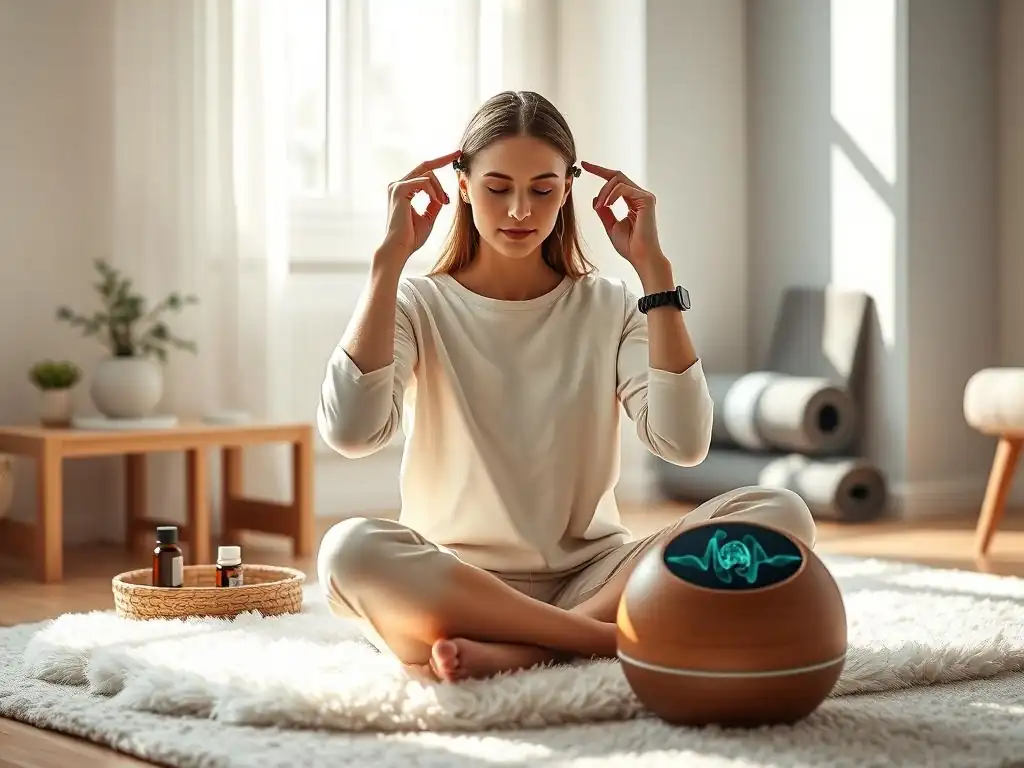
Mindfulness Meditation: A Powerful Complement to Biofeedback
Mindfulness meditation is an excellent complement to home biofeedback anxiety relief. While biofeedback provides objective data on your physiological state, mindfulness cultivates non-judgmental awareness of your thoughts, feelings, and bodily sensations. Combining these practices can enhance their individual benefits. For example, you can use biofeedback during mindfulness meditation to see how focusing on your breath or observing thoughts without judgment impacts your heart rate or brainwaves. This provides immediate, tangible proof of the calming effect of mindfulness.
Practicing mindfulness regularly, even outside of biofeedback sessions, can help you become more attuned to your body's early warning signs of stress and anxiety. This increased self-awareness makes it easier to recognize when you need to apply the self-regulation skills you've learned through biofeedback. Many home biofeedback apps include guided mindfulness meditations, making it easy to integrate these two powerful techniques. A mindful approach can deepen the effectiveness of your biofeedback training and support overall home biofeedback anxiety relief.
Cognitive Behavioral Therapy (CBT): Addressing Underlying Anxiety Triggers
Cognitive Behavioral Therapy (CBT) is a widely effective therapeutic approach that helps individuals identify and challenge negative thought patterns and behaviors that contribute to anxiety. While home biofeedback focuses on managing the physiological symptoms of anxiety, CBT addresses the cognitive and behavioral roots. Combining biofeedback with CBT can offer a comprehensive strategy for home biofeedback anxiety relief. For instance, you might use biofeedback to manage the physical sensations of anxiety that arise when confronting a feared situation, while simultaneously using CBT techniques to challenge the irrational thoughts associated with that fear.
A therapist trained in CBT can help you understand your specific anxiety triggers and develop coping strategies. You can then use your home biofeedback device to practice staying calm and regulated while mentally or physically confronting those triggers in a controlled way. This integrated approach allows you to tackle both the 'top-down' (cognitive) and 'bottom-up' (physiological) aspects of anxiety, leading to more robust and lasting relief.
Lifestyle Changes: Nutrition, Exercise, and Sleep for Enhanced Well-being
Adopting healthy lifestyle habits significantly enhances the effectiveness of home biofeedback anxiety relief and overall mental well-being. Nutrition plays a role; balanced meals and limiting caffeine and sugar can help stabilize mood and energy levels, reducing physiological excitability that can exacerbate anxiety. Regular physical exercise is a powerful stress reliever, releasing endorphins and helping to regulate the nervous system. Even moderate activity like a brisk walk can make a difference.
Prioritizing sufficient, quality sleep is also crucial, as sleep deprivation can heighten anxiety and impair your ability to cope with stress. Aim for 7-9 hours of consistent sleep each night. When you combine consistent biofeedback practice with a healthy diet, regular exercise, and good sleep hygiene, you create a synergistic effect. Each element supports the others, building a strong foundation for managing anxiety and promoting a calmer, more resilient state. These lifestyle changes aren't just supplementary; they are fundamental components of a holistic approach to home biofeedback anxiety relief.
The Future of Home Biofeedback: Innovations and Emerging Technologies
AI-Powered Biofeedback: Personalized Anxiety Management Solutions
The integration of Artificial Intelligence (AI) is set to revolutionize home biofeedback anxiety relief. Current devices collect data, but AI has the potential to analyze this data in more sophisticated ways, identifying subtle patterns and triggers specific to an individual user. Imagine a device that, over time, learns your unique stress responses and predicts when you might become anxious based on your physiological data and perhaps even contextual information (like calendar events, with user permission).
AI could then offer highly personalized biofeedback exercises or interventions precisely when you need them. It could tailor breathing paces, suggest specific meditation types, or provide customized insights based on your historical data and progress. This level of personalization could make biofeedback training more efficient, engaging, and ultimately more effective for home biofeedback anxiety relief, moving beyond generic programs to truly individualized support. While still in early stages, AI-powered biofeedback is a promising area of development.
Virtual Reality (VR) Biofeedback: Immersive and Engaging Training Experiences
Virtual Reality (VR) offers an exciting frontier for making biofeedback training more immersive and engaging. Instead of just seeing graphs or simple visuals on a screen, VR biofeedback places the user in a virtual environment that responds directly to their physiological state. For example, as your HRV increases or your brainwaves shift towards a calm Alpha state, a peaceful virtual landscape might become sunnier, a calm body of water might become smoother, or ambient sounds might become more serene.
This provides powerful, multi-sensory feedback that can make the abstract concept of physiological self-regulation feel more tangible and intuitive. VR environments can also be designed to simulate controlled stressful situations (e.g., public speaking) while providing biofeedback, allowing users to practice staying calm in a safe, virtual space before facing real-world triggers. Several research projects and pilot programs are exploring VR biofeedback for anxiety and phobias, suggesting it could become a more mainstream option for home biofeedback anxiety relief in the coming years, making practice feel less like training and more like an interactive experience.
The Potential of Biofeedback for Other Mental Health Conditions
While this article focuses on home biofeedback anxiety relief, the technology holds significant potential for supporting individuals with a range of other mental health conditions. Research and clinical applications are exploring its use for:
- Depression: Helping individuals recognize and increase physiological states associated with positive mood and energy.
- ADHD: Training individuals to increase focus-related brainwave activity (e.g., Beta waves) and reduce distractibility.
- PTSD: Assisting individuals in regulating their heightened physiological arousal and reducing reactivity to trauma-related triggers.
- Insomnia: Training individuals to relax their bodies and quiet their minds to facilitate sleep onset.
As home biofeedback technology becomes more sophisticated and accessible, its applications are likely to expand, offering valuable self-management tools that complement traditional therapies for a broader spectrum of mental health challenges. The underlying principle of learning self-regulation of physiological responses is relevant to many conditions where dysregulation contributes to symptoms.
Investing in Your Calm: Choosing the Right Home Biofeedback Device
Considering Your Specific Needs and Preferences for Anxiety Relief
Choosing the right home biofeedback device is a personal decision that should align with your unique needs and preferences for anxiety relief. Ask yourself:
- What are the most prominent physical symptoms of my anxiety (e.g., rapid heart rate, muscle tension, racing thoughts)? This can help determine if HRV, EDA, or EEG biofeedback is likely most relevant.
- How do I plan to use the device? For dedicated daily sessions, or discreetly throughout the day?
- What is my budget, considering both the upfront cost and potential subscription fees?
- How comfortable am I with technology and using smartphone apps?
- Do I prefer visual, auditory, or tactile (vibration) feedback?
- Do I want guided content and programs, or just raw data feedback?
Thinking through these questions will help narrow down the options and identify devices that fit your lifestyle and therapeutic goals. Don't rush the decision; research different models and read user reviews relevant to your specific type of anxiety and desired usage.
Consulting with a Healthcare Professional Before Starting Biofeedback Training
While home biofeedback devices are generally safe for use, it is highly recommended to consult with a healthcare professional before starting any new anxiety management technique, including biofeedback training. This is especially important if you have a diagnosed anxiety disorder, are taking medication, or have any underlying medical conditions (such as heart conditions) that could be affected by physiological changes.
A doctor or mental health professional can help you determine if biofeedback is an appropriate tool for your specific situation. They can also provide guidance on how to best integrate biofeedback into your existing treatment plan, whether that includes therapy, medication, or other lifestyle changes. They can also offer advice on realistic expectations and help you monitor your progress effectively. Their expertise ensures that you are using home biofeedback anxiety relief in a way that is safe, effective, and aligned with your overall health goals.
Taking the First Step Towards a Calmer Future with Home Biofeedback
Embarking on the journey towards managing anxiety with home biofeedback is a proactive step towards a calmer, more resilient future. By providing you with real-time insight into your body's stress response, these innovative devices empower you to learn valuable self-regulation skills. Remember that biofeedback is a tool for training; the benefits come from consistent practice and the skills you develop over time.
Whether you choose an HRV device to regulate your breathing and heart rate, an EEG device to train your mind for serenity, or an EDA device to understand your body's arousal, you are investing in your ability to consciously influence your physiological state. Combined with other evidence-based techniques like mindfulness, CBT, and healthy lifestyle habits, home biofeedback can be a powerful component of a comprehensive strategy for home biofeedback anxiety relief. Take the time to research your options, consult with a professional, and commit to consistent practice. Your calmer future is within reach.
Frequently Asked Questions
What is home biofeedback, and how can it help with anxiety?
Home biofeedback involves using portable devices to monitor physiological signals like heart rate or skin conductance. This provides real-time feedback allowing you to learn to control these responses, ultimately reducing anxiety symptoms.
How does home biofeedback differ from traditional biofeedback therapy?
Traditional biofeedback usually occurs in a clinical setting with a trained therapist. Home biofeedback allows you to practice self-regulation techniques independently, using portable devices at your convenience.
What types of home biofeedback devices are available for anxiety relief?
Several devices exist, including those measuring heart rate variability (HRV), skin conductance, and brainwave activity (EEG). They often connect to apps that provide guided exercises and track your progress.
How effective is home biofeedback for reducing anxiety?
Studies suggest that home biofeedback can be effective in reducing anxiety symptoms, especially when combined with other therapeutic approaches. However, individual results may vary, and consistency is key.
What are the potential benefits and drawbacks of using home biofeedback for anxiety?
Benefits include increased self-awareness, convenience, and reduced reliance on medication. Drawbacks may include the cost of devices, the need for self-discipline, and the possibility of misinterpreting data without professional guidance.
Final Reflection: Finding Calm in the Digital Age
The integration of biofeedback technology into the home represents a revolutionary shift in anxiety management, offering accessible and personalized solutions for a growing global concern. Anxiety disorders are no longer a silent struggle confined to clinical settings; they are a pervasive challenge impacting millions, and the demand for effective, convenient relief is higher than ever. This accessibility is crucial, democratizing mental healthcare and empowering individuals to take control of their well-being.
The journey of exploring home biofeedback for anxiety relief has been profoundly impactful, highlighting the power of technology to bridge the gap between traditional therapeutic approaches and everyday life. The sheer potential to normalize self-care and destigmatize mental health struggles is immense. As we move forward, I believe that this technology will become increasingly sophisticated and integrated into our daily routines, much like wearable fitness trackers have become commonplace. The mind is everything. What you think you become.
- Buddha. This quote resonates deeply, as home biofeedback empowers individuals to actively shape their mental landscape through conscious awareness and self-regulation.
Consider the implications of this technology for your own life. Are you ready to embrace the future of calm? Take a moment to reflect on your relationship with anxiety and explore how the tools and techniques discussed in this article might benefit you. Perhaps it's time to invest in your mental well-being, to prioritize self-care, and to discover the power you hold to cultivate inner peace. The journey to a calmer, more resilient you begins with a single step – a step towards exploring the transformative potential of home biofeedback.
Unlock Your Inner Calm: Start Your Biofeedback Journey Today!
Thanks for taking the time to explore the exciting world of home biofeedback for anxiety management! We hope you gained valuable insights into how this technology can help you cultivate a calmer, more centered you. Now, it's time to put that knowledge into action.
- Begin your personalized biofeedback practice: Identify your primary anxiety triggers and start incorporating the techniques discussed in this article into your daily routine, even if it's just for 5 minutes a day. This is the most important step to experiencing the benefits.
- Share your experience: Connect with others on our Mind Care Guide community forum and share your progress, challenges, and successes with home biofeedback. Let's build a supportive network together!
- Explore further resources: Dive deeper into the specific biofeedback techniques mentioned, researching reputable apps and guides to further personalize your practice.
What small step will you take today to cultivate more calm in your life?