
Beyond the Physical Steps: Cultivating Awareness in Walking Meditation.


Welcome to Mind Care Guide, your haven for navigating the complexities of mental well-being. Are you feeling overwhelmed and seeking a grounded path to inner peace? In this exploration of Walking Meditation Mindfulness Benefits, we'll uncover how a simple stroll can unlock profound mental clarity and emotional resilience. Could mindful steps be the key to a calmer, more centered you? Let's walk this path together...
Beyond the Physical Steps: Cultivating Awareness in Walking Meditation
- Understanding Walking Meditation: A Path to Mindfulness
- Preparing for Your Walking Meditation Practice
- The Physical Steps of Walking Meditation Explained
- Cultivating Awareness: Beyond the Physical Movements
- Deepening Your Walking Meditation Practice
- Psychological Benefits of Walking Meditation
- Troubleshooting Common Challenges
- Walking Meditation: Summary and Next Steps
-
Frequently Asked Questions
- What exactly is walking meditation, and how does it differ from regular walking?
- What are the primary walking meditation mindfulness benefits for mental well-being?
- How do I incorporate mindfulness into my walking meditation practice?
- Can anyone practice walking meditation, or are there any limitations?
- How often should I practice walking meditation to experience its walking meditation mindfulness benefits?
- Final Reflection: The Unfolding Path of Mindful Walking
- Unlock Deeper Mindfulness: Step into a More Present You
Understanding Walking Meditation: A Path to Mindfulness
What is Walking Meditation and How Does it Differ from Seated Meditation?
Walking meditation is a form of mindfulness practice that involves paying deliberate attention to the physical sensations of walking. Unlike seated meditation, where the body remains still, walking meditation integrates mindfulness into movement. It's a way to bring your awareness fully into the present moment while engaged in the simple, rhythmic act of putting one foot in front of the other.
This practice emphasizes the journey, not the destination, focusing on the sensory input from your body and surroundings rather than letting the mind wander uncontrollably. It transforms an everyday activity into a powerful tool for mental clarity and presence.
While seated meditation often focuses on breath or body scan in stillness, walking meditation uses the movement itself as the primary anchor for attention. It offers a dynamic approach to mindfulness, making it accessible for those who find sitting still challenging or who wish to integrate mindfulness throughout their day. The key difference lies in the active engagement with physical motion; instead of suppressing movement, it becomes the very object of meditation. This distinction allows practitioners to cultivate mindfulness in different contexts, demonstrating that awareness isn't confined to quiet, stationary moments but can be found even in activity.
The Core Principles of Mindful Walking
The foundation of mindful walking rests on bringing non-judgmental awareness to the experience of walking. This involves paying attention to the sensations in your feet and legs as they move, the feeling of the ground beneath you, and the rhythm of your steps. It's about noticing without analyzing or critiquing. You might observe the lift of a heel, the swing of a leg, or the placement of a foot, treating each movement with gentle curiosity. This focused attention anchors you firmly in the present, preventing the mind from being swept away by thoughts about the past or future.
Another core principle is patience and acceptance. As you walk, your mind will inevitably wander. This is normal. The practice isn't about stopping thoughts but about noticing when your mind has strayed and gently guiding your attention back to the physical sensations of walking. There's no need for self-criticism when distraction occurs; simply acknowledge it and return to your anchor. This constant process of noticing and returning builds the muscle of mindfulness, making you more adept at recognizing your mental patterns and choosing where to place your attention, a key walking meditation mindfulness benefit.
Benefits of Mindful Walking: An Overview
Engaging in mindful walking offers a wide array of walking meditation mindfulness benefits, impacting both mental and physical well-being. On a psychological level, consistent practice has been shown to significantly reduce rumination and worry. A study published in the Journal of Health Psychology in 2016, for example, indicated that participants who engaged in mindful walking reported lower levels of negative affect and increased feelings of well-being compared to those who did not. This suggests that integrating mindfulness into physical activity can have a tangible positive effect on mood and emotional state.
Beyond stress reduction, the benefits of walking meditation extend to improved focus, enhanced sensory awareness, and a deeper connection with one's body and environment. Regular mindful walking can sharpen your ability to concentrate, making it easier to stay present in other areas of life. Furthermore, the gentle physical activity combined with mindfulness can contribute to better sleep patterns and increased energy levels. Many find that even a short 10-15 minute mindful walk can provide a much-needed mental reset, offering clarity and perspective amidst a busy day.
Preparing for Your Walking Meditation Practice
Choosing a Suitable Location for Mindful Walking
Selecting the right environment is crucial for a productive walking meditation session. Ideally, choose a location where you feel relatively safe and undisturbed. This could be a quiet path in a park, a less-trafficked street in your neighborhood, a peaceful garden, or even a long corridor indoors if outdoor space is unavailable. The aim is to minimize potential distractions from traffic, crowds, or hazards, allowing you to focus inward without feeling overly concerned about your surroundings. A predictable path can also be helpful, freeing up mental energy that might otherwise be spent navigating complex or unfamiliar terrain.
Consider the time of day as well. Early mornings or late evenings might offer more solitude. While nature settings like parks or trails can enhance the experience by adding sensory elements like the rustling of leaves or the scent of flowers, urban environments can also serve as valuable practice grounds, teaching you to find presence amidst noise and activity. The key is to find a place where you can establish a comfortable pace and feel at ease enough to turn your attention to your internal and immediate external experience without excessive external demands.
Setting Intentions for Your Walking Meditation Session
Before you begin your mindful walk, taking a moment to set an intention can significantly deepen your practice. An intention isn't a goal to achieve, but rather a quality of mind or a focus you wish to bring to the experience. For instance, your intention might be simply to be fully present with each step, to cultivate patience with your wandering mind, or to observe the sensations in your body with kindness. Setting an intention helps to orient your mind and imbues the walk with purpose beyond mere physical exercise.
You can set your intention by pausing for a moment before you start walking, perhaps taking a few deep breaths. Silently or softly state your intention to yourself. For example, you might think, "My intention for this walk is to notice the feeling of my feet on the ground," or "I intend to practice gently returning my attention whenever it drifts." This simple act primes your mind and sets a mindful tone for the practice ahead. It's a gentle reminder of why you are walking mindfully and what you hope to cultivate during the session.
Comfortable Attire and Considerations for Walking Meditation
Wearing comfortable, appropriate clothing and footwear is essential to minimize physical distractions during walking meditation. Choose shoes that fit well and provide adequate support, as discomfort in your feet can easily pull your attention away from the practice. Loose, breathable clothing that allows for ease of movement is also recommended. Avoid anything that feels restrictive, itchy, or requires constant adjustment.
Consider the weather conditions and dress accordingly to ensure you are neither too hot nor too cold. If walking outdoors, sun protection (like a hat or sunscreen) might be necessary. The goal is to make your physical body as comfortable as possible so that you can more easily direct your awareness to the sensations of walking itself, rather than being preoccupied with external discomforts. Think of your attire as supporting your intention to be fully present with the experience.
The Physical Steps of Walking Meditation Explained
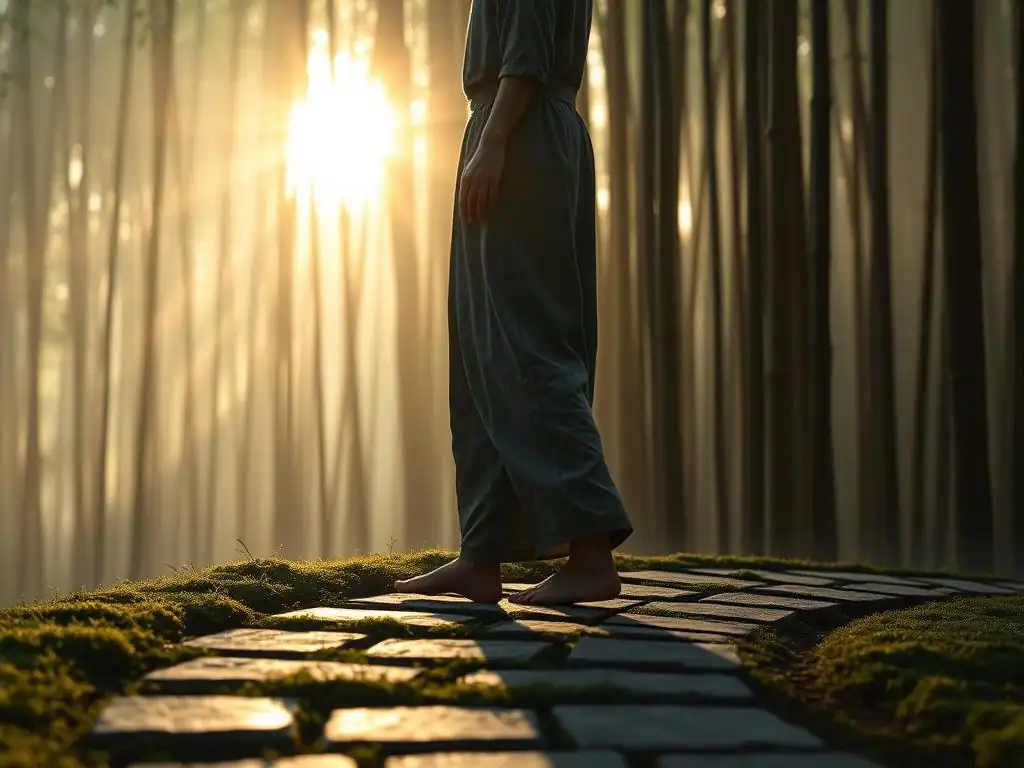
Stages of Mindful Walking Technique
Walking meditation can be practiced at various paces and with different levels of focus, often broken down into stages for detailed awareness. A common approach, particularly in traditions like Vipassanā (insight) meditation, involves slowing down your usual walking pace significantly. You might focus on breaking down the movement of each foot into distinct stages:
Lifting: Noticing the sensation as the heel leaves the ground, then the sole, then the toes.Moving: Being aware of the leg swinging forward.Placing: Feeling the foot as it extends and makes contact with the ground.
This detailed observation, often done at a very slow pace, allows for heightened awareness of the subtle physical sensations involved in each step. It trains the mind to focus intently on granular experience, which is a powerful walking meditation mindfulness benefit.
Alternatively, many practitioners find value in practicing mindful walking at a more natural pace, integrating awareness into their everyday movement. This involves less dissection of each step and more of a continuous flow of attention to the overall sensation of walking – the rhythm, the ground contact, the movement of the body. This approach makes it easier to integrate mindful walking into daily life, such as walking to work, around the house, or during a break. Both slow, deliberate walking and natural-paced mindful walking offer unique benefits and can be chosen based on your practice goals and the environment.
Focusing on the Sensation of Your Feet
The sensations in your feet are often the primary anchor for attention in walking meditation. As you walk, bring your awareness down to your feet and the contact they make with the ground. Notice the pressure, the texture, the warmth or coolness, the subtle shifts in balance. Feel the heel strike, the rolling motion through the sole, and the push-off from the toes. This simple focus grounds you firmly in the present moment.
The act of repeatedly bringing your attention back to the physical sensations in your feet serves as a gentle exercise in mindfulness. Each time your mind drifts off into thought, worry, or planning (which it will! ), you simply notice the distraction without judgment and kindly redirect your awareness back to the feeling of your feet.
This repeated return is the core practice – not the absence of distraction, but the conscious effort to return to the present anchor. Over time, this strengthens your ability to stay present and grounded, contributing significantly to the walking meditation mindfulness benefits you experience.
Coordinating Breath with Your Steps
While the feet are a primary anchor, you can also incorporate awareness of your breath into your walking meditation. This can be done by simply noticing your natural breath rhythm as you walk, or by gently coordinating your breath with your steps. For example, you might inhale for a set number of steps (e.g., 3 steps) and exhale for the same number of steps (e.g., 3 steps). There's no need to force the breath; the aim is simply to use it as another point of focus to enhance present moment awareness.
Synchronizing breath and steps can create a soothing rhythm that deepens the meditative quality of the walk. It provides an additional anchor to return to when the mind wanders. Some practitioners find that focusing on both feet and breath simultaneously provides a richer, more stable foundation for mindfulness during movement. Experiment with simply noticing the breath, coordinating it with steps, or focusing solely on the feet to discover what works best for you in a given session. The flexibility of walking meditation allows for tailoring the practice to your needs.
Cultivating Awareness: Beyond the Physical Movements
Awareness of Thoughts and Emotions During Walking Meditation
Walking meditation isn't just about the physical act; it's a powerful opportunity to observe the landscape of your inner experience – your thoughts and emotions – as they arise and pass. As you walk, thoughts will appear: worries about work, plans for dinner, memories, judgments. Instead of getting caught up in them or trying to push them away, the practice is to simply notice them.
See them as mental events, like clouds drifting across the sky, without attaching to their content. You might internally label a thought as "thinking" or an emotion as "sadness," then gently return your attention to the sensations of walking.
Similarly, emotions will arise – frustration, joy, sadness, peace. The mindful walker acknowledges these feelings without judgment. There's no need to analyze why you feel a certain way in that moment, just to register the physical sensations associated with the emotion in your body and the feeling itself. For example, noticing a tightness in your chest and identifying it as anxiety, then returning to the feel of your feet. This practice of observing internal states from a place of non-reaction is a profound walking meditation mindfulness benefit, fostering emotional intelligence and resilience.
Returning to the Present Moment
The essence of cultivating awareness in walking meditation, just like in seated practice, is the repeated act of returning your attention to your chosen anchor (sensations in feet, breath, or both) whenever you notice your mind has wandered. This isn't a failure; it's the practice itself. Every time you notice your mind drifting off into planning, reminiscing, judging, or worrying, and you gently guide it back to the present moment experience of walking, you are strengthening your mindfulness muscle.
Think of it like training a puppy: the puppy will naturally run off, and your job is to gently bring it back, without scolding. Each return reinforces the desired behavior. In walking meditation, each return reinforces your capacity for present moment awareness. This iterative process, acknowledging distraction and returning to the anchor, is where much of the walking meditation mindfulness benefits are truly cultivated, building sustained attention and mental discipline.
Using Walking Meditation for Emotional Regulation
Walking meditation can be a highly effective tool for emotional regulation. When strong emotions arise, whether during the walk or before starting, the combination of gentle rhythmic movement and mindful attention can help process and soothe them. Physical activity itself has been shown to impact mood and reduce stress hormones like cortisol. A study by the Anxiety and Depression Association of America suggests that even a single 10-minute walk can be effective in alleviating anxiety symptoms.
By adding mindfulness to this movement, you create a space to observe the emotion without being overwhelmed by it. Instead of reacting impulsively to anger or getting lost in sadness, you can walk with the emotion, noticing its physical manifestations and intensity with curiosity rather than fear.
The steady rhythm of walking provides a grounding anchor, preventing you from spiraling, while the gentle movement can help to release pent-up energy associated with the emotion. This practice fosters a greater capacity to tolerate difficult feelings and respond to them with more awareness and less reactivity, a significant walking meditation mindfulness benefit for emotional well-being.
Deepening Your Walking Meditation Practice
Varying Your Pace and Terrain
Once you are comfortable with the basic technique, experimenting with different paces and terrains can add richness and challenge to your walking meditation. Trying a very slow pace can heighten awareness of the subtle mechanics of walking, as discussed earlier, demanding sustained concentration. Conversely, practicing mindful walking at a brisk, more natural pace can challenge you to maintain awareness while the body is more vigorously engaged, reflecting how mindfulness can be integrated into more active states.
Exploring different terrains, such as uneven trails, sandy beaches, or slightly inclined paths, requires greater physical attention to maintain balance and navigate obstacles. This necessity for heightened physical awareness can sometimes make it easier to stay grounded in the present moment, as there's less mental space for wandering thoughts. Each variation offers a different opportunity to cultivate mindfulness under slightly different conditions, expanding the versatility and depth of your walking meditation practice.
Integrating Walking Meditation into Your Daily Routine
To truly reap the long-term walking meditation mindfulness benefits, consistency is key. Look for opportunities to integrate mindful walking into your existing daily routine. This could be mindfully walking during your commute, taking a mindful break around your office building, or simply walking mindfully from one room to another in your home. Even short bursts of 5-10 minutes of intentional mindful walking can make a difference over time.
Consider scheduling short mindful walks into your day, perhaps during lunch breaks or in the evening. Start small, maybe just a few minutes, and gradually increase the duration as you feel comfortable. The goal isn't to add another chore to your list, but to transform moments you are already walking into opportunities for cultivating presence and awareness. Making mindful walking a regular habit reinforces its benefits and helps build resilience against stress and distraction throughout your day.
Exploring Different Styles of Walking Meditation
Beyond the basic focus on feet and breath, various traditions offer different styles of walking meditation. Some, like the Kinhin practice in Zen Buddhism, involve walking in a slow, precise, often linear path within a meditation hall, emphasizing form and group energy. Others, like those found in Vipassanā or MBSR (Mindfulness-Based Stress Reduction) programs, are more adaptable to outdoor or personal practice and focus on detailed sensory awareness or integrating awareness into natural movement.
You might also explore walking meditation with a specific intention or theme, such as cultivating gratitude by noticing things you are thankful for as you walk, or practicing compassion by extending well wishes to yourself and others. Exploring these different styles and intentions can keep your practice fresh and help you discover what resonates most deeply with you, further enhancing the diverse walking meditation mindfulness benefits available.
Psychological Benefits of Walking Meditation

Reducing Stress and Anxiety
One of the most widely reported walking meditation mindfulness benefits is its effectiveness in reducing stress and anxiety. The combination of physical activity, which helps release tension and alter brain chemistry (like increasing endorphins), and mindfulness, which teaches you to observe stressful thoughts and feelings without getting consumed by them, creates a powerful antidote to stress. By focusing on the present moment sensations of walking, you interrupt the cycle of worry about the future or rumination about the past, which are common drivers of anxiety.
Practicing mindful walking regularly helps train your nervous system to become less reactive. Over time, you may find that you are less easily triggered by stressors and more able to respond to challenging situations with calm and clarity. Research, including studies cited by institutions like the Mayo Clinic, supports the use of meditation and mindful movement as effective tools for stress management, demonstrating measurable reductions in perceived stress levels and physiological markers like heart rate.
Improving Focus and Concentration
In our increasingly distracted world, the ability to focus is a valuable skill, and walking meditation is an excellent practice for cultivating it. By repeatedly bringing your attention back to the anchor of your steps or breath, you are actively training your brain's capacity for sustained attention. Each time you notice your mind wandering and gently redirect it, you are performing a mental "rep" that strengthens the neural pathways associated with focus.
This improved concentration isn't confined to your meditation practice; it spills over into other areas of your life. Practitioners often report being better able to concentrate on tasks at work, listen more attentively in conversations, and generally feel less scattered. This enhanced focus is a tangible walking meditation mindfulness benefit that can improve productivity and the quality of your interactions.
Enhancing Self-Awareness and Emotional Intelligence
Mindful walking provides a regular opportunity to check in with yourself – your physical state, your thoughts, and your emotions – in a gentle, non-judgmental way. By observing these internal landscapes as they arise during your walk, you gain deeper insight into your patterns, triggers, and reactions. This increased self-awareness is fundamental to emotional intelligence.
As you become more adept at noticing your emotions without immediately reacting to them, you develop a greater capacity to understand and manage your feelings. You learn to recognize the early signs of stress or frustration, for example, and can choose a skillful response rather than falling into old habits. This enhanced emotional intelligence is a significant walking meditation mindfulness benefit, leading to improved relationships, better decision-making, and a greater sense of control over your inner life.
Troubleshooting Common Challenges
Addressing Physical Discomfort
Sometimes physical discomfort can arise during walking meditation, ranging from tired feet to aches in the back or knees. It's important to address these issues mindfully rather than ignoring them or getting frustrated. First, check your posture and walking form; are you holding unnecessary tension anywhere? Can you soften your shoulders or relax your jaw? Adjust your pace if needed – perhaps slowing down or even speeding up slightly helps.
If discomfort persists, it's okay to pause the formal practice, stretch gently, or even stop the walk if necessary. Listen to your body; mindfulness is also about recognizing your physical limits with kindness. Ensure you have appropriate footwear and are not pushing yourself beyond your current physical capacity. Sometimes, chronic discomfort may require consulting a healthcare professional. Acknowledging and kindly responding to physical sensations is part of the practice, not a failure of it.
Managing Mental Restlessness
Mental restlessness, often manifesting as a racing mind, boredom, or strong urges to stop, is perhaps the most common challenge in any meditation practice, including walking. When your mind is particularly busy, the constant stream of thoughts can feel overwhelming and make it difficult to stay anchored to the present moment. Recognize that this is a normal part of the process; everyone experiences mental chatter.
Instead of fighting the thoughts, try to observe them with detachment. You might label them internally ("planning," "worrying") and then gently return your attention to your walking sensations. If the restlessness is very strong, sometimes shifting your focus slightly can help – perhaps paying more attention to the sounds around you for a few moments before returning to your feet. Be patient and compassionate with yourself; simply noticing the restlessness and choosing to return to your anchor, again and again, is the practice. Remember, consistency in practice, even when challenging, builds the valuable walking meditation mindfulness benefits over time.
Maintaining Motivation and Consistency
Like any practice, maintaining motivation and consistency with walking meditation can be challenging amidst a busy life. It's easy for mindful walking to slip down the priority list when demands are high. One strategy is to start small – even 5-10 minutes of mindful walking is beneficial and more sustainable than aiming for long sessions initially. Try integrating it into a pre-existing habit, like walking the dog or your commute, to make it feel less like an added task.
Finding an accountability partner or joining a walking meditation group (if available) can also provide support and motivation. Reflecting on the walking meditation mindfulness benefits you've already experienced can also be a powerful motivator. Keep a simple journal of how you feel after a mindful walk. On days when motivation is low, remind yourself that the goal isn't perfection, but simply showing up and practicing presence, one step at a time. Be flexible and forgiving with yourself; if you miss a day, just start again tomorrow.
Walking Meditation: Summary and Next Steps
Integrating Walking Meditation into a Well-being Plan
Walking meditation is a versatile and accessible practice that can significantly enhance a comprehensive well-being plan. By combining gentle physical activity with the mental training of mindfulness, it offers a unique blend of physical and psychological benefits. Integrating regular mindful walking can support stress reduction, improve mood, boost focus, and increase self-awareness – all key components of mental health and overall wellness.
Consider how mindful walking can complement other healthy habits you cultivate, such as balanced nutrition, sufficient sleep, and other forms of exercise or relaxation. It's not just another item on a checklist, but a way to bring mindful presence to activities you might already be doing, thereby enriching your experience of life and strengthening your capacity to navigate challenges with greater ease and resilience. The walking meditation mindfulness benefits contribute holistically to a healthier mind and body.
Resources for Further Learning
For those interested in deepening their understanding and practice of walking meditation, many valuable resources are available. Books on mindfulness and meditation often include sections specifically dedicated to walking meditation techniques. Teachers and centers offering mindfulness courses, such as those based on MBSR (Mindfulness-Based Stress Reduction) or MBCT (Mindfulness-Based Cognitive Therapy) programs, typically incorporate mindful walking as a core component.
Numerous online resources, including guided meditations, articles, and videos from reputable mindfulness organizations and teachers, can also provide guidance. Exploring different perspectives and instructions can help you refine your technique and find approaches that resonate most with you. Remember to seek guidance from qualified teachers if possible, especially if you are new to meditation or dealing with specific mental health challenges.
Next steps for deepening your practice
To continue cultivating the walking meditation mindfulness benefits, consider setting a realistic goal for how often you will practice, perhaps starting with 10 minutes three times a week. Experiment with different locations and times of day to see what feels most supportive. Try practicing at a very slow pace sometimes and at a more natural pace at other times to experience the different qualities of awareness each brings.
- [ ] Schedule 3 short mindful walks this week.
- [ ] Try a different route or location for one walk.
- [ ] Focus specifically on the breath coordination during one session.
- [ ] Simply notice thoughts and emotions without judgment during another session.
Reflect periodically on your experience – what did you notice? What challenges arose? What felt grounding or peaceful? This ongoing exploration and reflection will help you deepen your connection to the practice and continue to unlock its many potential benefits for your mental and emotional well-being.
Frequently Asked Questions
What exactly is walking meditation, and how does it differ from regular walking?
Walking meditation is a form of mindfulness practice that combines the physical act of walking with focused attention on the present moment. Unlike regular walking, the goal isn't to reach a destination, but to be fully aware of the sensations of each step.
What are the primary walking meditation mindfulness benefits for mental well-being?
The benefits include reduced stress and anxiety, increased self-awareness, and improved emotional regulation. It can also enhance concentration and promote a sense of inner peace.
How do I incorporate mindfulness into my walking meditation practice?
Pay attention to the sensations in your feet, legs, and body as you walk. Notice the rhythm of your breath and any thoughts that arise, acknowledging them without judgment and gently redirecting your focus back to your present experience.
Can anyone practice walking meditation, or are there any limitations?
Generally, walking meditation is accessible to most people, but individuals with mobility issues or certain health conditions should consult with a healthcare professional before starting. Adaptations can often be made to suit individual needs.
How often should I practice walking meditation to experience its walking meditation mindfulness benefits?
Even short, 10-15 minute sessions can be beneficial. Consistency is key; aim for regular practice, even if it's just a few times a week, to cultivate mindfulness and improve your overall well-being.
Final Reflection: The Unfolding Path of Mindful Walking
The practice of walking meditation, far from being a mere physical exercise, offers a potent pathway to present moment awareness, a skill increasingly crucial in our fast-paced, distraction-filled world. Its benefits extend far beyond the physical, cultivating a deeper understanding of ourselves and our relationship with the world around us. This ability to fully inhabit the present moment is not a luxury, but a necessity for navigating the complexities of modern life with greater ease and equanimity.
The impact of mindful walking extends beyond the individual, subtly shaping our cultural landscape. As we become more attuned to the present moment through this practice, we cultivate a greater capacity for empathy and compassion, fostering more meaningful connections with others. The present moment is filled with joy and happiness. If you are attentive, you will see it.
– Thich Nhat Hanh. This simple yet profound statement encapsulates the transformative power of mindful walking, reminding us that true peace and contentment are not destinations to be reached, but states of being cultivated in each present moment.
You, the reader, are now invited to integrate this practice into your own life. Begin with just a few minutes each day, focusing on the sensation of your feet on the ground, the rhythm of your breath, and the subtle shifts in your surroundings. Don't judge your experience; simply observe.
Allow this simple act of mindful walking to become a daily ritual, a sanctuary where you can reconnect with yourself and the world around you. The journey of self-discovery through mindful walking is a lifelong pursuit, and each step you take, both literally and metaphorically, brings you closer to a deeper understanding of yourself and the profound peace that lies within.
Unlock Deeper Mindfulness: Step into a More Present You
Thanks for taking the time to explore the world of walking meditation with us! We hope you've gained a deeper understanding of its transformative power. Are you ready to incorporate this practice into your daily routine?
- Begin your mindful walking journey today: Even five minutes of focused walking can make a difference. Find a quiet space and try the techniques we've discussed.
- Share your experience: Let's build a supportive community! Share your insights and challenges in the comments below. What surprised you most about walking meditation?
- Explore further: Discover additional resources on mindful movement by searching for mindful movement techniques on our website, MindCareGuide.org.
Ready to experience the profound calm that walking meditation offers? What small step will you take to incorporate this practice into your day?