
Improve Athletic Performance: Mental Focus and Recovery Benefits of Meditation

Welcome to Mind Care Guide, your trusted companion on the journey to mental well-being.
Are you pushing your limits but feeling mentally drained? Discover how meditation can significantly boost athletic performance by enhancing focus and accelerating recovery. Intrigued? Let's unlock the power of mindfulness together and explore how this simple practice can revolutionize your game. Read on to find out more!
Improve Athletic Performance: Mental Focus and Recovery Benefits of Meditation
- Introduction: Unlocking Athletic Potential Through Meditation
- How Meditation Boosts Athletic Performance: A Deep Dive
- The Science Behind Meditation and Athletic Gains
- Practical Meditation Techniques for Athletes
- Benefits Beyond Performance: The Holistic Advantages of Meditation for Athletes
- Elite Athletes and Meditation: Case Studies
- Overcoming Challenges and Maintaining a Consistent Meditation Practice
- Conclusion: Meditation - A Competitive Edge for Athletes
-
Frequently Asked Questions
- What specific aspect of meditation contributes to improved athletic performance?
- How does meditation aid in athletic recovery after intense training or competition?
- Can meditation really provide a noticeable boost to my athletic performance, or is it just a minor benefit?
- What types of meditation techniques are most effective for athletes looking to improve their mental focus?
- How often should athletes practice meditation to experience the performance-enhancing benefits?
- Final Reflection: Cultivating the Mind, Unleashing Peak Performance
- Unlock Your Athletic Potential: Start Meditating Today!
Introduction: Unlocking Athletic Potential Through Meditation
The Growing Recognition of Mental Training in Sports
For decades, athletic training primarily focused on physical conditioning, strength, speed, and technical skill. While these elements remain foundational, there's a rapidly growing understanding that peak performance is a complex interplay of the physical and the mental. Sports psychologists and coaches are increasingly emphasizing mental training techniques, recognizing that an athlete's mindset significantly impacts their ability to perform under pressure, recover effectively, and maintain consistency. This shift reflects insights from neuroscience and sports science, highlighting how factors like focus, emotional regulation, and stress management are not just 'nice-to-haves' but crucial components of elite athleticism.
This evolution in sports training acknowledges that even the most physically gifted athlete can be derailed by anxiety, lack of focus, or poor recovery. Mental skills training, including practices like visualization, positive self-talk, and mindfulness, is now considered essential for unlocking an athlete's full potential. The integration of these practices aims to build resilience, enhance cognitive functions relevant to the sport, and create a more balanced approach to training and competition, ultimately contributing to an athlete's longevity and success.
Meditation: A Powerful Tool for Enhanced Athleticism
Meditation, specifically mindfulness meditation, is emerging as a particularly powerful tool within this mental training landscape. Far from being solely a relaxation technique, regular meditation practice trains the mind in ways directly beneficial to athletic performance. It cultivates the ability to stay present, manage distracting thoughts and emotions, and develop a deeper awareness of one's body and surroundings – all critical for optimal execution in any sport.
The benefits of meditation boost athletic performance by addressing both the mental and physical demands of high-level competition. Athletes who incorporate meditation into their routine report improved focus during training and competition, better management of pre-competition nerves, and enhanced recovery times. This holistic approach acknowledges that the stress of training and competing impacts the entire system, and meditation offers a systematic way to mitigate negative effects and promote positive adaptation.
How Meditation Boosts Athletic Performance: A Deep Dive
Meditation Techniques for Improved Concentration
Meditation, particularly mindfulness meditation, is fundamentally a practice in paying attention. Techniques like focused attention meditation, where you concentrate on a single object such as the breath, train the mind to return to the present moment whenever it wanders. This repeated exercise strengthens the neural pathways associated with focus and attention control. For an athlete, this translates directly to the ability to concentrate on the game plan, react quickly to changing dynamics, and execute complex movements without being distracted by internal chatter or external noise.
Another technique, open monitoring meditation, cultivates a broader awareness of thoughts, feelings, and sensations without judgment. This helps athletes become more aware of potential distractions – whether it's fatigue, crowd noise, or self-doubt – without getting caught up in them. Learning to simply notice a distracting thought and let it pass, rather than engaging with it, is a powerful skill that keeps the athlete anchored in the task at hand, significantly enhancing mental focus during critical moments.
Reducing Distractions and Enhancing Focus on the Present Moment
A primary challenge for athletes is maintaining focus amidst pressure, fatigue, and external stimuli. Meditation trains the athlete to bring their attention back to the present moment, whether that's the feel of the ball, the opponent's movement, or their own body's state. By practicing mindfulness, athletes become less susceptible to ruminating on past mistakes or worrying about future outcomes. This present-moment awareness is crucial for optimal decision-making and execution.
Consider a basketball player at the free-throw line. Without mindfulness training, their mind might race with thoughts of previous misses, the crowd's reaction, or the game's outcome. With mindfulness, they can notice these thoughts but gently redirect their attention to the process: the grip on the ball, the stance, the breath. This ability to stay grounded in the present action, rather than being lost in distracting thoughts, is a direct result of consistent meditation practice and a key way meditation boost athletic performance.
The Role of Mindfulness in Achieving Flow State
The 'flow state,' often described as being 'in the zone,' is a peak experience where an athlete is fully immersed, focused, and performing effortlessly. Mindfulness is deeply connected to achieving this state. Flow occurs when there is a balance between the challenge of a task and an athlete's skill level, coupled with intense focus and a loss of self-consciousness. Mindfulness cultivates the necessary ingredients for flow: heightened present-moment awareness, reduced self-judgment, and improved concentration.
By regularly practicing mindfulness meditation, athletes train their brains to enter this state more readily. They become more adept at shutting out distractions, tuning into their body's subtle cues, and reacting intuitively. This enhanced ability to achieve and sustain flow state during competition is one of the most significant ways meditation boost athletic performance, leading to break-through results and a feeling of peak potential realized.
Enhancing Recovery and Reducing Muscle Soreness with Meditation
Meditation's Impact on the Nervous System and Muscle Relaxation
Intense physical training activates the body's sympathetic nervous system, often referred to as the 'fight or flight' response. While necessary for acute performance, prolonged activation hinders recovery. Meditation activates the parasympathetic nervous system, the 'rest and digest' state. This shift helps to calm the body, reducing muscle tension and promoting relaxation. Deep, mindful breathing, a core component of many meditation practices, directly signals the nervous system to downregulate stress responses, facilitating physical relaxation crucial for muscle recovery.
Studies have shown that mindfulness practices can lead to a reduction in perceived muscle soreness and a faster return to baseline function after strenuous exercise. By increasing body awareness through techniques like body scan meditation, athletes can identify and address areas of tension more effectively. This conscious effort to relax muscles, supported by a calmed nervous system, contributes significantly to the body's ability to repair and rebuild tissue post-exertion.
Lowering Stress Hormones: Cortisol and Athletic Recovery
High levels of stress hormones, particularly cortisol, are detrimental to athletic recovery. Elevated cortisol can suppress the immune system, interfere with muscle protein synthesis, and disrupt sleep patterns – all of which slow down the body's ability to repair itself. Chronic stress from training, competition, and daily life can keep cortisol levels persistently high. Meditation has been shown in numerous studies to significantly lower cortisol levels.
For athletes, this reduction in stress hormones means less physiological stress burden, allowing the body's resources to be directed more effectively towards muscle repair and energy replenishment. A study published in Health Psychology found that participants who engaged in mindfulness meditation showed lower levels of cortisol compared to control groups. By mitigating the catabolic effects of high cortisol, meditation plays a direct role in optimizing the recovery process, enabling athletes to bounce back faster and train more consistently.
Promoting Restful Sleep for Optimal Physical Restoration
Sleep is arguably the most critical component of athletic recovery. During deep sleep, the body repairs muscle tissue, consolidates memories, and regulates hormones essential for growth and recovery, such as growth hormone. Athletes often struggle with sleep due to pre-competition anxiety, post-exercise physiological arousal, or simply busy schedules. Meditation is widely recognized as an effective tool for improving sleep quality and duration.
Practicing meditation before bed helps to quiet the racing mind, reduce anxiety, and induce a state of relaxation conducive to falling asleep. A meta-analysis of studies on mindfulness meditation and sleep found that mindfulness interventions significantly improved sleep quality in various populations. For athletes, better sleep directly translates to enhanced physical restoration, improved cognitive function, and better energy levels, providing a foundational boost to athletic performance and overall well-being.
The Science Behind Meditation and Athletic Gains
Neuroplasticity and Improved Brain Function for Athletes
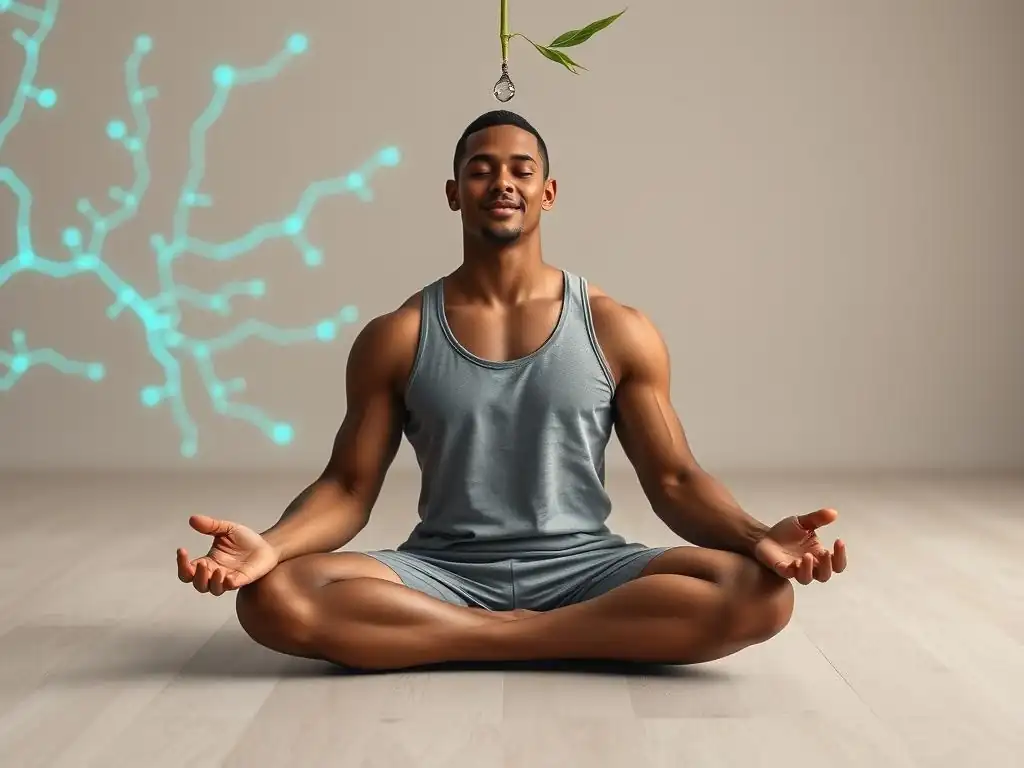
The brain is remarkably adaptable, a property known as neuroplasticity. Meditation physically changes the brain structure and function in ways that benefit athletes. Regular practice has been shown to increase gray matter density in areas associated with attention, self-awareness, and emotional regulation, such as the prefrontal cortex and hippocampus. Conversely, it can decrease gray matter in the amygdala, the brain's fear and stress center.
These changes translate to improved cognitive performance relevant to sports: enhanced decision-making under pressure, better emotional control, and increased resilience to stress. For instance, a study from 2007 published in PLoS Biology provided early evidence of meditation-induced changes in brain regions supporting attention and self-regulation. By literally rewiring the brain to be calmer, more focused, and less reactive to stressors, meditation provides a fundamental neurobiological boost to athletic performance.
Meditation's Influence on Heart Rate Variability (HRV) and Recovery
Heart Rate Variability (HRV) is a key physiological marker reflecting the balance between the sympathetic ('fight or flight') and parasympathetic ('rest and digest') nervous systems. Higher HRV generally indicates better recovery status, greater resilience to stress, and readiness to perform. Lower HRV is often associated with fatigue, overtraining, and increased stress. Meditation, by promoting parasympathetic activity, is known to positively influence HRV.
Studies have demonstrated that mindfulness and deep breathing exercises can lead to an increase in HRV. For athletes, monitoring and improving HRV is a crucial aspect of managing training load and preventing burnout. By enhancing HRV, meditation helps the body recover more efficiently from strenuous activity, signaling that the nervous system is returning to a balanced state. This physiological benefit is a tangible way meditation boost athletic performance by optimizing the body's natural recovery mechanisms.
Exploring the Mind-Body Connection in Sports Performance
Elite athletic performance is not merely a physical act; it's a seamless integration of mind and body. The mind-body connection refers to the profound influence of mental states on physical function and vice versa. Anxiety can cause physical tension, while injury can impact mental well-being. Meditation strengthens this connection by increasing interoceptive awareness – the ability to sense the internal state of the body.
Through practices like body scan meditation, athletes become more attuned to subtle physical sensations, such as fatigue, tension, or pain. This heightened awareness allows them to listen to their body's signals more effectively, guiding decisions about training intensity, rest, and injury prevention. Understanding and leveraging the mind-body connection through meditation enables athletes to train smarter, recover better, and perform with greater proprioception and control, providing a significant advantage.
Practical Meditation Techniques for Athletes
Beginner-Friendly Meditation Exercises for Athletes
Breath Awareness Meditation for Focus and Calm
Breath awareness is one of the simplest yet most powerful meditation techniques, perfect for athletes looking to improve focus and manage pre-competition nerves. Find a comfortable seated position. Close your eyes or soften your gaze. Bring your attention to your breath as it enters and leaves your body.
Notice the sensation of the air in your nostrils or the rise and fall of your abdomen. When your mind wanders, which it will, simply notice the thought without judgment and gently bring your attention back to the breath. Start with just 5-10 minutes daily. This practice trains the mind to stay present and provides an anchor during stressful situations.
- Sit comfortably.
- Close eyes or soft gaze.
- Focus on the sensation of breath.
- When mind wanders, gently return focus to breath.
- Practice for 5-10 minutes daily.
Body Scan Meditation for Enhanced Body Awareness
Body scan meditation involves systematically bringing awareness to different parts of the body, noticing sensations without trying to change them. Lie down comfortably on your back. Close your eyes. Bring your attention to your feet, noticing any sensations there. Then, slowly move your attention up through your body – ankles, calves, knees, thighs, hips, torso, arms, neck, and head. This practice enhances proprioception, helps athletes identify areas of tension or discomfort, and improves the mind-body connection. It's excellent for pre-sleep relaxation or post-training recovery.
- Lie down comfortably.
- Close eyes.
- Bring attention sequentially to different body parts.
- Notice sensations without judgment.
- Move attention slowly from feet to head.
Guided Meditation for Visualization and Performance Enhancement
Guided meditations, often found on apps or online platforms, can be particularly effective for athletes. Many guided meditations are specifically designed for performance enhancement, incorporating visualization techniques. Visualization involves mentally rehearsing a desired outcome or performance – seeing, feeling, and hearing the experience in vivid detail. Athletes can visualize executing perfect technique, performing calmly under pressure, or successfully navigating a challenging competition scenario. This mental rehearsal, combined with the relaxed and focused state achieved through meditation, can prime the brain and body for actual performance.
Visualizing success isn't just dreaming; it's training your brain to believe it's possible and preparing your body to execute.
Look for guided meditations tailored to sports or performance anxiety. These often combine relaxation techniques with powerful mental imagery, making them a powerful tool for athletes seeking to boost athletic performance through mental preparation.
Incorporating Meditation into Your Training Routine
Best Times to Meditate for Optimal Benefits
Finding the "best" time to meditate varies for each athlete, but consistency is key. Many athletes find meditating first thing in the morning helpful to set a calm and focused tone for the day, impacting training sessions positively. Others prefer meditating in the evening to unwind, reduce stress from training, and improve sleep quality.
A short meditation session immediately before training or competition can also help sharpen focus and manage anxiety. Experiment to find what works best with your schedule and energy levels. The goal is to make it a non-negotiable part of your routine, even if it's just for 5-10 minutes.
Creating a Dedicated Meditation Space
While you can meditate anywhere, having a dedicated space can help build a consistent habit. This doesn't need to be elaborate – a quiet corner in your room, a comfortable chair away from distractions, or even a clean spot on the floor. The key is that it's a place associated with calm and focus. Ensure it's free from clutter and potential interruptions (like phones or screens). This specific space acts as a cue for your brain and body to enter a relaxed, meditative state, making the practice feel more accessible and grounding.
Resources for Guided Meditations and Mindfulness Apps for Athletes
Numerous resources are available to support athletes in starting and maintaining a meditation practice. Mindfulness apps like Headspace, Calm, and Ten Percent Happier offer guided meditations of varying lengths, including specific sessions for focus, stress reduction, and sleep. Some apps even have content tailored for athletes or performance. YouTube and various websites also offer free guided meditations. Exploring these resources can help beginners get started and provide variety for experienced practitioners.
- Mindfulness Apps: Headspace, Calm, Ten Percent Happier
- Online Platforms: YouTube, specific sports psychology websites
- Books and Audio Programs on sports psychology and mindfulness.
These tools make incorporating meditation boost athletic performance accessible and manageable, even for athletes with demanding schedules.
Benefits Beyond Performance: The Holistic Advantages of Meditation for Athletes
Reduced Anxiety and Improved Emotional Regulation
Athletes face immense pressure from training, competition, expectations, and potential setbacks like injury. This can lead to significant anxiety and emotional volatility. Meditation trains the mind to observe thoughts and feelings without getting overwhelmed by them. By creating a space between an emotion (like fear or frustration) and the reaction to it, athletes develop greater emotional regulation. They learn to acknowledge these feelings without letting them dictate their behavior or performance. This leads to reduced pre-competition jitters, better composure during challenging moments, and a more stable emotional state overall.
Mindfulness helps you respond to pressure, not just react to it.
This improved emotional resilience is a significant benefit beyond mere performance enhancement; it contributes to the athlete's overall mental well-being and enjoyment of their sport.
Enhanced Self-Awareness and Confidence
Meditation cultivates deep self-awareness – an understanding of one's thoughts, emotions, physical sensations, and behavioral patterns. For athletes, this means becoming more attuned to their internal state, recognizing signs of fatigue, stress, or impending burnout sooner. This self-awareness also extends to understanding one's mental game – identifying negative self-talk, limiting beliefs, or performance anxiety triggers. By becoming aware of these internal dynamics, athletes can address them proactively. This insight builds authentic confidence, not based on external validation, but on a grounded understanding of one's capabilities and limitations, and the ability to manage internal challenges.
Cultivating Resilience and Mental Toughness
Resilience is the ability to bounce back from adversity, and mental toughness is the capacity to perform effectively under pressure and persist through challenges. Both are critical in sports. Meditation directly contributes to these qualities. By training the mind to be present and less reactive to negative thoughts or difficult circumstances, meditation builds mental fortitude.
Athletes learn to navigate pain, fatigue, setbacks, and losses with greater equanimity. They develop the ability to refocus after a mistake, push through discomfort, and maintain effort even when things aren't going as planned. This cultivated resilience and mental toughness, fostered through consistent meditation, is a hallmark of successful, long-term athletic careers.
Elite Athletes and Meditation: Case Studies
Michael Jordan: Visualization and Mental Preparation
While perhaps not a meditator in the traditional sense, basketball icon Michael Jordan was a pioneer in intense mental preparation, heavily relying on visualization. He would meticulously visualize game scenarios, shots, and defensive plays in his mind, often before practice and games.
This mental rehearsal, a form of focused attention and imagery practice akin to guided meditation for performance, was a cornerstone of his training regimen. His legendary ability to perform under pressure and execute critical plays is often attributed not just to physical skill but to this rigorous mental conditioning, demonstrating the power of focused mental techniques to boost athletic performance.
LeBron James: Mindfulness for Stress Management and Focus
NBA superstar LeBron James has spoken openly about incorporating mindfulness and meditation into his routine, particularly during the demanding NBA season. He uses these practices to manage the immense physical and mental stress of professional basketball, improve his focus during games, and enhance recovery. By training his mind to stay present and calm amidst the chaos of high-stakes competition, he demonstrates how meditation helps maintain peak cognitive function and emotional control, providing a competitive edge in a high-pressure environment.
Novak Djokovic: Improved Emotional Control and Performance Under Pressure
Tennis champion Novak Djokovic is a vocal advocate for the benefits of mindfulness and meditation. He attributes these practices, along with yoga and breathing exercises, to helping him improve his emotional control on the court, manage pressure points in matches, and maintain focus during long, grueling contests. His ability to recover mentally from missed shots or lost points and consistently perform at an elite level under intense scrutiny highlights the significant impact meditation can have on an athlete's capacity for emotional regulation and mental resilience, directly impacting their ability to win.
Overcoming Challenges and Maintaining a Consistent Meditation Practice
Addressing Common Obstacles to Meditation
Finding Time in a Busy Schedule
One of the most common challenges for athletes is finding time to meditate amidst demanding training, travel, and competition schedules.
- Solution: Start small. Even 5-10 minutes of focused breathing or body scan can be beneficial.
- Solution: Stack the habit. Meditate immediately after showering or before bed to link it to an existing routine.
- Solution: Schedule it like a training session. Put it in your calendar to prioritize it.
Dealing with a Wandering Mind
Many beginners get discouraged when their mind constantly wanders during meditation.
- Solution: Recognize that a wandering mind is normal. The practice isn't about not having thoughts, but noticing them and gently returning to your anchor (like the breath).
- Solution: Be patient and non-judgmental. Each time you notice your mind has wandered and bring it back, you are strengthening your focus muscle.
- Solution: Try different techniques. Some people find guided meditations easier to follow than silent practice.
Staying Motivated and Consistent
Maintaining a consistent practice, especially when results aren't immediately obvious, can be difficult.
- Solution: Track your progress. Use an app or journal to note your practice length and how you felt afterwards.
- Solution: Connect with a community. Share your experiences with teammates, friends, or online groups.
- Solution: Remember your 'why'. Revisit your reasons for starting meditation – improved focus, better recovery, reduced stress – to reinforce motivation.
Tips for Building a Sustainable Meditation Habit
Building a sustainable meditation habit requires intention and strategy.
- Tip 1: Start small and build gradually. Aim for 5 minutes daily for a week, then increase to 10, and so on. Consistency is more important than duration initially.
- Tip 2: Be flexible. If you miss a day, don't dwell on it. Just get back to it the next day. Progress is not linear.
- Tip 3: Find a method you enjoy. Whether it's breathwork, body scan, walking meditation, or guided sessions, find what resonates with you.
- Tip 4: Integrate it into your identity. Think of yourself as "someone who meditates" rather than just "someone trying to meditate."
- [ ] Schedule 5 minutes daily meditation.
- [ ] Identify a quiet space for practice.
- [ ] Download a meditation app or find a guided meditation resource.
- [ ] Practice returning focus gently when the mind wanders.
- [ ] Reflect on post-meditation feelings.
Conclusion: Meditation - A Competitive Edge for Athletes
The Future of Mental Training in Sports
The integration of mental training, including mindfulness and meditation, into mainstream athletic development is no longer a niche concept; it's the future of sports performance. As the physical capabilities of athletes continue to push boundaries, the mental game becomes an increasingly significant differentiator. Sports organizations, teams, and coaches are investing more resources into sports psychology and mindfulness programs, recognizing that training the mind is just as vital as training the body to boost athletic performance. This trend will likely continue, with mental skills becoming a standard part of athletic curricula from youth levels to professional leagues.
Embracing Meditation for Long-Term Athletic Success and Well-being
For any athlete seeking to maximize their potential, enhance their resilience, and cultivate sustainable well-being, embracing meditation is a powerful step. The benefits extend far beyond the competitive arena, contributing to better stress management, improved emotional health, and a greater sense of presence and calm in daily life.
By making meditation a consistent part of their routine, athletes not only gain a competitive edge in their sport but also build mental strength and peace that serves them throughout their lives. The evidence is clear: meditation boost athletic performance by training the mind to be focused, resilient, and calm, enabling athletes to perform at their best when it matters most.
Frequently Asked Questions
What specific aspect of meditation contributes to improved athletic performance?
Meditation primarily enhances athletic performance by improving mental focus and promoting faster recovery. This is achieved through techniques that reduce stress and anxiety.
How does meditation aid in athletic recovery after intense training or competition?
Meditation facilitates recovery by lowering cortisol levels, a stress hormone, and promoting relaxation. This allows the body to repair itself more efficiently and reduces muscle soreness.
Can meditation really provide a noticeable boost to my athletic performance, or is it just a minor benefit?
Yes, meditation can offer a noticeable boost. It sharpens concentration, improves reaction time, and enhances emotional regulation which are all vital for peak athletic performance.
What types of meditation techniques are most effective for athletes looking to improve their mental focus?
Techniques like mindfulness meditation and visualization are particularly beneficial. These practices help athletes stay present, manage distractions, and mentally rehearse successful performance.
How often should athletes practice meditation to experience the performance-enhancing benefits?
Regular practice is key. Aim for at least 15-20 minutes daily to cultivate the mental resilience and focus needed for optimal athletic performance. Consistency is more important than duration.
Final Reflection: Cultivating the Mind, Unleashing Peak Performance
The pursuit of athletic excellence is no longer solely defined by physical training; it's inextricably linked to the power of the mind. Ignoring the mental game is like leaving a crucial piece of the puzzle missing, hindering the potential for true peak performance. This article has explored the profound impact of meditation on athletic performance, demonstrating its ability to enhance focus, accelerate recovery, and cultivate a resilient mindset.
The integration of mindfulness practices into the world of sports is no longer a niche trend, but a growing necessity. Athletes are increasingly recognizing the limitations of solely focusing on physical conditioning. The mental fortitude to handle pressure, bounce back from setbacks, and maintain unwavering concentration under duress is paramount. As renowned sports psychologist Dr. Jim Loehr once said, The greatest gains in athletic performance are not made in the gym, but in the mind.
This quote underscores the importance of mental training, and meditation offers a powerful tool for achieving this mental edge.
Now, consider your own athletic journey, whatever level you're at. How can you incorporate even a few minutes of daily meditation to enhance your focus, reduce stress, and improve your overall performance? Don't underestimate the transformative power of stillness. Experiment with different meditation techniques, find what resonates with you, and commit to consistent practice. The journey to peak performance is a holistic one, and nurturing your mental well-being is the key to unlocking your full athletic potential. Embrace the power of the mind, and witness the remarkable results.
Unlock Your Athletic Potential: Start Meditating Today!
Thanks for taking the time to explore the powerful connection between meditation and athletic performance! You've just learned how mental focus and effective recovery can significantly boost your game. Now it's time to put this knowledge into action.
Here's how to get started:
- Begin a daily meditation practice: Even 5-10 minutes a day can make a noticeable difference in your mental clarity and stress levels. Start small and gradually increase your practice time.
- Share your experience: Tell your friends or teammates about your newfound meditation practice and encourage them to try it too. You might be surprised at how many are curious!
- Explore different meditation techniques: Experiment with guided meditations, mindfulness exercises, or even simple breathing techniques to find what works best for you.
Ready to experience the transformative power of mindfulness on your athletic journey? What small step will you take today to enhance your mental game?