
Tai Chi for Beginners: Finding Serenity in Simple Movements

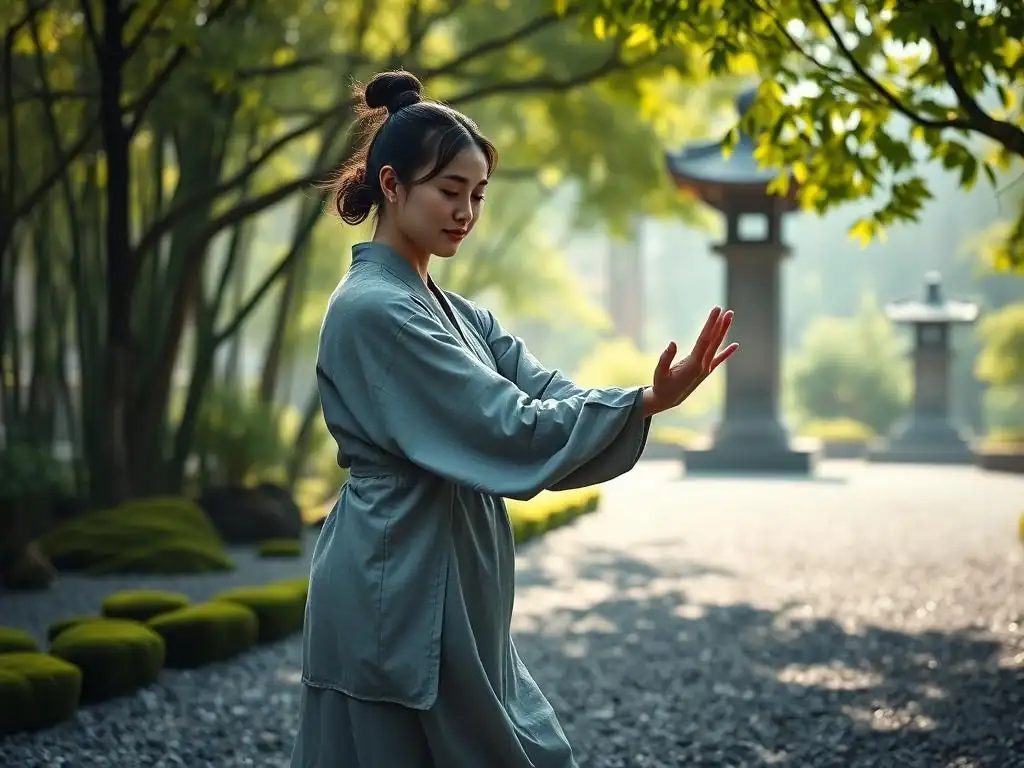
Welcome to Mind Care Guide, your haven for nurturing inner peace.
Feeling overwhelmed by anxiety? You're not alone. Delve into our latest article, "Tai Chi for Beginners," and discover how the gentle art of Tai chi anxiety relief can unlock a pathway to serenity. Curious to learn how slow, mindful movements can calm your mind and body? Let's explore the transformative power of Tai Chi together.
Tai Chi for Stress Reduction: Cultivating Calm Through Movement
- Introduction to Tai Chi and its Impact on Well-being
- Understanding Tai Chi for Stress Management
- Getting Started with Tai Chi: A Practical Guide
- Foundational Tai Chi Movements for Stress Alleviation
- Establishing a Daily Tai Chi Practice for Stress Reduction
- Foundational Tai Chi Movements for Stress Alleviation
- Establishing a Daily Tai Chi Practice for Stress Reduction
- Advanced Tai Chi Practices for Enhanced Relaxation
- Sustaining Motivation and Continued Progress in Tai Chi
- Tai Chi and Holistic Well-being: An Integrated Approach
- Resources for Continued Learning and Practice
-
Frequently Asked Questions
- What is Tai Chi and how can it help with anxiety?
- Is Tai Chi suitable for beginners with no prior experience?
- How often should I practice Tai Chi to experience anxiety relief benefits?
- What are the key elements of Tai Chi that contribute to its anxiety-reducing effects?
- Are there any potential risks or precautions to consider before starting Tai Chi for anxiety?
- Final Reflection: Cultivating Inner Peace Through Tai Chi
- Unleash Your Inner Calm: Start Your Tai Chi Journey Today!
Introduction to Tai Chi and its Impact on Well-being
What is Tai Chi? A Gentle Exercise Rooted in Ancient Tradition
Tai Chi Chuan, often simply called Tai Chi, is an ancient Chinese martial art and mind-body practice. Developed centuries ago, it involves a series of slow, deliberate, and flowing movements, often described as "meditation in motion." These movements are performed in a continuous, graceful sequence, accompanied by deep, focused breathing.
While it originated as a martial art, its modern practice is predominantly focused on health, relaxation, and cultivating inner peace. Unlike more strenuous forms of exercise, Tai Chi is low-impact and accessible to people of varying ages and physical conditions, making it an ideal practice for stress management and overall well-being.
The practice emphasizes harmony between mind and body, using gentle physical movements to calm the nervous system and improve mental clarity. The focus is on smooth transitions, proper posture, and synchronized breathing, which together create a state of relaxed awareness.
This mindful approach helps practitioners become more attuned to their bodies and present in the moment, which is a crucial element in reducing stress and fostering a sense of calm. The traditional forms, such as the widely practiced Yang style, consist of dozens of interconnected movements, each flowing seamlessly into the next, creating a moving meditation that soothes the mind and energizes the body.
Tai Chi's Multi-faceted Benefits: Beyond Physical Fitness
While Tai Chi is known for improving balance, flexibility, and muscle strength, its benefits extend significantly into the realm of mental and emotional health. Regular practice has been shown to have a profound impact on stress levels, anxiety, and overall mood. The gentle, rhythmic movements, combined with focused breathing, activate the body's relaxation response, counteracting the effects of chronic stress. This makes Tai Chi a powerful tool for those seeking natural ways to alleviate the pressures of modern life and find inner tranquility.
Beyond stress reduction, many individuals turn to Tai Chi for anxiety relief and to manage symptoms associated with conditions like depression or insomnia. Studies have indicated that consistent Tai Chi practice can lead to reductions in cortisol, the body's primary stress hormone. Furthermore, the mindful aspect of Tai Chi encourages practitioners to let go of worrying thoughts and focus on the present moment, which can significantly reduce rumination and anxious feelings. The practice fosters a sense of groundedness and resilience, helping individuals navigate challenges with greater ease and equanimity.
Understanding Tai Chi for Stress Management
How Tai Chi Regulates the Nervous System: A Scientific Perspective
The effectiveness of Tai Chi in stress management is rooted in its impact on the autonomic nervous system, specifically promoting the activity of the parasympathetic nervous system. This is the body's "rest and digest" system, responsible for calming responses like slowing the heart rate, lowering blood pressure, and promoting relaxation. In contrast, chronic stress activates the sympathetic nervous system, the "fight or flight" response, leading to elevated heart rate, increased muscle tension, and heightened anxiety. Tai Chi's slow, controlled movements, deep breathing, and meditative focus help shift the balance towards parasympathetic dominance.
Research using biofeedback and physiological measurements has supported this. For example, studies have shown that Tai Chi practice can lead to a measurable decrease in heart rate variability (HRV) patterns associated with stress and an increase in those associated with relaxation. The controlled breathing techniques inherent in Tai Chi also directly influence the vagus nerve, a key component of the parasympathetic system, further enhancing the calming effect. This physiological shift is a primary reason why Tai Chi is so effective for Tai chi anxiety relief and general stress reduction.
Tai Chi vs. Other Activities: Comparing Stress-Relieving Effects
While many activities offer stress relief, Tai Chi provides a unique combination of physical exercise, mindfulness, and breath work that sets it apart. Unlike high-intensity workouts, which can sometimes increase cortisol levels in the short term, Tai Chi's low-impact nature promotes relaxation without over-stimulating the body. Compared to purely sedentary mindfulness practices like meditation, Tai Chi integrates movement, which can be beneficial for individuals who find it difficult to sit still or prefer an active form of meditation.
Consider yoga, another popular mind-body practice. While yoga shares similarities with Tai Chi in its focus on breath, movement, and mindfulness, Tai Chi movements are typically more fluid and circular, performed without holding static poses for extended periods. This continuous flow can create a deeply meditative state conducive to shedding tension.
Furthermore, Tai Chi's roots in martial arts imbue it with principles of rootedness, balance, and yielding, which can translate into greater resilience and adaptability when facing stressors in daily life. For many, the gentle, flowing nature of Tai Chi offers a more accessible entry point into mind-body practices compared to more physically demanding forms of exercise or static meditation.
Getting Started with Tai Chi: A Practical Guide
Core Tai Chi Principles: Posture, Breathing, and Mindfulness
Embarking on your Tai Chi journey involves understanding a few fundamental principles that underpin the practice. Proper posture is crucial; it's about being relaxed yet aligned, with a sense of being rooted to the ground. The body should be erect but not stiff, with joints slightly bent and the weight centered. Imagine a string gently pulling you up from the crown of your head while simultaneously feeling grounded through your feet. This relaxed alignment allows energy (often referred to as 'Qi') to flow freely and supports the gentle movements.
Breathing in Tai Chi is slow, deep, and natural, coordinated with the movements. Typically, inhalation occurs during expansive or opening movements, and exhalation during contracting or closing ones. The breath should originate from the diaphragm, promoting relaxation and oxygen flow. Finally, mindfulness is paramount. It's about bringing your full attention to the present moment – the sensations in your body, the flow of your breath, and the movement sequence. This focused awareness helps quiet the mental chatter and is a key element in achieving Tai chi anxiety relief and cultivating inner calm.
Finding Qualified Tai Chi Instruction: In-Person and Online Options
Finding a good teacher is vital for beginners to learn the correct form and principles safely and effectively. Qualified instructors can provide personalized feedback on posture, movement, and breathing, preventing the development of poor habits. Look for instructors with experience teaching beginners and a teaching style that resonates with you – some focus more on the health aspects, while others may incorporate more martial applications. Many community centers, gyms, and dedicated Tai Chi schools offer introductory classes.
In recent years, the availability of online Tai Chi instruction has grown significantly. Platforms offer video tutorials, live classes, and even one-on-one sessions. While online learning lacks the direct physical correction of an in-person class, it offers flexibility and accessibility. When choosing an online resource, look for instructors who provide clear instructions, demonstrate movements from multiple angles, and ideally offer guidance on the underlying principles. Many reputable Tai Chi organizations offer online resources, providing a convenient way to start your practice from home.
Preparing for Your Initial Tai Chi Experience: What to Expect
Preparing for your first Tai Chi class is simple. Wear loose, comfortable clothing that allows for a full range of motion – anything you'd wear for light exercise or yoga is suitable. Flat, comfortable shoes, like sneakers or soft-soled canvas shoes, are best to allow your feet to feel grounded and support your balance. Tai Chi is typically practiced barefoot or in socks if the surface is suitable and you feel stable.
Expect the first few sessions to focus on foundational principles, basic posture, and perhaps just a few simple movements. The instructor will likely guide you through gentle warm-up exercises. Don't worry about memorizing sequences immediately; the focus is on learning the feeling of the movements, coordinating breath, and cultivating relaxation. Be patient with yourself; learning Tai Chi is a gradual process. Most importantly, approach it with an open mind and a willingness to explore the gentle, flowing movements. Many beginners report feeling a sense of calm and centeredness even after their very first session.
Foundational Tai Chi Movements for Stress Alleviation
The "Cloud Hands" Movement: Detailed Instructions for Beginners
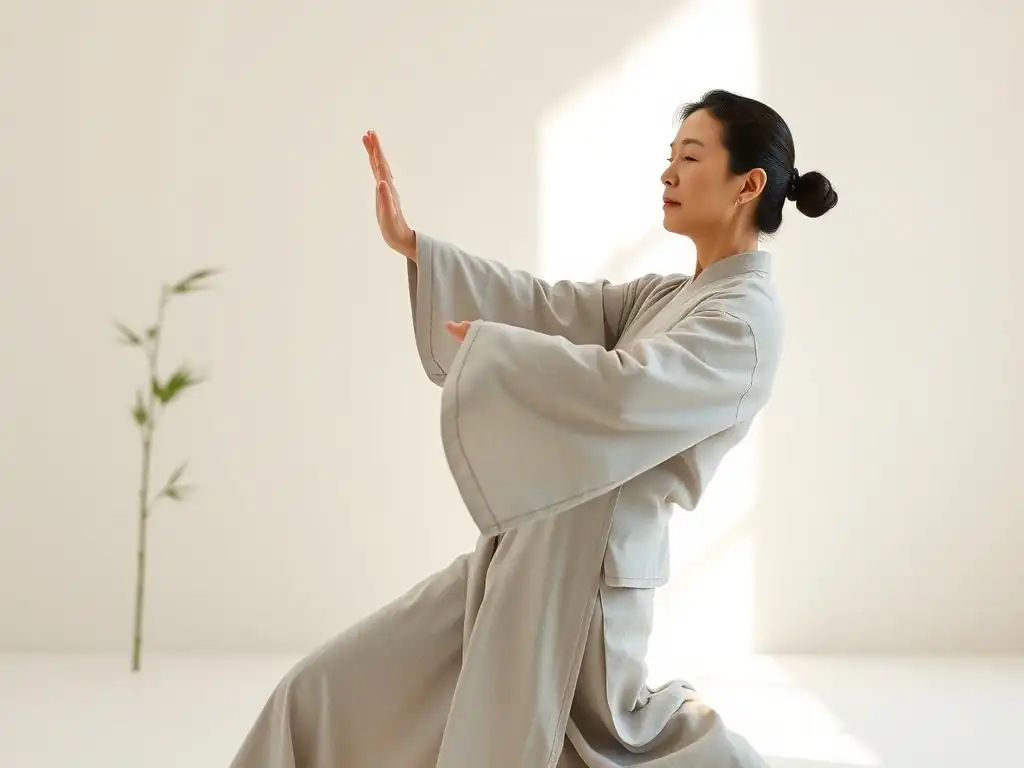
Cloud Hands is one of the most fundamental and calming movements in Tai Chi, excellent for cultivating coordination and a sense of flow. Begin with your feet shoulder-width apart, knees slightly bent, and body relaxed. Imagine holding a large ball in front of your chest. As you shift your weight to one foot (say, the left), your hands move in opposing circles: the left hand sweeps down and across your body while the right hand rises in front of you, as if turning the ball. Your torso gently turns with the weight shift.
As you complete the weight shift and torso turn, your hands transition. The hand that went down now comes up in front of the chest, and the hand that went up sweeps down and across as you shift weight back to the center and then over to the other foot (the right). Your gaze often follows the hand that is rising in front of you.
The movement is continuous, smooth, and circular, with the hands moving like clouds drifting across the sky, coordinating with the gentle turning of the waist and the shifting of weight. This rhythmic, symmetrical movement is deeply soothing and helps release tension in the shoulders and torso, contributing significantly to Tai chi anxiety relief.
The "Opening and Closing" Movement: A Gentle and Grounding Exercise
The Opening and Closing movement is a simple yet powerful exercise that emphasizes breath control and cultivating a sense of expansion and contraction within the body. Start in a relaxed, upright posture with feet shoulder-width apart, knees slightly bent. Let your arms hang loosely at your sides. As you inhale deeply, slowly raise your arms forward and slightly out to the sides, as if gently pushing something away or opening a door. Your palms might face forward or slightly inward.
As you exhale, slowly bring your arms back down towards your sides, allowing them to gently return to their starting position, as if gathering something in or closing a door. The movement is soft, continuous, and perfectly synchronized with your breath. This simple cycle of expansion on the inhale and contraction on the exhale promotes deep relaxation and helps regulate the nervous system. It's a grounding movement that brings awareness to the core of the body and can quickly calm a restless mind, offering immediate stress reduction.
The "Rocking Step" Movement: Building Balance and Coordination
The Rocking Step, sometimes called "Shift Weight," is foundational to all Tai Chi forms as it teaches proper weight transfer and rooting. Start with feet shoulder-width apart. Gently shift your weight slowly and smoothly onto one foot, say the left. As you do this, the opposite foot (the right) becomes light; you can lift the heel or even the entire foot slightly, but it remains next to the weighted foot. Maintain your balance and upright posture throughout the shift.
Then, slowly shift your weight back to the center, distributing it evenly between both feet. Finally, shift your weight fully onto the other foot (the right), allowing the left foot to become light. The movement is like gently rocking back and forth, focusing on maintaining balance and control through the core and weighted leg. This practice builds leg strength and stability, crucial for all subsequent movements, and the focused attention required helps draw the mind away from stressors, contributing to mental calm.
Synchronizing Breath with Movement: Enhancing Relaxation and Focus
The conscious synchronization of breath with movement is arguably the most powerful element of Tai Chi for stress and anxiety relief. Each movement, or phase of a movement, is paired with either an inhalation or an exhalation. Generally, outward, expansive, or rising movements correspond with inhalation, while inward, contracting, or sinking movements correspond with exhalation. The breath should be deep, slow, and abdominal, rather than shallow chest breathing.
This deliberate coordination creates a meditative rhythm that calms the nervous system. By focusing on the breath and the movement, the mind is less likely to wander to worries or stressors. The deep, diaphragmatic breathing itself activates the parasympathetic nervous system, promoting relaxation and reducing the physiological symptoms of stress like rapid heart rate or tense muscles. Practicing this synchronization enhances body awareness and fosters a state of relaxed alertness, making Tai Chi a moving meditation that directly addresses the roots of anxiety.
Establishing a Daily Tai Chi Practice for Stress Reduction
Creating a Sustainable Tai Chi Routine: Consistency is Key
Establishing a sustainable Tai Chi routine is crucial for reaping its full benefits, especially for long-term Tai chi anxiety relief. Consistency, even in short bursts, is more effective than infrequent, long sessions. Aim to practice for at least 15-20 minutes most days of the week. This duration is often sufficient to enter a state of relaxed focus and allow the gentle movements to calm the nervous system. Consider starting with just a few foundational movements and gradually adding more as you become comfortable.
Find a time and place where you can practice undisturbed. This could be a corner of your living room, a quiet spot in your garden, or a park. The space doesn't need to be large, just enough room to move your arms freely. Treat your practice time as a non-negotiable appointment with yourself. Having a dedicated time helps build the habit. Remember that perfection is not the goal; the intention to practice and the act of moving mindfully are what matter most.
Incorporating Tai Chi into Your Daily Schedule: Finding the Right Time
Integrating Tai Chi into a busy daily schedule might seem challenging, but flexibility is key. Many practitioners find that practicing first thing in the morning sets a calm tone for the day. A morning session can help clear the mind and prepare you to face daily challenges with greater equanimity. Others prefer practicing in the late afternoon or early evening as a way to decompress and release the tensions accumulated throughout the day.
Even short sessions can be beneficial. If a 20-minute block is impossible, break it down. Practice 10 minutes in the morning and another 10 minutes before dinner. You can even incorporate mindful Tai Chi principles into everyday movements – standing with rooted posture while waiting in line or practicing deep breathing during a stressful moment. The goal is to make Tai Chi a natural part of your day, a reliable tool for managing stress whenever you need it.
Modifying Tai Chi for Individual Needs: Addressing Physical Limitations
One of the great strengths of Tai Chi is its adaptability. It can be modified to suit almost any physical condition or limitation. If standing for extended periods is difficult, many Tai Chi forms can be practiced while seated in a chair. This modification retains the focus on upper body movements, breath, and mindfulness, still providing significant stress relief benefits. Instructors can guide you on adapting footwork or stances if you have knee, hip, or balance issues.
For individuals with mobility challenges, even focusing solely on the arm movements and coordinating them with breath can be profoundly calming. The core principles of relaxation, conscious breathing, and mindful awareness are applicable regardless of the complexity of the physical movements performed. Always communicate any physical concerns to your instructor, who can help you modify movements to ensure your practice is safe, comfortable, and effective for your specific needs, allowing you to gain Tai chi anxiety relief without strain.
Foundational Tai Chi Movements for Stress Alleviation
The "Cloud Hands" Movement: Detailed Instructions for Beginners
Cloud Hands is one of the most fundamental and calming movements in Tai Chi, excellent for cultivating coordination and a sense of flow. Begin with your feet shoulder-width apart, knees slightly bent, and body relaxed. Imagine holding a large ball in front of your chest. As you shift your weight to one foot (say, the left), your hands move in opposing circles: the left hand sweeps down and across your body while the right hand rises in front of you, as if turning the ball. Your torso gently turns with the weight shift.
As you complete the weight shift and torso turn, your hands transition. The hand that went down now comes up in front of the chest, and the hand that went up sweeps down and across as you shift weight back to the center and then over to the other foot (the right). Your gaze often follows the hand that is rising in front of you.
The movement is continuous, smooth, and circular, with the hands moving like clouds drifting across the sky, coordinating with the gentle turning of the waist and the shifting of weight. This rhythmic, symmetrical movement is deeply soothing and helps release tension in the shoulders and torso, contributing significantly to Tai chi anxiety relief.
The "Opening and Closing" Movement: A Gentle and Grounding Exercise
The Opening and Closing movement is a simple yet powerful exercise that emphasizes breath control and cultivating a sense of expansion and contraction within the body. Start in a relaxed, upright posture with feet shoulder-width apart, knees slightly bent. Let your arms hang loosely at your sides. As you inhale deeply, slowly raise your arms forward and slightly out to the sides, as if gently pushing something away or opening a door. Your palms might face forward or slightly inward.
As you exhale, slowly bring your arms back down towards your sides, allowing them to gently return to their starting position, as if gathering something in or closing a door. The movement is soft, continuous, and perfectly synchronized with your breath. This simple cycle of expansion on the inhale and contraction on the exhale promotes deep relaxation and helps regulate the nervous system. It's a grounding movement that brings awareness to the core of the body and can quickly calm a restless mind, offering immediate stress reduction.
The "Rocking Step" Movement: Building Balance and Coordination
The Rocking Step, sometimes called "Shift Weight," is foundational to all Tai Chi forms as it teaches proper weight transfer and rooting. Start with feet shoulder-width apart. Gently shift your weight slowly and smoothly onto one foot, say the left. As you do this, the opposite foot (the right) becomes light; you can lift the heel or even the entire foot slightly, but it remains next to the weighted foot. Maintain your balance and upright posture throughout the shift.
Then, slowly shift your weight back to the center, distributing it evenly between both feet. Finally, shift your weight fully onto the other foot (the right), allowing the left foot to become light. The movement is like gently rocking back and forth, focusing on maintaining balance and control through the core and weighted leg. This practice builds leg strength and stability, crucial for all subsequent movements, and the focused attention required helps draw the mind away from stressors, contributing to mental calm.
Synchronizing Breath with Movement: Enhancing Relaxation and Focus
The conscious synchronization of breath with movement is arguably the most powerful element of Tai Chi for stress and anxiety relief. Each movement, or phase of a movement, is paired with either an inhalation or an exhalation. Generally, outward, expansive, or rising movements correspond with inhalation, while inward, contracting, or sinking movements correspond with exhalation. The breath should be deep, slow, and abdominal, rather than shallow chest breathing.
This deliberate coordination creates a meditative rhythm that calms the nervous system. By focusing on the breath and the movement, the mind is less likely to wander to worries or stressors. The deep, diaphragmatic breathing itself activates the parasympathetic nervous system, promoting relaxation and reducing the physiological symptoms of stress like rapid heart rate or tense muscles. Practicing this synchronization enhances body awareness and fosters a state of relaxed alertness, making Tai Chi a moving meditation that directly addresses the roots of anxiety.
Establishing a Daily Tai Chi Practice for Stress Reduction
Creating a Sustainable Tai Chi Routine: Consistency is Key
Establishing a sustainable Tai Chi routine is crucial for reaping its full benefits, especially for long-term Tai chi anxiety relief. Consistency, even in short bursts, is more effective than infrequent, long sessions. Aim to practice for at least 15-20 minutes most days of the week. This duration is often sufficient to enter a state of relaxed focus and allow the gentle movements to calm the nervous system. Consider starting with just a few foundational movements and gradually adding more as you become comfortable.
Find a time and place where you can practice undisturbed. This could be a corner of your living room, a quiet spot in your garden, or a park. The space doesn't need to be large, just enough room to move your arms freely. Treat your practice time as a non-negotiable appointment with yourself. Having a dedicated time helps build the habit. Remember that perfection is not the goal; the intention to practice and the act of moving mindfully are what matter most.
Incorporating Tai Chi into Your Daily Schedule: Finding the Right Time
Integrating Tai Chi into a busy daily schedule might seem challenging, but flexibility is key. Many practitioners find that practicing first thing in the morning sets a calm tone for the day. A morning session can help clear the mind and prepare you to face daily challenges with greater equanimity. Others prefer practicing in the late afternoon or early evening as a way to decompress and release the tensions accumulated throughout the day.
Even short sessions can be beneficial. If a 20-minute block is impossible, break it down. Practice 10 minutes in the morning and another 10 minutes before dinner. You can even incorporate mindful Tai Chi principles into everyday movements – standing with rooted posture while waiting in line or practicing deep breathing during a stressful moment. The goal is to make Tai Chi a natural part of your day, a reliable tool for managing stress whenever you need it.
Modifying Tai Chi for Individual Needs: Addressing Physical Limitations
One of the great strengths of Tai Chi is its adaptability. It can be modified to suit almost any physical condition or limitation. If standing for extended periods is difficult, many Tai Chi forms can be practiced while seated in a chair. This modification retains the focus on upper body movements, breath, and mindfulness, still providing significant stress relief benefits. Instructors can guide you on adapting footwork or stances if you have knee, hip, or balance issues.
For individuals with mobility challenges, even focusing solely on the arm movements and coordinating them with breath can be profoundly calming. The core principles of relaxation, conscious breathing, and mindful awareness are applicable regardless of the complexity of the physical movements performed. Always communicate any physical concerns to your instructor, who can help you modify movements to ensure your practice is safe, comfortable, and effective for your specific needs, allowing you to gain Tai chi anxiety relief without strain.
Advanced Tai Chi Practices for Enhanced Relaxation
Exploring Different Tai Chi Styles: Yang, Chen, Wu, and Sun
As you progress in your Tai Chi journey and seek deeper relaxation and mental benefits, you might explore different styles beyond the beginner forms. The Yang style, often the first introduced to beginners, is known for its gentle, expansive, and even movements, making it highly accessible and effective for health and stress reduction. It's a popular choice for achieving Tai chi anxiety relief due to its focus on slow, continuous flow.
Other styles offer different nuances. The Chen style, the oldest, incorporates bursts of power and faster movements alongside slow ones, offering a different dynamic. The Wu and Sun styles are generally more compact and focus on smaller movements, suitable for smaller spaces or those with mobility issues. Each style maintains the core principles of posture, breath, and mindfulness but expresses them through unique movement vocabularies. Exploring these can deepen your understanding and practice, providing new ways to cultivate calm.
Tai Chi Qigong: Combining Movement, Breath, and Visualization
Qigong (Chi Kung) is a related practice that often overlaps with Tai Chi, focusing on cultivating and balancing internal energy (Qi) through gentle movements, breathwork, and visualization. While Tai Chi is a complex form sequence, Qigong often consists of simpler, repetitive movements or static postures. Many Tai Chi classes incorporate Qigong exercises as warm-ups or supplementary practices.
Practicing Qigong alongside Tai Chi can enhance the relaxation response. Simple Qigong exercises, like "Eight Brocades" or "Five Animal Frolics," are designed to promote energy flow in specific ways that can release tension and calm the mind. The emphasis on visualization – imagining energy moving through the body or breathing in fresh, calming energy – adds another layer to the practice, making it a powerful tool for stress management and achieving Tai chi anxiety relief.
Using Tai Chi for Emotional Regulation: Cultivating Inner Peace
Beyond reducing generalized stress and anxiety, Tai Chi can be a powerful tool for specific emotional regulation. The practice encourages you to observe your physical and emotional state without judgment. As you become more attuned to your body through movement and breath, you may notice where you hold tension or experience emotions physically. The slow, deliberate movements can help release these physical manifestations of emotional stress.
Furthermore, the focus required by Tai Chi pulls attention away from distressing thoughts and redirects it to the present moment. This cultivates a sense of detachment from overwhelming emotions, allowing you to experience them without being consumed by them. Over time, regular practice builds emotional resilience, helping you respond to challenging situations with greater calm and perspective, moving towards a state of inner peace.
Sustaining Motivation and Continued Progress in Tai Chi
Setting Achievable Goals: Focusing on the Process, Not Perfection
Maintaining motivation in any new practice, including Tai Chi, involves setting realistic and achievable goals. For beginners, the goal shouldn't be to perfectly perform complex forms immediately. Instead, focus on the process: attending classes regularly, practicing for a set amount of time each day, or simply focusing on your breath during movements. Celebrate small victories, like feeling more balanced or noticing a sense of calm after practice.
Shift your focus from achieving a flawless form to experiencing the feeling of the movements and the state of mind they cultivate. The true progress in Tai Chi for stress management is not about physical perfection but about the subtle shifts in your internal state – reduced tension, increased patience, greater peace. Embracing this process-oriented mindset makes the practice enjoyable and sustainable, ensuring you continue to benefit from Tai chi anxiety relief.
Monitoring Your Progress: Noticing Subtle Improvements in Well-being
Progress in Tai Chi, particularly regarding stress and anxiety relief, is often subtle and cumulative. It's not always a dramatic overnight change. Take time to periodically reflect on how you feel before and after practice, and how your general state of mind is changing over weeks and months. Do you feel less reactive to stressors? Is it easier to fall asleep? Do you experience fewer anxious thoughts?
Keeping a simple journal can be helpful. Note how long you practiced, what movements you focused on, and any observations about your physical or mental state. Over time, looking back at these notes can reveal significant, positive changes in your well-being that you might not notice day-to-day. This tangible evidence of progress can be a powerful motivator to continue your practice.
Addressing Challenges: Seeking Support and Adapting Your Practice
Like any practice, you may encounter challenges in Tai Chi, such as difficulty with specific movements, waning motivation, or physical discomfort. It's important to address these challenges constructively rather than becoming discouraged. If you're struggling with a movement, break it down into smaller parts or ask your instructor for alternative approaches.
If motivation dips, remind yourself of why you started – likely seeking greater peace and Tai chi anxiety relief. Revisit your initial goals or try practicing with others. Physical discomfort should always be addressed carefully; never push into pain. Talk to your instructor about modifications or consult a healthcare professional if needed. Seeking support from teachers or fellow practitioners can provide encouragement and practical solutions to keep your practice consistent and beneficial.
Tai Chi and Holistic Well-being: An Integrated Approach
Combining Tai Chi with Mindfulness Meditation and Yoga
Tai Chi integrates beautifully with other mind-body practices, creating a holistic approach to well-being. Many practitioners find that combining Tai Chi with seated mindfulness meditation enhances the meditative quality of both. Tai Chi can prepare the body and mind for stillness, while seated meditation can deepen the awareness cultivated during movement.
Similarly, combining Tai Chi with yoga can offer complementary benefits. Yoga often focuses on static stretches and holding poses, improving flexibility and strength in different ways than Tai Chi. Practicing both can create a well-rounded approach to physical and mental health, combining yoga's grounding poses with Tai Chi's flowing movement for comprehensive stress and anxiety relief. The core principles of breath, mindfulness, and body awareness are common threads that weave these practices together.
Tai Chi as a Complementary Practice: Supporting Mental and Physical Health
Tai Chi is increasingly recognized by the medical community as a valuable complementary therapy. It doesn't replace conventional medical or psychological treatment but can significantly support overall health and recovery. For mental health, it serves as a non-pharmacological intervention that helps manage symptoms of stress, anxiety, and depression by calming the nervous system and promoting emotional regulation.
On the physical side, Tai Chi improves balance, reducing falls risk, especially in older adults. It can help manage chronic conditions like arthritis, fibromyalgia, and cardiovascular disease by improving circulation, reducing joint stiffness, and lowering blood pressure. Integrating Tai Chi into your lifestyle means adding a powerful tool that supports both your mental resilience and physical vitality, fostering a truly holistic sense of well-being.
Long-Term Benefits of Tai Chi: Increased Resilience and Vitality
Committing to Tai Chi practice over the long term yields profound and lasting benefits. Beyond immediate stress and Tai chi anxiety relief, consistent practice builds remarkable resilience – the ability to bounce back from adversity. By regularly training the mind to stay calm and focused amidst movement, you develop the capacity to remain centered when faced with life's challenges.
Long-term practitioners often report increased energy levels, improved sleep quality, and a greater sense of vitality and overall life satisfaction. The continuous, gentle movements maintain joint health and muscle tone, contributing to physical longevity. The blend of physical activity and mental calm fostered by Tai Chi cultivates a sustainable state of well-being, allowing you to navigate life with greater ease, peace, and energy.
Resources for Continued Learning and Practice
Recommended Books and Online Resources for Tai Chi Study
For those looking to deepen their understanding and practice of Tai Chi, numerous resources are available. Books can provide detailed explanations of forms, principles, and the philosophy behind Tai Chi. Titles such as "The Complete Book of Tai Chi Chuan" by Wong Kiew Kit or books specifically focused on the Yang style for health by authors like Dr. Paul Lam are often recommended for beginners seeking a solid foundation.
Online platforms and websites offer a wealth of video tutorials, articles, and historical information. Many reputable Tai Chi organizations and individual instructors maintain websites with free or subscription-based content. Look for resources that align with the style you are learning and offer clear, step-by-step instructions. While not a replacement for in-person feedback, these can be excellent supplements to your learning.
Connecting with Tai Chi Communities: Sharing Experiences and Support
Joining a Tai Chi community, whether local or online, can be incredibly beneficial for motivation and continued learning. Practicing with others provides a sense of camaraderie and shared purpose. You can learn by observing more experienced practitioners and receive encouragement from peers facing similar learning curves. Many parks and community centers have informal groups that meet regularly to practice together.
Online forums, social media groups, and dedicated Tai Chi platforms connect practitioners globally. These communities offer spaces to ask questions, share experiences, discuss challenges, and celebrate progress. Engaging with a community provides valuable support, helps keep you accountable, and enriches your understanding of Tai Chi beyond just the physical movements, reinforcing its role in achieving Tai chi anxiety relief and fostering connection.
The Growing Role of Tai Chi: Promoting Health and Wellness
Tai Chi's role in promoting health and wellness is becoming increasingly recognized globally. Healthcare providers are more frequently recommending it as a low-impact exercise for various conditions and as a complementary therapy for mental health challenges like stress and anxiety. Its integration into wellness programs, corporate health initiatives, and senior centers highlights its broad appeal and proven benefits.
As research continues to validate its positive impacts on physical health, mental clarity, and emotional regulation, Tai Chi is positioned to play an even larger role in preventative health and holistic care. Its accessibility, adaptability, and profound ability to calm the mind and strengthen the body make it a valuable practice for anyone seeking a path to greater peace and vitality in their lives.
Frequently Asked Questions
What is Tai Chi and how can it help with anxiety?
Tai Chi is a gentle form of exercise that involves slow, flowing movements and focused breathing. It can help with anxiety by promoting relaxation and reducing stress hormones in the body.
Is Tai Chi suitable for beginners with no prior experience?
Yes, Tai Chi is generally considered suitable for beginners of all ages and fitness levels. The movements are low-impact and can be easily modified to accommodate individual needs and limitations.
How often should I practice Tai Chi to experience anxiety relief benefits?
While individual results may vary, practicing Tai Chi for at least 2-3 times per week is generally recommended to experience noticeable anxiety relief benefits. Consistency is key for optimal results.
What are the key elements of Tai Chi that contribute to its anxiety-reducing effects?
The key elements include mindful movement, deep breathing, and focused attention. These elements work together to calm the nervous system and promote a sense of inner peace and tranquility.
Are there any potential risks or precautions to consider before starting Tai Chi for anxiety?
While Tai Chi is generally safe, it's always best to consult with a healthcare professional before starting any new exercise program, especially if you have any underlying health conditions. They can advise on modifications or precautions specific to your needs.
Final Reflection: Cultivating Inner Peace Through Tai Chi
The gentle art of Tai Chi Chuan offers more than just physical exercise; it provides a powerful antidote to the anxieties of modern life. In a world increasingly dominated by stress and uncertainty, the slow, deliberate movements of Tai Chi offer a sanctuary for the mind and body, a pathway to a calmer, more centered self. Its growing popularity is a testament to its effectiveness in promoting well-being and reducing stress levels.
The profound impact of Tai Chi on my own life, and the lives of countless others, cannot be overstated. It's not simply about learning a series of poses; it's about cultivating a mindful awareness of breath, movement, and the present moment. This mindful practice gently unravels the knots of tension that accumulate throughout the day, leaving one feeling lighter, more balanced, and better equipped to navigate life's challenges. The journey of a thousand miles begins with a single step.
This ancient proverb perfectly encapsulates the essence of Tai Chi – the consistent practice, even in small increments, yields significant and lasting benefits.
Now, it's your turn. Consider incorporating even a few minutes of Tai Chi into your daily routine. Start with the basic movements, focus on your breath, and allow yourself to experience the calming effects of this ancient practice. Don't be afraid to experiment, to find what works best for you, and to embrace the journey towards a more peaceful and centered you. The serenity you discover within yourself will be a gift that keeps on giving.
Unleash Your Inner Calm: Start Your Tai Chi Journey Today!
Thanks for taking the time to explore the world of Tai Chi with us! We hope you found this introduction to its calming power both insightful and inspiring. Now it’s time to turn those newfound insights into action.
Here’s how you can continue your journey to serenity:
- Begin your practice today! Even 5 minutes of the Sun Salutation can make a difference. Find a quiet space, follow your breath, and feel the gentle movements unlock inner peace.
- Share your experience! Tell us (and others!) about your initial practice. What did you find most challenging? What brought you the most joy? Let's build a supportive community together.
- Explore Tai Chi resources: Dive deeper into different Tai Chi styles and find a local class or online tutorial that resonates with you.
Ready to embrace the tranquility Tai Chi offers? What small step will you take today to cultivate your inner peace?