
TM vs. Mindfulness: Understanding the Key Differences

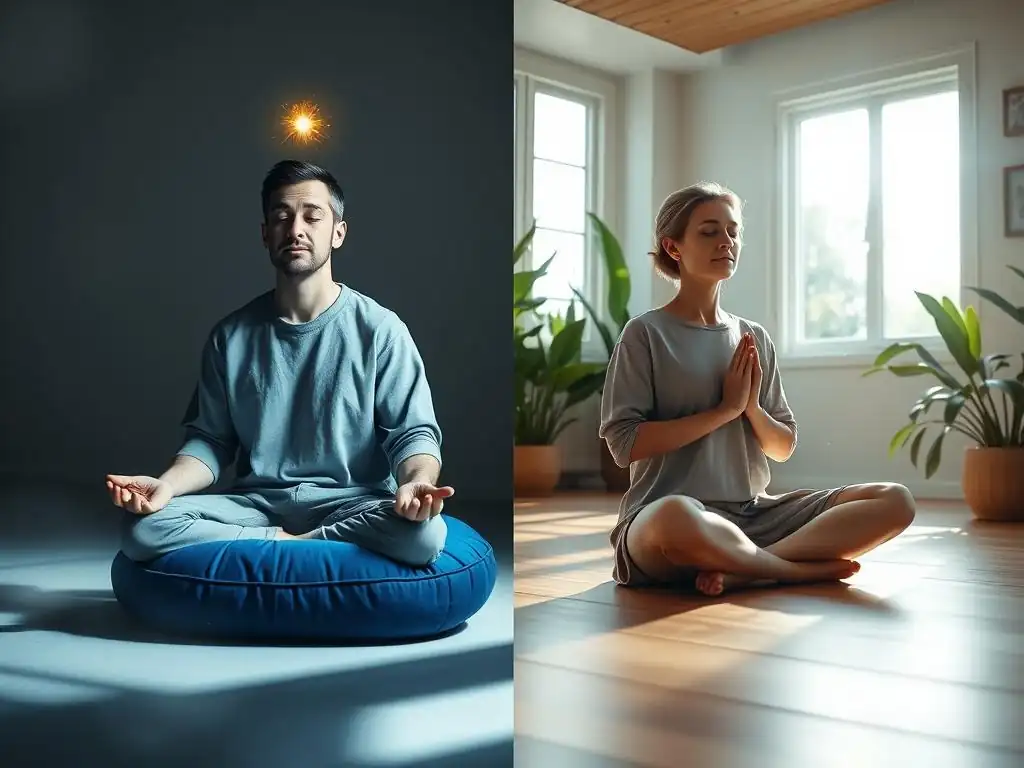
Welcome to Mind Care Guide, your sanctuary for nurturing inner peace. Feeling overwhelmed trying to navigate the world of meditation? You're not alone. Many seek clarity amidst the noise, and understanding the nuances of different practices is a great first step. Are you curious about the subtle, yet significant differences between Transcendental Meditation (TM) and mindfulness? Our latest guide dives deep, exploring the TM vs mindfulness benefits to help you discover which path resonates most with your unique journey to well-being. Let's explore together...
TM vs. Mindfulness: Understanding the Key Differences for Mental Well-being
- Introduction: Exploring the Landscape of Meditation Techniques for Mind Care
- TM vs. Mindfulness: A Detailed Comparison of Key Aspects
- Benefits of TM and Mindfulness: A Side-by-Side Analysis
- Practical Considerations: Time Commitment, Cost, and Accessibility
- The Scientific Evidence: Research Supporting TM and Mindfulness
- Choosing the Right Meditation Technique for You: A Personalized Approach
- Conclusion: Making an Informed Decision for Your Mental Well-being
-
Frequently Asked Questions
- What are the key differences between Transcendental Meditation (TM) and mindfulness meditation?
- Which practice, TM or mindfulness, is better for reducing anxiety and stress?
- Does TM offer any unique benefits compared to mindfulness meditation?
- Is it possible to practice both TM and mindfulness meditation simultaneously?
- Where can I find resources or training to learn TM or mindfulness meditation?
- Final Reflection: Finding Your Path to Inner Peace
- Unlock Your Inner Peace: TM or Mindfulness – Which Path is Right for You?
Introduction: Exploring the Landscape of Meditation Techniques for Mind Care
Meditation has emerged as a powerful tool in the pursuit of mental well-being, offering respite from the relentless pace of modern life. As awareness grows about the importance of mind care, so too does the variety of techniques available. Two prominent practices often discussed are Transcendental Meditation (TM) and Mindfulness Meditation. While both aim to cultivate inner peace and reduce stress, they employ distinct approaches and may offer different TM vs mindfulness benefits depending on individual needs and goals.
Navigating the world of meditation can feel overwhelming, with various paths promising similar outcomes. Understanding the fundamental differences between techniques like TM and Mindfulness is crucial for making an informed choice that aligns with your personal journey towards improved mental health. This article delves into the core principles, practices, and evidence-based benefits of each, providing a comprehensive guide to help you discern which approach, or combination thereof, might best support your well-being.
What is Transcendental Meditation (TM)? A Deep Dive
Transcendental Meditation is a specific form of mantra meditation introduced to the West by Maharishi Mahesh Yogi. The technique involves sitting comfortably with closed eyes and silently repeating a specific, personalized mantra twice a day for 20 minutes. This mantra is not a word with meaning but rather a sound vibration, chosen by a certified TM teacher for the individual.
The core principle of TM is to allow the mind to settle down naturally to a state of deep rest and expanded awareness without concentration or effort. The silent repetition of the mantra is intended to facilitate this process, enabling the meditator to transcend ordinary thinking processes and experience a state described as "transcendental consciousness." This state is said to be distinct from waking, dreaming, or deep sleep, offering profound physiological and psychological restoration.
Defining Mindfulness Meditation: A Core Practice
Mindfulness Meditation, rooted in ancient Buddhist traditions but adapted for secular use, involves paying attention to the present moment without judgment. It is a broad category encompassing various techniques, all centered around cultivating awareness of one's thoughts, feelings, bodily sensations, and the surrounding environment as they arise.
Unlike TM's focus on transcending thought, Mindfulness encourages acknowledging thoughts and feelings without getting carried away by them. Practices can include focused attention on the breath, body scan meditations (bringing awareness to different parts of the body), walking meditation, or simply observing thoughts as "mental events." The goal is to develop a non-reactive awareness, fostering acceptance and a deeper understanding of one's inner landscape.
Why Compare TM and Mindfulness? Benefits and Applications
Comparing TM and Mindfulness is valuable because they are two of the most widely practiced and scientifically studied meditation techniques. While both are often sought for stress reduction and mental clarity, their mechanisms and specific outcomes can differ, leading to varying TM vs mindfulness benefits. For instance, research might highlight TM's unique effects on blood pressure, while studies on Mindfulness often emphasize its role in emotional regulation.
Understanding these differences helps individuals choose a path that resonates with their personality, lifestyle, and specific mental well-being goals. Someone seeking a structured, effortless technique for deep rest might lean towards TM, while another interested in developing moment-to-moment awareness and acceptance might find Mindfulness more appealing. Examining the TM vs mindfulness benefits side-by-side provides clarity on what each practice uniquely offers.
TM vs. Mindfulness: A Detailed Comparison of Key Aspects
Choosing a meditation practice involves understanding the nuances of how each technique is performed and what it aims to achieve. Beyond the general idea of 'meditation,' TM and Mindfulness diverge significantly in their core methodology, the level of effort required, and their primary objectives. These differences directly influence the TM vs mindfulness benefits one might experience.
This section provides a head-to-head comparison of these fundamental aspects, offering a clearer picture of the distinct paths offered by Transcendental Meditation and Mindfulness Meditation. By examining their techniques, the role of effort, and their stated goals, you can begin to identify which approach aligns better with your personal aspirations for mental wellness.
Technique and Practice: How They Differ
The practical application of TM and Mindfulness represents one of their most significant distinctions. While both involve setting aside time for quiet introspection, the process within that time is quite different. This difference in technique is a key factor in the unique TM vs mindfulness benefits associated with each practice.
Understanding these procedural variations is essential for anyone considering either path. It's not just about sitting quietly; it's about how you engage your mind during that quiet time. This section details the specific techniques employed by TM and Mindfulness, highlighting the core actions and mental states cultivated during practice sessions.
Transcendental Meditation: Mantra-Based Practice Explained
Transcendental Meditation is characterized by its use of a specific mantra, a meaningless sound, which is used effortlessly. The technique requires formal instruction from a certified teacher, typically involving a multi-day course. The teacher provides the individual with their personal mantra and teaches the specific procedure for using it correctly.
During TM practice, the meditator sits comfortably with eyes closed and silently repeats the mantra. The instruction emphasizes not concentrating on the mantra, but allowing it to be present effortlessly. Thoughts will inevitably arise, but the practitioner is taught to return to the mantra in a gentle, easy way, without trying to control the mind. The aim is to allow the mind to "transcend" the thinking process and settle into a state of deep rest and inner wakefulness.
Mindfulness Meditation: Focusing on the Present Moment
Mindfulness Meditation involves intentionally bringing one's attention to the present experience without judgment. This can involve focusing on the breath, bodily sensations, sounds, or thoughts as they occur. Unlike TM, there is no specific mantra used in most forms of Mindfulness.
Practice typically involves sitting comfortably and directing attention to a chosen anchor, such as the sensation of breath entering and leaving the body. When the mind inevitably wanders (which is acknowledged as a natural process), the practitioner gently brings their attention back to the anchor. The emphasis is on observing thoughts and feelings as they arise and pass, cultivating a non-reactive awareness and acceptance of whatever is present in the moment. This can be practiced formally in dedicated sessions or informally throughout daily activities.
Effort vs. Effortlessness: The Role of Active Attention
Another fundamental difference lies in the level of mental effort required during practice. TM is often described as effortless, while Mindfulness, particularly in its early stages, can feel like it requires active effort to maintain focus. This distinction influences the experience of meditation and potentially the TM vs mindfulness benefits derived.
The concept of effort or effortlessness goes beyond mere physical posture; it relates to the mental engagement with the technique itself. Understanding this aspect helps set realistic expectations for practice and highlights the different internal experiences cultivated by each method.
TM: Effortless Transcendence Through Mantra
Transcendental Meditation is specifically designed to be an effortless technique. The instruction emphasizes that the mantra should be used in a natural, easy way, without concentration, control, or forcing the mind. The theory is that the mantra, chosen for its sound vibration, allows the mind to settle spontaneously to quieter levels of thought and eventually transcend thinking altogether.
The goal is not to empty the mind or stop thoughts, but to allow the mind to follow its natural tendency towards greater happiness and deep rest. If thoughts arise, the practitioner is simply instructed to easily return to the silent use of the mantra. This lack of required concentration is central to TM's claim of providing a unique state of deep rest and is a key differentiator when considering TM vs mindfulness benefits related to profound relaxation.
Mindfulness: Cultivating Awareness with Focused Attention
Mindfulness Meditation, while non-judgmental, typically involves a degree of active attention or focus, especially for beginners. The practitioner consciously directs their attention to the chosen object (like the breath) and, when the mind wanders, actively notices the wandering and gently redirects attention back.
While the judgment of thoughts and feelings is discouraged, the act of noticing where the mind is and guiding it back requires a level of deliberate engagement. This focused attention is what helps train the mind to be more present and less reactive. While practice can become easier over time, the initial stages often involve conscious effort to maintain awareness, a contrast to the effortless nature of TM.
Goals and Objectives: What Are You Trying to Achieve?
Although both TM and Mindfulness contribute to overall well-being, they often emphasize different primary goals and outcomes. Understanding these objectives helps clarify the specific TM vs mindfulness benefits each practice is most known for promoting.
Identifying your personal reasons for meditating is a crucial step in choosing the right technique. Are you primarily seeking stress relief, emotional resilience, heightened self-awareness, or something else? The stated goals of TM and Mindfulness offer insight into which practice might best serve your specific needs.
TM: Reducing Stress and Promoting Relaxation
A primary stated goal and widely researched benefit of Transcendental Meditation is the profound reduction of stress and promotion of deep physiological rest. Proponents often highlight its effectiveness in counteracting the effects of chronic stress, sometimes referred to as reducing the "stress response."
Studies on TM have frequently focused on outcomes such as reductions in anxiety, improvements in blood pressure (with some research showing average reductions of several points), and decreased levels of stress hormones like cortisol. The effortless nature of the technique is believed to facilitate a unique state of rest, deeper than sleep, which helps dissolve accumulated stress and fatigue. This focus on deep rest and stress physiology is a key aspect of the TM vs mindfulness benefits narrative.
Mindfulness: Enhancing Awareness and Acceptance
Mindfulness Meditation primarily aims to cultivate present moment awareness and a non-judgmental attitude towards one's experiences. The goal is not necessarily to empty the mind or achieve a transcendent state, but to become more aware of thoughts, feelings, and sensations without getting caught up in them.
Through regular practice, individuals often develop greater emotional regulation, increased self-awareness, and improved ability to handle difficult emotions and challenging situations with more acceptance and less reactivity. Mindfulness is often used in therapeutic contexts, such as Mindfulness-Based Stress Reduction (MBSR) or Mindfulness-Based Cognitive Therapy (MBCT), specifically to help individuals manage conditions like anxiety, depression, and chronic pain by changing their relationship to difficult experiences.
Benefits of TM and Mindfulness: A Side-by-Side Analysis
Both Transcendental Meditation and Mindfulness are associated with a range of positive effects on mental and physical health. While there is overlap in some areas, each practice also has specific TM vs mindfulness benefits that are more commonly highlighted in research and anecdotal reports. This section provides a comparative look at the outcomes you might expect from regular practice of each technique.
Understanding the specific advantages of each method helps individuals align their choice of practice with their personal goals for well-being. Whether seeking profound relaxation or enhanced emotional intelligence, examining the TM vs mindfulness benefits side-by-side offers valuable perspective.
TM Benefits: Stress Reduction, Anxiety Relief, and Cognitive Enhancement
Research on Transcendental Meditation has consistently pointed to significant TM vs mindfulness benefits related to stress and anxiety reduction. Studies have shown statistically significant decreases in reported anxiety levels among practitioners. For example, some meta-analyses pooling data from multiple studies suggest a greater effect size for TM in reducing anxiety compared to some other relaxation techniques.
Beyond stress, TM practice is also associated with potential cognitive enhancements. Some studies indicate improvements in areas like processing speed, memory, and executive function. The deep rest achieved during TM is hypothesized to allow the brain to function more efficiently. Physiological benefits frequently cited include reductions in high blood pressure and improved cardiovascular health markers, potentially linked to the practice's impact on the body's stress response.
Mindfulness Benefits: Improved Focus, Emotional Regulation, and Self-Awareness
Mindfulness Meditation is widely recognized for its TM vs mindfulness benefits in cultivating focus and attention. By repeatedly bringing the mind back to the present moment anchor, practitioners train their ability to concentrate and resist distractions. This enhanced focus can translate into improved performance in daily tasks and work.
A core strength of Mindfulness lies in emotional regulation. By observing emotions without judgment, individuals learn to respond to feelings rather than react impulsively. This leads to greater emotional resilience and stability. Furthermore, regular practice deepens self-awareness, providing insights into one's thought patterns, triggers, and habitual reactions, which is crucial for personal growth and managing psychological challenges.
TM vs. Mindfulness Benefits: Alignment with Personal Goals
When considering TM vs mindfulness benefits, it's helpful to think about what you prioritize. If your primary goal is deep physiological rest, significant stress reduction, and potentially improvements in cardiovascular health or cognitive function, TM might be particularly appealing due to its emphasis on effortless transcendence and its specific research findings in these areas.
If, however, your focus is on developing greater present moment awareness, improving your ability to handle difficult emotions with acceptance, increasing self-compassion, and enhancing your concentration in daily life, Mindfulness Meditation might be a more direct path. Many people find that the practical, everyday application of mindfulness principles resonates strongly with their desire for greater emotional intelligence and resilience.
Practical Considerations: Time Commitment, Cost, and Accessibility
Choosing a meditation technique isn't just about the theoretical benefits; practical factors like how much time it requires, the associated costs, and how easily you can access instruction also play a significant role. These practical considerations can influence the sustainability of a practice and should be weighed alongside the desired TM vs mindfulness benefits.
This section explores the logistical aspects of starting and maintaining a TM or Mindfulness practice. Understanding these factors helps set realistic expectations and make a choice that fits your lifestyle and resources.
Time Requirements: Integrating Meditation into Your Daily Routine
Both TM and Mindfulness require dedicated time for practice, but the typical structure and flexibility can differ. Integrating meditation into a busy schedule is a common challenge, making the time commitment a critical factor for many.
Considering the time needed for each session and the frequency is essential when evaluating TM vs mindfulness benefits against the demands of your daily life. Consistency is key to experiencing the full potential of either practice, so choosing a technique whose time requirements you can realistically meet is important.
TM: Dedicated Practice Times and Teacher Certification
Transcendental Meditation is typically practiced for 20 minutes, twice a day – usually in the morning and evening. The TM organization emphasizes the importance of these two dedicated sessions for achieving the full benefits of the technique. While the technique itself is performed independently after the initial instruction, the initial training involves a structured multi-day course with a certified TM teacher.
This specific time commitment and the need for formal, in-person instruction are integral to the TM approach. The structure provides consistency but requires setting aside 20 minutes reliably twice daily, which can be a commitment for some. The initial certification process ensures practitioners learn the technique correctly to facilitate the intended effortless experience.
Mindfulness: Flexible Practice Options and Guided Meditations
Mindfulness Meditation offers greater flexibility in terms of practice duration and format. While formal sitting meditations can range from a few minutes to an hour or more, even short, informal practices (like mindful walking or eating) can be beneficial. Many practitioners start with shorter formal sessions, such as 5 or 10 minutes daily, and gradually increase the duration.
Instruction for Mindfulness is widely available through various channels, including books, apps, online courses, meditation centers, and workshops. This accessibility means individuals can often start practicing with readily available resources, adapting the duration and frequency of formal practice to fit their schedule. Guided meditations, widely available online and via apps, make it easy to practice even without in-person instruction, though structured courses like MBSR offer deeper training.
Cost and Resources: Finding Affordable Options for Meditation
The financial investment required to learn and practice meditation can vary significantly between TM and Mindfulness. Cost is a practical barrier for some, making accessibility of affordable resources a key consideration when exploring TM vs mindfulness benefits.
Understanding the potential expenses involved helps individuals plan and budget for their meditation journey. Fortunately, options exist across a spectrum of costs for both practices, though the initial investment structure differs notably.
TM: Costs Associated with Instruction and Mantras
Learning Transcendental Meditation involves a tuition fee for the structured course taught by a certified TM teacher. This fee covers the personalized instruction, the mantra, and follow-up support. The cost can vary depending on location and income level, but it is generally a significant initial investment, often ranging from several hundred to over a thousand dollars in Western countries.
Once the initial course is completed, there are typically no ongoing fees required to practice TM independently. However, the upfront cost is a defining characteristic of the TM learning process, setting it apart from many other meditation techniques which can be learned at little to no cost initially.
Mindfulness: Free Resources and Accessible Apps
Mindfulness Meditation can be learned and practiced using a vast array of resources, many of which are free or low-cost. Numerous apps (like Insight Timer, Calm, Headspace, though some require subscriptions) offer guided meditations, timers, and instructional content. Websites, YouTube channels, and public libraries provide free information and basic guidance.
While structured courses like MBSR or workshops at meditation centers do have fees, these are often more affordable than the initial TM course, and free or donation-based options are widely available through community centers or non-profit organizations. This wide accessibility of free and low-cost resources makes Mindfulness a financially accessible option for many people exploring TM vs mindfulness benefits.
Accessibility: Overcoming Barriers to Practice
Beyond time and cost, other factors can influence accessibility. These include the need for specific types of instruction, the location of teachers or centers, and the format of learning available. Accessibility plays a crucial role in determining who can easily start and maintain a meditation practice.
Considering how easily you can access qualified instruction and ongoing support is important. While the digital age has increased the availability of resources for many practices, some still rely more heavily on in-person or specific types of instruction.
Transcendental Meditation requires in-person instruction from a certified TM teacher. While there are TM centers and teachers in many cities worldwide, access depends on your geographic location. Learning the technique remotely is not permitted. This requirement ensures standardized teaching but can be a barrier for those living in remote areas or with mobility issues who cannot easily travel to a certified teacher. The TM organization maintains a directory to help locate teachers.
Mindfulness Meditation is highly accessible due to the sheer volume of available resources. You can learn the basics from books, apps, and free online videos. While structured courses offer depth, many people begin and maintain a consistent practice using readily available digital tools. This makes Mindfulness easily accessible regardless of location or ability to attend in-person classes, significantly lowering the barrier to entry for exploring its potential TM vs mindfulness benefits.
The Scientific Evidence: Research Supporting TM and Mindfulness

Both Transcendental Meditation and Mindfulness have been the subject of scientific research, investigating their effects on the brain and body. While the body of evidence differs in focus and methodology, research supports various TM vs mindfulness benefits for mental and physical health.
Examining the scientific literature provides a data-driven perspective on the potential outcomes of each practice. It's important to note that research quality and focus can vary, but overall, studies contribute to our understanding of how these techniques impact well-being.
Research on Transcendental Meditation: Scientific Validation
Research on Transcendental Meditation often focuses on its physiological effects and impact on stress-related conditions. Studies have investigated its effects on blood pressure, cardiovascular disease risk factors, and brain function (e.g., using EEG). For instance, some research supported by the National Institutes of Health in the U.S. has explored TM's effects on hypertension.
Meta-analyses and systematic reviews have evaluated TM's impact on anxiety and stress, with some suggesting significant reductions. While some studies are funded by organizations related to TM, independent research also exists. The focus often lies on the unique state of deep rest and "transcendence" TM is said to induce and its measurable physiological correlates.
Research on Mindfulness Meditation: Evidence-Based Benefits
Mindfulness Meditation, particularly in the context of programs like MBSR and MBCT, has a large and growing body of research. Studies span a wide range of outcomes, including effects on anxiety, depression, chronic pain, stress, attention, and emotional regulation. Research often uses psychological assessments, neuroimaging (like fMRI), and physiological measures.
Evidence supports the use of mindfulness-based interventions for reducing symptoms of anxiety and depression, improving coping skills for chronic conditions, and enhancing attentional control. Thousands of studies have been published on mindfulness, making it one of the most extensively researched meditation practices, contributing significantly to the understanding of TM vs mindfulness benefits in various clinical and non-clinical populations.
TM vs. Mindfulness: Comparing the Scientific Backing
When comparing the scientific backing for TM vs mindfulness benefits, it's clear both have evidence, but the volume, focus, and history differ. TM research has a longer history, with early studies often focusing on unique physiological states and specific health outcomes like blood pressure. While this body of work is substantial, the overall volume of published research on mindfulness has surpassed that of TM in recent decades, particularly as mindfulness has been integrated into clinical psychology and healthcare settings.
Mindfulness research is incredibly broad, covering a vast array of psychological and physical conditions, and often focusing on mechanisms like attention control, emotional processing, and cognitive flexibility. While both practices show effectiveness for stress and anxiety, the specific TM vs mindfulness benefits emphasized by the research tend to align with their core principles – deep rest and physiological calm for TM, and present-moment awareness, emotional regulation, and cognitive insight for Mindfulness.
Choosing the Right Meditation Technique for You: A Personalized Approach
Deciding between Transcendental Meditation and Mindfulness, or exploring other options, is a personal process. There is no single "best" technique; the most effective practice is the one you will actually do consistently and that best meets your individual needs and preferences. Considering the distinct TM vs mindfulness benefits in relation to your goals is key.
This section guides you through a personalized approach to selecting a meditation practice. It encourages introspection about your needs, considers whether combining techniques is possible, and briefly mentions the broader landscape of meditation options.
Assessing Your Needs and Preferences: What Are You Looking For?
Start by reflecting on why you want to meditate. Are you primarily seeking profound relaxation and stress relief? Do you struggle with racing thoughts and want a technique that feels effortless? If so, TM's emphasis on deep rest and its mantra-based, non-concentrative approach might appeal to you, aligning with potential TM vs mindfulness benefits in physiological calmness.
Alternatively, are you looking to develop greater self-awareness, improve your ability to handle difficult emotions, or enhance your focus and presence in daily life? If cultivating a non-judgmental relationship with your thoughts and feelings resonates, and you are comfortable with a practice that involves gently redirecting attention, Mindfulness might be a better fit, leveraging its strengths in emotional regulation and awareness. Consider your learning style, budget, and time availability as well.
Combining TM and Mindfulness: An Integrated Approach?
Some individuals find benefit in practicing both Transcendental Meditation and Mindfulness, viewing them as complementary rather than mutually exclusive. For example, someone might practice TM twice daily for deep rest and stress reduction, while also incorporating informal mindfulness throughout the day to enhance present-moment awareness during activities like eating or walking.
While TM instruction typically emphasizes practicing TM as taught without mixing it with other techniques during the 20-minute TM session, there is no inherent conflict in practicing Mindfulness at other times of the day. Exploring an integrated approach allows individuals to potentially access a broader range of TM vs mindfulness benefits, combining deep physiological rest with enhanced everyday awareness and emotional skills.
Exploring Other Meditation Techniques
It's also worth remembering that TM and Mindfulness are just two paths within the vast landscape of meditation. Many other techniques exist, each with its own approach and potential TM vs mindfulness benefits.
Examples include:
- Loving-Kindness Meditation (Metta): Cultivating feelings of warmth and compassion towards oneself and others.
- Walking Meditation: Bringing mindful awareness to the physical sensations of walking.
- Yoga and Tai Chi: Incorporating meditative movement and breathwork.
- Zazen (Zen Meditation): Often involving seated, open-eyed meditation focusing on breath and awareness.
- Sound Meditation: Using sounds (like singing bowls or gongs) as a focus for awareness.
Exploring these options, perhaps through introductory classes or guided sessions, can help you find a practice that truly resonates with your personal path to mental well-being.
Conclusion: Making an Informed Decision for Your Mental Well-being
Navigating the choices in meditation can be a significant step towards enhancing your mind care. Both Transcendental Meditation and Mindfulness offer compelling pathways to reduce stress, improve focus, and foster greater inner peace. Understanding the core differences in their techniques, effort levels, and primary goals, as well as their respective TM vs mindfulness benefits, is essential for making an informed choice that aligns with your personal aspirations.
Ultimately, the effectiveness of any meditation practice lies in consistent engagement. Whether you choose TM, Mindfulness, a combination, or another technique entirely, the commitment to regular practice is what unlocks the transformative potential for your mental and emotional health.
Recap of Key Differences Between TM and Mindfulness
- Technique: TM uses a specific, meaningless mantra effortlessly; Mindfulness uses various anchors (breath, body, thoughts) with focused attention.
- Effort: TM is designed to be effortless, allowing the mind to transcend; Mindfulness often involves gentle but active effort in redirecting attention.
- Goals: TM primarily aims for deep rest and stress reduction through transcendence; Mindfulness aims for present moment awareness, acceptance, and emotional regulation.
- Learning: TM requires formal, in-person instruction with a significant initial cost; Mindfulness can be learned through a wide range of accessible, often free or low-cost resources.
- Benefits Focus: While both reduce stress, TM research often highlights physiological effects and deep rest; Mindfulness research emphasizes awareness, emotional regulation, and cognitive control.
Empowering Your Mind Care Journey with Meditation
Choosing a meditation technique is a powerful step towards taking proactive control of your mental well-being. By exploring the unique characteristics and TM vs mindfulness benefits of different practices, you empower yourself to select a tool that genuinely supports your journey.
Remember that finding the right fit may involve some experimentation. Be patient and compassionate with yourself as you explore. The goal is to find a practice that feels sustainable, enjoyable, and contributes positively to your daily life and overall resilience.
Resources for Learning More About TM and Mindfulness
To deepen your understanding and begin practicing, numerous resources are available. For Transcendental Meditation, the official TM organization website provides information on the technique and helps locate certified teachers for instruction. For Mindfulness, explore websites dedicated to MBSR or MBCT, utilize widely available meditation apps, or search for local meditation centers and workshops. Many books offer comprehensive guides to getting started with mindfulness practice. Taking advantage of these resources can help you embark on your chosen path with confidence.
Frequently Asked Questions
What are the key differences between Transcendental Meditation (TM) and mindfulness meditation?
TM involves using a mantra and focusing inwards, aiming to transcend thought. Mindfulness, on the other hand, emphasizes present moment awareness without judgment, observing thoughts and feelings as they arise. They differ significantly in their technique and focus.
Which practice, TM or mindfulness, is better for reducing anxiety and stress?
Both TM and mindfulness have shown effectiveness in reducing anxiety and stress. Research suggests TM may be particularly effective for reducing stress hormones, while mindfulness excels at cultivating present moment awareness to manage anxiety. The "better" option depends on individual preferences and needs.
Does TM offer any unique benefits compared to mindfulness meditation?
Yes, TM's use of a personalized mantra and its focus on transcending thought may lead to deeper states of relaxation and reduced mental chatter. Some studies suggest it offers unique benefits for cardiovascular health and cognitive function.
Is it possible to practice both TM and mindfulness meditation simultaneously?
While theoretically possible, it's generally recommended to focus on one practice at a time to avoid diluting their individual effects. You can explore both and see which resonates better or incorporate them at different times.
Where can I find resources or training to learn TM or mindfulness meditation?
For TM, certified instructors offer formal courses and personalized mantra instruction. Mindfulness resources include guided meditations, online courses, and workshops offered by qualified teachers and practitioners. Websites like Mind Care Guide can also provide introductory information and resources.
Final Reflection: Finding Your Path to Inner Peace
The pursuit of inner peace and stress reduction is more relevant today than ever before, a testament to the frenetic pace of modern life. The overwhelming demands placed upon us necessitate a proactive approach to well-being, and understanding the nuances between different practices like Transcendental Meditation (TM) and mindfulness is crucial in finding the right fit for individual needs. This exploration of TM vs. mindfulness benefits highlights the unique strengths of each approach, emphasizing the importance of informed choice in selecting a practice that resonates deeply.
The impact of both TM and mindfulness on the cultural landscape is undeniable, shaping how we approach stress management and mental health. These practices are no longer confined to niche communities; they've become mainstream tools for navigating the complexities of modern existence. Their increasing popularity reflects a growing awareness of the importance of inner work and a shift towards holistic well-being. The mind is everything. What you think you become.
– Buddha. This ancient wisdom underscores the power of these practices to cultivate positive change, not just in our individual lives, but in the collective consciousness.
Now, consider your own journey towards inner peace. Which aspects of TM or mindfulness resonate most with your personality and lifestyle? Take the time to explore the options presented, to experiment, and to discover the practice that best supports your unique path. Don't be afraid to try both, to integrate elements of each, or to discover a completely different approach altogether. The most important aspect is to commit to a practice that brings you a sense of calm, focus, and well-being, empowering you to navigate the challenges of life with greater ease and grace.
Unlock Your Inner Peace: TM or Mindfulness – Which Path is Right for You?
Thanks for exploring the fascinating world of Transcendental Meditation and mindfulness with us! We hope you gained a clearer understanding of their unique benefits and approaches. Now it's time to take the next step on your journey to inner peace.
- Explore a Guided Meditation: Begin experiencing the calming power of mindfulness firsthand with a short, guided meditation session. Many free resources are available online. This is the perfect way to integrate what you've learned today.
- Research TM Centers: If you're drawn to the structured approach of Transcendental Meditation, research local centers offering introductory sessions and learn more about the technique's practice.
- Share Your Insights: Discuss your thoughts and experiences with others in the comments below! What resonated most with you from this article, and which path are you most inclined to explore?
Ready to embark on your personal journey to greater calm and well-being? What's your first step?