
Unlock Your Mind: A Beginner's Guide to Vipassana Meditation

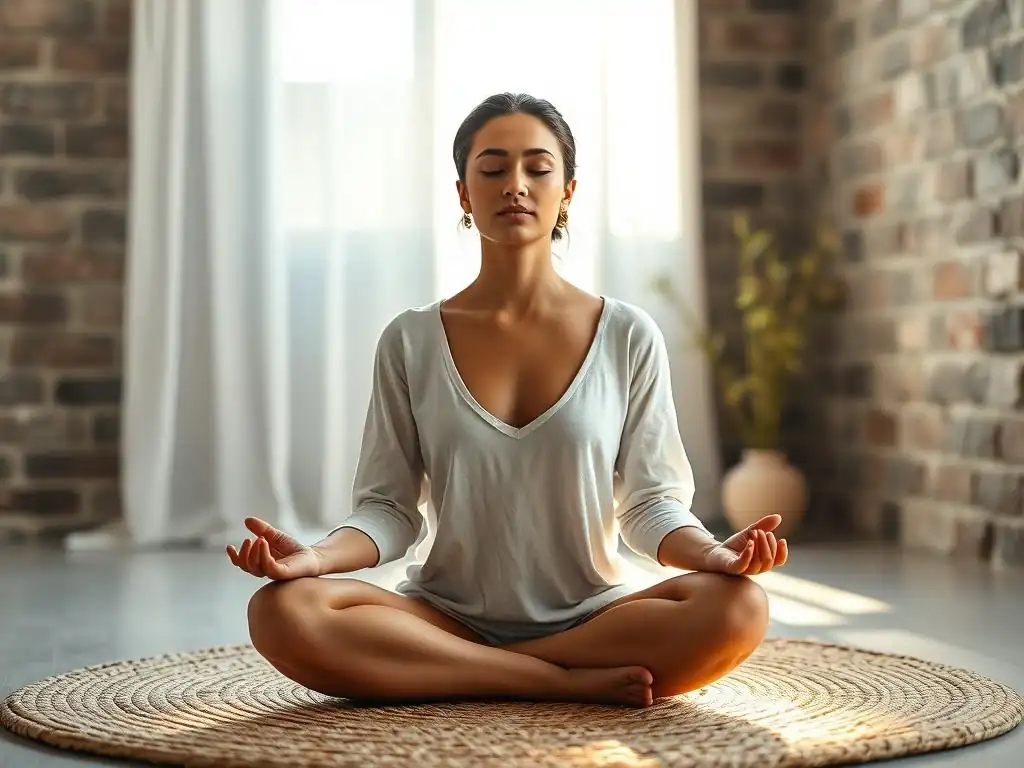
Welcome to Mind Care Guide, a space dedicated to nurturing your mental well-being.
Feeling overwhelmed? You're not alone. Discover a path to inner peace and clarity with our comprehensive guide to Vipassana meditation for beginners. Curious how this ancient practice can transform your life? Let's begin your journey to a calmer, more centered you...
Unlock Your Mind: A Beginner's Guide to Vipassana Meditation
- Introduction to Vipassana Meditation: A Pathway to Insight
- Preparing for Your First Vipassana Meditation Session
- Vipassana Meditation Techniques: A Step-by-Step Guide
- Common Challenges in Vipassana Meditation and How to Overcome Them
- Integrating Vipassana into Daily Life: Beyond the Cushion
- Conclusion: Embracing the Journey of Vipassana Meditation
-
Frequently Asked Questions
- What is Vipassana meditation and how does it differ from other meditation techniques?
- Is Vipassana meditation suitable for beginners with no prior meditation experience?
- How long should a beginner meditate using Vipassana each day?
- What are some common challenges beginners face when learning Vipassana, and how can they overcome them?
- Where can beginners find reliable resources and guidance to learn Vipassana meditation effectively?
- Final Reflection: The Transformative Power of Presence
- Ready to Breathe Deeper? Start Your Vipassana Journey Now!
Introduction to Vipassana Meditation: A Pathway to Insight
What is Vipassana Meditation? Understanding the Core Principles
Vipassana, meaning "to see things as they really are," is one of India's most ancient techniques of meditation. It was rediscovered by Gautama Buddha more than 2500 years ago and taught by him as a universal remedy for universal ills. The core principle of Vipassana meditation for beginners is the practice of continuous, bare attention to the changing phenomena of mind and body.
It's not a ritual or a philosophy, nor is it based on blind belief. Instead, it is a practical method of self-observation that allows one to purify the mind of mental defilements like craving, aversion, and ignorance. This practice aims to dissolve the illusion of a permanent, unchanging self by directly experiencing the impermanent nature of reality.
The technique involves observing one's own physical sensations and mental processes without reaction or judgment. This non-reactive observation is key to understanding the root causes of suffering. By calmly observing the arising and passing away of sensations, thoughts, and emotions, practitioners begin to see the impermanent (anicca), unsatisfactory (dukkha), and non-self (anatta) nature of existence. This direct insight, gained through personal experience rather than intellectual understanding, is the transformative power of Vipassana meditation for beginners and experienced practitioners alike. It is a path of self-exploration that leads to wisdom and compassion.
The Benefits of Vipassana: Why Practice Insight Meditation?
Engaging in a consistent Vipassana meditation practice can yield profound benefits for mental and emotional well-being. Studies, such as those conducted at research centers globally, consistently report positive outcomes. For instance, research published in the Journal of Consulting and Clinical Psychology in the early 2000s, focusing on Mindfulness-Based Stress Reduction (MBSR), which incorporates elements of Vipassana, showed significant reductions in psychological distress among participants. While specific Vipassana studies are fewer, the core principles of non-reactive observation and awareness of present moment experience directly address common psychological issues, making Vipassana meditation for beginners a powerful tool for personal growth.
Beyond clinical studies, anecdotal evidence from millions of practitioners worldwide highlights improvements in areas like emotional regulation, patience, and overall life satisfaction. For example, participants completing a typical 10-day Vipassana retreat often report feeling significantly calmer, more centered, and better equipped to handle life's challenges. While individual results vary, the systematic training of attention and equanimity inherent in the practice fosters a deeper understanding of one's own mind, leading to greater resilience and inner peace.
Reduced Stress and Anxiety with Vipassana Practice
Vipassana practice directly addresses the patterns of mind that contribute to stress and anxiety. By training the mind to observe sensations and thoughts without immediate reaction, practitioners learn to create space between a stimulus and their response. Instead of being swept away by anxious thoughts or stressful feelings, one learns to notice them as transient phenomena arising and passing away. This non-identification with mental states reduces their power. For example, someone prone to worrying about the future might learn through Vipassana to recognize the worried thought as just a thought, rather than an absolute truth, thereby lessening its grip.
Moreover, the focus on the present moment inherent in Vipassana meditation for beginners helps pull the mind away from ruminating on past problems or anticipating future difficulties, which are common drivers of anxiety. By anchoring awareness in the breath or bodily sensations, the mind is gently trained to stay grounded. Over time, this cultivated ability to remain present and non-reactive to internal discomfort can lead to a substantial decrease in experienced stress levels and the frequency and intensity of anxiety episodes.
Enhanced Self-Awareness and Mindfulness Through Vipassana
A primary outcome of Vipassana meditation is a significant increase in self-awareness. The practice involves diligently observing the intricate workings of one's own mind and body – the constant flow of thoughts, emotions, and physical sensations. This sustained attention allows practitioners to gain deep insights into their habitual patterns, triggers, and reactions. For instance, one might become acutely aware of how certain thoughts consistently lead to specific emotional states or how physical tension arises in response to stress.
This enhanced self-awareness is the foundation of mindfulness, which is the quality of being fully present and aware of where we are and what we're doing, without being overly reactive or overwhelmed by what's going on around us. Vipassana cultivates this mindfulness by systematically training the mind to observe reality as it is, moment by moment. For someone new to the practice, even a few minutes of daily Vipassana meditation for beginners can start to illuminate previously unconscious habits of mind, paving the way for more conscious choices and responses in daily life.
Improved Focus and Concentration: A Vipassana Advantage
The initial stages of Vipassana meditation often involve focusing attention on a single object, such as the breath. This foundational practice, common in Vipassana meditation for beginners, serves as a rigorous training ground for concentration (samadhi). The mind, naturally prone to wandering, is repeatedly brought back to the chosen object of attention whenever it drifts. This consistent exercise strengthens the 'muscle' of concentration over time. While the ultimate goal of Vipassana is insight, a prerequisite for deep insight is a stable and focused mind.
As concentration improves, the mind becomes less scattered and more capable of sustained attention, not just during formal meditation sessions but also in daily activities. This enhanced focus can translate into improved performance at work or study, better listening skills in conversations, and a greater ability to stay present in any task. The discipline of returning the mind to the present moment, practiced diligently in Vipassana, directly counteracts the modern tendency towards distraction and fragmented attention.
Preparing for Your First Vipassana Meditation Session
Setting the Stage: Creating a Conducive Meditation Environment
Creating a dedicated and peaceful space is an important step when beginning Vipassana meditation for beginners. While it's true that one can meditate anywhere, especially with practice, having a specific environment free from major distractions can significantly help when you are just starting out. This doesn't require a large or elaborate setup; even a small corner of a room can be transformed into a personal meditation sanctuary. The goal is to minimize external interruptions so you can focus your attention inward without constant external pulls.
Consider factors like noise levels, lighting, and temperature when choosing your space. Try to find a time when you are least likely to be disturbed by others or by responsibilities. Inform family members or housemates of your intention to meditate and request their cooperation in maintaining quiet during that time. Even simple actions like turning off your phone or putting it on silent mode are crucial steps in creating a conducive environment for effective Vipassana meditation for beginners.
Finding a Quiet and Comfortable Space for Vipassana
The ideal space for practicing Vipassana meditation for beginners is one where external noise is minimal and you feel a sense of safety and comfort. This might be a quiet bedroom, a spare room, or even a secluded spot in a garden if the weather permits. The key is consistency; using the same space regularly helps train your mind to transition into a meditative state more easily when you enter that environment. It becomes a cue for your practice.
While absolute silence might be difficult to achieve in many homes, try to find a time of day when ambient noise is lowest. Early mornings or late evenings often work well. Ensure the space is reasonably tidy and free from clutter, which can be visually distracting. Comfort is important, but avoid making the space too comfortable (like meditating in bed) that you risk falling asleep. The aim is alert relaxation.
Establishing a Regular Vipassana Meditation Schedule
Consistency is arguably the most important factor in developing a successful Vipassana meditation practice, especially for beginners. Establishing a regular schedule helps integrate meditation into your daily routine, much like brushing your teeth or eating meals. Even starting with a short duration, perhaps 10-15 minutes daily, is more beneficial than sporadic longer sessions. The brain thrives on routine, and a consistent schedule signals to your mind that this practice is a priority.
Choosing a specific time each day, such as first thing in the morning before the day's demands begin or in the evening to wind down, can make adherence easier. Put it on your calendar if necessary. Don't be discouraged if you miss a session; simply acknowledge it without judgment and commit to resuming your schedule the next day. Over time, this regular practice will build momentum and make Vipassana meditation for beginners feel less like a chore and more like a natural part of your day.
The Right Posture for Vipassana: Achieving Comfort and Stability
Finding a stable and comfortable posture is essential for sustaining attention during Vipassana meditation. The posture should allow you to remain alert and upright without excessive strain. While the traditional cross-legged positions are common, the "right" posture is ultimately the one that allows you to sit still and alert for your chosen meditation duration. Discomfort is a common distraction, so finding a posture that minimizes physical agitation is key for Vipassana meditation for beginners.
The spine should ideally be straight but not rigid, allowing energy to flow freely. The shoulders should be relaxed, and the hands can rest comfortably in your lap or on your knees. The chin should be slightly tucked, and the gaze can be gently lowered if your eyes are open, or the eyes can be softly closed. Experiment with different options to find what works best for your body.
Seated Vipassana Meditation Postures
The most widely recognized seated postures for Vipassana meditation include the full lotus, half lotus, Burmese position, and sitting on a cushion or bench. The full lotus and half lotus positions involve crossing the legs with feet resting on the opposite thigh, which can be challenging for many Western bodies.
The Burmese position, with both legs folded in front and one foot in front of the other, is generally more accessible. Using a meditation cushion (zafu) or bench is highly recommended, especially for Vipassana meditation for beginners, as it elevates the hips above the knees, allowing the spine to naturally straighten and reducing pressure on the knees and ankles.
When using a cushion, sit towards the front edge so your thighs slope downwards. Ensure your knees are lower than your hips. If your knees don't comfortably rest on the floor, you can place smaller cushions or folded blankets underneath them for support. The goal is stability and comfort for an extended period, perhaps 20-30 minutes as you progress.
Alternative Vipassana Postures: Lying Down or Walking
While seated meditation is traditional, Vipassana can also be practiced effectively in other postures. Lying down is a valid alternative, particularly for those with physical limitations, although there is a higher risk of falling asleep. When lying down, lie on your back with legs uncrossed and arms resting comfortably at your sides, palms up or down. The key is to maintain awareness and alertness, treating any drowsiness as an object of observation rather than succumbing to it. This is still a practice of Vipassana meditation for beginners, just adapted for comfort.
Walking meditation is another powerful form of Vipassana. It involves bringing mindful awareness to the physical sensations of walking – the lifting, moving, and placing of the feet. This can be practiced indoors or outdoors, in a straight line or a circle. The pace is typically slow and deliberate, allowing full attention to the subtle movements and sensations in the legs and feet. Walking meditation is an excellent way to integrate mindfulness into movement and can be a refreshing alternative or complement to seated practice.
Vipassana Meditation Techniques: A Step-by-Step Guide
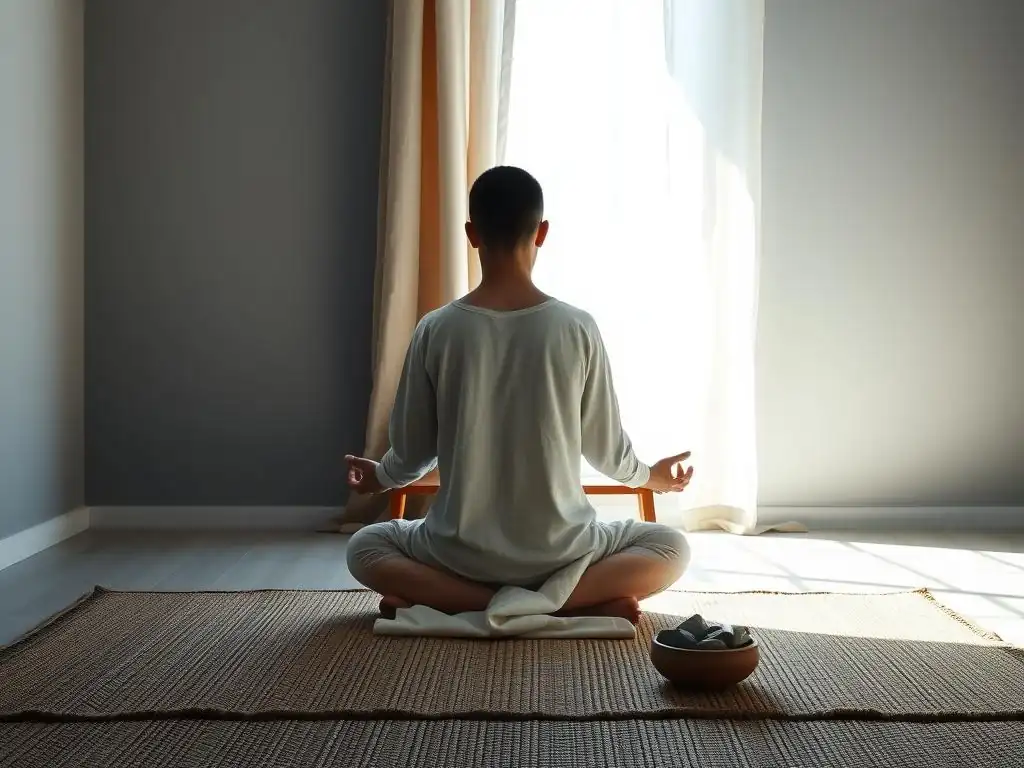
Focusing on the Breath: The Foundation of Vipassana Practice
The breath is often the primary anchor for attention in Vipassana meditation, especially when starting out. It is a constant, ever-present phenomenon that reflects the impermanent nature of reality. The practice involves simply observing the natural incoming and outgoing breath without attempting to control or alter it in any way. You are merely witnessing the breath as it is, moment by moment. This simple act of observation is fundamental to Vipassana meditation for beginners.
Choose a point where you can most easily feel the sensation of the breath, such as the nostrils or the abdomen rising and falling. Rest your attention gently on this point. When the mind wanders, which it inevitably will, simply notice that it has wandered and gently, without judgment, bring your attention back to the breath. This repeated process of noticing distraction and returning to the breath is the core training.
Observing the Natural Rhythm of Your Breath
The instruction in Vipassana is to observe the breath as it is, not as you think it should be. Notice its length, depth, and texture without trying to make it longer, shorter, deeper, or shallower. Is the breath rough or smooth, long or short, deep or shallow? Just observe the sensations associated with each inhalation and exhalation. There's no need to count breaths or use any specific breathing technique; the focus is purely on bare observation.
This practice cultivates acceptance and non-reactivity. You are training yourself to witness reality (in this case, the breath) without wanting to change it. This seemingly simple exercise builds the foundation for observing all other physical and mental phenomena with the same attitude of equanimity. It's a crucial starting point for Vipassana meditation for beginners, grounding the practice in tangible, ever-present reality.
Dealing with Distractions During Breath Awareness
Distraction is a natural and expected part of meditation, not a sign of failure. In Vipassana, distractions – thoughts, sounds, physical sensations, emotions – are treated as objects of observation themselves. When the mind wanders from the breath to a thought, for example, the practice is to notice the thought ("Oh, there is thinking") and then gently return attention to the breath. There's no need to engage with the thought, analyze it, or judge yourself for having it.
Treating distractions with curiosity and non-judgment is key. Each time you notice your mind has wandered and gently bring it back to the breath, you are strengthening your capacity for mindfulness and concentration. This is a core lesson in Vipassana meditation for beginners: the practice isn't about having an empty mind, but about becoming aware of what is in the mind and learning not to be carried away by it.
Body Scan Meditation: Cultivating Awareness of Sensations
After establishing some stability with breath awareness, Vipassana often expands to include awareness of physical sensations throughout the body. This is typically done through a systematic body scan. The practice involves moving your attention deliberately through different parts of the body, observing any sensations present without judgment or reaction. This direct experience of bodily sensations is vital for understanding impermanence at a deep level.
Begin by bringing your attention to the top of your head and slowly move it downwards, through the face, neck, shoulders, arms, torso, hips, legs, and feet. Pause your attention in each area for a moment, simply noticing what you feel – tingling, pressure, warmth, coolness, absence of sensation, etc. This systematic approach helps ensure thorough awareness of the physical form, which is a fundamental part of Vipassana meditation for beginners.
Noticing Sensations Without Judgment
The instruction in the body scan is to observe sensations as they are. If you feel pain in your back, you simply notice the sensation of pain. You don't need to label it as "bad," wish it would go away, or start thinking about why it's there. Similarly, if you feel pleasant warmth, you simply notice the warmth without clinging to it or wishing it would last longer. This non-judgmental observation is crucial for developing equanimity.
This practice helps to break the habitual link between sensation and reaction (craving for pleasant sensations, aversion to unpleasant ones). By simply observing the arising and passing away of sensations, you begin to directly experience their impermanent nature, a core insight of Vipassana. This detachment from sensations reduces their power to cause suffering.
Moving Your Attention Through the Body
During the body scan, guide your attention smoothly from one area of the body to the next. Some traditions suggest moving in a specific order, such as from head to toe, or sweeping through sections like the entire right side, then the left, then the back, and so on. The specific path is less important than the intention to bring mindful awareness to each part. Spend enough time in each area to genuinely investigate the sensations present before moving on.
If you encounter an area with intense sensation or no sensation at all, simply observe it briefly and continue the scan. There's no need to get stuck or try to force a sensation to appear. The practice is about observing what is, not what you expect or want to be there. This systematic exploration of the physical body is a powerful way for Vipassana meditation for beginners to ground their awareness in present moment reality.
Mindfulness of Thoughts and Emotions: Observing Mental Activity
As concentration and awareness of the body develop, Vipassana practice naturally expands to include the observation of mental phenomena – thoughts and emotions. Just like physical sensations, thoughts and emotions are seen as transient objects arising and passing away in the field of consciousness. The practice is to observe them with the same attitude of non-judgment and equanimity. This is a more subtle aspect of Vipassana meditation for beginners, as it involves observing the non-physical.
When a thought arises, notice it. When an emotion surfaces, acknowledge it. The key is not to get lost in the thought or emotion, but to observe it as a thought or emotion. For example, instead of getting caught up in a story about being angry, you simply note "anger" or "angry feeling." This creates a space between you (the observer) and the mental phenomenon (the thought or emotion).
Recognizing Thoughts as Thoughts
A crucial insight developed through observing thoughts is the understanding that thoughts are not facts. They are mental events that arise and pass away. In Vipassana, you learn to recognize a thought as a thought, separate from reality. For example, if the thought "I'm not good enough" arises, instead of believing it or getting distressed by it, you simply note "thinking" or "a thought of not being good enough."
This practice of labeling or noting mental events helps to disengage from their content and see their impermanent nature. You are training yourself not to identify with your thoughts or let them dictate your mood or actions. This detachment is a powerful tool for reducing mental suffering and is a significant step in Vipassana meditation for beginners towards understanding the nature of the mind.
Acknowledging and Accepting Emotions
Emotions, like thoughts and sensations, are also impermanent phenomena to be observed in Vipassana. When an emotion arises – be it joy, sadness, fear, or irritation – the practice is to acknowledge its presence without pushing it away or clinging to it. Simply note the emotion, perhaps by name ("sadness," "joy"), and observe the physical sensations associated with it in the body. Emotions often manifest as physical feelings; for example, anxiety might be felt as tightness in the chest.
Acceptance here does not mean approval or resignation; it means allowing the emotion to be present without resistance. By observing emotions with equanimity, you learn that they are not solid or permanent, and their intensity naturally fluctuates and eventually passes. This capacity to acknowledge and accept emotions without getting overwhelmed by them is a vital aspect of emotional intelligence cultivated through Vipassana meditation for beginners and experienced meditators alike.
Common Challenges in Vipassana Meditation and How to Overcome Them
Dealing with a Restless Mind: Tips for Staying Present
One of the most common challenges, particularly for Vipassana meditation for beginners, is dealing with a restless, wandering mind. It's natural for the mind to jump from thought to thought, planning, remembering, worrying, or fantasizing. This is not a sign of failure, but simply how the untrained mind behaves. The practice of Vipassana is precisely the training to become aware of this wandering and gently redirect attention.
When you notice your mind has drifted, acknowledge where it went without judgment ("planning," "remembering," "worrying") and then gently but firmly bring your attention back to your primary object of observation, whether it's the breath or bodily sensations. Think of it as training a puppy; you don't scold it for wandering, you just patiently guide it back. Consistency is key; the more you practice this gentle redirection, the more stable your attention will become over time. Even if you spend most of a session bringing your mind back, that is the practice.
Managing Physical Discomfort During Meditation
Physical discomfort – itching, pain, stiffness – is another frequent challenge in Vipassana meditation. When discomfort arises, the initial tendency might be to immediately shift posture or scratch an itch. However, in Vipassana, the instruction is often to first observe the discomfort with curiosity and equanimity. Bring your full attention to the area of sensation. Investigate its qualities: Is it throbbing, stinging, aching, pulsating? Does it have a temperature? Does it stay constant or change?
Often, when observed with bare attention and without resistance, intense sensations can change, diminish, or even disappear. If the discomfort becomes truly unbearable or is causing physical harm, it is perfectly acceptable to gently adjust your posture mindfully. The key is to do so with awareness, noting the intention to move and the sensations of movement, rather than reacting automatically out of aversion. Learning to distinguish between bearable discomfort and pain requiring adjustment is part of the process for Vipassana meditation for beginners.
Overcoming Judgment and Self-Criticism
Many beginners encounter a strong inner critic during meditation, judging their performance ("I'm doing this wrong," "My mind is too busy," "I'm not relaxed enough"). This self-criticism is a major obstacle to cultivating equanimity and an empathetic relationship with oneself. Recognizing and working with this judgment is an important part of Vipassana meditation for beginners.
When judgmental thoughts arise, treat them like any other thought: observe them as mental events ("judgment," "self-criticism"). Do not identify with the judgment or believe it. Simply note its presence and gently return to your primary object of attention. Cultivate an attitude of kindness and patience towards yourself. Remember that meditation is a practice, not a performance, and there is no "perfect" way to do it. Every moment of mindful awareness, even amidst distraction or discomfort, is a success.
Integrating Vipassana into Daily Life: Beyond the Cushion
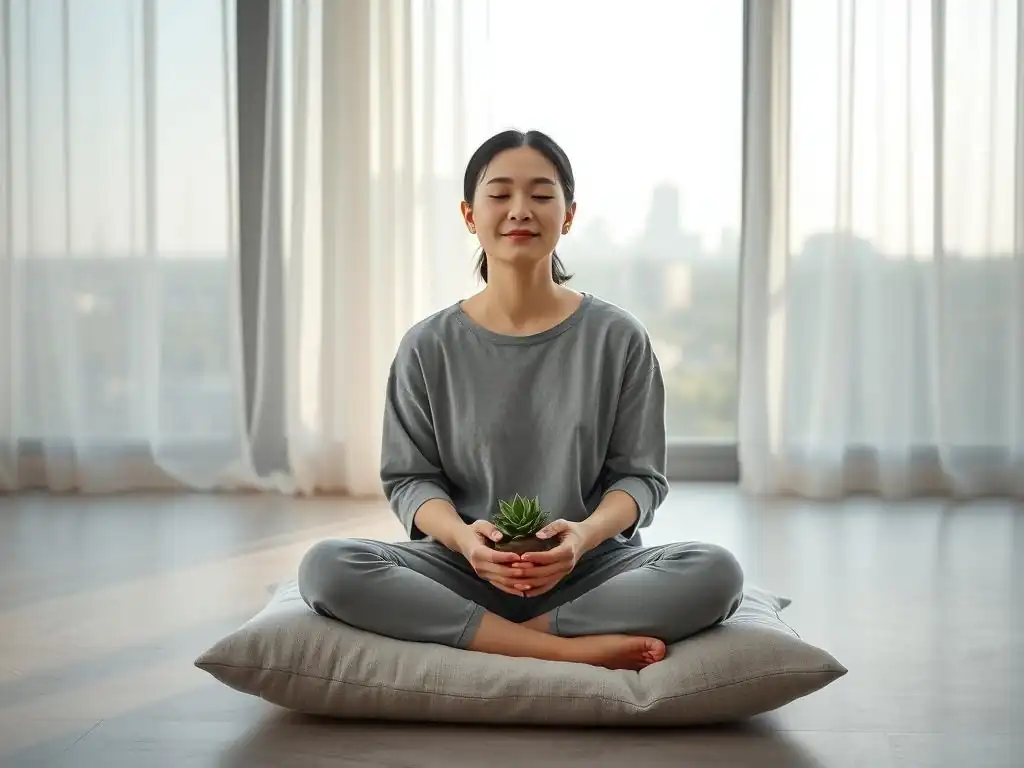
Practicing Mindfulness in Everyday Activities
The insights gained during formal Vipassana meditation sessions are meant to be integrated into daily life. The cushion is a training ground for developing awareness and equanimity, which can then be applied to the challenges and experiences of everyday living. This is where the true transformation happens. Practicing mindfulness in daily activities is a natural extension of Vipassana meditation for beginners.
Simple activities like eating, walking, washing dishes, or even listening to someone can become opportunities for practice. When eating, pay attention to the sensations of taste, texture, and smell. When walking, be aware of the movement of your legs and the contact of your feet with the ground. When listening, focus fully on the sounds and the words without letting your mind wander into planning your response. These moments of informal practice reinforce the skills developed during seated meditation.
Short Vipassana Meditation Sessions for Busy Schedules
Finding time for formal meditation can be challenging in a busy world. However, consistency is more important than duration. Even dedicating 5-10 minutes each day to Vipassana meditation can be beneficial. These short sessions can help maintain the momentum of your practice and provide moments of calm and clarity amidst a hectic schedule.
Consider waking up a few minutes earlier or using a lunch break for a brief sit. Even a single minute of mindful breathing or observing sensations can help reset your mind and bring you back to the present moment. Don't let the idea that you need a long block of time prevent you from practicing; short, regular sessions of Vipassana meditation for beginners are perfectly valid and effective.
Resources for Further Learning About Vipassana Meditation
For those interested in deepening their understanding and practice of Vipassana meditation, numerous resources are available. These resources can provide guidance, support, and further instruction beyond what a beginner might find online or in a single article. Exploring these options can significantly enrich your journey with Vipassana meditation for beginners.
From foundational texts to structured courses and the immersive experience of retreats, there are many avenues to explore. Engaging with these resources can help clarify doubts, provide motivation, and connect you with experienced teachers and a supportive community.
Recommended Books on Vipassana
Several classic and contemporary books offer valuable insights into the theory and practice of Vipassana meditation. Mindfulness in Plain English by Henepola Gunaratana is widely recommended for beginners due to its clear and accessible language. The Art of Living: Vipassana Meditation as Taught by S.N.
Goenka provides a comprehensive overview of the technique as taught in the Goenka tradition. Other notable books include Seeking the Heart of Wisdom by Joseph Goldstein and Jack Kornfield, which delves into the core teachings with warmth and clarity. Reading these texts can provide context and inspiration for your personal Vipassana meditation for beginners journey.
These books often explain the philosophical underpinnings of Vipassana, offer practical instructions, and address common challenges faced by practitioners. They can serve as valuable companions as you navigate the path of insight meditation.
Online Vipassana Meditation Courses and Communities
The digital age offers numerous opportunities to learn about Vipassana meditation online. Many meditation centers and teachers offer online courses, guided meditations, and even virtual retreats. Platforms like Coursera or dedicated mindfulness websites sometimes feature structured programs that guide participants through the principles and techniques. Online communities, such as forums or social media groups dedicated to Vipassana, can also provide support and allow you to connect with other practitioners.
While online resources can be convenient and accessible, it's important to find reputable sources rooted in authentic teachings. For Vipassana meditation for beginners, starting with well-established organizations or teachers is advisable. These online options can offer flexibility for those who cannot attend in-person classes or retreats.
Vipassana Retreat Centers and Teachers
For a truly immersive experience in Vipassana meditation, attending a residential retreat is highly recommended. Organizations like the Vipassana International Academy (as taught by S.N. Goenka) offer free 10-day residential courses worldwide. These retreats provide an environment conducive to deep practice, free from daily distractions, under the guidance of experienced teachers. Other retreat centers offer Vipassana or insight meditation retreats in various lengths and formats.
Learning directly from a qualified teacher is invaluable. Teachers can provide personalized guidance, answer questions, and help navigate difficulties that arise in practice. While attending a retreat might seem like a significant commitment, the concentrated practice time often leads to profound insights and solidifies the foundation for ongoing Vipassana meditation for beginners.
Conclusion: Embracing the Journey of Vipassana Meditation
Embarking on the path of Vipassana meditation is a journey of self-discovery and profound insight. It is a practical technique that offers the potential to understand the true nature of reality and alleviate suffering by observing the mind and body with bare attention and equanimity. Starting Vipassana meditation for beginners involves cultivating patience, consistency, and a willingness to observe whatever arises without judgment.
While challenges will undoubtedly arise – a restless mind, physical discomfort, self-criticism – these are simply opportunities to deepen the practice of awareness and acceptance. By integrating Vipassana into daily life, even in small ways, the benefits extend far beyond the formal meditation session, fostering greater presence, clarity, and peace. Embrace this journey with curiosity and kindness, and unlock the transformative potential within your own mind.
Frequently Asked Questions
What is Vipassana meditation and how does it differ from other meditation techniques?
Vipassana, meaning "to see things as they really are," is an ancient Indian meditation technique. It focuses on observing sensations in the body and mind without judgment, differing from techniques that emphasize concentration or visualization. This direct experience is key.
Is Vipassana meditation suitable for beginners with no prior meditation experience?
Yes, Vipassana is absolutely suitable for beginners. While it requires dedication and patience, the practice begins with simple observation of breath and bodily sensations. There are many beginner-friendly resources available.
How long should a beginner meditate using Vipassana each day?
Starting with even just 10-15 minutes a day is beneficial for beginners. Gradually increase the duration as you become more comfortable with the practice. Consistency is more important than long, infrequent sessions.
What are some common challenges beginners face when learning Vipassana, and how can they overcome them?
Common challenges include mind-wandering and physical discomfort. To overcome these, gently redirect your attention back to the breath or sensation. Practice self-compassion and adjust your posture for comfort.
Where can beginners find reliable resources and guidance to learn Vipassana meditation effectively?
"Mind Care Guide" offers a comprehensive guide to Vipassana meditation. You can also find resources through reputable meditation centers and apps that offer guided Vipassana practices and teachings.
Final Reflection: The Transformative Power of Presence
The practice of Vipassana meditation, once considered esoteric, is rapidly gaining traction as a powerful tool for navigating the complexities of modern life. Its ability to cultivate mindfulness and self-awareness offers a potent antidote to the constant barrage of stimuli and anxieties that characterize our daily existence. This simple yet profound technique holds the key to unlocking inner peace and a deeper understanding of ourselves and the world around us.
The journey into Vipassana has profoundly impacted my own life, fostering a sense of calm and clarity that permeates every aspect of my being. It's not just about silencing the mind; it's about developing a compassionate understanding of its workings. The process of observing thoughts and sensations without judgment has been transformative, allowing me to respond to challenges with greater equanimity. As the Buddha himself wisely stated: The mind is everything. What you think you become.
This resonates deeply with the experience of Vipassana, highlighting the direct link between our mental state and our overall well-being.
Now, it's your turn. Consider incorporating even a few minutes of daily Vipassana meditation into your routine. Begin with the basics outlined in this guide, and allow yourself to experience the subtle yet powerful shifts in your perspective. Don't be discouraged by fleeting thoughts or moments of restlessness; these are simply part of the process. Embrace the journey, and discover the transformative power of presence within yourself. The path to inner peace begins with a single breath, a single moment of mindful awareness. Take that first step today.
Ready to Breathe Deeper? Start Your Vipassana Journey Now!
Thanks for taking the time to explore the world of Vipassana meditation with us! We hope this beginner's guide has given you a solid foundation and sparked your interest in this transformative practice. Now it's time to turn knowledge into experience.
- Begin your first Vipassana session today: Even 10 minutes of focused breathing can make a world of difference. Try the guided meditation we suggested, or simply find a quiet space and focus on your breath. This is your first step toward inner peace.
- Share your experience: Tell us (or a friend!) about your initial meditation. What surprised you? What challenges did you encounter? Sharing your journey can deepen your understanding and inspire others.
- Explore further resources: We encourage you to look into local meditation centers or online communities dedicated to Vipassana. Connecting with others on this path can be incredibly supportive.
What small step will you take today to cultivate mindfulness and inner calm?