
Your Digital Sanctuary: Key Features of Effective Anxiety Apps (Pricing Guide)

Welcome to Mind Care Guide, a space dedicated to nurturing your inner peace.
Feeling overwhelmed and seeking a better night's sleep? You're not alone. Many struggle with anxiety that disrupts their rest, but there's hope. Dive into our guide, "Your Digital Sanctuary: Key Features of Effective Anxiety Apps (Pricing Guide)", where we explore how anxiety apps for better sleep can become powerful allies in your journey to tranquility. Discover the key features to look for and which apps might be the perfect fit for you. Ready to find your digital sanctuary and reclaim your sleep? Let's begin...
Your Digital Sanctuary: Key Features of Effective Anxiety Apps (Pricing Guide)
- Finding Peace with Anxiety Apps for Better Sleep: A Mind Care Guide
- Top Anxiety Relief Apps for Sleep: Features and Benefits
- Comparing Anxiety Apps: Which is Right for Your Sleep Needs?
- Using Anxiety Apps to Combat Sleep Problems: Real-World Examples
- Maximizing the Benefits of Anxiety Apps for Restful Sleep
- Final Thoughts: Choosing the Best Anxiety App for Your Digital Sanctuary.
-
Frequently Asked Questions
- How can anxiety apps specifically help me sleep better?
- What key features should I look for in an anxiety app focused on sleep?
- Are all anxiety apps free, or do they typically involve subscriptions?
- How do I know if an anxiety app is actually effective and not just another gimmick?
- Can anxiety apps replace professional mental health treatment for sleep issues?
- Final Reflection: Finding Calm in the Digital Age
- Unlock Your Calm: Start Building Your Digital Wellness Toolkit
Finding Peace with Anxiety Apps for Better Sleep: A Mind Care Guide
In today's fast-paced world, anxiety is a common companion for many, often disrupting the tranquility needed for restorative sleep. The mind races, worries compound, and the simple act of falling asleep can feel like an insurmountable challenge. This is where anxiety apps for better sleep emerge as valuable digital tools, offering a sanctuary of calm in the palm of your hand. They are designed to help quiet the mental chatter, reduce physiological arousal associated with anxiety, and guide users towards a state conducive to sleep.
These apps provide a range of techniques rooted in mindfulness, cognitive behavioral therapy (CBT), and relaxation exercises. By incorporating features like guided meditations, soothing soundscapes, and sleep tracking, they aim to address the specific ways anxiety interferes with sleep – whether it's difficulty falling asleep, frequent waking, or poor sleep quality. Choosing the right digital tool from the myriad of anxiety apps for better sleep can be a crucial step in reclaiming your nights and improving overall well-being.
Top Anxiety Relief Apps for Sleep: Features and Benefits
1. Sleep Cycle: Smart Alarm and Sleep Tracking
Sleep Cycle stands out primarily as a sophisticated sleep tracking tool, but its features offer significant benefits for those whose anxiety manifests as worries about sleep quality or consistency. The app uses your phone's microphone or accelerometer to monitor your sleep patterns throughout the night, identifying distinct sleep phases like light sleep, deep sleep, and REM sleep. This data provides users with insights into their sleep habits, which can help alleviate anxiety related to the unknown aspects of their sleep health.
Beyond tracking, Sleep Cycle's signature feature is its smart alarm, designed to wake you during your lightest sleep phase within a customizable 30-minute window. Waking up during light sleep can reduce morning grogginess and improve your mood upon waking, a small but impactful change that can positively influence daily anxiety levels.
While it doesn't offer guided meditations like some others, understanding and optimizing your sleep schedule through objective data can be a powerful anxiety reducer, especially for those who feel out of control regarding their sleep. The app offers a free version with basic tracking and the smart alarm, while a premium subscription unlocks detailed analysis, long-term trends, and specialized sleep aids.
2. Calm: Guided Meditations and Sleep Stories
Calm is one of the most popular anxiety apps for better sleep, widely recognized for its extensive library of guided meditations and its unique "Sleep Stories." The core of Calm's approach is to cultivate mindfulness and relaxation, directly targeting the racing thoughts and physical tension that anxiety often brings to bedtime. Users can choose from meditations tailored to various needs, including specific sessions focused on easing into sleep, releasing tension, or managing worried thoughts that keep them awake.
The "Sleep Stories" are a particularly beloved feature, narrated by soothing voices (including celebrities) and designed to gently distract the mind from anxious loops and lull the listener into sleep. These stories range from fictional narratives to descriptions of serene places or concepts, offering a calming alternative to traditional reading or screen time before bed.
With daily check-ins, breathing exercises, and calming music, Calm provides a comprehensive toolkit aimed at reducing pre-sleep anxiety and fostering a peaceful state conducive to falling asleep faster and staying asleep longer. While offering a free trial period, full access to Calm's vast content library requires a subscription.
3. Headspace: Mindfulness for Anxiety Reduction
Headspace takes a playful yet effective approach to mindfulness and meditation, making it highly effective as an anxiety app for better sleep. Founded by a former monk, the app breaks down complex mindfulness concepts into simple, manageable steps, perfect for beginners or those overwhelmed by anxiety. Its core programs focus on teaching users how to observe their thoughts without judgment, a crucial skill for managing the intrusive worries that often plague anxious minds at night.
Headspace offers specialized content specifically for sleep, including "Sleepcasts" – unique audio experiences that combine narration with ambient sounds to create an immersive environment designed to help users drift off. It also includes sleep-focused meditations and breathing exercises aimed at calming the nervous system and preparing the body for rest. By helping users cultivate a more mindful relationship with their thoughts and feelings, Headspace empowers them to reduce the impact of anxiety on their sleep patterns. The app provides a free basic version with introductory courses, while a subscription unlocks the full range of content, including sleep-specific features.
4. BetterSleep: Customizable Soundscapes for Relaxation
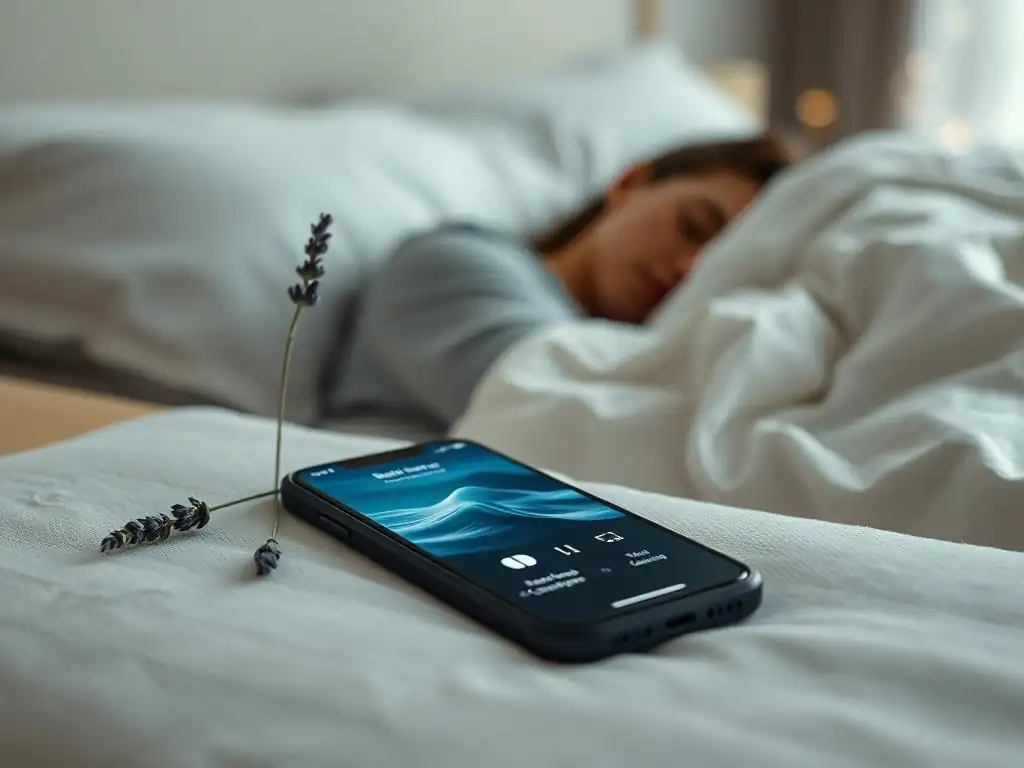
BetterSleep, formerly known as Relax Melodies, specializes in creating a personalized auditory environment for sleep and relaxation, making it a practical anxiety app for better sleep. Its strength lies in its vast library of sounds, ranging from nature sounds (rain, waves, forest) to ambient noise (white noise, pink noise, fan sounds) and binaural beats. Users can mix and match these sounds, adjusting volume levels for each, to create a unique soundscape that effectively blocks out distracting external noises and internal mental chatter.
In addition to sound mixing, BetterSleep offers guided meditations, hypnotherapy sessions, and bedtime stories, providing multiple avenues for relaxation and anxiety reduction before sleep. The ability to customize the audio experience is particularly beneficial for individuals whose anxiety makes them highly sensitive to noise or who find specific sound combinations uniquely calming.
By providing a consistent and soothing auditory backdrop, the app helps signal to the brain that it's time to wind down, facilitating the transition from wakefulness to sleep. A free version offers limited access, with a premium subscription required for the full collection of sounds, meditations, and stories.
5. Pzizz: Sleep Sounds and Dreamscapes
Pzizz is a unique anxiety app for better sleep that uses scientifically-backed psychoacoustic principles to create dynamic sleep sounds and "dreamscapes." Unlike apps that play static loops, Pzizz generates constantly changing sequences of music, voiceovers, and sound effects. This non-repeating nature is designed to prevent the brain from habituating to the sounds, keeping the focus on the present moment and preventing anxious thoughts from taking hold.
The app offers different modules for sleep, naps, and focus, each designed with specific psychoacoustic properties to induce the desired state. For sleep, the "dreamscapes" combine soothing sounds with gentle verbal cues that encourage relaxation and sleep onset. Users can customize the length of the session, the volume of the voice and music, and choose whether to include wake-up phases. Pzizz's algorithm aims to help users fall asleep faster and experience more restful sleep by providing a continuously evolving auditory environment that promotes deep relaxation and minimizes mental distractions caused by anxiety. Access to Pzizz is primarily subscription-based.
Comparing Anxiety Apps: Which is Right for Your Sleep Needs?
Choosing among the many anxiety apps for better sleep can feel overwhelming. Each app offers a distinct approach, and the "best" one depends heavily on your individual needs and preferences. A key step in making this decision involves comparing the core features offered and how they align with the specific ways anxiety impacts your sleep. Do you struggle most with a racing mind? Are you bothered by external noises? Do you want to understand your sleep patterns better? Answering these questions can help narrow down the options.
Considering a combination of features might also be beneficial. For instance, someone who wants both sleep tracking data and guided relaxation might look for apps that offer both or consider using two different apps in tandem. The comparison isn't just about the quantity of features but their quality and relevance to your personal sleep challenges exacerbated by anxiety. Many apps offer free trials or basic versions, which provides an excellent opportunity to test them out before committing to a subscription.
Feature Comparison: Tracking, Sounds, and Meditation
When evaluating anxiety apps for better sleep, their primary tools for promoting rest fall into a few key categories: sleep tracking, sound environments, and guided relaxation techniques like meditation or stories. Apps like Sleep Cycle excel specifically in sleep tracking, offering detailed data on your sleep cycles and helping optimize wake-up times. While this doesn't directly reduce anxiety, the knowledge gained can empower users and reduce anxiety about the unknown.
Other apps, such as BetterSleep and Pzizz, specialize in creating auditory environments. BetterSleep offers extensive customization of ambient sounds and noise, ideal for blocking out disturbances and creating a consistent sleep cue. Pzizz uses dynamic, non-repeating soundscapes based on psychoacoustic research, aiming to keep the mind engaged just enough to prevent anxious thoughts from dominating but not so much as to keep you awake.
Apps like Calm and Headspace focus heavily on guided relaxation – meditations, breathing exercises, and sleep stories – directly addressing the mental and emotional aspects of anxiety that interfere with sleep onset and maintenance. Many apps now offer a blend of these features, providing a more holistic approach to using technology as an anxiety app for better sleep.
The financial aspect is a significant consideration when choosing among anxiety apps for better sleep. Most popular apps operate on a freemium model, offering a basic version with limited features and a premium subscription for full access. Free versions can be useful for getting a feel for the app's interface and core concept, but they typically restrict access to the most valuable content, such as the full library of sleep stories, advanced meditation series, or detailed sleep analysis.
Premium subscriptions vary widely in cost, often available on monthly or annual plans. Annual plans usually offer a significant discount compared to monthly billing, making them more cost-effective for long-term use. For example, Calm and Headspace subscriptions can range from approximately $13-15 per month or $60-70 per year.
Sleep Cycle's premium is often lower, potentially around $30 annually, while apps like Pzizz and BetterSleep fall within a similar range depending on promotions. It's important to weigh the cost against the perceived value of the features you need. A free trial is highly recommended to determine if an app's premium content justifies the subscription fee for your specific needs related to using it as an anxiety app for better sleep.
Using Anxiety Apps to Combat Sleep Problems: Real-World Examples
Integrating anxiety apps for better sleep into a nightly routine can yield tangible improvements. While individual results vary, countless users have shared how these digital tools have transformed their relationship with sleep, moving from nights of tossing and turning filled with anxious thoughts to more peaceful rest. These aren't just theoretical benefits; they are experienced by people navigating the daily challenges of anxiety.
Consider the impact on sleep onset latency – the time it takes to fall asleep. For someone with anxiety, this can stretch into hours. Using a guided meditation or a calming soundscape from an app can help shorten this period significantly.
Similarly, for those who wake up during the night with racing thoughts, having access to a quick breathing exercise or a short sleep story within the app can prevent a full bout of insomnia, helping them drift back to sleep more quickly. These are practical, actionable ways that anxiety apps for better sleep provide immediate support when it's needed most.
Case Study 1: Improving Sleep with Sleep Cycle
Sarah, a 40-year-old marketing manager, often experienced fragmented sleep and morning grogginess, which fueled her daytime anxiety. She suspected her sleep wasn't restful but had no objective way to track it. She started using Sleep Cycle primarily for its smart alarm and tracking features. According to the app's data collected over several weeks, her sleep consistency varied significantly, with her wake-up times fluctuating by over an hour daily. The app also indicated she was spending a disproportionate amount of time in light sleep.
By using the smart alarm function, which woke her during a light sleep phase within a set window (e.g., 6:30 AM - 7:00 AM), Sarah began experiencing less morning inertia. More importantly, the data insights prompted her to adjust her bedtime slightly to better align with her natural sleep-wake cycles. While Sleep Cycle didn't directly address her anxiety with meditation, the data provided a sense of control and understanding over her sleep patterns.
After approximately two months, her reported morning grogginess decreased by an estimated 40%, and her anxiety about sleep quality lessened as she saw objective improvements in her sleep consistency data within the app. This demonstrates how objective tracking, even without direct relaxation features, can function as an effective component of using anxiety apps for better sleep.
Case Study 2: Falling Asleep Faster with Calm
David, a 28-year-old graphic designer, struggled with intense pre-sleep anxiety. His mind would replay stressful events from the day or worry about future deadlines, making it nearly impossible to relax and fall asleep. He would often lie awake for 60-90 minutes before finally drifting off. He turned to Calm specifically for its guided meditations and Sleep Stories, hoping to find a way to quiet his racing thoughts.
David started incorporating a 10-minute "Ease Into Sleep" meditation followed by a Sleep Story into his nightly routine. He found that focusing on the narrator's voice and the calming narrative provided a much-needed distraction from his anxious internal monologue. Within two weeks, he noticed a significant reduction in the time it took him to fall asleep, estimating a decrease of approximately 50%, often falling asleep within 30-45 minutes.
The consistent practice also seemed to reduce his overall anxiety levels as he approached bedtime. This case illustrates how the direct relaxation and distraction techniques offered by anxiety apps for better sleep like Calm can be highly effective for individuals whose primary sleep barrier is a hyperactive, anxious mind.
Maximizing the Benefits of Anxiety Apps for Restful Sleep
Simply downloading an app isn't a magic bullet for sleep problems caused by anxiety. To truly harness the power of anxiety apps for better sleep, it requires consistent use and integration into a broader strategy for improving sleep health. Think of the app as one tool in your toolkit, not the only solution. Maximizing its benefits involves creating a supportive environment and routine around its use.
This includes setting realistic expectations – while apps can significantly help, they may not instantly eliminate all sleep difficulties. Patience and persistence are key. Experiment with different features within your chosen app (or apps) to find what resonates most with you. Does a specific meditation technique work better than another? Do you prefer nature sounds or white noise? Do Sleep Stories help more than instrumental music? Fine-tuning your approach based on your personal response will enhance the app's effectiveness as an anxiety app for better sleep.
Creating a Personalized Sleep Routine
A personalized sleep routine is foundational for addressing sleep issues, and anxiety apps for better sleep can be a central component of this routine. Start by establishing a consistent bedtime and wake-up time, even on weekends. Approximately 30-60 minutes before your target bedtime, begin your winding-down process.
-
- [x] Turn off bright overhead lights.
-
- [x] Avoid screens (phones, tablets, TVs) or use blue light filters.
-
- [x] Engage in quiet activities like reading a physical book or gentle stretching.
-
- [x] Use your chosen anxiety app:
- Select a guided meditation or breathing exercise.
- Start a calming soundscape or Sleep Story.
- Review your sleep data from the previous night (if using a tracking app) to inform adjustments.
This consistent sequence signals to your brain and body that it's time to transition from the day's activities to rest. Incorporating the app at the same time each night helps build a strong association between the app's content and the act of falling asleep, reinforcing its effectiveness as an anxiety app for better sleep.
Combining Anxiety Apps with Healthy Sleep Habits
Using anxiety apps for better sleep is most effective when paired with established healthy sleep hygiene practices. The apps help manage the mental and emotional barriers to sleep, while good habits create the optimal physical environment and physiological state for rest.
Here are some essential habits to combine with your app usage:
- Ensure your bedroom is dark, quiet, and cool.
- Avoid caffeine and alcohol, especially in the hours before bed.
- Limit daytime naps, or keep them short (under 20-30 minutes).
- Get regular physical activity, but avoid intense exercise close to bedtime.
- If you can't fall asleep after about 20 minutes, get out of bed, go to another dimly lit room, and do a quiet activity (like reading or listening to your app) until you feel sleepy, then return to bed. This prevents associating your bed with frustration and wakefulness.
By combining the targeted anxiety relief and relaxation techniques offered by anxiety apps for better sleep with these fundamental sleep hygiene principles, you create a powerful, multi-faceted approach to improving your sleep quality and duration, ultimately supporting your overall mental well-being.
Final Thoughts: Choosing the Best Anxiety App for Your Digital Sanctuary.
Navigating the world of anxiety apps for better sleep offers a promising path toward more restful nights for those whose sleep is disrupted by worry and stress. From data-driven tracking with smart alarms to immersive soundscapes and soothing guided meditations, these digital tools provide diverse approaches to calming the mind and preparing the body for sleep. The ideal app is a personal choice, dependent on which features resonate most with your specific needs and how your anxiety manifests at bedtime.
Whether you prioritize understanding your sleep cycles, finding solace in guided relaxation, or blocking out noise with custom sounds, there's likely an app designed to help. Exploring free versions or trials is a wise first step. Remember that while these apps are powerful aids, they work best as part of a holistic approach that includes establishing a consistent sleep routine and practicing good sleep hygiene. By finding the right anxiety app for better sleep and integrating it thoughtfully into your life, you can create a digital sanctuary that supports peace of mind and leads to more restorative sleep.
Frequently Asked Questions
How can anxiety apps specifically help me sleep better?
Anxiety apps often incorporate features like guided meditations and breathing exercises designed to calm the mind and reduce stress. They can also provide sleep stories and ambient soundscapes that promote relaxation before bed, leading to improved sleep quality.
What key features should I look for in an anxiety app focused on sleep?
Look for features like sleep tracking to monitor your sleep patterns, personalized recommendations based on your needs, and cognitive behavioral therapy for insomnia (CBT-I) techniques. These features can help you identify and address specific sleep challenges.
Are all anxiety apps free, or do they typically involve subscriptions?
While some anxiety apps offer a free trial or a limited free version, most effective apps operate on a subscription model to provide ongoing support and access to premium features. Pricing varies depending on the app and subscription duration.
How do I know if an anxiety app is actually effective and not just another gimmick?
Look for apps that are evidence-based, meaning they are developed based on research and clinical practices. Check for user reviews and ratings to gauge the experiences of other users. Reputable apps will also provide information about their methodology.
Can anxiety apps replace professional mental health treatment for sleep issues?
Anxiety apps can be a helpful supplement to professional treatment but are not a replacement for seeing a therapist or doctor. If you are experiencing severe or persistent sleep problems related to anxiety, it's important to seek professional help.
Final Reflection: Finding Calm in the Digital Age
The pervasive nature of anxiety, exacerbated by our always-on digital world, demands innovative solutions. Finding effective coping mechanisms is crucial, and the rise of anxiety apps offering personalized support and sleep improvement tools represents a significant step forward in accessible mental health care. These apps aren't just technological advancements; they're vital tools in a growing movement towards prioritizing mental well-being.
The impact of these apps extends beyond individual users, shaping a broader cultural conversation around mental health. We're moving away from the stigma surrounding seeking help, and technology plays a key role in this shift. The accessibility and anonymity offered by these apps empower individuals to take control of their mental health in a way that was previously unimaginable. The greatest discovery of all time is that a person can change his future by merely changing his attitude.
– Oprah Winfrey. This quote perfectly encapsulates the potential of these apps to facilitate positive change through a shift in perspective and proactive self-care.
Consider the information presented in this guide. Reflect on your own relationship with technology and its impact on your sleep and anxiety levels. Are there features highlighted here that resonate with your needs? Take the time to explore the apps mentioned, and remember that finding the right tool is a personal journey. Don't hesitate to experiment and prioritize your mental well-being. Your digital sanctuary awaits – embrace the opportunity to build it.
Unlock Your Calm: Start Building Your Digital Wellness Toolkit
Thanks for diving into the world of anxiety apps with us! We hope you gained valuable insights into finding the perfect tool for your wellbeing journey. Now, it's time to put that knowledge into action.
- Explore the apps mentioned: Take the next step and research the apps highlighted in the pricing guide. Which features resonate most with your needs?
- Download and try one (or two!): Don't just read about them – experience the difference! Download a free trial or explore a low-cost option to see how it integrates into your daily life.
- Share your experience: Have you found an app that's truly transformed your anxiety management? Tell us about it in the comments below – your feedback could help others find their digital sanctuary too!
What's the one feature you're most excited to try in an anxiety app today?