
Transforming Your Classroom: A Teacher's Guide to Implementing Mindfulness


Welcome to Mind Care Guide, a safe space to explore the path to mental well-being.
Are you a teacher feeling the weight of the classroom, yearning for a moment of calm amidst the chaos? You're not alone. In this guide, we delve into the power of mindfulness for teachers wellbeing, offering practical strategies to not only navigate the daily challenges but also cultivate a more centered and resilient you. Ready to discover how mindfulness can transform your classroom and your life? Let's begin.
Transforming Your Classroom: A Teacher's Guide to Implementing Mindfulness
- Introduction: The Importance of Mindfulness for Teachers and Students
- What is Mindfulness and How Can It Help Teachers?
- Practical Mindfulness Techniques for Teachers
- Integrating Mindfulness into the Classroom: A Step-by-Step Guide
- Addressing Common Challenges in Implementing Mindfulness in the Classroom
- Mindfulness Resources for Teachers
- Fostering a School-Wide Culture of Mindfulness
- The Future of Mindfulness in Education: Trends and Innovations
- Conclusion: Empowering Teachers and Students Through Mindfulness
-
Frequently Asked Questions
- What is mindfulness and how can it benefit teachers' well-being?
- How can teachers integrate mindfulness practices into their daily classroom routine?
- What are some common challenges teachers face when trying to implement mindfulness and how can they overcome them?
- How does mindfulness specifically address teacher burnout and improve mental health?
- Where can teachers find resources and support to learn more about mindfulness for their well-being?
- Final Reflection: Cultivating Calm in the Classroom
- Unlock Your Classroom's Potential: Start Practicing Mindfulness Today!
Introduction: The Importance of Mindfulness for Teachers and Students
Understanding the Growing Need for Mindfulness in Education
The modern educational landscape presents educators with unprecedented challenges, from increasing class sizes and diverse student needs to demanding curricula and limited resources. These pressures contribute significantly to elevated stress levels among teachers. Recent surveys indicate that a substantial percentage of teachers, sometimes cited as over 50% in various studies, report high levels of job-related stress. This pervasive stress impacts not only their personal lives but also their effectiveness in the classroom, potentially leading to burnout and high turnover rates within the profession. Addressing this stress is crucial for sustaining a healthy and effective education system.
Furthermore, students today face their own set of pressures, including academic expectations, social dynamics, and the constant stimulation of digital technology. Many students exhibit signs of anxiety, difficulty focusing, and challenges in regulating their emotions. Educators are increasingly seeking practical, evidence-based strategies to support students' emotional regulation, attention span, and overall well-being. Mindfulness emerges as a promising approach that can cultivate calmness, focus, and resilience for both the teacher leading the class and the students learning within it, directly contributing to improved mindfulness for teachers wellbeing and student outcomes.
Exploring the Benefits of Mindfulness for Teacher Wellbeing and Student Success
Implementing mindfulness practices offers a dual benefit: it significantly enhances teacher wellbeing and simultaneously fosters a more positive and productive learning environment for students. For educators, regular mindfulness practice has been shown to reduce stress and symptoms of burnout. Studies and anecdotal evidence from schools implementing mindfulness programs suggest that teachers who practice mindfulness report feeling calmer, more resilient, and better equipped to handle the daily challenges of the classroom. This improved state of mind allows teachers to be more present, patient, and responsive to their students' needs, thereby enhancing their overall job satisfaction and professional longevity.
Beyond the direct benefits for teachers, mindfulness positively impacts student success. When teachers model mindfulness, they create a ripple effect. Students exposed to mindfulness activities often demonstrate improved attention and focus, better emotional regulation, and enhanced social-emotional skills, such as empathy and compassion. Research in educational settings has linked mindfulness interventions to reduced instances of disruptive behavior and increased academic engagement. For instance, some school-based programs have reported observed improvements in student concentration and a decrease in classroom conflicts, showcasing how cultivating mindfulness for teachers wellbeing extends to fostering a healthier, more effective learning space for everyone.
What is Mindfulness and How Can It Help Teachers?
Defining Mindfulness: A Practical Approach for Educators
Mindfulness, in its simplest form, is the practice of paying deliberate attention to the present moment without judgment. For educators, this means bringing a non-reactive awareness to their thoughts, feelings, bodily sensations, and the surrounding environment as they unfold. It's not about emptying the mind or achieving a state of perpetual calm, but rather about noticing what is happening, both internally and externally, with curiosity and acceptance. This practical approach allows teachers to step back from automatic reactions driven by stress or frustration and respond more thoughtfully to challenging situations in the classroom or staff room.
Applying mindfulness in an educational context involves integrating brief moments of intentional awareness throughout the day. This could be taking a few conscious breaths before entering the classroom, paying full attention to the taste and smell of lunch, or simply noticing the physical sensations of standing or sitting during a lesson.
By cultivating this present-moment awareness, teachers can develop a greater capacity to manage their own stress responses, improve their ability to listen actively to students and colleagues, and make more considered decisions. This deliberate practice is foundational to enhancing mindfulness for teachers wellbeing, enabling them to navigate the complexities of teaching with greater ease and presence.
The Science Behind Mindfulness: Understanding its Impact on the Brain
The growing body of scientific research provides compelling evidence for the physiological and neurological benefits of mindfulness. Studies using fMRI scans have shown that regular mindfulness practice can lead to measurable changes in brain structure and function. Specifically, areas associated with attention, emotional regulation (like the prefrontal cortex and amygdala), and self-awareness can be altered. For example, research suggests that the amygdala, the brain's fear center, may become less reactive, while connections between the prefrontal cortex and the amygdala strengthen, allowing for better emotional control and reduced stress reactivity.
Furthermore, mindfulness has been shown to impact the body's stress response system, including reducing levels of cortisol, often referred to as the "stress hormone." Lower cortisol levels are associated with improved mood, better sleep, and enhanced immune function. For teachers facing daily stressors, these physiological changes are particularly beneficial. Understanding the scientific underpinnings reinforces that mindfulness is not just a "soft skill" but a powerful tool with tangible effects on the brain and body, contributing significantly to teacher wellbeing and their ability to manage the demanding nature of their profession effectively.
Reducing Teacher Stress and Burnout: Mindfulness as a Tool for Self-Care
Teacher stress and burnout are significant issues affecting the profession globally. Long hours, emotional labor, and the constant pressure to perform can take a heavy toll. Mindfulness offers educators a vital self-care tool to proactively manage these challenges. By practicing mindfulness, teachers can become more aware of the early signs of stress in their bodies and minds, allowing them to intervene before stress escalates into burnout. This heightened self-awareness is the first step in developing healthier coping mechanisms than simply reacting to stressors.
Incorporating simple mindfulness techniques into the daily routine can act as a powerful buffer against the effects of chronic stress. Even short practices, like a three-minute mindful breathing exercise during a planning period or a brief body scan before leaving school, can help reset the nervous system and cultivate a sense of calm. Over time, consistent mindfulness practice builds resilience, enabling teachers to bounce back more quickly from challenging situations. Prioritizing mindfulness for teachers wellbeing isn't a luxury; it's a necessity for sustaining a fulfilling career and providing the best possible learning environment for students.
Practical Mindfulness Techniques for Teachers
Breathing Exercises for Calm and Focus
Mindful breathing is one of the most accessible and fundamental mindfulness practices, offering immediate benefits for calm and focus. The simple act of paying attention to the breath anchors you in the present moment, diverting attention away from stressful thoughts about the past or future.
A basic technique involves sitting comfortably with your back straight, closing your eyes or softening your gaze, and simply noticing the sensation of the breath entering and leaving the body, perhaps at the nostrils or the rise and fall of the abdomen. When the mind wanders, gently guide it back to the breath without judgment.
A popular and effective breathing exercise is the 4-7-8 technique, though variations exist. This involves inhaling quietly through the nose for a count of four, holding the breath for a count of seven, and exhaling completely through the mouth with a whoosh sound for a count of eight. Repeating this cycle several times can significantly slow the heart rate and promote relaxation. Teachers can use these techniques before a challenging meeting, during a break, or even for a few moments when feeling overwhelmed in the classroom, quickly regaining composure and enhancing their overall mindfulness for teachers wellbeing.
Mindful Movement and Body Scan Techniques
Mindful movement involves bringing conscious awareness to the physical sensations of the body during gentle activity. This doesn't require a full yoga class; simple stretches at your desk, a mindful walk during a break, or even just consciously shifting your posture can be forms of mindful movement. The goal is to pay attention to how your body feels as you move, noticing tension, ease, or any sensations without trying to change them. This practice can help release physical tension often held during stressful teaching days and reconnect the mind with the body.
The body scan is another powerful technique where you systematically bring awareness to different parts of your body, noticing any sensations present – tingling, warmth, tightness, coolness – without judgment. You can start with the toes and slowly move your attention up through the legs, torso, arms, neck, and head.
This practice helps to increase body awareness, reduce physical stress, and can also be used to quiet a busy mind. For teachers, a brief body scan before starting the day or at the end of the school day can be a valuable tool for self-care and improving mindfulness for teachers wellbeing by grounding them in their physical experience.
Cultivating Compassion and Self-Compassion Practices
Compassion in mindfulness involves extending kindness and understanding towards oneself and others, especially in the face of suffering or difficulty. For teachers, this is vital, as they navigate complex relationships with students, parents, and colleagues, and often face challenging situations. Practices like loving-kindness meditation (Metta) involve silently or softly repeating phrases wishing well-being, happiness, and freedom from suffering for oneself, loved ones, neutral persons, difficult persons, and eventually all beings. This cultivates a warm, open-hearted attitude that can transform interactions and reduce feelings of irritation or resentment.
Self-compassion is particularly important for teacher wellbeing. It involves treating oneself with the same kindness, care, and understanding one would offer a good friend who is struggling. This means acknowledging that making mistakes or feeling overwhelmed is part of the human experience, rather than engaging in self-criticism.
Simple self-compassion practices can include placing a hand over your heart and offering yourself a kind phrase like "This is hard right now," or "May I be kind to myself." Cultivating self-compassion helps teachers process difficult emotions, recover from setbacks, and maintain resilience, significantly contributing to their overall mindfulness for teachers wellbeing and preventing burnout.
Integrating Mindfulness into the Classroom: A Step-by-Step Guide
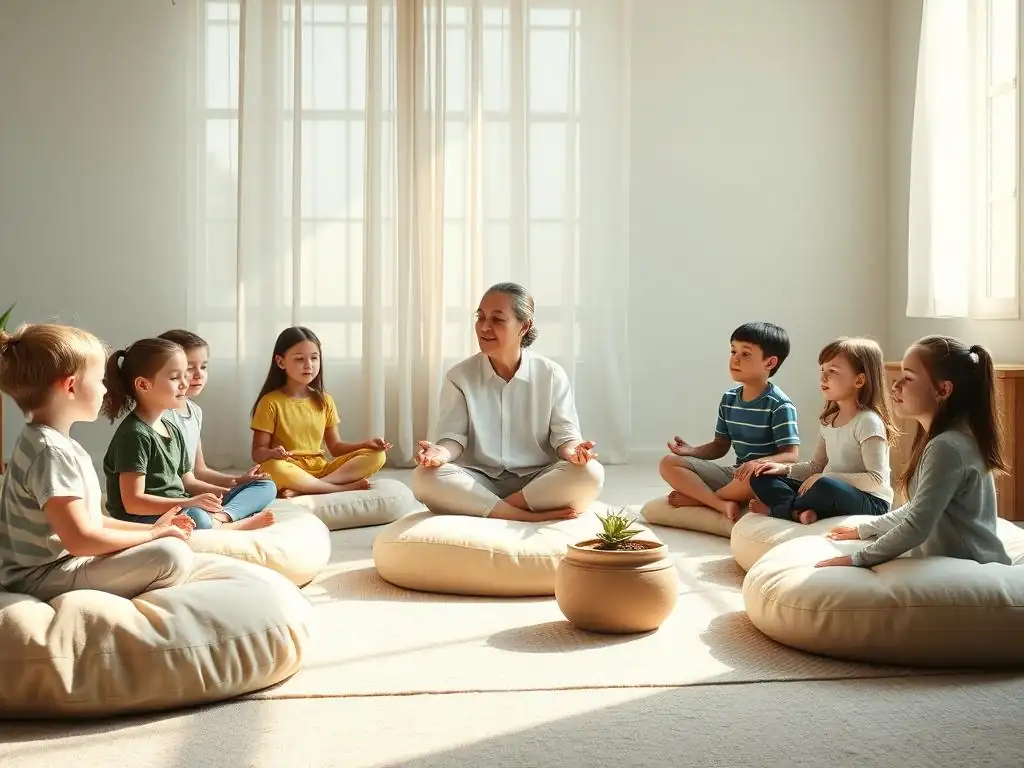
Creating a Mindful Classroom Environment: Setting the Stage for Success
Creating a mindful classroom environment goes beyond just doing specific activities; it involves fostering an atmosphere of presence, respect, and emotional safety. This begins with the teacher modeling mindfulness themselves – demonstrating calm responses to challenges, listening attentively to students, and acknowledging their own feelings with honesty (where appropriate). The physical space can also contribute: simple things like reducing clutter, using calming colors, and ensuring comfortable seating can make a difference. Establishing clear routines and expectations helps students feel secure, reducing anxiety and making them more receptive to mindful practices.
Furthermore, dedicating a small, quiet corner or "calm down" spot with soft pillows or calming objects can provide students with a physical space to practice self-regulation. Start each day or lesson with a brief moment of quiet or a simple breathing exercise to help students transition and settle their minds.
Consistency is key; integrating mindfulness practices into the daily or weekly routine makes them feel like a normal part of the school day, rather than an isolated event. By intentionally creating a mindful classroom, teachers lay the groundwork for improved focus, emotional intelligence, and a positive learning community, benefiting both student success and mindfulness for teachers wellbeing.
Simple Mindfulness Activities for Elementary School Students
Introducing mindfulness to elementary students should be engaging, brief, and experiential. Activities that involve the senses are particularly effective. A "Mindful Eating" exercise with a raisin or a piece of fruit, where students slowly explore its texture, smell, taste, and appearance before eating it, teaches focused attention. A "Listening Walk" where students quietly notice different sounds inside or outside the classroom sharpens their auditory awareness. These activities are typically short, perhaps 2-5 minutes, making them easy to fit into the busy school day.
Another simple yet powerful technique is "Mindful Breathing Buddies." Students lie on their backs with a small stuffed animal (their "breathing buddy") on their belly and watch it rise and fall with each breath. This makes the abstract concept of breathing awareness concrete and fun.
Storytelling incorporating mindfulness themes or using visual aids like glitter jars (shaking the jar and watching the glitter settle as a metaphor for calming a busy mind) can also resonate with younger learners. These activities, woven into the daily routine, help build foundational mindfulness skills in students and support the teacher's efforts in creating a calm learning environment, indirectly contributing to mindfulness for teachers wellbeing.
Mindfulness Exercises for Middle and High School Students
Mindfulness for older students can be introduced with more direct language about its benefits for stress reduction, focus, and emotional regulation, connecting it to their own experiences with academic pressure, social anxiety, or navigating technology. Short guided meditations, ranging from 5 to 10 minutes, focusing on breath awareness, body scan, or cultivating kindness, can be effective. Teachers can find many age-appropriate scripts or recordings online. Offering choices in how they practice (e.g., sitting, standing, or lying down briefly if space allows) can increase buy-in.
Discussion and reflection are important components for middle and high school students. After a mindfulness practice, a brief check-in asking students what they noticed (sensations, thoughts, feelings) can help them process the experience and understand its relevance. Journaling prompts related to mindful awareness or emotional states can also be valuable.
Incorporating mindful moments before tests or high-stress activities can help students manage performance anxiety. While resistance might occur initially, presenting mindfulness as a practical life skill for managing stress and improving focus, and consistently offering opportunities to practice, can gradually increase student engagement and contribute to a more mindful classroom dynamic that benefits mindfulness for teachers wellbeing too.
Mindful Listening Activity for Elementary Students
Mindful listening is a wonderful activity to enhance focus, patience, and awareness in young students. Begin by having students sit comfortably and quietly. Explain that they are going to become "listening detectives" and try to notice all the sounds they can hear for a short period, perhaps 60 seconds. Instruct them not to talk or react, just listen with their full attention. You might ask them to close their eyes gently if they feel comfortable, or simply soften their gaze.
After the minute is up, ask students to share what they heard. Encourage them to name sounds both near (like their own breathing or the hum of lights) and far (like traffic outside or sounds from another classroom). You can create a list on the board.
Discuss how paying close attention to sounds is a way of being fully present. This simple exercise can be repeated often and helps students develop concentration skills and an appreciation for their environment. It also offers a brief moment of quiet and focus for the teacher, reinforcing mindfulness for teachers wellbeing through shared calm.
Addressing Common Challenges in Implementing Mindfulness in the Classroom
Time Constraints and Curriculum Demands: Finding Time for Mindfulness
One of the most frequently cited challenges by educators is the perceived lack of time to incorporate anything new into an already packed curriculum. Finding time for mindfulness doesn't necessarily mean adding another subject; it's often about integrating brief moments of mindful awareness into existing routines.
Instead of teaching a standalone 30-minute lesson on mindfulness, teachers can weave 1-3 minute practices into transitions between subjects, at the beginning of the school day, after recess, or before a test. These short bursts of mindfulness can actually save time in the long run by helping students focus more quickly and reduce disruptive behavior.
Prioritizing mindfulness for teachers wellbeing is also key to finding time for classroom practices. A teacher who feels less stressed and more present is likely to manage their time more effectively and feel less overwhelmed by curriculum demands. Consider mapping out your day or week and identifying natural pauses or transition points where a brief mindful moment could be inserted.
Even taking 30 seconds to simply notice your breath before giving instructions can shift the energy of the classroom. Start small, be consistent, and observe the impact; often, the benefits in terms of improved focus and reduced behavioral issues free up time elsewhere.
Student Resistance and Distractions: Strategies for Engagement
It's not uncommon for students, especially older ones, to initially show resistance or seem distracted during mindfulness activities. They might giggle, fidget, or express skepticism. It's important to approach this with empathy and patience, remembering that mindfulness is a new skill for them, and sitting still or being quiet can be challenging. Avoid forcing participation; instead, offer it as an invitation. Explain why you are doing the practice in terms that resonate with them – helping them focus, feel calmer before a test, or manage difficult feelings.
Making practices optional or offering variations can also help. For example, some students might prefer a walking meditation around the classroom perimeter to sitting still. Keep practices short initially and gradually increase the duration as students become more comfortable. Use engaging language and metaphors appropriate for their age group.
Most importantly, model patience and non-judgment yourself. If a student is distracted, gently guide them back to the activity without criticism. Your consistent, calm presence and belief in the practice are powerful tools for encouraging student engagement and fostering a more mindful classroom environment, which in turn supports mindfulness for teachers wellbeing.
Measuring the Impact of Mindfulness in Your Classroom: Observation Checklists
While formal research studies use complex metrics, teachers can gauge the impact of mindfulness in their own classrooms through simple observation and reflection. Creating an observation checklist can provide a structured way to track changes over time. Such a checklist might include observable behaviors like: increased student ability to transition quietly between activities, fewer instances of impulsive behavior, improved student listening skills, greater student capacity to articulate their feelings, or enhanced student concentration during tasks.
Teachers can also observe changes in their own responses and feelings. A checklist for teacher wellbeing might include: feeling less reactive to student misbehavior, experiencing reduced stress levels throughout the day, feeling more present during lessons, improved ability to bounce back from challenging interactions, or increased overall job satisfaction. Regularly (e.g., weekly or monthly) reviewing these observations allows educators to see the tangible effects of their mindfulness efforts on both students and their own mindfulness for teachers wellbeing, providing motivation to continue and refine their practice.
Mindfulness Resources for Teachers
Recommended Books and Articles on Mindfulness for Educators
Exploring literature on mindfulness tailored for educators can provide deeper understanding, practical strategies, and inspiration. Books like "Mindful Teaching and Teaching Mindfulness" by Deborah Schoeberlein David and Suki Sheth offer comprehensive guides on integrating personal practice with classroom application. "Sitting Still Like a Frog" by Eline Snel is an excellent resource with simple mindfulness exercises specifically designed for children, easily adaptable for classroom use. For understanding the science and broader context, "Full Catastrophe Living" by Jon Kabat-Zinn, the pioneer of MBSR, provides foundational knowledge.
Numerous articles and research papers are available online through educational journals and mindfulness centers, detailing studies on the impact of mindfulness in schools on both students and teacher wellbeing. Websites of organizations dedicated to mindfulness in education, such as Mindful Schools or the Greater Good Science Center at UC Berkeley, often feature articles, research summaries, and practical tips. Consulting these resources can help teachers deepen their understanding, find specific activities for different age groups, and stay informed about the latest research supporting mindfulness for teachers wellbeing and student development.
Online Mindfulness Courses and Workshops for Teacher Wellbeing
Participating in structured mindfulness training is highly beneficial for educators, providing both personal practice development and guidance on classroom implementation. Many organizations and universities offer online courses specifically designed for teachers. Programs like the Mindful Schools Curriculum Training or variations of Mindfulness-Based Stress Reduction (MBSR) adapted for educators provide foundational training in mindfulness practices and pedagogical strategies for teaching mindfulness to youth. These courses often involve guided meditations, theoretical background, and practical exercises.
Workshops, both online and in-person (where available), offer opportunities for interactive learning, asking questions, and connecting with other educators interested in mindfulness. Many educational conferences now include sessions on mindfulness for teacher wellbeing and classroom integration. Investing time in formal training not only enhances the teacher's personal practice but also builds confidence and competence in sharing mindfulness with students. These structured learning environments are invaluable for educators seeking to deepen their mindfulness journey and effectively bring its benefits into their professional lives.
Mindfulness Apps and Tools for Classroom Use
Technology can be a useful aid in supporting mindfulness practices for both teachers and students, provided it's used intentionally. Mindfulness apps offer convenient access to guided meditations, body scans, and breathing exercises. Popular apps like Calm, Headspace, and Insight Timer have sections or content specifically geared towards children or include short exercises suitable for classroom use. Teachers can use these apps for their personal practice during breaks to support their mindfulness for teachers wellbeing, or play short guided sessions for students to follow along.
Other simple tools can also support mindfulness in the classroom. A chime or singing bowl can be used to signal the beginning or end of a quiet moment, helping students transition. Visual timers can help students understand the duration of a practice. While technology should not replace the teacher's presence and guidance, these apps and tools can serve as accessible resources for introducing and maintaining mindfulness practices in a busy school environment, making it easier for educators to integrate these beneficial habits.
Fostering a School-Wide Culture of Mindfulness
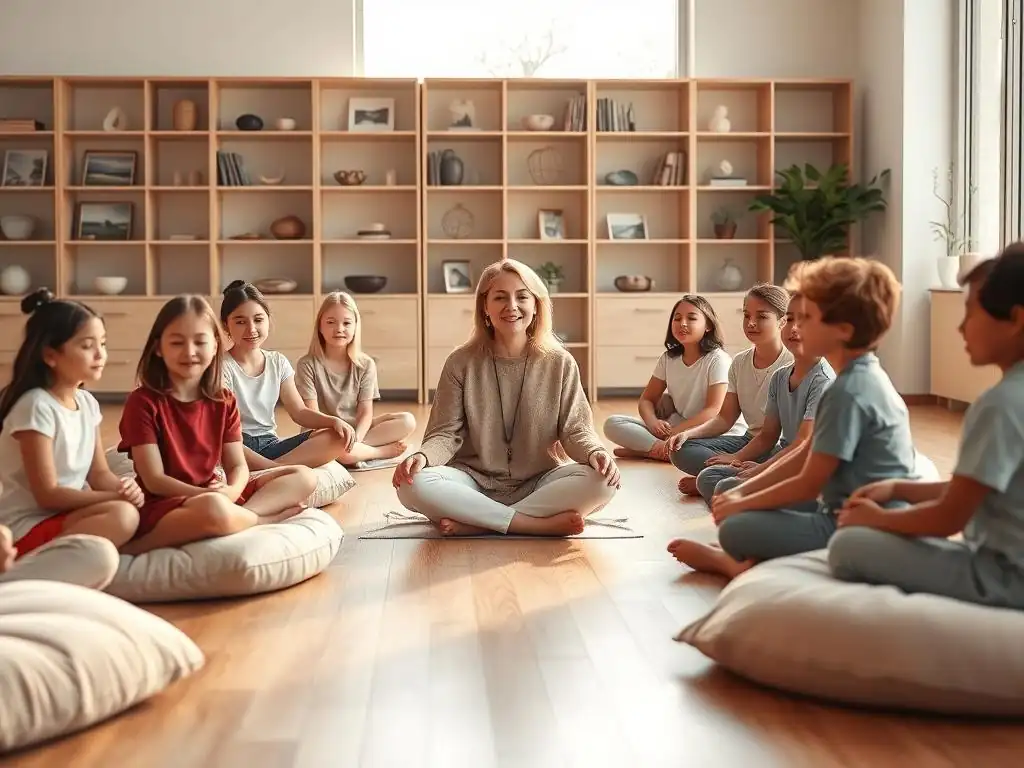
Collaboration with Administrators and Colleagues
Implementing mindfulness effectively throughout a school often requires buy-in and collaboration from administrators and colleagues. Start by discussing the benefits of mindfulness, particularly focusing on how it can address shared concerns like student behavior, academic focus, and teacher stress (mindfulness for teachers wellbeing). Sharing relevant research or articles can help build a case. Proposing a pilot program in a few classrooms before a school-wide rollout can demonstrate the potential impact with less initial commitment.
Encourage colleagues to explore mindfulness for their own well-being, perhaps by organizing a brief voluntary lunchtime meditation session or sharing resources. When administrators understand and support the initiative, they can allocate resources, provide professional development opportunities, and help integrate mindfulness into the school's overall wellness strategy. A collaborative approach ensures that mindfulness isn't just an isolated practice in one classroom but becomes part of the school's ethos, creating a more supportive environment for both students and educators.
Parent Involvement and Education
Engaging parents is crucial for creating a supportive environment for mindfulness both at school and potentially at home. Inform parents about the mindfulness activities happening in the classroom and explain the rationale behind them – how they help students focus, manage emotions, and reduce stress. This can be done through newsletters, parent-teacher meetings, or dedicated information sessions. Addressing potential misconceptions about mindfulness is also important; emphasize that it is a secular practice focused on attention and awareness, not tied to any specific religion.
Offering parents simple mindfulness tips or activities they can try at home with their children can reinforce the practices learned at school. Providing resources like recommended apps or websites for family mindfulness can empower parents to support their child's emotional development outside of school hours. When parents understand and support mindfulness initiatives, it creates a stronger home-school connection and a more consistent message for students about the value of presence and emotional regulation, further strengthening the positive impact on student behavior and academic readiness, while indirectly supporting mindfulness for teachers wellbeing by fostering a calmer classroom environment.
Sustaining Mindfulness Practices Long-Term
Sustaining mindfulness practices over the long term requires commitment, consistency, and flexibility. For teachers, this means integrating personal mindfulness practice into their daily or weekly routine, even when time is scarce. Just like any skill, mindfulness requires regular exercise to maintain its benefits for mindfulness for teachers wellbeing. Finding a "mindfulness buddy" among colleagues for mutual support and accountability can be helpful.
In the classroom, sustaining the practice involves making it a regular, expected part of the routine rather than an occasional activity. Be flexible and willing to adapt practices based on student needs and energy levels. Reflect regularly on what's working and what's not, and adjust your approach.
Celebrating small successes – noticing a student using a breathing technique independently, or feeling calmer yourself during a stressful moment – can provide motivation. Building mindfulness into the school culture through ongoing professional development, shared practices among staff, and consistent communication about its value helps ensure its longevity and continued positive impact on the entire school community.
The Future of Mindfulness in Education: Trends and Innovations
Emerging Research on Mindfulness and Executive Function
Exciting new research is increasingly exploring the link between mindfulness practice and the development of executive functions in the brain, particularly in children and adolescents. Executive functions are a set of cognitive skills that include working memory, flexible thinking, and self-control – all crucial for academic success and life skills. Studies are investigating how mindfulness training might strengthen these skills by improving attention control, reducing impulsivity, and enhancing the ability to switch between tasks.
For example, preliminary findings from some studies suggest that school-based mindfulness programs may lead to observable improvements in students' ability to sustain attention on tasks and regulate their emotional responses in challenging situations. As this research matures, it provides further scientific backing for integrating mindfulness into the educational curriculum, highlighting its potential not just for emotional well-being but also for directly enhancing cognitive capacities essential for learning.
This growing evidence base further supports the value of mindfulness for teachers wellbeing, as teachers equipped with strategies to improve student focus and self-regulation can experience a less chaotic and more productive classroom environment.
The Role of Technology in Supporting Mindfulness Practices
Technology is playing an increasingly significant role in making mindfulness accessible, though mindful use is key. Beyond the apps mentioned earlier, virtual reality (VR) and augmented reality (AR) are being explored as tools to create immersive mindfulness experiences, potentially offering novel ways for students and teachers to practice relaxation and focus. Educational platforms are starting to integrate short mindfulness breaks or resources directly into their learning management systems.
However, it's crucial to use technology mindfully itself. Screen time should not replace direct instruction or human connection. Technology should serve as a support for practice, not the sole method. The goal is to equip individuals with skills they can use anytime, anywhere, without reliance on a device. Future innovations may focus on developing adaptive technologies that personalize mindfulness practices based on individual needs or provide real-time feedback on physiological indicators of stress, further enhancing the potential reach and impact of mindfulness in supporting both student learning and mindfulness for teachers wellbeing.
Conclusion: Empowering Teachers and Students Through Mindfulness
Recap of the Benefits of Mindfulness for Teacher Wellbeing and Student Achievement
Mindfulness offers a powerful pathway to enhanced well-being and effectiveness for both teachers and students. For educators, consistent mindfulness practice is a proven strategy for reducing stress, mitigating burnout, and cultivating greater resilience in the face of demanding professional lives. It empowers them to be more present, patient, and responsive in their interactions, ultimately leading to increased job satisfaction and professional sustainability. Prioritizing mindfulness for teachers wellbeing is not selfish; it is foundational to being an effective educator.
For students, the integration of mindfulness into the classroom fosters essential social-emotional learning skills, improves focus and attention, enhances emotional regulation, and can lead to reduced anxiety and stress. A mindful classroom environment, cultivated by a mindful teacher, becomes a more supportive and conducive space for learning and growth. The benefits ripple outwards, creating a positive cycle where teacher well-being directly supports student achievement, and student engagement reinforces the value of the teacher's efforts.
A Call to Action: Embracing Mindfulness in Education for a Brighter Future
The evidence is clear: mindfulness is a valuable tool with significant potential to transform the educational experience. It is more than just a trend; it is a practical, evidence-based approach that addresses some of the most pressing challenges facing schools today – teacher stress and student mental health. Educators are encouraged to take the first step, whether it's committing to a personal mindfulness practice for their own mindfulness for teachers wellbeing or introducing a simple mindful moment into their classroom routine.
Embracing mindfulness requires a willingness to explore, practice, and adapt. It is a journey, not a destination, offering continuous opportunities for growth and self-discovery. By integrating mindfulness into their professional lives and sharing it with their students, teachers can cultivate calmer classrooms, foster greater connection, and empower themselves and the next generation with essential skills for navigating the complexities of life with greater presence, resilience, and compassion. The future of education is brighter when built on a foundation of mindful awareness.
Frequently Asked Questions
What is mindfulness and how can it benefit teachers' well-being?
Mindfulness is paying attention to the present moment without judgment. It can reduce stress, improve emotional regulation, and enhance overall well-being for teachers facing demanding classroom environments.
How can teachers integrate mindfulness practices into their daily classroom routine?
Short mindfulness exercises like deep breathing, mindful listening, or body scans can be incorporated into lessons or during transitions. This helps both the teacher and students cultivate present moment awareness and reduce anxiety.
What are some common challenges teachers face when trying to implement mindfulness and how can they overcome them?
Time constraints, lack of training, and student resistance are common challenges. Overcoming them involves starting small, seeking professional development in mindfulness, and gradually introducing practices to students.
How does mindfulness specifically address teacher burnout and improve mental health?
Mindfulness helps teachers become more aware of their stress triggers and develop coping mechanisms. By practicing self-compassion and emotional regulation, teachers can better manage burnout and improve their mental health.
Where can teachers find resources and support to learn more about mindfulness for their well-being?
Websites like Mind Care Guide, professional development workshops, and mindfulness-based apps offer resources. Seeking support from colleagues or a mindfulness community can also enhance teacher wellbeing.
Final Reflection: Cultivating Calm in the Classroom
The urgent need for teacher well-being is no longer a whisper, but a resounding call to action. The overwhelming pressures of modern education demand a proactive approach to self-care, and mindfulness offers a powerful, accessible tool for teachers to navigate these challenges and thrive. This guide has explored practical strategies for incorporating mindfulness into the classroom, benefiting not only teachers but also their students.
The ripple effect of a mindful teacher is profound. A teacher who cultivates inner peace and self-awareness creates a calmer, more focused learning environment for their students. This positive energy fosters a supportive classroom culture where both teachers and students can flourish. As the Dalai Lama wisely stated, The purpose of life, after all, is to live it, to taste experience to the utmost, to reach out eagerly and without fear for newer and richer experience.
This sentiment resonates deeply with the importance of prioritizing well-being, allowing teachers to fully engage with the rewarding, yet demanding, profession of education.
Now, consider your own classroom. What small steps can you take today to integrate mindfulness into your daily routine? Perhaps it's a few minutes of deep breathing before tackling lesson planning, or a mindful walk during your lunch break. Remember, the journey towards self-care is a personal one, and even small acts of self-compassion can make a significant difference. Embrace the opportunity to cultivate calm within yourself, and watch as it transforms your classroom into a haven of learning and well-being for all.
Unlock Your Classroom's Potential: Start Practicing Mindfulness Today!
Thanks for taking the time to explore the power of mindfulness in the classroom! We hope you gained valuable insights into creating a calmer, more focused learning environment. Ready to transform your teaching and your students' experience?
- Prioritize one mindfulness technique: Start small by implementing just one technique from the article—even 5 minutes of deep breathing can make a big difference. Which one resonates most with you and your students?
- Share your experience: Tell us (or your colleagues!) about your initial experience with incorporating mindfulness. What challenges did you face, and what successes did you achieve?
- Challenge yourself: Try a different mindfulness activity each week, gradually integrating these practices into your daily routine for a sustainable impact.
What small step will you take this week to cultivate a more mindful classroom?