
The Energy Within: How Qigong Balances Your Qi for Mental Clarity

Welcome to Mind Care Guide, a sanctuary for your mental well-being. Feeling overwhelmed by the constant demands of life? We understand. Discover how the ancient practice of Qigong for mental clarity and stress can unlock your inner peace and bring balance back to your life. Curious to learn how harnessing your body's energy flow can dramatically improve your focus and reduce anxiety? Let's begin your journey to a calmer, clearer mind...
Qigong for Mental Clarity: Cultivating Inner Harmony for Cognitive Enhancement
- Introduction: Qigong and Mental Well-being
- The Science of Qigong: Its Impact on Mental Clarity
- Core Qigong Principles for Cognitive Enhancement
- Practical Qigong Exercises for Improved Mental Clarity
- Integrating Qigong into Daily Life for Sustained Mental Acuity
- Qigong Compared to Other Stress Reduction Methods
- Addressing Misconceptions About Qigong and Cognitive Health
- Advanced Qigong Practices for Deeper Cognitive Enhancement
- Conclusion: Qigong for a Clearer, More Focused Mind
-
Frequently Asked Questions
- What exactly is Qigong, and how does it relate to mental clarity?
- How does Qigong specifically help with stress reduction?
- Can anyone practice Qigong, regardless of age or physical ability?
- How often should I practice Qigong to experience benefits for mental clarity?
- Where can I find resources or qualified instructors to learn Qigong?
- Final Reflection: Unlocking Inner Peace Through Qigong
- Unleash Your Inner Calm: Take Control of Your Qi Today!
Introduction: Qigong and Mental Well-being
Qigong, an ancient Chinese mind-body practice, is gaining recognition in modern wellness circles for its profound impact on mental well-being. Far beyond simple physical exercise, Qigong integrates gentle movements, controlled breathing, and focused intention to cultivate and balance the body's vital energy, known as Qi. This harmonization of energy is believed to have direct benefits on cognitive function, emotional stability, and overall mental health, offering a powerful tool for those seeking Qigong for mental clarity stress reduction.
Qigong: An Ancient Practice for Modern Cognitive Health
Originating thousands of years ago in China, Qigong evolved from ancient meditation, martial arts, and traditional Chinese medicine. Its core philosophy revolves around the idea that health and vitality stem from a harmonious flow of Qi within the body. While historically rooted in physical health and longevity, its application for mental and emotional balance has always been integral, making it highly relevant for addressing contemporary issues like stress, anxiety, and lack of focus.
In today's fast-paced world, where cognitive overload and chronic stress are prevalent, Qigong offers a sanctuary of calm and a pathway to enhanced mental acuity. By engaging the body and mind in deliberate, gentle actions, practitioners learn to quiet the internal chatter, release physical tension held from stress, and cultivate a state of relaxed alertness conducive to improved concentration and problem-solving. This makes exploring Qigong for mental clarity stress management a valuable endeavor.
Understanding Qi: The Foundation of Vitality and Mental Function
In traditional Chinese philosophy, Qi is the fundamental life force or vital energy that animates all living things. It flows through specific pathways in the body called meridians, nourishing organs, tissues, and the mind. A balanced and abundant flow of Qi is associated with health, vitality, emotional stability, and sharp cognitive function. Conversely, blockages or deficiencies in Qi are believed to contribute to physical ailments, emotional imbalances, and mental fogginess.
Understanding Qi is crucial to appreciating how Qigong works for mental clarity. Qigong practices are designed to clear blockages, strengthen weak areas, and promote smooth, harmonious Qi circulation. This improved energy flow is thought to nourish the brain and nervous system, leading to enhanced mental function, reduced stress responses, and a greater sense of inner peace. The concept of cultivating Qi is central to achieving the benefits of Qigong for mental clarity stress relief.
The Science of Qigong: Its Impact on Mental Clarity
While the concept of Qi belongs to traditional systems, modern science is increasingly exploring and validating the physiological and psychological effects of Qigong. Research points to tangible changes in the body and brain that explain its reported benefits for mental clarity and stress reduction.
Qigong's Role in Stress Reduction and Emotional Regulation
Numerous studies indicate that Qigong is effective in reducing stress and improving emotional regulation. Practices often involve slow, rhythmic movements synchronized with deep, conscious breathing, which activates the parasympathetic nervous system – the body's "rest and digest" mode. This counteracts the "fight or flight" response triggered by stress.
Research has shown that regular Qigong practice can lead to reductions in stress hormones like cortisol. For example, some studies have reported significant decreases in cortisol levels and improvements in self-reported stress and anxiety scores among participants after consistent Qigong training over several weeks or months. This physiological shift helps calm the mind, making it easier to manage emotions and think clearly, directly addressing the need for Qigong for mental clarity stress management.
Qi Flow and its Connection to Cognitive Performance
From a Western perspective, the concept of smooth Qi flow can be related to optimal circulation of blood, lymph, and nerve impulses, as well as balanced neurochemical activity. Qigong movements, particularly those involving gentle stretching and twisting, are thought to improve circulation throughout the body, including to the brain.
Enhanced blood flow delivers more oxygen and nutrients to brain cells, supporting optimal cognitive function. Furthermore, the meditative aspect of Qigong, which involves focused attention and intention, can train the mind to be less reactive and more present, improving attention span and working memory. This holistic approach connects physical movement and mental focus to enhance cognitive performance.
Brainwave Modulation and Enhanced Mental Focus Through Qigong
Studies using electroencephalography (EEG) have explored how Qigong affects brainwave activity. Practitioners often enter states characterized by increased alpha and theta brainwaves, which are associated with relaxation, creativity, and meditative states. Alpha waves are prominent during relaxed wakefulness, while theta waves are linked to deep relaxation and access to subconscious material.
Cultivating these brainwave states through Qigong helps quiet the busy, analytical beta waves often associated with stress and anxiety. This shift facilitates a state of focused calm, making it easier to concentrate, learn, and process information. Regular practice trains the brain to access these beneficial states more readily, contributing significantly to enhanced mental focus and clarity.
Core Qigong Principles for Cognitive Enhancement
Several core principles underpin Qigong practice, each contributing uniquely to its cognitive benefits. Understanding these principles helps practitioners deepen their experience and maximize the positive impact on their mental state.
Diaphragmatic Breathing: Calming the Nervous System
Diaphragmatic breathing, also known as abdominal breathing, is a cornerstone of Qigong. Unlike shallow chest breathing, which is often linked to stress, diaphragmatic breathing involves expanding the abdomen as you inhale, allowing the diaphragm to descend and the lungs to fill more fully. This deep breathing pattern directly stimulates the vagus nerve, which is a key component of the parasympathetic nervous system.
By consciously engaging in slow, deep breaths, practitioners signal to the body that it is safe and relaxed. This immediately reduces the physiological stress response, lowering heart rate and blood pressure. A calmer nervous system translates directly into a calmer mind, reducing anxiety and creating a foundation for clearer thinking and improved focus.
Spinal Alignment and Posture: Optimizing Energy Flow
Proper posture and spinal alignment are fundamental in Qigong. The spine is considered a central channel for energy flow in traditional Chinese medicine, and also houses the central nervous system. Maintaining a relaxed, upright posture allows Qi (and nerve impulses) to flow smoothly throughout the body and to the brain.
Incorrect posture, often a result of stress or sedentary habits, can create physical blockages and tension that impede energy circulation. Qigong exercises emphasize gentle lengthening of the spine, relaxation of the shoulders and hips, and rooting through the feet. This improved physical structure supports optimal physiological function, including better circulation and nervous system communication, which in turn enhances mental clarity and reduces physical tension associated with stress.
Mindfulness and Present Moment Awareness in Qigong
Mindfulness is an inseparable component of Qigong practice. While performing the gentle movements and focusing on the breath, practitioners are encouraged to bring their full attention to the present moment – noticing physical sensations, the flow of breath, and the subtle energetic shifts within the body. This contrasts with the mind's usual tendency to dwell on the past or worry about the future.
Cultivating present moment awareness through Qigong trains the mind to be less distracted by intrusive thoughts and worries, which are major contributors to stress and mental fog. By focusing on the here and now, practitioners develop greater concentration, emotional resilience, and a sense of groundedness. This mental discipline is directly applicable to daily life, leading to improved focus and a reduction in stress-induced cognitive impairments.
Practical Qigong Exercises for Improved Mental Clarity
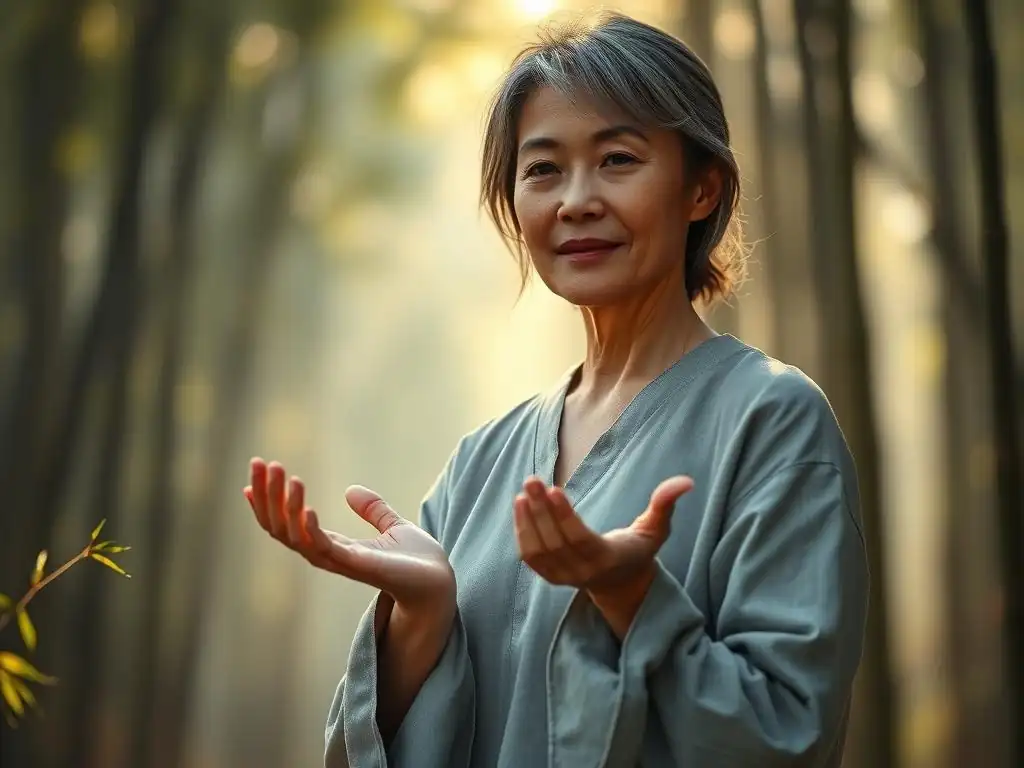
Many Qigong exercises are specifically beneficial for calming the mind and enhancing focus. These practices can be integrated into a daily routine to cultivate inner harmony and cognitive function.
Microcosmic Orbit Meditation: Enhancing Energy Circulation
The Microcosmic Orbit is a fundamental meditative practice in many Qigong traditions. It involves visualizing or sensing the flow of Qi circulating along a specific pathway that runs up the spine from the tailbone to the crown of the head, then down the front of the body from the palate to the perineum. This circular path is considered a primary channel for energy circulation.
Regular practice of the Microcosmic Orbit is believed to harmonize the energy flow in the body's core channels, balancing Yin and Yang energies. This enhanced circulation is thought to nourish the brain and calm the nervous system, leading to deep states of relaxation, reduced mental chatter, and improved concentration. It's a powerful internal practice for cultivating Qigong for mental clarity stress relief.
Taiji Ruler Exercise: Promoting Balance and Coordination
The Taiji Ruler exercise involves holding a short wooden cylinder (the "ruler") and performing gentle, flowing movements that coordinate the hands, arms, torso, and legs. The focus is on circular motions, smooth transitions, and maintaining a connection to the core.
This practice requires significant mind-body coordination and concentration to execute the movements smoothly while maintaining relaxation. It trains proprioception (awareness of the body's position in space) and balance, which are linked to cognitive function. The focused attention required for the movements helps quiet distracting thoughts, while the gentle physical activity releases tension, contributing to a state of alert calm beneficial for mental clarity.
Ba Duan Jin (Eight Brocades): A Comprehensive Qigong Routine for Cognitive Function
Ba Duan Jin, or the Eight Brocades, is one of the most popular and widely practiced forms of Qigong. It consists of eight distinct movements, each designed to target specific organ systems and energy channels. Examples include "Holding Up the Heavens" (stretches the torso and opens the energy channels) and "Separating Heaven and Earth" (balances the left and right sides of the body).
Practicing Ba Duan Jin provides a comprehensive workout for both body and mind. The sequence of movements requires focus and memory, engaging cognitive function. The physical movements release tension and improve circulation, while the coordinated breathing calms the nervous system. Many practitioners report feeling energized yet relaxed after performing the Eight Brocades, experiencing improved mood, reduced stress, and enhanced mental sharpness, making it an excellent routine for Qigong for mental clarity stress management.
Integrating Qigong into Daily Life for Sustained Mental Acuity
To reap the full benefits of Qigong for mental clarity and stress reduction, consistency is key. Integrating the practice seamlessly into your daily routine can lead to lasting improvements in cognitive function and emotional well-being.
Establishing a Consistent Qigong Practice
Starting small and building gradually is often the most effective way to establish a consistent Qigong practice. Even 10-15 minutes of Qigong daily can yield noticeable benefits over time. Choose a time and place where you are unlikely to be interrupted, whether it's first thing in the morning to set a calm tone for the day, during a lunch break to combat the afternoon slump, or in the evening to unwind before sleep.
Try scheduling your Qigong session like any other important appointment. For instance, committing to 20 minutes every morning at 7:00 AM. The cumulative effect of regular practice is far more significant than occasional long sessions. Over weeks and months, this consistency retrains the body and mind to enter states of calm and focus more easily, solidifying the benefits of Qigong for mental clarity stress reduction.
Setting Achievable Goals for Cognitive Wellness
Approach Qigong with realistic expectations and set achievable goals related to your cognitive wellness. Instead of aiming for perfect clarity overnight, focus on incremental improvements. Perhaps your initial goal is to feel slightly less stressed after your practice, or to notice a small improvement in your ability to concentrate on a task for a few extra minutes.
As you progress, you might set goals like reducing the frequency of stress-induced headaches, improving recall speed, or feeling more mentally resilient in challenging situations. Tracking your progress, perhaps in a simple journal noting your practice duration and how you feel afterward, can provide motivation and demonstrate the tangible impact of Qigong for mental clarity stress relief on your daily life.
Combining Qigong with Complementary Practices (e.g., Healthy Diet)
Qigong is a holistic practice that works best when supported by other healthy lifestyle choices. Combining your Qigong routine with complementary practices can amplify its benefits for cognitive function and mental well-being. A balanced, nutritious diet, for example, provides the essential building blocks for brain health and energy production, complementing the energy cultivation aspect of Qigong.
Adequate sleep is another crucial factor; Qigong can often improve sleep quality, which in turn supports cognitive function. Regular physical activity, even gentle forms like walking, enhances circulation and reduces stress. By addressing multiple aspects of health simultaneously – through Qigong, diet, sleep, and other movement – you create a synergistic effect that profoundly supports mental acuity and resilience against stress.
Qigong Compared to Other Stress Reduction Methods
While many practices offer stress reduction benefits, Qigong possesses unique characteristics that differentiate it from modalities like yoga, meditation, and aerobic exercise, particularly in its integrated approach to energy cultivation and cognitive function.
Qigong vs. Yoga: Distinct Approaches to Mental Focus
Both Qigong and Yoga are ancient mind-body practices involving movement, breath, and meditation, and both are effective for stress reduction. However, they differ in their primary focus and approach to energy. Yoga often emphasizes physical postures (asanas) held for periods, focusing on flexibility, strength, and alignment, with breath (pranayama) often used to deepen stretches or build heat. Mental focus in Yoga is often on maintaining the posture and coordinating breath with movement.
Qigong, conversely, emphasizes fluid, gentle, continuous movements, often repeated, with a strong focus on the internal sensation of Qi flow and intentional energy cultivation. The movements are typically less physically demanding than many yoga poses but require a deep level of internal awareness and coordination of breath with subtle energetic shifts. This emphasis on internal energy work provides a distinct path to cultivating Qigong for mental clarity stress relief, focusing on inner balance rather than primarily physical prowess.
Qigong vs. Meditation: Active vs. Passive Techniques
Meditation, particularly mindfulness meditation, shares the core principle of present moment awareness with Qigong. However, meditation is typically a static practice, involving sitting or lying still while focusing on the breath, a mantra, or observing thoughts without judgment. Its power lies in training the mind through stillness.
Qigong, while incorporating meditative stillness and focus, is fundamentally an active moving meditation. The movements are not just physical exercises but are vehicles for cultivating and guiding Qi. This combination of gentle physical activity and focused intent can be more accessible for individuals who find it difficult to sit still for extended periods. The movement itself helps to release physical tension and energetic blockages, which can sometimes be a barrier to deep meditation, offering a dynamic way to achieve mental clarity and reduce stress.
Qigong vs. Aerobic Exercise: Energy Cultivation vs. Physical Exertion
Aerobic exercise, such as running, swimming, or cycling, is widely recognized for its stress-reducing benefits, often through the release of endorphins and reduction of stress hormones. It primarily focuses on cardiovascular health, muscular strength, and increasing metabolic rate through vigorous physical exertion.
Qigong, while involving physical movement, is generally low-impact and aims to cultivate and conserve energy rather than expend it through exertion. The movements are slow, relaxed, and focus on internal coordination and energy flow. While aerobic exercise energizes the body through stimulating physical systems, Qigong energizes by harmonizing the body's intrinsic energetic system (Qi). Both are beneficial, but Qigong offers a path to stress reduction and mental clarity that emphasizes internal balance and gentle cultivation over strenuous physical output.
Addressing Misconceptions About Qigong and Cognitive Health
Despite its growing popularity, Qigong is sometimes misunderstood, particularly regarding its applications beyond physical health. Clarifying these misconceptions is important for recognizing its full potential for cognitive well-being.
Myth: Qigong is Only for Physical Health
A common misconception is that Qigong is solely a set of exercises for physical fitness or healing physical ailments. While it is undoubtedly beneficial for physical health – improving balance, flexibility, circulation, and immune function – this view overlooks its profound impact on the mind and spirit.
Qigong was historically developed as a practice for cultivating the whole person, encompassing physical, mental, emotional, and spiritual dimensions. The gentle movements, breathing techniques, and meditative focus are specifically designed to harmonize the mind and body, calm the emotions, and enhance mental acuity. Its effectiveness in reducing anxiety, improving focus, and promoting mental clarity is well-documented and central to its practice.
Reality: Qigong Profoundly Impacts Mental and Emotional Well-being
The reality is that Qigong has a deep and direct impact on mental and emotional states. By regulating the nervous system through breath and movement, it helps dissipate tension and stress held in the body and mind. The focus required during practice trains the mind to be less reactive and more present, which is invaluable for managing anxiety and improving emotional regulation.
Many practitioners report a significant reduction in stress levels, decreased feelings of anxiety and depression, and an increased sense of peace and emotional resilience after consistent Qigong practice. The cultivation of Qi is believed to nourish the "Shen" (Spirit or Mind), leading to greater mental clarity, emotional balance, and a more positive outlook on life. This makes it a powerful tool for Qigong for mental clarity stress relief.
Myth: Qigong is a Quick Fix for Mental Health Issues
Another misconception is that Qigong offers immediate, miraculous results for complex mental health challenges. While a single Qigong session can certainly induce a sense of calm and relaxation, addressing chronic stress, anxiety, or improving deep-seated cognitive issues requires consistent, dedicated practice over time.
Like learning any new skill or cultivating a garden, the benefits of Qigong unfold gradually with patience and persistence. The initial practices lay the foundation, and deeper levels of calm, clarity, and energetic balance are achieved through regular effort. Thinking of Qigong as a quick fix diminishes its true value as a sustainable lifestyle practice for long-term mental wellness.
Reality: Qigong Requires Consistent Practice for Optimal Results
The reality is that Qigong is a practice that yields optimal results through consistency. The cumulative effects of daily or near-daily sessions build resilience in the nervous system, strengthen the mind's ability to focus, and improve the body's energetic balance.
For example, studies might show significant improvements in stress markers after 8-12 weeks of regular practice (e.g., 3-5 times per week). The brain and body adapt over time, making it easier to enter states of relaxation and focus. Committing to a routine, even a short one, is far more effective than sporadic practice for achieving the deep, lasting benefits of Qigong for mental clarity stress reduction.
Advanced Qigong Practices for Deeper Cognitive Enhancement
As practitioners deepen their Qigong journey, they can explore more advanced concepts and methods that further cultivate energy and enhance cognitive function beyond basic stress reduction.
Cultivating the Three Treasures: Jing, Qi, and Shen
In advanced Qigong and Daoist practices, emphasis is placed on cultivating the "Three Treasures": Jing (Essence), Qi (Vitality), and Shen (Spirit/Mind). Jing is the foundational energy, often associated with physical substance and reproductive energy. Qi is the dynamic energy that flows through the meridians, powering bodily functions. Shen is the spiritual and mental energy, residing in the heart and governing consciousness, wisdom, and clarity.
Advanced Qigong methods aim to refine and transform Jing into Qi, and Qi into Shen. Practices might involve specific meditations, visualizations, and energy-directing techniques. Cultivating Shen through Qigong is directly related to achieving higher levels of mental clarity, intuition, and spiritual insight, moving beyond simply managing stress to enhancing the very quality of consciousness.
Connecting with Nature for Enhanced Vitality
Many Qigong traditions emphasize the importance of practicing in nature, particularly in environments with abundant natural energy (like parks, forests, or near water). Connecting with the energy of the natural world is believed to replenish one's own Qi and enhance vitality.
Practicing Qigong outdoors, grounding oneself with the earth and absorbing the fresh air and natural light, can deepen the meditative state and amplify the benefits for stress reduction and mental clarity. This connection with nature provides a powerful antidote to the artificial and often stressful environments of modern life, helping to restore energetic balance and calm the mind.
Seeking Guidance from a Qualified Qigong Instructor
While many basic Qigong forms can be learned from books or videos, seeking guidance from a qualified instructor is highly recommended for deeper understanding and advanced practice. An experienced teacher can provide personalized feedback on posture, movement, and energy sensation, ensuring correct technique and helping practitioners avoid common pitfalls.
A good instructor can also introduce more complex practices, guide students in cultivating the Three Treasures, and offer insights into the energetic principles underlying the movements. Learning from a lineage or experienced teacher provides a richer context and accelerates progress, allowing practitioners to more effectively harness the power of Qigong for mental clarity stress reduction and profound cognitive enhancement.
Conclusion: Qigong for a Clearer, More Focused Mind
Qigong offers a time-tested, holistic approach to enhancing mental clarity and reducing stress. By integrating gentle movement, conscious breathing, and focused intention, it harmonizes the body's vital energy (Qi), leading to profound benefits for cognitive function, emotional regulation, and overall well-being. It is not a quick fix but a sustainable practice that cultivates inner harmony over time.
Long-Term Benefits of Qigong for Cognitive Well-being
Consistent Qigong practice yields significant long-term benefits for cognitive well-being. These include sustained reductions in stress and anxiety, improved emotional resilience, enhanced ability to focus and concentrate, better memory and cognitive flexibility, and a greater sense of calm and mental spaciousness. By addressing the root causes of stress and energetic imbalance, Qigong helps build a foundation for lasting mental acuity and emotional stability, proving its value as Qigong for mental clarity stress management.
Regular engagement with Qigong cultivates a deeper connection with one's body and mind, fostering self-awareness and the ability to manage internal states more effectively. This leads to improved decision-making, greater creativity, and an overall enhancement in the quality of life, demonstrating the transformative power of this ancient practice for modern challenges.
Resources for Further Exploration of Qigong and Mental Health
For those interested in exploring Qigong further, numerous resources are available. Many communities offer local Qigong classes led by certified instructors. Online platforms provide video courses and workshops for learning various forms like Ba Duan Jin or the Microcosmic Orbit. Books and articles delve deeper into the philosophy, science, and practical applications of Qigong for health and well-being.
Engaging with these resources can help individuals find a style and teacher that resonate with them, supporting their journey towards cultivating Qigong for mental clarity stress reduction. Remember to approach the practice with patience, consistency, and an open mind, allowing the gentle power of Qi to bring balance and clarity to your life.
Frequently Asked Questions
What exactly is Qigong, and how does it relate to mental clarity?
Qigong is an ancient Chinese practice involving coordinated body postures, breathing techniques, and meditation. It aims to cultivate and balance qi (vital energy) within the body, which can directly impact mental clarity by reducing stress and promoting relaxation.
How does Qigong specifically help with stress reduction?
Qigong's slow, deliberate movements and focused breathing activate the parasympathetic nervous system, promoting relaxation and reducing the production of stress hormones like cortisol. This leads to a calmer and more focused mind.
Can anyone practice Qigong, regardless of age or physical ability?
Yes, Qigong is generally considered safe and adaptable for all ages and fitness levels. Many forms can be modified to suit individual needs, making it accessible even for those with limited mobility.
How often should I practice Qigong to experience benefits for mental clarity?
While results vary, consistent practice is key. Aim for at least 15-30 minutes, 3-5 times per week to start noticing improvements in mental clarity, reduced stress, and overall well-being.
Where can I find resources or qualified instructors to learn Qigong?
"Mind Care Guide" provides information and resources. Look for certified Qigong instructors in your area or explore online Qigong classes and videos to learn the basics and find a style that resonates with you.
Final Reflection: Unlocking Inner Peace Through Qigong
The ancient practice of Qigong offers a potent antidote to the pervasive stress and mental fog of modern life. In a world obsessed with external solutions, Qigong reminds us that true clarity and well-being originate from within, a wellspring of energy we can cultivate and nurture. This internal resource, our Qi, is not merely a concept; it's a tangible force that, when balanced, can transform our experience of stress and anxiety.
The impact of Qigong extends far beyond individual practice; it's a ripple effect influencing our collective approach to wellness. By prioritizing inner harmony, we challenge the dominant narrative of constant striving and external validation. We begin to reclaim our power to manage stress, not through fleeting fixes, but through a sustainable, holistic approach. As Bruce Lee wisely observed: Knowing is not enough; we must apply. Willing is not enough; we must do.
This sentiment perfectly encapsulates the essence of Qigong – the transformative power lies not just in understanding the principles, but in the consistent, dedicated practice.
Now, consider your own life. Where are you holding onto tension, both physically and mentally? I invite you to explore the potential of Qigong as a pathway to greater mental clarity and emotional resilience. Begin with even a few minutes of gentle practice each day – notice the subtle shifts in your energy, the deepening of your breath, the quietening of your mind. This journey inward is a journey towards a more balanced, peaceful, and ultimately, more fulfilling life. Embrace the energy within.
Unleash Your Inner Calm: Take Control of Your Qi Today!
Thanks for taking the time to explore the power of Qigong for mental clarity! We hope you gained valuable insights into how balancing your Qi can transform your well-being. Now it's time to put that knowledge into practice.
Here are a few ways to continue your journey:
- Begin your personalized Qigong practice: Start with just 5 minutes a day focusing on the breathing techniques discussed in the article. Even small steps make a big difference!
- Share your experience: Tell us (or others!) about your first Qigong session. What did you notice? What surprised you? Your feedback inspires others.
- Explore further resources: Search online for beginner Qigong videos or consider joining a local class to enhance your practice.
What small step will you take today to cultivate inner peace and focus?