
A Core Skill to Defeat Anxiety: Thought Challenging in CBT

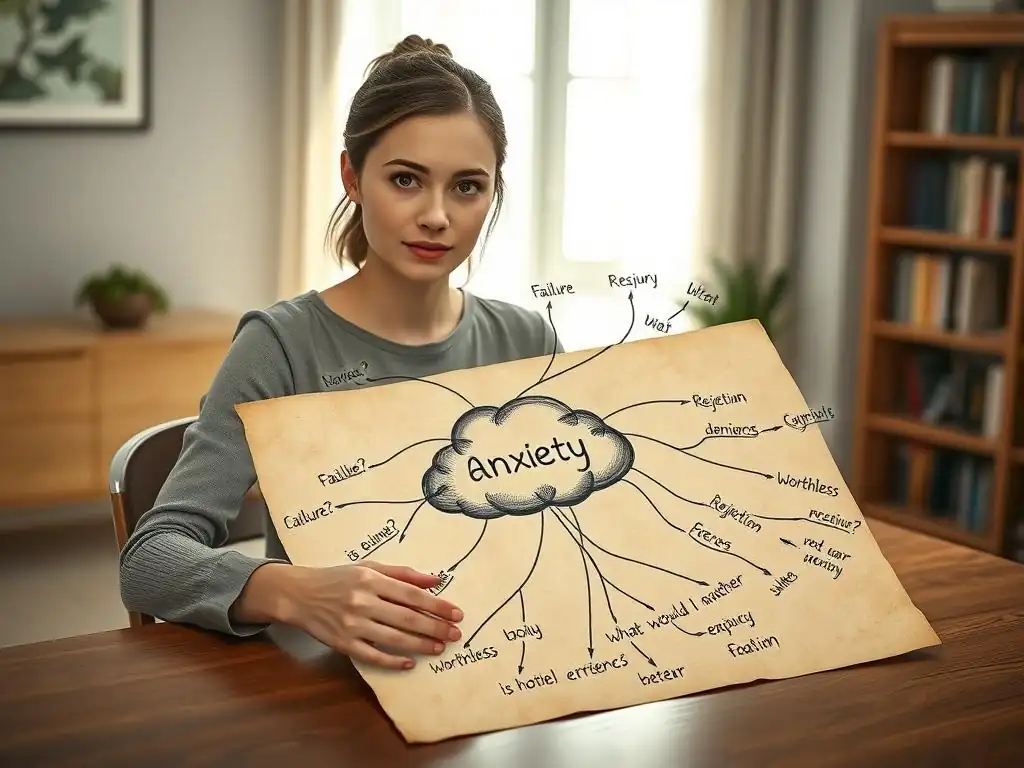
Welcome to Mind Care Guide, your haven for mental well-being.
Are you feeling overwhelmed by anxiety's grip? Many struggle to find lasting relief, but what if a core skill, readily available, could significantly reduce its power? Discover how cognitive challenging, a powerful tool within Cognitive Behavioral Therapy (CBT), can help you dismantle anxious thoughts and reclaim your peace. Intrigued? Let's explore how this technique can transform your relationship with anxiety...
A Core Skill to Defeat Anxiety: Thought Challenging in CBT
- Understanding Anxiety and the Role of Cognitive Behavioral Therapy (CBT)
- What is Thought Challenging in CBT?
- Step-by-Step Guide to Challenging Anxious Thoughts
- Cognitive Challenging Techniques for Anxiety Reduction
- Benefits of Using Cognitive Challenging to Manage Anxiety
- Practical Examples of Thought Challenging in Action
- Tips for Effective Thought Challenging and Sustained Anxiety Relief
- Maintaining Progress and Preventing Relapse: Long-Term Strategies
- Conclusion: Empowering Yourself with Cognitive Challenging for Anxiety Management
-
Frequently Asked Questions
- ### What is thought challenging in the context of Cognitive Behavioral Therapy (CBT)?
- ### How does cognitive challenging specifically reduce anxiety?
- ### What are some common techniques used in thought challenging?
- ### How can I start practicing thought challenging on my own?
- ### Are there any potential drawbacks to using thought challenging for anxiety?
- Final Reflection: The Empowering Practice of Thought Challenging
- Unleash Your Inner Strength: Conquer Anxiety with Thought Challenging
Understanding Anxiety and the Role of Cognitive Behavioral Therapy (CBT)
Anxiety Disorders: An Overview for Mind Care
Anxiety disorders represent a group of mental health conditions characterized by excessive worry, fear, and nervousness that significantly interferes with a person's daily life. These are not simply fleeting moments of stress but persistent, intense feelings that can manifest physically through symptoms like rapid heartbeat, sweating, and trembling, and cognitively through constant worrying thoughts. Common types include Generalized Anxiety Disorder (GAD), Social Anxiety Disorder (SAD), Panic Disorder, and specific phobias. Each type has unique triggers and symptoms, but they all share the core feature of overwhelming anxiety that is disproportionate to the actual threat.
Globally, anxiety disorders are among the most prevalent mental health challenges. For instance, the World Health Organization estimates that hundreds of millions of people worldwide are affected by anxiety. In the United States alone, data from the National Institute of Mental Health suggests that approximately 19.1% of U.S. adults had an anxiety disorder in the past year. These statistics highlight the widespread impact of anxiety and the critical need for effective interventions and coping strategies to improve mental well-being.
The Cognitive Model of Anxiety: How Thoughts Impact Feelings
The cognitive model of anxiety posits that our feelings and behaviors are heavily influenced by our interpretation of events, rather than the events themselves. According to this model, individuals prone to anxiety tend to interpret ambiguous or neutral situations in a threatening or catastrophic way. For example, receiving a vague email from a boss might be interpreted by an anxious person as a sign they are about to be fired, leading to intense fear and worry, whereas someone else might interpret it as a routine communication.
This model emphasizes the central role of automatic negative thoughts (ANTs) – spontaneous, often unnoticed thoughts that pop into our minds and are usually negative or distorted. These ANTs act as filters through which we perceive the world, shaping our emotional responses. In the context of anxiety, these thoughts often revolve around themes of danger, threat, failure, or inadequacy. Understanding this connection – that our thoughts directly impact our anxious feelings and subsequent actions – is fundamental to learning how cognitive challenging reduces anxiety.
Introduction to Cognitive Behavioral Therapy (CBT) for Anxiety Relief
Cognitive Behavioral Therapy (CBT) is a highly effective, evidence-based psychotherapy approach widely used to treat anxiety disorders. The core principle of CBT is that psychological problems are based, in part, on faulty or unhelpful ways of thinking (cognitive distortions) and learned patterns of unhelpful behavior. Therefore, treatment involves changing these thought patterns and behaviors to change how you feel. CBT is typically a short-term therapy, often lasting between 12 to 20 sessions, though this can vary depending on the individual's needs and the severity of the condition.
For anxiety relief, CBT focuses on teaching specific skills to identify and modify distorted thinking, challenge core beliefs, and change behavioral responses to anxiety-provoking situations. Key techniques include exposure therapy, behavioral experiments, and crucially, cognitive restructuring or cognitive challenging. These techniques empower individuals to become their own therapists by providing them with practical tools to manage their anxiety in the long term. Research consistently shows that CBT can lead to significant reductions in anxiety symptoms and improve overall functioning.
What is Thought Challenging in CBT?
Defining Cognitive Challenging: A Key CBT Technique
Cognitive challenging, also known as cognitive restructuring, is a core technique within Cognitive Behavioral Therapy specifically designed to address and modify unhelpful or inaccurate thought patterns that contribute to emotional distress, particularly anxiety. At its heart, it's a process of questioning the validity and usefulness of your thoughts, especially automatic negative thoughts (ANTs), rather than accepting them as absolute truths. It's about stepping back and examining your thoughts objectively, like a detective gathering evidence.
The goal of cognitive challenging is not necessarily to replace negative thoughts with overly positive ones, but rather to develop more balanced, realistic, and helpful perspectives. This process involves identifying specific anxious thoughts, evaluating the evidence that supports and contradicts them, and then constructing alternative thoughts that are more accurate and less distressing. By systematically evaluating and modifying these thought patterns, cognitive challenging reduces anxiety by weakening the link between distorted thinking and intense emotional reactions.
How Thought Challenging Helps Reduce Anxiety: The Underlying Mechanism
The mechanism by which cognitive challenging reduces anxiety is rooted in the cognitive model. Anxious thoughts often operate under the assumption that they are true, leading to a cascade of anxious feelings and behaviors (like avoidance). When you engage in cognitive challenging, you are essentially breaking this automatic chain reaction. By questioning the evidence for an anxious thought, you begin to see that it might not be entirely accurate or that there are alternative explanations for a situation.
This process weakens the belief you have in the anxious thought. As your belief in the thought decreases, the intensity of the anxious feeling associated with it also tends to decrease.
For example, if you have the thought "I'm going to fail this presentation" and you challenge it by looking at evidence (e.g., "I prepared well," "I've given presentations before"), your belief in failing might drop from 90% to 30%, leading to a significant reduction in your anxiety about the presentation. This shift in perspective and belief is the fundamental way that cognitive challenging reduces anxiety and empowers you to respond differently to triggering situations.
Identifying Automatic Negative Thoughts (ANTs)
The first crucial step in thought challenging is learning to identify your Automatic Negative Thoughts (ANTs). These are the spontaneous, often fleeting thoughts that pop into your mind without conscious effort, particularly in situations that trigger anxiety. They can be images, single words, or full sentences, and they often feel like facts rather than opinions.
ANTs are highly personal and reflect underlying beliefs about yourself, others, or the world. For someone with social anxiety, an ANT before a party might be "Everyone will think I'm awkward"; for health anxiety, it might be "This headache means I have a brain tumor"; for generalized anxiety, "Something bad is definitely going to happen today."
Recognizing ANTs requires developing self-awareness and paying attention to your internal dialogue, especially when you notice your anxiety levels increasing. A helpful technique is to keep a thought record, noting down the situation, the emotion you felt (and its intensity), and the exact thought(s) that went through your mind just before or during the peak of the emotion. Over time, you'll start to notice patterns in your ANTs and the types of situations that trigger them, making them easier to catch in the moment, which is essential for effective cognitive challenging.
Recognizing Cognitive Distortions: Common Thinking Traps
Automatic Negative Thoughts often contain cognitive distortions, which are systematic errors or biases in thinking. These "thinking traps" are inaccurate ways of interpreting information that maintain negative beliefs and fuel anxiety. Learning to identify these distortions within your ANTs is a powerful part of cognitive challenging. Common examples include:
- Catastrophizing: Predicting only negative outcomes and viewing them as unbearable ("If I mess up this task, my career is over").
- All-or-Nothing Thinking: Viewing situations in only two extreme categories (good or bad, perfect or a total failure) ("If I'm not completely calm, I'm a total mess").
- Mind Reading: Assuming you know what others are thinking negatively about you without evidence ("They think I'm incompetent").
- Fortune Telling: Predicting future negative events as if they are already facts ("I just know I'm going to fail the exam").
- Emotional Reasoning: Believing that because you feel a certain way, it must be true ("I feel terrified, so this situation must be dangerous").
Identifying these distortions within your ANTs helps you see that your thoughts may not be accurate reflections of reality. Recognizing a thought as, for instance, "catastrophizing" immediately gives you a critical distance from it, making it easier to challenge its validity. Understanding these common thinking traps is a fundamental skill taught in CBT to help individuals effectively implement cognitive challenging and reduce the power of anxious thoughts.
Step-by-Step Guide to Challenging Anxious Thoughts
Step 1: Identify the Anxious Thought
The very first step in applying cognitive challenging is to become acutely aware of the specific thought or thoughts that are triggering your anxiety in a particular situation. This requires pausing and tuning into your internal monologue when you notice feelings of anxiety, fear, or worry arising. Ask yourself: "What thought just went through my mind?" or "What am I telling myself about this situation?" It's important to capture the thought as accurately as possible, even if it seems irrational or silly.
For example, if you're about to give a presentation and feel your heart pounding, the thought might be "I'm going to forget everything and make a fool of myself." If you're feeling anxious in a crowded place, the thought might be "I'm going to have a panic attack and no one will help me." Writing down the exact thought, the situation, and the intensity of your anxiety (e.g., on a scale of 0-100%) can be incredibly helpful in making the thought concrete and ready for the next steps of cognitive challenging.
Step 2: Evidence for and Against the Thought
Once you've identified the specific anxious thought, the next critical step is to examine the evidence that supports this thought and the evidence that contradicts it. This is where you put on your detective hat and look for facts, not just feelings or assumptions. This step is crucial because anxious thoughts often feel true, but they are rarely supported by objective evidence.
Gathering Evidence Supporting the Anxious Thought
When gathering evidence for the anxious thought, try to be as objective as possible. What specific facts or real experiences genuinely support the idea that this thought is true? Avoid relying on feelings or predictions.
For instance, if your thought is "I'm going to fail this presentation," evidence for this thought might be: "I stumbled over a word during practice yesterday" or "I feel very nervous right now." Be honest, but stick to concrete points. Often, when you look for objective evidence supporting an anxious thought, you find there is very little, or it is based on subjective feelings rather than facts.
It's common for individuals to struggle to find factual evidence that truly supports their most catastrophic anxious thoughts. For example, the thought "I'm going to have a panic attack and die" has virtually no factual evidence supporting the "die" part, even if the "panic attack" part feels imminent. This step helps illuminate how little grounding many anxious thoughts have in reality, paving the way for effective cognitive challenging.
Gathering Evidence Contradicting the Anxious Thought
This is often the most powerful part of the process. Now, actively search for evidence that contradicts or goes against your anxious thought. Think about past experiences, facts about the current situation, logical reasoning, and alternative explanations. For the thought "I'm going to fail this presentation," evidence against might include: "I've practiced the presentation multiple times," "I know the material well," "My colleagues have given successful presentations even when nervous," "Even if I stumble, it doesn't mean I've failed," "I've successfully given presentations in the past."
For the thought "Everyone will think I'm awkward" (social anxiety), evidence against could be: "My friend invited me, so they enjoy my company," "I've had positive social interactions before," "People are usually more focused on themselves than judging others," "Even if one person doesn't connect with me, it doesn't mean everyone thinks I'm awkward." By actively seeking out contradictory evidence, you build a case against the validity of the anxious thought, which is how cognitive challenging reduces anxiety.
Step 3: Develop Alternative, More Balanced Thoughts
Based on the evidence you've gathered (especially the evidence against the anxious thought), the next step is to construct one or more alternative thoughts that are more balanced, realistic, and helpful. These aren't simply positive affirmations (though positive thoughts can be helpful), but rather statements that more accurately reflect the situation based on the evidence. The goal is a thought you can genuinely believe, even if it's not 100% positive.
Using the presentation example, instead of "I'm going to fail this presentation," a more balanced thought might be: "I am prepared for this presentation, and while I might feel nervous, I can handle it. It's okay if it's not perfect." For the social anxiety example ("Everyone will think I'm awkward"), an alternative could be: "Some people might like me, some might not, and that's okay.
I can focus on connecting with the people I feel comfortable with." These balanced thoughts acknowledge potential challenges but are grounded in reality and reduce the catastrophic interpretation, demonstrating how cognitive challenging reduces anxiety by shifting perspective.
Step 4: Evaluate the Outcome and Adjust as Needed
The final step is to evaluate the impact of challenging the thought and adopting a more balanced perspective. After identifying the anxious thought, gathering evidence, and formulating an alternative thought, check in with yourself: How do you feel now? Has your anxiety level decreased? How strongly do you now believe the original anxious thought compared to the alternative thought? For instance, if your anxiety about the presentation started at 80% intensity with the thought "I will fail," after challenging it and adopting the balanced thought, your anxiety might drop to 40%.
This step helps reinforce the effectiveness of cognitive challenging. If your anxiety hasn't decreased significantly, it might mean the alternative thought isn't fully believable, or you need to look for more evidence against the original thought. It's an iterative process. You might need to refine the balanced thought or practice the challenging process multiple times. Reflecting on the process also helps you learn which types of thoughts trigger you most and which challenging techniques are most effective for you, solidifying cognitive challenging as a core skill for anxiety management.
Cognitive Challenging Techniques for Anxiety Reduction

Socratic Questioning: A Powerful Tool for Thought Exploration
Socratic questioning is a cornerstone of cognitive challenging, involving a series of open-ended questions designed to help you explore the validity, logic, and implications of your anxious thoughts. Named after the ancient Greek philosopher Socrates, this technique encourages critical thinking about your automatic assumptions rather than accepting them at face value. Questions are typically posed in a curious, non-judgmental way.
Examples of Socratic questions include:
- "What is the evidence for this thought?"
- "What is the evidence against this thought?"
- "What would I tell a friend who had this thought?"
- "Are there any alternative explanations for this situation?"
- "What is the worst that could realistically happen? Can I cope with that?"
- "What is the best that could realistically happen?"
- "What is the most likely outcome?"
- "How useful is this thought?"
By systematically asking these types of questions, you naturally begin to see the flaws in your anxious reasoning and open up to more balanced perspectives. This process is highly effective in helping individuals see that their thoughts are not facts, thereby enabling cognitive challenging to reduce anxiety significantly. It empowers you to become an investigator of your own mind, uncovering the truth behind your fears.
Decatastrophizing: Addressing "What If" Scenarios
Decatastrophizing is a specific cognitive challenging technique used when your anxious thoughts involve predicting extreme, negative outcomes – the classic "what if" scenarios. This distortion, known as catastrophizing, is common in various anxiety disorders, from worrying about a minor symptom being a fatal illness to fearing a small mistake will ruin your life. Decatastrophizing involves examining these feared outcomes and assessing their actual probability and your ability to cope with them.
The process typically involves identifying the feared catastrophe ("What if I completely freeze during the interview? "), then rating the likelihood of this happening (e.g., on a 0-100 scale). Next, you consider how bad the outcome would really be if it did happen (e.g., on a 0-100 scale of distress or negative impact).
Crucially, you then brainstorm how you would cope, problem-solve, or manage the situation if the feared event occurred ("If I freeze, I can take a deep breath, look at my notes, or ask for a moment"). Often, people realize the feared outcome is less likely than they thought, and even if it happens, they have coping resources. This technique directly tackles the core fear in catastrophic thinking, illustrating how cognitive challenging reduces anxiety by reducing the perceived threat and increasing confidence in coping abilities.
Reattribution: Examining Alternative Explanations
Reattribution is a cognitive challenging technique used when you tend to blame yourself excessively for negative events or outcomes, or when you attribute negative events solely to one cause when multiple factors are likely involved. Anxious individuals often fall into the trap of taking personal responsibility for things outside their control or assuming a single, negative cause for a complex situation (e.g., "The meeting went poorly because I didn't speak up enough," when other factors like poor planning or technical issues were also at play).
This technique involves systematically considering all possible factors that might have contributed to a situation, not just the one you initially focused on. It encourages you to broaden your perspective and recognize that events are often the result of a combination of internal factors (your actions, thoughts) and external factors (other people's actions, circumstances, luck, systemic issues). By considering alternative explanations and distributing responsibility more realistically, reattribution helps to alleviate excessive guilt, shame, and worry, demonstrating how cognitive challenging reduces anxiety by correcting biased interpretations of causality.
Cognitive Restructuring: Reframing Negative Thought Patterns
Cognitive restructuring is an umbrella term that encompasses the overall process of identifying, challenging, and modifying unhelpful thought patterns. While thought challenging is often used interchangeably, restructuring emphasizes the process of building new, more balanced ways of thinking. This involves not just dismantling old negative thoughts but actively constructing and reinforcing alternative, realistic perspectives based on the evidence gathered during the challenging process.
This technique involves practicing the steps outlined earlier – identifying ANTs, analyzing evidence for and against, and creating balanced alternatives – repeatedly across different situations. Over time, with consistent practice, the brain begins to form new neural pathways, making it easier and more automatic to generate balanced thoughts rather than immediately defaulting to anxious ones. This continuous process of reshaping your cognitive landscape is how cognitive challenging reduces anxiety on a fundamental level, leading to more stable and lasting improvements in emotional well-being.
Benefits of Using Cognitive Challenging to Manage Anxiety
Reducing Anxiety Symptoms Through Thought Modification
One of the most immediate and significant benefits of engaging in cognitive challenging is a tangible reduction in the intensity and frequency of anxiety symptoms. By learning to identify and modify the anxious thoughts that trigger your fear response, you directly interrupt the cycle of negative thinking and emotional distress.
For example, someone who constantly worries about their health might experience frequent physical symptoms like chest tightness or headaches, fueled by catastrophic thoughts. When they challenge thoughts like "This chest tightness means I'm having a heart attack" with evidence like "I've had this checked before, it's likely muscle tension," the physical symptoms often lessen as the fear subsides.
Studies and clinical experience consistently show that mastering cognitive challenging leads to a measurable decrease in subjective feelings of worry, nervousness, and panic. By reducing the belief in the validity of anxious thoughts, the emotional charge associated with those thoughts diminishes. This process is not about eliminating all negative feelings, but about preventing automatic thoughts from spiraling into overwhelming anxiety, proving that cognitive challenging reduces anxiety effectively at its source.
Improving Emotional Regulation and Resilience
Beyond simply reducing anxiety symptoms, cognitive challenging significantly improves emotional regulation skills. Emotional regulation is the ability to manage and respond to an emotional experience in a way that is socially tolerable and flexible enough to allow spontaneous reactions when desired. When you can identify and challenge your anxious thoughts, you gain greater control over your emotional responses instead of being swept away by them. You learn that you have agency in how you react to situations.
This skill also builds psychological resilience – the ability to bounce back from adversity and stress. By practicing challenging thoughts, you become more adept at navigating difficult situations without falling into deep despair or overwhelming fear. You develop confidence in your ability to question negative interpretations and find more helpful perspectives, making you less vulnerable to the impact of future stressors. This increased resilience is a long-term benefit, showing how cognitive challenging reduces anxiety and equips you to handle life's inevitable challenges with greater strength.
Enhancing Self-Awareness and Cognitive Flexibility
Engaging in the process of cognitive challenging requires and simultaneously enhances self-awareness. You must pay close attention to your internal state – your thoughts, feelings, and physical sensations – to identify the ANTs that are driving your anxiety. This increased mindfulness about your own cognitive processes is a valuable skill in itself, helping you understand your patterns and triggers better.
Furthermore, cognitive challenging promotes cognitive flexibility – the ability to switch between different ways of thinking and adapt your thinking to new situations. Instead of being rigidly stuck in anxious, distorted thought patterns, you learn to consider multiple perspectives, weigh evidence objectively, and generate alternative interpretations. This flexibility allows you to respond to challenges with a wider range of thoughts and behaviors, making you less reactive and more thoughtful. This enhanced self-awareness and flexibility are key outcomes, demonstrating how cognitive challenging reduces anxiety by fundamentally changing how you interact with your own mind.
Long-Term Effectiveness of Cognitive Challenging
One of the most compelling advantages of cognitive challenging, particularly as part of CBT, is its demonstrated long-term effectiveness in managing anxiety. Unlike approaches that might offer temporary relief, cognitive challenging teaches a fundamental skill that individuals can use throughout their lives. By practicing this technique, individuals internalize the process, making it a natural way of responding to potential triggers.
Research consistently shows that the benefits of CBT, including the skills learned through cognitive challenging, are often sustained over time, reducing the likelihood of relapse compared to some other forms of treatment. A meta-analysis published in the Journal of Consulting and Clinical Psychology in 2013, for example, found that CBT had durable effects for anxiety disorders.
This lasting impact is because the individual learns how to challenge their own thoughts, rather than relying on external intervention. This transformation into becoming your own cognitive detective is why cognitive challenging reduces anxiety not just in the moment, but for the long haul.
Practical Examples of Thought Challenging in Action
Imagine someone with social anxiety is invited to a work happy hour. Their initial automatic negative thought (ANT) is: "I'll go and stand awkwardly alone, and everyone will notice how uncomfortable I am. They'll think I'm weird." This thought triggers intense anxiety (say, 85/100).
Using cognitive challenging:
- Evidence for: "I felt awkward at the last social event," "I don't know many people there."
- Evidence against: "My colleague Sarah will be there, and I can talk to her," "It's only for an hour, I don't have to stay long," "Most people are focused on their own conversations, not watching me," "Even if I feel awkward sometimes, it doesn't mean everyone notices or cares," "Feeling uncomfortable is temporary."
- Balanced Thought: "I might feel a bit uncomfortable at times, but I can talk to Sarah or a few colleagues. It's okay if I'm not the life of the party; I can still connect with a few people. My discomfort doesn't define me."
- Outcome: After challenging, the anxiety might drop to 40/100. They might decide to go for a short time with a plan to connect with Sarah, demonstrating how cognitive challenging reduces anxiety by creating a more realistic and manageable perspective.
Example 2: Addressing Health Anxiety Through Cognitive Challenging
Consider someone experiencing a mild headache who has health anxiety. Their ANT is: "This headache feels different. It's a sign of a serious brain tumor. I'm going to die soon." This thought sends their anxiety soaring (e.g., 95/100).
Using cognitive challenging:
- Evidence for: "The headache feels intense," "I've read about symptoms online."
- Evidence against: "I've had headaches before that weren't serious," "I've been stressed lately, which can cause headaches," "I'm young and otherwise healthy," "Brain tumors are statistically very rare for someone like me," "If it were a tumor, I'd likely have other severe symptoms," "Dr. Google isn't a real doctor."
- Balanced Thought: "I have a headache, which is uncomfortable, but headaches are common and usually caused by stress or tension. While a serious issue is theoretically possible, it's highly unlikely given the evidence. I can take some pain relief and rest."
- Outcome: The anxiety might decrease significantly, perhaps to 30/100. They feel less panicked and more able to manage the discomfort, illustrating how cognitive challenging reduces anxiety by reframing catastrophic health interpretations into realistic ones.
Example 3: Overcoming Generalized Anxiety with Thought Restructuring
Someone with Generalized Anxiety Disorder (GAD) wakes up feeling a general sense of dread. Their ANT is: "Something terrible is going to happen today. I can just feel it. The whole day will be awful." This vague, persistent worry contributes to their baseline anxiety (e.g., 70/100).
Using cognitive challenging (more broadly, restructuring):
- Evidence for: "I feel anxious," "Bad things have happened in the past."
- Evidence against: "Feeling anxious doesn't mean something bad will happen (emotional reasoning)," "Most days are actually quite ordinary, not terrible," "I have coped with difficult days before," "I have plans today that are likely to be fine (e.g., meeting a friend, going to work)," "Worrying doesn't prevent bad things, it just makes me miserable now."
- Balanced Thought: "I feel anxious today, but that's a feeling, not a prediction of the future. Today will likely have ups and downs like any other day, and I can handle whatever comes my way. I will focus on the tasks and interactions in front of me."
- Outcome: The generalized feeling of dread might lessen to a more manageable level (e.g., 45/100). By consistently challenging the vague "doom and gloom" predictions, the individual learns that cognitive challenging reduces anxiety by replacing unfounded worry with realistic expectation and confidence in coping.
Tips for Effective Thought Challenging and Sustained Anxiety Relief

Practice Regularly for Optimal Results
Like any skill, cognitive challenging requires consistent practice to become effective and eventually feel more automatic. Simply reading about the technique isn't enough; you need to actively apply it when you experience anxious thoughts. Start by practicing with less intense anxious thoughts or in less stressful situations. Use a thought record or journal to guide you through the steps initially.
Aim to practice daily, even if it's just for a few minutes. The more you identify, challenge, and reframe your thoughts, the more natural the process will become. Over time, you'll find yourself catching ANTs earlier and more easily generating balanced alternatives without needing to go through every step formally. This dedication to regular practice is key to ensuring that cognitive challenging reduces anxiety not just occasionally, but as a consistent part of your life.
Be Patient and Kind to Yourself
Learning to challenge deeply ingrained thought patterns takes time and effort. There will be days when it feels difficult, when your anxious thoughts feel overwhelmingly convincing, or when your anxiety doesn't seem to decrease much after challenging. This is a normal part of the process. Avoid getting frustrated with yourself or viewing setbacks as failures.
Approach cognitive challenging with patience and self-compassion. Acknowledge that you are learning a new skill to change long-standing habits of thinking. If a challenging attempt doesn't work perfectly, simply note it and try again next time. Remember that progress isn't always linear. Being kind to yourself makes the practice sustainable and reinforces the positive change you are working towards, supporting the long-term goal that cognitive challenging reduces anxiety over time.
Seek Guidance from a Qualified CBT Therapist
While this guide provides an overview, learning cognitive challenging is often most effective when guided by a qualified Cognitive Behavioral Therapy therapist. A therapist can provide personalized instruction, help you identify your specific cognitive distortions and core beliefs, and guide you through challenging particularly difficult or deeply held thoughts. They can also troubleshoot when you get stuck and help you apply the technique to a wide range of situations.
A therapist can offer tailored exercises and support, ensuring you are applying the technique correctly and safely. They can also integrate cognitive challenging with other CBT techniques, such as behavioral experiments or exposure therapy, for a comprehensive approach to anxiety management. Working with a professional significantly enhances your ability to master this skill and ensures that you are using cognitive challenging effectively to reduce anxiety in a way that addresses your unique challenges.
Combining Thought Challenging with Other Anxiety Management Strategies
Cognitive challenging is a powerful tool, but it is often most effective when used as part of a broader strategy for managing anxiety. Consider integrating it with other evidence-based techniques. This might include behavioral strategies like gradual exposure to feared situations, relaxation techniques such as deep breathing or progressive muscle relaxation, mindfulness practices to increase awareness of the present moment without judgment, or lifestyle changes like regular exercise, adequate sleep, and a balanced diet.
A holistic approach recognizes that anxiety is influenced by thoughts, feelings, behaviors, and physical states. By combining cognitive challenging with methods that address these other components, you create a more robust and comprehensive plan for reducing anxiety. For example, using relaxation techniques can help calm your nervous system, making it easier to engage in the cognitive work of challenging thoughts. This integrated approach maximizes the benefits and helps ensure that cognitive challenging reduces anxiety alongside other supportive practices for overall well-being.
Maintaining Progress and Preventing Relapse: Long-Term Strategies
Continuing to Identify and Challenge Negative Thoughts
Maintaining the gains made through cognitive challenging requires ongoing effort. Even after significant improvement, anxious thoughts and cognitive distortions may reappear, especially during times of stress. The key is to continue using the skills you've learned. Make it a habit to check in with your thoughts when you notice your anxiety rising. Don't wait for anxiety to become overwhelming before engaging in the process.
Regularly revisiting the steps of identifying ANTs, analyzing evidence, and developing balanced thoughts helps keep these skills sharp. You might find it helpful to occasionally use a thought record, even if you don't need it daily, just to reinforce the practice. By proactively continuing to identify and challenge negative thinking patterns, you reinforce the message that cognitive challenging reduces anxiety and maintain control over your emotional responses.
Building a Strong Support System
Having a strong support system is invaluable for maintaining mental well-being and preventing relapse. This can include friends, family, support groups, or ongoing therapy. Sharing your experiences with trusted individuals can provide validation, perspective, and encouragement. They can also help you identify when you might be falling back into old thought patterns that are fueling anxiety.
Discussing your use of cognitive challenging with someone supportive can also be beneficial. They might offer alternative perspectives you hadn't considered or simply listen as you work through challenging a difficult thought. Knowing you have people who care and understand can reduce feelings of isolation that sometimes accompany anxiety, providing a crucial buffer against stressors and supporting your continued use of the skills that ensure cognitive challenging reduces anxiety in your daily life.
Integrating Cognitive Challenging into Daily Life for Lasting Anxiety Reduction
The ultimate goal of cognitive challenging in CBT is to integrate it so seamlessly into your daily life that it becomes a natural way of thinking. This means moving beyond formal exercises and beginning to question your thoughts automatically throughout the day. It's about developing a consistently critical and balanced perspective on your internal dialogue.
Look for opportunities to practice in everyday situations – during your commute, before a meeting, when reading the news, or during social interactions. The more you apply the principles of identifying distortions and seeking balanced views in routine moments, the stronger the habit becomes. This ongoing integration is the most effective strategy for ensuring lasting anxiety reduction, as it solidifies the understanding that cognitive challenging reduces anxiety by making realistic and helpful thinking your default mode.
Conclusion: Empowering Yourself with Cognitive Challenging for Anxiety Management
Anxiety can feel overwhelming, but understanding its cognitive roots provides a powerful pathway to regaining control. Cognitive challenging, a core technique in CBT, offers a systematic method to examine and modify the anxious thoughts that fuel distress. By learning to identify automatic negative thoughts, recognize cognitive distortions, and critically evaluate the evidence for and against your fears, you can significantly reduce the intensity and frequency of your anxiety symptoms.
This skill empowers you to become an active participant in your own mental well-being. It's not about eliminating all negative feelings but about developing a more accurate and balanced perspective on yourself, others, and the world. Through consistent practice, patience, and potentially with the guidance of a therapist, cognitive challenging reduces anxiety by building resilience, improving emotional regulation, and fostering cognitive flexibility. Embracing this skill means equipping yourself with a lifelong tool to navigate challenges with greater confidence and achieve lasting relief from the grip of anxiety.
Frequently Asked Questions
### What is thought challenging in the context of Cognitive Behavioral Therapy (CBT)?
Thought challenging in CBT involves identifying and questioning negative or unhelpful thought patterns that contribute to anxiety. It's about examining the evidence for and against these thoughts to develop more balanced perspectives. This helps to reduce the power these thoughts have over you.
### How does cognitive challenging specifically reduce anxiety?
By actively challenging your thoughts, you can identify and dispute irrational beliefs that fuel anxiety. This process promotes a more realistic and less threatening view of situations, ultimately leading to reduced feelings of fear and worry. It allows you to replace anxious thoughts with more helpful ones.
### What are some common techniques used in thought challenging?
Common techniques include evidence gathering, where you look for objective proof to support or refute your thoughts. Another is cognitive restructuring, which involves reframing negative thoughts into more balanced and realistic ones. Downward arrow technique is another technique used to identify core beliefs.
### How can I start practicing thought challenging on my own?
Begin by keeping a thought record to identify anxious thoughts and the situations that trigger them. Then, ask yourself questions like "What is the evidence for this thought?" and "What is the worst that could happen?". Be prepared to challenge your own biases and seek alternative perspectives.
### Are there any potential drawbacks to using thought challenging for anxiety?
While generally effective, thought challenging can sometimes be difficult to implement without professional guidance. It's important to avoid excessive self-criticism and to be patient with the process. Some may also find it initially increases anxiety before providing relief.
Final Reflection: The Empowering Practice of Thought Challenging
The ability to challenge negative thoughts is not merely a therapeutic technique; it's a fundamental life skill, increasingly crucial in our anxiety-ridden world. In a society saturated with information and pressure, the capacity to identify and reframe distorted thinking patterns is paramount to navigating the complexities of modern life and fostering mental well-being. This skill, as explored throughout this article, offers a powerful antidote to the pervasive grip of anxiety.
The impact of cognitive challenging extends far beyond the confines of a therapist's office; it's a transformative practice that ripples outwards, influencing our relationships, our productivity, and our overall sense of self. It's about reclaiming agency over our own minds, shifting from passive recipients of anxious thoughts to active participants in shaping our emotional landscape. As Viktor Frankl so eloquently stated: >“Between stimulus and response there is a space.
In that space is our power to choose our response. In our response lies our growth and our freedom.” This quote perfectly encapsulates the power of thought challenging – the space between a triggering event and our emotional reaction is where we can consciously choose a more adaptive and empowering response.
Consider the potential within you. You now possess a tool – the ability to challenge your thoughts – that can significantly impact your daily experience. Don't just passively read about cognitive challenging; actively practice it. Start small, identify one negative thought today, and dissect it. Question its validity, explore alternative perspectives, and witness the shift in your emotional state. This journey of self-discovery and empowerment is yours to embark on. Embrace the power of thought challenging and cultivate a more resilient and joyful life.
Unleash Your Inner Strength: Conquer Anxiety with Thought Challenging
Thanks for taking the time to explore the power of thought challenging in Cognitive Behavioral Therapy! You've now armed yourself with a crucial tool to manage anxiety. Ready to put this knowledge into practice?
- Identify and challenge a negative thought today. Start small; pick one anxious thought and dissect its validity. This is the most crucial step to building resilience.
- Share your experience! Discuss your thought-challenging journey in the comments below. Let's build a supportive community.
- Explore additional CBT techniques: Delve deeper into our resources on MindCareGuide.org to discover even more strategies for managing anxiety.
What specific thought will you challenge today, and how will you approach it?