Getting Started with a Guided CBT Therapy App: A Beginner's Guide
🌟 Discover how CBT therapy apps can transform mental well-being for beginners. This guide provides essential tips and insights to help CBT…
Read article

Looking for a structured path to better mental health? Guided CBT therapy apps bring the proven principles of Cognitive Behavioral Therapy right to your pocket, offering step-by-step programs crafted by licensed professionals. These tools are perfect if you want *evidence-based strategies* without the waitlist, providing interactive lessons, thought-challenging exercises, and mood tracking that keep you engaged and accountable. With personalized feedback and bite-sized modules, you can practice healthier thinking patterns anytime, anywhere—transforming anxiety, depression, and stress into manageable, actionable growth. Whether you’re new to therapy or supplementing existing care, these guided programs turn expert knowledge into your daily wellness ritual. Start building resilience and rewiring negative thought loops with a clinically-backed companion that meets you exactly where you are.

🌟 Discover how CBT therapy apps can transform mental well-being for beginners. This guide provides essential tips and insights to help CBT…
Read article
🌟 Discover how guided CBT exercises for anxiety relief can empower you to reshape negative thoughts, reduce stress, and improve mental well-being.…
Read article
🌟 Discover how guided CBT apps for mental health differ from traditional therapy, offering accessible, convenient support. Learn which option best suits…
Read article
🌟 Discover the top Guided CBT apps for anxiety, essential tools in your mental well-being journey. This pocket guide highlights effective apps…
Read article
🌟 Explore the best guided CBT apps for anxiety relief, designed to provide accessible, effective support. Our comprehensive guide highlights top tools…
Read article
🌟 Discover how guided CBT apps effectiveness is transforming mental health support, offering accessible, evidence-based tools to manage anxiety and depression. Explore…
Read article
🌟 Discover how top CBT apps for depression can empower your mental health journey, providing accessible, guided support to help you manage…
Read article
🌟 Discover how the right Guided CBT app for anxiety can transform your mental well-being, offering effective tools to manage stress and…
Read article
🌟 Discover how guided CBT apps can transform mental health support through our comprehensive guided CBT apps effectiveness review, exploring their benefits…
Read article
🌟 Discover how affordable guided CBT apps are transforming mental health access, offering effective, convenient support for those seeking affordable therapy options…
Read article
🌟 Discover how leveraging a Guided CBT app can enhance mental well-being through journaling, tracking progress, and personalized support—unlock the full potential…
Read article
🌟 Discover how guided programs in CBT apps for anxiety relief provide structured, supportive steps toward mental well-being, empowering users to manage…
Read articleWelcome to the Apps for CBT Therapy – Guided Programs subcategory at Mind Care Guide. Here, we focus on mobile applications that deliver structured Cognitive Behavioral Therapy through step-by-step modules, interactive exercises, and professional-designed curricula. Unlike simple mood trackers, these guided programs help you identify negative thought patterns, challenge cognitive distortions, and build lasting coping skills—all from your smartphone. Whether you’re managing anxiety, depression, stress, or OCD, these apps act as a portable therapist, offering evidence-based techniques backed by clinical research. Below, we break down the essential facets of this transformative digital mental health niche.
When evaluating guided CBT programs, look for apps that offer structured lesson sequences, daily practice reminders, and progress tracking dashboards. The best tools provide psychoeducation on cognitive distortions (e.g., all-or-nothing thinking, catastrophizing) and then guide you through behavioral experiments and thought records. A strong app should also include interactive worksheets that mirror what you’d do in a therapist’s office, such as “Downward Arrow” techniques or “ABC sheets.” Expect a blend of video explanations, written content, and audio-guided exercises that reduce anxiety in real-time. Always check if the program adapts to your specific concerns—many offer separate tracks for general anxiety, panic, insomnia, or depression.
Additionally, top-tier apps integrate gamification elements (e.g., streaks, badges) to boost motivation, but they never sacrifice clinical rigor for entertainment. Look for apps with crisis support features—such as quick access to hotlines—and secure data encryption to protect your privacy. Remember, these guided programs are not a replacement for a licensed therapist for severe conditions, but they are excellent for mild-to-moderate symptoms or as supplementary tools. In our reviews, we prioritize apps that demonstrate adherence to CBT principles and have published outcome studies or partnerships with academic institutions.
Guided CBT apps often allow you to choose a primary focus upon onboarding, which customizes your curriculum. For anxiety, expect modules on exposure therapy, breathing techniques, and cognitive defusion. For depression, programs may emphasize behavioral activation, gratitude journaling, and rumination tracking. OCD-specific apps focus on ERP (Exposure and Response Prevention) with structured urges-challenging tasks. These personalized paths use adaptive algorithms that adjust difficulty based on your self-reported mood scores and completion rates. You’ll also encounter periodic assessments (like PHQ-9 or GAD-7) to measure your progress over time, giving you tangible data on your mental health journey.
Many apps now incorporate AI-driven chatbots that deliver mini-CBT sessions in moments of acute distress. For example, you might type “I’m panicking about work,” and the chatbot walks you through a 5-minute grounding exercise or cognitive restructuring prompt. This real-time availability is a game-changer for people who need immediate helpoutside of therapy hours. However, be mindful that some chatbots lack human nuance—always use them as a supplement, not a substitute. We recommend trialing free versions first to see if the personalization feels intuitive and supportive for your unique mental health goals.
Not all guided CBT apps are created equal—critical evaluation of clinical backing is essential. Peer-reviewed studies have validated apps like Moodpath, Woebot, and Youper for reducing anxiety and depression symptoms. Look for apps that disclose their theoretical model and cite randomized controlled trials (RCTs). For instance, a strong app will publish effect sizes similar to in-person CBT (around 0.5–0.8) in academic journals. Also, check if the app is listed in the NHS Apps Library or APA’s Digital Health directory—these are signs of external review. Beware of apps that claim “one-size-fits-all” cures; effective programs acknowledge variability in individual responses.
Additionally, understand that empirical support doesn’t guarantee your personal success. Engagement—how often you log in and complete modules—is the strongest predictor of outcomes. Most validated apps report that users need at least 20–30 minutes per week over 8–10 weeks to see significant improvement. We recommend setting realistic expectations and using the app consistently rather than binge-using it. In our breakdowns, we highlight the evidence base, but we also provide user experience insights, such as interface usability and dropout rates, to help you select a tool you’ll actually stick with.
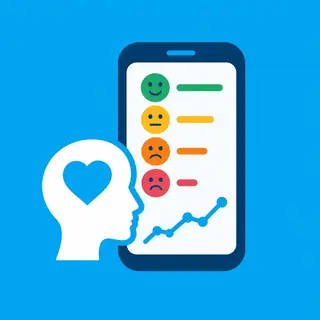
The heart of any guided CBT program is the interactive thought diary. This feature lets you log negative emotions in real-time, then breaks down the situation into activating event, belief, and consequence. The app then prompts you to generate alternative, balanced thoughts—a core CBT skill. Some apps use audio-coaching modules where a calming therapist voice walks you through progressive muscle relaxation, imagined exposure, or cognitive rehearsal. These are especially useful for people who find reading less engaging or have lower literacy levels. Expect to find daily ‘check-in’ prompts that ask about your mood, sleep, and energy levels, feeding into weekly summary graphs.
Beyond individual exercises, advanced apps offer social accountability features—such as moderated group forums or peer support circles—where you can share insights under supervision. However, privacy-conscious users may prefer apps without social components, so check your comfort level. Additionally, many guided programs now include wearable integration (e.g., Apple Watch, Fitbit) that tracks heart rate variability and suggests breathing exercises when stress spikes are detected. These integrations make CBT a proactive rather than reactive practice. If you value a multi-sensory experience, prioritize apps that offer high-production audio and video content, not just text bubbles.
Guided CBT apps are designed for short daily sessions—typically 5 to 15 minutes—to build a sustainable habit. Most programs are structured around 6–12 week modules, mirroring traditional CBT therapy durations. You’ll receive push notifications that nudge you to complete your “cognitive workout” for the day. The apps use behavioral reinforcement like streaks and achievements to keep you engaged, but it’s crucial not to feel guilt if you miss a day; perfection is counterproductive to mental health. Instead, focus on consistency—even 10 minutes every other day can significantly rewire unhelpful thinking patterns. Some apps offer “crisis modes” that skip ahead to breathing or grounding exercises if you’re in acute distress.
You’ll also be encouraged to set weekly behavioral goals, such as “call a friend” or “take a 15-minute walk,” which are classic CBT exposure tasks. The app will ask you to rate your confidence (0–100%) before and after completing these actions, teaching you that your predictions of catastrophe often don’t come true. This is called behavioral experimentation, and it’s a cornerstone of lasting change. To maximize benefits, pair your app usage with external support—for example, discussing your insights with a trusted friend or your therapist. In our guides, we outline expected time commitments you can realistically fit into a busy schedule.
Since CBT apps process highly sensitive mental health data, privacy policies must be scrutinized. Ensure the app uses end-to-end encryption and does not sell your data to third parties. Look for transparency about where data is stored (e.g., EU or US servers) and whether you can export and delete your information at any time. Some apps are completely offline, which is safer for privacy but limits cloud backup. Free tiers often include ads or data monetization—opt for paid versions or ad-free subscriptions for peace of mind. Expect to pay anywhere from $5 to $15 per month after a trial, with annual plans offering discounts. Premium features usually unlock unlimited sessions, detailed analytics, and human coaching support.
Beyond subscription costs, consider insurance or HSA/FSA compatibility—some apps qualify for reimbursement as mental health tools. Also, check if your employer, university, or health plan offers free access to certain programs. For example, many companies provide benefits like “Kaiser’s Digital Coaching” or partnerships with Apps like SilverCloud. While cost shouldn’t be the sole deciding factor, a high price tag doesn’t guarantee better outcomes. We recommend starting with free trials of three different apps to compare usability and engagement, then commit to one that feels like a natural fit for your daily routine and therapeutic needs.
For mild-to-moderate anxiety and depression, evidence shows they can be nearly as effective as in-person CBT, especially when used consistently. However, they lack the relational depth and adaptability of a live therapist. For severe or complex conditions, they should be used as a supplement, not a replacement, alongside professional care.
Most clinical trials show significant improvement after 4 to 8 weeks of regular use (about 20–30 minutes per week). Individual results vary based on engagement, baseline severity, and adherence. Some users notice subtle shifts in thought patterns within two weeks, while others need two to three months to feel substantial change.
Absolutely—many therapists recommend these apps as homework tools between sessions. You can share your app’s progress reports and thought diary logs with your therapist to enrich your sessions. Just ensure the app’s approach aligns with your therapist’s methods, and discuss any overlapping content to avoid confusion.
A mood tracker only logs how you feel over time, offering minimal intervention. A guided CBT program actively teaches skills—like cognitive restructuring, exposure, and behavioral activation—through structured lessons and interactive exercises. The latter changes your thinking patterns, not just monitors them.
Yes, apps like Woebot and MindShift offer free versions with solid CBT frameworks. However, free tiers may limit session lengths, advanced analytics, or human coaching. Many freemium models are clinically validated on their free content alone. Always read current reviews to ensure the free version still supports meaningful engagement.