How Long Does It Take? Duration of EvidenceBased Therapy for PTSD
✨ Discover the typical PTSD therapy duration timeline and what to expect from evidence-based treatments. Understand how long effective therapy may take,…
Read article

Discovering effective, compassionate care for post-traumatic stress disorder begins with understanding what truly works. 🌟 At Mind Care Guide, we highlight evidence-based treatments for PTSD that are rigorously researched and proven to help you reclaim your life. From Cognitive Behavioral Therapy (CBT) and Eye Movement Desensitization and Reprocessing (EMDR) to Prolonged Exposure (PE) and Cognitive Processing Therapy (CPT), these approaches target the root of trauma with measurable success. Our goal is to empower you with clear, trustworthy information so you can make informed choices about your mental health journey. Whether you’re seeking first-line therapies, understanding how medication complements psychotherapy, or exploring newer modalities like trauma-focused CBT and narrative exposure therapy, we break down complex science into actionable insights. No jargon, no guesswork—just practical guidance backed by clinical evidence. Start your path toward healing with tools that prioritize your safety, resilience, and long-term recovery. 🧠💪

✨ Discover the typical PTSD therapy duration timeline and what to expect from evidence-based treatments. Understand how long effective therapy may take,…
Read article
🌟 Discover the proven effectiveness of CPT treatment for PTSD, backed by extensive research. This evidence-based therapy offers hope and healing for…
Read article
🌟 Discover how CPT challenges unhelpful beliefs through Socratic questioning, empowering individuals to reframe negative thought patterns. This approach is a vital…
Read article
🌟 Discover how prolonged exposure therapy for PTSD can help you confront fears safely, gradually reducing trauma-related anxiety. This comprehensive guide provides…
Read article
🌟 Discover the latest evidencebased PTSD treatment research revealing innovative approaches that significantly improve recovery outcomes. This groundbreaking information offers hope and…
Read article
🌟 Discover how EMDR trauma healing therapy effectively processes painful memories, helping individuals overcome trauma and regain emotional stability. This powerful approach…
Read article
🌟 Discover how PTSD therapy rewires brain pathways, physically transforming neural circuits affected by trauma. This groundbreaking process highlights the brain’s remarkable…
Read article
🌟 Discover how trauma therapy helps process trauma by providing valuable insights into your reactions, empowering you to heal and regain control.…
Read article
🌟 Discover how bilateral stimulation underpins EMDR therapy for PTSD, revealing its powerful mechanism in reprocessing traumatic memories. This comprehensive guide explores…
Read article
🌟 Discover how trauma processing written exposure therapy offers a structured, effective path to healing from trauma. This approach empowers individuals to…
Read article
🌙 Discover effective PTSD nightmare relief techniques that can transform your sleep and restore peace of mind. Our comprehensive guide explores therapeutic…
Read article
🌟 Discover if you’re prepared for emotional healing with our EMDR therapy readiness assessment. This guide helps you evaluate your mental state…
Read articlePost-Traumatic Stress Disorder (PTSD) can feel overwhelming, but recovery is not only possible—it is highly achievable with the right, scientifically validated treatments. At Mind Care Guide, we focus on therapies that have been rigorously tested and proven to reduce symptoms like intrusive memories, hypervigilance, and emotional numbing. This subcategory explores the most effective, evidence-based approaches for PTSD, helping you or a loved one make informed choices about care. From trauma-focused psychotherapies to FDA-approved medications, we break down what works, how it works, and what to expect during the healing journey.
CPT is a 12-session, structured therapy that helps you identify and challenge unhelpful beliefs stemming from trauma—such as “I am to blame” or “The world is completely unsafe.” Through written accounts and cognitive restructuring, you learn to separate the trauma from your self-worth and current reality. Research consistently shows CPT significantly reduces PTSD severity and is effective across diverse populations, including veterans and survivors of assault.
During CPT, you’ll work collaboratively with a therapist to examine how trauma has shaped your thoughts about safety, trust, and control. The goal is not to forget the event but to integrate it into a balanced, factual narrative. Expect homework assignments that build skills in recognizing “stuck points” and generating alternative, more accurate interpretations. This therapy empowers long-term resilience, as the cognitive skills you develop remain useful for managing future stressors beyond PTSD.
PE relies on the principle of habituation: by gradually and systematically approaching trauma-related memories and situations you avoid, your fear response naturally decreases. Sessions include in-vivo exposure (real-world safe situations) and imaginal exposure (recounting the trauma in detail). Clinical trials show PE is one of the most robust treatments for PTSD, with many achieving clinically meaningful improvement in 8–15 sessions.
This approach may sound daunting, but a trained therapist guides you at a pace you control, ensuring you never feel overwhelmed. The process teaches your brain that memories and reminders are not dangerous in the present. Over time, you reclaim activities and places you once avoided, restoring a sense of freedom. PE is particularly effective for combat-related trauma and sexual assault, and its benefits often persist long after treatment ends, making it a cornerstone of trauma recovery.
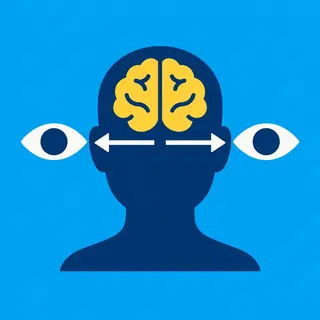
Eye Movement Desensitization and Reprocessing (EMDR) uses bilateral stimulation, such as guided eye movements, to help your brain process stuck trauma memories naturally. Rather than talking extensively about the event, you focus on it briefly while tracking the therapist’s finger, allowing the memory to lose its emotional charge. Major health organizations, including the WHO and APA, recognize EMDR as an effective, evidence-based treatment for PTSD.
EMDR follows an eight-phase protocol, starting with history-taking and preparation, then moving to processing and integration. Many clients report that disturbing images and body sensations become less vivid and distressing after just a few sessions. It is especially appealing for those who find traditional talk therapy re-traumatizing. EMDR can produce faster relief for some, though it requires a trained clinician to ensure safe, structured processing, and it is equally effective for single-incident traumas and complex PTSD.
While psychotherapy is the first-line treatment, certain medications can significantly complement it. The FDA has approved sertraline (Zoloft) and paroxetine (Paxil), both SSRIs, for PTSD, reducing symptoms like depression, anxiety, and intrusive thoughts. Additionally, prazosin is sometimes used off-label for trauma-related nightmares. Medications do not erase memories but lower the emotional intensity, making it easier to engage in therapy.
It is vital to work with a psychiatrist who specializes in trauma, as dosing and side effects require careful monitoring. Medication is not a cure but a powerful tool—many find that combining SSRIs with CPT or PE yields the best outcomes. For severe cases, emerging evidence supports the use of MDMA-assisted therapy (in clinical trials) for treatment-resistant PTSD, but this is not yet widely available. Always discuss risks and benefits to tailor a plan that fits your unique neurobiology and lifestyle.
Young people experience PTSD differently, often showing behavioral regressions or irritability rather than classic flashbacks. Trauma-Focused Cognitive Behavioral Therapy (TF-CBT) is an evidence-based, components-based treatment for ages 3–18, involving both child and caregiver. It includes psychoeducation, relaxation skills, affective modulation, and gradual exposure, culminating in a joint child-parent session to rebuild trust and communication.
TF-CBT is particularly effective after sexual abuse, witnessing violence, or disasters. Parents learn to become “co-therapists,” supporting their child’s coping at home. Research shows up to 80% of treated children no longer meet PTSD criteria post-treatment. Because it is structured, sessions are typically 12–16 weeks, and caregivers report reduced guilt and improved parenting efficacy. Early intervention with TF-CBT can prevent chronic PTSD and developmental disruptions, making it a public health priority.
Evidence-based PTSD therapies are increasingly available via telehealth and self-guided digital platforms. Studies show that internet-delivered CPT and PE have similar outcomes to in-person care, especially when supplemented with brief therapist check-ins. This democratizes access for rural communities, those with mobility issues, or individuals who prefer privacy. Programs like “PTSD Coach” offer symptom tracking and coping tools, while structured online clinics provide full protocols.
Hybrid models—mixing in-person and online sessions—offer flexibility without sacrificing therapeutic alliance. For many, the convenience increases engagement and reduces dropout rates. However, not all online programs are evidence-based; always verify that a platform cites randomized controlled trials. If you are technology-averse, a blended approach can gradually introduce you to digital tools. Ultimately, the best treatment is the one you can access consistently—and telehealth now removes that barrier for millions.
Most structured therapies like CPT, PE, or EMDR show measurable improvement within 8–12 sessions, though some notice relief earlier. Significant symptom reduction often occurs by session 10, with lasting gains continuing post-treatment. Medication may take 4–6 weeks to show effects. Consistency and homework completion are the strongest predictors of speed.
Yes, combining trauma-focused psychotherapy with SSRIs is common and often yields the best outcomes. Therapy addresses the cognitive and behavioral patterns, while medication reduces acute distress, making it easier to engage in exposure work. Always coordinate your therapist and psychiatrist to avoid contraindications and ensure integrated care.
EMDR is safe when delivered by a trained clinician who follows the standard protocol with modifications for complex PTSD. For individuals with significant dissociation, the therapist will first teach grounding techniques to ensure stability before processing. It is not recommended without proper preparation, so seek a certified EMDR practitioner experienced in complex cases.
Yes. Evidence-based therapies focus on current symptoms and beliefs, not perfect recall. In PE and CPT, you work with whatever memory fragments you have. EMDR also works with partial or emotional memories. The goal is to reduce distress associated with those fragments, not to reconstruct a full narrative.
Yes, numerous peer-reviewed trials confirm that internet-delivered CPT and PE are as effective as in-person, especially with therapist support via video. Online programs reduce access barriers and show comparable dropout and improvement rates. Always choose a platform backed by clinical research and licensed professionals.