
The Power of Positive SelfTalk: Helping Your Child Build Mental Fortitude

Welcome to Mind Care Guide, a safe space to explore the intricacies of mental well-being.
Are you wondering how to nurture your child's inner voice and build a foundation of resilience? We understand the challenges parents face. Dive into our article on The Power of Positive Selftalk: Helping Your Child Build Mental Fortitude and discover practical strategies to foster positive selftalk children mental health. Unlock the secrets to empowering your child with a confident and optimistic mindset. Let's embark on this journey together!
Cultivating Confidence: Fostering Positive Self-Talk in Children
- Introduction: Why Self-Talk Shapes a Child's World
- What is Positive Self-Talk and Why is it Important?
- Recognizing Negative Self-Talk Patterns
- Strategies to Encourage Positive Self-Talk
- Age-Appropriate Activities
- The Role of Parents and Caregivers
- Addressing Challenges
- Situation-Specific Examples
- Long-Term Impact
- Resources
- Conclusion: Empowering Children Through Positive Self-Talk
-
Frequently Asked Questions
- How can I introduce the concept of positive self-talk to my child?
- What are some examples of positive self-talk phrases I can teach my child?
- At what age should I start teaching my child about positive self-talk?
- How can I model positive self-talk for my child?
- What are some signs that my child might benefit from more focused support on positive self-talk?
- Final Reflection: Cultivating Inner Strength Through Positive Self-Talk
- Unleash Your Child's Inner Champion: Start Building Confidence Today!
Introduction: Why Self-Talk Shapes a Child's World
The Connection Between Self-Perception and Well-being
A child's internal dialogue, often referred to as self-talk, profoundly influences how they see themselves and interact with the world around them. This self-perception isn't just about vanity; it's a fundamental building block of their mental well-being. When a child believes they are capable, kind, or resilient, they are more likely to approach challenges with confidence and bounce back from setbacks.
Conversely, a negative self-perception can lead to anxiety, withdrawal, and a reluctance to try new things. Research consistently shows a strong correlation between a positive self-image and better mental health outcomes in children and adolescents. For example, studies indicate that children with higher self-esteem report lower levels of stress and depression.
This intricate connection means that fostering a healthy internal voice is a crucial aspect of supporting a child's overall development. It influences their academic performance – a child who believes they are 'bad at math' is less likely to engage or seek help – as well as their social relationships. A child who feels worthy and accepted is more likely to form positive peer connections.
Teaching positive selftalk children mental health strategies is therefore not just about boosting ego, but about equipping them with a foundational tool for navigating the complexities of life with greater emotional stability and psychological health. It's about helping them build a robust internal compass that guides them towards positive experiences and interpretations.
Understanding the Downsides of Negative Self-Beliefs
Negative self-talk can manifest as persistent self-criticism, feelings of inadequacy, or a fixed belief in one's limitations. These negative self-beliefs can have significant detrimental effects on a child's mental fortitude. A child who constantly thinks "I'm not smart enough" or "Nobody likes me" is likely to experience heightened anxiety in academic or social situations. This internal narrative can become a self-fulfilling prophecy, leading them to avoid challenges, give up easily, or misinterpret social cues through the lens of their own negative perceptions. The impact can extend to physical health too, with chronic stress linked to various physical ailments.
Furthermore, unchecked negative self-talk can contribute to more serious mental health issues later in life. Studies tracking children with negative self-beliefs have shown an increased risk of developing depression and anxiety disorders during adolescence and adulthood.
For instance, a longitudinal study might show that children who frequently used self-deprecating language at age 8 were significantly more likely to report symptoms of depression by age 15 compared to their peers. Addressing these negative patterns early by introducing positive selftalk children mental health techniques is vital for preventing these long-term consequences and helping children develop healthier coping mechanisms and a more optimistic outlook.
What is Positive Self-Talk and Why is it Important?
Defining Positive Self-Talk for Children: A Simple Guide
Positive self-talk for children is essentially their inner voice using encouraging, kind, and realistic words about themselves and their abilities. It's the opposite of being overly critical or pessimistic. Think of it as having a friendly, supportive coach living inside their head. This coach doesn't say things like "You're the best at everything," which isn't realistic, but rather phrases like "I can try my best," "It's okay to make mistakes," "I am brave," or "I am learning." It's about acknowledging their feelings and challenges while maintaining a belief in their capacity to cope, learn, and improve.
For a young child, this might be as simple as saying "I did it!" after completing a small task or "I can keep trying" when something is difficult. For an older child, it involves more nuanced internal dialogues like "That test was hard, but I studied, and I'll learn from the questions I missed" or "I felt nervous talking to new kids, but I took a deep breath and introduced myself."
Teaching positive selftalk children mental health involves helping them identify these helpful inner statements and consciously choose them over discouraging ones. It's a skill that needs to be taught and practiced, just like riding a bike or learning to read.
Benefits of Positive Self-Talk in Child Development: Research-Backed
The advantages of cultivating positive self-talk in children are numerous and well-supported by psychological research. One key benefit is improved emotional regulation. Children who practice positive self-talk are better equipped to manage difficult emotions like frustration, disappointment, and anxiety. Instead of being overwhelmed, they can use their internal voice to soothe themselves or reframe the situation, perhaps thinking, "I'm feeling angry, but I can take some deep breaths" or "This didn't work out, but I can try a different way." This internal coping mechanism builds emotional resilience.
Positive selftalk children mental health practices also significantly impact academic performance and problem-solving skills. When faced with a challenging math problem or a difficult reading passage, a child with positive self-talk is more likely to persevere. They replace thoughts like "I can't do this" with "Let's break it down" or "I'll ask for help if I get stuck." This mindset fosters persistence and a willingness to tackle challenges, leading to greater success. Studies have shown that students taught positive self-affirmations before tests report feeling less anxious and perform better than control groups, illustrating the tangible academic benefits.
Building Resilience and Self-Assurance Through Affirmations
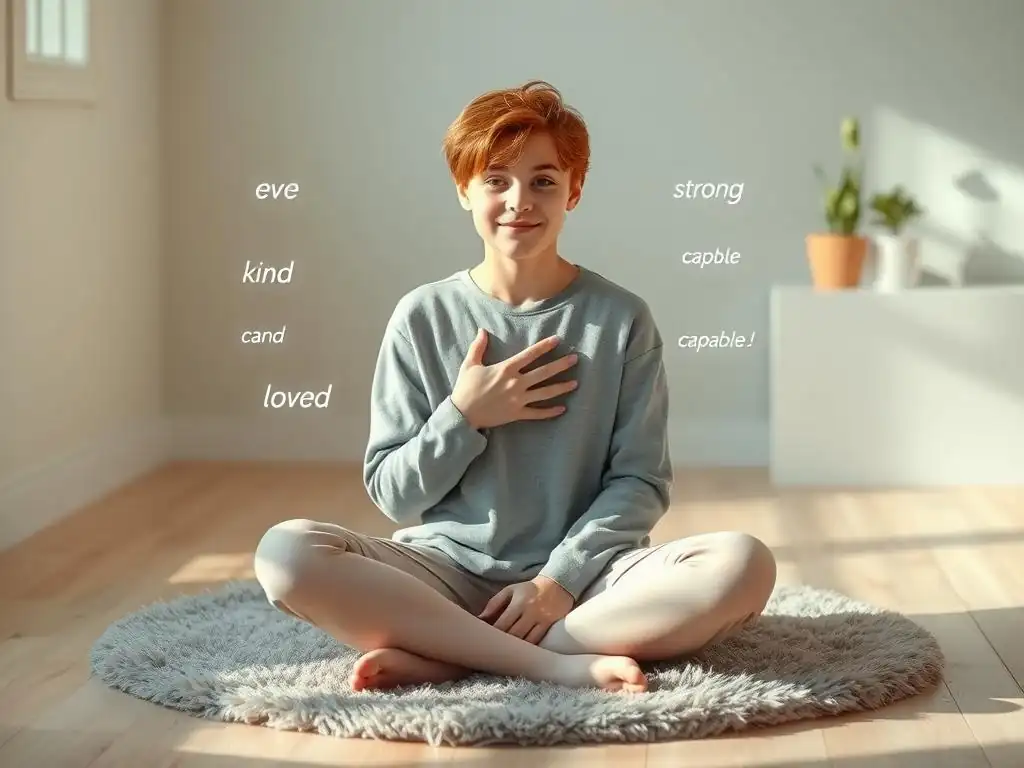
Affirmations are short, positive statements repeated regularly to reinforce positive beliefs about oneself. For children, affirmations serve as powerful tools for building resilience and self-assurance. Statements like "I am capable," "I am strong," "I am kind," or "I can handle challenges" help counteract negative internal messages and build a foundation of self-worth. When a child internalizes these positive statements, they develop a stronger belief in their ability to face adversity and recover from setbacks. This is the core of resilience – the capacity to bounce back.
Using affirmations as part of a positive selftalk children mental health strategy helps children develop a robust sense of self-assurance. It's not about denying difficulties, but about affirming their inner strength and worth despite challenges. For example, after failing at a task, instead of thinking "I'm a failure," a child who practices affirmations might think, "That didn't work, but I am learning and I won't give up. I am capable." This shift in perspective is critical for developing a healthy self-image and the confidence to keep trying, even after experiencing failure or disappointment.
Recognizing Negative Self-Talk Patterns
Identifying Common Phrases Reflecting Negative Self-Talk
Negative self-talk in children often manifests through specific phrases that reveal their inner critic at work. Parents and caregivers should listen for these verbal cues, which are often spoken aloud before becoming purely internal. Common phrases include absolute statements like "I always mess up," "I never get it right," or "I can't do this." Other indicators are global judgments like "I'm stupid," "I'm bad at everything," or "Nobody likes me." You might also hear catastrophic thinking, such as "If I don't get an A, my life is over," or comparisons like "She's so much better than me."
These phrases are red flags indicating that a child is struggling with negative self-perception. They often reflect underlying fears of failure, rejection, or inadequacy. Recognizing these patterns is the first step in helping a child shift towards more positive selftalk children mental health habits. It requires attentive listening and creating a safe space where a child feels comfortable expressing their thoughts and feelings, even the negative ones, without fear of judgment. Understanding what they are saying to themselves is crucial before you can help them change how they are speaking to themselves.
Exploring the Origins of Negative Self-Perception
Negative self-perception doesn't appear out of nowhere; it's often shaped by a variety of influences in a child's environment. Critical feedback, whether from parents, teachers, peers, or even siblings, can contribute significantly. A child who is repeatedly told they are "lazy" or "not good enough" may internalize these labels. Experiences of failure or rejection, especially if not processed constructively, can also lead to negative self-beliefs. For instance, consistently struggling in a particular subject or being excluded from a peer group can foster feelings of inadequacy.
Furthermore, children learn by observing and imitating the adults around them. If parents or caregivers frequently engage in negative self-talk ("I'm so clumsy," "I can never do anything right"), a child may adopt similar patterns. Media and societal pressures also play a role, presenting often unrealistic standards that children may feel they fall short of.
Understanding these origins is key to addressing the root causes of negative self-talk rather than just the symptoms. It helps parents approach the issue with empathy and tailor their support to the specific influences affecting their child's self-perception, reinforcing the importance of positive selftalk children mental health support from the entire environment.
Listening for and Identifying Self-Critical Language
Identifying self-critical language requires active and empathetic listening. It's not just about hearing what a child says, but how they say it and observing their behavior in response to challenges or setbacks. Pay attention to sighs of frustration followed by muttering, "I knew I couldn't do it."
Notice if they immediately default to blaming themselves excessively when something goes wrong, saying things like "It's all my fault, I'm so stupid." Be aware of non-verbal cues too, such as slumped shoulders, avoiding eye contact, or giving up quickly after a minor difficulty – these can be physical manifestations of negative internal dialogue.
Beyond direct negative statements, self-critical language can also be subtle. It might appear as hedging ("I'll try, but I'm probably going to fail"), or downplaying achievements ("It wasn't that good," even when it was). Creating opportunities for your child to talk about their day, their challenges, and their feelings is essential. During these conversations, listen specifically for how they describe their own actions, efforts, and outcomes. Identifying this self-critical language is the vital diagnostic step before you can effectively implement strategies for building positive selftalk children mental health habits and fostering a more constructive internal dialogue.
Strategies to Encourage Positive Self-Talk
Modeling Positive Self-Talk: Setting a Good Example
One of the most powerful ways to teach children positive self-talk is by demonstrating it yourself. Children are keen observers and will often mirror the behaviors and attitudes they see modeled by important adults in their lives. When you face a challenge, a mistake, or a disappointment, articulate your own positive self-talk process aloud. For example, if you spill something, instead of saying "I'm so clumsy!
", you could say, "Oops, mistakes happen! I'll grab a cloth and clean it up." If you're struggling with a task, you might say, "This is tricky, but I can figure it out if I take it step by step."
By verbalizing your own positive selftalk children mental health strategies, you provide a live demonstration of how to cope with difficulties constructively. Share your thought process: "I didn't get that promotion, and I feel disappointed, but I learned a lot from the process, and I'll keep working towards my goals." This shows your child that it's normal to experience negative emotions or setbacks, but that you can choose a positive and resilient internal response. Modeling vulnerability balanced with positive coping mechanisms is incredibly impactful for a child's own development of healthy self-talk patterns.
Reframing Negative Thoughts: Cognitive Restructuring Techniques
Reframing involves actively challenging negative thoughts and replacing them with more balanced and realistic ones. This is a core technique in cognitive behavioral therapy adapted for positive selftalk children mental health. When a child expresses a negative thought, like "I'm bad at drawing," help them reframe it. Instead of directly contradicting them (which can feel dismissive), ask questions: "What makes you say that?
What parts were difficult? What did you learn?" Then, offer alternative perspectives: "You might not be the best yet, but you are practicing and improving," or "Maybe that drawing wasn't your favorite, but look at how much detail you put into this part!"
Another reframing technique is to turn negative absolutes into more flexible statements. If a child says, "I always fail," help them remember a time they succeeded or point out instances where they didn't fail. "Remember when you built that amazing tower? That wasn't a failure! Sometimes things don't work out, but that doesn't mean you always fail." This process teaches children to identify their negative thoughts, question their validity, and consciously choose more helpful and accurate ways of thinking about themselves and their experiences. It's a skill that empowers them to take control of their internal narrative.
Using Affirmations and Visualization
Incorporating affirmations and visualization into a child's routine can significantly boost their positive self-talk. Affirmations, as discussed earlier, are simple positive statements like "I am brave," "I am kind," "I can learn anything." Encourage your child to choose a few affirmations that resonate with them and repeat them daily, perhaps in the morning or before a challenging situation. You can write them down together, turn them into songs, or even create visual reminders. The repetition helps these positive messages sink in and become part of their subconscious beliefs.
Visualization involves mentally picturing oneself succeeding or coping effectively with a situation. Before a test, a sports event, or a social gathering, encourage your child to close their eyes and imagine themselves doing well, feeling confident, and handling any challenges that arise. For example, before a soccer game, they might visualize themselves running confidently, passing the ball well, and having fun, even if they make a mistake. Combining positive selftalk children mental health affirmations with visualization helps children not only think positively but also feel more prepared and capable, reinforcing their inner strength and self-assurance.
Fostering a Growth Mindset: Embracing Challenges
A growth mindset, a concept popularized by Dr. Carol Dweck, is the belief that abilities and intelligence can be developed through dedication and hard work. This is fundamentally aligned with fostering positive self-talk children mental health. In contrast, a fixed mindset assumes abilities are innate and unchangeable. Children with a growth mindset see challenges as opportunities to learn and grow, rather than insurmountable obstacles that expose their limitations. They understand that effort, practice, and learning from mistakes are key to improvement.
To cultivate a growth mindset, praise effort and process rather than just outcomes or innate ability. Instead of saying "You're so smart! ", try "You worked really hard on that problem, and your effort paid off!" or "I love how you kept trying even when it was difficult; that's how you learn!"
Frame mistakes as learning opportunities: "Okay, that didn't work. What can we learn from this and try differently next time?" Encourage them to embrace challenges outside their comfort zone. By fostering a growth mindset, you naturally promote positive self-talk that focuses on effort, learning, and resilience, rather than fixed judgments about their abilities.
Age-Appropriate Activities
Activities for Early Childhood (Ages 3-5)
For preschoolers, positive selftalk children mental health activities should be simple, fun, and sensory-based. Mirror affirmations are excellent: Stand with your child in front of a mirror and say simple positive phrases together like "I am happy," "I am strong," "I am a good friend." Make silly faces and connect the words to actions. Use puppets or stuffed animals to act out scenarios where the puppet faces a small challenge (like building a block tower that falls) and uses positive phrases ("Oops! I can try again!") instead of negative ones.
Another activity involves drawing or creating a "Courage Crown" or "Happy Heart." Have them decorate it and talk about what makes them feel brave or happy. Whenever they feel scared or sad, they can touch their crown or heart and remember their positive feelings and strengths. Sing simple songs with positive messages about trying, being kind, and being unique. Keep it playful and integrate positive language into everyday interactions, praising effort and kindness frequently.
Activities for Elementary School (Ages 6-11)
Elementary school children can engage in more structured positive selftalk children mental health activities. Introduce the concept of an "Inner Coach" versus an "Inner Critic." Draw pictures of each and talk about what they might say. Help them identify when their Inner Critic is talking and brainstorm what their Inner Coach would say instead. For example, replace "I'm bad at spelling" (Inner Critic) with "Spelling is tricky, but I can sound out the words and ask for help" (Inner Coach).
Create an "Affirmation Jar" or "Strength Cards." Write positive affirmations or things they are good at on slips of paper. When they need a boost, they can pull one out. Encourage them to journal or draw about their feelings and challenges, and then write or draw a positive thought or solution related to it. Role-playing challenging situations (like dealing with a bully or not being picked for a team) and practicing positive self-talk responses can also be very effective at this age.
Activities for Adolescence (Ages 12-18)
For teenagers, positive selftalk children mental health work can be more reflective and cognitive. Introduce them to the concept of cognitive restructuring more formally – identifying negative automatic thoughts and challenging their validity. Encourage them to keep a thought journal, noting down negative thoughts, the situation, how it made them feel, and then writing a more balanced or positive reframe. Discuss the impact of social media and peer pressure on self-perception and how positive self-talk can be a defense mechanism.
Guided meditations or mindfulness exercises that incorporate positive affirmations can be helpful. Encourage them to set intentions for their day or week using positive statements. Discuss real-life examples, perhaps from biographies or current events, of how individuals overcame challenges using resilience and positive thinking. Empower them to choose their own affirmations that feel authentic and meaningful to them. For instance, a teen struggling with social anxiety might choose "I am worthy of connection" or "I can handle feeling nervous." The key is to make it relevant to their specific challenges and experiences.
The Role of Parents and Caregivers
Creating a Supportive Home Environment
A supportive home environment is the bedrock upon which positive selftalk children mental health flourishes. This means creating a space where a child feels safe to express their thoughts and feelings, both positive and negative, without fear of ridicule or punishment. Listen actively and empathetically when your child talks about their struggles or fears. Validate their emotions ("It sounds like you're really frustrated right now") before attempting to problem-solve or reframe.
Avoid overly critical language, sarcasm, or comparisons to siblings or peers. Instead, focus on constructive feedback that targets behavior, not character ("Hitting is not okay because it hurts others" vs. "You are a bad kid"). Ensure your home is a place where effort is praised, mistakes are seen as learning opportunities, and unconditional love is clearly communicated. A child who feels accepted and loved for who they are is much more likely to develop a positive internal voice.
Encouragement and Building Self-Worth
Consistent, genuine encouragement is vital for building a child's self-worth and fostering positive self-talk. Focus on praising their effort, persistence, courage, and kindness, not just their achievements or talents. Phrases like "I'm so proud of how hard you worked on that," "You were so brave to try something new," or "That was a really kind thing you did" are much more impactful than generic praise like "You're the best." This type of encouragement reinforces the behaviors and qualities that contribute to resilience and positive self-image.
Help your child identify their strengths and unique qualities. Regularly point out what you admire about them, not just in terms of skills, but character traits. "I love your sense of humor," "You are a very thoughtful person," or "You have a great imagination." Building self-worth is about helping a child see their inherent value, independent of their performance or external validation. This internal knowing is a powerful antidote to negative self-talk and a key component of positive selftalk children mental health.
Celebrating Effort and Progress
Shifting the focus from solely celebrating outcomes to celebrating effort and progress is crucial for cultivating a growth mindset and positive self-talk. When a child tries hard at something, even if they don't succeed, acknowledge and praise the effort. "You stuck with that for a long time, even when it was difficult. That shows real determination!" This teaches them that the process of trying and learning is valuable, regardless of the result.
Celebrate small steps and improvements along the way. If a child is learning a new skill, point out specific areas where they have improved, even if they haven't mastered it yet. "Last week, you couldn't balance on one foot for long, and now you can do it for five seconds!
That's great progress!" This focus on improvement reinforces the idea that abilities are developed through practice and perseverance, directly counteracting negative self-talk that might say "I'm not good at this." Celebrating effort and progress instills a belief in their capacity to learn and grow, which is fundamental to positive selftalk children mental health.
Addressing Challenges
Overcoming Resistance
Sometimes, children, especially older ones or those deeply entrenched in negative patterns, may resist efforts to introduce positive self-talk. They might feel it's silly, unnatural, or even dishonest if they don't genuinely feel positive. Approach this resistance with patience and empathy. Acknowledge their feelings ("I know it can feel weird to say nice things about yourself") and explain why you think it's important – not to pretend everything is perfect, but to help their brain think in more helpful ways.
Start small and make it feel less forced. Instead of demanding they repeat affirmations, try incorporating positive language into casual conversations. Share your own struggles and how you use positive self-talk. Frame it as building a skill, like strengthening a muscle. For teens, connect it to their goals – how could more positive thinking help them perform better in sports, school, or social situations? Don't push too hard; gentle encouragement and consistent modeling are often more effective than confrontation when fostering positive selftalk children mental health.
Building Resilience After Negative Experiences
Negative experiences are inevitable, but they don't have to define a child. Helping them build resilience after setbacks is a critical part of positive selftalk children mental health development. After a disappointment, failure, or difficult event, allow them space to feel their emotions. Validate their sadness, anger, or frustration. Once they've processed their feelings, help them reflect on the experience constructively.
Ask questions like: "What did you learn from this? ", "What did you handle well? ", "What could you try differently next time? ", or "What strengths did you use?" Help them identify what was within their control and what wasn't. Encourage them to see the experience as a single event, not a reflection of their entire worth. Frame it as a chapter in their story, not the whole book. This process teaches them to use positive self-talk to analyze challenges, learn from them, and maintain belief in their ability to cope and move forward.
When to Seek Professional Support
While fostering positive self-talk is a powerful tool for mental well-being, it's important to recognize when a child's negative self-talk or related issues are severe enough to warrant professional help. If a child's negative self-beliefs are persistent, significantly impacting their daily functioning (school, social life, sleep, appetite), or accompanied by symptoms of anxiety, depression, extreme withdrawal, or hopelessness, it's time to consult a mental health professional.
A therapist or counselor specializing in child psychology can assess the underlying issues, which might include anxiety disorders, depression, trauma, learning disabilities, or other challenges contributing to the negative self-perception. They can provide targeted therapies, such as Cognitive Behavioral Therapy (CBT), which is highly effective in helping children identify and change negative thought patterns. Seeking professional support is a sign of strength, not failure, and can provide children and families with the specific tools and interventions needed to address more complex positive selftalk children mental health challenges.
Situation-Specific Examples

Academic Settings
In an academic setting, a child struggling with a difficult assignment might think, "This is too hard, I'm stupid, I'll never finish." Positive self-talk would involve reframing this: "This is challenging, but I can ask for help," or "I'll break it down into smaller steps," or "I can try my best."
For example, a 10-year-old tackling a complex math problem might say internally, "Okay, I don't get this right away, but I can look at the example again," or "I'll try the first step and see what happens." This shifts the focus from fixed ability to process and effort, crucial for positive selftalk children mental health in learning.
After receiving a lower-than-expected grade on a test, a child might think, "I'm a failure, I'm bad at this subject." Positive self-talk reframes this experience: "I didn't do as well as I hoped, but I learned from this test," or "I'll study differently next time," or "One grade doesn't define me."
A specific example might be a high schooler who failed a pop quiz thinking, "That quiz was rough, but I know the material better now than I did before, and I'll be more prepared for the main test." This response focuses on learning and future action rather than self-condemnation.
Navigating social situations can be challenging, and negative self-talk often surfaces here. A child approaching a group of peers might think, "They won't like me, I'll just stand here." Positive self-talk encourages action: "I can go say hi," or "I'll ask if I can play," or "It's okay if they're busy, I can find someone else." For example, a shy 7-year-old at the playground might internally say, "I'm feeling a little scared, but I'm brave, I can ask that girl her name." This inner encouragement helps them overcome social anxiety.
After a disagreement or rejection from a friend, a child might think, "It's my fault, I'm unlikable." Positive self-talk helps them process the situation more healthily: "We had a disagreement, but that doesn't mean I'm a bad friend," or "Sometimes friends argue, we can work it out," or "It's okay if not everyone wants to play, I have other friends." A teenager who wasn't invited to a party might use positive self-talk like, "That stings, but my worth isn't based on party invitations.
I'll make other plans and have fun." This resilience is key to positive selftalk children mental health in social contexts.
Extracurricular Activities
In sports, arts, or other activities, challenges and comparisons are common. After making a mistake in a game, a child might think, "I messed up, I'm terrible at this." Positive self-talk focuses on the learning and effort: "Mistakes happen, I'll learn from that," or "I'll try harder next time," or "I still contributed to the team." A young soccer player who missed a goal might say to themselves, "Okay, I missed, but I ran fast and I was in the right position. Next time I'll aim lower."
If a child doesn't get the lead role in a play or doesn't win a competition, negative self-talk might be "I'm not talented enough, I should quit." Positive self-talk encourages perseverance and appreciation for the experience: "I didn't get the lead, but I'm still part of the show, and I'm learning so much," or "I didn't win, but I improved since last time," or "I tried my best, and that's what matters." A teen musician who didn't make the advanced ensemble might think, "I'm disappointed, but I'll keep practicing and try again next year.
My passion for music is what's important." This perspective supports positive selftalk children mental health resilience in competitive environments.
Handling Mistakes
Mistakes are an integral part of learning, but negative self-talk can turn them into sources of shame and self-doubt. A child who spills milk might think, "I'm so clumsy, I always do this." Positive self-talk reframes the mistake as an isolated event or a learning opportunity: "Oops! That was an accident. I can help clean it up," or "Everyone makes mistakes sometimes."
When a child breaks something accidentally, instead of thinking "I'm destructive," positive self-talk would be "It was an accident, I didn't mean to," followed by taking responsibility: "How can I help fix this or make it right?" This separates the action from their identity. Teaching children that mistakes are moments for learning ("What can I do differently next time to avoid this?") rather than evidence of their inadequacy is fundamental to building positive selftalk children mental health and a healthy relationship with failure.
Long-Term Impact
Improved Self-Esteem
Consistently practicing positive self-talk significantly contributes to a child's long-term self-esteem. As children internalize positive messages about their worth, capabilities, and resilience, they develop a stronger and more stable sense of self. They learn to value themselves based on their inherent qualities and efforts, rather than solely on external validation or outcomes. This robust self-esteem acts as a protective factor against negative influences and challenges throughout life.
Children with higher self-esteem, nurtured by positive selftalk children mental health practices, are more likely to feel confident in their abilities, take healthy risks, and believe in their capacity to achieve their goals. They are less susceptible to peer pressure and are more likely to form healthy relationships built on mutual respect. This improved self-esteem is not about arrogance, but a quiet confidence that allows them to navigate the world with greater security and well-acceptance.
Enhanced Emotional Regulation
Positive self-talk equips children with powerful tools for managing their emotions effectively. When they encounter frustrating, scary, or sad situations, their positive internal dialogue helps them process these feelings constructively. Instead of being overwhelmed by anger or anxiety, they can use phrases like "I can handle this," "It's okay to feel sad," or "This feeling will pass." This internal coaching helps them calm down, think more clearly, and choose appropriate responses rather than reacting impulsively.
This enhanced emotional regulation, supported by positive selftalk children mental health strategies, is a critical life skill. It allows children to navigate conflicts peacefully, cope with stress more effectively, and maintain emotional balance even in challenging circumstances. As they grow, this ability contributes to better relationships, improved decision-making, and a greater sense of control over their emotional lives.
Increased Resilience
Ultimately, the long-term impact of fostering positive self-talk in children is the cultivation of increased resilience. Resilience is the ability to bounce back from adversity, and positive self-talk is a core component of this capacity. By internalizing messages of strength, capability, and perseverance, children develop the inner fortitude needed to face setbacks, failures, and difficult life events without being permanently derailed.
When faced with a challenge, a resilient child using positive selftalk children mental health techniques doesn't dwell on the difficulty or blame themselves excessively. Instead, they access their inner coach, reminding themselves of past successes, their ability to learn, and their inherent strength. This allows them to view challenges as temporary obstacles rather than insurmountable barriers, empowering them to persevere, adapt, and grow stronger through difficult experiences.
Resources
Books and Websites
There are many excellent resources available to help parents and children learn about positive self-talk. For younger children, picture books like "Your Fantastic Elastic Brain" by JoAnn Deak or "Beautiful Oops!" by Barney Saltzberg can introduce concepts of growth mindset and learning from mistakes in a fun way. Books specifically on affirmations, such as "I Am Enough" by Grace Byers, offer simple, powerful statements.
For parents and older children, websites from reputable mental health organizations often provide guides and activities. Organizations like the National Alliance on Mental Illness (NAMI) or the Child Mind Institute offer articles and resources on building resilience and healthy coping skills in children, frequently touching upon the importance of positive selftalk children mental health. Searching these sites for keywords like "self-esteem," "resilience," and "positive thinking for kids" can yield valuable information and practical tips.
Apps and Tools
Several mobile apps and tools can support the practice of positive self-talk and mindfulness in children and teens. Apps designed for mindfulness and meditation, such as Headspace for Kids or Calm, often include sessions focused on self-compassion and positive thinking. Some apps are specifically designed around affirmations, allowing users to choose or create their own positive statements and set reminders to repeat them.
Other tools might include printable worksheets for identifying negative thoughts and reframing them, or journals designed to encourage gratitude and positive reflection. While specific app recommendations can vary, searching app stores for "kids mindfulness," "affirmations for teens," or "anxiety tools for kids" can reveal options. It's advisable for parents to review these tools first to ensure they are age-appropriate and align with their goals for fostering positive selftalk children mental health.
Mental Health Organizations
Numerous mental health organizations provide invaluable support, information, and resources regarding children's mental well-being, including guidance on fostering positive self-talk. Organizations such as the American Academy of Pediatrics (AAP) and the American Psychological Association (APA) offer parenting guides and articles on child development, emotional health, and building resilience.
Local mental health services or children's hospitals often have websites with resources for families and information about workshops or programs focused on building coping skills. These organizations can also be the first point of contact if you are concerned about your child's negative self-talk patterns or believe professional support might be needed. They can offer referrals to therapists or counselors specializing in positive selftalk children mental health and related issues.
Conclusion: Empowering Children Through Positive Self-Talk
Cultivating positive self-talk in children is one of the most powerful gifts parents and caregivers can bestow. It's not about creating unrealistic optimism, but about equipping children with a realistic, kind, and resilient internal voice that can guide them through life's inevitable challenges. By understanding what positive self-talk is, recognizing negative patterns, and implementing age-appropriate strategies, we help children build the mental fortitude they need to thrive.
From modeling positive responses to setbacks to actively teaching reframing techniques and celebrating effort, every interaction is an opportunity to reinforce healthy self-perception. The long-term benefits – improved self-esteem, enhanced emotional regulation, and increased resilience – are profound, shaping children into confident, capable, and well-adjusted individuals. Investing time and effort in fostering positive selftalk children mental health is an investment in their lifelong well-being and their ability to face the future with strength and optimism.
Frequently Asked Questions
How can I introduce the concept of positive self-talk to my child?
Start with simple explanations and examples. Encourage your child to replace negative thoughts with positive affirmations. Make it a fun and engaging activity.
What are some examples of positive self-talk phrases I can teach my child?
Examples include "I can do this!", "I am strong!", and "I am learning and growing!" These positive phrases help build self-esteem and confidence.
At what age should I start teaching my child about positive self-talk?
You can start introducing simple concepts at a young age, even as early as preschool. Focus on age-appropriate language and simple affirmations tailored to their understanding.
How can I model positive self-talk for my child?
Children learn by observing. Use positive self-talk yourself, especially when facing challenges. This reinforces the importance of self-compassion and resilience.
What are some signs that my child might benefit from more focused support on positive self-talk?
If your child frequently expresses negative thoughts about themselves, struggles with low self-esteem, or lacks confidence, it might be time to focus more intentionally on building positive self-talk skills.
Final Reflection: Cultivating Inner Strength Through Positive Self-Talk
The ability to harness positive self-talk is not merely a beneficial skill; it's a foundational element of mental well-being, especially crucial for children navigating the complexities of growth and development. In a world increasingly demanding resilience and emotional intelligence, equipping our children with the tools to cultivate positive inner dialogue is more vital than ever. This empowers them to face challenges with confidence and build a strong sense of self.
The impact of positive self-talk extends far beyond childhood, shaping an individual's self-esteem, resilience, and overall mental health trajectory. It influences how they approach academic pressures, social interactions, and future obstacles. As the saying goes, Believe you can and you're halfway there.
This simple yet profound statement encapsulates the power of positive self-belief, a belief nurtured and strengthened through consistent positive self-talk. Witnessing the positive transformation in a child's confidence and ability to cope with adversity is deeply rewarding, a testament to the profound influence of this simple yet powerful technique.
Now, consider your own relationship with self-talk. Are you modeling positive self-affirmations for your children? Take a moment to reflect on your inner dialogue and how it might be impacting your child. Make a conscious effort to practice positive self-talk yourself, demonstrating its power through your own actions. By fostering a supportive and encouraging environment, filled with positive affirmations and constructive feedback, you can help your child build a strong foundation for a lifetime of mental well-being and success. Let's empower the next generation with the gift of positive self-talk.
Unleash Your Child's Inner Champion: Start Building Confidence Today!
Thanks for taking the time to explore the power of positive self-talk with us! We hope you now have a clearer understanding of how to help your child cultivate mental strength and resilience. Ready to put this knowledge into action?
- Prioritize positive affirmations: Start incorporating at least three positive affirmations into your child's daily routine. Even small changes can make a big difference!
- Create a 'Positive Moments' jar: Encourage your child to write down or draw their daily successes, no matter how small. This helps them actively focus on their achievements.
- Share this article: Spread the word and empower other parents to build their children’s confidence. Let's build a community of supportive parents!
So, what positive affirmation will you and your child start with today? Let's hear it in the comments below!