
30Second Mindfulness Breaks to Stop Anxiety Spirals


Welcome to Mind Care Guide, a safe space for nurturing your mental well-being.
Feeling overwhelmed? You're not alone. We understand how quickly anxiety can spiral out of control, leaving you feeling lost and helpless. But what if relief was just 30 seconds away? In this article, we'll explore how quick anxiety spiral relief can be achieved through simple, yet powerful, mindfulness breaks. Ready to reclaim your peace of mind? Let's dive in.
30-Second Mindfulness Breaks to Stop Anxiety Spirals: A Mind Care Guide
- Understanding Anxiety Spirals and the Need for Quick Relief
-
30-Second Mindfulness Techniques for Immediate Anxiety Relief
- Technique 1: Focused Breathing for Anxiety - A 30-Second Reset
- Technique 2: Body Scan Meditation - Grounding Yourself in 30 Seconds
- Technique 3: Mindful Observation - Detaching from Anxious Thoughts in 30 Seconds
- Technique 4: Sensory Awareness - Engaging Your Senses to Stop Anxiety
- Technique 5: Positive Affirmations - Shifting Your Mindset in 30 Seconds
- Integrating 30-Second Mindfulness into Your Daily Routine for Anxiety Prevention
- Troubleshooting Common Challenges with Quick Mindfulness Breaks for Anxiety
- Beyond 30 Seconds: Expanding Your Mindfulness Practice for Long-Term Anxiety Management
- Conclusion: Empowering Yourself with Quick Anxiety Spiral Relief Through Mindfulness
- Frequently Asked Questions
- Final Reflection: Finding Stillness in the Storm
- Unlock Your Inner Calm: Start Practicing Mindfulness Today!
Understanding Anxiety Spirals and the Need for Quick Relief
Anxiety spirals can feel overwhelming, like being caught in a powerful undertow of worry and fear. These moments, characterized by escalating anxious thoughts and physical sensations, can strike without warning, making the need for quick anxiety spiral relief incredibly pressing. Learning to interrupt these cycles is a vital skill for managing everyday stress and preventing anxiety from taking over. Short, accessible techniques can make a significant difference when you feel that familiar wave of unease beginning to build.
The urgency for effective, on-the-spot strategies stems from the nature of anxiety itself. When an anxious thought takes root, it can quickly multiply, feeding on itself and amplifying the emotional and physical response. Finding methods for quick anxiety relief that can be deployed discreetly and efficiently allows individuals to regain control before the spiral becomes too intense to manage. This is where the power of brief mindfulness interventions truly shines, offering a lifeline in moments of acute distress.
What is an Anxiety Spiral? Recognizing the Signs
An anxiety spiral is a rapid escalation of anxious thoughts and feelings, often triggered by a relatively minor worry or event. It's a self-reinforcing cycle where negative thoughts lead to increased physical symptoms (like a racing heart or shallow breathing), which in turn fuel more anxious thoughts, creating a downward trajectory. Recognizing the early signs is crucial for implementing quick anxiety spiral relief strategies effectively. These signs can be subtle at first but tend to intensify rapidly.
Common signs of an impending or active anxiety spiral include a sudden onset of rapid, intrusive negative thoughts about worst-case scenarios, often feeling disproportionate to the situation. Physically, you might notice your heart rate quickening, breathing becoming shallow, muscles tensing, or a knot forming in your stomach. Emotionally, there's a growing sense of dread, panic, or feeling overwhelmed. Identifying these signals – perhaps recognizing the specific thought patterns or physical cues unique to your anxiety – allows you to intervene early and deploy a quick anxiety relief technique before the spiral gains full momentum.
Why 30-Second Mindfulness Breaks Offer Effective Anxiety Relief
Thirty-second mindfulness breaks are potent tools for quick anxiety spiral relief because they disrupt the automatic negative thought patterns and physiological responses characteristic of anxiety. In just half a minute, these techniques can shift your focus away from the internal narrative of worry and ground you in the present moment. This brief pause creates space between you and your anxious thoughts, reducing their power and preventing them from escalating uncontrollably.
The effectiveness lies in their simplicity and brevity. Unlike longer meditation sessions that require dedicated time and space, 30-second breaks can be performed almost anywhere – at your desk, in a crowded train, or before a challenging meeting. This accessibility makes them practical for real-life situations where quick anxiety relief is needed most. By consistently practicing these short interventions, you train your brain to interrupt the anxiety cycle, building resilience and fostering a greater sense of calm over time.
The Science Behind Mindfulness for Anxiety Reduction
Research has increasingly validated the efficacy of mindfulness practices, even brief ones, in reducing anxiety. Studies utilizing fMRI scans have shown that regular mindfulness practice can lead to changes in brain regions associated with anxiety and stress regulation, such as the amygdala (the brain's fear center) and the prefrontal cortex (involved in executive functions and emotional regulation). While comprehensive studies on specifically 30-second interventions are ongoing, the underlying principles align with established findings on longer mindfulness practices.
Mindfulness works by cultivating present-moment awareness without judgment. This process helps individuals observe their thoughts and feelings as transient events rather than absolute truths, thus reducing reactivity. By focusing attention on sensory input or the breath for even a short period, you interrupt the rumination cycle that feeds anxiety. This shift in attention helps to downregulate the body's stress response, reducing physical symptoms like elevated heart rate and cortisol levels. Even a brief 30-second anchor to the present can begin to break the cycle of escalating worry, offering effective quick anxiety relief.
30-Second Mindfulness Techniques for Immediate Anxiety Relief
When anxiety starts to build, having a repertoire of fast-acting techniques is invaluable. These 30-second mindfulness breaks are designed to be simple, discreet, and effective at providing quick anxiety spiral relief by bringing you back into the present moment. Choose the one that resonates most with you or rotate through them depending on the situation. The key is to practice them before the anxiety becomes overwhelming.
Here are five techniques you can deploy in half a minute to help calm your mind and body:
- Focused Breathing
- Body Scan
- Mindful Observation
- Sensory Awareness
- Positive Affirmations
Technique 1: Focused Breathing for Anxiety - A 30-Second Reset
Focused breathing is arguably the most accessible and powerful tool for quick anxiety relief. It redirects your attention from anxious thoughts to the physical sensation of breath, immediately grounding you. In just 30 seconds, you can significantly impact your nervous system's response to stress. This technique requires no special equipment or location; your breath is always with you.
By consciously slowing and deepening your breath, even for a short duration, you activate the parasympathetic nervous system, which is responsible for the body's 'rest and digest' state. This counteracts the 'fight or flight' response triggered by anxiety. Practicing focused breathing for quick anxiety spiral relief helps lower heart rate, relax muscles, and clear mental fog, creating a brief but crucial window of calm.
How to Practice Focused Breathing for Quick Anxiety Spiral Relief
Find a comfortable position, either sitting or standing. Close your eyes gently if possible, or soften your gaze. For 30 seconds, bring your full attention to your breath.
- Notice the sensation of the air entering and leaving your nostrils or mouth.
- Feel your chest or abdomen rise and fall.
- Don't try to change your breath initially, just observe it.
- If your mind wanders to anxious thoughts (which it likely will), gently guide your attention back to the breath without judgment.
- Try counting your breaths if it helps you focus – perhaps counting "in" on the inhale and "out" on the exhale for 30 seconds.
Benefits of Diaphragmatic Breathing for Calming Anxiety
Diaphragmatic or "belly" breathing, where the abdomen expands on the inhale, is particularly effective for calming the nervous system. Unlike shallow chest breathing, which is common during anxiety, diaphragmatic breathing promotes deeper, more efficient oxygen exchange and signals to the brain that the body is safe and relaxed. Even a few conscious diaphragmatic breaths within a 30-second window can initiate a calming response.
Regular practice of deep, controlled breathing, even in short bursts for quick anxiety relief, can lower overall stress levels and improve your body's ability to manage stress responses over time. It provides a reliable anchor point when your mind feels chaotic, offering immediate physiological and psychological benefits that disrupt the anxiety spiral before it takes hold.
Technique 2: Body Scan Meditation - Grounding Yourself in 30 Seconds
A mini body scan is an excellent way to ground yourself in physical reality and detach from intrusive anxious thoughts. Instead of getting lost in worries about the future or regrets about the past, this technique brings your awareness to the tangible sensations in your body in the present moment. While full body scans can take 20 minutes or more, a 30-second version is highly effective for quick anxiety spiral relief.
The principle is simple: rapidly move your attention through different parts of your body, noticing any sensations present without trying to change them. This practice interrupts the mental loop of anxiety by engaging a different part of your brain and shifting focus from abstract worry to concrete physical experience. It's a rapid way to anchor yourself when you feel adrift in anxiety.
Performing a Mini Body Scan for Anxiety Management
Take a moment to pause. If possible, sit or stand comfortably. Close your eyes or lower your gaze. For 30 seconds, quickly bring your awareness to different areas of your body.
- Start with your feet: What sensations do you notice? Pressure, warmth, coolness?
- Move up to your legs: Any tension? Tingling?
- Scan your torso: Notice your abdomen, chest, shoulders. Are they tight?
- Bring awareness to your arms and hands: What do you feel there?
- Finally, notice your neck, head, and face: Any clenching in your jaw or furrowing in your brow?
- Spend just a few seconds on each area, simply noticing. Don't judge or try to fix anything. Just be aware of the physical sensations.
Connecting with Your Physical Sensations to Reduce Anxiety
Anxiety often manifests strongly in the body (e.g., tight chest, churning stomach). By consciously directing your attention to these physical sensations through a body scan, you can sometimes diffuse their intensity. More importantly, you create a disconnect between the sensation and the interpretation driven by anxiety. Instead of thinking, "My heart is racing, I must be having a panic attack," you simply notice, "My heart is beating quickly."
This shift in perspective, even brief, is a powerful form of quick anxiety relief. It pulls you out of the narrative and into direct experience. Regularly practicing these short body scans helps you become more attuned to your body's signals, allowing you to recognize the early physical signs of an anxiety spiral and intervene sooner.
Technique 3: Mindful Observation - Detaching from Anxious Thoughts in 30 Seconds
Anxiety spirals thrive on getting caught up in the content of your thoughts. Mindful observation teaches you to notice your thoughts without getting entangled in them. In 30 seconds, you can practice observing the stream of your consciousness as if watching clouds drift across the sky – they are there, but you don't have to ride on them. This technique is particularly useful when your anxiety is heavily driven by rumination.
This detachment provides quick anxiety relief by reducing the emotional charge attached to anxious thoughts. When you simply observe a thought ("There's the thought that I'm going to fail"), rather than engaging with it ("Oh no, I am going to fail, and then X, Y, and Z will happen! "), its power diminishes. It's about shifting from being your thoughts to having your thoughts.
Observing Thoughts Without Judgment for Anxiety Relief
Set a timer for 30 seconds. Find a comfortable position. Close your eyes or soften your gaze. Bring your awareness to your thoughts.
- Notice the thoughts as they arise. Don't try to stop them or change them.
- See them as mental events, like words on a screen or images passing by.
- Avoid labeling them as "good" or "bad."
- Simply observe their presence.
- If you find yourself getting caught up in a thought, gently acknowledge it ("Ah, getting hooked there") and bring your awareness back to simply observing the next thought that arises.
Identifying and Labeling Anxious Thoughts for Quick Relief
Within that 30-second observation period, you might notice specific anxious thoughts recurring. A helpful variation is to briefly label the type of thought without getting into its content. For instance, you might internally note: "Worry thought," "Judgment thought," "Planning thought," or specifically, "Anxiety thought."
This act of labeling creates a cognitive distance. It puts the thought into a category rather than engaging with its message. For quick anxiety spiral relief, this simple act of classification can be surprisingly effective at disrupting the spiral. It acknowledges the thought's presence without giving it the power to pull you down. For example, noticing "Oh, there's a catastrophic thinking thought" allows you to see it for what it is – a thought pattern – rather than an impending reality.
Technique 4: Sensory Awareness - Engaging Your Senses to Stop Anxiety

Anxiety often pulls us out of the present moment, either into worries about the future or regrets about the past. Engaging your senses is a powerful and immediate way to anchor yourself firmly in the "here and now." In 30 seconds, you can rapidly tune into what your senses are perceiving, providing quick anxiety relief by diverting attention from internal distress to external reality.
This technique works because sensory input is inherently present-moment information. Focusing on what you see, hear, feel, smell, or taste requires your attention to be grounded. It disrupts the abstract nature of anxious rumination and brings you back to the concrete, tangible world around you, effectively pressing a pause button on the anxiety spiral.
Using Sensory Awareness to Interrupt Anxiety Spirals
For 30 seconds, consciously engage one or more of your senses. Choose whichever is most accessible or appealing in the moment.
- Sight: Look around and notice 3-5 things you haven't noticed before. Pay attention to colors, shapes, textures, light.
- Sound: Tune into the sounds around you. Listen for the furthest sound, the closest sound, or different layers of sound.
- Touch: Notice the feeling of your feet on the ground, the texture of your clothes, the temperature of the air on your skin, or the object you are holding.
- Smell: Take a conscious sniff. What do you smell? Even subtle scents can be grounding.
- Taste: If you have something to eat or drink, notice its taste. If not, notice the taste or sensation inside your mouth.
Activating Your Senses for a Moment of Calm
The goal is not to analyze the sensory input, but simply to notice it. This brief period of focused sensory perception provides immediate quick anxiety relief by pulling your attention away from the internal world of anxious thoughts and centering it in the external, present reality. It's a mini-vacation from your worries, lasting just long enough to interrupt the spiraling process. You might find one sense is more effective for you than others; experiment to find your go-to sensory anchor.
For example, if you're in a stressful meeting, you might subtly focus on the feeling of the chair beneath you or the texture of the table. If you're walking, notice the sensation of your feet hitting the pavement or the feeling of the breeze. These simple acts of noticing can be incredibly powerful for grounding yourself in the moment and providing rapid relief from escalating anxiety.
Technique 5: Positive Affirmations - Shifting Your Mindset in 30 Seconds
While mindfulness often focuses on non-judgmental observation, sometimes a direct, positive intervention can be helpful for quick anxiety relief. Positive affirmations are short, positive statements that you repeat to yourself to counter negative self-talk and reframe your perspective. In 30 seconds, you can repeat a chosen affirmation several times, planting a seed of calm and confidence.
Anxiety often comes with a soundtrack of negative self-talk ("I can't handle this," "Something bad is going to happen"). Affirmations offer a counter-message, a deliberate choice to focus on resilience, capability, or safety. While they don't make the anxiety disappear instantly, they can shift your mental state enough to disrupt the spiral and introduce a sense of hope or strength.
Using Affirmations for Immediate Anxiety Relief
Choose one or two positive affirmations that resonate with you when you're feeling anxious. For 30 seconds, repeat these affirmations silently or softly to yourself.
- Examples: "I am safe," "This feeling will pass," "I can handle this moment," "I am breathing deeply," "I am calm."
- Repeat the affirmation slowly and deliberately.
- Try to connect with the feeling behind the words, even if it feels difficult initially.
- Focus your attention solely on the words and their intended meaning for the 30 seconds.
Creating Personalized Affirmations for Managing Anxiety
The most effective affirmations for quick anxiety spiral relief are often those that are personal and directly address your specific fears or negative self-talk. Think about the core messages your anxiety tells you and create an affirmation that offers a compassionate and empowering counterpoint. For instance, if your anxiety tells you, "You're not good enough," a counter-affirmation might be, "I am doing my best, and that is enough."
Keep your personalized affirmations concise and present-tense. Write them down and keep them handy. When you feel anxiety starting to build, you can quickly choose one from your list and repeat it for your 30-second break. Over time, these positive statements can help rewire your brain's response to anxious triggers, building a more resilient mindset.
Integrating 30-Second Mindfulness into Your Daily Routine for Anxiety Prevention
While these 30-second breaks are excellent for quick anxiety spiral relief in the moment, integrating them proactively into your daily routine can significantly reduce the frequency and intensity of anxiety over time. Prevention is key, and short, regular mindfulness practices build resilience, much like exercising builds physical strength. Consistency is more important than duration when it comes to cultivating a mindful state.
Making mindfulness a habit doesn't require carving out large chunks of time. The beauty of 30-second breaks is their adaptability. By strategically placing these short moments of awareness throughout your day, you create micro-pauses that act as circuit breakers for potential anxiety buildup. This proactive approach helps maintain a baseline level of calm, making you less susceptible to being thrown into an anxiety spiral by minor stressors.
Identifying Trigger Situations for Anxiety Spirals
The first step in proactive mindfulness for anxiety prevention is understanding what typically triggers your anxiety spirals. Are there specific people, places, times of day, or types of events that reliably precede feelings of escalating worry? Common triggers include social situations, work deadlines, financial worries, health concerns, or even specific news headlines. Recognizing these patterns is crucial.
Keep a simple journal for a week or two, noting when you felt particularly anxious and what was happening immediately before. This will help you identify your personal triggers. Once you know your high-risk situations, you can strategically plan to deploy your 30-second mindfulness techniques before or during these times, using them as preventive measures rather than just reactive tools for quick anxiety relief.
Proactive Mindfulness: Scheduling Short Breaks Throughout the Day
Once you've identified potential triggers or times of day when you tend to feel more stressed, intentionally schedule 30-second mindfulness breaks. Think of them like mini-meditation appointments with yourself. You don't need an app or a quiet room; you just need 30 seconds of conscious attention.
- Set an alarm on your phone for a few key times (e.g., before checking emails, during your commute, before a regular meeting, after lunch).
- Use transition times: while waiting for coffee, before opening your laptop, before walking into a building.
- Choose a different technique for each break to see what feels most helpful at that moment.
- Remember, the goal is simply to pause and be present for 30 seconds, using your chosen method for quick anxiety relief before anxiety escalates.
Creating a Mindfulness Toolkit for On-the-Go Anxiety Relief
Having a readily accessible toolkit of mindfulness techniques can empower you to handle anxiety whenever and wherever it arises. This toolkit isn't physical items (as we are avoiding those elements), but rather a mental or noted list of your preferred 30-second strategies.
Keep a list in your phone's notes app or on a small card:
- 30-sec Breathing (focus on belly)
- 30-sec Body Scan (quick check feet to head)
- 30-sec Observe Thoughts (label: worry, fear, etc.)
- 30-sec Sensory Check (5 things seen, 3 sounds, 1 touch)
- 30-sec Affirmation (e.g., "I am capable")
Knowing you have these simple, portable tools at your disposal provides a sense of agency. When you feel the first inklings of an anxiety spiral, you can quickly consult your mental or physical list and choose the technique that feels most appropriate for achieving quick anxiety relief in that specific moment. This preparedness builds confidence in your ability to manage anxiety proactively and reactively.
Troubleshooting Common Challenges with Quick Mindfulness Breaks for Anxiety
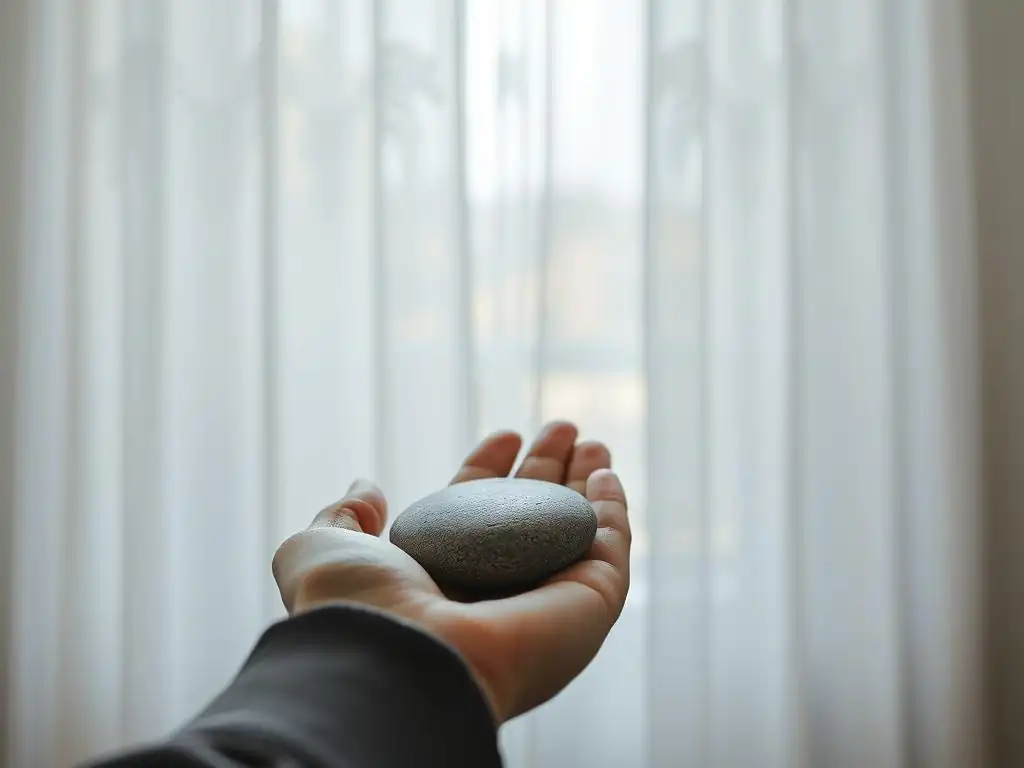
While 30-second mindfulness breaks are designed to be simple, it's normal to encounter challenges when first incorporating them, especially when you're feeling anxious. Don't get discouraged if your mind feels too busy or if you don't feel instantly calm. These are common experiences, and acknowledging them with self-compassion is part of the practice. The goal isn't perfection, but progress and persistence.
It's important to approach these techniques with realistic expectations. They are tools for quick anxiety spiral relief, designed to interrupt the cycle and provide a brief pause, not necessarily to eliminate all anxiety permanently in 30 seconds. Learning to navigate difficulties like distraction or frustration is part of developing a sustainable mindfulness practice for managing anxiety.
Difficulty Focusing? Tips for Staying Present
It's incredibly common for the mind to wander during mindfulness practice, especially when anxious. If you find it hard to stay focused for even 30 seconds, remember that noticing your mind has wandered is the practice. The goal isn't an empty mind, but gently redirecting your attention back to your chosen anchor (breath, body, senses, etc.) whenever you notice it drifting.
Try these tips:
- Shorten the focus area: Instead of scanning the whole body, focus only on the sensations in your hands or feet for 30 seconds. Instead of counting breaths, just notice one inhale and one exhale fully.
- Use a stronger anchor: If breath isn't working, switch to a sensory focus that is more engaging, like really noticing the texture of something you can touch.
- Accept the wandering: Don't judge yourself for losing focus. Simply acknowledge, "My mind wandered," and gently bring it back. Each time you do this, you're strengthening your attention muscle. Even a few seconds of focused attention within the 30 seconds counts as quick anxiety relief.
Feeling Frustrated? Adjusting Your Expectations and Approach
If you feel frustrated because you're not experiencing immediate calm or your mind is too chaotic, check your expectations. Remember, 30 seconds is a very short time, and the benefit might be subtle – perhaps just a slight decrease in the intensity of a feeling or a brief moment of distance from a thought. It's not a magic cure, but a tool for disruption.
- Lower the bar: If 30 seconds feels like too much pressure, start with 10 or 15 seconds. Any conscious pause is beneficial.
- Shift techniques: If one technique feels frustrating (e.g., breath focus makes you feel more aware of your rapid heartbeat), try another, like sensory awareness or affirmations.
- Be kind to yourself: Avoid self-criticism. Mindfulness is a practice, not a performance. Acknowledge the frustration and gently recommit to the 30 seconds, reminding yourself you are simply creating a pause for quick anxiety spiral relief.
When 30-Second Breaks Aren't Enough: Knowing When to Seek Additional Support
While these 30-second techniques offer valuable quick anxiety relief, they are not a substitute for professional help if you are experiencing severe or persistent anxiety. If your anxiety is significantly impacting your daily life, relationships, or work, or if you are experiencing panic attacks regularly, it's important to consult a mental health professional.
Mindfulness practices can be a wonderful adjunct to therapy or other treatments for anxiety, but they may not be sufficient on their own for everyone. Pay attention to whether these breaks are truly helping you manage moments of escalating anxiety or if you feel overwhelmed regardless of using them. Knowing when to seek additional support is a sign of strength and is crucial for long-term well-being. Resources like therapists, counselors, or support groups can provide comprehensive strategies and support tailored to your specific needs.
Beyond 30 Seconds: Expanding Your Mindfulness Practice for Long-Term Anxiety Management
Mastering 30-second mindfulness breaks is a fantastic starting point for quick anxiety spiral relief. However, experiencing deeper, more sustained benefits often comes from gradually expanding your mindfulness practice. While the short bursts are perfect for acute moments, dedicating a bit more time regularly can build greater resilience and a more profound sense of calm over time. Think of the 30-second breaks as sprints and longer practices as endurance training for your mind.
Developing a consistent, albeit brief, daily mindfulness routine can change your brain's response to stress over time. Research suggests that even 10-15 minutes of daily mindfulness meditation can lead to noticeable reductions in anxiety levels. Building upon the foundation of your 30-second skills allows you to explore other forms of mindfulness that can offer deeper insights and more lasting peace.
Moving from Quick Relief to Sustained Calm
The skills learned in 30-second mindfulness breaks – focusing attention, noticing thoughts without judgment, grounding in the present – are the same skills used in longer meditations. By practicing these short bursts for quick anxiety relief, you are building the foundation for sustained calm. As you become more comfortable with these micro-moments of mindfulness, you can gradually extend the duration.
Try increasing one or two of your daily breaks to 1 or 2 minutes. As you get more comfortable, you might aim for a single 5-minute practice session each day. This gradual increase allows you to deepen your focus and cultivate a more sustained state of mindful awareness, which can significantly impact your overall anxiety levels beyond just responding to acute moments of spiraling.
Exploring Other Mindfulness Practices for Deeper Anxiety Reduction
Beyond seated meditation or quick techniques, mindfulness can be integrated into many aspects of life. Exploring different practices can help you find what resonates most and provides deeper, more comprehensive anxiety reduction.
Consider exploring:
- Mindful Walking: Pay attention to the sensation of your feet on the ground, the movement of your body, the sights and sounds around you as you walk.
- Mindful Eating: Bring full attention to the experience of eating – the textures, smells, tastes, and physical sensations.
- Mindful Movement: Practices like yoga or Tai Chi can combine physical activity with present-moment awareness.
- Loving-Kindness Meditation: This practice cultivates feelings of warmth and compassion towards yourself and others, which can be very soothing for anxiety driven by self-criticism or fear of judgment.
These practices, even when done for moderate lengths of time (5-15 minutes), build on the skills developed with your 30-second quick anxiety spiral relief techniques and contribute to a more resilient and peaceful state of mind overall.
Resources for Continued Mindfulness Education and Support for Anxiety
For those interested in deepening their mindfulness practice and exploring its benefits for anxiety management, numerous resources are available. While we cannot include specific links here, searching for reputable organizations and programs can provide valuable guidance.
Look for:
- Mindfulness-Based Stress Reduction (MBSR) or Mindfulness-Based Cognitive Therapy (MBCT) courses, often offered locally or online. These structured programs are empirically supported for reducing anxiety.
- Books by renowned mindfulness teachers.
- Guided meditation recordings or apps (though we cannot link to them).
- Workshops or retreats focused on mindfulness and anxiety.
- Mental health professionals who incorporate mindfulness into their therapeutic approach.
Engaging with these resources can provide structured learning, community support, and deeper insights into how mindfulness can be a powerful tool for not just quick anxiety relief, but long-term well-being and managing anxiety effectively.
Conclusion: Empowering Yourself with Quick Anxiety Spiral Relief Through Mindfulness
Navigating anxiety spirals can feel daunting, but you have the power to interrupt these challenging moments. The simple yet profound techniques of 30-second mindfulness breaks offer an accessible and effective pathway to quick anxiety spiral relief. By consciously pausing for just half a minute to connect with your breath, body, senses, or positive affirmations, you create a crucial space between yourself and your escalating worries.
These brief moments of present-moment awareness are not a cure-all, but they are potent tools for regaining control, reducing the intensity of physical symptoms, and preventing anxiety from completely taking over. Integrating these techniques into your daily life, both proactively and reactively, builds resilience and empowers you to face anxious moments with greater skill and self-compassion. Remember, every 30-second pause is an opportunity to choose calm and reclaim your peace of mind. By practicing consistently, you strengthen your ability to find quick anxiety relief whenever you need it most.
Frequently Asked Questions
What are 30-second mindfulness breaks?
30-second mindfulness breaks are short, focused moments where you can practice breathing techniques or grounding exercises to reduce anxiety and regain control.
How can mindfulness help with anxiety spirals?
Mindfulness practices allow you to acknowledge your feelings without judgment, helping you to interrupt and redirect anxiety spirals effectively.
Can anyone practice mindfulness for anxiety relief?
Yes, mindfulness is accessible to everyone. You don't need prior experience to start using quick techniques for anxiety spiral relief.
What techniques can I use during a mindfulness break?
During a mindfulness break, you can use deep breathing, visualization, or body scanning to quickly alleviate anxiety and promote a sense of calm.
How often should I practice mindfulness for it to be effective?
For optimal results, try to incorporate mindfulness breaks into your daily routine, even if it's just a few times a day, to build resilience against anxiety spirals.
Final Reflection: Finding Stillness in the Storm
The relentless pace of modern life often leaves us teetering on the edge of an anxiety spiral, a dizzying descent into overwhelming worry. But the simple act of pausing, even for just 30 seconds, can be the lifeline we need to regain our footing and navigate the turbulent waters of our minds. This article explored practical, accessible techniques to interrupt those spirals before they consume us, proving that even the smallest moments of mindfulness can yield significant results.
The impact of readily available anxiety relief techniques is profound, reshaping our relationship with stress and fostering a culture of self-care. We are increasingly recognizing the importance of mental well-being, moving away from a stigma of silence towards open conversations and proactive strategies. This shift is vital, and the accessibility of these 30-second breaks is a powerful tool in this movement. The time to repair the roof is when the sun is shining.
– John F. Kennedy. This quote perfectly encapsulates the preventative power of these mindfulness exercises; we don't need to wait for the storm to hit before seeking shelter.
Now, consider your own life. Where do you feel the pressure mounting? Where do those anxiety spirals begin to form? I invite you to experiment with these techniques, to make them a part of your daily routine. Start small, with just one 30-second break, and observe the subtle shifts in your mental landscape. Remember, the power to calm the storm within lies within your reach; it's a matter of choosing to pause, breathe, and find your stillness.
Unlock Your Inner Calm: Start Practicing Mindfulness Today!
Thanks for taking the time to explore the power of mindful moments! We hope you found practical techniques to navigate those anxiety spirals. Ready to integrate these tools into your daily life?
- Prioritize a 30-second mindfulness practice: Choose one of the techniques discussed and commit to trying it at least three times today. Notice the shift in your energy.
- Share your experience: Tell a friend or family member about your mindfulness practice. Sharing your journey can reinforce your commitment and inspire others.
- Explore creative mindfulness: Consider incorporating mindfulness into other aspects of your day, like while eating or taking a shower. How can you make this routine even more enriching?
What simple change in your daily routine will best help you cultivate more mindful moments? Let us know in the comments below!