
The Body Scan: Your Guide to Releasing Stress Through Mindfulness

Welcome to Mind Care Guide, a space dedicated to nurturing your mental well-being.
Feeling overwhelmed by stress? You're not alone. We understand the weight that stress can carry. This week, we're diving into a powerful technique that can help you reclaim your calm: the mindfulness body scan. Curious how focusing on your physical sensations can unlock profound stress relief? Let's explore how to use the mindfulness body scan stress relief technique to reconnect with your body and find a sense of peace within.
The Body Scan: Your Guide to Releasing Stress Through Mindfulness
- Introduction to the Mindfulness Body Scan for Stress Reduction
- Preparing for Your Mindfulness Body Scan
-
Step-by-Step Guide to Performing a Mindfulness Body Scan for Stress Relief
- Step 1: Beginning with Awareness of Your Breath
- Step 2: Focusing on Your Toes: The First Point of Contact
- Step 3: Gradually Moving Your Attention Up Your Body: Feet, Legs, Hips
- Step 4: Paying Attention to Your Torso: Stomach, Chest, Back
- Step 5: Shifting Focus to Your Arms and Hands
- Step 6: Bringing Awareness to Your Neck, Face, and Head
- Step 7: Observing Your Whole Body and Breath
- Step 8: Gently Returning to Your Day
- Tips for a Successful Mindfulness Body Scan Experience
- Integrating Body Scan Meditation into Your Daily Routine for Lasting Stress Relief
- Common Challenges and How to Overcome Them During Body Scan Practice
- Advanced Techniques and Variations of the Body Scan for Deeper Stress Reduction
- The Science Behind Body Scan Meditation and Stress Relief
- Conclusion: Embrace the Body Scan for a Calmer, More Mindful Life
-
Frequently Asked Questions
- What is a mindfulness body scan and how does it relate to stress relief?
- How can a body scan help me manage stress in my daily life?
- How long should a typical mindfulness body scan session last?
- What if I experience discomfort or unpleasant sensations during a body scan?
- Are there any contraindications for practicing mindfulness body scans?
- Final Reflection: Embracing the Stillness Within for Lasting Stress Relief
- Unlock Your Inner Calm: Start Your Stress-Free Journey Today!
Introduction to the Mindfulness Body Scan for Stress Reduction
Understanding Mindfulness and its Role in Stress Management
Mindfulness is the practice of bringing one's attention to the present moment without judgment. It involves observing thoughts, feelings, bodily sensations, and the surrounding environment with acceptance and openness. In the context of stress management, mindfulness helps individuals become more aware of their stress triggers, physical responses to stress, and habitual thought patterns that may exacerbate feelings of overwhelm or anxiety. By cultivating this non-reactive awareness, people can learn to respond to stressful situations with greater calm and clarity, rather than automatically reacting with tension or distress.
Engaging in regular mindfulness practices, such as meditation, mindful movement, or simply paying attention to daily activities, has been shown to interrupt the body's stress response cycle. Instead of getting caught in a loop of worry about the future or rumination about the past, mindfulness anchors awareness in the here and now. This shift in focus can lower cortisol levels, reduce muscle tension, and quiet the 'fight or flight' response, contributing significantly to overall stress reduction and improved emotional regulation. It provides a mental space to observe stress without being consumed by it.
What is a Body Scan Meditation and How Does it Work?
A body scan meditation is a specific mindfulness technique that involves systematically bringing your attention to different parts of your body, from your toes all the way up to the crown of your head. The purpose is not to relax the body (though that is often a pleasant side effect), but rather to cultivate present-moment awareness of physical sensations. As you move your attention through each area, you simply notice whatever sensations are present – warmth, coolness, tingling, pressure, absence of sensation – without trying to change or judge them.
The practice works by training your attention to stay focused on the physical reality of the present moment. In doing so, it gently redirects the mind away from stressful thoughts, worries, or planning. By repeatedly bringing awareness back to the body, you strengthen your ability to focus and observe internal experiences with acceptance.
This enhanced body awareness can help you recognize the physical signs of stress earlier in your daily life, such as tight shoulders or a clenched jaw, allowing you to intervene with mindful techniques before stress escalates. The mindfulness body scan stress relief comes from this cultivation of non-reactive awareness and the ability to anchor oneself in physical reality.
Benefits of Body Scan Meditation for Stress Relief and Overall Well-being
Regularly practicing the mindfulness body scan can offer significant benefits for stress relief. By systematically checking in with the body, individuals become more attuned to where they hold tension, which is a common physical manifestation of stress. This awareness is the first step towards releasing that tension. The practice also promotes relaxation by activating the parasympathetic nervous system, counteracting the 'fight or flight' response often triggered by stress. Many people report feeling calmer and more grounded after a body scan session, experiencing a noticeable reduction in perceived stress levels and anxiety.
Beyond immediate stress reduction, the body scan contributes to overall well-being by improving interoceptive awareness – the ability to sense the internal state of the body. This heightened awareness can lead to better self-care decisions, as individuals become more sensitive to their body's signals related to hunger, fatigue, or discomfort. It can also improve sleep quality, reduce chronic pain sensitivity, and enhance emotional regulation by helping individuals notice the physical sensations associated with emotions. Integrating the mindfulness body scan into one's routine is a powerful step towards holistic health and lasting stress relief.
Preparing for Your Mindfulness Body Scan
Finding a Quiet and Comfortable Space for Body Scan Practice
Choosing the right environment is crucial for a successful body scan meditation, especially when starting out. Look for a space where you are unlikely to be interrupted by external noise or other people. This could be a bedroom, a quiet corner of a living room, or even an office during a break if you can ensure privacy. The key is to minimize distractions so you can fully focus on your internal experience. Inform family members or colleagues if necessary to avoid being disturbed during your practice time.
Ensure the space is comfortable and conducive to relaxation. Adjust the lighting to be soft or dim, if possible. Make sure the temperature is pleasant – neither too hot nor too cold. If lying down, ensure you have a mat, blanket, or cushion for support. If sitting, choose a chair that allows you to sit upright comfortably with your feet on the floor. Creating a dedicated, peaceful space signals to your mind and body that it's time to slow down and cultivate mindfulness body scan stress relief.
Setting an Intention for Your Body Scan Meditation
Setting an intention before beginning your body scan can help focus your mind and give purpose to the practice. Your intention doesn't need to be elaborate; it can be as simple as "to be present with my body" or "to cultivate awareness without judgment." For those seeking mindfulness body scan stress relief, the intention might be "to notice where I hold stress in my body and gently release tension" or "to cultivate a sense of calm and ease."
Holding an intention gently in mind can help orient you when your mind inevitably wanders. It serves as a gentle reminder of why you are practicing and what you hope to gain from the session. It's not about rigidly achieving a goal, but rather setting a compass bearing for your attention. You can repeat your intention silently to yourself a few times before you begin scanning your body, allowing it to settle into your awareness as you start the practice.
Body Scan Posture: Lying Down vs. Sitting
The most common posture for a body scan meditation is lying down on your back, often on a yoga mat, blanket, or comfortable surface. This position allows the body to fully relax and release tension, making it easier to notice subtle sensations without the effort required to maintain an upright posture. If lying down, you can place a cushion under your knees for lower back support and ensure your arms rest comfortably at your sides, palms up or down.
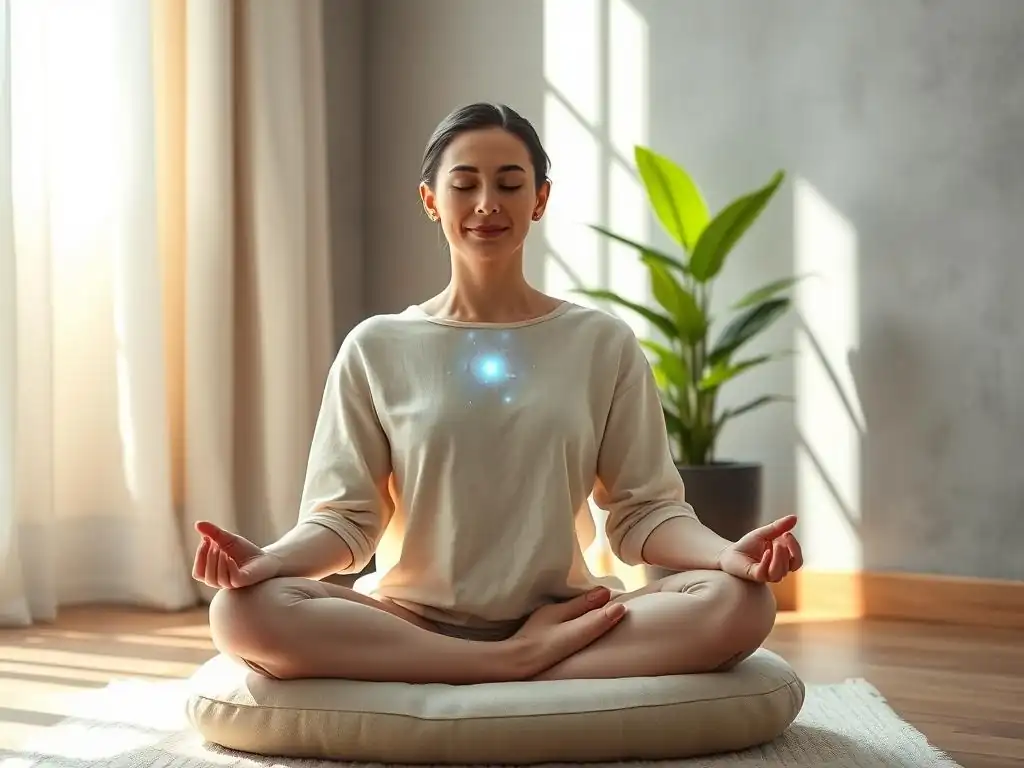
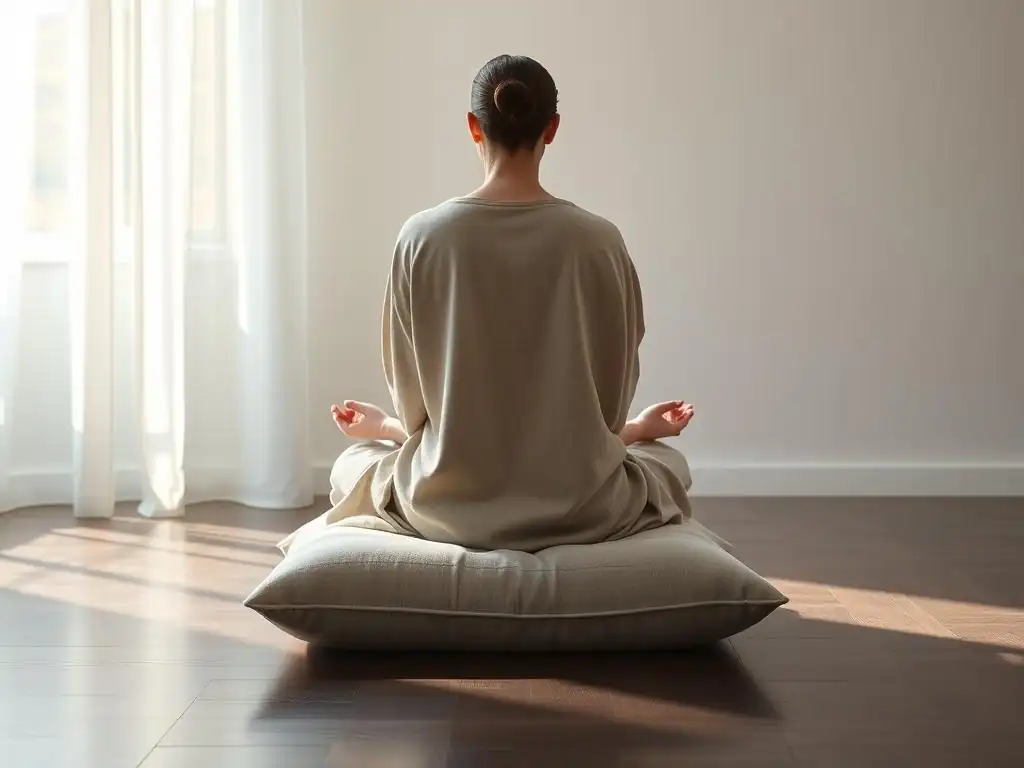
Alternatively, the body scan can be practiced while sitting, which might be preferable if you are prone to falling asleep when lying down or if you need to practice in a public or semi-public space. When sitting, choose a chair that allows you to sit with your feet flat on the floor and your spine relatively straight but not rigid. You can also sit on a cushion on the floor with legs crossed comfortably.
The key is to find a posture where you can remain relatively still and alert for the duration of the practice, allowing your attention to move through your body without discomfort becoming a major distraction. Both postures are effective for cultivating mindfulness body scan stress relief.
Step-by-Step Guide to Performing a Mindfulness Body Scan for Stress Relief
The following steps outline a typical body scan meditation practice. Remember that the goal is simply to notice sensations, not to make anything happen or feel a certain way.
Step 1: Beginning with Awareness of Your Breath
Begin by settling into your chosen posture, either lying down or sitting. Close your eyes gently if that feels comfortable. Take a few moments to simply arrive in the present moment. Notice the points where your body is supported – the contact with the floor, mat, or chair. Bring your attention to your breath, wherever you feel it most prominently – perhaps the rise and fall of your abdomen, the expansion and contraction of your chest, or the sensation of air moving in and out of your nostrils.
Spend a few minutes simply observing the natural rhythm of your breath. There's no need to change it in any way; just notice each inhale and exhale as it happens. This initial focus on the breath helps to anchor your awareness in the present and prepare your mind for the systematic scan of the body. It's a gentle transition into the practice of mindfulness body scan stress relief.
Step 2: Focusing on Your Toes: The First Point of Contact
Now, gently shift your attention away from the breath and guide it down to your toes. Bring your full awareness to the toes of your left foot. Can you feel any sensations there? Perhaps warmth, coolness, tingling, pressure, or maybe nothing at all. Whatever you notice is perfectly fine. Simply observe the sensations in the toes of your left foot for a moment or two. Then, gently expand your awareness to include the toes of your right foot. Notice the sensations there.
Spend a few moments allowing your attention to rest fully in your toes. If your mind wanders (which it will), simply acknowledge where it went and gently escort your attention back to your toes. This is the core skill of mindfulness – noticing distraction and returning to the intended focus, in this case, the physical sensations in your toes. This deliberate focus begins the process of cultivating body awareness essential for mindfulness body scan stress relief.
Step 3: Gradually Moving Your Attention Up Your Body: Feet, Legs, Hips
From your toes, slowly expand your awareness to include the soles of your feet, the tops of your feet, and your heels. Notice any sensations in your entire left foot, and then your entire right foot. Then, gently move your attention up into your ankles, noticing the sensations there. Continue this upward journey, bringing mindful awareness to your lower legs (shins and calves), then your knees, and then your upper legs (thighs and hamstrings).
As you move through each area, simply observe without judgment. If you encounter areas of discomfort or tension, just notice them. There's no need to try and fix or change anything; simply be present with the sensation. Finally, bring your awareness to your hips and pelvic area, noticing the sensations of contact with the surface you are on, and any feelings within the hip joints or pelvic region. This systematic scan helps to ground your awareness firmly in the physical body, aiding in mindfulness body scan stress relief.
Step 4: Paying Attention to Your Torso: Stomach, Chest, Back
Now, gently guide your attention into your torso. Begin with your abdomen. Notice the gentle movement of your belly with each breath. Are there any sensations of tightness, spaciousness, or digestion? Just observe whatever is present. Then, move your awareness to your chest. Notice the expansion and contraction with breathing. Are there any sensations in your heart area or ribs?
Next, bring your attention to your back, starting with your lower back, moving up to your middle back, and then your upper back and shoulder blades. Notice the contact your back makes with the surface you are lying or sitting on. Are there areas of tension or ease? Spend a few moments allowing your awareness to rest in your entire torso – front, back, and sides – simply noticing the physical reality of this part of your body. This detailed attention helps reveal where stress manifests physically.
Step 5: Shifting Focus to Your Arms and Hands

From your torso, shift your attention to your arms. Begin with one arm, perhaps your left arm. Bring your awareness to your fingers, noticing any sensations there. Then move up through your hand, wrist, forearm, elbow, and upper arm to your shoulder. Notice any sensations throughout your entire left arm. Then, repeat this process with your right arm, bringing mindful awareness to your fingers, hand, wrist, forearm, elbow, upper arm, and shoulder.
Allow your attention to rest in both arms simultaneously for a moment, noticing the sensations in your hands and arms all the way up to your shoulders. Pay attention to the feeling of your arms resting at your sides or in your lap. This step helps you become more aware of tension often held in the upper body and arms, contributing to mindfulness body scan stress relief.
Step 6: Bringing Awareness to Your Neck, Face, and Head
Now, gently guide your attention to your neck and throat area. Notice any sensations of tightness, stiffness, or openness. Then, move your awareness to your face. Bring soft attention to your jaw, mouth, tongue, cheeks, nose, eyes, eyebrows, and forehead. Notice any tension held in these areas, which is very common when experiencing stress. Can you soften your jaw or the muscles around your eyes?
Finally, bring your attention to your scalp and the top of your head. Notice any sensations there. Spend a few moments allowing your awareness to rest in your entire head, face, and neck. This conscious scanning of areas prone to stress-related tension is a key part of using the mindfulness body scan for stress relief.
Step 7: Observing Your Whole Body and Breath
After systematically scanning each part of your body, now allow your awareness to expand and encompass your entire body as a whole. Imagine your awareness filling your body from the tips of your toes to the crown of your head. Notice the sense of your body lying or sitting as one complete unit.
As you hold this awareness of your whole body, also gently bring your attention back to your breath. Notice the feeling of your breath moving through your body, perhaps noticing how the entire torso moves subtly with each inhale and exhale. Rest here for a few moments, simply being present with the sensations of your whole body and the rhythm of your breath.
Step 8: Gently Returning to Your Day
When you are ready to conclude the practice, begin to gently bring your awareness back to the external environment. Notice the sounds around you. Bring gentle movement back into your fingers and toes. Perhaps take a deeper breath or two.
When you feel ready, gently open your eyes. Take a moment to stretch if that feels good. Notice how your body feels after the scan. Carry this sense of grounded awareness with you as you transition back into your daily activities. This gentle return helps integrate the benefits of the mindfulness body scan into your ongoing experience of stress relief.
Tips for a Successful Mindfulness Body Scan Experience
Dealing with Distractions During Body Scan Meditation
It is completely normal for your mind to wander during a body scan meditation. Thoughts about the past, future plans, or random ideas will arise. This isn't a sign that you're doing it wrong; it's simply what minds do. The practice isn't about stopping thinking, but about noticing when your mind has wandered and gently bringing your attention back to the intended focus – the sensations in the specific part of the body you are scanning.
When you notice your mind has drifted, acknowledge it without judgment. You might silently say "thinking" to yourself. Then, with kindness and patience, gently redirect your attention back to the area of the body you were focusing on. This process of noticing and returning is the very essence of strengthening your mindfulness muscle. Each time you gently guide your attention back, you are reinforcing your ability to focus and cultivate presence, which is fundamental for mindfulness body scan stress relief.
Cultivating Patience and Non-Judgment During the Process
Approach the body scan practice with an attitude of patience and non-judgment. There will be days when it feels easy to focus and other days when your mind feels particularly restless. Some days you might notice many sensations, while on others, you might feel very little. All of these experiences are valid and part of the process. Avoid criticizing yourself for getting distracted or for not feeling what you think you "should" be feeling.
Remember that the body scan is a practice, not a performance. There's no right or wrong way to do it, only your experience in the present moment. Treat yourself with the same kindness and understanding you would offer a friend learning a new skill. This compassionate approach is vital; judging yourself or the practice will only create more mental noise and hinder the process of mindfulness body scan stress relief.
Lengthening or Shortening the Body Scan Based on Your Needs
While traditional guided body scans often last between 20 and 45 minutes, the practice is flexible and can be adapted to fit your schedule and needs. If you are new to meditation or short on time, a shorter body scan of 10-15 minutes can still be beneficial. You can simply move through the body sections more quickly, spending a minute or two on each major area (toes/feet, legs, hips, torso, arms/hands, neck/head).
Conversely, if you have more time and wish to deepen your practice, you can extend the time spent on each body area, perhaps dedicating several minutes to the feet, then the legs, and so on. You can also pause and spend extra time with areas where you notice strong sensations or tension. The key is consistency, not necessarily duration. Finding a length that is manageable for you will help you integrate the mindfulness body scan into your routine for ongoing stress relief.
Addressing Physical Sensations and Emotions That Arise
During a body scan, you may encounter strong physical sensations, such as pain, itching, or discomfort. You might also notice emotions arising, like sadness, frustration, or restlessness. The mindful approach is to acknowledge these experiences without immediately reacting to them. If you notice discomfort, try bringing your attention right to the center of the sensation. Can you describe its qualities – is it throbbing, dull, sharp, tingling? Notice if it changes as you simply observe it.
If emotions arise, notice them as mental or physical phenomena. Where do you feel that emotion in your body? Is it a tightness in your chest, a knot in your stomach? Simply observe the physical sensations associated with the emotion without getting caught up in the story or narrative behind it.
If the sensation or emotion becomes overwhelming, it's okay to gently expand your awareness to include the whole body or even open your eyes and ground yourself in the room. The practice is about building capacity, not enduring distress. Addressing these experiences mindfully is part of the mindfulness body scan stress relief process.
Integrating Body Scan Meditation into Your Daily Routine for Lasting Stress Relief
Scheduling Regular Body Scan Sessions
Consistency is key to reaping the full benefits of the mindfulness body scan for stress relief. Try to schedule regular sessions, even if they are short. This could be first thing in the morning to start your day grounded, during a lunch break to reset, or in the evening to unwind before sleep. Aim for a time when you are less likely to be interrupted and when you can dedicate your full attention to the practice.
Even practicing the body scan a few times a week can make a significant difference in your ability to manage stress. Think of it like exercising a muscle – the more you practice focusing your attention and observing your physical experience, the stronger that capacity becomes. Making it a regular part of your routine reinforces the skill of grounding yourself in the present moment, which is invaluable for sustained mindfulness body scan stress relief.
Using Body Scan as a Tool for Stress Management in Specific Situations
The body scan isn't just for dedicated meditation time; it can also be a powerful tool for managing stress in the moment. When you feel stress building – perhaps before a challenging meeting, during a difficult conversation, or when feeling overwhelmed – take a minute or two to do a mini body scan. You don't need to lie down or close your eyes fully.
Simply bring your attention to your body. Notice your feet on the ground, the tension in your shoulders, the feeling in your stomach. Take a few conscious breaths, allowing your awareness to rest in these physical sensations. This brief check-in can interrupt the stress response, ground you in the present, and create a small space for a more mindful response rather than a reactive one. Using the mindfulness body scan in these specific moments offers immediate stress relief.
Combining Body Scan with Other Mindfulness Practices
The body scan pairs well with other mindfulness techniques to enhance overall well-being and stress reduction. For example, you might start your day with a seated breath awareness meditation to cultivate focus and then incorporate a short body scan later in the day when you notice tension accumulating. Or, you could follow a body scan with some gentle mindful movement, such as stretching or walking, paying attention to the sensations in your body as you move.
Combining practices creates a more comprehensive approach to stress management. For instance, mindful eating involves bringing awareness to the sensations of taste, texture, and smell, complementing the body awareness cultivated in the scan. Exploring different mindfulness modalities can help you find a balanced practice that supports long-term mindfulness body scan stress relief.
Common Challenges and How to Overcome Them During Body Scan Practice
Difficulty Focusing: Strategies for Enhancing Concentration
One of the most common challenges in body scan meditation is a wandering mind. It's important to remember that this is not a failure; it's simply the nature of the mind. Strategies for enhancing concentration include setting a clear intention before you begin, as discussed earlier. Using a guided meditation track can also be very helpful, as the guide's voice provides a gentle anchor for your attention and prompts you to move through the body parts.
Another technique is to gently label thoughts as "thinking" when they arise and then compassionately return your attention to the body part you are focusing on. If a particular body area feels "blank" or devoid of sensation, simply rest your attention there for a moment or two before moving on, acknowledging the absence of sensation as the present experience. Patience and consistent practice are your greatest allies in improving focus and deepening mindfulness body scan stress relief.
Experiencing Discomfort or Pain: Adjusting Your Approach
Encountering discomfort or pain during a body scan can be challenging. First, check your posture to ensure you are comfortable and supported. If lying down, ensure your lower back is supported; if sitting, adjust your posture so your spine is erect but relaxed. Sometimes, simply adjusting your position slightly can alleviate physical strain.
If pain or discomfort persists, the mindful approach is to bring curiosity to the sensation rather than aversion. Can you explore the edges of the sensation? Does it have a temperature, a texture, a shape? However, if the discomfort is intense or becomes overwhelming, it is perfectly acceptable to gently shift your attention to a different area of the body or even pause the practice. The goal is not to push through pain, but to cultivate a wise relationship with physical sensations, which is part of the process of using the mindfulness body scan for stress relief.
Falling Asleep During the Body Scan: Tips for Staying Awake and Engaged
Falling asleep is a common challenge, especially when practicing the body scan while lying down or when feeling tired. If this happens, try practicing in a seated position, which naturally encourages more alertness. Ensure the room is not too warm or dark.
If you find yourself drifting off, you can gently open your eyes for a moment or two to re-orient yourself. You might also try focusing on sensations that are typically more alerting, such as the feeling of air moving in and out of your nostrils or the weight of your body pressing down. If you consistently fall asleep, consider shortening the practice time or shifting your practice to a time of day when you feel more awake. The aim is mindful presence, not unconscious relaxation, to achieve mindfulness body scan stress relief.
Advanced Techniques and Variations of the Body Scan for Deeper Stress Reduction
Guided Body Scan Meditations: Utilizing Audio Resources
Using guided audio recordings is an excellent way to practice the body scan, particularly when you are new to it or want to deepen your experience. Guided meditations lead you step-by-step through the process, prompting you to focus on different body parts and offering gentle reminders to return your attention when it wanders. This can help maintain focus and structure the practice effectively.
Many mindfulness apps, websites, and meditation centers offer guided body scan recordings of varying lengths, from 10 minutes to over 45 minutes. Experiment with different guides to find a voice and pace that resonates with you. Utilizing these resources can make the practice more accessible and consistent, enhancing your ability to use the mindfulness body scan for deeper stress relief.
Progressive Muscle Relaxation Body Scan: Combining Relaxation Techniques
A variation of the traditional body scan is to combine it with progressive muscle relaxation (PMR). PMR involves tensing specific muscle groups for a few seconds and then intentionally releasing the tension. In a PMR body scan, you would move through the body parts as in a regular scan, but for each area (e.g., feet, lower legs, upper legs), you would first gently tense the muscles in that area, hold for a count of five or ten, and then consciously release the tension before moving on to the next section.
This combination technique can be particularly effective for individuals who hold a lot of physical tension due to stress. The act of intentionally tensing and releasing highlights the contrast between tension and relaxation, making it easier to identify and release chronic muscular tightness. This integrated approach offers a powerful method for mindfulness body scan stress relief by actively engaging with physical tension.
Body Scan for Pain Management: Focused Attention on Areas of Discomfort
The body scan can be adapted specifically for managing chronic pain. Instead of just passively observing sensations, this variation involves intentionally bringing gentle, non-judgmental awareness to the area of pain. The aim is not to make the pain go away, but to change your relationship with it by observing its characteristics with curiosity.
When focusing on a painful area during the scan, you might explore its qualities: Where are its boundaries? Does it have a temperature? Does it pulse, burn, or ache?
Does it change from moment to moment? This practice helps to de-catastrophize the pain by breaking it down into its raw sensory components, rather than getting lost in the mental narrative about the pain ("This is unbearable," "It will never get better"). While challenging, using the mindfulness body scan for pain management can reduce suffering by fostering acceptance and altering the brain's processing of pain signals, contributing indirectly to stress relief associated with chronic discomfort.
The Science Behind Body Scan Meditation and Stress Relief
How Mindfulness Affects the Brain and Nervous System
Research into mindfulness has revealed significant effects on the brain and nervous system, explaining its capacity for stress relief. Studies using fMRI scans have shown that regular mindfulness practice can lead to structural changes in the brain, including increased gray matter density in areas associated with learning, memory, emotion regulation (like the hippocampus and prefrontal cortex), and self-awareness. Simultaneously, there can be a reduction in gray matter density in the amygdala, the brain region responsible for processing fear and the stress response.
Mindfulness also influences the autonomic nervous system, shifting it from a state dominated by the sympathetic 'fight or flight' response towards greater activation of the parasympathetic 'rest and digest' response. This shift is evidenced by changes in heart rate variability (HRV), where higher HRV is associated with better stress resilience and emotional regulation. By calming the nervous system and altering brain structures involved in stress, the mindfulness body scan provides a neurobiological pathway for stress relief.
Research Supporting the Benefits of Body Scan for Anxiety and Stress
Numerous studies have investigated the efficacy of mindfulness-based interventions, including programs that heavily feature the body scan, such as Mindfulness-Based Stress Reduction (MBSR). Research consistently shows that participation in MBSR and similar programs leads to significant reductions in symptoms of anxiety and stress. For example, a meta-analysis published in JAMA Internal Medicine in 2014 reviewed 47 trials and found moderate evidence that mindfulness programs improved anxiety and depression symptoms.
Specific studies focusing on the body scan component have demonstrated its effectiveness in increasing body awareness and reducing worry and rumination, both of which are significant contributors to stress and anxiety. Participants often report feeling more grounded and less reactive to stressful thoughts and feelings after practicing the body scan regularly. This body of research provides strong support for the use of the mindfulness body scan as a tool for stress relief and improved mental health.
Understanding the Mind-Body Connection in Stress Management
The body scan practice explicitly highlights the profound connection between the mind and body, particularly in relation to stress. Stress is not just a mental experience; it manifests physically through muscle tension, altered breathing patterns, digestive issues, and increased heart rate. Conversely, physical states, like chronic tension or pain, can significantly impact our mental state, leading to irritability, anxiety, or low mood.
By systematically bringing awareness to physical sensations, the body scan helps individuals recognize how their thoughts and emotions are held in the body. This awareness allows for a more integrated approach to stress management, addressing both the mental and physical components simultaneously. Releasing physical tension through mindful awareness can calm the mind, while a calmer mind is less likely to trigger the physical stress response. This understanding of the mind-body connection is fundamental to the effectiveness of the mindfulness body scan for comprehensive stress relief.
Conclusion: Embrace the Body Scan for a Calmer, More Mindful Life
Key Takeaways: Using the Body Scan for Ongoing Stress Reduction
The body scan meditation is a powerful and accessible mindfulness practice that offers significant benefits for stress reduction. Key takeaways include the importance of cultivating non-judgmental awareness of physical sensations, recognizing that the mind will wander and practicing gentle return, and understanding that consistency in practice is more important than duration. The body scan helps you become more attuned to how stress manifests physically, enabling you to address tension and discomfort mindfully.
Integrating the body scan into your routine, whether through dedicated sessions or brief check-ins during stressful moments, can help shift your nervous system towards a state of greater calm and resilience. By regularly practicing the mindfulness body scan, you build your capacity to stay present, respond wisely to challenges, and cultivate a deeper connection with your physical self, leading to lasting stress relief.
Resources for Further Exploration of Mindfulness and Meditation
To further explore mindfulness and meditation practices, including the body scan, numerous resources are available. Many reputable websites and apps offer guided meditations, including various lengths and styles of body scans. Books by pioneering figures in mindfulness, such as Jon Kabat-Zinn (creator of MBSR), Sharon Salzberg, or Tara Brach, provide in-depth explanations and guidance.
Local meditation centers and mindfulness teachers often offer courses and workshops, providing structured learning environments and the opportunity to practice with others. Exploring these resources can support your journey towards integrating mindfulness more deeply into your life, enhancing your ability to use the mindfulness body scan and other techniques for ongoing stress relief and overall well-being.
Frequently Asked Questions
What is a mindfulness body scan and how does it relate to stress relief?
A mindfulness body scan is a meditation technique that involves bringing attentive awareness to different parts of your body. It promotes stress relief by fostering a deeper connection with your physical sensations, allowing you to notice and release tension.
How can a body scan help me manage stress in my daily life?
Regular body scans can help you become more aware of stress signals in your body, such as muscle tension or shallow breathing. This awareness allows you to intervene early with relaxation techniques and prevent stress from escalating.
How long should a typical mindfulness body scan session last?
A typical body scan session can range from 5 to 45 minutes. Beginners might start with shorter sessions and gradually increase the duration as they become more comfortable and proficient.
What if I experience discomfort or unpleasant sensations during a body scan?
It's normal to encounter uncomfortable sensations. The key is to observe them without judgment and avoid trying to change them. Gently acknowledge the sensation and allow it to pass, focusing on your breath if needed.
Are there any contraindications for practicing mindfulness body scans?
While generally safe, individuals with severe mental health conditions should consult with a therapist or mental health professional before starting mindfulness practices. They can provide guidance and ensure the practice is appropriate.
Final Reflection: Embracing the Stillness Within for Lasting Stress Relief
The practice of the body scan, a simple yet powerful mindfulness technique, offers a crucial antidote to the relentless pressures of modern life. In a world saturated with constant stimulation and demands, finding moments of quiet introspection is not a luxury, but a necessity for maintaining both mental and physical well-being. The ability to cultivate this inner awareness is more vital than ever before.
The body scan's impact extends far beyond the immediate sensation of relaxation. It cultivates a deeper understanding of our physical and emotional selves, fostering a more compassionate relationship with our own experiences. This mindful awareness allows us to observe our stress responses without judgment, breaking the cycle of reactivity that often exacerbates anxiety and tension. As Jon Kabat-Zinn eloquently stated, Mindfulness means paying attention in a particular way: on purpose, in the present moment, and non-judgmentally.
This quote perfectly encapsulates the essence of the body scan and its transformative potential.
Now, consider how you can integrate this practice into your daily routine. Perhaps dedicate just five minutes each morning or evening to a guided body scan, or even incorporate shorter, mindful moments of body awareness throughout your day. You don't need extensive time or specialized equipment; you only need your breath and your attention. By embracing the stillness within, you unlock a powerful resource for managing stress, enhancing self-awareness, and cultivating a more peaceful and fulfilling life. Begin your journey towards lasting stress relief today.
Unlock Your Inner Calm: Start Your Stress-Free Journey Today!
Thanks for taking the time to explore the power of body scans with us! We hope you gained valuable insights into how this simple practice can significantly reduce stress and improve your overall well-being. Now it's time to put your newfound knowledge into action.
- Begin your first body scan meditation today: Even five minutes can make a world of difference. Find a quiet space, follow the steps outlined in the article, and notice the sensations in your body.
- Share your experience: Let's build a community of mindful individuals. Share your thoughts and any challenges you faced (or triumphs you experienced!) in the comments below.
- Explore further: Discover additional mindfulness techniques on MindCareGuide.org—we have a wealth of resources to help you on your journey to a calmer, more balanced you.
Ready to embrace the transformative power of mindfulness? What small step will you take today to prioritize your well-being?