
The Body Scan: Releasing Anxiety Through Mindful Awareness

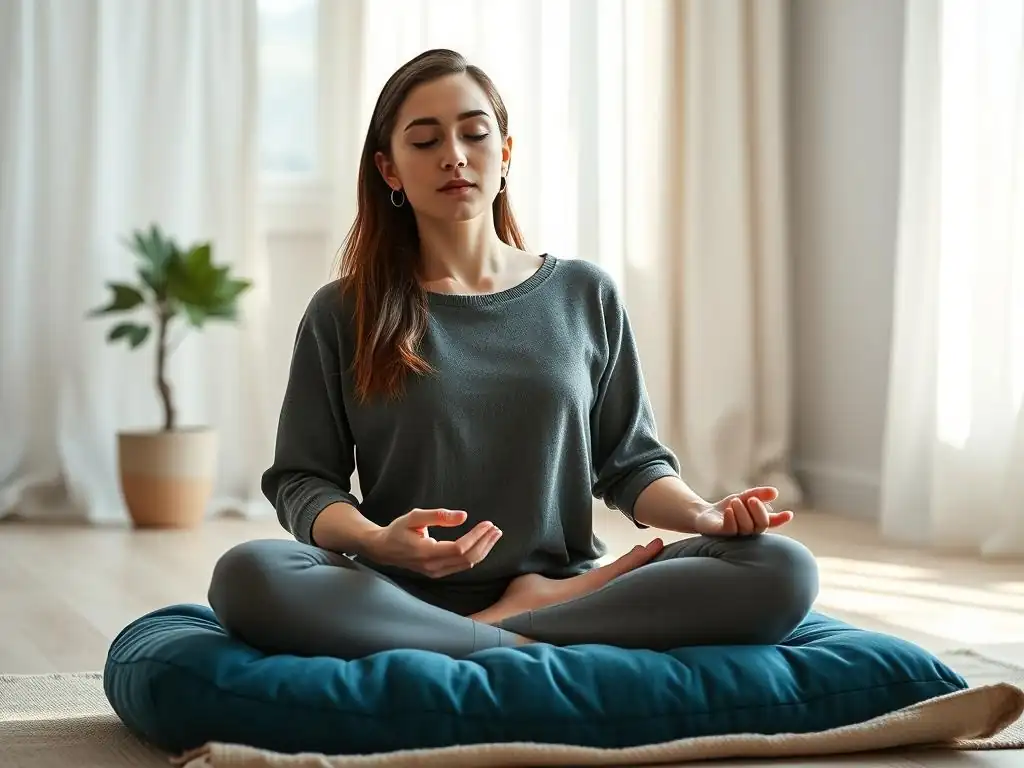
Welcome to Mind Care Guide, a space dedicated to nurturing your mental well-being.
Feeling overwhelmed by anxiety? You're not alone. Many find solace in simple yet powerful techniques. This week, we delve into the practice of mindful body scan anxiety relief, a proven method for grounding yourself in the present moment and easing anxious thoughts. Curious to learn how this gentle technique can unlock a sense of calm within? Let's explore...
Mindful Body Scan Anxiety Relief: A Complete Guide
- Understanding Anxiety and the Power of Mindfulness
- What is a Mindful Body Scan?
- Preparing for Your Body Scan Meditation
- Step-by-Step Guide to Performing a Body Scan for Anxiety Relief
- Tips for a Successful Body Scan Practice
- Integrating Body Scan Meditation into Your Daily Routine for Sustained Anxiety Relief
- Advanced Body Scan Techniques for Deeper Anxiety Reduction
- The Science Behind Body Scan Meditation and Anxiety
- Common Challenges and Solutions in Body Scan Practice
- Resources for Learning More About Body Scan and Mindfulness for Anxiety
-
Frequently Asked Questions
- What exactly is a mindful body scan, and how does it relate to anxiety relief?
- How does a body scan help specifically with anxiety relief?
- How often should I practice a mindful body scan for anxiety relief to see noticeable results?
- Are there any specific situations where a body scan is particularly helpful for managing anxiety?
- What if I find it difficult to focus or experience increased anxiety during the body scan?
- Final Reflection: Embracing the Stillness Within
- Unwind Your Worries: Start Your Daily Body Scan Now
Understanding Anxiety and the Power of Mindfulness
Anxiety is a common human experience, often characterized by feelings of worry, nervousness, or unease. While a normal response to stress, chronic or intense anxiety can significantly impact daily life, affecting mental, emotional, and physical well-being. Understanding the intricate connection between our minds and bodies is crucial in finding effective strategies for managing these challenging feelings.
Mindfulness, the practice of paying deliberate attention to the present moment without judgment, offers a powerful pathway to navigating anxiety. By cultivating awareness of our thoughts, feelings, and physical sensations, we can begin to observe anxious patterns rather than being consumed by them. This shift in perspective is fundamental to finding genuine relief.
The Connection Between Anxiety and the Body
Anxiety doesn't just reside in the mind; it manifests profoundly in the body. When we feel anxious, our sympathetic nervous system often kicks into 'fight or flight' mode, triggering a cascade of physiological responses. This can include increased heart rate, rapid breathing, muscle tension, digestive issues like stomach knots or nausea, sweating, and even headaches or dizziness.
These physical sensations can, in turn, amplify the mental experience of anxiety, creating a feedback loop. For example, a racing heart might be interpreted as a sign of impending doom, increasing panic. Recognizing these bodily signals as anxiety, rather than separate threatening events, is a key step in gaining control. Many individuals report experiencing significant physical symptoms alongside their anxious thoughts, sometimes even before the mental worry fully sets in.
How Mindfulness Can Help Manage Anxiety Symptoms
Mindfulness offers a non-judgmental approach to observing anxiety symptoms. Instead of trying to suppress or eliminate anxious thoughts and feelings, mindfulness encourages us to acknowledge them with curiosity and acceptance. This process can help to де-escalate the intensity of the emotional and physical responses.
By practicing mindfulness techniques, such as focusing on the breath or engaging in a mindful body scan for anxiety relief, individuals can learn to create space between themselves and their anxious reactions. This doesn't mean the anxiety disappears entirely, but its grip often loosens.
For instance, someone might notice their chest tightening, but instead of spiraling into panic, they can observe the sensation, breathe through it, and remember it is a temporary bodily experience linked to anxiety, not necessarily a physical threat. Research indicates that consistent mindfulness practice can lead to measurable reductions in anxiety levels and improved emotional regulation.
What is a Mindful Body Scan?
A mindful body scan is a specific type of meditation that involves systematically bringing your attention to different parts of your body, noticing any sensations, thoughts, or emotions that arise, without judgment. It's a foundational practice in many mindfulness-based programs, designed to cultivate present-moment awareness and strengthen the mind-body connection.
Unlike progressive muscle relaxation, which often involves tensing and releasing muscles, the body scan is primarily about passive observation. The goal isn't to change anything, but simply to notice what is already present. This gentle yet focused attention can be profoundly calming, making the mindful body scan a particularly effective tool for anxiety relief.
Defining the Body Scan Meditation Technique
The body scan meditation technique is a structured exercise where you lie down or sit comfortably and systematically guide your attention from one part of your body to another, typically starting from the toes and moving all the way up to the head. As you focus on each area, you simply observe any physical sensations – warmth, coolness, tingling, pressure, discomfort, absence of sensation – with an attitude of open curiosity.
The practice encourages you to acknowledge whatever you find without trying to fix or change it. If your mind wanders, which it inevitably will, the instruction is simply to notice that it has wandered and gently guide your attention back to the current area of the body you are scanning. This repeated act of returning attention is a core part of training the mind in focus and presence.
The Core Principles of the Body Scan for Anxiety
The body scan for anxiety relief is built upon several core principles of mindfulness. Firstly, it emphasizes non-judgment. When you notice tension or discomfort, the practice is to simply observe it without labeling it as 'good' or 'bad.' This non-judgmental awareness helps to break the cycle of negative self-talk or catastrophic thinking often associated with anxiety.
Secondly, it cultivates acceptance. While you might prefer not to feel anxious sensations, the body scan encourages you to accept their presence in the moment. This radical acceptance can paradoxically reduce the struggle and resistance that often fuels anxiety. Finally, the practice fosters present-moment awareness. By anchoring attention to the physical body, which is always in the present, the body scan helps to draw the mind away from worries about the future or ruminations about the past, which are common triggers for anxiety.
Benefits of Regular Body Scan Practice for Anxiety Reduction
Regular practice of a mindful body scan can yield significant anxiety relief and numerous other benefits. One primary benefit is increased awareness of how anxiety manifests physically. By becoming more attuned to early physical signals like shallow breathing or muscle tightness, individuals can intervene sooner, potentially preventing anxiety from escalating.
Another key benefit is improved emotional regulation. By observing sensations and emotions without reacting impulsively, you build resilience and the capacity to tolerate difficult feelings. Many regular practitioners report feeling more grounded, less reactive to stressors, and experiencing a general sense of calm and presence in their daily lives. Some studies have shown that consistent mindfulness practices, including body scans, can lead to physiological changes, such as a reduction in cortisol levels (the stress hormone), further contributing to anxiety reduction.
Preparing for Your Body Scan Meditation
Preparation is key to creating a conducive environment for your body scan practice and maximizing its potential for mindful body scan anxiety relief. Taking a few moments to set the stage can help you settle in, minimize distractions, and approach the meditation with a sense of ease and readiness.
While the body scan can be done almost anywhere, especially after you've gained some experience, initially dedicating a specific time and place can be very helpful. Think of it as creating a small sanctuary for yourself, even if it's just for 15-20 minutes.
Creating a Calm and Comfortable Environment
Choosing a calm and comfortable environment is essential for a successful body scan. Find a quiet space where you are unlikely to be interrupted. This might be your bedroom, a quiet corner of your living room, or even an office after hours. Ensure the temperature is comfortable – not too hot or too cold.
Consider minimizing sensory distractions. If possible, turn off your phone or put it on silent mode. Dim the lights slightly if that feels relaxing. Some people find it helpful to use an eye mask to block out light. The goal is to create a setting where you feel safe, relaxed, and able to turn your attention inward without external disruptions.
Setting Intentions for Your Body Scan Practice
Before beginning your body scan, it can be helpful to set a simple intention. This isn't about having a goal like "I must feel completely relaxed" or "I must make my anxiety disappear." Instead, the intention is more about the quality of your presence during the practice.
A helpful intention might be: "I intend to bring gentle, non-judgmental awareness to my body," or "I intend to practice kindness towards myself during this meditation," or simply, "I am here to notice what is present." Setting an intention helps to frame the practice and can anchor your focus, especially if you tend to get caught up in expectations or self-criticism.
Body Scan Posture and Positioning for Optimal Relaxation
The most common posture for a body scan is lying down on your back. This allows the body to fully relax and release tension. You can lie on a yoga mat, a carpeted floor, or a bed. If lying on the floor, you might place a cushion or rolled blanket under your knees to support your lower back, and a thin cushion under your head for comfort.
If lying down is not comfortable or possible, you can perform the body scan while seated. Choose a chair with back support that allows you to sit upright but relaxed. Place your feet flat on the floor. The key is to find a position where you feel stable and comfortable enough to remain relatively still for the duration of the meditation, minimizing the need to fidget.
Step-by-Step Guide to Performing a Body Scan for Anxiety Relief

Performing a mindful body scan is a practice that unfolds gradually, guiding your awareness through the landscape of your physical self. It's a journey of gentle observation, designed to cultivate presence and offer anxiety relief. Remember that there's no 'right' or 'wrong' way to do it; the practice is simply about noticing your experience from moment to moment.
This step-by-step guide provides a common structure for the body scan. As you become more familiar with the technique, you can adapt it to suit your own needs and preferences. The key is to approach each step with curiosity and kindness towards yourself.
Step 1: Finding a Comfortable Position
Begin by finding your comfortable position, either lying down or sitting. Allow your body to settle. If lying down, let your arms rest comfortably alongside your body, palms facing up or down, whichever feels natural. If sitting, rest your hands in your lap or on your thighs. Close your eyes gently if that feels comfortable, or soften your gaze, looking slightly downward.
Take a moment just to arrive. Notice the points where your body makes contact with the surface supporting you – the floor, the chair, the bed. Allow your weight to be fully supported. Take a few deeper breaths if that helps you settle, then allow your breath to return to its natural rhythm.
Step 2: Bringing Awareness to Your Breath
Before beginning the systematic scan, bring your attention to your breath. Notice the sensation of breathing in and breathing out. You don't need to change your breath in any way – just observe it as it is. Where do you feel the breath most prominently? Perhaps in your nostrils, your chest, or your abdomen?
Follow the path of one breath from beginning to end. This focus on the breath helps to ground you in the present moment and can act as an anchor throughout the practice. If your mind gets busy, you can always return to the simple sensation of breathing.
Step 3: Systematically Scanning Your Body
Now, gently begin to move your attention through your body, starting from your feet and moving upwards. Imagine your awareness as a spotlight, shining on each area in turn. Linger in each region for a few breaths, simply noticing what is present.
As you scan, bring an attitude of curiosity. What sensations are here? Are they pleasant, unpleasant, or neutral? Is there warmth, coolness, tingling, pressure, tightness, spaciousness, or perhaps no sensation at all? Whatever you find, simply acknowledge it without judgment. If you encounter discomfort, simply notice it, breathe with it, and continue to scan. There's no need to try and fix or change anything during the scan itself.
Focusing on Sensations in Your Toes
Bring your attention now to the toes of your left foot. Can you feel your big toe? The toe next to it? Each individual toe? Notice any sensations – perhaps a slight pressure where they touch the surface, warmth, or coolness. Linger here for a few breaths, simply observing. Then, gently shift your attention to the toes of your right foot, noticing whatever is present there.
Allow your awareness to soften and broaden to include all the toes on both feet. Spend a little time here, really tuning into this part of your body. If your mind wanders to thoughts about what you need to do later or worries from the day, that's perfectly normal. Simply notice that your mind has drifted, and gently guide your attention back to your toes.
Moving Up to Your Feet and Ankles
Now, expand your awareness to include the soles of your feet, the tops of your feet, and your ankles. Notice the sensation of your heels resting on the surface, the arches of your feet, the flexibility or stiffness in your ankles. Are there any areas of tension or discomfort here?
Bring your gentle attention to any sensations you find. Perhaps there's a pulsing, an ache, or a feeling of lightness. Breathe into this region, not to change it, but simply to acknowledge its presence. Allow your awareness to fully occupy your feet and ankles before slowly moving on.
Bringing Awareness to Your Legs and Thighs
Gently guide your attention up into your lower legs – your calves and shins. Notice the feeling of contact with the surface beneath you. Are your muscles relaxed or tense? Scan up to your knees, noticing any sensations in the joints. Then, move your awareness into your upper legs, your thighs and hamstrings.
These large muscle groups often hold tension. Simply observe any tightness or heaviness you find here. There's no need to try and force relaxation, just notice what is present with open awareness. Continue to breathe gently as your attention rests in this region of your body.
Scanning Your Pelvis and Abdomen
Shift your attention now to your pelvic region – your hips, glutes, and groin. Notice the weight of your pelvis resting on the surface. Is there any tension held here? Many people hold stress in their hips. Simply observe with kindness.
Now, bring your awareness into your abdomen and lower back. This area is often connected to anxiety, sometimes manifesting as 'stomach knots' or digestive discomfort. Gently bring your attention to your belly. Notice the subtle movements as you breathe in and out. Are there any feelings of tightness, fluttering, or softness? Simply observe whatever is present in your abdomen and lower back.
Noticing Sensations in Your Chest and Back
Move your attention upwards to your chest and upper back. Notice the rise and fall of your chest with each breath. Are there any feelings of tightness, pressure, or spaciousness in your chest? Anxiety often manifests as tightness or difficulty breathing in this area. Simply observe these sensations without trying to change them.
Now, scan your upper back and shoulders. Notice the contact your back makes with the surface. Are your shoulders hunched or relaxed? This area commonly holds tension related to stress. Gently bring your awareness to your shoulder blades, your spine, and the muscles in your upper back. Observe any sensations with curiosity.
Paying Attention to Your Arms and Hands
Allow your awareness to move down your arms, starting from your shoulders, through your upper arms, elbows, and forearms. Notice any sensations – perhaps warmth, coolness, or muscle tone.
Now, bring your attention to your hands. Scan through your wrists, the backs of your hands, your palms, and each individual finger and thumb. Notice any tingling, warmth, coolness, or pressure. Are your hands clenched or relaxed? Simply observe the sensations present in your arms and hands.
Exploring Sensations in Your Neck and Shoulders
Gently guide your attention up into your neck and shoulders. This is another area where tension frequently accumulates, especially with anxiety. Notice the muscles in your neck. Is there stiffness or soreness? Bring your awareness to the tops of your shoulders.
Simply observe any tightness, heaviness, or discomfort you find here. Breathe gently into this region, not to release the tension, but simply to acknowledge its presence with awareness. Allow your attention to linger here for a few breaths before moving on.
Focusing on Your Face and Head
Finally, bring your attention to your face and head. Notice the muscles in your jaw – is it clenched? Soften your jaw if possible. Scan your mouth, tongue, lips, and cheeks. Notice your eyes – are they tense or relaxed behind your closed eyelids? Bring awareness to your forehead and scalp.
Observe any sensations in your face and head – perhaps pressure, tingling, or warmth. Notice the feeling of the air on your skin. Gently rest your attention here for a few moments, completing the systematic scan through your body.
Step 4: Acknowledging Thoughts and Emotions
As you scanned your body, you likely noticed thoughts arising – perhaps planning, worrying, or evaluating the practice. You may have also noticed emotions – frustration, sadness, or even moments of peace. When you become aware of thoughts or emotions during the scan, simply acknowledge them without getting caught up in their content.
Imagine placing the thought or emotion gently on a leaf and watching it float down a stream. There's no need to analyze it or push it away. Simply label it mentally – "thinking," "worry," "sadness" – and then gently guide your attention back to the physical sensations in the part of the body you were scanning. This practice of acknowledging and returning is crucial for building mindful awareness and is a key component of mindful body scan anxiety relief.
Step 5: Expanding Awareness to the Whole Body
After systematically scanning through each region, allow your awareness to expand to encompass your entire body as a whole. Notice the feeling of your body resting as a complete unit. Can you sense the overall feeling of your physical form?
Rest here for a few moments, simply being present with the sensations of your whole body breathing. Notice the interconnectedness of the different parts. If any particular area is calling for attention, you can gently rest your awareness there for a moment before expanding back to the whole.
Step 6: Gently Returning to Your Day
When you are ready to conclude the body scan, begin to gently bring your awareness back to the external environment. Notice the sounds around you. Feel the contact of your body with the surface beneath you.
Begin to wiggle your fingers and toes gently. Perhaps take a deeper breath. When you feel ready, slowly open your eyes. Take a moment to stretch if that feels good. Acknowledge the experience you just had, whatever it was, without evaluation. Transition slowly back into your day, carrying a little bit of the awareness you cultivated during the mindful body scan for anxiety relief with you.
Tips for a Successful Body Scan Practice
Embarking on a regular body scan practice is a journey, and like any new skill, it takes time and patience. There will be days when it feels easy and calming, and days when your mind feels particularly restless. These tips can help you navigate common challenges and enhance your experience of the mindful body scan for anxiety relief.
Remember that consistency is often more important than the duration or perceived 'success' of any single session. Even a short, imperfect body scan is beneficial. Be kind to yourself throughout the process.
Staying Present and Avoiding Judgment
One of the most common challenges in body scan meditation is the mind wandering. It's important to understand that this is not a failure; it's simply what minds do. The practice isn't about having an empty mind, but about noticing when your mind has wandered and gently bringing it back to the intended focus – the sensations in your body.
Equally important is avoiding self-judgment. Don't criticize yourself for having thoughts, feeling restless, or not feeling instantly relaxed. Approach yourself with the same gentle curiosity and acceptance you are trying to bring to your bodily sensations. Each time you notice your mind has drifted and gently guide it back, you are strengthening the muscle of attention and presence.
Dealing with Discomfort or Pain During the Body Scan
It's possible that during a body scan, you might become more aware of physical discomfort or pain that was previously background noise. If you encounter pain or strong discomfort, first, check in with yourself to ensure you are not in a position that is causing harm. If the position is the issue, adjust it gently.
If the discomfort persists or is related to chronic pain or tension, the practice is to approach it with curiosity rather than resistance. Can you breathe with the sensation? Can you soften around it?
Imagine breathing into the area of discomfort and out from that area. Sometimes, simply acknowledging the pain without adding the layer of resistance or frustration can slightly shift your relationship with it. If the pain is too intense to focus, you can gently broaden your awareness to the entire body, including the discomfort, or even choose to focus on a neutral area like your breath until the intensity subsides.
Shortening or Lengthening the Body Scan as Needed
Standard guided body scans can range from 10 minutes to 45 minutes or longer. As you develop your practice, feel free to adjust the duration to suit your schedule and energy levels. On a busy day, a 5-minute mini-body scan focusing just on areas where you hold tension (like shoulders and jaw) can still offer anxiety relief.
Conversely, on days when you have more time and feel settled, you might choose a longer scan to explore sensations more deeply. The key is flexibility. Don't let the prescribed time become another source of pressure. The effectiveness comes from the quality of your attention, not necessarily the clock.
Using Guided Body Scan Meditations for Beginners
If you are new to the body scan, using a guided meditation can be incredibly helpful. A guide will gently lead you through each part of the body, reminding you to notice sensations and guiding you back when your mind wanders. This removes the need to remember the sequence and allows you to focus solely on the practice itself.
Many mindfulness apps and websites offer free or subscription-based guided body scans of varying lengths. Find a voice and style that resonates with you. Guided meditations can provide structure and support as you build familiarity with the technique and learn how to effectively use the mindful body scan for anxiety relief.
Integrating Body Scan Meditation into Your Daily Routine for Sustained Anxiety Relief
Consistent practice is the key to unlocking the full potential of the mindful body scan for anxiety relief. While a single session can offer temporary calm, integrating it into your daily life builds resilience and strengthens your ability to manage anxiety over the long term. Think of it like exercising a muscle – the more you train it, the stronger it becomes.
There are various ways to weave the body scan into your routine, from dedicated daily sessions to using the technique spontaneously in moments of distress. Finding what works best for you is part of the journey.
Scheduling Regular Body Scan Sessions
One of the most effective ways to build consistency is to schedule regular body scan sessions, just like you would schedule a workout or an appointment. Even committing to 10-15 minutes a few times a week can make a significant difference. Find a time that is likely to work for you – perhaps first thing in the morning before the day's demands kick in, during a lunch break, or in the evening before bed.
Putting it in your calendar or setting a reminder on your phone can help ensure it happens. While daily practice is ideal, finding a rhythm that is sustainable for you is more important than aiming for perfection and getting discouraged if you miss a day. Regularity helps train your nervous system to calm down more readily.
Using the Body Scan in Moments of High Anxiety
Beyond formal seated or lying-down sessions, the principles of the body scan can be applied informally in moments of high anxiety. When you feel anxiety starting to build – perhaps noticing a tight chest, racing thoughts, or restless energy – you can pause and do a mini-body scan.
Take a few deep breaths and quickly bring your awareness to the area where you feel the anxiety most intensely. Simply acknowledge the sensations without trying to push them away. Notice the tightness in your chest, the fluttering in your stomach, the tension in your shoulders. Breathe with these sensations for a minute or two. This brief, mindful check-in can interrupt the anxiety spiral and bring you back into the present moment, providing immediate anxiety relief.
Combining Body Scan with Other Mindfulness Practices
The body scan is a powerful practice on its own, but its benefits for anxiety relief can be enhanced when combined with other mindfulness techniques. Pairing a body scan with mindful breathing, walking meditation, or mindful eating can deepen your overall sense of presence and calm.
For example, you might start your day with a 15-minute body scan, then practice mindful walking during your commute or a break. You can also integrate brief moments of mindful awareness of physical sensations throughout the day, noticing the feeling of water during a shower, the texture of your clothes, or the sensation of your feet on the ground as you walk. This combination creates a more holistic approach to managing anxiety through embodied awareness.
Advanced Body Scan Techniques for Deeper Anxiety Reduction
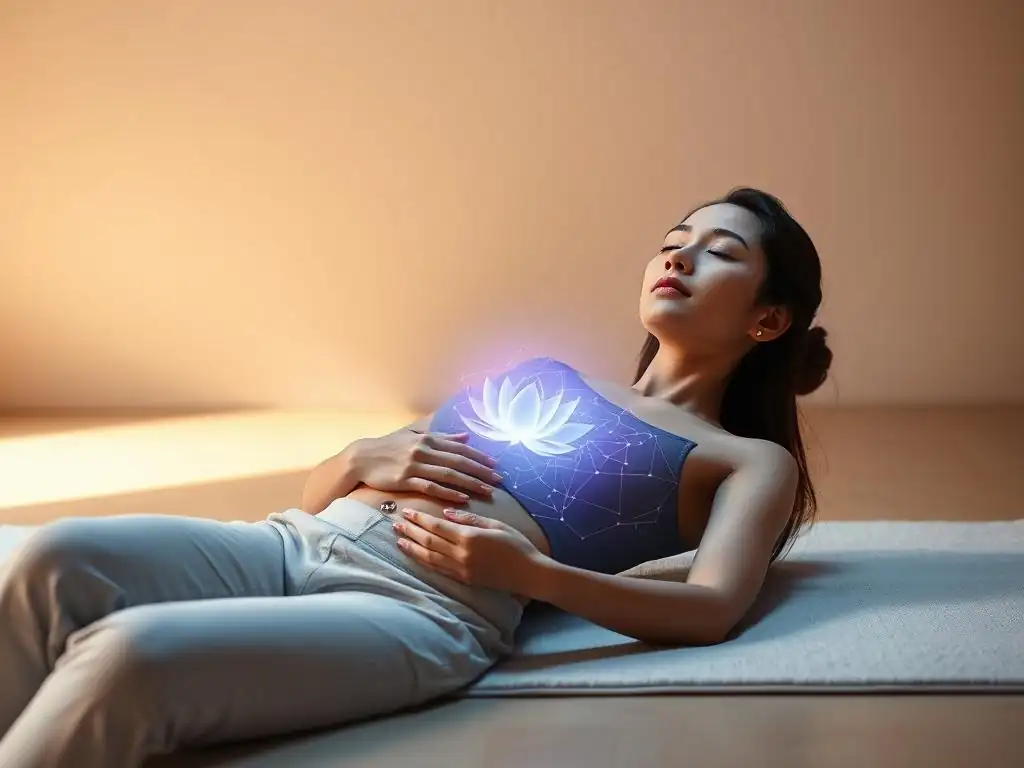
Once you've established a regular body scan practice, you might explore more advanced techniques to deepen your experience and enhance its effectiveness for mindful body scan anxiety relief. These variations build upon the foundational practice of non-judgmental awareness of physical sensations.
These techniques are not about making the practice more difficult, but rather about exploring different facets of your inner experience through the lens of the body. They can offer new ways to process emotions and understand the physical manifestations of anxiety.
Exploring Emotional Release Through Body Scan
As you scan your body, you may notice that certain physical sensations are linked to specific emotions, including anxiety, fear, sadness, or anger. With practice, you can gently allow yourself to explore the emotional landscape that arises alongside the physical sensations.
Instead of just labeling a sensation as 'tightness,' you might notice if that tightness has an emotional quality – does it feel like fear? Like sadness? Allow yourself to simply acknowledge the emotion without getting swept away by it. You can imagine breathing kindness or spaciousness into the area where the emotion and sensation are held. This isn't about wallowing in difficult feelings, but about developing the capacity to be present with them in a safe and contained way, which can facilitate processing and release.
Using Visualization During the Body Scan
While the core body scan focuses on direct sensation, some practitioners find adding gentle visualization helpful. As you scan each body part, you might visualize sending warm, soothing light or healing energy to that area, especially if you notice tension or discomfort.
Another visualization technique involves imagining the breath flowing directly into and out of the body part you are focusing on. For example, imagining breathing into your tight shoulders and exhaling tension. This can add a layer of active engagement and a sense of directing calm energy, which some individuals find enhances the feeling of anxiety relief. It's important that the visualization feels supportive and not like another task or expectation.
An advanced application of the body scan is using it as a diagnostic tool to specifically identify where you habitually hold anxiety-related tension. Through repeated practice, you might notice patterns – perhaps you consistently find tightness in your jaw, neck, shoulders, or stomach when you are stressed or anxious.
Once you identify these 'hot spots' of tension, you can use this awareness outside of the formal scan. When you notice yourself getting anxious during the day, you can quickly check in with these specific areas and consciously invite a release of tension, perhaps through a gentle stretch or a few focused breaths directed to that area. This targeted approach, informed by your body scan practice, can offer more immediate and specific mindful body scan anxiety relief.
The Science Behind Body Scan Meditation and Anxiety
The effectiveness of the mindful body scan for anxiety relief isn't just anecdotal; it's supported by a growing body of scientific research. Studies using neuroimaging and physiological measurements are helping to explain how this seemingly simple practice can have profound effects on our minds and bodies, particularly in regulating the stress response.
Understanding the science can sometimes bolster motivation for practice and provide reassurance that you are engaging in a technique with empirical backing. While individual experiences vary, the general trends in research are promising.
Research Supporting the Effectiveness of Body Scan for Anxiety
Numerous studies have investigated the impact of mindfulness-based interventions, which often include the body scan as a core component, on anxiety levels. Programs like Mindfulness-Based Stress Reduction (MBSR) and Mindfulness-Based Cognitive Therapy (MBCT) have demonstrated significant reductions in anxiety symptoms in clinical trials. For example, a meta-analysis published in JAMA Internal Medicine in 2014 reviewed 47 trials and found that mindfulness meditation programs showed moderate evidence of improving anxiety and depression.
Specific research on the body scan itself suggests it can help reduce symptoms associated with generalized anxiety disorder (GAD) and even panic disorder. Participants often report decreased worry, improved sleep, and a greater sense of calm after engaging in regular body scan practice. These findings underscore the potential of the mindful body scan as a valid tool for anxiety relief.
How Body Scan Affects the Brain and Nervous System
Neuroscientific research is shedding light on the mechanisms by which body scan meditation impacts the brain and nervous system. Functional MRI (fMRI) studies have shown that regular mindfulness practice can lead to structural changes in the brain, such as increased gray matter density in areas associated with learning, memory, emotion regulation, and self-awareness (like the hippocampus and prefrontal cortex). Conversely, there can be a decrease in the size of the amygdala, the brain region associated with the fear response.
From a nervous system perspective, the body scan helps to shift the balance from the sympathetic 'fight or flight' response towards the parasympathetic 'rest and digest' response. By intentionally bringing awareness to the body and breathing, individuals can activate the vagus nerve, which plays a key role in calming the nervous system, leading to reduced heart rate, lower blood pressure, and decreased muscle tension – all physiological markers of anxiety relief.
Understanding the Mind-Body Connection in Anxiety Management
The body scan practice is a direct exploration of the mind-body connection, which is fundamental to understanding and managing anxiety. Anxiety is not purely a psychological state; it is an integrated experience involving thoughts, emotions, and physical sensations. The body scan teaches us to recognize these physical manifestations as part of the anxiety experience itself, rather than separate, frightening events.
By training our attention on the body, we become more sensitive to early signals of stress or anxiety, allowing for earlier intervention. We also learn that physical sensations, even uncomfortable ones, are often transient. This embodied awareness helps to break the cycle where anxious thoughts trigger physical symptoms, which in turn fuel more anxious thoughts. The mindful body scan thus provides a practical method for working with the body to achieve anxiety relief, rather than just trying to control the mind.
Common Challenges and Solutions in Body Scan Practice
While the mindful body scan is a gentle and accessible technique, it doesn't mean the practice is always easy. Beginners and experienced practitioners alike can encounter challenges that might feel discouraging. Recognizing these common hurdles and having strategies to navigate them is crucial for maintaining a consistent practice and continuing to experience anxiety relief.
Remember that challenges are a normal part of the learning process. Approaching them with patience and self-compassion is key. There are effective ways to work through difficulties without giving up on the practice altogether.
Falling Asleep During the Body Scan
One very common challenge, especially when practicing lying down, is falling asleep. This is often a sign that your body is deeply relaxed or that you are sleep-deprived. While relaxation is a benefit of the body scan, the goal of the practice is conscious awareness, not sleep.
If you frequently fall asleep, try practicing in a seated position instead of lying down. Ensure you are well-rested before starting. You might also try practicing at a different time of day when you feel more alert, such as in the morning or midday, rather than right before bed. If you do nod off, simply notice it without judgment when you wake up and gently resume the scan from where you left off, or simply continue with the time remaining.
Difficulty Focusing or Staying Present
Having difficulty focusing or constantly getting lost in thought is perhaps the most universal challenge in any meditation practice, including the body scan. It's easy to feel like you're "failing" if your mind is busy, but remember that the practice is in noticing the wandering and gently returning your attention.
Accept that your mind will wander – it's normal. The key is how you respond. When you notice you've been thinking, simply acknowledge it ("Ah, thinking") and gently guide your awareness back to the body part you intended to focus on. You can use the breath as an anchor to help reground you before returning to the body scan. Consistency in gently redirecting your attention is how you build the capacity for sustained presence, which is vital for mindful body scan anxiety relief.
Experiencing Heightened Anxiety During the Body Scan
Occasionally, focusing inward during a body scan can paradoxically lead to heightened awareness of anxiety-related sensations or thoughts, which might feel overwhelming initially. This can happen as you become more attuned to what's present in your body and mind.
If anxiety increases during the scan, try not to resist it. Acknowledge the feelings and sensations with as much acceptance as possible. You can broaden your focus to the entire body, including the anxiety, rather than fixating on the intense area.
You can also return your attention solely to the breath for a few minutes, focusing on the anchor of inhalation and exhalation, before gently attempting to return to the body scan if it feels manageable. If the anxiety becomes too intense, it's okay to gently end the formal practice and engage in a grounding activity like walking or splashing cold water on your face. You can always try the body scan again another time, perhaps starting with shorter durations.
Resources for Learning More About Body Scan and Mindfulness for Anxiety
Deepening your understanding and practice of the mindful body scan for anxiety relief can be greatly supported by utilizing available resources. Whether you prefer reading, listening to guided meditations, or engaging in structured programs, there are many avenues to explore that can enhance your journey towards greater well-being.
Connecting with reliable resources can provide guidance, inspiration, and a sense of community as you integrate mindfulness into your life. These resources offer various entry points depending on your learning style and time availability.
Recommended Books on Mindfulness and Anxiety
Many excellent books delve into the principles and practices of mindfulness, often including detailed guidance on the body scan and its application for anxiety. Jon Kabat-Zinn's "Full Catastrophe Living" is a foundational text that describes the MBSR program, including the body scan, in detail.
Other highly regarded books include "Mindfulness: An Eight-Week Plan for Finding Peace in a Frantic World" by Mark Williams and Danny Penman, which offers practical exercises and insights. For a more direct focus on anxiety, "Rewire Your Anxious Brain" by Catherine M. Pittman and Elizabeth M. Karle, while not solely about mindfulness, effectively explains the brain science behind anxiety and how practices like body scan can help. These books can provide a deeper theoretical understanding and practical instructions.
Online Guided Body Scan Meditations and Apps
Accessing guided body scan meditations has become incredibly convenient thanks to numerous online platforms and mobile applications. Websites like UCLA Mindful Awareness Research Center or Palouse Mindfulness offer free guided meditations, including various lengths of body scans.
Popular mindfulness apps such as Calm, Headspace, Insight Timer, and Ten Percent Happier provide extensive libraries of guided meditations, often featuring multiple versions of the body scan led by different teachers. Insight Timer, for example, offers tens of thousands of free guided meditations. These resources make it easy to practice the mindful body scan for anxiety relief anytime, anywhere, with the support of an experienced guide.
Mindfulness-Based Stress Reduction (MBSR) Programs
For a comprehensive and immersive experience in mindfulness, including the body scan, consider participating in a Mindfulness-Based Stress Reduction (MBSR) program. Developed by Jon Kabat-Zinn, MBSR is an evidence-based 8-week course that teaches core mindfulness practices, including the body scan, sitting meditation, and mindful movement.
MBSR programs are typically offered in person or online by certified instructors. They provide structured learning, group support, and in-depth exploration of how mindfulness can be applied to manage stress, anxiety, chronic pain, and other challenges. Participating in an MBSR program is often considered the gold standard for learning mindfulness and can provide a solid foundation for sustained mindful body scan anxiety relief.
Frequently Asked Questions
What exactly is a mindful body scan, and how does it relate to anxiety relief?
A mindful body scan is a meditation technique that involves systematically bringing awareness to different parts of your body. It helps to cultivate present moment awareness, which can significantly reduce anxiety by shifting focus away from worrying thoughts.
How does a body scan help specifically with anxiety relief?
It works by grounding you in the present physical sensations. This interrupts the cycle of anxious thoughts, allowing you to observe sensations without judgment and reducing the power of anxiety.
How often should I practice a mindful body scan for anxiety relief to see noticeable results?
While individual results vary, practicing a body scan daily for at least 10-15 minutes is generally recommended. Consistency is key to developing mindfulness skills and experiencing its anxiety-reducing benefits.
Are there any specific situations where a body scan is particularly helpful for managing anxiety?
Body scans are beneficial in moments of acute anxiety, such as before a stressful meeting or during a panic attack. They can also be used proactively as a preventative measure to reduce overall anxiety levels.
What if I find it difficult to focus or experience increased anxiety during the body scan?
It's common to experience some difficulty focusing initially. Acknowledge your thoughts and gently redirect your attention back to your body. If anxiety increases, consider shortening the session or seeking guidance from a mental health professional for tailored support and coping strategies.
Final Reflection: Embracing the Stillness Within
The power of the body scan to alleviate anxiety is not merely a theoretical concept; it's a readily accessible tool for navigating the turbulent waters of modern life. In a world saturated with constant stimulation and relentless demands, the ability to cultivate inner peace and self-awareness is more crucial than ever. The practice offers a tangible pathway to reclaim control over our emotional landscape and find solace in the present moment.
The profound impact of mindful body scans extends far beyond individual stress reduction; it's a ripple effect that touches our relationships, our productivity, and the overall quality of our lives. By learning to listen to the subtle whispers of our bodies, we foster a deeper connection with ourselves and a greater capacity for empathy towards others. As Thich Nhat Hanh wisely said, Breathing in, I calm body and mind. Breathing out, I smile. Dwelling in the present moment I know this is the only moment.
This quote encapsulates the essence of the body scan's transformative power: to bring us back to the here and now, where true peace resides.
Consider incorporating the body scan into your daily routine. Even five minutes of focused attention on your breath and bodily sensations can make a significant difference. Don't underestimate the transformative potential of this simple yet profound practice. Start small, be patient with yourself, and allow the stillness within to guide you toward a calmer, more centered existence. The journey to anxiety relief begins with a single breath, a single moment of mindful awareness. Embrace the stillness, and let it transform you.
Unwind Your Worries: Start Your Daily Body Scan Now
Thanks for taking the time to explore the power of the body scan for anxiety relief! We hope you gained valuable insights into this simple yet profound practice. Ready to experience the calm?
Here's how to begin your journey towards mindful serenity:
- Begin your first body scan today: Find a quiet space, set a timer for 10 minutes, and let the guided meditation lead you to a place of peace. Even 5 minutes can make a difference!
- Share your experience: Tell us about your initial body scan meditation in the comments below. What did you notice? What surprised you?
- Explore deeper: Consider incorporating daily body scans into your routine and track how it shifts your overall wellbeing.
What mindful practice will you integrate into your day to best support your mental wellness?