
Mastering Mindfulness Through Guided Practice

Welcome to Mind Care Guide, a safe space dedicated to nurturing your mental well-being.
Feeling overwhelmed by anxiety? You're not alone. Discover the transformative power of mindfulness meditation for anxiety relief and begin your journey towards a calmer, more centered you. We understand the challenges you face, and within these pages, you'll find practical guidance and compassionate support to help you master mindfulness and reclaim your peace. Let's explore how guided practice can unlock a brighter, more resilient future, together.
Mastering Mindfulness Through Guided Practice: A Mind Care Guide
- Introduction to Mindfulness Meditation for Anxiety Relief
- Preparing for Your Guided Mindfulness Meditation Session
- Step-by-Step Guide to a Basic Guided Mindfulness Meditation
- Advanced Techniques in Guided Mindfulness Meditation for Anxiety
- Integrating Mindfulness Meditation into Your Daily Life for Long-Term Anxiety Relief
- Addressing Common Concerns About Mindfulness Meditation
- Resources for Further Exploration of Mindfulness Meditation
- Conclusion: Embracing Mindfulness for a Calmer and More Peaceful Life
-
Frequently Asked Questions
- How does mindfulness meditation help with anxiety?
- What is guided mindfulness meditation, and how is it different from regular meditation?
- How often should I practice mindfulness meditation to see results for anxiety relief?
- Are there any potential side effects of practicing mindfulness meditation?
- Where can I find reliable guided mindfulness meditation resources for anxiety relief?
- Final Reflection: Cultivating Inner Peace Through Mindfulness
- Unlock Your Inner Calm: Start Your Mindfulness Journey Today!
Introduction to Mindfulness Meditation for Anxiety Relief
What is Mindfulness and How Does it Relate to Anxiety?
Mindfulness is the practice of intentionally bringing one's attention to the present moment without judgment. It involves observing thoughts, feelings, bodily sensations, and the surrounding environment with an attitude of openness and acceptance. At its core, mindfulness is about cultivating awareness – awareness of what is happening now, rather than getting caught up in worries about the future or regrets about the past. This present-moment awareness is crucial because anxiety often stems from dwelling on potential threats or past negative experiences, pulling us away from the reality of the current moment.
Anxiety is characterized by excessive worry, fear, and nervousness, often accompanied by physical symptoms like increased heart rate or shortness of breath. Mindfulness directly addresses the rumination and future-oriented catastrophizing that fuels anxiety. By gently redirecting attention to the present, mindfulness practice helps to interrupt the cycle of anxious thought patterns. It doesn't eliminate thoughts or feelings, but rather changes our relationship to them, allowing us to observe them without being overwhelmed. Practicing mindfulness meditation for anxiety relief helps individuals develop a greater capacity to tolerate uncomfortable emotions and physical sensations associated with anxiety.
The Benefits of Guided Mindfulness Meditation for Anxiety Management
Guided mindfulness meditation offers a structured way to learn and practice mindfulness, making it particularly accessible and effective for managing anxiety. A guide, whether a person or a recording, leads you through the steps, making it easier to stay focused, especially when your mind is prone to wandering due to anxious thoughts. This guidance provides a framework and support, helping beginners navigate the process and experience the benefits more readily. Studies have consistently shown that regular mindfulness meditation for anxiety relief can lead to significant reductions in anxiety symptoms.
The benefits extend beyond simply feeling calmer during the practice itself. Consistent engagement in guided mindfulness meditation can lead to lasting changes in how the brain processes stress and emotions. Research, including studies using fMRI, indicates that mindfulness practice can decrease activity in the amygdala (the brain's fear center) and increase connectivity to the prefrontal cortex (associated with higher-order functions like decision-making and emotion regulation).
Many individuals report experiencing reduced overall worry, improved sleep quality, and a greater sense of emotional resilience after several weeks of regular practice. For example, a meta-analysis of over 47 studies published in JAMA Internal Medicine in 2014 found that mindfulness meditation programs had moderate evidence of improving anxiety.
Preparing for Your Guided Mindfulness Meditation Session
Creating a Calm and Comfortable Environment for Meditation
Establishing a dedicated space, even a small one, can significantly enhance your mindfulness meditation for anxiety relief practice. Choose a quiet area where you are unlikely to be interrupted. This doesn't need to be elaborate; a corner of a room, a comfortable chair, or even a spot on the floor can work. The goal is to minimize external distractions. Turn off notifications on your phone and let others in your household know you need some quiet time.
Consider the sensory aspects of your chosen space. Is the lighting too harsh? Can you dim it or use natural light? Is the temperature comfortable?
Are there any strong odors? Simple adjustments like ensuring a comfortable temperature, using soft lighting, or even having a plant nearby can make the space more conducive to relaxation and focus. While not strictly necessary, some people find that incorporating elements like a comfortable cushion, a soft blanket, or even a gentle, calming scent like lavender can help signal to the body and mind that it's time to transition into a state of calm for their mindfulness meditation for anxiety relief practice.
Choosing the Right Guided Meditation for Anxiety Relief
Selecting a guided meditation that resonates with you is key to a successful practice, especially when targeting anxiety. There are countless guided meditations available, varying in length, style, and focus. For anxiety relief, look for meditations specifically designed to address stress, worry, or calming the nervous system. Many resources offer meditations focused on themes like "releasing anxiety," "cultivating calm," or "body scan for relaxation."
Consider the length of the meditation. If you're new to the practice or short on time, start with shorter sessions, perhaps 5 to 10 minutes. As you become more comfortable, you can gradually increase the duration. Pay attention to the voice and tone of the guide; find a voice that you find soothing and trustworthy. Experiment with different guides and styles (e.g., focusing on breath, body sensations, or visualization) to discover what feels most effective for your personal experience of mindfulness meditation for anxiety relief.
Setting Intentions for Your Mindfulness Practice
Setting an intention before you begin your guided mindfulness meditation session can help focus your mind and make the practice more meaningful, particularly when working with anxiety. An intention is not a rigid goal, but rather a gentle guiding principle for your practice. It could be as simple as "to be present," "to cultivate kindness towards myself," or "to observe my thoughts without judgment."
For anxiety relief, a helpful intention might be "to create space for my anxious feelings without being consumed by them" or "to practice acceptance of what is." State your intention silently to yourself before pressing play on your guided meditation. Remember that the intention is there to support you, not to create pressure. If your mind wanders or you feel frustrated, gently bring your awareness back to your intention without self-criticism. This act of setting an intention reinforces your commitment to using mindfulness meditation for anxiety relief as a tool for well-being.
Step-by-Step Guide to a Basic Guided Mindfulness Meditation
Finding a Comfortable Posture for Meditation
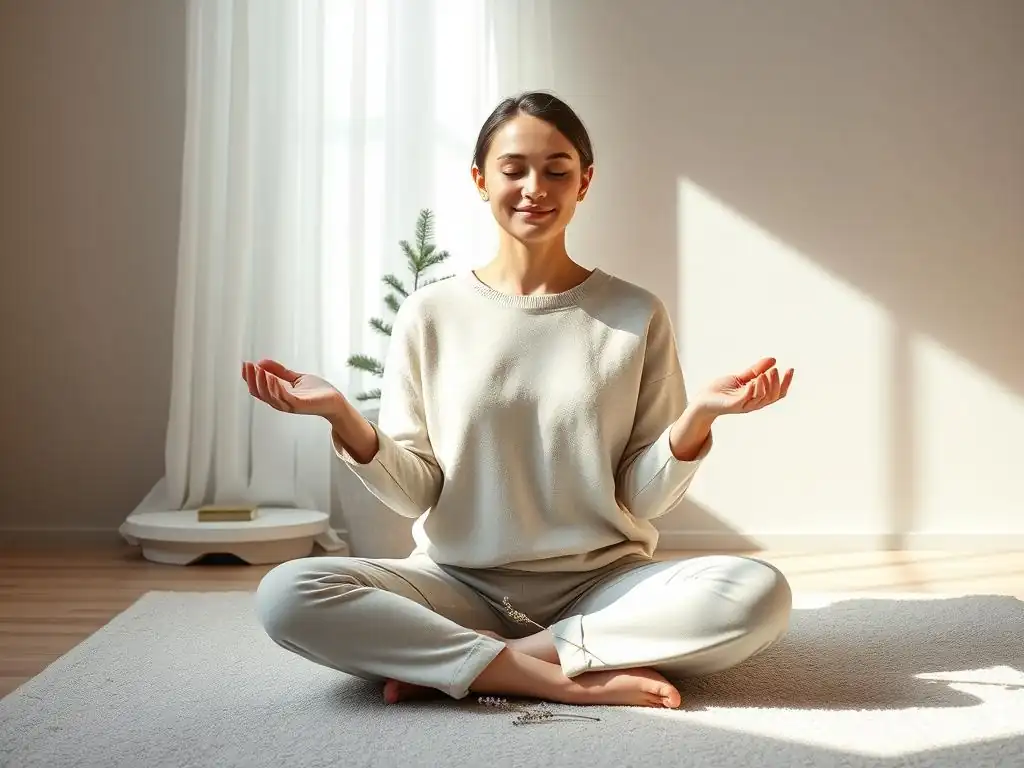
Finding a comfortable and stable posture is the first physical step in preparing for mindfulness meditation for anxiety relief. While many people visualize meditation as sitting cross-legged on the floor, this is not the only way, nor is it necessary. The most important aspect is choosing a posture where your body can be relatively still and comfortable for the duration of the practice. You can sit on a chair with your feet flat on the floor, supported by the back of the chair, or sit on a cushion on the floor with legs crossed or extended.
Ensure your spine is relatively straight but not rigid. Imagine a string gently pulling you up from the crown of your head. Relax your shoulders down and away from your ears. Your hands can rest comfortably on your lap or knees. If sitting is uncomfortable, you can also practice lying down, though there's a slightly higher risk of falling asleep. The key is to find a posture that allows you to remain alert yet relaxed, supporting your ability to focus on the present moment during your guided mindfulness meditation for anxiety relief.
Focusing on Your Breath: The Anchor of Mindfulness
The breath is often used as the primary anchor in mindfulness meditation. It is always available and happens automatically, making it a perfect object of attention for grounding in the present moment. Once you are in a comfortable posture, the guided meditation will typically invite you to bring your awareness to your breath. You don't need to change your breathing in any way; simply observe it as it naturally is.
Notice the physical sensations of the breath entering and leaving your body. Where do you feel it most prominently? It might be the rise and fall of your abdomen, the expansion and contraction of your chest, or the sensation of air moving through your nostrils.
Pay attention to the subtle nuances – the temperature difference between the inhale and exhale, the pause between breaths. By focusing gently on these sensations, you are directing your attention away from anxious thoughts and towards the immediate, physical reality of your breath. This simple act is a powerful component of mindfulness meditation for anxiety relief.
Acknowledging and Accepting Thoughts and Feelings Without Judgment
A common misconception about mindfulness meditation is that you need to stop thinking or feel completely calm. In reality, thoughts and feelings will inevitably arise, especially when practicing mindfulness meditation for anxiety relief. The practice is not about suppressing them, but about developing a different relationship with them – one of acknowledgment and acceptance, rather than resistance or judgment. When a thought or feeling arises, the practice is to simply notice it.
Imagine your thoughts and feelings as clouds floating across the sky. You see them, you know they are there, but you don't need to chase them or try to push them away. Simply label them internally if helpful (e.g., "thinking," "worry," "sadness") and then gently guide your attention back to your chosen anchor, usually the breath. This non-judgmental observation is a cornerstone of mindfulness and is particularly therapeutic for anxiety, as it helps to break the cycle of self-criticism and fear associated with anxious thoughts and feelings.
Returning Your Focus to the Breath When the Mind Wanders
It is completely normal for the mind to wander during meditation. In fact, noticing that your mind has wandered and gently bringing it back is a fundamental part of the practice, often referred to as the "repetition" or "bicep curl" of meditation. Don't view mind-wandering as a failure. Every time you notice your mind has drifted – perhaps into planning, worrying, or reminiscing – that moment of awareness is a success.
Once you notice your mind has wandered, acknowledge where it went without judgment. There's no need for frustration or self-recrimination. Simply say to yourself, "My mind wandered," and with kindness and patience, gently redirect your attention back to the sensation of your breath or whatever anchor the guided meditation is using. This repeated process of noticing wandering and returning is how you build the mental muscle of attention and focus, which is incredibly beneficial for disrupting anxious thought loops and strengthening your capacity for mindfulness meditation for anxiety relief.
Advanced Techniques in Guided Mindfulness Meditation for Anxiety
Body Scan Meditation for Anxiety Reduction
The body scan is a powerful mindfulness technique that involves systematically bringing awareness to different parts of the body, often starting from the toes and moving up to the head. It's particularly effective for anxiety because anxiety often manifests physically (tension, restlessness, rapid heartbeat). By intentionally focusing on bodily sensations, you can become more attuned to where tension is held and learn to consciously release it.
During a guided body scan for anxiety reduction, the guide will prompt you to bring gentle, non-judgmental awareness to each body part. You simply notice any sensations present – warmth, tingling, pressure, discomfort, or absence of sensation. There's no need to change anything, just observe. If you encounter areas of tension, you might be guided to breathe into that area on the inhale and imagine releasing the tension on the exhale. This practice helps to ground you in the physical present, reducing the tendency to get lost in anxious thoughts, and fostering a greater sense of embodiment and relaxation.
Loving-Kindness Meditation for Self-Compassion and Anxiety
Loving-kindness meditation, also known as Metta meditation, is a practice that cultivates feelings of warmth, compassion, and kindness towards oneself and others. While it might not seem directly related to anxiety at first glance, it is incredibly effective because anxiety often involves harsh self-judgment and fear of others' judgment. By intentionally directing kindness inwards, you counteract the critical inner voice that fuels much anxiety.
The practice typically involves silently repeating phrases that express loving-kindness, first towards yourself (e.g., "May I be free from suffering," "May I be happy," "May I be at peace"), then towards loved ones, neutral persons, difficult persons, and eventually all beings. For someone experiencing anxiety, focusing on the self-compassion aspect is vital. Allowing yourself to receive kindness and acknowledging your own struggles with empathy can significantly reduce the burden of anxiety and foster a sense of inner safety and acceptance. Many find this form of mindfulness meditation for anxiety relief deeply comforting and healing.
Using Visualization Techniques in Guided Meditation
Visualization is another technique sometimes incorporated into guided mindfulness meditation, offering a different pathway to calm and focus, especially beneficial for managing anxiety. This involves creating mental images or scenes suggested by the guide to evoke specific feelings or states of mind. For anxiety relief, visualizations often involve peaceful natural settings, such as a calm lake, a serene forest, or a safe, comforting space.
The guide might lead you through imagining yourself in this peaceful environment, engaging your senses – what do you see, hear, smell, feel? By immersing yourself in this imagined tranquil scene, you can help soothe the nervous system and distract the mind from anxious thoughts.
Other visualizations might involve imagining releasing worries like leaves floating down a stream or breathing in calming light and breathing out tension. While not a core mindfulness technique in the same way as breath awareness, visualization can be a powerful complementary tool within guided mindfulness meditation for anxiety relief, helping to create a sense of safety and calm.
Integrating Mindfulness Meditation into Your Daily Life for Long-Term Anxiety Relief
Establishing a Consistent Mindfulness Practice Routine
Consistency is far more important than duration when it comes to reaping the long-term benefits of mindfulness meditation for anxiety relief. Aim for a regular practice, even if it's just 5-10 minutes daily. Finding a specific time that works for you can help establish a routine – perhaps first thing in the morning, during a lunch break, or before bed. Treat it like any other important appointment you wouldn't skip.
Consider using triggers or cues to remind you to practice. This could be setting an alarm, meditating immediately after brushing your teeth, or doing it before starting your workday. Starting small and gradually increasing the time as you feel comfortable is a sustainable approach. Remember that some days will be easier than others; the key is to return to the practice without judgment, even if you missed a day or felt distracted during the session. Building this routine is foundational for experiencing lasting changes in your anxiety levels through mindfulness meditation.
Applying Mindfulness to Everyday Activities
Mindfulness isn't just something you do during a formal meditation session; it's a way of being that can be integrated into countless daily activities. This informal practice can significantly enhance your ability to manage anxiety throughout the day. Choose simple activities to start with, such as eating a meal, washing dishes, walking, or even waiting in line.
When practicing mindfulness during these activities, bring your full attention to the sensory experience. If you're eating, notice the taste, texture, smell, and appearance of your food. If you're walking, feel your feet on the ground and the movement of your body.
When your mind wanders (which it will! ), gently notice where it went and bring your attention back to the sensations of the activity. This continuous practice of returning to the present moment in everyday life strengthens the same skills cultivated during formal mindfulness meditation for anxiety relief, making you more present and less susceptible to getting caught in anxious thought spirals.
Dealing with Challenges and Setbacks in Your Mindfulness Journey
It's important to acknowledge that the path of mindfulness meditation for anxiety relief is not always linear. You will encounter challenges and experience setbacks. There will be days when you feel too anxious, restless, or distracted to meditate. You might miss scheduled sessions or feel like the practice isn't "working." These are normal parts of the process, not failures.
When challenges arise, approach them with the same non-judgmental awareness you cultivate during meditation. Notice the resistance or difficulty without criticizing yourself. Perhaps explore why it feels challenging today. Can you still sit for just 5 minutes? Can you simplify the practice? If you miss a session, simply commit to starting again tomorrow. View setbacks as opportunities to practice self-compassion and resilience. Remembering that mindfulness is a practice, not a destination, helps you navigate these difficulties and maintain your commitment to using mindfulness meditation for anxiety relief as a long-term tool.
Addressing Common Concerns About Mindfulness Meditation
Is Mindfulness Meditation Right for Everyone with Anxiety?
While mindfulness meditation is widely beneficial and supported by research for anxiety relief, it may not be the sole solution or the right starting point for absolutely everyone experiencing anxiety. For individuals with severe anxiety or specific anxiety disorders, particularly those experiencing panic attacks or significant trauma, it can sometimes be challenging to sit quietly with one's thoughts and sensations initially. In some cases, focusing inward without proper guidance might even temporarily increase discomfort.
It's crucial to approach mindfulness meditation for anxiety relief with realistic expectations and, if your anxiety is severe or complex, in conjunction with other therapeutic approaches. For some, starting with shorter guided meditations, meditations focused specifically on relaxation or grounding, or practicing alongside a therapist trained in mindfulness-based therapies (like MBSR or MBCT) can provide necessary support and ensure the practice is helpful rather than overwhelming. While generally safe and effective, individual responses vary, and it's always wise to consider your personal needs and circumstances.
What if I Can't Stop My Mind From Wandering?
One of the most common concerns about mindfulness meditation, especially for those with anxious minds, is the perceived inability to "stop thinking" or prevent the mind from wandering. It's essential to understand that the goal of mindfulness is not to empty the mind or stop thoughts. Thoughts will always arise; that's what minds do. The practice is about changing your relationship to those thoughts.
If your mind is constantly wandering during mindfulness meditation for anxiety relief, it simply means you are human! This is not a sign of failure; it's an opportunity to practice the core skill of mindfulness: noticing where your attention has gone and gently bringing it back to your chosen anchor (like the breath). Each time you notice your mind has wandered, you are succeeding at being mindful. Be patient and kind to yourself. The more you practice gently redirecting your attention without judgment, the stronger your capacity for focus and present-moment awareness will become over time.
How Long Does it Take to See Results from Mindfulness Meditation?
The timeline for experiencing results from mindfulness meditation for anxiety relief varies greatly from person to person and depends on factors like the severity of anxiety, consistency of practice, and individual responsiveness. Some people report feeling a sense of calm or reduced stress after just a single session, while for others, it may take several weeks or even months of regular practice to notice significant changes in their overall anxiety levels.
Many studies on mindfulness-based interventions for anxiety show statistically significant reductions in symptoms after programs lasting typically 8 weeks, with participants practicing daily for 15-45 minutes. However, even shorter, consistent daily practices (e.g., 10-15 minutes) can yield benefits over time. Think of it like physical exercise; you don't get fit after one workout. Building mental fitness through mindfulness meditation for anxiety relief requires consistent effort. Be patient with the process, focus on the practice itself rather than just the outcome, and trust that the cumulative effect of showing up will lead to positive changes.
Resources for Further Exploration of Mindfulness Meditation
Recommended Guided Meditation Apps and Websites
Access to quality guided meditations is crucial for establishing and maintaining a mindfulness practice, especially for anxiety relief. Numerous reputable apps offer large libraries of guided meditations, often categorized by topic (like anxiety, sleep, stress), duration, and technique (body scan, loving-kindness). Popular examples include Calm, Headspace, Insight Timer, and Ten Percent Happier. Many offer free basic content or trial periods.
Beyond apps, many websites from mindfulness centers, universities (like UCLA or Palouse Mindfulness), and non-profit organizations provide free guided meditations. These resources often feature experienced teachers and offer different voices and styles. Exploring these platforms allows you to find guides and meditations that resonate most effectively with your needs for mindfulness meditation for anxiety relief, providing structure and support for your practice anytime, anywhere.
Books and Articles on Mindfulness for Anxiety Relief
For those who wish to deepen their understanding of mindfulness and its application to anxiety, a wealth of literature is available. Books by pioneering figures in the field, such as Jon Kabat-Zinn ("Full Catastrophe Living"), Mark Williams and Danny Penman ("Mindfulness: An Eight-Week Plan for Finding Peace in a Frantic World"), and Tara Brach ("Radical Acceptance"), offer comprehensive insights and practical guidance.
Academic articles and publications from psychological and medical journals provide evidence-based information on the efficacy of mindfulness meditation for anxiety relief. Websites of mental health organizations and research institutions often feature summaries of studies and accessible articles explaining the science behind mindfulness. Engaging with these resources can strengthen your motivation and inform your practice by providing a deeper context for the benefits you are experiencing.
Finding a Qualified Mindfulness Teacher or Therapist
While guided apps and books are excellent resources, working with a qualified mindfulness teacher or a therapist who incorporates mindfulness into their practice can provide personalized support, especially if you are using mindfulness meditation for significant anxiety relief or have a history of trauma. A teacher can offer instruction on posture, technique, and how to navigate challenges that arise during practice.
A therapist trained in mindfulness-based cognitive therapy (MBCT) or mindfulness-based stress reduction (MBSR) can help you integrate mindfulness into a broader therapeutic framework, addressing the root causes and patterns of your anxiety. They can provide tailored guidance, help you work through difficulties that arise during meditation, and ensure that the practice is being used safely and effectively as part of your overall mental well-being plan. Seeking professional guidance can be a valuable step in your journey with mindfulness meditation for anxiety relief.
Conclusion: Embracing Mindfulness for a Calmer and More Peaceful Life
Embracing mindfulness meditation for anxiety relief is a journey, not a quick fix. It involves cultivating a gentle, consistent practice of bringing your attention to the present moment with openness and non-judgment. As you navigate the guided meditations, learn to anchor yourself in your breath, and practice observing thoughts and feelings without getting carried away by them, you are building powerful skills that can significantly reduce the grip of anxiety on your life.
Integrating mindfulness into your daily routine, whether through formal meditation sessions or informal moments of present-moment awareness, strengthens your capacity for resilience and calm. While challenges will inevitably arise, approaching them with patience and self-compassion is part of the practice. By committing to mindfulness meditation for anxiety relief, you are choosing to nurture your inner peace, cultivate a more accepting relationship with yourself, and move towards a calmer, more present, and more peaceful life.
Frequently Asked Questions
How does mindfulness meditation help with anxiety?
Mindfulness meditation helps by teaching you to focus on the present moment without judgment. This reduces anxiety by interrupting racing thoughts and promoting a sense of calm. It also helps you become more aware of your anxiety triggers.
What is guided mindfulness meditation, and how is it different from regular meditation?
Guided mindfulness meditation involves listening to a narrator who leads you through the practice. This is different from regular meditation, where you focus on your breath or a mantra without external guidance, often making it easier for beginners.
How often should I practice mindfulness meditation to see results for anxiety relief?
Consistency is key! Aim for at least 10-15 minutes per day to start experiencing benefits. Many people find that regular practice over several weeks leads to significant anxiety reduction.
Are there any potential side effects of practicing mindfulness meditation?
While generally safe, some individuals may initially experience increased awareness of difficult emotions or physical sensations. It's important to approach mindfulness with patience and, if needed, consult a mental health professional.
Where can I find reliable guided mindfulness meditation resources for anxiety relief?
Mind Care Guide offers a range of guided meditation resources. You can also find apps, websites, and qualified instructors who specialize in mindfulness for anxiety management.
Final Reflection: Cultivating Inner Peace Through Mindfulness
The pervasive anxiety of modern life demands effective coping mechanisms, and mindfulness meditation offers a powerful antidote. Its ability to quiet the racing mind and foster a sense of presence is not merely a trendy wellness practice; it's a crucial skill for navigating the complexities of the 21st century. The techniques explored in this article – from body scans to mindful breathing – provide accessible pathways to this transformative state.
The impact of mindfulness on our collective well-being is undeniable. It's reshaping how we approach stress, fostering resilience, and promoting a deeper understanding of ourselves. Mindfulness means paying attention in a particular way: on purpose, in the present moment, and non-judgmentally.
– Jon Kabat-Zinn. This simple yet profound definition encapsulates the power of this practice to shift our perspective and cultivate inner peace, impacting not only our individual lives but also our relationships and our communities.
Now, consider how you can integrate these practices into your daily routine. Even five minutes of mindful breathing can make a significant difference. Don't wait for a crisis to emerge before seeking solace in the present moment. Begin today. Explore the techniques discussed, experiment with what resonates most with you, and allow the transformative power of mindfulness to gently unravel the knots of anxiety and stress, revealing the calm and clarity that lies within.
Unlock Your Inner Calm: Start Your Mindfulness Journey Today!
Thank you for taking the time to explore the power of mindfulness with us! We hope you gained valuable insights into how guided practice can transform your daily life. Now it's time to put your new knowledge into action.
- Begin your personalized mindfulness practice: Download our free guided meditation (available on MindCareGuide.org – not a real link, please download from your site). This is your first step toward a calmer, more focused you.
- Share your experience: Tell us about your first meditation session! We'd love to hear your thoughts and experiences in the comments below. Let's build a supportive community together.
- Explore additional resources: Dive deeper into mindfulness techniques by exploring other articles on MindCareGuide.org (again, not a real link). Discover new ways to integrate mindfulness into your daily routine.
What small step will you take today to cultivate more mindfulness in your life?