
The Powerful Benefits of Body Scan Meditation for Stress and Anxiety

Welcome to Mind Care Guide, a space dedicated to nurturing your mental well-being.
Feeling overwhelmed by stress and anxiety? You're not alone. Many find solace and relief through mindfulness practices. This article delves into a powerful yet simple technique: body scan meditation. Discover how this practice can help you reconnect with your body, calm your mind, and find moments of peace amidst the chaos. Ready to explore the transformative benefits of body scan meditation for stress anxiety? Let's begin.
The Powerful Benefits of Body Scan Meditation for Stress and Anxiety
- Understanding Body Scan Meditation and its Role in Stress Reduction
- Key Benefits of Body Scan Meditation for Managing Stress and Anxiety
-
Step-by-Step Guide to Practicing Body Scan Meditation for Anxiety Relief
- Preparing for Your Body Scan Meditation Session
- Finding a Comfortable Position for Body Scan Practice
- Guiding Your Attention Through Your Body: A Detailed Body Scan Meditation Technique
- Dealing with Distractions During Body Scan Meditation
- Integrating Body Scan Meditation into Your Daily Routine for Sustained Stress Reduction
- Body Scan Meditation Techniques and Variations for Different Needs
- Overcoming Challenges and Optimizing Your Body Scan Meditation Practice
- Complementary Practices to Enhance the Benefits of Body Scan Meditation
- Real-Life Examples: Body Scan Meditation Success Stories for Stress and Anxiety
- Resources for Learning More About Body Scan Meditation and Anxiety Relief
- Conclusion: Embracing Body Scan Meditation for a Calmer, More Present You
-
Frequently Asked Questions
- What is body scan meditation and how does it relate to stress and anxiety?
- How can body scan meditation help with managing stress?
- How often should I practice body scan meditation to see benefits for stress and anxiety?
- Are there any specific resources mentioned in the Mind Care Guide for learning body scan meditation?
- Can body scan meditation be used in conjunction with other stress and anxiety management techniques?
- Final Reflection: Unraveling the Calm Within Through Body Scan Meditation
- Unlock Your Inner Calm: Start Your Body Scan Journey Today!
Understanding Body Scan Meditation and its Role in Stress Reduction
What is Body Scan Meditation? A Beginner's Guide
Body scan meditation is a core mindfulness practice that involves systematically bringing your attention to different areas of your body, from head to toe. The goal isn't necessarily to relax or change anything, but rather to cultivate awareness of physical sensations without judgment. This includes noticing feelings of warmth, coolness, tingling, pressure, or even absence of sensation, simply observing them as they are in the present moment. It’s a foundational technique often taught in mindfulness-based programs, designed to anchor your awareness in the physical reality of your body, helping to interrupt cycles of worried or anxious thought.
This practice typically involves lying down or sitting comfortably, closing your eyes, and directing your attention sequentially through different body parts, such as the toes, feet, ankles, legs, torso, arms, neck, and head. As you move your attention, you simply acknowledge whatever sensations are present, allowing thoughts and feelings to come and go without getting caught up in them. The aim is to develop a deeper connection with your physical self, recognizing that your body is a constant source of present-moment information, which can be incredibly grounding when experiencing stress and anxiety.
How Body Scan Meditation Differs from Other Mindfulness Practices
While many mindfulness practices cultivate present-moment awareness, body scan meditation specifically focuses on the physical realm. Unlike practices that might center on the breath alone, walking, or observing thoughts, the body scan systematically explores the entire physical form as the primary object of attention. This deliberate, step-by-step approach helps train the mind to focus and remain present, even when encountering discomfort or restlessness. It provides a structured pathway for beginners to learn mindfulness.
Other forms of meditation might involve open awareness (simply noticing whatever arises in consciousness), loving-kindness (cultivating compassionate feelings), or focused attention on a single object like a candle flame. The body scan's unique contribution lies in its comprehensive physical exploration, which can be particularly effective for individuals who tend to intellectualize their experiences or get lost in thought patterns. By bringing awareness back to the tangible sensations of the body, body scan meditation helps to interrupt the mental rumination often associated with stress and anxiety, offering a direct route to grounding in the here and now.
The Science Behind Body Scan Meditation and its Impact on Anxiety
Research into mindfulness practices, including body scan meditation, suggests tangible effects on the brain and nervous system that are relevant to managing anxiety. Studies using fMRI scans have indicated that regular mindfulness practice can lead to changes in brain regions associated with attention, self-awareness, and emotion regulation, such as the prefrontal cortex and the amygdala. The amygdala, often referred to as the brain's fear center, appears to show decreased reactivity to stressors in experienced meditators, suggesting a reduced "fight or flight" response.
Furthermore, body scan meditation can influence the body's physiological stress response. Chronic stress and anxiety can lead to elevated levels of cortisol, the primary stress hormone. While individual results vary, some studies have found that consistent mindfulness practice can contribute to lower cortisol levels over time. Additionally, by promoting relaxation and present-moment focus, body scan meditation can help shift the nervous system from a sympathetic (stress) state to a parasympathetic (rest and digest) state, leading to slower heart rate, lower blood pressure, and reduced muscle tension, all of which are indicators of decreased physiological stress and anxiety.
Key Benefits of Body Scan Meditation for Managing Stress and Anxiety
Reducing Stress and Anxiety Through Body Awareness
One of the most significant benefits of body scan meditation for stress and anxiety is its ability to build body awareness. Many people experiencing anxiety are disconnected from their physical sensations, often unaware of muscle tension, shallow breathing, or restlessness until these symptoms become overwhelming. The body scan practice teaches you to tune into these subtle signals early on.
By systematically noticing sensations without judgment, you develop a greater understanding of how stress and anxiety manifest physically in your body. This awareness is the first step towards managing these states, allowing you to recognize the onset of stress rather than being blindsided by it.
Moreover, this heightened body awareness cultivated through body scan meditation provides an anchor in the present moment. When the mind is racing with worries about the future or regrets about the past – common features of anxiety – bringing attention back to the concrete sensations of the body offers a reliable way to ground yourself.
This simple act of focusing on physical reality disrupts the cycle of anxious thought and provides a sense of stability. Over time, this practice can help reduce the intensity and frequency of stress responses by fostering a more mindful and less reactive relationship with uncomfortable physical sensations associated with anxiety.
Body Scan Meditation for Improved Sleep Quality and Relaxation
Stress and anxiety are significant contributors to sleep disturbances, including difficulty falling asleep, staying asleep, and experiencing restless sleep. The practice of body scan meditation directly addresses the mental and physical tension that often prevents restful sleep. By guiding attention through the body and releasing held tension, the practice promotes a state of deep relaxation. Furthermore, the focus on present-moment physical sensation helps quiet the "monkey mind" – the incessant stream of thoughts that keeps many people awake at night.
Regular engagement with body scan meditation has been shown in various studies and personal accounts to improve sleep quality. For instance, participants in mindfulness programs incorporating body scan often report falling asleep faster and experiencing fewer awakenings during the night.
The empathetic, non-judgmental awareness fostered by the practice can also help individuals relate differently to insomnia-related worries, reducing the anxiety about not sleeping that often perpetuates the problem. Incorporating a body scan before bed can become a powerful ritual to prepare the body and mind for rest, making it a valuable tool for those struggling with sleep issues linked to body scan meditation stress anxiety.
Alleviating Physical Tension and Pain with Body Scan Techniques
Stress and anxiety often manifest as physical tension – tight shoulders, clenched jaw, stomach discomfort, or headaches. Chronic stress can even exacerbate or contribute to chronic pain conditions. Body scan meditation offers a method to become aware of this tension and, sometimes, to release it. As you move your attention through different body parts, you learn to notice where tension is held. The practice encourages you to simply acknowledge these sensations without trying to force them away, which paradoxically can sometimes lead to a softening or release of the tension.
Furthermore, by changing your relationship with physical sensations, body scan meditation can help alleviate the suffering associated with physical pain, even if the pain itself doesn't disappear entirely. Instead of reacting with fear, frustration, or resistance to pain signals, the body scan teaches you to observe the sensations with curiosity and acceptance.
This shift in perspective can reduce the emotional distress linked to pain, making it more manageable. Case studies and patient reports from pain management clinics utilizing mindfulness often highlight how body scan meditation helps individuals find moments of relief and develop greater tolerance and acceptance of chronic physical discomfort.
Enhancing Emotional Regulation and Self-Awareness Through Body Scans
Body scan meditation is not just about the physical; it significantly impacts emotional well-being. By regularly tuning into your body, you become more aware of how emotions are felt physically. For example, you might notice a tightening in your chest when you feel fear or a warmth in your stomach when you feel joy. This increased sensitivity to the physical manifestations of emotions provides valuable information about your internal state, enhancing overall self-awareness.
This heightened awareness is crucial for emotional regulation. When you can identify an emotion early by recognizing its physical signature, you have a greater opportunity to choose how to respond rather than reacting impulsively.
Instead of being overwhelmed by a wave of anxiety, you might notice the familiar knot in your stomach and consciously apply coping strategies learned through mindfulness, like pausing or taking a deep breath. Body scan meditation helps create a crucial pause between stimulus (an emotion or stressor) and response, fostering greater emotional intelligence and reducing reactivity, which is particularly beneficial for managing body scan meditation stress anxiety.
Step-by-Step Guide to Practicing Body Scan Meditation for Anxiety Relief
Preparing for Your Body Scan Meditation Session
Setting the stage for your body scan meditation practice can significantly enhance its effectiveness for managing stress and anxiety. Choose a quiet time and place where you are unlikely to be disturbed for at least 15-20 minutes. Turn off your phone and other potential distractions. While traditionally done lying down, you can also practice sitting if that is more comfortable or practical. The key is to find a position where you can remain relatively still and alert without falling asleep, though falling asleep is also okay if you are practicing for relaxation before bed.
Consider making the space comfortable. You might want a mat or blanket if lying on the floor, or a cushion for your head or knees. If sitting, ensure your back is supported and your feet are flat on the floor or legs are crossed comfortably. The preparation is less about creating a perfect, sterile environment and more about signaling to yourself that this is a dedicated time for self-care and present-moment awareness, helping to transition your mind away from daily stresses and towards the practice of body scan meditation for stress anxiety relief.
Finding a Comfortable Position for Body Scan Practice
The most common position for body scan meditation is lying flat on your back. Find a comfortable surface, such as a yoga mat, rug, or bed. Allow your legs to be slightly apart, with your feet falling gently outward. Your arms can rest by your sides, palms facing up or down, whichever feels natural. The aim is to allow your body to feel fully supported and relaxed, minimizing any physical distractions. If lying down isn't comfortable due to back issues or the risk of falling asleep, sitting is a perfectly acceptable alternative.
If sitting, choose a chair where you can sit upright with your feet flat on the floor, or sit cross-legged on a cushion. Ensure your spine is relatively straight but not rigid, allowing your shoulders to relax. Rest your hands comfortably in your lap or on your thighs. The goal of finding a comfortable position is to minimize physical discomfort so that your attention can be more easily directed towards the systematic exploration of body sensations during the body scan meditation, rather than being preoccupied with fidgeting or pain.
Guiding Your Attention Through Your Body: A Detailed Body Scan Meditation Technique
Begin by gently closing your eyes or softening your gaze. Take a few deep breaths, exhaling slowly, perhaps letting go of some initial tension. Bring your awareness to the physical sensation of your body resting on the surface beneath you. Notice the points of contact and the feeling of gravity. Then, consciously direct your attention to your toes. Simply notice any sensations present in your toes – warmth, coolness, tingling, pressure, or perhaps nothing at all. There's no need to change anything, just observe.
Slowly and deliberately, move your attention through your body: from your toes, to the soles of your feet, the tops of your feet, and your ankles. Spend a few moments with each area, simply observing. Then move up to your lower legs, knees, upper legs, and hips. Notice the sensations in your pelvis and lower back. Continue moving through your abdomen, upper back, chest, and shoulders. Then direct your attention down your arms to your hands and fingers, noticing sensations there. Finally, bring your awareness up through your neck and into your head, including your jaw, face, and scalp. After scanning all the individual parts, spend a few moments feeling the body as a whole. When you are ready, gently open your eyes. This systematic journey through the body is the core of the body scan meditation technique, offering a powerful way to ground yourself and reduce stress and anxiety.
Dealing with Distractions During Body Scan Meditation
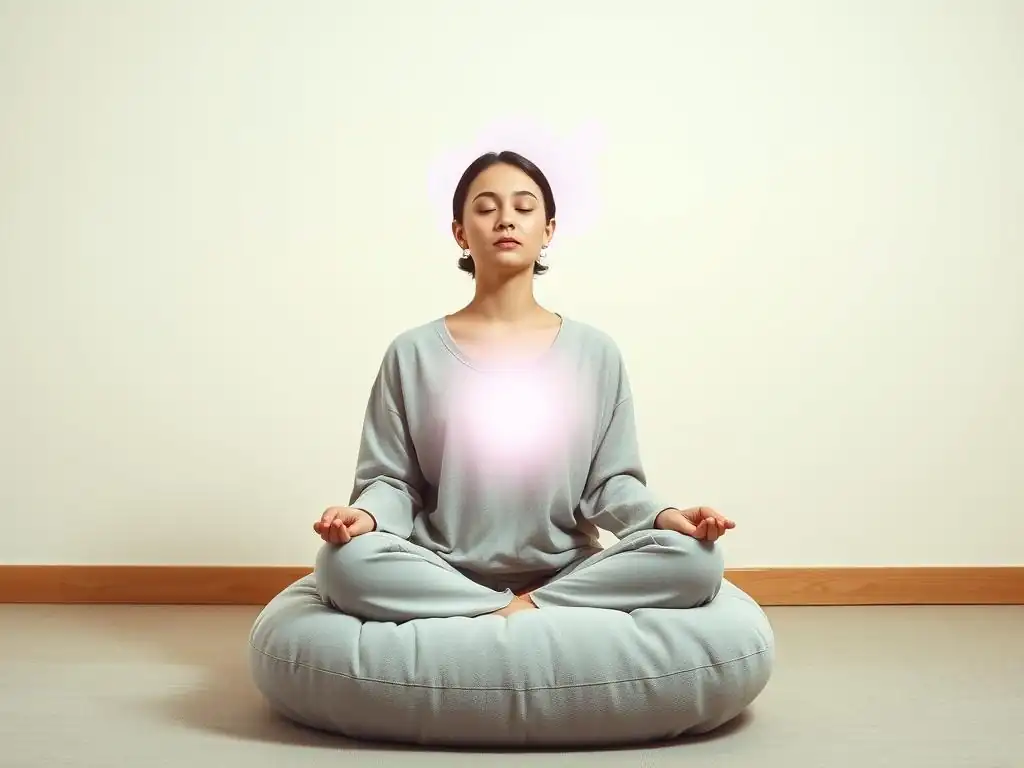
It is completely normal for your mind to wander during body scan meditation, especially when you are new to the practice or are experiencing significant stress or anxiety. Thoughts, feelings, sounds, and physical discomforts will arise. The key is not to get rid of these distractions, but to notice them without judgment and gently guide your attention back to the intended area of the body you are scanning. Think of your attention as a curious explorer, gently returning to its map whenever it gets sidetracked.
When you notice your mind has wandered – perhaps you started thinking about your to-do list or replaying a conversation – simply acknowledge where your mind went without criticizing yourself. This acknowledgment itself is an act of mindfulness. Then, with kindness, redirect your focus back to the part of the body you were just scanning or the next part in the sequence. Each time you notice your mind wandering and bring it back, you are strengthening the "muscle" of attention and cultivating patience and self-compassion, essential qualities for managing body scan meditation stress anxiety.
Integrating Body Scan Meditation into Your Daily Routine for Sustained Stress Reduction
Consistency is key to reaping the full benefits of body scan meditation for sustained stress reduction and anxiety management. Aim to practice regularly, even if it's just for 10-15 minutes a few times a week initially. Consider scheduling your practice at the same time each day – perhaps in the morning to start your day grounded, or in the evening to unwind. Even short, frequent sessions can be more beneficial than infrequent long ones.
Look for opportunities to bring brief moments of body awareness into your day outside of formal practice. This could be noticing the sensations in your feet while standing in line, feeling the water while washing your hands, or observing the tension in your shoulders while working.
These micro-body scans reinforce the skills learned in formal practice and help you stay more present throughout the day, reducing the buildup of stress. Making body scan meditation a regular part of your routine builds resilience and provides a reliable tool for navigating the challenges of daily life with greater ease and less anxiety.
Body Scan Meditation Techniques and Variations for Different Needs
Guided Body Scan Meditation vs. Unguided Practice
For beginners, guided body scan meditations are highly recommended. A recording or a teacher leads you through the practice, prompting you to bring attention to specific body parts and offering gentle reminders to return your focus when your mind wanders. This can make the practice feel more accessible and less daunting, providing structure and support as you learn the technique. Many apps and websites offer guided body scans of varying lengths, making it easy to find one that suits your needs and available time.
Once you become more familiar with the process and feel comfortable directing your attention, you might choose to explore unguided body scan meditation. In unguided practice, you take yourself through the body scan sequence at your own pace. This offers greater flexibility and allows you to spend more or less time on different areas as needed. Unguided practice deepens your personal connection to the technique and fosters a greater sense of autonomy in your mindfulness practice, which can be empowering when actively working to manage body scan meditation stress anxiety.
Short Body Scan Meditation for Quick Stress Relief
You don't always need 20 or 30 minutes for a full body scan. Even a short body scan meditation of 3-5 minutes can be effective for quick stress relief. When you feel tension building, anxiety rising, or your mind becoming overwhelmed, take a few moments to pause. Close your eyes if possible, or simply soften your gaze. Take three conscious breaths, focusing on the sensation of the air entering and leaving your body.
Then, quickly scan through your body, perhaps focusing just on the areas where you tend to hold tension, like your shoulders, jaw, or stomach. Or simply bring awareness to your feet on the ground, feeling the support beneath you. This brief anchor in physical reality can interrupt the stress response, ground you in the present, and provide a moment of calm amidst a hectic day. Practicing these short body scans regularly builds your capacity to access calm quickly when needed, a valuable skill for managing body scan meditation stress anxiety on the go.
Body Scan Meditation for Chronic Pain Management
Body scan meditation is a well-established component of mindfulness-based programs for chronic pain, like MBSR. When using the body scan for pain, the focus shifts from relaxation (though that may occur) to cultivating a different relationship with the pain itself. Instead of resisting or fearing the pain, the practice encourages observing the sensations associated with pain with curiosity and non-judgment. You might notice the intensity, quality (throbbing, sharp, dull), location, and how it changes over time, treating the pain sensations simply as information.
This approach helps decouple the sensation of pain from the suffering caused by the emotional reaction to it (fear, anger, despair). By bringing mindful awareness to the painful area, individuals learn that pain sensations are not static and can be observed without being overwhelmed. While body scan meditation does not necessarily eliminate pain, it can significantly reduce the emotional distress and anxiety associated with it, improving quality of life for individuals living with chronic conditions. Studies have shown improvements in pain acceptance and functional capacity in patients who incorporate body scan meditation stress anxiety management techniques into their routine.
Using Body Scan Meditation to Address Performance Anxiety
Performance anxiety, whether related to public speaking, sports, exams, or artistic performance, often involves intense physical symptoms like rapid heart rate, sweating, trembling, and a racing mind focused on potential failure. Body scan meditation can be a powerful tool to manage these pre-performance jitters. By practicing body scan regularly, you become more attuned to the physical signs of anxiety as they arise.
Before a performance, a brief body scan can help ground you. Instead of trying to suppress the physical sensations of anxiety, you can use the body scan to acknowledge them with acceptance: "Okay, my heart is racing, my hands feel clammy. This is what anxiety feels like in my body right now." This non-judgmental observation can diffuse the intensity of the fear. It shifts your focus from the catastrophic thoughts in your head to the tangible, present-moment reality of your physical experience, helping to regulate the nervous system and reduce the grip of performance-related body scan meditation stress anxiety.
Overcoming Challenges and Optimizing Your Body Scan Meditation Practice
Common Challenges in Body Scan Meditation and How to Address Them
Many people encounter challenges when starting body scan meditation. A very common one is the mind constantly wandering. You might feel frustrated or think you're "doing it wrong." Remember, the goal isn't to have a completely empty mind, but to notice when your mind wanders and gently bring it back. Each time you do this, you are strengthening your attention muscle. Be patient and compassionate with yourself; it's a skill that develops over time.
Another challenge is feeling restless or uncomfortable, either physically or emotionally. Sometimes, bringing awareness to the body can highlight areas of tension or even buried emotions. If discomfort arises, try directing your breath towards that area, imagining softening around it. If the discomfort is intense, it's okay to gently shift your position or even pause the practice. The key is to approach discomfort with curiosity rather than aversion. For those dealing with significant trauma, it's advisable to practice body scan meditation stress anxiety relief under the guidance of a qualified mindfulness teacher or therapist.
Tips for Deepening Your Body Scan Meditation Experience
To deepen your body scan meditation practice, try experimenting with different times of day or durations. Some find morning practice grounding, while others prefer evening for relaxation. Varying the length (from 5 minutes to 45 minutes) can also provide different experiences. Pay close attention to subtle sensations – not just obvious ones like pain or tingling, but also temperature, vibration, or simply the feeling of space within a body part.
Cultivating an attitude of curiosity and kindness towards your body is crucial. Approach the scan not as a task to be completed, but as an exploration. What can you notice today that you didn't notice yesterday? Can you meet any discomfort or restlessness with gentle acceptance? Consistent, non-judgmental practice is the most effective way to deepen your body scan meditation experience and enhance its power in managing body scan meditation stress anxiety.
The Importance of Consistency in Body Scan Meditation for Anxiety Management
Like any skill, the benefits of body scan meditation for anxiety management are cumulative and depend heavily on consistent practice. Sporadic sessions may offer temporary relief, but regular engagement – even daily short sessions – is what leads to lasting changes in your relationship with stress and anxiety. Consistency helps train your nervous system to respond differently to stressors over time.
Aiming for daily practice, even if it's just 10 minutes, builds mindfulness into a habit. This regular exposure to present-moment awareness strengthens the neural pathways associated with focus, emotional regulation, and reduced reactivity. Over weeks and months of consistent body scan meditation, you'll likely find yourself becoming more aware of your body's signals earlier, better able to tolerate discomfort, and more capable of choosing a mindful response instead of being overwhelmed by body scan meditation stress anxiety.
Complementary Practices to Enhance the Benefits of Body Scan Meditation
Combining Body Scan Meditation with Deep Breathing Exercises
Integrating deep breathing exercises with body scan meditation can significantly enhance its calming effects. Before starting your body scan, take a few minutes to practice conscious, deep breathing. Inhale slowly through your nose, allowing your abdomen to expand, and exhale slowly through your mouth or nose. Focus your attention entirely on the sensation of the breath.
During the body scan itself, if you encounter an area of tension or discomfort, you can gently direct your breath towards that area. Imagine your inhale bringing ease to the spot and your exhale releasing tension from it. This combination leverages the grounding power of the body scan with the physiological calming effect of deep breathing, creating a potent synergy for reducing body scan meditation stress anxiety.
Yoga and Body Scan Meditation: A Synergistic Approach
Yoga and body scan meditation are natural complements. Both practices cultivate body awareness, though yoga adds movement and physical postures. Engaging in yoga helps you become more aware of your body's physical sensations, limits, and capabilities in motion. This heightened awareness gained through yoga can then deepen your ability to notice subtle sensations during a stationary body scan.
Conversely, the non-judgmental awareness learned in body scan meditation can transform your yoga practice. Instead of pushing through discomfort or comparing yourself to others, you can approach each pose with curiosity, noticing the sensations present without judgment. Combining these practices offers a holistic approach to well-being, addressing both physical tension and mental stress, proving effective for managing body scan meditation stress anxiety.
Mindfulness-Based Stress Reduction (MBSR) and Body Scan Meditation
Body scan meditation is a foundational practice within the widely recognized Mindfulness-Based Stress Reduction (MBSR) program, developed by Jon Kabat-Zinn. MBSR is an intensive, eight-week course that teaches a range of mindfulness practices, including sitting meditation, walking meditation, mindful movement (like gentle yoga), and particularly, the body scan.
Participating in an MBSR program provides a structured and supportive environment to learn and integrate body scan meditation and other techniques into your life. Research consistently shows that completing an MBSR program leads to significant reductions in self-reported stress, anxiety, and symptoms of depression. The body scan is a cornerstone of this success, demonstrating its power within a comprehensive framework for addressing body scan meditation stress anxiety.
Real-Life Examples: Body Scan Meditation Success Stories for Stress and Anxiety
Managing Test Anxiety with Body Scan Meditation
Consider Sarah, a college student who struggled intensely with test anxiety. Before exams, her heart would pound, her hands would shake, and her mind would go blank despite hours of studying. A counselor suggested body scan meditation. Sarah started practicing for 15 minutes each evening. Initially, she found it hard to stay focused, but she persisted. She learned to notice the physical sensations of anxiety – the tightness in her chest, the butterflies in her stomach – without letting them escalate into panic.
Before her next major exam, instead of trying to force the anxiety away, Sarah did a quick 5-minute body scan in the hallway. She acknowledged the racing heart and trembling hands with curiosity, thinking, "Okay, this is what test anxiety feels like right now." By anchoring her attention in her body, she was able to interrupt the spiral of catastrophic thoughts.
She still felt nervous, but the intensity was significantly reduced, and she was able to access the information she had studied, performing better than she had on previous tests. This example highlights how body scan meditation stress anxiety management can be practical and effective in acute situations.
Body Scan Meditation for Reducing Generalized Anxiety Disorder Symptoms
Take the case of David, who experienced chronic, low-grade generalized anxiety disorder (GAD). He often felt a pervasive sense of worry, muscle tension, and restlessness. Therapy helped him understand his thought patterns, but he struggled with the persistent physical symptoms. He began incorporating a daily 20-minute body scan meditation into his routine, often in the morning.
Through consistent practice, David became much more attuned to the subtle signs of rising anxiety in his body – a slight clenching in his jaw, a shallowing of his breath, a knot in his stomach. By noticing these signs early through his body scan practice, he could apply coping strategies before the anxiety became overwhelming.
He reported feeling less reactive to his anxious thoughts and experiencing fewer days dominated by pervasive worry. While not a cure, body scan meditation became a vital tool in his overall strategy for managing the chronic physical and mental symptoms of body scan meditation stress anxiety.
Resources for Learning More About Body Scan Meditation and Anxiety Relief
Recommended Guided Body Scan Meditations and Apps
Many resources are available to help you get started with guided body scan meditation. Numerous meditation apps, such as Calm, Headspace, Insight Timer, and Ten Percent Happier, offer guided body scan sessions ranging from 5 to 45 minutes, often categorized by length or purpose (e.g., for sleep, for stress). Many of these apps offer introductory courses that include the body scan as a foundational practice.
Additionally, websites associated with mindfulness centers and teachers often provide free audio recordings of guided body scans. Searching online for "guided body scan meditation for anxiety" will yield many options. Look for recordings by experienced mindfulness teachers who have a clear and gentle voice and pace that feels comfortable for you. Experiment with different guides until you find one that resonates, making your initial steps into body scan meditation stress anxiety relief smoother.
Books and Articles on Body Scan Meditation and Mindfulness
Numerous books delve into the practice of body scan meditation and its benefits for stress and anxiety. "Full Catastrophe Living" by Jon Kabat-Zinn, the founder of MBSR, provides a comprehensive overview of the program, with detailed instructions for the body scan. Other authors like Tara Brach ("Radical Acceptance") and Sharon Salzberg ("Real Happiness") also discuss body scan within the broader context of mindfulness and meditation.
Academic articles and research papers on the effects of mindfulness and body scan meditation on anxiety, stress, and physiological markers are widely available through university libraries and online databases like PubMed. While sometimes technical, these resources provide the scientific evidence supporting the practice. Exploring these materials can deepen your understanding of why body scan meditation is effective for body scan meditation stress anxiety.
Finding a Qualified Mindfulness Teacher for Body Scan Guidance
For those seeking more in-depth guidance, especially if dealing with significant anxiety or trauma, learning body scan meditation from a qualified mindfulness teacher can be invaluable. A teacher can provide personalized instruction, answer questions, and offer support as you navigate challenges in your practice. They can also help tailor the practice to your specific needs.
Organizations like the Center for Mindfulness in Medicine, Health Care, and Society at the University of Massachusetts Medical School (where MBSR originated) or other reputable mindfulness training institutes often have directories of certified teachers. Searching for MBSR teachers in your local area or online can help you find qualified individuals. Learning body scan meditation stress anxiety management from an experienced teacher can provide a solid foundation and ongoing support for your journey.
Conclusion: Embracing Body Scan Meditation for a Calmer, More Present You
Body scan meditation offers a simple yet profound pathway to greater well-being by cultivating a mindful connection with your physical self. For those grappling with stress and anxiety, this practice provides a powerful tool to become more aware of physical tension, emotional reactivity, and the tendency for the mind to get lost in worry. By systematically directing attention through the body with non-judgmental awareness, you learn to ground yourself in the present moment, interrupt anxious thought spirals, and foster a sense of calm and stability.
Integrating body scan meditation into your life, whether through short daily practices, longer guided sessions, or as part of a program like MBSR, builds resilience. It's not about eliminating stress or anxiety entirely, but about developing the capacity to meet these experiences with greater awareness, acceptance, and ease. As you become more attuned to your body's signals and less reactive to discomfort, you empower yourself to navigate life's challenges with more presence and less struggle, ultimately leading to a calmer, more embodied, and more present you, effectively managing body scan meditation stress anxiety.
Frequently Asked Questions
What is body scan meditation and how does it relate to stress and anxiety?
Body scan meditation is a mindfulness technique that involves systematically focusing on different parts of your body. It helps reduce stress and anxiety by increasing awareness of physical sensations and promoting relaxation.
How can body scan meditation help with managing stress?
By bringing focused attention to the present moment and your physical sensations, body scan meditation can help break the cycle of anxious thoughts. It allows you to observe stress responses without judgment, promoting emotional regulation.
How often should I practice body scan meditation to see benefits for stress and anxiety?
Consistency is key. Aim for at least 10-15 minutes of body scan meditation several times a week. Regular practice will lead to greater stress reduction and improved anxiety management.
Are there any specific resources mentioned in the Mind Care Guide for learning body scan meditation?
While the article may not explicitly mention specific resources, the Mind Care Guide generally offers a wealth of information, support, and resources for various mental health challenges, including stress and anxiety management techniques like body scan meditation. Check the website's meditation section.
Can body scan meditation be used in conjunction with other stress and anxiety management techniques?
Absolutely! Body scan meditation can be a valuable addition to other strategies like therapy, exercise, and a healthy diet. It's a complementary practice that can enhance overall well-being and reduce the impact of stress and anxiety.
Final Reflection: Unraveling the Calm Within Through Body Scan Meditation
The pervasive nature of stress and anxiety in modern life demands effective coping mechanisms, and body scan meditation offers a powerful, accessible antidote. Its ability to ground us in the present moment, fostering self-awareness and reducing the grip of anxious thoughts, is more crucial than ever in our fast-paced world. This simple yet profound practice offers a pathway to a calmer, more resilient self.
The impact of body scan meditation extends far beyond individual stress reduction; it's a tool that cultivates a deeper understanding of our physical and emotional selves. It encourages a mindful relationship with our bodies, often neglected in our busy lives. This mindful awareness can ripple outwards, influencing our interactions with others and fostering a greater sense of self-compassion. As Jon Kabat-Zinn eloquently stated, Mindfulness means paying attention in a particular way: on purpose, in the present moment, and without judgment.
This perfectly encapsulates the essence of body scan meditation and its transformative potential.
You now hold the key to unlocking a profound sense of calm and well-being. Consider incorporating body scan meditation into your daily routine – even just five minutes can make a significant difference. Experiment with different guided meditations, find what resonates with you, and allow yourself to experience the transformative power of connecting with your body and breath. Embrace the journey towards a more peaceful and present you; the rewards are immeasurable.
Unlock Your Inner Calm: Start Your Body Scan Journey Today!
Thanks for taking the time to explore the powerful world of body scan meditation! We hope you now feel equipped with the knowledge to reduce stress and anxiety. Ready to take the next step?
- Begin your first body scan meditation now: Find a quiet space, get comfortable, and let the guided imagery wash over you. Even 5 minutes can make a world of difference.
- Share your experience: Let others know about the benefits you discovered – share this article with a friend or family member who might find it helpful.
- Consider tracking your progress: Start a simple journal to note how your practice impacts your daily life. Note down even small changes. What did you notice differently after your meditation?
Ready to experience the transformative power of regular body scan meditation? What simple changes will you incorporate into your day to prioritize self-care and relaxation?