
Using Objects for Mindfulness: Simple Exercises to Reduce Stress

Welcome to Mind Care Guide, a space dedicated to nurturing your mental well-being.
Are you feeling overwhelmed by the constant demands of daily life? We understand. Discover practical ways to cultivate inner peace and reduce stress with our guide on Mindfulness with Everyday Objects. Unlock simple yet powerful techniques to ground yourself in the present moment, transforming ordinary items into tools for enhanced focus and tranquility. Ready to find calm amidst the chaos? Let's explore together...
- Mindfulness with Everyday Objects: Simple Exercises for Stress Reduction
- Understanding Mindfulness and Stress Reduction
-
Practical Exercises: Mindfulness with Common Objects
- Exercise 1: Mindful Observation of a Raisin (Sensory Awareness)
- Exercise 2: Mindful Breathing with a Stone (Anchoring to the Present)
- Exercise 3: Mindful Eating with a Piece of Chocolate (Savoring the Moment)
- Exercise 4: Mindful Walking with a Pebble (Grounding Yourself)
- Exercise 5: Mindful Focusing on a Flower (Cultivating Appreciation)
- Benefits of Practicing Mindfulness with Objects
- Tips for Integrating Object-Based Mindfulness into Your Daily Routine
- Troubleshooting Common Challenges in Object Mindfulness
- Advanced Techniques for Mindfulness with Objects
-
Frequently Asked Questions
- What exactly is mindfulness, and how does it relate to everyday objects?
- What are some examples of everyday objects I can use for mindfulness exercises?
- How can focusing on an object help reduce stress and improve mental well-being?
- How long should I practice mindfulness with an object each time?
- What if my mind wanders while I'm trying to focus on the object?
- Final Reflection: Finding Stillness in the Everyday
- Unlock Your Inner Calm: Start Your Mindfulness Journey Today!
Mindfulness with Everyday Objects: Simple Exercises for Stress Reduction
Mind Care Guide's Approach to Mindfulness for Stress
At Mind Care Guide, we understand that navigating stress is a common challenge in modern life. Our approach emphasizes accessible and practical tools that anyone can integrate into their daily routine. Mindfulness, the practice of paying attention to the present moment without judgment, is a cornerstone of stress reduction. However, formal meditation isn't the only path. We believe that incorporating mindfulness with everyday objects offers a tangible and often less intimidating way to anchor yourself and cultivate presence, thereby easing the grip of stress and anxiety.
This guide explores how ordinary items can become powerful tools for mindfulness practice. Instead of needing special equipment or a dedicated quiet space for long periods, you can use objects readily available in your environment – a piece of fruit, a smooth stone, even a simple pen. Engaging with these objects through your senses helps ground you in the here and now, interrupting the cycle of worry and rumination that often fuels stress. Our goal is to provide simple, actionable exercises that demonstrate how mindfulness with everyday objects can become a consistent source of calm and focus.
Understanding Mindfulness and Stress Reduction
The Connection Between Mindfulness and Stress Relief
Mindfulness practice directly counters the physiological and psychological effects of stress. When we are stressed, our nervous system often enters a state of heightened alert, sometimes called the "fight or flight" response. This can manifest as a rapid heart rate, shallow breathing, muscle tension, and a mind racing with worries about the past or future. Mindfulness, by gently directing attention to the present moment, helps activate the parasympathetic nervous system, which promotes relaxation and calm.
Regular engagement in mindfulness, even through simple exercises like focusing on an object, has been shown in numerous studies to reduce cortisol levels, the body's primary stress hormone. For instance, a study published in Health Psychology found that participants who completed an 8-week mindfulness program showed significant reductions in cortisol compared to a control group. By learning to observe thoughts and feelings without getting swept away by them, individuals can develop a greater capacity to respond to stressors more calmly and effectively, rather than reacting impulsively.
What are Everyday Objects in Mindfulness Practice?
Everyday objects are simply the common items that populate our immediate environment. They are things we often overlook or interact with purely functionally – a key, a cup, a leaf, a piece of clothing, a stone found on a walk, or a piece of food. In the context of mindfulness, these objects are used as anchors for attention. Instead of letting the mind wander uncontrollably, you focus your sensory awareness on the object.
Using ordinary items for mindfulness makes the practice highly accessible. You don't need to buy anything or find a special location. A simple stone from your pocket can become a tool for grounding during a stressful meeting. A piece of fruit can be used for a mindful eating exercise during a lunch break. The familiarity of these objects can also make the practice feel less daunting than traditional meditation techniques for beginners. The power lies not in the object itself, but in the intentional attention you bring to it.
Practical Exercises: Mindfulness with Common Objects
Exercise 1: Mindful Observation of a Raisin (Sensory Awareness)
This classic exercise, often used in mindfulness programs, involves focusing completely on a single raisin. It's a powerful way to train your mind to pay attention to detail and engage all your senses, interrupting the automatic pilot mode that often dominates our day. While it uses a raisin, the principles apply to any small piece of food.
Begin by holding the raisin in the palm of your hand or between your fingers. Treat it as if you've never seen one before. Take a moment just to notice its weight, its texture, and its temperature against your skin. Allow yourself to be fully present with this simple object.
Focusing on the Raisin's Appearance
Hold the raisin up and look at it closely. Examine its color – is it uniform, or are there variations? Notice the ridges and valleys on its surface. Observe its shape; is it round, elongated, or irregular? Spend a minute or two simply observing its visual details without judgment. Allow your eyes to explore every part of the raisin as if discovering a miniature landscape.
This detailed visual inspection helps to slow down the mind and focus attention on the immediate sensory input. By concentrating on these minute visual details, you pull your awareness away from distracting thoughts about the past or future. It’s a simple yet effective way to practice being fully present with what is right in front of you.
Exploring the Raisin's Texture
Now, roll the raisin between your fingers. Pay attention to how it feels. Is it soft or firm? Wrinkled or smooth in parts? Does it feel sticky or dry? Gently squeeze it slightly and notice how it responds. Explore its texture with your fingertips, really trying to discern the subtle sensations.
Engaging the sense of touch anchors you further into the present moment. The tactile sensations of the raisin provide a concrete point of focus, making it harder for the mind to drift. This exploration of texture encourages a deeper connection with the physical world around you, a key aspect of mindfulness practice.
Noticing the Raisin's Smell
Bring the raisin up to your nose. Take a slow, deep inhale and notice any scent. Does it have a sweet smell? Fruity? Earthy? Does the smell bring any memories or associations? Just notice the aroma without trying to label it or analyze it too much. Simply experience the smell.
The sense of smell is strongly linked to memory and emotion, but in mindfulness, we practice simply noticing the sensation itself. Focusing on the aroma provides another layer of sensory information to ground you. It's a subtle detail we often miss, and paying attention to it sharpens your awareness of the present environment.
Tasting the Raisin Mindfully
Finally, place the raisin in your mouth, but do not chew it immediately. Let it rest on your tongue and explore it with your mouth. Notice the texture against your tongue and palate. Slowly, begin to chew, perhaps just once or twice, and notice the burst of flavor. Chew very slowly, paying attention to how the taste changes and evolves. Swallowing mindfully, noticing the sensation as it goes down.
This part of the exercise is often the most revealing, as we typically eat without much conscious awareness. By slowing down and focusing intensely on the taste and texture, you can experience the food in a completely new way. This mindful eating technique can be applied to any food and helps cultivate a healthier, more appreciative relationship with eating, while also being a powerful way to practice mindfulness with everyday objects.
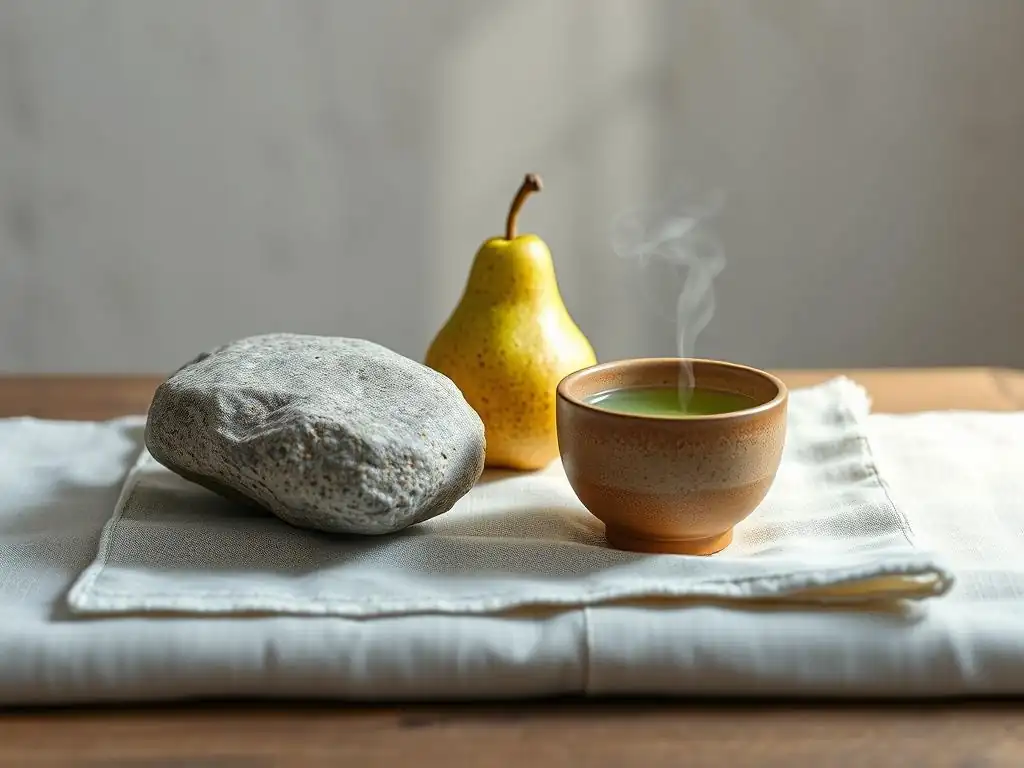
Exercise 2: Mindful Breathing with a Stone (Anchoring to the Present)
Using a smooth stone as an anchor for your breath is a simple yet effective way to practice mindfulness, particularly when you feel scattered or anxious. The stone provides a tangible point of focus that can help draw your attention away from racing thoughts and back to the steady rhythm of your breath. It makes the abstract concept of "the present moment" feel more concrete.
This exercise can be done anywhere – sitting at your desk, on a park bench, or even standing in a queue. The key is to choose a stone that feels comfortable and pleasant to hold, as its physical presence will serve as your primary anchor throughout the practice. It's a versatile method for integrating mindfulness with everyday objects into moments of potential stress.
Choosing Your Stone for Mindfulness
Find a small stone, perhaps one you picked up on a walk or one you keep as a small memento. Choose one that fits comfortably in your hand and has a smooth texture. It doesn't need to be special, just appealing to you. The act of choosing the stone can itself be a small mindful act, bringing awareness to your surroundings.
Having a dedicated "mindfulness stone" can be a helpful cue to begin your practice. You might keep it on your desk, in your pocket, or on a bedside table. Its presence can serve as a gentle reminder throughout the day to pause and reconnect with your breath and the present moment, utilizing an ordinary item for an extraordinary purpose.
Feeling the Stone's Weight and Temperature
Hold the stone in the palm of your hand or cup it between both hands. Close your eyes gently if comfortable, or simply soften your gaze. Bring your full attention to the physical sensations of holding the stone. Notice its weight – is it heavy or light? Feel its temperature – is it cool, warm, or room temperature? Pay attention to the texture against your skin. Are there any subtle vibrations or pulses you can feel?
Focusing on these simple physical sensations grounds you immediately in the present. It shifts your awareness from the mental realm of thoughts and worries to the tangible reality of touch. This direct sensory experience is a powerful way to interrupt the stress response cycle and cultivate a sense of stability.
Using the Stone as an Anchor for Breath Awareness
While still holding the stone, bring your awareness to your breath. Notice the sensation of the air entering and leaving your body. Don't try to change your breathing, just observe it as it is. As you inhale, perhaps notice the stone in your hand. As you exhale, perhaps feel the stone's weight. Let the stone serve as a gentle anchor for your attention.
Whenever your mind wanders – which it inevitably will – simply notice where it went without judgment, and gently guide your attention back to the feeling of the stone in your hand and the sensation of your breath. The stone is a constant, tangible presence that helps keep your awareness from drifting too far. Practicing mindfulness with everyday objects like a stone reinforces your ability to return to the present moment amidst distraction.
Exercise 3: Mindful Eating with a Piece of Chocolate (Savoring the Moment)
Mindful eating involves bringing full awareness to the experience of consuming food. Using a small piece of chocolate is ideal for beginners because its rich sensory profile makes it easy to focus on. This exercise not only helps you appreciate your food more but also serves as a powerful way to practice mindfulness with everyday objects, cultivating presence and reducing stress related to hurried eating or emotional eating.
This practice can transform a simple act into a deeply grounding experience. Instead of mindlessly consuming the chocolate while distracted, you engage all your senses, bringing your full attention to the experience. This can help you become more aware of hunger and fullness cues and develop a more conscious relationship with food.
Selecting Your Chocolate for Mindful Eating
Choose a small piece of chocolate. It could be a square from a bar, a single truffle, or even a chocolate chip. Hold it in your hand. Observe its appearance – the color, the sheen, any patterns or textures on its surface. Notice its shape and size.
Taking this deliberate step to select and observe the chocolate prepares your mind for the practice. It signals that you are about to engage in something intentionally, shifting from automatic behavior to conscious awareness. This initial observation phase is a crucial part of bringing mindfulness with everyday objects into the act of eating.
Engaging All Senses with the Chocolate
Bring the chocolate to your nose and inhale deeply. What scents do you detect? Is it sweet, bitter, earthy? Break off a tiny piece – what sound does it make? Place the piece on your tongue and let it melt slowly. Resist the urge to chew. Notice the texture as it melts and the flavors that emerge. What is the initial taste? How does it change as it melts? Swirl it around your mouth, noticing the sensations.
This multi-sensory exploration deepens your connection to the present moment. By deliberately engaging sight, smell, sound (if you break it), and taste with such focus, you occupy your mind with immediate sensory input, leaving less room for stressful thoughts to intrude. This detailed attention is key to making mindfulness with everyday objects effective.
Observing Thoughts and Feelings During the Experience
As you slowly consume the chocolate, pay attention not only to the sensory experience but also to any thoughts or feelings that arise. Do you feel impatient? Guilty? Pleased? Do thoughts about other things pop into your head? Simply notice these thoughts and feelings without judgment. Acknowledge them, and then gently bring your attention back to the taste and texture of the chocolate.
This dual awareness – of both the sensory experience and your internal reactions – is central to mindfulness. It helps you observe your mental and emotional patterns, particularly those related to food or pleasure, without getting caught up in them. This non-judgmental observation builds resilience and self-awareness, contributing significantly to stress reduction.
Exercise 4: Mindful Walking with a Pebble (Grounding Yourself)
Mindful walking is a powerful way to integrate mindfulness into physical activity. Adding a pebble provides a tangible anchor for your awareness as you move. Holding a pebble in your hand can help you stay grounded and present, especially if your mind tends to race while walking. This exercise is an excellent example of combining movement and mindfulness with everyday objects.
This practice can turn a simple walk into a moving meditation, helping to quiet the mind and connect you more deeply with your body and the environment. It's particularly useful for releasing physical tension often associated with stress.
Finding a Pebble for Walking Meditation
Before you begin your walk, select a small, smooth pebble that fits comfortably in your hand. You might find one outdoors or use a decorative one you have. The pebble should feel pleasant to hold and not be distracting.
Choosing the pebble intentionally sets the stage for mindful practice. It becomes your physical touchstone, a constant reminder to stay present during your walk. This simple preparation enhances the effectiveness of using an ordinary item for mindfulness.
Paying Attention to the Sensation of the Pebble in Your Hand
As you walk, hold the pebble loosely in one hand. Bring your attention periodically to the sensation of the pebble. Notice its weight, its temperature, and its texture against your palm or fingers. You might gently roll it between your fingers or simply feel its presence as you swing your arm.
Focusing on the pebble's physical presence helps anchor your awareness. When your mind starts planning, worrying, or rehashing the past, gently guide your attention back to the feeling of the pebble in your hand. This tactile focus makes it easier to return to the present moment than simply trying to focus on breath or steps alone for some people.
Coordinating Breath with Each Step
While holding the pebble and noticing its sensation, bring your awareness to your breath and your steps. You might coordinate them, perhaps inhaling for two steps and exhaling for two steps. Or simply notice the natural rhythm of your breath as you walk. Feel your feet making contact with the ground with each step.
By combining the awareness of the pebble, breath, and steps, you create multiple anchors for your attention. This layered approach makes the practice more robust and helps keep your mind from drifting. This form of mindfulness with everyday objects provides a dynamic way to reduce stress while engaging in physical activity.
Exercise 5: Mindful Focusing on a Flower (Cultivating Appreciation)
Taking time to mindfully observe a flower is a beautiful way to cultivate appreciation and connect with the natural world, even if the flower is simply one you've purchased or is in a pot indoors. This exercise uses the visual and olfactory senses as primary anchors for mindfulness, fostering a sense of wonder and calm.
Focusing on the intricate details of a flower can interrupt the tendency of the mind to rush or generalize. It encourages a slower, more deliberate way of seeing and experiencing, which is inherently stress-reducing. It's a gentle yet profound way to practice mindfulness with everyday objects found in nature or decorative settings.
Selecting a Flower for Mindfulness
Find a flower, either outdoors in a garden or park, or one that you have access to indoors. You can even use a picture of a flower if a real one isn't available, although engaging all senses with a real flower is more impactful. Choose one that catches your eye.
The act of selecting the flower, even just noticing one in your path, is the first step in bringing conscious attention to it. This simple choice initiates the shift from mindless scanning of the environment to intentional observation, setting the stage for mindfulness with this everyday object.
Noticing the Details of the Flower's Structure
Look closely at the flower. Examine the shape and arrangement of its petals. Notice the veins on the leaves, the texture of the stem, the structure of the center of the flower. Are there tiny hairs or intricate patterns you hadn't noticed before? Observe the way the light hits different parts of the flower.
This detailed visual inspection requires focused attention, drawing your mind away from internal chatter. By concentrating on the complex and often overlooked details of a natural object, you cultivate a sense of presence and curiosity. It’s a practice in seeing the extraordinary in the ordinary.
Observing the Flower's Color and Fragrance
Pay close attention to the colors of the flower. Are there subtle variations in shade? How do the colors blend or contrast? Then, gently bring the flower to your nose and inhale slowly and deeply. What is its fragrance like? Is it strong or subtle? Sweet or earthy? Does the scent evoke any feelings or memories? Simply notice the sensory input without analysis.
Engaging the senses of sight and smell deeply connects you to the present moment. The vibrant colors and fragrance of the flower provide rich sensory data that anchors your awareness. This mindful observation of a flower not only reduces stress but also can foster a sense of gratitude and connection to beauty, highlighting the potential of mindfulness with everyday objects from nature.
Benefits of Practicing Mindfulness with Objects
Reduced Stress and Anxiety
Regularly engaging in mindfulness with everyday objects helps to interrupt the cycle of stress and anxiety. By focusing attention on sensory input from an object, you pull your mind out of ruminating on worries about the future or regrets about the past. This shift in focus helps to calm the nervous system.
Studies have indicated that even short periods of mindfulness practice can lead to a measurable reduction in perceived stress. For example, research often points to participants reporting lower scores on stress questionnaires after consistent practice. The tangible nature of focusing on an object makes it easier for beginners to stay anchored and experience the calming effects sooner than perhaps with abstract breathing exercises alone. This accessible method provides a practical pathway to alleviate stress.
Increased Focus and Concentration
Practicing mindfulness involves training your attention muscle. When you repeatedly bring your attention back to an object after your mind has wandered, you are strengthening your ability to focus. This improved concentration isn't limited to your mindfulness sessions; it can carry over into other areas of your life.
Whether you are trying to concentrate on a work task, listen attentively to a conversation, or focus on a hobby, the mental discipline cultivated through object-based mindfulness can be highly beneficial. The simple act of focusing on the texture of a stone or the color of a flower for a few minutes each day builds your capacity for sustained attention, which many people find challenging in a world full of distractions.
Enhanced Sensory Awareness
Mindfulness with everyday objects deliberately engages your senses – sight, touch, smell, taste, and sometimes even sound. Through these practices, you become more attuned to the sensory details of your environment, details you might otherwise overlook. This heightened awareness can make everyday experiences richer and more vivid.
Developing enhanced sensory awareness allows you to find moments of presence and beauty throughout your day, not just during formal practice. Noticing the warmth of your coffee cup, the texture of your clothing, or the sound of rain on the window can all become spontaneous moments of mindfulness, helping you stay grounded and appreciate the simple things in life, which contributes to overall well-being and reduced stress.
Greater Appreciation for Everyday Life
By learning to slow down and pay attention to the ordinary, you begin to see the world with fresh eyes. The simple objects and experiences that make up your day are no longer just background noise; they become opportunities for connection and appreciation. This shift in perspective can profoundly impact your overall happiness and resilience.
Cultivating gratitude for the small things – the comforting weight of a stone, the intricate beauty of a flower, the rich taste of food – helps to counter negative thought patterns and foster a more positive outlook. This increased appreciation derived from practicing mindfulness with everyday objects can make navigating challenges feel less overwhelming and highlight the abundance present in your daily life.
Tips for Integrating Object-Based Mindfulness into Your Daily Routine
Start with Short Sessions (5-10 Minutes)
You don't need to dedicate long periods to practice mindfulness with everyday objects. Even 5-10 minutes a day can yield significant benefits. Consistency is more important than duration, especially when you are starting out. Try incorporating a short practice during a natural pause in your day.
For example, you could mindfully eat a piece of fruit during your morning break, focus on a stone during your commute (if you're not driving), or mindfully observe a plant on your desk before starting work. Setting a realistic time commitment makes it easier to stick with the practice and build it into a habit without feeling overwhelmed.
Find a Quiet and Comfortable Space
While you can practice mindfulness with objects almost anywhere, especially once you're more experienced, finding a relatively quiet and comfortable space can be helpful when you are starting. This minimizes external distractions and allows you to focus more easily on the object and your internal experience.
This doesn't mean you need a dedicated meditation room. It could be a quiet corner of your home, a park bench, or even just sitting in your car for a few minutes before going into work. The key is to choose a space where you feel safe and reasonably undisturbed, allowing you to fully engage in the mindfulness practice with the everyday object you've chosen.
Be Patient and Kind to Yourself
Mindfulness is a practice, and like any skill, it takes time and patience to develop. Your mind will wander – that's perfectly normal. The practice isn't about stopping thoughts, but about noticing when your mind has wandered and gently bringing it back to your anchor, in this case, the object.
Avoid self-criticism if you find your mind is busy or you feel distracted. Simply acknowledge it without judgment and redirect your attention. Treat yourself with the same kindness and understanding you would offer a friend who is learning something new. This compassionate approach is crucial for building a sustainable mindfulness practice with everyday objects.
Experiment with Different Objects and Exercises
Not every object or exercise will resonate with everyone. Feel free to experiment to find what works best for you. You might find that focusing on natural objects like stones or flowers is more calming, or perhaps the tactile experience of holding a smooth, man-made object is more grounding.
Try the different exercises outlined in this guide and explore others. What other everyday objects could you use? A key, a pen, a cup of tea, a piece of fabric? Finding objects and practices that you genuinely enjoy makes it more likely that you will continue to practice regularly. The beauty of mindfulness with everyday objects is its adaptability.
Troubleshooting Common Challenges in Object Mindfulness
Difficulty Focusing
It's completely normal to find it challenging to focus when you first start practicing mindfulness, especially with objects. Our minds are often conditioned to jump from one thought to the next. If you find your mind is constantly wandering away from the object, it doesn't mean you're failing.
Try shortening your practice sessions. Even 2-3 minutes of focused attention is beneficial. You can also try engaging multiple senses simultaneously – for example, holding a stone and focusing on your breath. If visual focus is hard, try a tactile object like a piece of velvet. Remember, the goal isn't perfect focus, but the gentle, repeated effort of returning your attention. Using the everyday object itself as a physical anchor provides a concrete point to return to whenever you notice your mind has drifted.
Wandering Thoughts
Wandering thoughts are perhaps the most common challenge in any mindfulness practice. You might start focusing on a flower and suddenly find yourself thinking about your grocery list or a conversation from earlier. This is simply your mind doing what minds do.
When you notice your thoughts have wandered, simply acknowledge them without judgment. You might say to yourself, "Ah, thinking about groceries," and then gently guide your attention back to the object – the color of the flower, the feeling of the stone. Don't get frustrated; each time you notice your mind has wandered and bring it back, you are strengthening your mindfulness muscle. Consistent practice using the object as a reliable anchor helps train the mind to stay present more easily over time.
Emotional Reactions
Sometimes, when you slow down and become present, you might notice uncomfortable emotions arising – frustration, sadness, anxiety. Using an object for mindfulness can sometimes bring these feelings to the surface, as the distraction of constant activity is removed.
If strong emotions arise, acknowledge them with kindness. You don't need to analyze them or push them away. Simply notice the physical sensations associated with the emotion and continue to gently focus on your object anchor. If the emotion feels overwhelming, it's okay to pause the practice and return to it later, perhaps starting with shorter durations. Remember, mindfulness is about observing experience, including emotional experience, without getting swept away by it. The object provides a grounding point when emotions feel intense.
Advanced Techniques for Mindfulness with Objects
Combining Object Meditation with Body Scan Meditation
Once you are comfortable with basic object-based mindfulness, you can combine it with other techniques like a body scan. Start by bringing your full attention to the object in your hand, engaging your senses. After a few minutes, transition your awareness to your body, scanning for sensations from head to toe while still lightly holding the object.
The object can serve as a continuous anchor throughout the body scan. You can periodically return your attention to the feeling of the object in your hand if you find your mind wandering or getting lost in body sensations. This combination enhances both practices, using the tangible object to ground the more abstract body awareness, providing a deeper level of relaxation and presence.
Using Objects as Reminders for Mindfulness Throughout the Day
Beyond dedicated practice sessions, everyday objects can serve as powerful visual or tactile cues for brief moments of mindfulness throughout your day. Choose an object you interact with frequently – your phone, your computer mouse, a doorknob, or even a specific piece of jewelry you wear.
Decide that each time you see or touch this object, you will take one conscious breath. For example, every time you pick up your phone, take one mindful breath before unlocking it. This integrates tiny moments of mindfulness into your routine, using ordinary items as triggers to return to the present moment and break the cycle of automatic reactions, significantly reducing accumulated stress.
Creating a Mindfulness Kit with Objects
Assemble a small collection of objects that you find calming or interesting to the senses. This could include a smooth stone, a piece of textured fabric, a fragrant spice in a small container, a beautiful shell, or a small, intricate trinket. Keep these objects together in a box or on a tray in a place where you can easily access them.
When you feel stressed, overwhelmed, or simply need a moment to pause, take out your mindfulness kit. Spend a few minutes exploring each object mindfully, one by one, engaging your senses. This dedicated kit provides a readily available resource for quick, self-soothing mindfulness practices using a variety of everyday objects, making stress reduction accessible whenever you need it.
Frequently Asked Questions
What exactly is mindfulness, and how does it relate to everyday objects?
Mindfulness is paying attention to the present moment without judgment. Using everyday objects helps you anchor your awareness and practice mindfulness by focusing on their sensory details.
What are some examples of everyday objects I can use for mindfulness exercises?
Almost anything! Common examples include a cup of tea, a piece of fruit, or even a smooth stone. The key is to choose something accessible and readily available.
How can focusing on an object help reduce stress and improve mental well-being?
By directing your attention to the object's qualities, you interrupt racing thoughts and reduce mental clutter. This focused attention promotes a sense of calm and present moment awareness, lowering stress levels.
How long should I practice mindfulness with an object each time?
Even 5-10 minutes of focused attention can be beneficial. Consistency is more important than duration, so start small and gradually increase the time as you become more comfortable.
What if my mind wanders while I'm trying to focus on the object?
It's perfectly normal for your mind to wander. Gently acknowledge the thought and redirect your attention back to the object without judgment. This is a core part of the mindfulness practice.
Final Reflection: Finding Stillness in the Everyday
The simple act of engaging with everyday objects can be a powerful antidote to the relentless pace of modern life. We are constantly bombarded with information and demands, leaving little room for quiet reflection. This article explored how redirecting our attention to the tangible world around us—through mindful observation of textures, shapes, and even the weight of an object—can provide a much-needed refuge from the mental chatter that fuels stress and anxiety.
The impact of mindfulness practices, especially those easily accessible like object-based meditation, is profound and far-reaching. It's not just about stress reduction; it's about cultivating a deeper appreciation for the present moment and fostering a more mindful relationship with our surroundings. As Thich Nhat Hanh so eloquently stated, To practice mindfulness is to be present, to be fully alive in the present moment.
This simple philosophy, applied through the seemingly mundane act of holding a smooth stone or tracing the lines of a favorite mug, can transform our experience of daily life, fostering a sense of calm and groundedness that permeates every aspect of our being.
Now, consider your own life. What everyday objects surround you? Take a moment to choose one—perhaps a pen, a piece of fruit, or a cherished photograph. Close your eyes, hold it in your hands, and truly feel it. Notice its texture, its weight, its temperature. Let this simple act be a gateway to a deeper connection with yourself and the world around you. Embrace the stillness, the quiet observation, and discover the transformative power of mindfulness, one object at a time.
Unlock Your Inner Calm: Start Your Mindfulness Journey Today!
Thanks for taking the time to explore the power of mindful object observation! We hope you gained valuable insights into reducing stress through simple, everyday practices. Ready to integrate these techniques into your life?
- Begin your mindful object practice now: Choose a single object nearby—a pen, a plant, anything—and dedicate just 5 minutes to observing it with all your senses. Notice its details, textures, and even the feelings it evokes.
- Share your experience: Tell us about your mindful object meditation in the comments below! What did you notice? What surprised you?
- Consider exploring other mindful exercises: Look around Mind Care Guide for more articles on stress reduction and mindfulness techniques.
What small object will you choose to unlock your inner calm today?