
Sleep & Stress: How Wearable Trackers Connect the Dots

Welcome to Mind Care Guide, your sanctuary for cultivating inner peace and understanding your mental well-being.
Are you struggling to untangle the web of stress and sleepless nights? Imagine having a tool to shed light on this crucial connection. In this article, we delve into how wearable trackers can reduce stress sleep disturbances, offering a data-driven path to reclaiming your rest and resilience. Curious how these tiny devices can make a huge difference? Read on to discover the power of wearable tech in your journey to better mental health.
Sleep & Stress: How Wearable Trackers Connect the Dots
- Understanding the Sleep-Stress Connection and Why It Matters
- Best Wearable Trackers for Stress and Sleep Management: A Comparative Analysis
- Real-World Examples: How Wearable Trackers Help Manage Stress and Improve Sleep
- Maximizing Wearable Tracker Benefits: Tips for Effective Stress and Sleep Management
- Choosing the Right Wearable Tracker for Your Needs
- Conclusion: Empowering Your Mental Well-being Through Wearable Technology
-
Frequently Asked Questions
- How can wearable trackers actually help reduce stress and improve sleep, as mentioned in the article?
- What specific data points do wearable trackers typically collect that are relevant to stress and sleep?
- Are wearable trackers a reliable and accurate method for monitoring stress and sleep, or are there limitations?
- What types of lifestyle changes might be recommended based on the data collected by wearable trackers?
- Beyond data collection, do some wearable trackers offer additional features that directly address stress and sleep issues?
- Final Reflection: Unlocking the Power of Sleep Through Wearable Technology
- Unlock Your Best Sleep: Take Control of Stress Today!
Understanding the Sleep-Stress Connection and Why It Matters
The Vicious Cycle: How Stress Impacts Sleep Quality
Stress is a powerful physiological and psychological response that significantly disrupts sleep patterns. When we experience stress, our bodies release cortisol, often called the "stress hormone." Elevated cortisol levels interfere with the body's natural sleep-wake cycle (circadian rhythm), particularly by suppressing melatonin production, the hormone that signals it's time to sleep.
This hormonal imbalance can make it difficult to fall asleep, stay asleep, or achieve deep, restorative sleep stages like slow-wave sleep and REM sleep. For example, studies have shown that individuals reporting high stress levels frequently experience insomnia symptoms, taking longer to fall asleep (increased sleep latency) and waking up more often during the night, leading to fragmented sleep.
Furthermore, the mental rumination often associated with stress keeps the brain active, preventing the relaxation necessary for sleep onset. Worries about work, finances, or personal relationships can lead to a racing mind just as you try to wind down. This heightened state of alertness, driven by the sympathetic nervous system's "fight or flight" response triggered by stress, directly counteracts the parasympathetic system's "rest and digest" mode needed for sleep. Over time, chronic stress can lead to persistent sleep deprivation, creating a challenging cycle where stress makes sleep worse, and poor sleep, in turn, amplifies stress.
How Poor Sleep Exacerbates Stress Levels: A Deep Dive
Just as stress damages sleep quality, insufficient or poor-quality sleep significantly worsens stress levels and our ability to cope with stressors. Sleep deprivation impairs the prefrontal cortex, the part of the brain responsible for executive functions like decision-making, problem-solving, and regulating emotions. With this area compromised, individuals are more prone to emotional reactivity, irritability, and difficulty managing frustrating situations. A lack of sleep also keeps the amygdala, the brain's fear and stress processing center, on high alert, making you more sensitive to perceived threats and increasing feelings of anxiety and stress throughout the day.
Beyond emotional regulation, poor sleep affects physical stress markers. Research indicates that chronic sleep restriction can lead to elevated baseline cortisol levels and dysregulation of the hypothalamic-pituitary-adrenal (HPA) axis, the body's central stress response system. This means the body becomes less effective at shutting off the stress response once the stressor is gone. Furthermore, impaired sleep can reduce pain tolerance and increase inflammation, adding further physical burdens that contribute to overall stress. The compounded effect is a diminished capacity to handle daily pressures, making even minor inconveniences feel overwhelming and perpetuating the cycle of stress and poor sleep.
The Role of Wearable Trackers in Breaking the Cycle: Monitoring and Awareness
Wearable trackers offer a powerful tool in understanding and potentially breaking the sleep-stress cycle by providing objective data about your body's state. Devices worn on the wrist or finger can passively collect a wealth of information throughout the day and night, including heart rate, heart rate variability (HRV), sleep duration, sleep stages, and even body temperature.
This data allows individuals to see the tangible impact of their stress levels on their sleep patterns and vice versa. For instance, a user might notice their sleep quality score consistently drops after particularly stressful workdays, or that their HRV, a key indicator of stress and recovery, is lower after a night of poor sleep.
By presenting this data in easy-to-understand metrics and visualizations, wearable trackers empower users with self-awareness. This insight moves beyond subjective feelings ("I feel stressed," "I think I slept poorly") to concrete numbers and trends. This awareness is the first step towards intervention.
Seeing patterns like increased restlessness during sleep correlating with daytime stress, or low readiness scores after insufficient sleep, can motivate individuals to adopt healthier habits. Wearable trackers reduce stress sleep impact by highlighting these connections, encouraging users to implement stress-management techniques before bed or prioritize sleep hygiene when their data indicates a need for recovery. This data-driven approach helps individuals take proactive steps towards improving both their sleep and their ability to manage stress.
Best Wearable Trackers for Stress and Sleep Management: A Comparative Analysis
Key Features to Look For in a Wearable Stress Tracker for Sleep Improvement
Selecting a wearable tracker specifically for managing stress and improving sleep requires focusing on features that provide actionable insights into these interconnected areas. While basic step counting is common, advanced metrics are crucial. Look for devices that offer detailed sleep tracking, going beyond just duration to analyze sleep stages (light, deep, REM) and interruptions. Additionally, features related to physiological stress response, such as heart rate variability (HRV), are invaluable. A good wearable stress tracker for sleep will integrate these data points to give you a holistic view of your recovery and readiness.
The utility of these features lies in their ability to reveal patterns you might not otherwise notice. For example, consistent low HRV readings might indicate chronic stress or insufficient recovery, even if you feel subjectively okay. Similarly, seeing a lack of deep sleep over several nights, coupled with elevated resting heart rate, could point to the physical toll of stress or poor recovery habits.
Many trackers also offer features that guide users towards better habits, such as guided breathing exercises or reminders to wind down before bed. These combined monitoring and guidance features are key to using a wearable effectively to reduce stress and improve sleep quality.
- Heart Rate Variability (HRV) Tracking: Measuring Stress Response
- Sleep Stage Analysis: Understanding Sleep Architecture
- Activity Tracking: Connecting Physical Activity to Sleep and Stress
- Guided Breathing Exercises: Built-in Relaxation Techniques
Comparing Top Wearable Trackers for Stress and Sleep: Features, Accuracy, and Price
When choosing a wearable tracker to help reduce stress and improve sleep, comparing specific models based on their relevant features, reported accuracy, and price is essential. Different devices excel in different areas, and understanding their strengths and weaknesses can help you find the best fit for your needs and budget. While accuracy claims vary between manufacturers and individual studies, focusing on devices known for robust biosensing and detailed reporting is key for getting meaningful data.
The market offers a range of devices, from rings focusing purely on health metrics to comprehensive smartwatches. The price point often reflects the breadth of features, build quality, and ecosystem integration. For instance, devices like the Oura Ring and Polar Vantage V3 offer advanced biosensing and recovery metrics, often at a higher price, while the Fitbit Charge 6 provides a more accessible entry point with core health and sleep tracking features, often integrating with a broader health platform.
Garmin devices, while often geared towards athletes, include sophisticated recovery metrics like HRV Status and Training Readiness that are highly relevant to stress and sleep management. Understanding these differences helps users decide which wearable trackers reduce stress sleep most effectively for their lifestyle.
- Oura Ring Generation 3: Holistic Health Insights for Sleep and Stress
- Features: Sleep Score, Readiness Score, Body Temperature Sensing, Activity Tracking
- Pros: Comfortable to wear, detailed sleep analysis, focuses on recovery, long battery life (typically 4-7 days)
- Cons: Subscription required for full features, limited display (requires app), can be expensive (often $299+)
- Garmin Forerunner 965: Comprehensive Training and Recovery Analysis
- Features: Sleep Score, HRV Status, Training Readiness, Multi-Sport Tracking
- Pros: Excellent for athletes, detailed performance metrics, accurate GPS, vibrant AMOLED Display
- Cons: Can be overwhelming for casual users, shorter battery life with GPS usage (e.g., 23 days smartwatch, 19 hours GPS), expensive (often $599+)
- Fitbit Charge 6: Everyday Health Tracking with Google Integration
- Features: Daily Readiness Score, Sleep Stages, ECG App, Google Apps Integration
- Pros: User-friendly interface, affordable (often $159+), wide range of features, Google ecosystem integration
- Cons: Accuracy can vary compared to clinical standards, limited advanced features compared to higher-end models, subscription (Fitbit Premium) required for some features like detailed Daily Readiness breakdown
- Polar Vantage V3: Premium Multisport Watch with Advanced Biosensing
- Features: SleepWise, Nightly Recharge, ECG, SpO2, Wrist-based heart rate with Polar Elixir™ biosensing technology
- Pros: Advanced training features, accurate heart rate and GPS, long battery life (e.g., up to 53 hours training, 8 days watch mode)
- Cons: Expensive (often $599+), may be complex for beginners
Real-World Examples: How Wearable Trackers Help Manage Stress and Improve Sleep
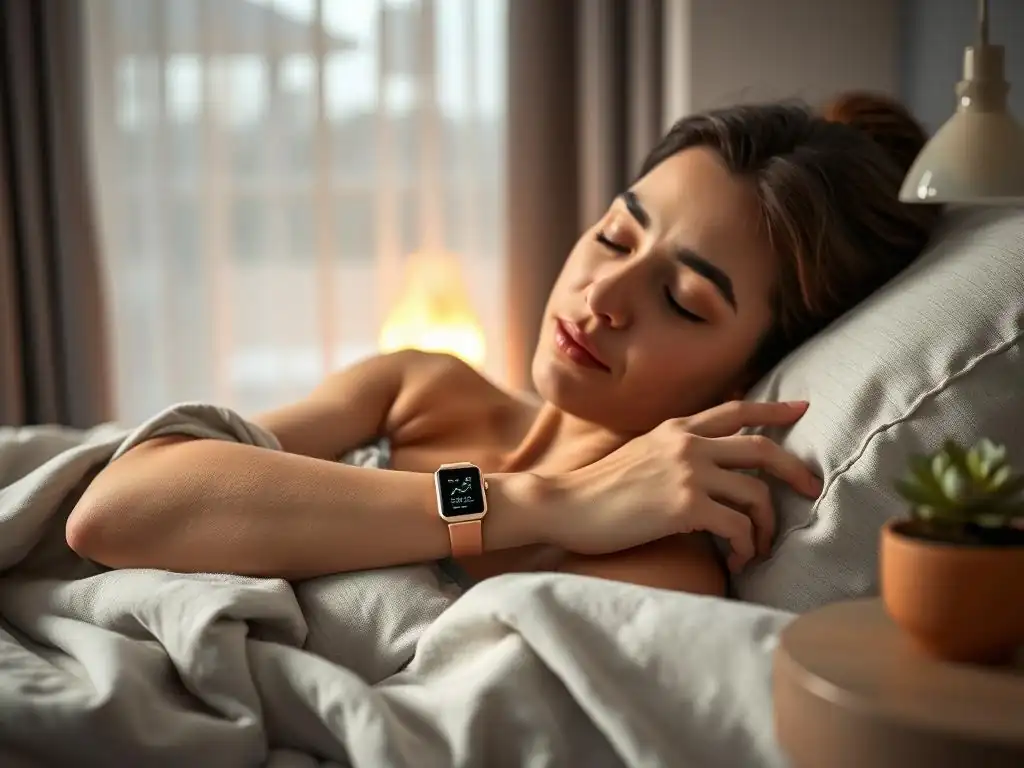
Case Study 1: Using Oura Ring to Optimize Sleep Schedule and Improve Recovery
Sarah, a marketing manager, struggled with feeling constantly drained despite believing she was getting enough sleep. Using her Oura Ring, she started paying attention to her Sleep Score and Readiness Score. She noticed a pattern: on nights she went to bed after 11 PM, even if she slept for 8 hours, her Deep Sleep duration was significantly lower (sometimes less than 45 minutes vs. her usual 90+ minutes), and her Readiness Score the next day was poor, often below 70. The Oura app also showed her Body Temperature consistently elevated on these nights, indicating potential stress or insufficient recovery.
By observing this data over several weeks, Sarah realized the timing of her sleep was as crucial as the duration. She started consistently going to bed by 10:30 PM. Within a month, her average Deep Sleep increased by over 30 minutes, her Sleep Scores improved by an average of 15 points, and her Readiness Scores regularly hit the 'Good' or 'Excellent' range.
This data-driven adjustment, guided by her Oura Ring, helped her feel more recovered, which in turn reduced her feelings of being overwhelmed by her demanding job. The wearable trackers reduce stress sleep challenges by making invisible patterns visible.
Case Study 2: Leveraging Garmin Forerunner's Training Readiness to Prevent Burnout
David, an avid runner, often pushed himself hard, sometimes feeling inexplicably tired during runs or experiencing increased irritability. He used a Garmin Forerunner, primarily for tracking workouts, but started utilizing its Training Readiness and HRV Status features. He observed that after exceptionally long workdays or periods of high personal stress, his HRV Status would move from 'Balanced' to 'Unbalanced' or 'Low,' and his Training Readiness score would plummet (often below 50). This occurred even if his recent training load seemed manageable.
Recognizing this correlation between life stress, physiological markers (low HRV), and his Training Readiness score, David began using the data to inform his training decisions. On days his Readiness was low, he would opt for an easy recovery run or cross-training instead of a planned intense workout.
He also started incorporating short mindfulness sessions when his HRV was low, seeing a subtle improvement in the metric afterward. This proactive approach, guided by his Garmin's data, helped him avoid overtraining and burnout, making him feel more in control and less stressed about his performance, effectively demonstrating how wearable trackers reduce stress sleep impact by monitoring recovery.
Case Study 3: Utilizing Fitbit Charge 6's Daily Readiness Score to Adjust Activity Levels
Maria, a busy student, found it hard to balance her studies, part-time job, and social life, often feeling run down. She started using a Fitbit Charge 6 to track her general activity and sleep, and found the Daily Readiness Score particularly helpful.
She noticed that after pulling an all-nighter to study, her Daily Readiness score would be very low (e.g., in the 'Poor' range below 30), and the app would recommend prioritizing recovery over intense exercise. On days she got at least 7 hours of sleep and managed her study load effectively, her score would be higher (e.g., in the 'Good' range above 60).
This simple, accessible metric helped Maria visualize the impact of her choices on her body's recovery state. Instead of trying to push through intense workouts when her Readiness score was low, she would opt for a gentle walk or stretching, and try to get to bed earlier that night. Conversely, a high score gave her the confidence to tackle a more challenging workout. This adjustment, guided by her Fitbit data, helped her feel less physically stressed and more in tune with her body's needs, illustrating how wearable trackers reduce stress sleep issues through simple, actionable scores.
Maximizing Wearable Tracker Benefits: Tips for Effective Stress and Sleep Management
Setting Realistic Goals for Sleep and Stress Reduction
Simply owning a wearable tracker isn't enough; setting clear, achievable goals is crucial for leveraging its capabilities to reduce stress and improve sleep. Start by identifying specific areas you want to address. Do you want to increase your average sleep duration from 5.5 hours to 7 hours? Do you want to see your average nightly resting heart rate decrease? Or perhaps improve your average daily HRV score? Setting specific, measurable, achievable, relevant, and time-bound (SMART) goals provides direction and allows you to track progress using the data from your device.
It's important to remember that progress takes time and consistency. Don't expect dramatic changes overnight. Focus on small, sustainable adjustments to your routine based on the insights your wearable provides. For instance, if your data consistently shows poor sleep quality after late-night screen time, a realistic goal might be to put your phone away 30 minutes earlier each night for a week. Celebrate small wins and adjust your goals as you learn more about your body's responses through the data. Effective use of wearable trackers reduce stress sleep problems when guided by mindful, realistic objectives.
Interpreting Your Wearable Tracker Data: Understanding the Metrics
Wearable trackers provide a wealth of data, but understanding what the numbers mean in the context of your own body and lifestyle is key to effective stress and sleep management. Metrics like Sleep Score, Readiness Score, HRV, and Resting Heart Rate are not just abstract numbers; they are indicators of your body's physiological state. Learn what healthy ranges are generally considered to be, but more importantly, understand your personal baseline and how it fluctuates based on your activities, stress levels, and sleep quality.
Most wearable apps provide explanations for their metrics and how they are calculated. Take the time to read these explanations. For example, a low HRV doesn't necessarily mean you're sick, but it could indicate cumulative stress, overtraining, or insufficient recovery. A high resting heart rate during sleep could suggest stress or illness. By correlating these metrics with how you feel and what's happening in your life, you gain deeper insights. This understanding empowers you to make informed decisions about your daily activities, recovery, and stress management strategies, making wearable trackers reduce stress sleep challenges more effectively.
Combining Wearable Tracker Data with Other Stress-Reduction Techniques
While wearable trackers provide valuable data and insights, they are most effective when used in conjunction with established stress-reduction and sleep-improvement techniques. The data from your tracker can help you identify when you are most stressed or sleeping poorly, and whether certain interventions are having a positive effect. For example, if your HRV is consistently low, indicating high stress, your tracker might prompt you to engage in relaxation techniques.
Using your wearable data to inform your practice of mindfulness, meditation, or guided breathing exercises can enhance their effectiveness. You might notice your heart rate or HRV improves after a 10-minute meditation session, reinforcing the benefit. Similarly, tracking your sleep quality after incorporating regular moderate exercise or making dietary changes can demonstrate their positive impact. Cognitive Behavioral Therapy for Insomnia (CBT-I), a highly effective treatment, can also be supported by objective sleep data from a tracker, providing concrete evidence of progress. By integrating data from wearable trackers reduce stress sleep effectively when paired with proven strategies.
- Mindfulness and Meditation Practices
- Regular Exercise and Healthy Diet
- Cognitive Behavioral Therapy (CBT) for Insomnia and Stress
Choosing the Right Wearable Tracker for Your Needs
Considering Your Budget and Feature Preferences
Selecting the right wearable tracker involves balancing what you're willing to spend with the features that are most important to you for stress and sleep management. Prices can range significantly, from under $100 for basic fitness bands with sleep tracking to over $500 for advanced smartwatches or health rings. Determine your budget first.
Then, prioritize the features that align with your goals. If detailed sleep stage analysis and recovery metrics like HRV are paramount, you'll likely need to invest in a mid-range to high-end device. If you primarily want to see overall sleep duration and activity levels, a more affordable option might suffice.
Consider also the form factor (wristband, watch, ring) and comfort, especially for sleep tracking. A device that is uncomfortable to wear at night won't provide consistent sleep data. Think about the ecosystem – do you want integration with specific health apps or platforms? Some brands work better with certain phone operating systems or offer subscription services for full access to data and insights. Carefully evaluating these factors ensures you choose a device that you will use consistently and that provides the specific data you need to help wearable trackers reduce stress sleep problems.
Prioritizing Accuracy and Data Privacy
Accuracy is paramount when relying on wearable data to make decisions about your health. While no consumer wearable is a medical-grade device, some are known for more reliable tracking of metrics like heart rate, HRV, and sleep stages than others. Look for reviews and comparisons that assess the accuracy of the models you are considering, ideally referencing studies or comparisons to gold-standard methods where available. Even small inaccuracies can lead to misinterpretations of your physiological state over time.
Data privacy is another critical consideration. Wearable trackers collect highly personal health information. Understand how the company stores and uses your data. Read their privacy policy to ensure you are comfortable with their practices. Some companies may anonymize data for research, while others might have different policies. Choosing a company with a strong commitment to user privacy is essential. Prioritizing both accuracy and privacy ensures that your wearable trackers reduce stress sleep insights are reliable and your personal information is protected.
Consulting with a Healthcare Professional for Personalized Recommendations
While wearable trackers provide valuable insights, they are consumer devices and should not replace professional medical advice. If you are experiencing significant sleep problems (like chronic insomnia) or high levels of stress that are impacting your life, consult with a healthcare professional, such as a doctor or a therapist specializing in sleep or stress management.
A healthcare provider can help diagnose underlying conditions, provide evidence-based treatment options, and offer personalized recommendations based on your specific health profile. You can share the data from your wearable tracker with your doctor or therapist; it can serve as a useful starting point for discussion and provide objective information about your patterns. They can help you interpret the data in the context of your overall health and guide you on how to best use the insights from your wearable trackers reduce stress sleep issues as part of a comprehensive wellness plan.
Conclusion: Empowering Your Mental Well-being Through Wearable Technology
The Future of Wearable Tech in Stress and Sleep Management
The field of wearable technology for health monitoring is rapidly advancing, promising even more sophisticated tools for managing stress and improving sleep. Future devices are likely to incorporate more advanced biosensors, potentially tracking metrics like blood pressure, glucose levels, or even specific biomarkers through non-invasive means. Machine learning algorithms will become more refined, offering even more personalized insights and predictive analytics – perhaps alerting you before you feel completely drained that your data suggests a high-stress day is likely or that your sleep debt is accumulating.
Integration with AI-powered coaching and personalized interventions is also on the horizon, offering tailored recommendations for stress reduction techniques or sleep hygiene adjustments based on real-time data. As the technology becomes more accurate, affordable, and seamlessly integrated into everyday objects, wearable trackers reduce stress sleep problems for a wider population, moving from niche gadgets to mainstream tools for proactive health management. The potential for these devices to contribute to preventative care and mental well-being is immense.
Taking Control of Your Sleep and Stress with Data-Driven Insights
Ultimately, wearable trackers offer a powerful opportunity to take a more active role in managing your sleep and stress. By providing objective, continuous data about your body's physiological responses, they move the conversation about well-being from subjective feelings to observable patterns. This data-driven approach allows you to identify triggers for poor sleep or heightened stress, understand the impact of your lifestyle choices, and track the effectiveness of different interventions.
Utilizing wearable trackers reduce stress sleep challenges by empowering you with awareness and enabling informed decision-making. They serve as a personal health dashboard, highlighting areas that need attention and reinforcing positive habits. While they are not a substitute for professional medical advice or healthy living, they are valuable allies in the journey towards better sleep and reduced stress, contributing significantly to overall mental and physical well-being. Embracing this technology can be a key step in regaining control and building resilience in the face of modern life's demands.
Frequently Asked Questions
How can wearable trackers actually help reduce stress and improve sleep, as mentioned in the article?
Wearable trackers can help by monitoring physiological data such as heart rate variability and sleep patterns. This data-driven feedback allows individuals to identify stressors and sleep disruptions, enabling them to make informed lifestyle changes. Ultimately, this leads to better stress management and improved sleep quality.
What specific data points do wearable trackers typically collect that are relevant to stress and sleep?
Trackers commonly measure heart rate, sleep stages (light, deep, REM), activity levels, and sometimes even skin temperature. This information provides insights into stress responses and sleep quality, allowing for more personalized interventions.
Are wearable trackers a reliable and accurate method for monitoring stress and sleep, or are there limitations?
While helpful, wearable trackers have limitations. Their accuracy can vary depending on the device and individual factors. They are best used as a supplement to professional medical advice, not a replacement for it. Self-reported data is also important.
What types of lifestyle changes might be recommended based on the data collected by wearable trackers?
Recommendations could include adjusting sleep schedules, incorporating relaxation techniques, increasing physical activity, and identifying and minimizing stressors. The tracker data helps pinpoint areas for improvement.
Beyond data collection, do some wearable trackers offer additional features that directly address stress and sleep issues?
Yes, some trackers offer features like guided meditations, breathing exercises, and sleep tracking analysis within the app. These features provide proactive tools to manage stress and improve sleep hygiene.
Final Reflection: Unlocking the Power of Sleep Through Wearable Technology
The pervasive nature of stress in modern life is undeniable, and its impact on sleep quality is profoundly significant. Wearable trackers, once a novelty, are rapidly becoming essential tools in understanding and mitigating this crucial connection. Their ability to quantify sleep patterns and correlate them with daily stressors offers a powerful pathway towards improved well-being.
The insights gleaned from these devices are not merely data points; they are windows into our internal landscapes. They reveal the subtle ways stress manifests physically, impacting our rest and ultimately, our overall health. This understanding empowers us to make informed choices, to prioritize self-care, and to actively manage our stress levels. The body keeps the score,
as Bessel van der Kolk so aptly puts it, and wearable trackers help us read that score, allowing for a more proactive approach to mental and physical health.
Consider the potential: Imagine a future where personalized stress-management strategies, informed by data from wearable trackers, become commonplace. Imagine a world where individuals are empowered to take control of their sleep, reducing the burden of stress and improving their quality of life. This is not a distant dream; it's a future we are actively building. Take a moment to reflect on your own relationship with stress and sleep. What steps can you take, armed with this knowledge, to prioritize your well-being and unlock the transformative power of restful sleep?
Unlock Your Best Sleep: Take Control of Stress Today!
Thanks for exploring the connection between sleep and stress with us! We hope you gained valuable insights into how wearable trackers can help you understand and manage both. Ready to put this knowledge into action?
- Prioritize sleep hygiene: Identify one small change you can make tonight to improve your sleep environment (dim lights, cooler room, etc.). Even a small step can make a big difference!
- Explore your data: Download your tracker's app and spend a few minutes reviewing your sleep and activity patterns. This will empower you to see trends and adjust your lifestyle accordingly.
- Share your experience: Tell us in the comments – what's one thing you'll try based on what you learned today? Let's support each other on our journey to better sleep!
What small step will you take tonight to improve your sleep and manage your stress levels?