
Enhance SelfAwareness: Understand Yourself Better Through Meditation Practice


Welcome to Mind Care Guide, a sanctuary for your mental well-being.
Feeling a little lost in the labyrinth of your own mind? We understand. This space is dedicated to helping you navigate those complex emotions and discover a deeper understanding of yourself. Today, we're shining a light on a powerful tool for self-discovery: meditation. Explore the profound benefits of meditation for self-awareness, and learn how it can unlock a more present and authentic you. Ready to begin your journey inward? Let's dive in.
Enhance Self-Awareness: Understand Yourself Better Through Meditation Practice
- Introduction: Unveiling Self-Awareness Through Meditation
- What is Self-Awareness and Why is it Important?
- Meditation for Self-Awareness Benefits: A Practical Guide
- Types of Meditation Practices for Improved Self-Awareness
- Step-by-Step Guide: Starting Your Meditation Journey for Self-Discovery
- Overcoming Challenges in Your Meditation Practice
- The Science Behind Meditation and Self-Awareness
- Integrating Meditation into Your Daily Life for Enhanced Self-Awareness
- Advanced Meditation Techniques for Deeper Self-Understanding
- Conclusion: Embracing Self-Awareness Through Meditation for a More Fulfilling Life
-
Frequently Asked Questions
- How does meditation specifically enhance self-awareness?
- What are the key benefits of using meditation for self-awareness?
- How often should I practice meditation to experience self-awareness benefits?
- What types of meditation are most effective for cultivating self-awareness?
- Is meditation the only tool available to increase self-awareness?
- Final Reflection: The Unfolding Self Through Meditation
- Unlock Your Inner Wisdom: Take the Next Step on Your Meditation Journey
Introduction: Unveiling Self-Awareness Through Meditation
In the busy rhythm of modern life, finding moments to truly understand ourselves can feel like a luxury. Yet, self-awareness is a cornerstone of mental well-being, offering clarity, resilience, and deeper connections. Meditation, an ancient practice, provides a powerful pathway to cultivate this inner understanding.
By setting aside dedicated time to quiet the mind and observe our inner landscape, we can begin to uncover the layers of thoughts, emotions, and physical sensations that shape our experience. This journey inward, facilitated by regular meditation, is not about achieving a state of emptiness, but rather about developing a clearer, more compassionate view of who we are.
The benefits of meditation for self-awareness are widely recognized, extending far beyond the meditation cushion into every aspect of daily life. As we become more attuned to our internal states, we gain the ability to respond to challenges with greater wisdom and less reactivity. This enhanced understanding allows us to make choices that are more aligned with our values and needs, fostering personal growth and emotional balance. Exploring meditation for selfawareness benefits opens the door to a richer, more authentic way of living.
What is Self-Awareness and Why is it Important?
Defining Self-Awareness: A Key Component of Mental Well-being
Self-awareness is the conscious knowledge of one's own character, feelings, motives, and desires. It involves being able to recognize and understand your own emotions, thoughts, and values, and how they influence your behavior. Think of it as having an internal mirror that accurately reflects your inner state. This isn't just about introspection; it's also about understanding how others perceive you and how your actions impact those around you. Developing self-awareness is a continuous process, requiring honest self-reflection and a willingness to look inward without judgment. It's a fundamental building block for emotional intelligence and effective interpersonal relationships.
Psychological research often categorizes self-awareness into two main types: internal self-awareness and external self-awareness. Internal self-awareness is how clearly we see our own values, passions, aspirations, fit with our environment, reactions (including thoughts, feelings, behaviors, strengths, and weaknesses), and impact on others. External self-awareness is understanding how other people view us, in terms of those same factors.
Studies suggest that while many people believe they are self-aware, true self-awareness is relatively rare, perhaps only around 10-15% of the population. However, the good news is that it's a skill that can be developed and strengthened over time, significantly contributing to overall mental health and life satisfaction.
The Benefits of Increased Self-Awareness in Daily Life
Increased self-awareness has profound positive impacts on various aspects of life. Emotionally, it allows you to identify your feelings as they arise, understand their source, and manage them more effectively. For example, recognizing the early signs of stress enables you to employ coping mechanisms before becoming overwhelmed. In decision-making, self-awareness helps you understand your motivations and potential biases, leading to more thoughtful and aligned choices. A study published in the Journal of Personality and Social Psychology found that individuals with higher self-awareness were better able to regulate their impulses and were more resilient in the face of setbacks.
Beyond personal well-being, improved self-awareness significantly enhances interpersonal relationships. By understanding your own emotional triggers and communication patterns, you can interact with others more empathetically and constructively. For instance, recognizing when you're feeling defensive can help you pause and respond calmly rather than reacting impulsively. This leads to reduced conflict and stronger, more authentic connections. Furthermore, self-awareness is crucial for professional success; it enables you to understand your strengths and weaknesses, receive feedback constructively, and navigate workplace dynamics more effectively, contributing to better performance and career growth.
How Meditation Cultivates Deeper Self-Understanding
Meditation provides a structured practice for paying attention to your inner experience without getting caught up in it. By regularly sitting in quiet observation, you train your mind to notice thoughts, emotions, and physical sensations as they arise and pass, without immediately reacting or judging them. This non-reactive observation creates space between you and your internal states, allowing you to see them more objectively. It's like watching clouds float by in the sky – you see them, acknowledge their presence, but don't try to grasp or change them. This simple act of witnessing is fundamental to cultivating deeper self-understanding.
Through consistent meditation, you begin to identify recurring patterns in your thinking and emotional responses. You might notice, for example, that certain situations consistently trigger anxiety, or that your internal dialogue tends to be overly critical. Recognizing these patterns is the first step towards changing them.
Meditation doesn't magically erase difficult thoughts or feelings, but it equips you with the awareness to choose how you respond to them. Instead of being swept away by a wave of anger or fear, you learn to notice the wave, understand that it's temporary, and choose a more skillful response, thereby enhancing self-awareness through meditation.
Meditation for Self-Awareness Benefits: A Practical Guide
Understanding Your Thoughts and Emotions Through Meditation
One of the primary benefits of meditation for self-awareness is its ability to help you understand the nature of your thoughts and emotions. During meditation, you sit and observe your mental activity. You might notice a constant stream of thoughts – planning, worrying, remembering, judging. Instead of engaging with these thoughts, you simply notice them as mental events. Over time, you realize that you are not your thoughts; they are simply phenomena passing through your consciousness. This realization creates a sense of detachment, reducing their power over you.
Similarly, meditation allows you to become intimately familiar with your emotional landscape. When an emotion arises, whether it's joy, sadness, frustration, or peace, you learn to feel it fully in your body and mind without suppressing or amplifying it. By sitting with difficult emotions, you discover that they, too, are impermanent. This practice demystifies emotions, teaching you that they are not fixed states but dynamic processes. A study published in Emotion journal showed that even a short meditation practice could improve participants' ability to identify and differentiate between different emotional states, a key aspect of emotional self-awareness.
Identifying Patterns and Triggers with Mindful Meditation
Mindful meditation, a popular form of meditation for self-awareness benefits, specifically focuses on paying attention to the present moment without judgment. By practicing mindfulness regularly, you become more adept at noticing what is happening as it is happening, both internally and externally. This heightened awareness extends to identifying your personal patterns of thought, behavior, and emotional reaction. You might start to see, for instance, that whenever you encounter a specific type of criticism, your immediate reaction is defensiveness, or that certain times of day consistently bring feelings of fatigue or restlessness.
Identifying these patterns is crucial for personal growth. It reveals your habitual responses and automatic reactions that might be holding you back or causing unnecessary suffering. Furthermore, mindful meditation helps you pinpoint the triggers for these patterns.
You learn to notice the specific external events or internal states that reliably precede certain thoughts or feelings. For example, you might realize that checking social media first thing in the morning consistently triggers feelings of inadequacy, or that a particular colleague's tone of voice always makes you feel irritable. Recognizing these triggers empowers you to make conscious choices about how to respond, rather than being driven by unconscious habits.
Cultivating a Non-Judgmental Awareness of Yourself
A cornerstone of meditation practice, especially valuable for enhancing self-awareness, is the cultivation of a non-judgmental attitude. Often, when we look inward, we do so with a critical eye, evaluating our thoughts and feelings as "good" or "bad," "right" or "wrong." This judgment creates internal conflict and hinders genuine self-understanding. Meditation encourages you to observe your inner landscape with curiosity and acceptance, treating your thoughts, emotions, and sensations simply as data points, without attaching labels or criticisms.
This non-judgmental approach is transformative. It allows you to explore difficult or uncomfortable aspects of yourself – insecurities, fears, past mistakes – without shame or self-condemnation. For example, instead of thinking "I'm such a failure because I had that negative thought," you learn to observe, "Ah, there is a thought about failure." This subtle shift in perspective reduces the emotional intensity and allows for greater clarity. Cultivating this compassionate self-awareness is essential for building resilience and fostering genuine self-acceptance, enabling you to see yourself more clearly and kindly through meditation.
Types of Meditation Practices for Improved Self-Awareness
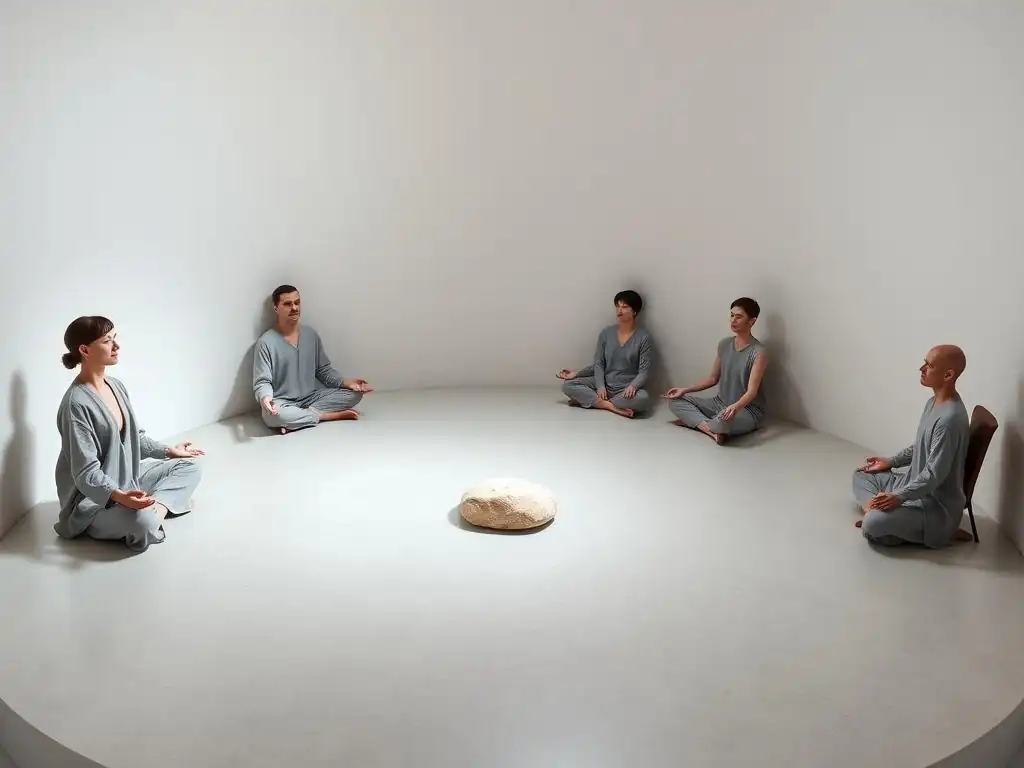
Mindfulness Meditation: Paying Attention to the Present Moment
Mindfulness meditation is perhaps the most widely practiced form for cultivating self-awareness. The core principle is simple: pay attention, on purpose, to the present moment, without judgment. This involves focusing on a point of anchor, usually the breath, and gently bringing your attention back whenever your mind wanders. By consistently redirecting your attention, you train your ability to notice what is happening internally and externally right now. This practice builds the foundational skill of awareness needed for deeper self-understanding.
Regular mindfulness practice helps you become intimately familiar with the ebb and flow of your inner experience. You learn to recognize when your mind is lost in worry about the future or ruminating on the past. You also become more sensitive to subtle shifts in your mood and physical state. For instance, you might notice the first hint of tension in your shoulders or the slight quickening of your breath when you feel stressed. This immediate recognition, fostered by mindfulness, provides an opportunity to intervene and choose a different response before the feeling escalates, significantly enhancing self-awareness through meditation.
Vipassana Meditation: Insight Through Observation
Vipassana, meaning "to see things as they really are," is an ancient Indian meditation technique that aims to cultivate insight into the true nature of reality, including the reality of one's own mind and body. It is a rigorous practice typically taught in intensive retreats, often lasting 10 days or longer. The technique involves observing physical sensations throughout the body systematically and equanimously, without reacting to pleasant or unpleasant feelings. The theory is that by observing sensations, which are constantly changing, one gains direct insight into the impermanent nature of all phenomena, including thoughts and emotions.
Through this meticulous observation of sensations, Vipassana deepens self-awareness by revealing the profound connection between mind and body. Participants often report gaining significant insight into their habitual reactions and ingrained patterns of craving (wanting pleasant sensations to stay) and aversion (wanting unpleasant sensations to go away). By observing these reactions with equanimity, they begin to dissolve the deep-seated roots of suffering. This practice offers a powerful path to understanding the fundamental workings of one's own being, providing profound meditation for selfawareness benefits.
Body Scan Meditation: Connecting with Your Physical Sensations
Body scan meditation is a specific mindfulness technique that involves systematically bringing your attention to different parts of your body, from head to toe, noticing any sensations present without trying to change them. You might notice warmth, tingling, pressure, coolness, or absence of sensation. The goal is simply to observe what is there, cultivating a mindful connection with your physical form. This practice is particularly effective for grounding and for developing somatic self-awareness – the awareness of your body's signals and states.
Many people live disconnected from their physical bodies, often ignoring signals of stress, fatigue, or discomfort until they become overwhelming. Body scan meditation helps re-establish this connection. By paying deliberate attention to physical sensations, you become more attuned to how emotions manifest in your body (e.g., a tight chest when anxious, a knot in the stomach when fearful). This somatic awareness is a critical component of overall self-awareness, providing valuable information about your internal state that might otherwise be missed. It's an accessible and effective way to start cultivating self-awareness through meditation.
Walking Meditation: Finding Self-Awareness in Movement
Meditation doesn't always require sitting still. Walking meditation is a practice where you bring mindful awareness to the physical sensations of walking. This involves paying attention to the lifting of the foot, the movement through the air, the placing of the foot on the ground, and the shift of weight. While focusing on the physical act of walking, you also remain aware of your surroundings and any thoughts or emotions that arise, observing them without judgment.
This practice offers a dynamic way to cultivate self-awareness and integrate mindfulness into everyday activities. It helps you become more present and aware of your body in motion and how your internal state affects your movement. For instance, you might notice that when you are stressed, your pace quickens or your shoulders tense up. Walking meditation also provides an opportunity to practice mindfulness when sitting feels difficult or restless. It demonstrates that the principles of meditation for selfawareness benefits can be applied beyond formal sitting practice, making awareness accessible throughout your day.
Step-by-Step Guide: Starting Your Meditation Journey for Self-Discovery
Preparing for Your Meditation Session: Setting the Stage
Setting the stage for your meditation practice can significantly impact your experience. Choose a quiet space where you are unlikely to be interrupted. This doesn't need to be elaborate; a corner of a room is sufficient. Inform family members or roommates that you need some undisturbed time. Consider the time of day that works best for you – some prefer the quiet of early morning, others find the evening helps them unwind. Consistency is often more important than duration, so aim for a time you can realistically commit to daily or several times a week.
Ensure your chosen space is comfortable. This might mean adjusting lighting, ensuring a pleasant temperature, or using a cushion or blanket if sitting on the floor. While some traditions emphasize austere conditions, for beginners focusing on enhancing self-awareness through meditation, comfort helps minimize distractions and allows you to settle more easily. Turn off electronic devices or put them on silent mode. Take a moment before you begin to let go of immediate tasks and mentally transition into a space of stillness and intention.
Finding a Comfortable Posture and Relaxing Your Body
Your posture during meditation should be both comfortable and alert. While many visualize meditation as sitting cross-legged on the floor, sitting on a chair with your feet flat on the ground is perfectly acceptable, especially for beginners. The key is to have a straight but not rigid spine, allowing your breath to flow freely. If sitting on the floor, use a cushion or folded blanket to elevate your hips above your knees, which can help maintain the curve in your lower back.
Once in your chosen posture, take a few moments to consciously relax your body. Start from your head and move down to your toes, releasing any tension you notice. Soften your jaw, relax your shoulders, and let your hands rest comfortably in your lap or on your knees. Allow your belly to be soft, permitting your breath to move naturally. This process of consciously relaxing the body helps to settle the mind and prepares you for the practice of observing your internal state, which is central to meditation for selfawareness benefits.
Focusing on Your Breath: Anchoring Yourself in the Present
The breath is the most common anchor in meditation practice because it is always present and provides a direct link to the current moment. Once settled in your posture, gently bring your attention to the sensation of your breath. You don't need to change your breath in any way; simply observe it as it is. Notice where you feel it most prominently – perhaps the rise and fall of your abdomen, the expansion and contraction of your chest, or the sensation of air moving in and out of your nostrils.
This focus on the breath serves two main purposes. Firstly, it provides a single point of focus to help quiet the restless mind. Secondly, it acts as an anchor to the present moment. When your mind inevitably wanders (which it will, it's part of the process), you simply notice that it has wandered and gently guide your attention back to the breath. This repeated act of noticing wandering and returning is the fundamental training of attention and awareness in meditation, crucial for cultivating self-awareness.
Observing Your Thoughts and Emotions Without Judgment
Once you've anchored yourself with the breath, expand your awareness to include your thoughts and emotions. The instruction here is simple but not always easy: observe them without judgment. When a thought arises, notice it. You might mentally label it ("thinking") and then return your attention to the breath. Do not get caught up in the content of the thought, analyze it, or try to push it away. Just notice its presence, like watching a cloud drift across the sky.
The same applies to emotions. When you notice an emotion, such as sadness, anger, or joy, simply acknowledge it. Feel the sensation of the emotion in your body, if you can, without getting lost in the story behind it. Avoid labeling the emotion as "good" or "bad." This practice of non-judgmental observation is vital for developing self-awareness. It teaches you that thoughts and emotions are transient events, not permanent aspects of your identity. This detachment allows you to understand your inner world more clearly and compassionately, unlocking deep meditation for selfawareness benefits.
Extending Self-Awareness Beyond Your Meditation Practice
The goal of meditation is not just to be self-aware for the few minutes you are sitting on the cushion, but to integrate that awareness into your daily life. Start by bringing mindful attention to simple, everyday activities. For instance, pay attention to the sensations of eating your breakfast, the feeling of water during your shower, or the experience of walking from one room to another. These small moments of mindfulness help bridge the gap between formal practice and daily living.
Consciously pause throughout your day to check in with yourself. Ask, "What am I thinking right now?" "What am I feeling?" "What sensations are present in my body?" These brief check-ins, perhaps lasting only a minute or two, reinforce your ability to observe your inner state in real-time. Over time, this practice becomes more natural, allowing you to navigate daily challenges, interactions, and decisions with a greater degree of presence and insight, truly embodying the benefits of meditation for self-awareness.
Overcoming Challenges in Your Meditation Practice
Dealing with Distractions and Wandering Thoughts
Distractions and wandering thoughts are perhaps the most common challenges faced by meditators, especially beginners. It's important to understand that a busy mind is not a sign of failure; it's simply how the mind works. The practice isn't about stopping thoughts, but about noticing when the mind has wandered and gently bringing it back to your chosen anchor (like the breath). This is the core exercise that builds the muscle of attention and self-awareness.
When you notice your mind has wandered – perhaps you're planning dinner, replaying a conversation, or feeling restless – simply acknowledge it without judgment. You can even mentally note "thinking" or "planning." Then, gently redirect your attention back to your breath or other anchor. Avoid getting frustrated; each time you notice wandering and return, you are strengthening your ability to be aware of your internal state. Consistency, even with a busy mind, is key to seeing meditation for selfawareness benefits.
Managing Difficult Emotions and Sensations
During meditation, you may encounter difficult emotions or uncomfortable physical sensations. Your instinct might be to push them away, get up, or distract yourself. However, part of cultivating self-awareness involves learning to be present with discomfort. When a challenging emotion or sensation arises, try to meet it with curiosity rather than resistance. Allow yourself to feel it without getting lost in the story or wanting it to be different.
Focus on the physical sensations associated with the emotion or discomfort. Where do you feel it in your body? Is it tight, hot, cold, buzzing? Observe these sensations with a non-judgmental attitude, remembering that sensations are impermanent. If the intensity becomes overwhelming, it's okay to gently shift your focus back to your breath or even take a short break, but try to approach the discomfort with mindful awareness first. Learning to be present with difficult states builds emotional resilience and deepens self-understanding.
Staying Consistent with Your Meditation Routine
Consistency is crucial for experiencing the full meditation for selfawareness benefits, but establishing a regular routine can be challenging amidst a busy life. Start small; even five or ten minutes a day is beneficial. Find a time that genuinely works for you and try to stick to it, even if you don't feel like it. Think of it as a non-negotiable appointment with yourself. Don't wait until you feel calm or have a "clear" mind – meditation is the practice that helps you achieve those states over time.
Be flexible and compassionate with yourself. Some days your practice might feel easier than others. Some days you might miss a session entirely. Don't let perfection be the enemy of progress. If you miss a day, simply start again the next. Consider using reminders on your phone or integrating meditation into an existing routine, like before breakfast or after dinner. Finding an online community or using guided meditation apps can also provide support and structure to help you maintain consistency.
The Science Behind Meditation and Self-Awareness
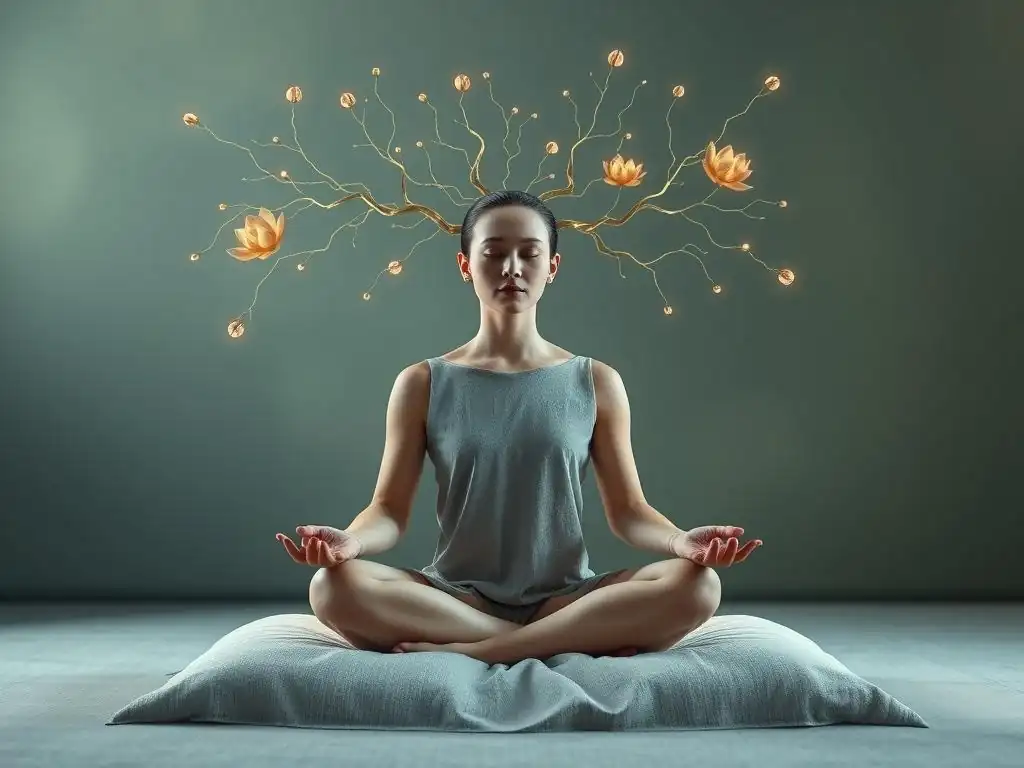
Research on Meditation's Impact on Brain Activity
Neuroscientific research provides compelling evidence for how meditation impacts the brain in ways that enhance self-awareness. Studies using fMRI scans have shown that regular meditation practice is associated with structural and functional changes in brain regions related to attention, emotional regulation, and self-referential processing. For instance, research indicates increased gray matter density in areas like the insula, which is involved in bodily awareness and interoception (the sense of the internal state of the body), and the prefrontal cortex, associated with executive functions like attention and decision-making.
Furthermore, meditation appears to alter activity in the Default Mode Network (DMN), a network of brain regions that is active when the mind is wandering or engaged in self-referential thought (like thinking about the past or future, or judging oneself). Studies show that meditators exhibit reduced activity in the DMN during meditation and even during rest, suggesting a shift away from habitual mind-wandering and self-judgment towards greater present-moment awareness. This neurobiological evidence supports the subjective reports of increased clarity and self-understanding experienced by meditators, highlighting the significant meditation for selfawareness benefits.
How Meditation Promotes Emotional Regulation
Meditation enhances emotional regulation by increasing awareness of emotions as they arise and by changing our relationship to them. Rather than being immediately swept away by strong feelings, meditation teaches us to pause, notice the emotion, and choose a response. Research has shown that meditation can decrease amygdala reactivity – the brain region responsible for the initial "fight or flight" response to perceived threats. This reduced reactivity suggests that meditators are less likely to be overwhelmed by intense emotions.
Moreover, meditation strengthens the connection between the prefrontal cortex (the "thinking" part of the brain) and the amygdala. This increased connectivity allows for better top-down control and regulation of emotional responses. A study published in Psychological Science found that brief mindfulness meditation training significantly reduced emotional reactivity to negative images. By cultivating a non-judgmental, observant stance towards emotions, meditation helps individuals navigate their internal emotional landscape with greater skill and resilience, contributing substantially to meditation for selfawareness benefits.
The Long-Term Benefits of Meditation for Self-Awareness and Mental Health
Consistent, long-term meditation practice yields cumulative benefits for self-awareness and overall mental health. Over time, the ability to observe thoughts and emotions without getting entangled becomes more effortless. This leads to a more stable sense of self, less dependent on fluctuating moods or external validation. Increased self-awareness enables individuals to recognize early signs of stress, anxiety, or depression and take proactive steps to manage their well-being.
Longitudinal studies have indicated that regular meditation can lead to sustained reductions in symptoms of anxiety and depression. For example, a meta-analysis published in JAMA Internal Medicine reviewed 47 trials and found that mindfulness meditation programs had moderate evidence of improving anxiety and depression symptoms over time. By fostering a deeper understanding of internal states and cultivating a more compassionate relationship with oneself, meditation provides powerful tools for navigating life's challenges and promoting lasting mental resilience, making the meditation for selfawareness benefits a valuable investment in personal well-being.
Integrating Meditation into Your Daily Life for Enhanced Self-Awareness
Creating a Daily Meditation Schedule
Making meditation a consistent part of your daily life is key to unlocking its full potential for enhancing self-awareness. Start by deciding on a realistic duration, even if it's just 5-10 minutes. Then, choose a specific time each day that you can commit to. This might be first thing in the morning before the day's demands begin, during a lunch break, or in the evening to unwind. Scheduling it like any other important appointment increases the likelihood that you'll stick to it.
Consider setting a reminder on your phone or linking your meditation to an existing habit. For instance, you could meditate immediately after brushing your teeth or before you have your first cup of coffee. Having a designated spot for your practice can also help create a routine. Consistency, even short sessions, is more impactful than infrequent long sessions for building the foundational awareness that leads to profound meditation for selfawareness benefits.
Using Mindfulness Techniques Throughout the Day
Formal meditation sessions are like strength training for your awareness muscle, but you can also integrate mindfulness into everyday activities. These informal practices reinforce your self-awareness throughout the day. For example, practice mindful eating by paying attention to the taste, texture, and smell of your food. Practice mindful walking by noticing the sensations in your feet and legs.
You can also incorporate brief moments of mindfulness, sometimes called "mindful pauses" or "micro-meditations." Take a few deep breaths before answering the phone, responding to an email, or entering a potentially stressful situation. Use transition times, like waiting in line or sitting in traffic, as opportunities to check in with your breath and body. These small, consistent efforts help maintain a baseline of self-awareness, making you more present and responsive in all your daily interactions.
Applying Self-Awareness to Improve Relationships
Enhanced self-awareness gained through meditation has a significant positive impact on relationships. By understanding your own emotional states, triggers, and communication patterns, you can interact with others more effectively and empathetically. For example, when you feel irritation arising during a conversation, your increased self-awareness allows you to notice the feeling without immediately reacting in anger. You can pause, take a breath, and choose a more constructive response.
Furthermore, understanding your own needs and boundaries helps you communicate them more clearly and assertively. You become better at recognizing when you are feeling overwhelmed or resentful and can address those feelings directly rather than letting them build up. By being more present and less reactive, you can listen more deeply to others and respond with greater compassion, fostering healthier, more authentic connections. The meditation for selfawareness benefits extend outward, enriching your interactions with everyone around you.
Advanced Meditation Techniques for Deeper Self-Understanding
Metta Meditation (Loving-Kindness Meditation)
While often not thought of specifically for self-awareness, Metta meditation, or loving-kindness meditation, offers a unique path to understanding your inner world through the cultivation of compassion. This practice involves directing feelings of warmth, kindness, and goodwill towards oneself and others, starting typically with oneself, then loved ones, neutral parties, difficult people, and finally all beings. The repeated offering of phrases like "May I be happy, may I be healthy, may I be safe, may I live with ease" can reveal deep-seated patterns of self-criticism or resistance to self-compassion.
By intentionally directing kindness inward, Metta meditation helps uncover and work with internal barriers to self-acceptance. It allows you to see the ways you might habitually judge or mistreat yourself, often more harshly than you would others. The practice can bring to the surface feelings of unworthiness or guilt, which can then be met with the same gentle awareness cultivated in other meditation forms. This process fosters a more compassionate form of self-awareness, essential for healing and growth.
Self-Inquiry Meditation: Asking Yourself Profound Questions
Self-inquiry is a meditation technique aimed at uncovering the nature of the "self" or "I." Made popular by the sage Ramana Maharshi, the core practice involves repeatedly asking oneself the question, "Who am I?" This is not meant to be an intellectual analysis, but rather a redirection of attention inward, noticing where the sense of "I" arises from and what remains when thoughts and external identities are stripped away.
This practice directly targets the conceptual self, the stories and beliefs we hold about who we are. By observing the fleeting nature of thoughts, emotions, and identities, self-inquiry aims to reveal a deeper, more fundamental layer of awareness that is not dependent on these changing phenomena. While potentially challenging, this form of meditation can lead to profound insights into the nature of consciousness and identity, offering a radical path to self-understanding that goes beyond mere psychological self-awareness.
Working with a Meditation Teacher or Guide
For those seeking to deepen their self-awareness through meditation, especially when encountering challenges or exploring more advanced techniques, working with a qualified meditation teacher or guide can be invaluable. A teacher can provide personalized guidance, help clarify misunderstandings, and offer support as you navigate your inner landscape. They can introduce you to different techniques and help you determine which practices are most suitable for your current needs and goals.
A teacher can also help you work through difficulties that arise in practice, such as intense emotions or persistent distractions. They can offer insights based on their own experience and training, helping you to see patterns you might not recognize on your own. While many resources are available online, the personalized feedback and support from a teacher can significantly accelerate your progress and deepen your understanding, ensuring you are effectively reaping the meditation for selfawareness benefits.
Conclusion: Embracing Self-Awareness Through Meditation for a More Fulfilling Life
Embracing self-awareness is a transformative journey, and meditation offers a proven and accessible path to embark upon it. By dedicating time to quiet observation, we learn to notice our thoughts, emotions, and sensations without judgment, gaining invaluable insight into our inner world. This practice isn't about achieving a perfect, empty mind, but about cultivating a clear, compassionate relationship with ourselves as we are. The benefits of meditation for self-awareness ripple outward, improving our emotional regulation, decision-making, and relationships.
Whether through mindfulness, Vipassana, body scans, or other techniques, consistent meditation practice strengthens the muscles of attention and non-reactivity, allowing us to navigate life's complexities with greater wisdom and ease. It is an ongoing process of discovery, revealing layers of ourselves we may never have noticed before. By committing to the practice of meditation, we invest in our mental well-being, unlocking a deeper understanding of who we are and paving the way for a more authentic, resilient, and fulfilling life.
Frequently Asked Questions
How does meditation specifically enhance self-awareness?
Meditation allows you to observe your thoughts and feelings without judgment, fostering a deeper understanding of your internal landscape. This focused attention helps identify patterns and triggers, leading to increased self-awareness.
What are the key benefits of using meditation for self-awareness?
The benefits include improved emotional regulation, a clearer understanding of your values, and a greater ability to recognize your own cognitive biases. Ultimately, it leads to improved decision-making and relationships.
How often should I practice meditation to experience self-awareness benefits?
Consistency is crucial. Aim for at least 10-15 minutes daily to begin experiencing noticeable shifts in self-awareness. Regular practice builds mindfulness muscle over time.
What types of meditation are most effective for cultivating self-awareness?
Mindfulness meditation and vipassana meditation are particularly effective. These techniques emphasize observing your thoughts and sensations as they arise, enhancing your awareness of the present moment.
Is meditation the only tool available to increase self-awareness?
No, while highly effective, it's not the only tool. Other methods include journaling, therapy, and seeking feedback from trusted individuals. Combining techniques can be highly beneficial.
Final Reflection: The Unfolding Self Through Meditation
The practice of meditation, far from being a mere trend, is a powerful tool for navigating the complexities of modern life. Its ability to foster self-awareness is more crucial now than ever, in a world saturated with distractions and external pressures that often leave us feeling disconnected from our inner selves. This disconnect fuels anxiety, stress, and a pervasive sense of unease – a feeling that meditation directly addresses and alleviates.
The journey of self-discovery through meditation is a deeply personal one, a continuous unfolding of understanding and acceptance. It's a process that has profoundly impacted my own life, allowing me to navigate challenges with greater clarity and compassion. The quiet moments spent in reflection have revealed hidden strengths and vulnerabilities, fostering a sense of self-compassion that I previously lacked. The unexamined life is not worth living,
Socrates famously stated, and meditation provides the space for that crucial examination, revealing the richness and complexity of our inner world.
Now, I invite you to consider your own relationship with self-awareness. What aspects of your life could benefit from the quiet contemplation that meditation offers? Perhaps it's a reduction in stress, a clearer understanding of your emotions, or simply a deeper connection to your authentic self. Take a moment to reflect on this, and consider incorporating even a few minutes of daily meditation into your routine. The journey towards greater self-awareness is a gift you give yourself, one that will continue to yield profound and lasting rewards.
Unlock Your Inner Wisdom: Take the Next Step on Your Meditation Journey
Thanks for taking the time to explore the power of meditation with Mind Care Guide! We hope you gained valuable insights into how this practice can enhance your self-awareness. Ready to deepen your understanding?
- Start your daily meditation practice today: Even 5 minutes a day can make a world of difference. Find a quiet space, close your eyes, and focus on your breath.
- Share your experience: Let's build a supportive community! Share your initial thoughts and feelings on social media using #MindCareMeditation.
- Explore guided meditations: Search for free guided meditations online—there's a wealth of resources out there to help you.
What small step will you take today to nurture your inner peace and self-discovery?