
Enhance Memory and Learning: Meditation's Positive Effects on Your Brain


Welcome to Mind Care Guide, a sanctuary for your mental well-being.
Feeling overwhelmed or struggling to focus? Discover how a simple practice could unlock a surprising potential within you. Dive into our exploration of how meditation boosts memory learning skills, and begin your journey toward a sharper mind and a more centered self. Curious to learn more?
- Meditation Enhances Memory & Learning: A Comprehensive Guide
- Understanding the Connection: Meditation, Memory, and Learning
- Meditation Techniques for Enhanced Memory and Learning
- The Benefits of Meditation on Different Types of Memory
- Meditation for Different Learning Styles and Challenges
- Practical Tips for Integrating Meditation into Your Learning Routine
- Meditation vs. Other Memory Enhancement Techniques
- Research and Studies Supporting Meditation's Impact on Memory and Learning
- Overcoming Challenges and Maximizing the Benefits of Meditation for Memory
- Conclusion: Unlock Your Cognitive Potential with Meditation
-
Frequently Asked Questions
- How does meditation actually boost memory and learning skills?
- What types of meditation are most effective for enhancing memory and learning?
- How long do I need to meditate to see improvements in my memory and learning abilities?
- Can meditation help with memory loss related to aging or cognitive decline?
- Are there any potential downsides or risks associated with using meditation to improve memory and learning?
- Final Reflection: The Quiet Revolution in Your Mind
- Unlock Your Brain's Potential: Start Meditating Today!
Meditation Enhances Memory & Learning: A Comprehensive Guide
Embarking on a journey of mental well-being often reveals unexpected pathways to cognitive improvement. One such path, increasingly supported by scientific evidence, is meditation. Beyond its well-known benefits for stress reduction and emotional regulation, consistent meditation practice offers profound advantages for memory function and learning capacity. This article explores the intricate connection between meditation and cognitive enhancement, providing insights and practical techniques to help you unlock your brain's full potential. Discover how Meditation boosts memory learning skills and can become a vital tool in your intellectual toolkit.
Understanding the Connection: Meditation, Memory, and Learning
The human brain is remarkably adaptable, a characteristic known as neuroplasticity. Meditation, a practice focused on training attention and awareness, actively engages this plasticity, leading to tangible changes in brain structure and function. These changes, in turn, lay the groundwork for improved cognitive abilities, particularly in the areas of memory and learning. Understanding this fundamental link is the first step toward appreciating how deeply Meditation boosts memory learning skills.
How Meditation Impacts Brain Structure and Function
Regular meditation has been shown to induce significant and measurable changes in the physical structure and functional connectivity of the brain. Key areas linked to memory, learning, and cognitive control appear to be particularly affected. For instance, studies using Magnetic Resonance Imaging (MRI) have observed increases in gray matter density in the hippocampus, a brain region critically involved in memory formation and consolidation.
One notable study, published in the journal Psychiatry Research: Neuroimaging, found that participants who completed an 8-week mindfulness-based stress reduction (MBSR) program showed increased gray matter in the hippocampus compared to a control group. This suggests that even relatively short periods of consistent practice can begin to reshape areas vital for learning and recall.
Furthermore, meditation has been associated with changes in the prefrontal cortex, the area responsible for executive functions like attention, decision-making, and working memory. Research often indicates increased activity and volume in this region among long-term meditators. Concurrently, studies have frequently reported a decrease in the size of the amygdala, the brain's fear and stress center.
This reduction in amygdala volume is correlated with decreased stress levels and improved emotional regulation, both of which are crucial for optimal cognitive function. When the brain isn't constantly reacting to perceived threats, it frees up resources for higher-level processes like learning and memory encoding. These structural shifts provide a compelling biological basis for how Meditation boosts memory learning skills.
The Science Behind Improved Cognitive Function Through Meditation
The positive structural changes observed in the brain correlate directly with improvements in various cognitive functions. One primary mechanism is the enhancement of attentional control. Meditation trains the ability to focus and sustain attention while reducing mind-wandering. Research using tasks like the Sustained Attention to Response Task (SART) has shown that meditators exhibit better performance, making fewer errors of inattention. Improved attention is fundamental to learning, as information must be attended to before it can be processed and stored in memory. By strengthening attentional networks, meditation makes the learning process more efficient and effective.
Beyond attention, meditation influences cognitive function by reducing the impact of stress and negative emotions. Chronic stress, characterized by elevated cortisol levels, is known to impair hippocampal function and disrupt memory retrieval. By lowering stress responses, meditation creates a more conducive internal environment for learning and memory. Studies measuring physiological markers like cortisol have shown significant reductions in meditators compared to non-meditators. Additionally, meditation fosters greater emotional regulation, preventing disruptive emotional states from hijacking cognitive resources. This allows for clearer thinking and better retention of new information, demonstrating another pathway through which Meditation boosts memory learning skills.
Meditation Techniques for Enhanced Memory and Learning
Various meditation techniques exist, each offering a unique approach to training the mind. While many techniques share core principles, some lend themselves particularly well to enhancing specific aspects of memory and learning. Exploring different methods can help you find the practice that best supports your cognitive goals. Understanding the nuances of each technique can optimize how Meditation boosts memory learning skills for you.
Mindfulness Meditation for Memory Enhancement
Mindfulness meditation involves paying non-judgmental attention to the present moment, observing thoughts, feelings, bodily sensations, and external stimuli as they arise. This practice cultivates awareness of internal and external experiences without getting caught up in them.
For memory enhancement, mindfulness is particularly beneficial because it reduces distractibility and improves the ability to stay focused on the task at hand, whether it's listening to a lecture, reading a book, or trying to recall specific information. By training the mind to return to the present moment when it wanders, mindfulness strengthens the neural pathways associated with attention and cognitive control, which are prerequisites for effective memory encoding and retrieval.
A key benefit of mindfulness for memory lies in its ability to reduce rumination and worry, common mental states that consume cognitive resources and interfere with memory processes. When the mind is less cluttered by anxious thoughts or distractions, it has more capacity to absorb and process new information. Studies have indicated that mindfulness training can improve working memory capacity, allowing individuals to hold and manipulate more information simultaneously.
For instance, research has shown that participants with mindfulness training perform better on complex span tasks requiring both processing and storage components. This enhanced ability to manage information actively underscores how Meditation boosts memory learning skills through present-moment awareness.
Focused Attention Meditation for Improved Concentration and Learning
Focused Attention (FA) meditation involves directing your awareness to a single object, such as the breath, a mantra, or a candle flame. The practice involves repeatedly bringing your attention back to the chosen object whenever the mind wanders. This technique is essentially a workout for your concentration muscle.
By consistently redirecting attention, you strengthen the neural circuits responsible for sustained focus and inhibiting distractions. This is directly applicable to learning, as sustained attention is necessary for absorbing complex material, following arguments, and engaging deeply with new concepts. Improved concentration means less time spent re-reading or getting sidetracked, making the learning process more efficient.
The benefits of FA meditation for learning extend to improved cognitive stamina. Just as physical exercise builds endurance, focused attention practice builds mental endurance. This allows you to engage in learning tasks for longer periods without experiencing mental fatigue or losing focus. Research using electroencephalography (EEG) has shown that individuals practicing FA meditation exhibit different brain wave patterns indicative of increased attentional control and reduced mind-wandering compared to novices. This heightened state of focused awareness creates an optimal mental state for information acquisition and processing, highlighting how this type of Meditation boosts memory learning skills by directly training concentration.
Vipassana Meditation to Boost Recall Ability
Vipassana, meaning "to see things as they really are," is a form of meditation that cultivates insight through systematic observation of mind and body. While often starting with focused attention on the breath, it expands to observing sensations, thoughts, and emotions without judgment, understanding their impermanent nature. Although not directly focused on memory storage, Vipassana can enhance recall ability by improving metacognition – the awareness of one's own thought processes. By observing how the mind works, including how memories arise and how thoughts are connected, practitioners can develop a better understanding of their own memory retrieval patterns.
Furthermore, Vipassana's emphasis on non-reactivity to internal states can reduce anxiety associated with memory retrieval, such as the pressure to remember information during tests or presentations. By observing the feeling of "blanking out" or frustration without getting overwhelmed by it, the mind remains calmer, which can actually facilitate access to stored information.
While direct empirical studies specifically linking Vipassana recall ability might be less abundant than those on attention or working memory, its core principles of awareness, observation, and reduced reactivity indirectly support a more efficient and less inhibited process of accessing stored memories. This insightful approach shows another facet of how Meditation boosts memory learning skills by enhancing self-awareness and reducing performance anxiety.
The Benefits of Meditation on Different Types of Memory
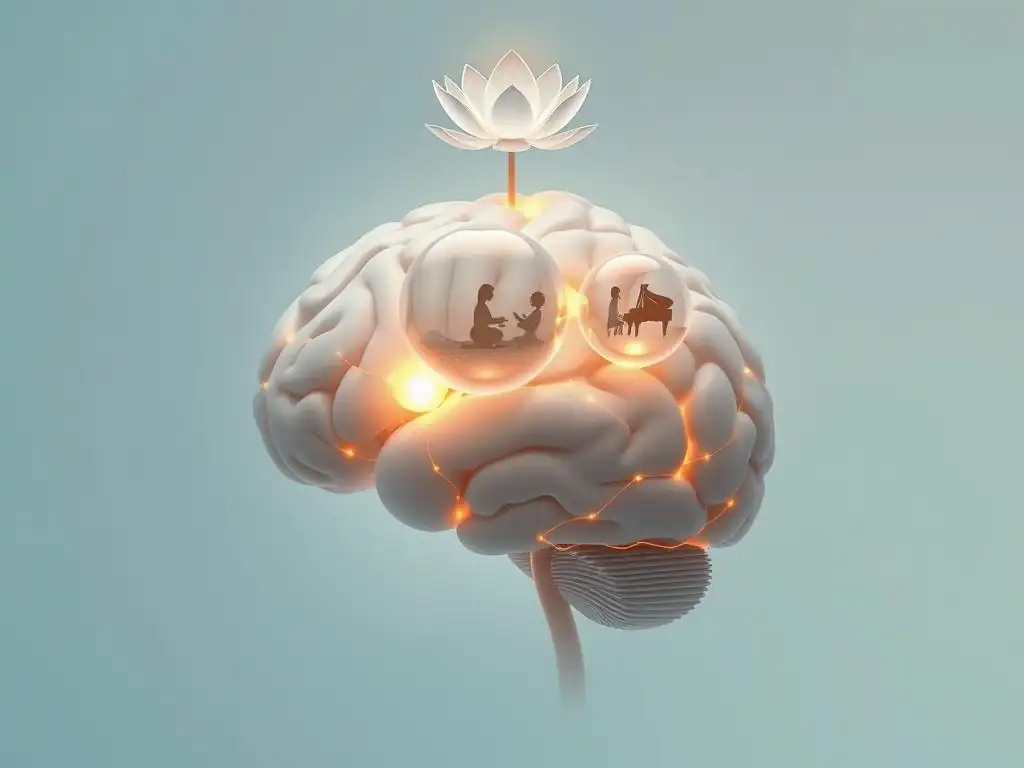
Memory is not a single entity but a complex system involving different types and processes. Meditation has been shown to positively influence several of these memory systems, from the short-term holding of information to the long-term storage of facts and experiences. Understanding these specific impacts helps clarify the multifaceted ways Meditation boosts memory learning skills.
Improving Working Memory with Meditation Practices
Working memory is the system responsible for temporarily holding and manipulating information needed for complex cognitive tasks like reasoning, comprehension, and learning. It's like a mental scratchpad where you juggle information actively. Mindfulness and Focused Attention meditation are particularly effective in improving working memory capacity and efficiency. By training the ability to focus attention and resist distractions, these practices help individuals maintain relevant information in their conscious awareness for longer periods and process it more effectively.
Studies specifically designed to measure working memory capacity, often using tasks like N-back tests or complex span tasks, have frequently shown superior performance among meditators compared to control groups. For example, research published in Psychological Science found that just two weeks of mindfulness training improved working memory performance and reduced mind-wandering in participants.
This suggests that even short-term meditation practice can enhance the brain's ability to hold and process information actively, a critical skill for learning new concepts and solving problems. This direct impact on the brain's temporary storage and processing unit is a key reason why Meditation boosts memory learning skills.
Long-Term Memory Enhancement Through Regular Meditation
While working memory deals with immediate information, long-term memory is where knowledge, experiences, and skills are stored for extended periods. Meditation contributes to long-term memory enhancement through several indirect and direct pathways. Indirectly, by reducing stress and improving sleep quality (both common benefits of meditation), it creates optimal conditions for memory consolidation, the process by which short-term memories are converted into stable long-term memories. Chronic stress and sleep deprivation are known disruptors of this crucial process.
More directly, meditation's impact on brain structures like the hippocampus, as mentioned earlier, is fundamental to long-term memory formation. Increased gray matter volume in the hippocampus observed in meditators indicates a stronger capacity for encoding new information and retrieving stored memories. Furthermore, meditation's ability to improve attention ensures that information is encoded more effectively in the first place.
Focused and mindful attention during learning leads to richer, more detailed memory traces that are easier to retrieve later. This combination of better encoding, improved consolidation conditions, and enhanced retrieval pathways demonstrates how regular Meditation boosts memory learning skills over the long haul.
Reducing the Impact of Stress on Memory Formation with Meditation
Stress is a major enemy of memory. When the body is under stress, it releases hormones like cortisol, which, in high and chronic doses, can damage hippocampal neurons and impair the brain's ability to form new memories and retrieve old ones. The subjective experience of stress also occupies cognitive resources, making it harder to focus on and encode new information. Meditation is highly effective at reducing the physiological and psychological impacts of stress.
Regular meditation practice has been shown to lower cortisol levels and reduce activity in the amygdala, the brain region responsible for the initial stress response. By mitigating the stress response, meditation protects the hippocampus from its damaging effects and creates a calmer mental state conducive to learning and memory formation. Imagine trying to learn complex information while feeling anxious or threatened – it's incredibly difficult.
Meditation helps quiet this internal noise, allowing the brain to dedicate its resources to cognitive tasks. This stress-buffering effect is a powerful mechanism through which Meditation boosts memory learning skills, protecting your cognitive abilities from one of their biggest threats.
Meditation for Different Learning Styles and Challenges
Learning is not a one-size-fits-all process. Individuals have different learning styles, and some face specific learning challenges. Meditation offers flexible benefits that can support diverse learners and potentially help mitigate some difficulties. Understanding how meditation interacts with different learning approaches reveals further ways Meditation boosts memory learning skills across various contexts.
Meditation for Visual Learners: Enhancing Visualization Skills
Visual learners tend to process information best through images, diagrams, and spatial relationships. While meditation might seem purely internal, some practices can indirectly enhance skills beneficial to visual learners. Techniques that involve focusing on an external object, like a candle flame (Trataka), or internal visualizations, though less common in mainstream mindfulness, can strengthen the brain's capacity for focused visual attention. More generally, the improved focus and reduced mental clutter fostered by most meditation practices allow visual learners to better concentrate on visual aids like charts, graphs, and videos, absorbing the information presented more effectively.
Furthermore, cultivating a calm and focused mind through meditation can enhance the ability to form vivid mental images, a technique often used by visual learners for memory recall (e.g., the method of loci). By reducing distractions and improving overall cognitive clarity, meditation allows visual processing to occur more smoothly and deeply.
While direct studies specifically linking meditation to improved visual learning outcomes might be niche, the underlying enhancement of attention and reduction of cognitive interference provides a strong basis for supporting visual learning styles. This indirect support shows another angle on how Meditation boosts memory learning skills by improving foundational cognitive processes.
Meditation for Auditory Learners: Improving Listening and Comprehension
Auditory learners process information best through hearing, listening to lectures, discussions, or audio materials. For these learners, the ability to focus intently on spoken information is paramount. Meditation, particularly Focused Attention and Mindfulness practices, directly enhances the skills needed for effective auditory learning. These techniques train the mind to sustain attention on auditory input (like the breath or external sounds) and to notice when the mind wanders, gently bringing it back. This practice translates directly to improved listening comprehension and the ability to follow complex verbal arguments or instructions.
By reducing internal distractions, such as intrusive thoughts or internal chatter, meditation creates a clearer mental space for processing auditory information. This means less "hearing but not listening." Improved focus allows auditory learners to absorb more detail from lectures, discussions, and audiobooks, leading to better encoding of this information into memory.
The practice of observing thoughts and emotions without judgment can also help auditory learners remain present and engaged during potentially challenging or emotionally charged discussions, ensuring that important information is not missed due to internal reactions. This direct impact on listening skills demonstrates a clear way Meditation boosts memory learning skills for auditory learners.
Addressing Learning Difficulties with Meditation: ADHD and Executive Function
Individuals with learning difficulties, such as Attention-Deficit/Hyperactivity Disorder (ADHD), often struggle with core executive functions like attention, impulse control, working memory, and organizational skills – precisely the areas meditation has been shown to benefit. Research into the effects of mindfulness and meditation on individuals with ADHD is a growing field. Studies have explored mindfulness-based interventions specifically designed for children and adults with ADHD, often showing positive results in improving attention, reducing hyperactivity, and enhancing executive functions.
For example, studies have indicated that mindfulness training can lead to reductions in self-reported symptoms of inattention and improvements in objective measures of attention and working memory in adults with ADHD. While meditation is not a cure and should not replace professional treatment, it can serve as a valuable complementary tool.
By systematically training attention control and promoting self-awareness of thought patterns and impulses, meditation empowers individuals to better manage their symptoms and improve their capacity for learning and cognitive tasks. This potential to support individuals facing specific challenges further illustrates how Meditation boosts memory learning skills by targeting core cognitive deficits.
Practical Tips for Integrating Meditation into Your Learning Routine
Knowing that meditation can benefit memory and learning is one thing; integrating it effectively into a busy learning routine is another. Consistency is key to experiencing the cognitive benefits. Here are some practical tips to help you make meditation a regular and impactful part of your study habits. Making meditation a habit is crucial for truly seeing how Meditation boosts memory learning skills.
Creating a Dedicated Meditation Space for Optimal Learning
Designating a specific space for meditation can help signal to your brain that it's time to practice and reduce distractions. This space doesn't need to be large or elaborate; a quiet corner in your room with a comfortable cushion or chair is sufficient. The key is to make it a place associated solely with meditation and possibly focused study. This separation helps minimize the mental baggage from other activities (like work, entertainment, or chores) that might interfere with your practice.
- Choose a quiet location free from major disturbances.
- Ensure it's comfortable, allowing you to sit upright yet relaxed.
- Keep it clean and tidy; clutter can be distracting.
- Consider adding elements that promote calm, like soft lighting or a plant.
- Avoid using this space for activities that are highly distracting or stressful.
Creating this dedicated zone helps establish a routine and makes the transition into a meditative state smoother, thereby maximizing the cognitive benefits you gain from each session. A consistent environment reinforces the habit, which is essential if you want to see how reliably Meditation boosts memory learning skills over time.
Setting Realistic Goals for Meditation and Cognitive Improvement
Approaching meditation with realistic expectations is crucial for long-term success and avoiding frustration. You won't become a memory champion overnight. Start small, perhaps with just 5-10 minutes of meditation per day. As you become more comfortable, you can gradually increase the duration. Focus on consistency rather than length initially. Aim for daily practice, even if brief, over sporadic longer sessions.
Set process-oriented goals rather than outcome-oriented ones. Instead of "I will have perfect memory after one month," aim for "I will meditate for 10 minutes every morning" or "I will practice mindfulness for 5 minutes before each study session." Track your practice consistency using a journal or app. Recognize that some days will be easier than others, and that's perfectly normal. The goal is to cultivate the habit and the skill of returning to the present moment, not to achieve a completely empty mind. Patience and persistence are your allies in discovering how profoundly Meditation boosts memory learning skills.
Combining Meditation with Spaced Repetition and Active Recall
Meditation's benefits for attention and memory encoding can be synergistically combined with proven study techniques like spaced repetition and active recall. Spaced repetition involves reviewing information at increasing intervals over time, which strengthens memory consolidation. Active recall is the process of actively retrieving information from memory (e.g., using flashcards or self-testing) rather than passively re-reading notes.
- Before a spaced repetition session: A brief 5-minute mindfulness or focused attention meditation can help clear your mind, improve focus, and make your review session more effective.
- Before active recall: Meditating beforehand can reduce anxiety about testing yourself and enhance your ability to retrieve information efficiently from a calmer, more focused state.
- After encoding new information: A short period of quiet reflection or mindful walking after learning something new might aid in the initial stages of memory consolidation.
By improving your ability to focus during encoding and reducing stress during retrieval, meditation makes these powerful study techniques even more effective. This strategic combination is a powerful way to leverage how Meditation boosts memory learning skills alongside established learning strategies.
Meditation vs. Other Memory Enhancement Techniques

The market is flooded with tools and techniques claiming to boost memory and learning, from mnemonic devices to brain training games. While many of these have their merits, it's useful to understand how meditation compares and contrasts with them, and how it can potentially complement other approaches. Examining these comparisons helps position meditation as a unique and foundational method for how Meditation boosts memory learning skills.
A Comparison of Meditation and Mnemonics
Mnemonics are memory aids that use patterns of letters, ideas, or associations to help recall information. Examples include acronyms (like ROYGBIV for colors), rhymes, or the method of loci (associating items with locations). Mnemonics are highly effective for memorizing specific pieces of information, lists, or sequences. They work by providing a hook or structure that makes retrieval easier.
Meditation, on the other hand, doesn't provide specific hooks for individual facts. Instead, it works by improving the underlying cognitive processes that support all memory and learning. It enhances the capacity for attention, reduces interference from stress and distractions, and strengthens the neural infrastructure involved in encoding and retrieval.
While mnemonics are excellent for what you memorize, meditation is excellent for how well your brain functions while you are memorizing and recalling. They are not mutually exclusive; using mnemonics while in a focused, calm state cultivated by meditation is likely more effective than using them when distracted or stressed. This highlights how Meditation boosts memory learning skills by improving the cognitive environment, making techniques like mnemonics work better.
Meditation vs. Brain Training Games: Which is More Effective?
Brain training games are digital programs designed to challenge various cognitive skills through repeated exercises. They often target areas like memory, attention, and problem-solving. Some studies show improvements in the specific tasks practiced within the games, and sometimes transfer to closely related cognitive skills. However, the extent to which these improvements generalize to real-world cognitive tasks and overall learning ability is a subject of ongoing debate and research.
Meditation, conversely, trains a more fundamental set of cognitive skills: attention regulation, emotional regulation, and self-awareness. These are foundational abilities that underpin performance across a wide range of cognitive tasks, including those targeted by brain games, but also complex real-world learning. While brain games train specific skills in a simulated environment, meditation trains the general capacity for focused, calm, and aware cognition.
Research often suggests that the cognitive benefits of meditation are more likely to generalize to everyday situations and academic performance than the highly specific skills trained by many brain games. While both might offer some benefits, meditation's impact on core cognitive processes offers a broader foundation for how Meditation boosts memory learning skills in a generalized way.
The Synergistic Effects of Combining Meditation with Cognitive Exercises
Rather than viewing meditation and other cognitive enhancement techniques as competing, it's often more productive to consider their synergistic potential. Combining meditation with techniques like mnemonics, active recall, spaced repetition, or even some well-designed cognitive exercises can lead to greater overall improvement.
For example, using active recall techniques requires focused attention and the ability to manage potential frustration when information isn't immediately accessible. Meditation cultivates both the focus needed for the task and the non-reactive attitude towards difficulty. Similarly, while meditation strengthens the brain's general capacity, targeted cognitive exercises might help hone specific skills further.
The calm, focused, and resilient mind fostered by meditation provides an optimal state for engaging in any cognitive challenge or learning activity, making other techniques more effective. This combined approach maximizes the potential of how Meditation boosts memory learning skills by building both foundational capacity and targeted skills.
Research and Studies Supporting Meditation's Impact on Memory and Learning
The claims about meditation's cognitive benefits are not merely anecdotal; they are increasingly backed by a growing body of scientific research. Numerous studies have investigated the effects of various meditation practices on brain function and cognitive performance, providing compelling evidence for how Meditation boosts memory learning skills.
Key Research Findings on Meditation and Cognitive Performance
Across a range of studies, consistent themes emerge regarding meditation's impact on cognitive performance relevant to memory and learning. Meta-analyses, which combine results from multiple studies, have often concluded that mindfulness-based interventions lead to moderate improvements in attention and working memory. Longitudinal studies tracking individuals over time have shown that long-term meditators often exhibit superior performance on tasks requiring sustained attention and conflict monitoring compared to age-matched non-meditators.
Specific findings frequently highlight structural changes, such as increased gray matter volume in the hippocampus and prefrontal cortex, correlating with improved memory and executive function test scores. Functional MRI studies reveal changes in brain network connectivity, showing stronger links between areas associated with attention and cognitive control and reduced connectivity in the default mode network (associated with mind-wandering). These consistent findings across different research methodologies provide strong support for the idea that Meditation boosts memory learning skills through measurable neural changes and functional improvements.
Davidson, R. J. et al. (2003) Analyzing the Effects of Meditation on Memory Capacity
A foundational study in this area, though perhaps more focused on emotional regulation and attention initially, by Richard J. Davidson and colleagues, often cited in relation to meditation's impact, explored the effects of an 8-week MBSR program on brain and immune function in healthy individuals. While not solely focused on memory capacity in the way a dedicated memory test might measure it, this research provided crucial early evidence of neuroplastic changes induced by meditation.
The study showed shifts in brain activity towards the left prefrontal cortex (associated with positive affect) and increased antibody response to a flu vaccine, indicating physiological changes.
Though subsequent research built more directly on memory measures, this early work was pivotal in demonstrating that meditation could produce measurable changes in the brain and body, paving the way for later studies specifically investigating cognitive functions like memory and attention. It established the biological plausibility for how a mental training practice like meditation could lead to tangible changes relevant to overall brain health and function, including the foundational elements that support memory and learning. This pioneering work helped establish the scientific basis for exploring how Meditation boosts memory learning skills.
Hölzel, B. K. et al. (20ling 1) Investigating Meditation and Learning Speed
The study by Britta K. Hölzel and colleagues, published in Psychiatry Research: Neuroimaging in 2011, is a key piece of research directly linking mindfulness meditation to structural brain changes relevant to learning and memory. This study examined brain scans of participants before and after they completed the 8-week MBSR program mentioned earlier. The findings revealed significant increases in gray matter density in several brain regions compared to a control group.
Specifically, the study reported increased gray matter in the hippocampus (associated with learning and memory), the posterior cingulate cortex (involved in self-awareness), the temporo-parietal junction (associated with perspective-taking), and the cerebellum (linked to cognitive processes and motor control). Crucially, they also found a decrease in gray matter volume in the amygdala (associated with stress and anxiety).
While the study didn't directly measure "learning speed," the observed structural changes in the hippocampus and prefrontal cortex are precisely in the areas known to facilitate the encoding, consolidation, and retrieval of new information, all of which contribute to the speed and efficiency of learning. This study provided strong anatomical evidence supporting the claim that Meditation boosts memory learning skills by physically reshaping the brain.
Overcoming Challenges and Maximizing the Benefits of Meditation for Memory
While the potential benefits of meditation for memory and learning are significant, establishing a consistent practice can come with challenges. Understanding common obstacles and strategies to overcome them, along with methods to tailor your practice and track progress, can help you maximize the cognitive rewards. Effectively navigating these aspects is key to realizing how truly Meditation boosts memory learning skills for you.
Addressing Common Obstacles to Meditation Practice
Many people encounter difficulties when trying to meditate regularly. Common obstacles include feeling like you don't have enough time, finding it hard to quiet a busy mind, feeling bored or restless, or questioning if you're "doing it right." It's important to remember that these experiences are normal parts of the process, not signs of failure.
- Lack of Time: Start small. Even 5-10 minutes a day is beneficial. Look for pockets of time, like first thing in the morning or during a study break.
- Busy Mind: The goal isn't to stop thinking, but to notice thoughts without getting carried away and gently return your attention. This is the core training. Acknowledge the thoughts and let them pass.
- Boredom/Restlessness: Try different techniques (mindfulness, focused attention, walking meditation). Incorporate short movement or stretching before sitting. Accept that some sessions will feel easier or harder than others.
- Am I Doing It Right?: There's no single "right" way. If you are sitting with the intention to pay attention and gently returning your attention when it wanders, you are practicing. Let go of perfectionism.
Treating meditation as a skill to be developed over time, with patience and self-compassion, helps overcome these hurdles. Consistency, even imperfect consistency, is what allows the brain changes that show how Meditation boosts memory learning skills to occur.
Tailoring Your Meditation Practice to Your Individual Needs
Just as learning styles vary, so too might the meditation approach that works best for you and your specific cognitive goals. Consider what aspects of memory and learning you want to improve most.
- If you struggle with distraction during lectures or reading, focus on Focused Attention techniques to build concentration stamina.
- If forgetting information shortly after learning it is an issue, practices that enhance working memory, like Mindfulness, might be particularly helpful.
- If stress or test anxiety impairs your ability to recall information, techniques focused on emotional regulation and reducing the stress response will be beneficial.
- If you find it hard to get started or stay motivated, try guided meditations or join a group.
Experiment with different durations, times of day, and techniques. Pay attention to how different practices make you feel and how they seem to impact your focus and state of mind before and after learning activities. Tailoring the practice makes it more sustainable and effective, helping you discover the most impactful ways Meditation boosts memory learning skills for your unique brain.
Measuring Your Progress and Tracking Improvements in Memory and Learning
While the changes from meditation can be subtle and gradual, tracking your progress can be motivating and provide insight into what's working. Don't expect dramatic leaps, but look for incremental improvements.
- Journaling: Keep a meditation journal. Note how long you sat, what technique you used, and your general state of mind during and after. Also, jot down observations about your focus or memory during your study sessions on those days.
- Cognitive Tasks: Periodically test yourself on simple memory or attention tasks (e.g., trying a short N-back task online, timing how long you can focus on a reading passage without getting distracted). Note your performance over weeks or months.
- Academic Performance: While influenced by many factors, observe if consistent meditation correlates with improved concentration during classes, better retention of material, or reduced test anxiety.
- Self-Observation: Pay attention to everyday moments. Do you find yourself less distracted during conversations? Are you better at remembering where you put things? Do you feel calmer when faced with complex problems?
These informal methods of tracking can provide valuable insights into the tangible ways Meditation boosts memory learning skills are manifesting in your daily life and learning activities.
Conclusion: Unlock Your Cognitive Potential with Meditation
The journey to enhanced memory and learning is multifaceted, and meditation offers a powerful, scientifically supported path to improving the brain's fundamental capacity for these vital functions. By training attention, reducing stress, and fostering neuroplastic changes, meditation provides a robust foundation for cognitive improvement. The evidence suggests that whether through mindfulness, focused attention, or other techniques, Meditation boosts memory learning skills in tangible ways, from improving working memory to enhancing long-term recall and supporting diverse learning styles.
Recap of the Benefits of Meditation for Memory and Learning
We've explored how meditation impacts brain structure and function, increasing gray matter in key areas like the hippocampus and prefrontal cortex while reducing stress responses in the amygdala. This leads to measurable improvements in attention, concentration, working memory, and the ability to form and retrieve long-term memories, all while reducing the detrimental effects of stress on cognitive function. Different techniques offer unique pathways to these benefits, and meditation can complement other effective learning strategies. The consistent message from research and practice is clear: Meditation boosts memory learning skills.
Encouraging Readers to Explore Meditation for Enhanced Cognitive Function
If you're looking to sharpen your mind, improve your focus, and enhance your ability to learn and remember, incorporating meditation into your routine is a step well worth taking. Start small, be patient with yourself, and explore different techniques to find what resonates. The commitment to regular practice is an investment in your cognitive health and potential.
By embracing meditation, you're not just finding a tool for relaxation; you're actively training your brain to be more focused, resilient, and capable, unlocking its incredible capacity for memory and learning. Discover for yourself how powerfully Meditation boosts memory learning skills can transform your cognitive landscape.
Frequently Asked Questions
How does meditation actually boost memory and learning skills?
Meditation enhances memory and learning by improving focus and attention. This allows for better encoding of new information into long-term memory. Furthermore, meditation can reduce stress and anxiety, factors that often impair cognitive function.
What types of meditation are most effective for enhancing memory and learning?
While various types can be beneficial, mindfulness meditation and concentration meditation are often highlighted. These practices train the mind to stay present and improve attentional control, directly impacting memory and learning.
How long do I need to meditate to see improvements in my memory and learning abilities?
Consistency is key. Even short, regular meditation sessions (e.g., 10-15 minutes daily) can yield positive results. Significant improvements are typically observed after several weeks of consistent practice.
Research suggests meditation may help slow cognitive decline and improve memory in older adults. While not a cure, it can be a valuable tool for maintaining cognitive function and enhancing brain plasticity.
Are there any potential downsides or risks associated with using meditation to improve memory and learning?
For most, meditation is safe. However, some individuals may experience increased anxiety or discomfort initially. It's recommended to start slowly and consider guidance from a qualified meditation teacher if needed.
Final Reflection: The Quiet Revolution in Your Mind
The science is clear: meditation isn't just a trendy practice; it's a powerful tool for enhancing cognitive function, particularly memory and learning. This article has explored the fascinating neurological mechanisms behind meditation's benefits, revealing how regular practice can literally reshape our brains for improved focus, recall, and overall cognitive agility. This isn't just about remembering grocery lists; it's about unlocking our full potential for learning and understanding the world around us.
The impact of mindfulness practices on our increasingly fast-paced, information-saturated world cannot be overstated. We are constantly bombarded with stimuli, leaving our minds feeling overwhelmed and our memories struggling to keep up. Meditation offers a much-needed antidote, a sanctuary of calm where we can cultivate focus and strengthen our cognitive abilities. As Jon Kabat-Zinn eloquently stated, Mindfulness means paying attention in a particular way: on purpose, in the present moment, and without judgment.
This simple yet profound definition encapsulates the core of meditation's power to transform our relationship with our minds and enhance our capacity for learning.
You now hold the key to unlocking a more focused, sharper, and more resilient mind. Consider incorporating even a few minutes of daily meditation into your routine. Experiment with different techniques, find what resonates with you, and observe the positive changes in your memory, learning abilities, and overall well-being. The journey to a more mindful and cognitively vibrant you begins with a single breath, a single moment of intention. Embrace the quiet revolution within, and watch your potential unfold.
Unlock Your Brain's Potential: Start Meditating Today!
Thanks for taking the time to explore the incredible benefits of meditation for memory and learning! We hope you now have a clearer understanding of how this powerful practice can transform your cognitive abilities. Ready to put this knowledge into action?
- Begin your meditation journey today: Even 5 minutes a day can make a significant difference. Find a quiet space, close your eyes, and focus on your breath. Try different techniques to find what resonates with you.
- Share your experience: Tell us (and others!) about your first meditation session. What challenges did you face? What felt rewarding? Sharing your journey inspires others to start their own.
- Explore guided meditations: Many free resources are available online. Experiment with different styles and find what helps you best focus and relax.
What small step will you take this week to integrate meditation into your daily routine and boost your brainpower?