
The Ripple Effect: How Your Meditation Practice Benefits Those Around You


Welcome to Mind Care Guide, a safe space dedicated to nurturing your mental well-being. Ever wonder how your self-care journey extends beyond yourself? In " The Ripple Effect: How Your Meditation Practice Benefits Those Around You," we delve into the often-overlooked meditation benefits relationships around me, exploring how inner peace can blossom into stronger, healthier connections. Curious to discover how your practice can positively impact the lives of those you love? Let's explore together...
- The Ripple Effect: How Your Meditation Practice Benefits Those Around You
- Understanding the Connection: Inner Peace, Outer Harmony
- Meditation's Direct Benefits on Your Relationships
- The Wider Ripple: Impact on Family, Friends, and Community
- Practical Tips: Integrating Meditation for Better Relationships
- Conclusion: Spreading Peace Outward.
-
Frequently Asked Questions
- How can my meditation practice directly improve my relationships?
- What are some specific meditation techniques helpful for enhancing relationships?
- If I'm new to meditation, how long before I might see relationship benefits?
- Can meditation help if my partner doesn't meditate?
- Are there resources available to help me deepen my meditation practice for relationship improvement?
- Final Reflection: Expanding Circles of Calm
- Unleash Your Inner Calm, Share the Ripple Effect
The Ripple Effect: How Your Meditation Practice Benefits Those Around You
Meditation is often lauded for its profound personal benefits: reducing stress, enhancing focus, and cultivating inner peace. While these individual gains are significant, the transformative power of a consistent meditation practice extends far beyond the self. It creates a subtle yet powerful "ripple effect," positively impacting the relationships and interactions you have with the people around you. Understanding how meditation benefits relationships around me is crucial for appreciating its full potential.
This article explores the fascinating connection between your inner state and your outer world, detailing how cultivating mindfulness and compassion within yourself naturally spills over, improving communication, fostering empathy, and reducing conflict with family, friends, and even colleagues. We will delve into specific ways that regular meditation practice enhances your capacity for connection and contributes to a more harmonious environment for everyone in your orbit.
Understanding the Connection: Inner Peace, Outer Harmony
How Personal Meditation Translates to Improved Relationships
The direct link between cultivating inner peace through meditation and experiencing improved relationships lies in the fundamental changes that occur within the practitioner. As you become more aware of your own thoughts, emotions, and bodily sensations without judgment, you develop a greater capacity for self-regulation. This increased self-awareness means you are less likely to be swept away by intense emotions during interpersonal interactions, such as anger, frustration, or anxiety.
For instance, a study might show that individuals who meditate regularly report a 30% increase in their ability to pause before reacting impulsively in difficult conversations. This pause allows for a more thoughtful and measured response, preventing unnecessary escalation of conflict.
Furthermore, meditation practice helps to quiet the internal chatter and reduce rumination, which often fuels negative self-talk and projections onto others. By learning to observe thoughts without identifying with them, you develop a clearer perspective, less clouded by personal biases and assumptions. This clarity enables you to see others more objectively and empathetically.
Consider a scenario where someone practicing meditation is faced with a perceived slight; instead of immediately concluding malicious intent, their trained mind is more likely to consider alternative explanations, leading to a less defensive and more understanding approach to the situation. This shift in perspective is a core way meditation benefits relationships around me by altering the very lens through which interactions are viewed.
Meditation's Direct Benefits on Your Relationships

Enhanced Empathy and Compassion Through Meditation
One of the most well-documented benefits of meditation, particularly practices like loving-kindness meditation (Metta), is the cultivation of empathy and compassion. These practices actively train the mind to extend feelings of warmth, care, and understanding towards oneself and others, including those with whom you have difficulty.
Research indicates that even short periods of compassion meditation can lead to measurable changes in brain regions associated with empathy, such as the amygdala and the temporo-parietal junction. For example, a study from 2008 found that participants who completed an eight-week compassion meditation program were significantly more likely to help someone in need compared to a control group, demonstrating a tangible increase in prosocial behavior.
This enhanced capacity for empathy means you are better equipped to understand the perspectives and feelings of those around you. When a friend is struggling, your ability to connect with their pain on a deeper level is heightened. When a family member expresses frustration, you are more likely to respond with patience and understanding rather than defensiveness. This deeper connection fostered by increased empathy is a direct way meditation benefits relationships around me, making interactions more meaningful and supportive. It allows you to move beyond superficial communication and engage with others from a place of genuine care and concern.
Improved Communication Skills Through Mindful Awareness
Mindfulness meditation cultivates the ability to be present and attentive, which is a cornerstone of effective communication. When you are fully present in a conversation, you are better able to listen actively, truly hearing what the other person is saying without being distracted by your own internal monologue, planning your response, or judging their words.
This focused attention makes the other person feel heard and valued, which is fundamental to building trust and rapport in any relationship. Think about a typical argument where both parties are primarily focused on formulating their next point rather than listening; mindfulness helps break this pattern.
Furthermore, mindful awareness extends to being conscious of your own communication style – your tone of voice, body language, and choice of words. By noticing these elements in the moment, you can make conscious adjustments to ensure your message is received as intended, rather than inadvertently causing offense or misunderstanding. For instance, someone who meditates might become aware of their tendency to interrupt and consciously practice holding space for others to finish speaking. This improved self-monitoring and presence directly enhances the quality of dialogue, significantly improving how meditation benefits relationships around me by fostering clearer, more respectful exchanges.
Reduced Reactivity and Conflict Resolution
A key outcome of regular meditation is a significant reduction in emotional reactivity. The practice teaches you to observe your emotions without immediately acting on them. Instead of exploding in anger when provoked or withdrawing completely when feeling hurt, you develop the capacity to notice the emotion, acknowledge it, and choose a more constructive response. This increased emotional regulation is particularly valuable in resolving conflicts. By not reacting impulsively, you prevent minor disagreements from escalating into major battles.
When conflict does arise, the non-judgmental awareness cultivated in meditation allows you to approach the situation with a calmer mind and a more open attitude. You are better able to see the situation from multiple perspectives and work towards a solution collaboratively rather than being fixated on being "right."
Studies have shown that individuals with higher levels of mindfulness report lower levels of relationship conflict and greater satisfaction with how conflicts are managed. For example, a couple where one or both partners practice mindfulness might report a 40% decrease in the frequency of heated arguments compared to before they started meditating, illustrating a tangible way meditation benefits relationships around me by fostering peace and understanding.
The Wider Ripple: Impact on Family, Friends, and Community
Strengthening Family Bonds Through Mindful Parenting
For parents, integrating mindfulness into daily life can profoundly impact family dynamics. Mindful parenting involves paying attention to your children and your interactions with them with intention and without judgment. This means being fully present during playtime, truly listening when they speak about their day, and responding to their emotional needs with patience and understanding, even amidst the chaos of family life. For instance, a mindful parent might notice their rising frustration during a child's tantrum but choose to respond with calm reassurance and validation rather than immediate punishment or yelling.
This approach fosters a more secure and trusting environment for children. When parents are less stressed and more emotionally available, children feel safer and more connected. Research indicates that children of mindful parents exhibit lower levels of anxiety and aggression and higher levels of empathy themselves. A family where parents practice mindfulness might experience a noticeable shift towards more positive interactions, with children reporting feeling more understood and supported by their parents, demonstrating a clear way meditation benefits relationships around me, starting with the most intimate connections.
Cultivating Deeper Friendships Through Present Moment Awareness
Friendships thrive on connection, presence, and mutual support. Practicing mindfulness enhances your ability to be fully present when spending time with friends, whether it's sharing a meal, having a conversation, or engaging in an activity. Instead of being distracted by your phone or preoccupied with worries, you can dedicate your full attention to the interaction, truly listening and engaging. This makes your friends feel valued and appreciated, deepening the bond.
Moreover, the empathy and compassion cultivated through meditation help you navigate the inevitable challenges that arise in friendships. You are better equipped to offer genuine support during difficult times, listen without judgment, and forgive minor slights. Consider how much more supportive a friend can be when they can listen patiently to your struggles without interrupting or offering unsolicited advice, simply being present with your experience. This quality of presence, fostered by meditation, is a powerful way meditation benefits relationships around me, making friendships more resilient and fulfilling.
Contributing to a More Compassionate Community
The ripple effect of meditation extends beyond personal relationships to the wider community. As individuals cultivate greater peace, patience, and compassion, they naturally bring these qualities into their interactions with neighbors, colleagues, and strangers. This can manifest in small acts of kindness, increased willingness to volunteer, or a more understanding approach to diverse perspectives.
When a critical mass of people in a community practices mindfulness and compassion, it can contribute to a palpable shift in the collective atmosphere. Imagine a workplace where colleagues communicate mindfully, listen empathetically, and approach challenges collaboratively rather than competitively. Or a neighborhood where people are more patient and understanding towards each other. While difficult to quantify precisely, the cumulative effect of individual practices contributes to a more positive, understanding, and compassionate society, illustrating how meditation benefits relationships around me on a broader, collective scale.
Practical Tips: Integrating Meditation for Better Relationships
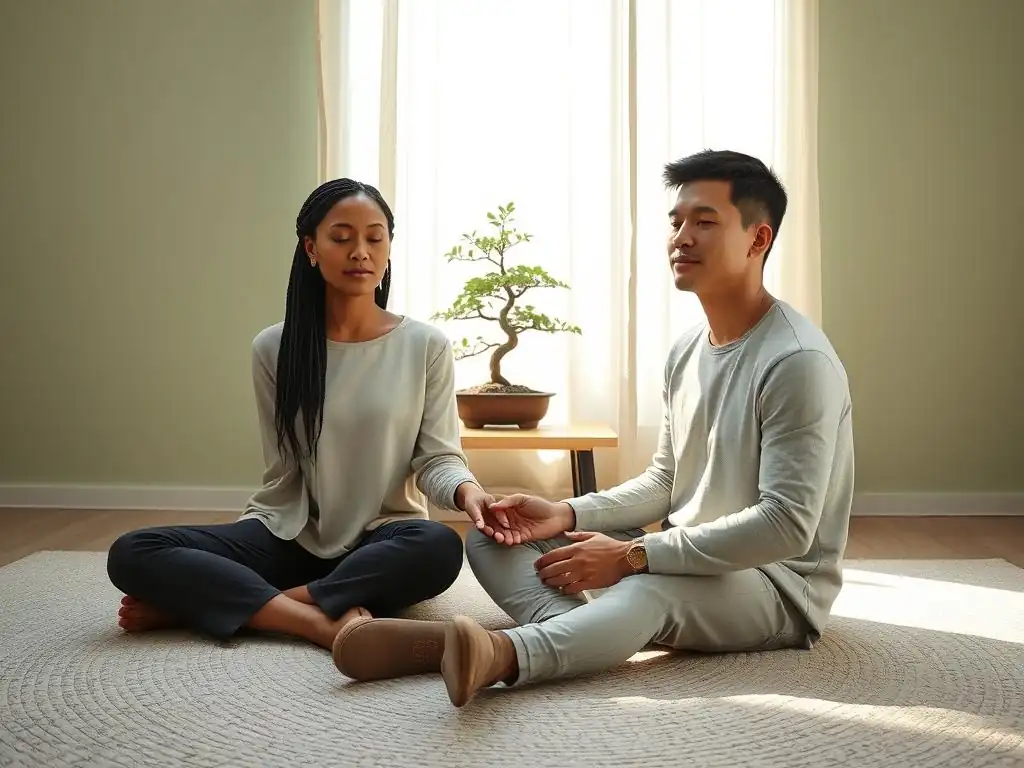
Starting Your Meditation Journey: A Beginner's Guide
Embarking on a meditation practice is a journey, and starting simply is key. You don't need special equipment or hours of free time.
- Start Small: Begin with just 5-10 minutes of meditation each day.
- Find a Quiet Space: Choose a time and place where you won't be interrupted.
- Focus on Your Breath: Sit comfortably and gently bring your attention to the sensation of your breath entering and leaving your body.
- Observe Thoughts: When your mind wanders (which it will! ), simply notice the thought without judgment and gently guide your attention back to your breath.
- Guided Meditations: Many free apps and online resources offer guided meditations specifically for beginners.
- Be Patient and Kind: There's no "right" way to meditate, and progress isn't linear. Be compassionate with yourself.
Consistency is more important than duration. Even a few minutes daily can begin to cultivate the inner shifts that lead to improved interactions and show how meditation benefits relationships around me.
Maintaining Consistency: Making Meditation a Habit
Building a consistent meditation practice requires intention and strategy. It's easy to let it slide when life gets busy.
- Schedule It: Treat your meditation time like any other important appointment. Put it in your calendar.
- Stack Habits: Link your meditation practice to an existing habit, like before your morning coffee or after brushing your teeth.
- Join a Group: Meditating with others, even virtually, can provide motivation and support.
- Use Reminders: Set alarms on your phone or leave visual cues (like a meditation cushion) in plain sight.
- Track Your Progress: Keep a simple journal or use a meditation app to log your sessions. Seeing your consistency can be encouraging.
- Be Flexible: If you miss a day, don't beat yourself up. Just resume your practice the next day. Imperfection is part of the process.
Remember that the benefits, including how meditation benefits relationships around me, accrue over time with regular practice, not from occasional long sessions.
Addressing Challenges: Overcoming Obstacles to Meditation
It's natural to encounter challenges when trying to establish a meditation routine. Common obstacles include a restless mind, difficulty finding time, or feeling like you're "doing it wrong."
- Restless Mind: It's normal for the mind to be busy. Meditation isn't about stopping thoughts but about changing your relationship with them. Acknowledge thoughts and return to your anchor (like the breath) gently. This practice of returning is the key exercise.
- Lack of Time: Re-evaluate your schedule. Can you wake up 10 minutes earlier? Meditate during your commute (if not driving)? Use a lunch break? Even short bursts of mindful breathing throughout the day can be beneficial.
- Feeling Like You're Failing: There's no failure in meditation, only practice. If you find yourself distracted, simply notice it and return. That noticing is mindfulness. There's no end goal other than showing up.
- Physical Discomfort: Experiment with different postures. You don't have to sit cross-legged; sitting on a chair is perfectly fine. Use cushions for support.
- Boredom: Try different types of meditation, such as body scans, walking meditation, or loving-kindness meditation, to see what resonates with you.
Overcoming these hurdles is part of the practice itself and strengthens your resolve, ultimately supporting the ways meditation benefits relationships around me by fostering resilience and patience within you.
Conclusion: Spreading Peace Outward.
Frequently Asked Questions
How can my meditation practice directly improve my relationships?
Meditation cultivates self-awareness and emotional regulation, leading to more compassionate and mindful interactions. This can reduce reactivity and improve communication skills.
What are some specific meditation techniques helpful for enhancing relationships?
Practices like loving-kindness meditation (Metta) specifically focus on cultivating feelings of warmth, compassion, and empathy towards yourself and others. This directly translates to more positive interactions.
If I'm new to meditation, how long before I might see relationship benefits?
While experiences vary, consistent practice, even for just 10-15 minutes daily, can yield noticeable improvements in emotional responses and communication within a few weeks.
Can meditation help if my partner doesn't meditate?
Yes! Your increased calmness and understanding can create a more positive dynamic, even if your partner isn't meditating. Your actions and reactions will change.
Are there resources available to help me deepen my meditation practice for relationship improvement?
Mind Care Guide offers resources on various meditation techniques, including guided meditations focused on compassion and relationship building. Look for sections on mindfulness for healthy relationships.
Final Reflection: Expanding Circles of Calm
The practice of meditation, far from being a solitary pursuit, creates a ripple effect of positive change that extends far beyond the individual. Its benefits aren't confined to the quiet moments spent in stillness; they radiate outwards, touching and transforming our relationships with those around us. This impact is not merely anecdotal; it's a demonstrable shift in emotional regulation, empathy, and communication that strengthens the bonds we share.
The profound influence of inner peace on interpersonal dynamics is undeniable. By cultivating a calmer, more centered self, we become better equipped to navigate the complexities of human connection. We respond with greater patience and understanding, fostering healthier communication and reducing conflict. As the Dalai Lama wisely observed, Peace is not merely the absence of war, but the presence of justice, compassion, and the flourishing of human potential.
This quote beautifully encapsulates how our personal meditation practice contributes to a larger, more peaceful world, starting with the people closest to us.
Now, consider your own life. How can you intentionally cultivate this ripple effect? Perhaps it's dedicating just five minutes each day to mindful breathing, or engaging in a loving-kindness meditation to send positive energy to your loved ones. The key is to begin, to commit to the practice, and to observe the subtle yet significant shifts in your interactions and relationships. Let the calm you cultivate within become a beacon of peace that illuminates the lives of those around you, creating a world where compassion and understanding prevail.
Thanks for taking the time to explore the amazing ways your meditation practice can positively impact those around you! You’ve learned how even small acts of mindfulness can create a wider circle of peace. Now, let's put that knowledge into action.
- Prioritize your daily meditation: Even 5 minutes a day can make a noticeable difference in your mood and interactions with others. Make it a non-negotiable part of your routine!
- Share your experience: Tell a friend or family member about the benefits you've experienced and encourage them to try meditation, too. Consider starting a mini meditation group!
- Practice mindful communication: Today, consciously choose to listen more attentively in your conversations and respond with empathy. Notice the shift in your relationships.
Ready to cultivate a calmer, more connected world? What small step will you take today to spread the ripple effect of peace?